2025 Fan Deng Annual Speech: The Innerly Relaxed Person Allows Everything to Happen | Xinxing PORTFOLIO

Endorsement: In an era of AI frenzy, why do we still need to read? And in an age of universal anxiety, how can we rebuild our inner order? At Fan Deng's 202...

Foreword:
In an era of AI frenzy, why do we still need to read?
In an age of universal anxiety, how do we rebuild our inner order?
In the just-concluded Fan Deng 2025 Knowledge Evolution annual speech, Fan used 52 great books to offer his answer.
As always, the Fan Shu team has compiled the highlights while they're fresh — this article is dedicated to every one of us who still reads.
Let's take it easy, and start again.
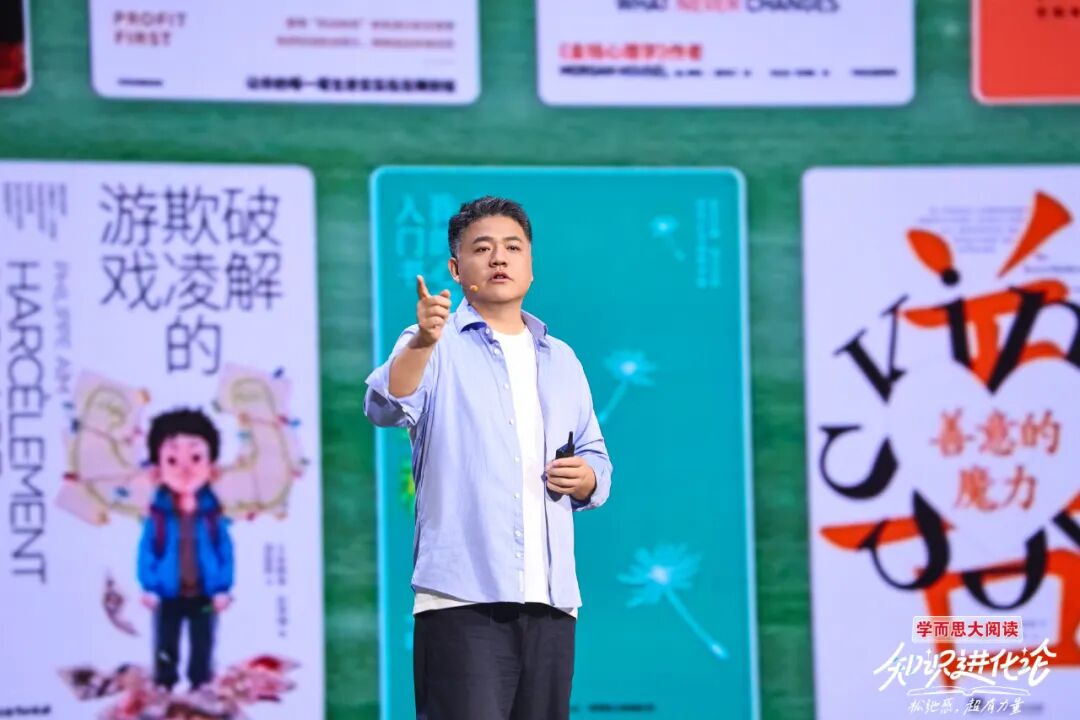
Good evening everyone, I'm Fan Deng. Welcome to the Fan Shu 2025 "Knowledge Evolution" speech.
Those of you familiar with us may have noticed — this is our first time holding this speech in Changsha.
The reason actually ties directly to this year's theme — "The Power of Ease."
In fact, ease isn't a state — it's a capability.
The most effective way to gain ease is to allow yourself to occasionally not be at ease.
As we read more books and improve our ability to handle problems, you'll find that ease naturally emerges over time.
The most important part of my annual speech is taking everyone through the books we've read together over the past year.
Before each speech, I deliberately avoid too much preparation — that way, what I remember is guaranteed to be what mattered most to me last year.
I'd like to share a theme I've spoken about frequently this past year: the paradox of knowledge.
When we encounter trouble in life, it's most likely caused by things we don't know.
Precisely because we don't know these things, we don't know what we need to learn.
This is exactly why I'm not worried at all about AI.
When a person doesn't know what to search for, doesn't know where their problem lies — how would they know what books to read?
For each of us, chance encounters with knowledge are what matter most.
A book you never thought you should read is very likely the one that most easily opens your eyes.
So you can think of today's speech as a large-scale book list showcase. I've roughly divided it into four categories.

PART 01
Life Needs No Limits
First, our opening section is called: Life Needs No Limits.
How can we better understand ourselves, understand our brains?
Take a look at the books I'll share below.
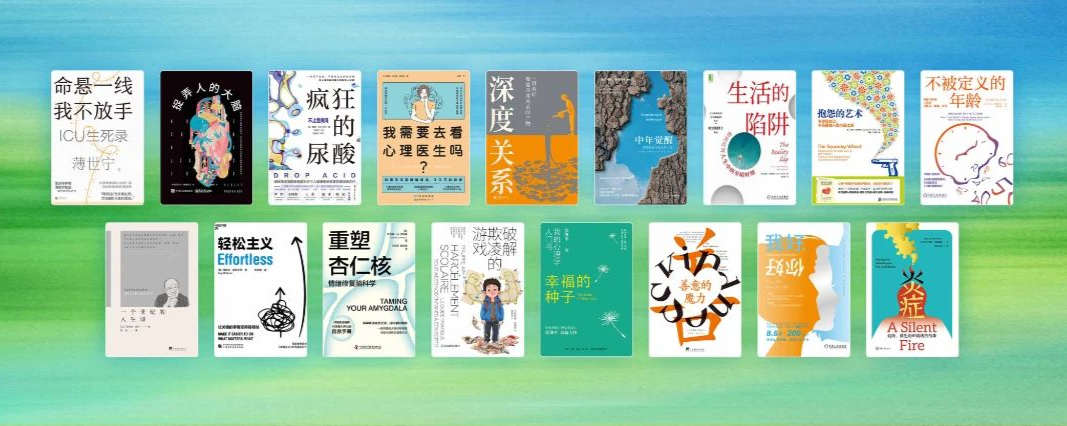
Many friends will say: How come I haven't seen most of these books?
Coming across a good book isn't easy. Selling books that sell well is relatively easy — those are books that suit the vast majority.
But what truly brings change to people are the books most people don't know about.
Rewire the Anxious Brain
"It's not you that's out of control — it's your amygdala."
The first book I'd like to revisit is this one.
As we all know, all our behavior is directed by the brain.
Some people think: "I'm impulsive, I get angry easily, I have a bad temper..."
It's not that simple — it's because your amygdala is more excitable.
When you encounter danger, when you get angry, the amygdala in your brain immediately takes over from the prefrontal cortex that's responsible for keeping you calm, and you become more prone to agitation.
If a child doesn't receive enough love growing up, their amygdala becomes more sensitive in adulthood.
They may be unwilling to self-discipline, prone to emotional outbursts, rebellion, arguing with you.
The best thing this book teaches us: you can absolutely tame your amygdala.
Next time you're about to lose it, you need to be able to stop and say: It's not me getting angry — it's my amygdala firing up.

Observation is the first step to change.
The first step for a person wanting to improve is always awareness — simply knowing about this. This is the meaning of reading.
If you don't read, if you don't understand neuroscience, if you don't know about the amygdala.
You'll never think to remind yourself that you have an amygdala. You'll consider your anger natural, nothing that needs controlling.
The Bully-Proof Kid
"Don't respond the way the bully expects you to."
This book comes especially recommended for all parents and children to read.
When a child encounters bullying at school, many parents angrily say: Why didn't you hit back?
But have you considered — if they actually hit back, might your child become the bully instead?
In our lives, we're certain to encounter some unpleasant people, people who don't like you or behave inappropriately.
What matters most is not playing the bully's game.
What is the bully's game? I bully you, you get angry, you cry, you tell the teacher.
He gets punished, he beats you up again the next day.
Because you're willing to play with him, you're willing to let him feel the pleasure of bullying people.
So when you get drawn into this game, you'll find you can't even explain yourself clearly.
Only when a person learns to face others' attacks and misunderstandings with self-mockery, with humor, does their inner self become truly strong.
For example, someone spreads rumors about you, someone comes asking for gossip: People are saying you did such-and-such, is it true?
This book tells us: You should respond gracefully — do you believe it?
You don't need to get entangled in this game with them at all.
The Goodness Paradox
"Simply observing acts of kindness can make your life better."
This book uses many scientific research methods to verify the impact of kindness on us.
The ultimate conclusion: If you can treat the world with more kindness, your relationships will improve, and you might even earn significantly more money.
Money's fundamental financial attribute is an IOU.
If you want people in the world to give you more money, you need to make them owe you more.
And the only legitimate way is to release goodness toward others, to genuinely treat people well.
If you're not comfortable interacting with others, simply actively observing 3 good things happening each day works too.

Many people see only danger, dissatisfaction, and discontent every day.
The sole reason is that you're too anxious.
When you're excessively anxious, you simply cannot see kindness.
After discussing this book, I launched an initiative:
I hope everyone can become a source of spreading kindness in society.
Even if the act is small, even if the person is far away.
From Strength to Strength
"Middle age is when everything is just beginning."
This book's author researches the idea that people have two types of intelligence: fluid intelligence and crystallized intelligence.
What's the difference? Fluid intelligence is more agile — stronger, faster reaction times.
Recently a meme has been circulating online: "New brains really do work better."
In our twenties and thirties, we spend more time using our fluid intelligence to respond to and solve problems, to generate creative ideas.
But once we pass 40, our fluid intelligence begins to decline.
Another type of intelligence rises to take its place: crystallized intelligence.
What is it? Our experience, our network, the things we've seen.
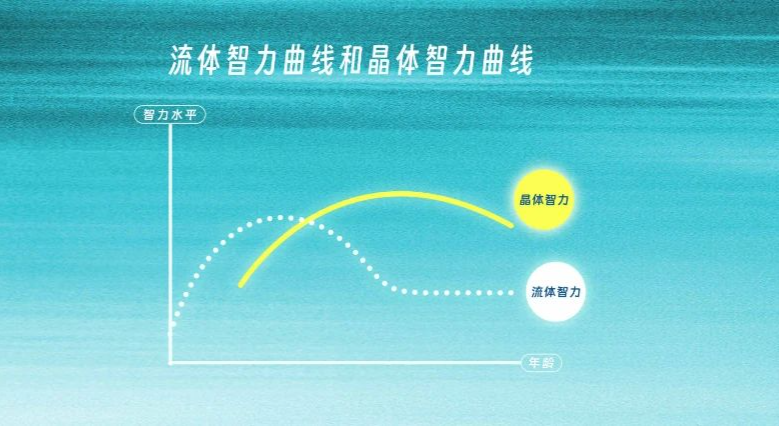
So many people start thinking: after reaching middle age, I need to adjust my life plan.
For example, instead of charging ahead on the front lines and doing everything myself, can I find ways to help others succeed?
Can I become someone who mentors apprentices? Can I become someone who leads a team?
This is what we call a career transition.
One reader said this book was a major wake-up call: he'd never understood why he was still so exhausted at 50.
It turned out his fluid intelligence had declined, but he was still trying to do the same things he did in his twenties and thirties.
So we need to recognize this midlife awakening: leverage our crystallized intelligence to replace our reliance on fluid intelligence.
Breaking the Age Code
"Don't let age become a self-fulfilling prophecy."
If you share this book with elderly family members, it will give them tremendous encouragement.
The author designed many test questions and had elderly people from two different countries take them together.
The results: the elderly from one country performed significantly better than the other.
The reason? Culture.
In other words, however we see ourselves determines what we think we should be doing.
Don't let age-based assumptions keep you from living a vibrant life.

I've recently been facing my own midlife awakening and age-related reminders.
So about a month ago, I decided to start memorizing poetry.
And I discovered — huh, when I was young I'd memorize poems and immediately forget them. But this time, I remember them very clearly.
The brain can be trained, and I love knowledge more now than I did as a child.
So please, don't spend all day forcing your kids to study.
When you scold them, yell at them, pressure them to learn, their vagus nervous system is extremely tense, and they're in a state of rejection toward knowledge.
Even if they learn it, they'll forget it as soon as they turn around.
Only when your vagus nervous system is open can you truly love what you're learning.
When you genuinely love something, your heart opens to it.
Do you know what memory is? Memory is imagination.
Every time you recall something from your past, you refresh that memory.
So learning something new means letting go of some old things.
The more open, tolerant, and curious we are, the easier it is to learn.
If we're constantly in self-protection mode, always assuming what we already know is right, then covering over it becomes very difficult.
PART 02
Parenting: Learning to Let Go
Next up: parenting, and learning to let go.
Many readers have noticed I'm talking about parenting books less and less, saying some books are hard to understand.
If you want simple tools, you can listen to books from 2015 or 2016 — those had plenty of tools.
But I've increasingly felt that simple tools can't transform a family.
Now I prefer to talk about more principle-based books.
When you encounter a book you don't understand, you should feel proud of yourself.

The Awakening of Growth
"Why do children 'suddenly' stop wanting to learn?"
Many people joined Fan Shu after reading or listening to this book.
I want to thank the author of this book: myself.
Why did I write it? To borrow a cool phrase: because I wanted to read a book like this.

In all my years promoting parent-child education, I've observed a mathematical phenomenon: the power curve.
When kids reach ninth or tenth grade, many parents ask: why was my child so well-behaved before, but suddenly stopped studying?
Because academic pressure becomes too great, combined with accumulated stress already in their minds — their mental stress crosses a threshold.
So my purpose in writing this book: don't assume you're a good parent just because your child still obeys you.
Parents of younger children should talk more to parents of eleventh and twelfth graders and see what they're discussing.
Things like depression, dropping out, and so on.
So before this happens, I hope we can listen to this book.
The Voices of Youth
"Problems can only be solved once they're seen."
This book made many parents cry.
Have you noticed? In life we constantly hear teachers' perspectives, experts' perspectives.
But we rarely hear from a middle schooler, from an elementary schooler.
Because children live in their own world; they don't talk to you.
What to do? Read this next book.

This book interviews children with psychological problems and children who are sunny and healthy.
When you compare them, you'll find: the sunny, happy, joyful, self-motivated children usually have very good relationships with their parents.
But children forced to study often reach eleventh or twelfth grade saying they simply can't keep going.
Because no one can be forced to do something for more than ten years.
So I hope everyone reads this little book.
Embracing the Black Dog
"When facing depression, respect matters more than understanding."
If psychological problems do arise, when facing adolescent depression, respect matters more than understanding.
This book is Embracing the Black Dog. The author, Dr. Zhan Wang, has a PhD in psychology from Stanford University and specializes in adolescent counseling.
I asked him: what about kids addicted to their phones, unable to put them down?
He said: we consider this relatively treatable. When we see a child really into their phone, it means they still have passion.
They still have passion; there are still things that can trigger their dopamine, so these children are usually easy to recover.
As long as your communication improves, they can be motivated.
What we fear most is children who don't even play with their phones, lying motionless in bed with the door locked.

I asked: what can parents do?
He said: find photos from family trips when your child was three or four, four or five years old.
Because at that time, without exception, both you and your child were beaming with smiles.
Print these photos, frame them, and place them along the path your child takes to the bathroom.
Stop discussing schoolwork with them. Stop criticizing them. Stop saying "if you waste two more years, see what happens."
We all like keeping pace, thinking: everyone else goes to college at 18, so you must too.
Not necessarily. Going to college at 28 is fine too.
When a child's brain relaxes, intracranial pressure decreases, and the prefrontal cortex becomes active again, they'll know what they want to learn.
But right now their brain is tired; they need rest.
The Learning Methods of Geniuses
"Only scientifically tested experience deserves to be called a method."
This book is for parents who love nagging their kids to study.
The author is a straight-A student, someone with strong learning ability.
When a person with strong learning ability tells you how to learn, that's called experience.
But experience isn't necessarily transferable, because they're not you.
So for an experience to become a theory, it needs long-term validation.

At this point I want to mention our sponsor this year, TALEducationGroup. You all know I endorse their TALEducationGroup Great Reading program. Why?
Because we share the same philosophy — we want to change parents.
But TALEducationGroup told me that even when parents are willing to change, they still face the problem of how to actually teach their kids.
You can't say parents change and then completely ignore the kids — that's too idealistic.
So when it comes to reading, TALEducationGroup has put in enormous effort. They've created a book list called TALEducationGroup Great Reading.
The methods inside align very closely with the ideas in The Learning Methods of Geniuses. They focus on letting children learn autonomously, cultivating independent thinking, guiding kids to find joy in reading, and learning to write.
A round of applause for them, thank you.
A Tree Grows in Brooklyn
"Even poor families can raise children with rich inner lives."
Every time I listen to this book, I cry.
It's one of the few novels I've discussed, based on a true story.
How poor was this family? They often went a whole week without food.
But then the father would say, let's play the Arctic expedition game: we're out of supplies now, waiting for rescue.
Even though they were starving, the kids had fun.
Though the author grew up in extreme poverty, she received enough security and love.
When she grew up, she became someone who could move the world through her writing.
The core of what moves me so deeply about this book is unconditional love.

Love has very little to do with how much money your family has.
What matters is whether you understand what it means to not threaten, not intimidate, not bargain.
I love you, I'm happy to buy you things, I'm happy to take you traveling — I don't need you to promise me anything.
You don't need to be threatened to do anything, you don't need targets, you don't need to talk about returns.
You will take responsibility for yourself, you will take responsibility for us, and we will take responsibility for you.
That's unconditional love.
Part 03
Entrepreneurship: Tension and Release
I love this saying: A book is a refuge you carry with you.
You can hide inside a book anytime, anywhere, and find resonance within yourself.
Next, we enter a very interesting section: entrepreneurship.
In the AI era, whether you like it or not, entrepreneurship should become one of your skills.
These are the books about entrepreneurship we discussed last year:

Why Greatness Cannot Be Planned
"An excessively clear imagination of the future prevents greatness from happening."
Why were the Wright brothers able to invent the airplane? Because they used to sell bicycles.
Before them, almost everyone trying to invent airplanes was trying to imitate birds.
Many great things are born from a stepping stone that was completely unimaginable.
The author of this book is a core member of the OpenAI team.
One of OpenAI's earliest algorithms was called the interestingness algorithm — simply put, do interesting things.
What are interesting things? Interesting things are simple: just don't repeat yourself.

Humans became the apex species because we've always followed the interestingness algorithm, forever striving to research more interesting things.
A company's evolution is the same — a truly good company iterates along the problem it aims to solve.
It's the same with children. If your vision for your child is getting into a top university, becoming a scientist — this might actually harm their vitality.
You're imagining their future too specifically. What they're able to do in the future is probably connected to every detour they've taken.
At my age, looking back at my life, I can only describe it with one phrase: nothing is wasted.
I feel like every decision I've made in life, even the bad ones, the failures, has given me a lot of insight.
Because when I think through problems, I draw on my past experience.
Marvel
"When your company is down to just you, think about Marvel."
Next is a book that can comfort every entrepreneur.
When we talk about Marvel, everyone knows the Hulk, Wolverine, Iron Man — but few know how hard this company had it.
At its lowest point, the entire company was down to one person.
So don't panic. Know this: when a company is down to one person, it can still make a comeback.
By the time he'd sold off all his valuable characters, he suddenly discovered:
Someone was using his characters to make movies, they were hugely popular, and it became a company worth tens of billions of dollars.
Life is about coexisting with uncertainty and complexity — try to be a little happier.

This time coming to Changsha, we happened to hit heavy rain. Everyone's flight was bouncing around pretty badly.
I told everyone: when the plane is bouncing, learn to go with it, don't fight the plane.
You can't control the plane, you can only trust the pilot.
So now when I fly, I'm very relaxed. I can move with it, rise and fall with it — that's uncertainty.
So relax. Relax about entrepreneurship. What doesn't kill you makes you stronger.
The Potential Principle
"Only those who feel protected can dare to move forward."
I hope everyone who leads a team will listen to this book.
To make someone dare to act, we need to care about them first.
Every one of us who leads a startup, who leads a team, or who is a parent at home — we are the secure base for our children, for our employees.
So we need to let the other person feel completely accepted:
You can make mistakes. What we want is for you to be a good person, not simply to meet our metrics.
This is truly what gives a team courage, what makes them willing to take responsibility, willing to act.
No detailed metric can dictate that a person become a good person.
Because being a good person is a matter of conscience.
What makes someone align with us in their work is their inner sense of security.
Do they feel, internally, that you appreciate them? That you care about their growth?
That you see them as a person, not as a tool?
This is the crucial core of leadership.

By the same logic, we should let our children know:
You shouldn't treat them as an exam-taking machine. They're a person, they can have their own choices, they can make decisions.
You'll support them. Only then can they throw themselves wholeheartedly into their efforts.
Profit First
"The more money you have on hand, the faster you spend it."
The biggest insight this book gave me was learning about Parkinson's Law:
If you have enough money on hand, you'll spend it more freely.
If you want your company to be profitable, the author's advice is to set aside the profit first.
He's built many businesses and really understands finance.
He says the simplest method is this: with any income you receive, immediately put 10-15% into a separate account and don't touch it again.
That money isn't yours — that's your profit. As long as you don't spend that portion, your company won't go bankrupt.
So don't underestimate such a simple method. It could very well improve our financial situation.
Same as Ever
"The world is driven by unquantifiable forces."
Many people come to my talks wanting to know: can you predict the future?
But I never predict the future in my speeches, because predicting the future is meaningless — the future simply cannot be predicted.
The future is made up of vast uncertainty.
What matters is the things that won't change in the future. Those are what determine whether what we're doing now will hold value later.
This author distilled 23 things he believes will never change.
I agree with almost every single one.
The world is driven by unquantifiable forces.
The vast majority of things in this world resist standardization.
If you're building something lifeless, you can look for blueprints.
But there are so many things in this world that can't be measured — love, for instance. Aesthetic taste. Sentiment.
People often ask me, you say I should give my kids more space, right? But I can't completely let go either. How do I find the balance?
There's only one final answer: grasp the right degree.
How do you grasp it? That degree comes from the displacement of your life.
When you're constantly changing how you see the world, and your life undergoes displacement, this question ceases to be a question at all.
Only by working on ourselves, by raising the level of our life, by reaching a state where we no longer ask such questions, is the problem truly solved.
This is what Albert Einstein meant: the answer to a difficult problem never exists on the same level as the problem itself.
Only by transcending that level can the problem be resolved.
This is what's difficult about life, and also what's beautiful about it. Don't treat these difficulties as boredom or torment — treat them as the most interesting handholds in the game of life.
We're playing this game. We hope to leave a little different from how we arrived. That is the meaning of life.
PART 04
Perspective, Breaking Boundaries
Now let's revisit the section I particularly enjoyed on broadening perspective.
The books here are all fascinating — history, philosophy, even physics.
If you're willing to study Chinese history, listening through the books we've covered basically gives you a solid foundation.
Up in the Air
"This book makes you love flying."
First, let's revisit Up in the Air.
If you have a fear of flying, you absolutely must read this book.
Ever since I finished it, I've genuinely looked forward to flights.
This book takes the entire experience of flying — from entering the terminal to takeoff and landing — and explains all the relevant physics in fascinating detail.
I love this kind of popular science book because it uses familiar experiences to help us understand so much physics.
The Dharma Bums
"Forever young, forever weeping."
Next, this book is for everyone who feels overwhelmed by life's pressures.
Its most famous line: forever young, forever weeping.
Why can someone remain forever young and forever weeping even as a vagrant? Because he's journeying inward.
So many of us work hard every day to earn more money, mostly to pay mortgages, cover tuition, save for retirement.
But many people couldn't spend all their money in a lifetime — yet they never feel secure, because they've never journeyed inward.
Walden put it this way: as many radii as there are from the center to the circumference, so many different ways of living.
One benefit of reading is that it increases our mental flexibility, letting us know there are countless different ways to live.
I believe many people have dreamed of just taking off on a trip, of living as a wanderer.
The cost of actually wandering alone may be too high. So read this book — it makes the journey for you. That's the meaning of books.
The books in your mind are your social circle.
We can hold many people in our minds — remarkable authors, extraordinary figures, history itself.
These people are your circle. They can offer you advice, help you, increase your mental flexibility.
Eventually you discover that life opens up. No one can limit your freedom.
Nexus
"Beware the naive information view."
We're all familiar with this author — he wrote Sapiens and Homo Deus.
He proposes a concept called the naive information view.
Many AI and tech enthusiasts believe that with enough information, problems will be solved.
But the author uses historical events to argue that the world has never become better simply because there's more information.
This book helps us reflect and serves as a reminder:
When everyone is cheering for AI, humanity must always maintain some vigilance.
Third Millennium Thinking
"The third millennium has only passed 2% — we still have so much we can do."
One insight from this book struck me:
What we can learn from experience is basically wrong.
Why? Because experience contains far more noise than signal.
This brings up a term: signal-to-noise ratio — the proportion of information to noise.

When the signal-to-noise ratio is high, it's easier to identify the signal. When it's very low, misjudgment becomes likely.
The conclusions we casually draw from past experience are actually quite dangerous — the signal-to-noise ratio just isn't high enough.
What you should trust is what you record and observe from experience, after filtering out all the confounding factors.
If you want to improve the quality of your thinking, I recommend giving this book a listen.
If our thinking remains stuck in the first two millennia, still trusting only in experience, we'll make many mistakes.
The comforting part, the author says: "The third millennium has only passed 2% — we still have so much we can do."
PART 05
Preview of Next Year's Books
For the final part of today's talk, as usual, I'll share some of the books I'll be covering in the coming year.
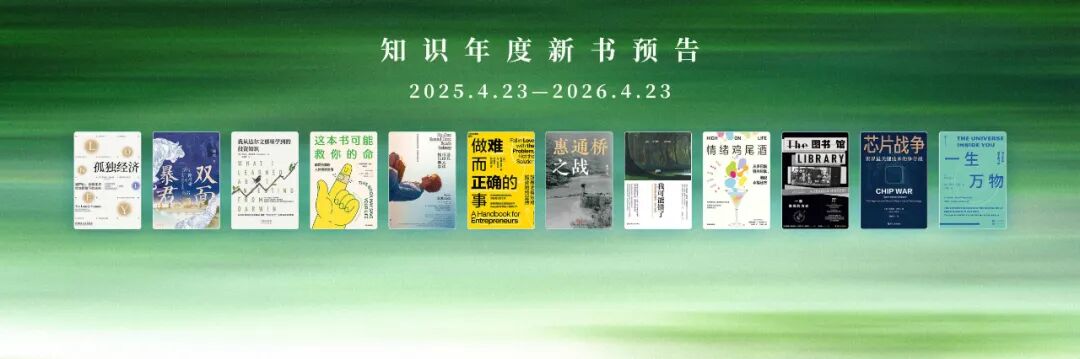
Here's what we can look forward to:
This Book May Save Your Life, What I Learned About Investing from Darwin, The Double-Faced Tyrant, The Solitude Economy, Nobody Here Reads Tolstoy, I May Be Wrong, The Library, Chip War, One Begets All, Emotional Cocktail...
Your destiny itself is composed of vast amounts of text, and reading means you're infusing that text with far richer substance.
So we very much hope you'll join us next year to read more and more fascinating books.
Finally, my sincere thanks to every audience member who came tonight and to everyone watching the livestream.
Thank you all — see you next year!

Founded in 2022, Heart Capital is a China-based early-stage venture capital fund focused on technology and digital transformation. The team is led by Yan Han, founding partner of Lightspeed China, alongside core investors, a CFO, and seasoned investors from industry. The team's past investments include Series A investments in Xpeng Motors (NYSE: XPEV, 09868.HK) and Full Truck Alliance (NYSE: YMM), as well as FinVolution (NYSE: FINV), RoboSense (02498.HK), Baichuan, Manman Cold Chain, Fan Deng Reading, World Logistics, Micro-Nano Starry Sky, LandSpace, Lanhu, Starfield, and others. Rooted in China with a global outlook, Heart Capital is committed to finding true value in non-consensus. The firm honors the value of people and champions the potential of the heart, aspiring to accompany more young Chinese entrepreneurs in strengthening China and going global.