"The Land Aircraft Carrier" Achieves Manned Flight: At 40, He Sees the World from Above | Xinxing PORTFOLIO

Mapping out a bold vision for urban low-altitude flight.
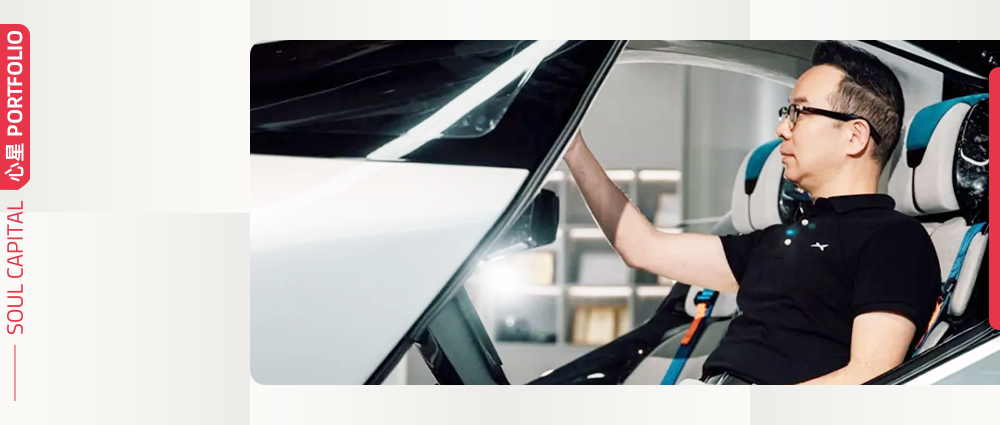
>>> 4,781 words, 10-minute read
At Xpeng Motors' AI Tech Day on November 6, Xpeng AeroHT showcased its latest progress in the flying car space. The most anticipated reveal was the "Land Aircraft Carrier," the world's first mass-produced modular flying car, which has already completed crewed test flights and is scheduled to launch pre-sales in December. Xpeng AeroHT also released a configuration design video for the X5 (internal codename), a fully tiltrotor eVTOL designed for intercity air travel, with mass production expected within five years.
Xpeng AeroHT is using a "three-step" strategy to gradually shape the future of urban transportation:
Step one: Launch the modular flying car "Land Aircraft Carrier," primarily for limited-scenario flight experiences and public services. Through scaled mass production and sales, it aims to drive the development and maturation of the low-altitude flight industry chain and ecosystem, while validating the business model for flying cars. The vehicle consists of a ground module and a flight module. The ground module, dubbed the "land carrier," features a three-axle, six-wheel design with 6×6 all-wheel drive and rear-wheel steering. It incorporates the world's only onboard automatic separation and docking mechanism, enabling one-button automatic detachment and reattachment of the two modules.
Step two: Launch a high-speed, long-range eVTOL product to solve air mobility challenges in typical scenarios, while working with stakeholders across the low-altitude flight ecosystem to advance urban three-dimensional transportation. The newly unveiled X5 is such a product. It adopts a fully tiltrotor configuration: the rotors are vertical for takeoff and landing, and rotate horizontal for high-speed cruise. The X5 will feature a six-seat intelligent flight cabin, with a maximum design speed of 360 km/h and a range of no less than 500 km, meeting cross-city travel demands.
Step three: Launch an integrated land-air flying car, truly achieving door-to-door, end-to-end urban 3D transportation.
Xpeng AeroHT has painted a blueprint for urban low-altitude flight — a scenario that was almost entirely unimaginable in the past, yet is now on the verge of becoming reality. Behind these remarkable achievements, however, lies the story of a "dreamer."
He is Deli Zhao, founder of Xpeng AeroHT, a dreamer who spent ten years turning the flying car from fantasy into reality.
His story reads like an inspirational film, full of twists and turns. From an ordinary factory worker to the owner of a model aircraft company, and then to the founder of Asia's largest flying car company, every step was fraught with challenges and uncertainty. His lived experience tells us: even in the darkest moments, hold fast to your dreams.
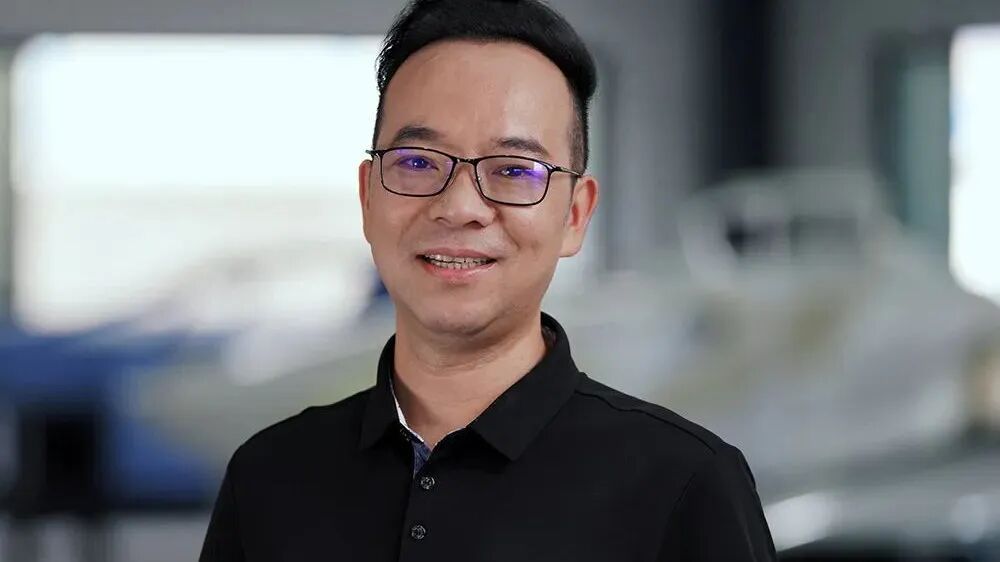
The following is from a 2024 interview with Deli Zhao by China Entrepreneur magazine:
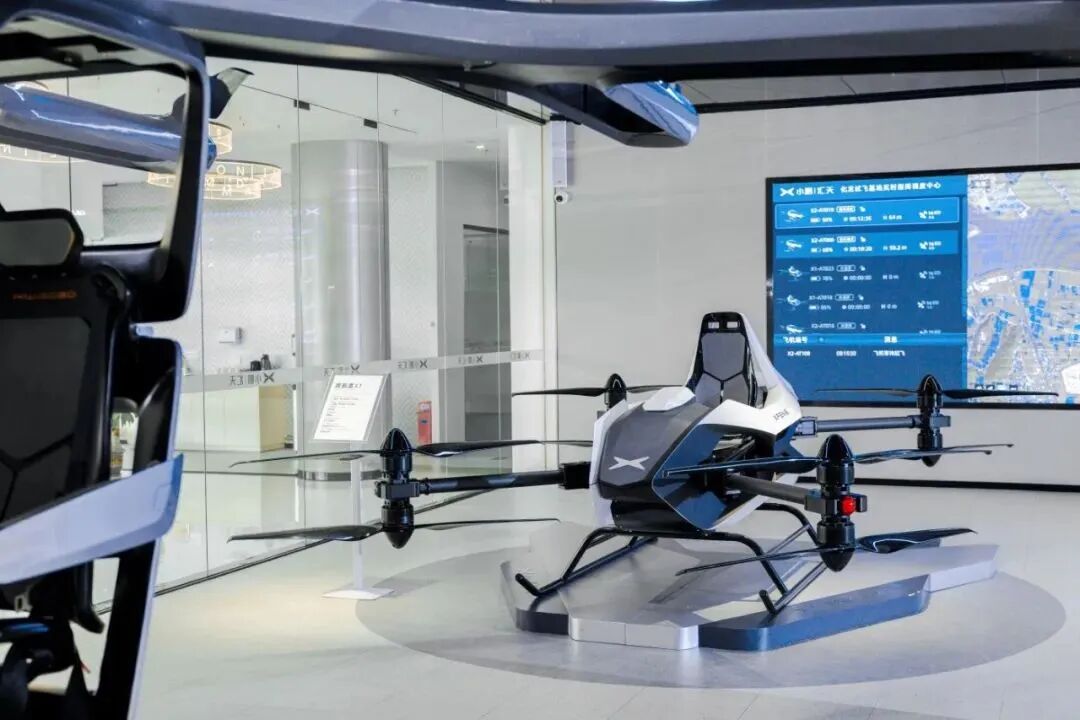
On the ground floor of Xpeng AeroHT's Guangzhou headquarters, three sleek flying cars are on display. Visitors invariably stop to observe, even climbing in to get a feel for them. These are all high-tech products developed by Xpeng AeroHT. Around the corner by the stairs, a flying motorcycle is showcased under special protection, viewable only through glass. Its four rotors have lost their luster, and the white seat shows visible stains and wear.
The story of Xpeng AeroHT and its founder Deli Zhao begins with this flying motorcycle. After more than 1,500 test flights and some forty to fifty crashes, in June 2018, Zhao piloted this flying motorcycle into the air for the first time.
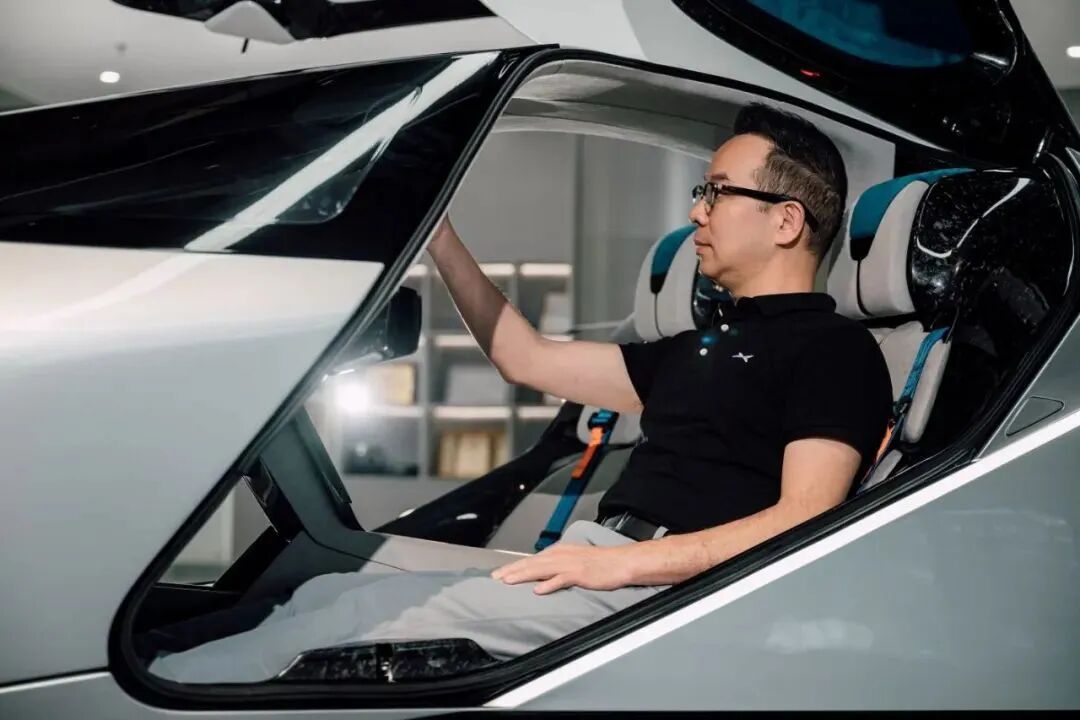
That moment of successful test flight gave Deli Zhao enormous encouragement and confidence. "Before that, I had already started doubting my whole life, thinking I was just a failure, a loser. If it hadn't flown, I probably would have become a cautionary tale, with nothing but ridicule and abuse everywhere," Zhao told the reporter.
Those close to Zhao describe him as smart, fiercely hardworking, methodical, and logical; simultaneously perceptive about human nature, with a sharp eye for markets.
When Zhao first entered the flying car track and founded HT Aero (Xpeng AeroHT's predecessor), only two companies in China were building crewed aircraft: HT Aero and EHang Holdings Limited, the latter of which listed on Nasdaq in 2019 and currently carries a market cap of roughly 6.5 billion RMB.
In September 2020, Xpeng AeroHT was formally established. He Xiaopeng is the majority shareholder and chairman; Deli Zhao serves as president.
Today, some 300–400 companies globally are developing ultra-low-altitude crewed aircraft, with more than 20 domestic players in China. On the policy front, low-altitude economy has also hit its "moment" — not only classified as a strategic emerging industry, but written into this year's Government Work Report as a "new growth engine." As the most closely watched segment of low-altitude economy, flying cars have triggered trillion-scale industrial opportunities. According to Morgan Stanley projections, by 2040, the global eVTOL market will exceed $1 trillion, with China capturing roughly 25% market share as the world's largest urban air mobility market.
"We're very confident about low-altitude economy's development, and we see even more possibilities ahead," Zhao said, standing at the forefront of this wave. He believes Xpeng AeroHT holds first-mover advantage.
After years of exploration in flying cars, Xpeng AeroHT has cumulatively developed five flying car products, including two prototypes, the Voyager T1, Voyager X1, Voyager X2, as well as an integrated flying car and the modular flying car "Land Aircraft Carrier" currently in development. It has grown into Asia's largest flying car company, valued at over $1 billion.
In just four years, Xpeng AeroHT has become a "dark horse" in China's flying car race that cannot be ignored. Surrounded by formidable competitors, how did Xpeng AeroHT carve out its own path?
A Pivotal Investment
Low-altitude economy is a track brimming with technological allure, but Deli Zhao's early experiences had almost nothing to do with technology. After dropping out of high school, Zhao went to work in Dongguan — factory worker, security guard, real estate agent; he sold insurance, sold fruit, ran restaurants, and started a model aircraft company, earning decent money. Obsessed with flight, in 2013 he took the more than 20 million RMB earned from selling model aircraft and founded HT Aero in Dongguan to develop low-altitude crewed aircraft.
The R&D proved far more difficult than imagined. Zhao started with motors, then moved to flight control systems, and didn't assemble a frame for flight testing until 2016.
During this period, Zhao's team nearly disintegrated multiple times. What started as a dozen or so people shrank to just two by 2016. The 20 million RMB was gone. "It was all debt — credit cards, Huabei, Jiebao, all maxed out. Every month it was collection calls. No friends reached out anymore." Recalling those years, Zhao described them as "utterly miserable."
But he couldn't let it go. He wanted to give himself an answer before turning forty. "Having the courage to chase dreams at this age is rare — probably a once-in-a-lifetime opportunity." In Zhao's view, the worst-case scenario of entrepreneurship was losing everything. Could he accept that? Yes, "because I'd still have a chance to start over."
Zhao set himself a deadline: if it didn't fly by 2018, he would quit. After the flying motorcycle's successful test flight, his confidence surged and he began considering commercialization.
Raising money became the most urgent priority.
On one hand, Zhao became active on variety shows, constantly putting himself in the spotlight to show the outside world what he was doing — "occasionally earning appearance fees to support the team." On the other hand, he began studying fundraising methods, signing up for TV investment programs and attending roadshows.
For Zhao, raising money wasn't easy. Wearing the label of "folk scientist," he had neither formal training nor connections or resources — only pure passion. This meant investors would be taking on enormous risk. "But entrepreneurs like me dare to fight and charge, unafraid of death, difficulty, or failure," Zhao said. He flew again and again for every investor. "If they wouldn't come, I'd haul the flying motorcycle to them and fly for them to see."
Later, with overwhelming media coverage, external validation and societal attention grew, and some entrepreneurs gradually found him, providing his first angel investment. "They valued my persistence in product R&D and also hoped to help me realize my dream of flight."
In 2019, Zhao used this funding to develop a two-seater flying motorcycle capable of carrying passengers. When He Xiaopeng came to Dongguan to find him in 2020, this was the vehicle he test-rode. He Xiaopeng decided on the spot to dive in, bringing money and resources. In September 2020, Xpeng AeroHT was formally established, with He Xiaopeng as majority shareholder and chairman, and Deli Zhao as president. Zhao then moved his employees from Dongguan to Guangzhou, beginning to work out of Xpeng Motors' headquarters.
After He Xiaopeng joined, Xpeng AeroHT's development began finding its stride.
Zhao candidly admitted that before this, most of his energy had been consumed by fundraising. "You'd be raising funds and then suddenly the company would be out of money again, spending every day in that anxiety, with no mind left for product development."
In October 2021, Xpeng AeroHT completed a $500 million Series A funding round, with many investors being shareholders of Xpeng Motors. Zhao said they were all interested in vehicles that could both drive and fly, believing the market would be larger than that for pure vertical takeoff and landing aircraft.
Financial assistance was only one aspect; what mattered more was strategic-level thinking. Zhao recalled that during that period, he and He Xiaopeng frequently talked on the phone about direction, product, technology, and future possibilities — "our first call lasted over an hour."
For more than a year after Xpeng AeroHT's founding, weekly meetings were held with He Xiaopeng's participation. "Many project milestones had to be reported to him, and he'd offer suggestions — pitfalls he had already stepped in, he definitely wouldn't let us step in again." Zhao also learned from He Xiaopeng about product thinking, team management, marketing organization, and system processes.
In Xpeng AeroHT's early days, talent from the aviation industry was scarce, with a team of just several people. Today, the team has grown to nearly 1,000, with R&D personnel accounting for 85%, master's and doctoral degrees comprising over half, and aviation-background staff exceeding 25%.
In November 2021, Zhao moved the team to Guangzhou University Town, a dozen or so kilometers from Xpeng Motors.
As Xpeng AeroHT's direction gradually clarified and the team took shape, in 2023, He Xiaopeng began gradually "letting go." "But strategic matters definitely still get discussed with him. He now reviews monthly project plan progress reports, financial statements, looking at our spending rhythm, product rhythm, personnel rhythm, and so on. If anything seems off, he'll tell me and we'll make adjustments," Zhao said.
Short-Term Goals and Ultimate Goals
The concept of "flying cars" was born in the 1920s, but constrained by technological innovation, airspace governance, and policy issues, the vast majority of flying cars being developed today are eVTOLs that can only fly, not drive.
Xpeng AeroHT chose a different path, aiming to build a truly personal flying car with both driving and flying capabilities. The scenario Zhao envisioned: normally it's a car, but in key moments it can take flight. This was also the new direction He Xiaopeng proposed after joining, which he believed held strong market prospects.
Initially, Zhao planned to develop an integrated flying car for earlier mass production. But after careful analysis, he changed his mind. "Pure-fly products don't have that much demand at this stage — general aviation aircraft globally only sell a few thousand units per year. How many more could you sell by electrifying and smartifying them?" Zhao firmly believes that air taxis will arrive, but the timeline will be long and the challenges numerous. "First is power systems, then regulations. Is an integrated flying car a car or an aircraft? Do you need dual certification? Lightweighting is also an issue — right now it can't fly far or long." So achieving mass production and delivery within two to three years wasn't realistic; Zhao believed developing and mass-producing such a product might take 10 to 15 years.
Only in the final step of Xpeng AeroHT's strategy will the integrated flying car be commercialized.
In the process of reaching this "ultimate goal," Xpeng AeroHT needed products that could be delivered in the near term — something that would let flight enthusiasts take off in the wilderness, or apply to specific scenarios like emergency rescue, logistics transport, and sightseeing tourism.
The Xpeng AeroHT modular flying car project was quickly approved. In October 2023, Xpeng AeroHT first announced development progress on the modular flying car "Land Aircraft Carrier." Per plan, this product would open for reservations in Q4 this year, with mass production and delivery beginning Q4 next year, at a price no less than 1 million RMB.
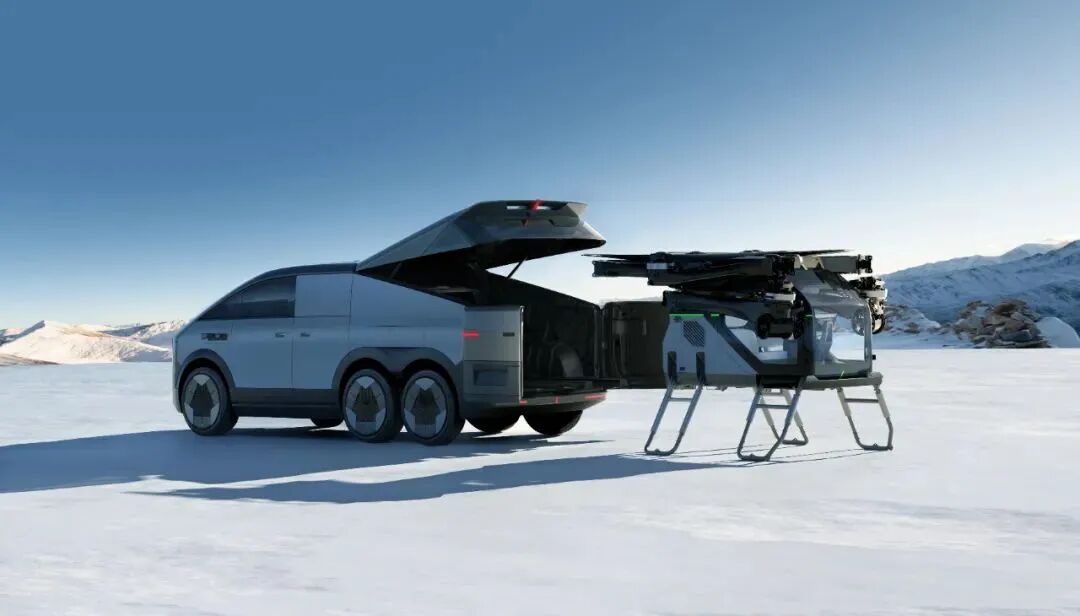
The "Land Aircraft Carrier," the world's first mass-produced modular flying car
Zhao revealed that some government departments, institutions, and enterprises have already been in contact with the company, with certain enterprises and institutions "eagerly" placing advance orders and signing purchase intent agreements. Individual users can begin placing reservations in Q4.
The integrated flying car regarded as Xpeng AeroHT's "ultimate goal" was also unveiled last October and publicly shown at CES this January. Per plan, mass production is targeted for 2028–2030 at the earliest.
But for flying cars to truly enter regular operations, numerous challenges remain. For companies, product safety is the biggest challenge in commercialization, followed by noise reduction, plus cost control. In Zhao's view, without solving these three problems, flying cars will struggle to achieve scaled application.
How to ensure safety? Xpeng AeroHT approaches it from the product design level, incorporating both active and passive safety. "We've built redundancy into power and flight control. Flight control is like the human brain — we have three flight control navigation systems. If one system fails, the second takes over within milliseconds. Power also has backup, ensuring safe forced landing if a rotor stops during flight. The third layer of protection is a whole-aircraft parachute, guaranteeing safe landing even when all systems fail," Zhao said.
Power systems are also one of the key problems flying cars must solve. Compared to conventional electric vehicles, flying cars demand far more from batteries — higher energy density, higher power density, and faster discharge rates. These metrics directly affect flying cars' endurance, payload capacity, and flight performance.
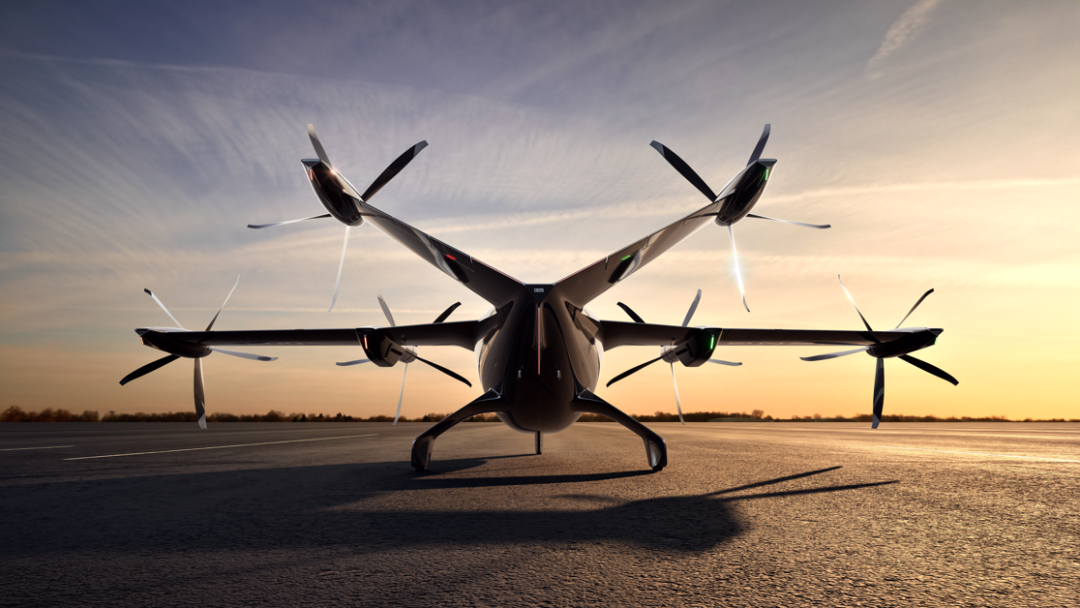
Design rendering of flying car X5 (internal codename)
It is understood that the modular flying car Land Aircraft Carrier weighs two tons, with ground driving range of several hundred kilometers and flight range of several tens of kilometers. The power required for vertical takeoff is 10–15 times that needed for ground driving. This demands extremely powerful propulsion systems. Therefore, Xpeng AeroHT's power team independently designed the ENP powertrain technology architecture, focusing efforts on the energy source, energy network, and drive end.
Additionally, for flying cars to truly take wing, cities need sufficient takeoff and landing points added, allowing users to fly anytime, anywhere. Relevant regulations must also keep pace.
In the future, Zhao hopes everyone can pilot their own flying car, freely shuttling above the city. But before that day arrives, Xpeng AeroHT still has a long road ahead. Zhao plans to work another 40 years, until he's 86. "The direction is now firmly set — just keep learning, stay healthy."

Heart Capital was founded in 2022 as a China-based early-stage venture capital fund focused on technology and digitalization. The team is primarily composed of Yan Han, founding partner of Lightspeed, core investors, a CFO, and senior investors from industry backgrounds. The team's past investments include Series A investments in Xpeng Motors (NYSE: XPEV, 09868.HK), Full Truck Alliance (NYSE: YMM), as well as FinVolution (NYSE: FINV), RoboSense (02498.HK), Baichuan, Manman Lengyun (cold chain logistics), Fan Deng Reading, World Logistics, Micro-nano Star, LandSpace, Lanhu, and Starfield, among others.
Rooted in China with a global perspective, Heart Capital is committed to finding true value in non-consensus. Heart Capital respects the value of "people" and advocates for the potential of "heart," looking forward to accompanying more young Chinese entrepreneurs to strengthen China and reach the world.