Heart Capital's Yan Han: Betting on "China Innovation, Global Market" for the Next 50 Years | VOICE

Global capital is rethinking China.
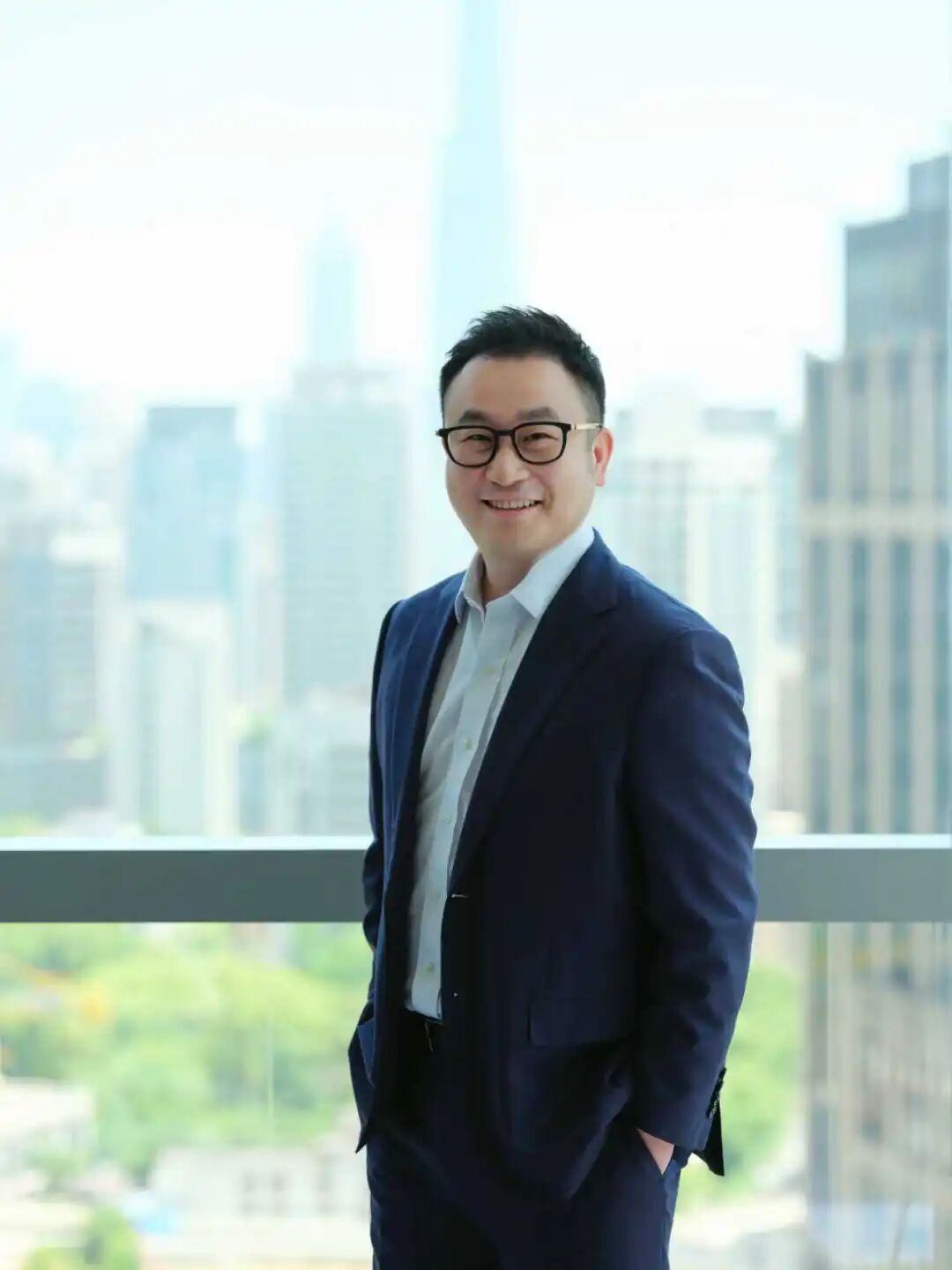
After two decades in what he considers the best era for venture capital, Yan Han believes the global paradigm for innovation and risk investing is undergoing a profound transformation. Over the next 50 years, he argues, the model will evolve into "Chinese innovation, global markets."
In a recent interview with Caijing magazine, Han elaborated on this thesis. What follows is the full transcript:
Germany, early afternoon. Yan Han orders an Uber. The driver proudly introduces his ride — a Geely electric vehicle from China. "Half the price of my last car, more modern interior, better infotainment system. Two years, not a single problem." He adds, "If this thing never breaks down, I'll endorse it for life."
Conversations like this have become familiar to Han over the past year — at venture forums in Saudi Arabia, on streets in London, in cafés across Germany. Each one signals the same underlying shift: Chinese technology and advanced manufacturing are quietly conquering the world.
In 2008, at age 27, Han joined Lightspeed's U.S.-China office. Three years later, he became part of the founding team of Lightspeed China, witnessing firsthand the golden age of Chinese innovation and dollar-denominated funds. But in recent years, the dollar-fund model has faced mounting challenges around exits and geopolitics, forcing veteran investors to search for a new order.
This year alone, Han has traveled to more than a dozen countries. The positive feedback he has received from asset managers and ordinary people in these distant markets has convinced him that a deep paradigm shift is underway: an era of "Chinese innovation, global markets" is emerging, with 2025 as its defining inaugural year.
Three years ago, Han chose to launch a new fund brand, Heart Capital, raising both RMB and "offshore USD" — funds established outside the United States, open to international non-U.S. investors, and designed to circumvent certain political, regulatory, or capital control restrictions. In an environment of profound uncertainty, he has been attempting to chart a new path. The fund has now held its first closes in both RMB and USD, actively deploying unrestricted dual-currency capital to support Chinese hard tech. "I chose the harder but correct path," he says. "Staying in China, rooted in China, participating in a once-in-five-thousand-years wave of innovation and globalization."
Paradigm Shift: The Era of "Chinese Innovation, Global Markets" Has Arrived
Q: How do you view the changes in the VC industry in recent years? Why did you decide to launch Heart Capital at this particular moment?
Han: I lived through the best 20 years this industry has ever seen. In 2011, I helped found Lightspeed China, catching the golden era of Chinese VC. We invested in the Series A rounds of numerous outstanding internet companies — from Tujia, Fangdd, and PPDAI to Full Truck Alliance, Xpeng Motors, and Xpeng AeroHT; from Micro-nano Star, LandSpace, and MetaX to Xi Wang. Before that, China's innovation market developed slowly. But by 2015 and 2016, China's number of unicorns had nearly caught up with the United States — astonishing speed. Yet starting around 2020, the entire industry began to transform dramatically. At the time, no one anticipated how sweeping this change would become.
Two signals gradually emerged. First, over time, China and the United States became the two poles of global VC — simultaneously competitive and collaborative. Innovation ran in parallel across both markets; I felt this acutely at Lightspeed, a globally connected platform with American origins.
The second signal: over the past five years, and especially this year, I have deeply sensed a new trend — the era of "Chinese innovation, global markets" has arrived. At the same time, the VC market is becoming more globalized, no longer confined to U.S. dollars but increasingly reliant on RMB and offshore USD capital. This demands that Chinese-branded VC firms operate independently, resilient against geopolitical shocks.
I believe the global paradigm for innovation and risk investing is undergoing profound transformation. The early VC logic was "U.S. innovation, China market" — venture capital itself was an imported concept, transmitted from America to China. Over the next 50 years, I judge that this model will evolve into "Chinese innovation, global markets." 2025 is the defining inaugural year of this paradigm shift, and may become the greatest "national fortune starting point" our generation will witness.
Based on this, I founded Heart Capital, with RMB and offshore USD as its dual currencies, focused on investment opportunities in "Chinese innovation, global markets."
Q: Why is 2025 the defining inaugural year of this paradigm shift, rather than 2024 or 2026?
Han: This judgment rests on long-term observation of China's development trajectory and global feedback. In five thousand years of civilization, China has never participated in globalization with such depth and speed — particularly in hard technology. In the coming years, we will see more Chinese companies not only leading in their home market but going global, truly becoming internationally influential companies with technological moats. Over the previous 30 years, China produced some such enterprises, but in limited numbers. This year, the acceleration has become unmistakable.
In 2025, Chinese innovation has gained clear, sustained positive feedback on the global stage for the first time. Frontier companies like DeepSeek have achieved breakthroughs with limited resources and earned international recognition, causing the world to reevaluate China's independent technological capabilities and innovation level.
The rise of Chinese manufacturing also follows a clear trajectory. After more than a decade of technological tempering in the iPhone supply chain, Chinese manufacturing completed its leap from traditional to advanced manufacturing, accumulating precision manufacturing capabilities and industrial coordination experience. This has become a crucial technological foundation for emerging hard-tech industries such as electric vehicles, robotics, and aerospace.
Over the past two years, as I traveled globally, I found the world still harbored misunderstandings and underestimations of the Chinese market. By 2025, the situation has completely changed. I have visited nearly ten countries this year, and the consensus I hear is: "China is great, Chinese technology is strong, China is a partner worth working with."
Q: Is this trend visible to global capital? In your recent travels, how do overseas LPs view investment opportunities in China?
Han: In 2022, I attended SuperReturn in Singapore — one of the first times Chinese GPs ventured out to engage international capital after the pandemic. Many LPs were still hesitant, even观望 and bearish on the China market. During that period, capital first favored Southeast Asia, then recognized Southeast Asia's limitations, then circled the globe and realized that beyond the United States, there are actually very few markets capable of supporting early-stage venture capital. If you don't invest in China, there is almost no better alternative.
This year, a European LP told me: "Herry, investing in China requires no discussion — we've already decided. But we are strangers to China. Please help us understand it." An American investor asked: "What sectors in China can I invest in?"
Broadly speaking, the consensus has already formed. It's just that domestically, people haven't yet felt the intensity of this signal.
"Offshore USD" Funds: Capital Understanding China at the Source
Q: In the current global restructuring, how do you view the response of dollar funds? What structural shifts does this reflect?
Han: The concept of "dollar funds" needs to be redefined. Over the past 30 years, foreign-currency funds were essentially synonymous with "U.S. dollar funds," operating under American-dominated global investment rules. But this structure is now changing, which is why we focus more precisely on offshore USD.
For Chinese enterprises, globalization is no longer optional — it is a prerequisite for reaching the next level of development. They face two markets: China and overseas. So they need both RMB and foreign currency. They need the resources and capabilities that the RMB investment market provides, and they urgently need genuine "offshore USD" capital to bring them capital and resource networks that can participate in globalization without geopolitical restrictions. This is the fundamental transformation currently underway in the venture capital paradigm.
However, there is a problem here: over the past 30 years, China's dollar funds were long dominated by American managers. Chinese brands were scarce.
Q: How does this paradigm shift manifest?
Han: Most obviously, capital is beginning to "directly understand China" at its source. In the past, many Middle Eastern and European family offices, despite their substantial assets, participated in the China market indirectly through American funds. Their understanding of China was essentially zero, let alone deep. But now, they are proactively seeking to understand, to engage directly, to personally "taste what Chinese assets are like."
Culturally, too, convergence is happening: young Europeans who have never set foot in China are now traveling there, filming, spreading authentic images of China. This cognition and understanding create fertile soil for capital reallocation.
Q: In this new global capital landscape, how do you view U.S.-China interaction in the investment sphere?
Han: More than three decades ago, venture capital spread from the United States to China, combining with China's vast market and application scenarios to jointly catalyze wave after wave of Chinese innovation cycles — mobile internet, new energy, and others — producing a cohort of outstanding Chinese innovative enterprises. This history has already proven that technological innovation itself knows no borders, and that China and the United States are the two technological superpowers most capable of mutual achievement and shared prosperity.
I believe the two countries should integrate with each other, with more exchange and cooperation at the technological and cultural levels. This is not only a lesson from history but also a practical necessity for sustained global economic innovation and development. Although the current geopolitical landscape involves certain competition, we hope such competition will be healthy and constructive. Under the new capital paradigm, we should actively create bridges for cooperation rather than allow barriers to rise unchecked — this is precisely why we built our "offshore USD" fund: we can serve as neutral capital lubricant, relying not only on capital but on our global resources and partners to help more Chinese technology innovators reach global markets and become a new generation of world-class enterprises.
Q: At this inflection point, which opportunities are you most optimistic about?
Han: I am particularly bullish on the future of Hong Kong, especially over the next decade, for two core reasons. First, Hong Kong has the potential to become "the long-term capital center beyond the United States," gathering "patient capital" from the Middle East, Europe, and Southeast Asia to jointly build a Chinese "Nasdaq" that resonates with global markets.
Second, I believe in Hong Kong's financial innovation capacity. From stablecoins to blockchain to mechanism design, it is one of the few places in Asia that combines institutional flexibility with technological infrastructure. The combination of industrial financing hub and financial innovation high ground will constitute Hong Kong's core competitiveness over the next decade.
Q: If a China-background dollar fund wanted to raise capital in Europe or the Middle East, what advice would you give them?
Han: First, abandon short-term "fundraising mentality" and adopt "long-term relationship" thinking. You are not just selling a project — you are representing China in telling a story. To tell your own story well, the first step is understanding the other party, thinking from their perspective about how to help them better understand our story without misunderstanding. You must carry long-termism in your heart. We are looking for long-term partners, not one-time financing transactions.
Second, actively make yourself seen. Many European LPs have told me they can count the Chinese investors they know on one hand — maybe they don't even need all five fingers. It's not that they lack interest; it's simply that no one is out there speaking, and young people who dare to represent China and tell stories in their own way are far too scarce.
Third, prepare for long-termism. European capital long followed the United States; today it is independently assessing China's new relationship with the world. This process will not be quick, but the direction is clear. Fundraising outside the United States remains difficult, but it is a path that must be taken. Those who see far will move early and seize initiative.
Starting Anew: Spirit and Taste, Original Intention and Patience
Q: Starting over as an entrepreneur, what from your past experience is worth preserving, and what needs to change?
Han: We stand on 20 years of accumulated foundation, moving toward a new cycle. What deserves to be carried forward are two things above all: the VC spirit and investment taste.
What is the VC spirit? It is a contractual spirit of "willing to bet, willing to lose." Entrepreneurs devote themselves fully; investors must equally bear risk and accept failure. This is not gambling — it is the courage to face uncertainty honestly and share outcomes together. The greatness of venture capital lies not merely in picking winning projects but in this "trust—accountability—shared success" mechanism forged through long-term collaboration.
Taste is the element many overlook. Venture capital cannot "invest stupidly." It must ask: Is this worth risking ourselves for? Does it create positive value for society?
Over the past decade-plus, mobile internet improved social efficiency; the electric vehicle supply chain was built from nothing — these were sectors worth backing. But enormous capital also flowed into projects pursuing short-term arbitrage or pseudo-innovation — these were investments that VC should never have supported.
Winds shift, tools change, but value judgment and aesthetic discernment are the core of whether venture capital can exert positive social force. We don't focus on who gets rich quickest; we judge which endeavors deserve support and which people deserve trust.
Q: You were known for being "good at reading people," but in hard-tech investing, technology and trends seem to carry more weight. Do you still adhere to the "people-centric" philosophy?
Han: I actually believe more firmly than ever that "people" are the decisive factor. This is why I named my firm Heart Capital. After nearly 20 years in investing, I have grown increasingly reverent toward the character for "heart" (心), and only now am I truly beginning to appreciate the power of "original intention" (初心) and "patience" (耐心).
The heart is the origin of all causality. In a startup's early days, original intention determines what direction you pursue, how you choose people, how you make decisions. In a company's middle and later stages, original intention determines whether you can bear greater influence, resources, and ambition. If the "heart" deviates, no valuation can prevent eventual self-destruction. Where the heart is, the ending has already been determined.
A friend of mine was involved in building a star company valued at tens of billions; that company later collapsed spectacularly. He shared that despite the outward glamour, from founder to investors, "hearts were disturbed" — unconsciously, goals became "I need to reach such-and-such valuation," "I need to achieve such-and-such industry position." These cannot be goals; they can only be incidental results. When this mindset controls you, whatever stage you reach, you fall into desire, anxiety, and internal depletion, eventually "losing control."
Technology iterates, winds shift, business models may be disrupted — but the source driving all of this has always been people. Heart Capital firmly believes that the more core force driving Chinese hard tech to the world and earning global respect stems from entrepreneurs' purest "original intention."
Founded in 2022, Heart Capital is a China-based early-stage venture capital fund focused on technology and digitalization. The team is led by Yan Han, founding partner of Lightspeed China, alongside core investors, a CFO, and seasoned investors from industry backgrounds. The team's past investments include Series A investments in Xpeng Motors (NYSE: XPEV, 09868.HK), Full Truck Alliance (NYSE: YMM), as well as FinVolution (NYSE: FINV), RoboSense (02498.HK), Baichuan, Manbang Lengyun, Dedao, World Logistics, Micro-nano Star, LandSpace, Lanhu, Starfield, and others. Rooted in China with a global outlook, Heart Capital is committed to finding true value in non-consensus. Heart Capital respects the value of "people" and champions the potential of the "heart," looking forward to accompanying more young Chinese entrepreneurs in strengthening China and going global.