Not text generation, not physics models — the ultimate frontier of AGI is life sciences | Xinxing PORTFOLIO

Baichuan's Chuan Wang: Toward a "Mathematical Principles of the Philosophy of Life"
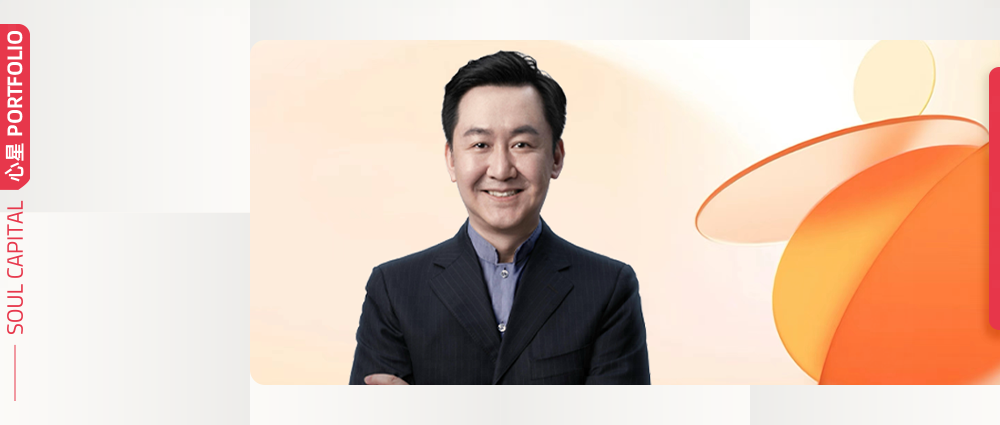
From Sogou to Baichuan, Chuan Wang's second act reveals AI's golden rule: idealism sets the ceiling, pragmatism determines survival.
In a recent interview with LatePost, Baichuan's founder and CEO offered three contrarian insights: How do you maintain technical conviction without being abandoned by the market? What team structure can survive cycles? What cognitive traps do technical founders most easily fall into?
As Baichuan's founder, Wang's transition from Sogou CEO to AI large model entrepreneur demonstrates the balancing act between technical idealism and commercial reality.
The following is from LatePost's early 2025 interview with Chuan Wang:
This article is republished with permission from LatePost (ID: postlate), author: Manqi Cheng.
After dedicating his "prodigy" years to Sogou, Wang found a field that had long captivated him:
"In 2000, my graduate thesis was on genome sequencing assembly algorithms. I wanted to know: what is the mathematical principle of life?"
At Baichuan, founded in 2023, Wang unified his longstanding interest in life sciences with his pursuit of more powerful AI.
This made Baichuan, which was still talking about general models and applications just over a year ago, appear to have "changed" and "slowed": while competitors frequently updated models, Baichuan went nearly 8 months without a major release; while others emphasized generality and generalization, Baichuan pivoted to healthcare; as traffic competition intensified, Baichuan neither joined the API price war nor the user acquisition spending race.
After stepping out of the spotlight, skeptical voices emerged on social media. Yet some investors said: "Baichuan is actually one of the most stable large model unicorns" — with cumulative funding exceeding 5 billion yuan, it hasn't burned through much cash.
On January 25, Baichuan released its new model Baichuan-M1-preview, the company's first full-scenario reasoning model.
That afternoon, we interviewed Wang. He began by sharing how M1 provided diagnostic reference for a critically ill cerebral infarction patient. Over the next two-plus hours, we discussed the origins of his interest in life sciences, his understanding of the relationship between AGI and healthcare, and Baichuan's ongoing healthcare deployments.
Most people see healthcare as a vertical domain. Wang's logic runs differently:
"Healthcare isn't a vertical scenario, because any AI technology has applications in healthcare — it won't be subsumed by today's AI." "Building a doctor is equivalent to AGI. Doctors are among the most complex human professions, and can serve as a benchmark for AGI." "Previously we turned physics into math, now we're turning language into math, and in the future we'll turn life into math." "Language is the axis of intelligence; there's no intelligence in video. Training world models directly on video and images is a detour." "Life isn't entirely computable through physics. The physical world is precise but trends toward entropy increase; life appears imprecise but trends toward entropy decrease."
He previewed Baichuan's 2025 deployment plans:
Baichuan's AI pediatrician will begin working at Beijing Children's Hospital. In Q1 2025, every Haidian district resident will have their own "AI doctor assistant."
As more peers and tech giants battle in the same trenches, Baichuan has chosen a different large model entrepreneurship path. What does Wang see "beyond the big companies' range"? Here are his answers so far.
"Building a Doctor Equals AGI; Healthcare Isn't a Vertical Scenario"
LatePost: The past two months have been especially lively in the large model industry, with companies big and small frantically releasing models. What has Baichuan been busy with?
Wang: Working on our first full-scenario reasoning model, Baichuan-M1-preview, released today (January 25). Tomorrow we'll also release an open-source omnimodal model, Omini-1.5.
LatePost: Before M1, Baichuan hadn't updated a major model version for 8 months. Why did you slow down in such a competitive industry?
Wang: We've been focused on healthcare models and products. And in 2025 you'll see we're not actually slow: in March or April we expect to update a super doctor model; in Q1, our AI doctor will start at Beijing Children's Hospital; we're also collaborating with Haidian District on an AI doctor assistant, with every Haidian resident able to use it as early as Q1.
LatePost: The main change in reasoning models is the use of reinforcement learning. In May 2024, four months before OpenAI released o1, you said Baichuan was moving relatively fast on reinforcement learning. Why wasn't Baichuan among the first Chinese companies to produce a reasoning model?
Wang: Because speed wasn't our goal. We're doing both general capabilities and healthcare enhancement — double the effort. I hope that with each subsequent generation, we can emphasize the healthcare positioning.
LatePost: What can the healthcare-enhanced M1 specifically do now?
Wang: M1's core is complex disease reasoning and diagnosis. Let me share a real case: recently, a cerebral infarction patient at Inner Mongolia People's Hospital was given a critical condition notice. The family refused to accept it and sent the patient to Peking Union Medical College Hospital, while also sharing the case with us. M1 provided three diagnostic directions, completely matching three of the four directions later proposed by Peking Union's expert consultation. M1 has already far surpassed municipal-level hospital standards.
This unlocks new scenarios: M1 doesn't just handle simple ailments like headaches and fevers. After last year's upgrade, it can also diagnose complex diseases.
LatePost: Everyone talks about generality and generalization, yet Baichuan plunged into the specific scenario of healthcare. Why this choice? When did you clearly pivot?
Wang: Actually, from day one of Baichuan, I wanted to build doctors. In 2016, two things happened: AlphaGo defeated Lee Sedol, and the Wei Zexi incident occurred. I did a lot of thinking about healthcare then and reached two conclusions.
First, AlphaGo wasn't enough. When machines truly master language, that's when strong AI arrives. This was later validated.
The other was "whoever gets doctors gets the world." The core bottleneck in medical resources is doctor supply, not information matching — this isn't something internet logic can solve. So building registration platforms, Spring Rain, or Haodf at that time just helped patients find doctors; it couldn't solve supply. AI empowerment is what can potentially increase medical supply, especially at the grassroots level, giving everyone access to doctors.
Then in 2021, after selling Sogou to Tencent, I felt I could enter the arena. In my Sogou farewell letter, I wrote: for the next 20 years, I want to work on life sciences and public health. In 2022, I founded Wuji Healthcare, right in this building — you'll meet them in due course.
Then in 2023, AI exploded and I created Baichuan, because I believed AI would be tremendously useful for healthcare scenarios. We entered with a scenario in mind.
LatePost: If you wanted to build doctors from day one, why didn't you seem to emphasize healthcare much when Baichuan was first founded?
Wang: At that time, everyone was thinking about OpenAI. When communicating with investors and the team, if you emphasized healthcare too much, people might think it's vertical.
Moreover, healthcare's explosion would indeed come after general models unlocked capabilities, so we needed to build general models first. And people will gradually see that healthcare isn't vertical.
LatePost: When did you start clearly telling the team and investors you were focusing on healthcare? What did you say?
Wang: In July 2024 we held a strategy meeting, core to which was explaining healthcare's prospects — that it's not vertical.
First, the most important insight: healthcare is the crown jewel of large models. Any AI technology has applications in healthcare: complex diagnosis requires reasoning capability and reduced hallucination; full-course disease management requires long-context memory, eventually possibly recording a person's lifetime health information; understanding medical imaging, auscultation, etc. requires multimodality; evidence-based practice and paper searching require RAG (Retrieval-Augmented Generation); even future surgical robots — which we may not build ourselves — require embodied intelligence.
There are two different attitudes here: one is the more commonly heard "laying eggs along the way," releasing corresponding applications as capabilities develop. But some scenarios may reach a point where, with sufficient model development, they're no longer just an application.
Our approach is "rising waters lift all boats," because healthcare's ceiling is high enough that it won't be submerged by super models. The higher the model capability, the more super this application becomes. So healthcare is something bigger than large models themselves; it's not vertical.
The second point: building a doctor equals AGI. Some people think AGI can already do everything, so it should surpass doctors, but that's not actually achievable yet.
LatePost: By naive logic, don't you need to become a person first, then become a doctor, lawyer, or other expert? Your formulation seems to be: by becoming a doctor, you become a person?
Wang: What does it mean to become a person? That's too broad. Large models build people, and doctors are among the most complex human professions, so they can serve as a benchmark.
I even explained internally: are there more natural numbers or even numbers? Actually the same amount, because they're bijective — any natural number multiplied by 2 is an even number. When you can build a doctor, you've reached AGI.
LatePost: When you told the team in July, what was the feedback? How much could they understand?
Wang: Maybe 50%. After all, some engineers would wonder: what can I do? As our professional healthcare team gradually joined, people began coordinating, which required a transition process.
LatePost: Why at that particular time? Not long before, in May 2024, you had just released "Baixiaoying," a general chatbot app in the same category as Doubao and Moonshot AI.
Wang: We had to release something, and at that node, putting something out did no harm.
The subsequent strategy meeting was when we realized we should make the team value healthcare more. If we kept emphasizing generality, we'd have to simultaneously build general models, general applications, and healthcare enhancement. We needed the team to understand the company was serious about healthcare.
LatePost: After becoming more明确 about building AI doctors, what actual organizational and team changes occurred at Baichuan?
Wang: Now every team has people related to healthcare. We've also established a Medical Product Department with over 30 doctors, and acquired a company doing medical-engineering integration with over 40 people.
LatePost: How do AI talent and healthcare talent collaborate, divide labor, and integrate?
Wang: First, technical people need to be able to ask medical questions. Second, medically trained people participate in designing model evaluation systems and need to learn concepts around data. They've磨合得 relatively well now.
LatePost: From when you first founded the company and felt you shouldn't emphasize healthcare too much, to summer 2024 when you dared to explicitly propose healthcare — what changed?
Wang: First, we raised money. Second, the team also realized that beyond models, you need good scenarios; otherwise it's a red ocean.
LatePost: What about future funding rounds? Compared to companies continuing to build general-purpose models and applications, will Baichuan, which is building AI doctors, find it easier or harder to raise money?
Chuan Wang: We're now in the industry deployment phase. You can't raise money just by talking about models anymore.
LatePost: Among this wave of Chinese large model startups, who do you think will fall first, and who will survive longer?
Chuan Wang: Companies that still need continuous funding but haven't found their own applications and scenarios will face challenges. After all, there are already companies that don't need much funding and have claimed the "pure technology" positioning.
Also, companies whose applications put them in the same trench as the tech giants will face challenges.
"From Turning Physics into Math, to Turning Language into Math, to Turning Life into Math"
LatePost: What's your view on how quickly a batch of Chinese companies have caught up on reasoning models? MiniMax founder Junjie Yan told us that one reason Chinese companies have moved fast on reasoning models is through distillation. Others have pointed out that distillation can't explain the experiments and training processes described in the technical reports for DeepSeek-R1 and Kimi-K1.5.
Chuan Wang: Distillation is an open secret. I don't particularly reject it. And some companies' reasoning models aren't complete — they appear to benchmark against o1 on the surface, but their actual capabilities still lag. Moving fast is partly due to this.
LatePost: What do you consider "distillation"?
Chuan Wang: Training models requires constructing data. Many companies are now trying to use data generated by other models.
LatePost: When ByteDance released its reasoning model Doubao-1.5-pro a few days ago, it emphasized "taking no shortcuts" and not using any data from other models.
Chuan Wang: Every company has its own attributes and strategy. As a giant, ByteDance probably has higher demands for originality. But they still have to read papers, right?
LatePost: DeepSeek has exploded globally. Does this bring you more excitement or anxiety?
Chuan Wang: I'm quite excited. Two points. First, the US-China tech competition will enter a new phase. DeepSeek's open source will change the industry landscape. China is closer to achieving AGI and an application explosion.
Second, DeepSeek's breakout has let more people experience AI and educated the industry. Baichuan's M1, released around the same time as R1 before the New Year, didn't attract much attention, but its usability in differential diagnosis exceeded R1's. We had been wondering how to get the National Health Commission and doctors to understand that AI's medical reasoning capabilities are already very strong — now this will be easier. Going forward, we just need to verify that Baichuan's medically enhanced general model can provide more authoritative and accurate responses, and AI doctors will deploy faster.
LatePost: Your Baichuan and Baichuan2, released in 2023, were open source. Baichuan 3 and 4 after that were closed-source models. This time with M1, you've open-sourced a 14B version (14 billion parameters). Does returning to open source relate to DeepSeek's recent strong open-source push?
Chuan Wang: This was the original plan. The healthcare industry can't be completed by Baichuan alone. It requires deep collaboration with hospitals. This open-sourced 14B version is medically enhanced — its scores on medical benchmarks actually exceed the 72B version — and it can be deployed with just 4090 cards (a consumer-grade GPU from NVIDIA).
Open source lets medical researchers easily get hands-on with the model and do fine-tuning. It also helps us build transparency and trust with the healthcare industry.
LatePost: You said last year that China's large model industry is "one step slower on ideals, three steps faster on deployment" — meaning that on frontier technology, China would follow America's original innovations for a period, but Chinese companies could potentially deploy applications faster and better. Today it seems like "ideals are only half a step slower." Did this exceed your expectations?
Chuan Wang: I think DeepSeek's approach did exceed everyone's expectations. Maybe it's only half a step behind OpenAI, or very close.
"Three steps faster on deployment" — that hasn't changed. Deployment in healthcare will be an important milestone in 2025. Healthcare will be one of the earlier major scenarios unlocked by AI, not a later one as some people think.
LatePost: What's your view on DeepSeek's early approach of mainly doing open-source models plus providing APIs? They only launched their first to-C application in January 2025.
Chuan Wang: DeepSeek isn't a typical startup. It doesn't have the responsibility and risk of fundraising, so it neither considers where money comes from nor needs to first consider business models. Even the GPUs were already available. This is impossible to replicate for a startup starting from zero.
LatePost: So what's replicable, or the common part that everyone shares?
Chuan Wang: Technical idealism. Today, whether it's good startups, DeepSeek, or giants like ByteDance, everyone is pushing forward on technical idealism.
LatePost: What is Baichuan's technical idealism?
Chuan Wang: Believing in technological breakthroughs, and the connection between life sciences and AI.
LatePost: Is technical idealism the "faith" that everyone in the AI industry likes to talk about?
Chuan Wang: Technical idealism is a subset of faith. Believing in anything is faith. I believe in the scientific method, in discovering more unknowns through experimental verification and other methods. But the previous scientific paradigm is no longer sufficient — I call this the shift from the era of science to the era of intelligence.
The starting point of the intelligence era is large language models. Before this, it was turning physics into math, using math to deconstruct the physical world. Now it's turning language into math — what's being deconstructed is no longer the physical world itself, but rather the human projection of the physical world contained in language. Going further, it's turning life into math. So life sciences won't be covered by today's AI.
LatePost: What is the source of your long-term conviction in life sciences? When you were at Sogou, you invested in quite a few healthcare companies, such as Airdoc, Spring Rain, Boyuweikang, and Xiaolu Traditional Chinese Medicine.
Chuan Wang: In 2000, my graduate thesis was on genome sequencing assembly algorithms. At that time, I wanted to know: what is the mathematical principle of life?
LatePost: I heard you can recite the Yellow Emperor's Inner Canon?
Chuan Wang: No. What I think is: when mathematical physics can't explain life phenomena, it's not that the phenomena are wrong, but that the theory is incomplete. I wanted to seek new theoretical explanations, so I put considerable effort into studying traditional Chinese medicine. TCM is also a philosophy.
LatePost: Your high school classmate, Bilibili CEO Rui Chen, once told us that in high school he was more emotional, loved writing poetry; you were more rational, liked computers. But he feels like it's reversed now.
Chuan Wang: He was my desk mate — we swapped positions. But that's not "emotional" either, it's actually more rational. When science is insufficient, you do philosophical thinking.
From the fertilized egg combining our parents' DNA to becoming a person who even looks like Mom and Dad — this sounds natural, but mathematically it's inconceivable. How is this calculated? The three-body problem is already unsolvable. Weather forecasting also struggles to find patterns.
Yet a cell — something even more "weather-like" than weather — ends up showing patterns. This isn't entirely calculated by physics. The physical world is very precise but moves toward entropy increase. Life appears imprecise but moves toward entropy decrease.
(Note: Entropy increase refers to how the entropy [total disorder] of a closed system increases over time until reaching its maximum at thermodynamic equilibrium. Entropy decrease refers to a system's entropy decreasing under specific conditions — the system moving from disorder to order, with reduced disorder.)
LatePost: Life is indeed quite miraculous. The mainstream view holds that the entire universe is entropy-increasing, yet life was born in the universe.
Chuan Wang: Actually, I don't think the universe moving toward entropy increase holds up. This is derived from physical laws, and the derivation's premise is that the universe is a closed system with no material or energy exchange with the outside. How do you verify this? You can't use the finite to infer the infinite. So I say I'm not being "emotional" — only someone insufficient in physics and math would produce such a result.
LatePost: How did large language models, especially ChatGPT in late 2022, change your thinking about how to do healthcare?
Chuan Wang: It boils down to three sentences. First, the era of strong AI has arrived.
I'm very sensitive to language. At Sogou, both input methods and search involved language. The word associations in input methods — you could consider that as predicting next token (the training objective of large language models). When doing search engines, I also wanted to move from search to Q&A. I was thinking about Q&A systems during my PhD.
So when ChatGPT came out, I immediately knew the game had changed. At a discussion organized by GeekPark, I was a firm member of the "AGI has arrived" camp.
The second sentence is what I proposed in 2024: from the era of science to the era of intelligence. From using math to deconstruct the physical world, to using math to deconstruct humans and life. Not long after I said this, Hinton and Hassabis won Nobel Prizes in Physics and Chemistry. AI is overturning the scientific paradigm.
(Note: Geoffrey Hinton is a Turing Award winner and one of the founding figures of deep learning. Demis Hassabis led the team at DeepMind that developed AlphaFold for predicting protein structures.)
The third sentence is still "whoever gets doctors gets the world." On the internet, it's whoever gets users gets the world. But after doing healthcare, we realized that's wrong — without doctors, where do users come from? Doctors are also the distribution channel for devices and pharmaceuticals. They have prescribing authority; they're the hub of the entire industry. In the past 20 years, the entire VC industry invested 100 billion RMB without making internet healthcare work. The core reason is they could only do periphery around doctors: helping doctors write papers, helping hospitals with informatization... These models don't work.
So rather than finding doctors, create doctors. This is also a massive blue ocean — everyone needs a doctor friend.
"China has 8.4 billion annual patient visits.
Of course there's a super app here"
LatePost: You've always said that the path to AGI requires dual-wheel drive of super model plus super app — doing both ultra-large-scale models and applications simultaneously. Going forward, if Baichuan wants to continue doing super models in healthcare, will the cost be lower or higher than doing general-purpose models?
Chuan Wang: I think it will be higher, because we need more medical data. The further barrier is continuous data observation, achieving "admission equals enrollment" or even "birth equals enrollment" — complete recording of every medical intervention throughout the disease course and even the entire life process. This generates massive data, which then becomes the foundation for AI for Science, pushing life science forward. Previously, much clinical data was discarded after use.
LatePost: Previously, Kai-Fu Lee told us that only the tech giants can afford to burn money on super large models.
Chuan Wang: Medical large models being expensive has high value. It concerns life and health; you can't calculate it by token.
LatePost: Beyond training your own models, can some of today's open-source models help you with healthcare?
Chuan Wang: It's half and half. For example, we built a cough model — it can determine upper respiratory tract infection versus lower respiratory tract infection by listening to cough sounds — there's nothing like this on the market, so we have to build it ourselves. At the same time, we also need to master the full capabilities of pre-training, post-training, reinforcement learning, and RAG.
LatePost: When it comes to super apps, you previously defined them as "having at least 30 million to 100 million DAU." Can a healthcare scenario really produce something that massive?
Chuan Wang: China sees 8.4 billion patient visits per year. Baidu gets over 50 million users making 400 million-plus health-related search queries daily. If we can do long-term chronic disease and health management, this absolutely becomes a super app.
LatePost: What form might a healthcare super app take?
Chuan Wang: On the consumer side, it'll most likely be a doctor friend. We won't fear it — we'll communicate with it as an equal, and it'll know your health history. When you need to see a human doctor, it can still offer plenty of consultation. On the enterprise side, it's currently an assistant to doctors, helping with diagnosis and full-cycle disease management.
LatePost: Some believe that when models become strong enough, they'll "swallow everything." Xiang Li recently said: "At the consumer level, companies like OpenAI that control the strongest foundation models won't leave any applications for startups. Because software is essentially about features, which need to be contextualized and verticalized — whereas AI is essentially about capability, and strong capability can swallow everything, which is also most convenient for users." What do you think of this view?
Chuan Wang: First, healthcare requires a lot of specialized data that simply doesn't exist in general-purpose models. Albert Einstein, brilliant as he was, couldn't treat your illness.
Moreover, healthcare and life sciences are what define the next era. As we advance toward life sciences, new AI technologies and paradigms will emerge along the way.
LatePost: How does Baichuan obtain sufficiently rich, high-quality medical data?
Chuan Wang: First through hospital partnerships. There are also medical journals and databases with substantial amounts of publicly available, high-quality data.
LatePost: For institutions you're already working with, like Beijing Children's Hospital, can they actually share their data with you?
Chuan Wang: We jointly established a Beijing municipal key laboratory. Data gets shared into that lab.
LatePost: How much synergy exists between medical models and medical applications? Is there a data flywheel where more users and hospitals served means more data, which then feeds back into stronger models?
Chuan Wang: The most critical data still comes from top-tier hospitals — quality matters more than quantity. To what extent a data flywheel actually forms, we'll need more practice before we can answer that well.
LatePost: If the prospects for AI doctors get validated by the major tech companies, and they decide to enter too — you've said multiple times that "foundation model startups need to get outside big tech's range." Is healthcare really outside that range?
Chuan Wang: At least for now, Baidu and Tencent are still reducing their healthcare investments. This isn't their top priority.
LatePost: Ant Group acquired Haodf.com not long ago, and they said they'll jointly focus on healthcare AI services.
Chuan Wang: I see that partnership as more strategically driven. Its thrust and innovation point are in the payment环节 and business model design, not in AI breakthroughs or changing doctor supply.
"The future is Hospital at Home,
starting with creating pediatricians"
LatePost: I heard that in your two-plus years building Baichuan, you've met more government leaders than ever before.
Chuan Wang: More in number, and higher in rank too.
Back when we did search, getting access to relevant department leaders was extremely difficult. Now governments and hospitals are quite willing to engage with us. The complexity is that B2B and B2G require layer-by-layer communication. The higher-ranking the leader, the deeper their understanding and the stronger their support; at the grassroots level, there's more KPI pressure, and we need to redesign evaluation pathways to help drive implementation. Not everyone welcomes change immediately, but the overall trend is positive.
LatePost: Last August you announced your first major medical partnership with Beijing Children's Hospital. Was this also because you first connected with their leadership?
Chuan Wang: The president of Beijing Children's Hospital has real vision. Some institutions might resist the idea of "creating doctors," while he proposed creating 1 million pediatricians.
Second, China genuinely lacks pediatricians. The previous pattern of rushing to hospitals every so often creates medical crowding, cross-infection, parental accompaniment burdens, and if uncontrolled, can become epidemic.
The future will be Hospital at Home — managing many diseases at home, even full-lifecycle chronic disease management, with early prevention and early diagnosis. This also aligns with national policy: delivering medical resources to the grassroots.
Third, children's parents tend to be younger and more open to new technologies. So pediatrics will become the fastest-to-commercialize segment of AI healthcare.
LatePost: Beyond hospitals, you recently announced strategic partnerships with government bodies like Beijing's Haidian District Health Commission and Ningbo High-Tech Zone. How do partnerships at this level get finalized?
Chuan Wang: Government demand is strongest in two areas: pediatrics, and general practice for grassroots delivery.
Shenzhen is one of our key focus areas. In the last round of healthcare reform, the medical consortium reform [starting 2013, China's push for tiered diagnosis and treatment and strengthening grassroots medical resources] — Shenzhen was among the earliest pilots. In Shenzhen's Bao'an District, I've met everyone from the district party secretary to the district mayor to the health bureau leadership.
Haidian District will also be an important pilot. We'll integrate with Haidian's entire medical system and case record system. In Q1 2025, every Haidian resident will get an AI doctor assistant.
LatePost: When these strategic partnerships with hospitals and governments translate into concrete products, what do they look like?
Chuan Wang: I can talk about what's already happening. With Beijing Children's Hospital, we'll launch "one big, four small." The "one big" refers to the super doctor model planned for release around March-April this year. The "four small" are four different scenarios: home, community, municipal-level people's hospitals, and children's hospitals. The super doctor model plays two roles across these scenarios: a doctor friend at home, and a doctor assistant in hospitals.
LatePost: How do you charge? From residents or from government?
Chuan Wang: Overall, there are three directions for payment models or business models: First, G-side (government), which already has grassroots public health budgets supporting family doctor programs and public hospital reform. Second, H-side (hospitals), which eventually flows into medical insurance. For example, at the end of last year, AI-assisted diagnosis was included for the first time in the service item catalog by the National Healthcare Security Administration — and notably, it's not counted as medical device fees, but as doctor service fees. Third is consumer-direct, potentially moving from individual payment toward multi-tiered commercial insurance. Additionally, there's a major opportunity going forward: going global.
LatePost: I was going to bring that up, since you've previously said B2B isn't a good business in China but is in Europe and America. But healthcare globalization may involve citizen data and privacy issues. How do you address that?
Chuan Wang: We're exploring this and hope to have results this year. We still need to look at the value of this technological breakthrough from a global perspective.
LatePost: Returning to doing B2B and B2G in China — one difficulty is that delivery can easily become very heavy, even turning into outsourcing. How does Baichuan avoid this?
Chuan Wang: Previously it was because you could only work around the periphery of doctors, so it easily became outsourcing. But if you're creating doctors, the core value still lies in the super doctor model. It may need to be heavier at first, but after the first few customers are up and running, some non-core model deployment work can be handed to ISVs [independent software vendors].
LatePost: When you actually go talk to clients now, do you need to go through bidding processes? What competitors do you encounter? What's Baichuan's win rate?
Chuan Wang: These projects definitely require bidding, and we do encounter other AI companies — though nowadays every company claims to be an AI company. But once we clearly explain our vision and capabilities, almost without exception, it's Baichuan [that gets chosen].
LatePost: To summarize, what major deployment progress in AI doctors will we see in 2025?
Chuan Wang: First, pediatrics — AI doctors will significantly reduce parental anxiety and medical resource crowding, with many issues resolvable outside hospitals. Second, in more scenarios and regions, we'll partner with leading health commissions to advance family doctor programs, with AI playing an important role in grassroots healthcare. Third, for some major difficult diseases, AI diagnosis may even surpass human capabilities.
"Like a ship — you lose some things, you gain others"
LatePost: In 2023 you had a strong conviction that language is the central axis of intelligence. This time Baichuan-M1-preview also has multimodal capabilities like visual understanding. How do you define the different roles of language and multimodality in advancing intelligence?
Chuan Wang: Multimodality is more about enhancing interactive capability — like communication between doctors and patients. That doesn't equal intelligence. Multimodality isn't technically opening a new track.
LatePost: OpenAI's o1 opened up the reasoning model direction. What was its main inspiration for you?
Chuan Wang: The shift from fast thinking to slow thinking. Slow thinking still uses language for reasoning, which further validates the powerful role of language in advancing intelligence.
LatePost: You've said "there's no intelligence in video," but Yann LeCun [Turing Award winner, head of Meta FAIR] has noted: humans constantly receive massive amounts of information through vision and other senses, which gets compressed and processed to form complex models of the world. A four-year-old child receives as much visual data in four years as the largest LLMs have been trained on from internet text. Training through text alone cannot enable understanding of the physical world or complex reasoning and planning like humans or animals. What do you think of this view?
Chuan Wang: I've seen his argument, but actually humans didn't really understand [the physical world] for most of history.
LatePost: But humans can naturally predict physical phenomena like motion trajectories — it became survival instinct.
Chuan Wang: That's a survival issue. We're discussing intelligence.
I think perhaps new models can obtain training data from video, but I still believe language is the central axis of intelligence. I previously discussed this in a small group with some American peers, and some said language is a "crutch" — that future AI training won't need language, and can go directly to images or video. I think that's off track.
Language is at least scaffolding. Human intelligence and abstract thinking are constrained by language patterns; the boundaries of language approximate the boundaries of human cognitive understanding of the world.
LatePost: When you discuss this with companies that emphasize multimodality more — like MiniMax, StepFun, or video-generation specialists like Pika, Runway — and you say there's no intelligence in video, how do they react?
Chuan Wang: Two types. One is: why even ask this question? My video work is going fine.
The second type genuinely believes multimodality helps advance intelligence. Zhang Peng [CEO of Zhipu AI] has a formulation that separates intellect from intelligence — intellect is language, intelligence is language plus multimodality. Actually intellect and intelligence are both Intelligence.
LatePost: What do you see as the next technological trend on the central axis of intelligence, language?
Chuan Wang: Beyond reinforcement learning, there are two important steps: First, AI using tools. Anthropic's ComputerUse, and OpenAI's recently released Operator, both qualify as tool invocation.
Then comes creating tools. Writing code to build tools is a powerful paradigm. It used to be engineers writing code; going forward, AI will write the code and run it itself — AI will build its own tools and use them.
LatePost: What technological shifts would this require?
Chuan Wang: The core is still capability improvement. Using tools requires interacting with the external environment. Creating tools is more forward-looking — it could become a paradigm shift after reinforcement learning. Marx said what separates humans from animals is, one, language, and two, tools.
LatePost: What help would self-tool-use and self-tool-creation bring to an AI doctor?
Chuan Wang: It would let the AI doctor connect better with the real world — operating your computer, helping with statistical data analysis, and eventually even surgical robots.
LatePost: How far are we from a real AI doctor?
Chuan Wang: AI doctors and AGI are the same thing. Didn't Sam Altman say AGI would arrive by 2027?
LatePost: That's his timeline. What's yours?
Chuan Wang: AI doctors helping diagnose difficult and complex cases, classifying rare diseases — that happens in 2025.
Robot doctors that enter the physical world, we haven't touched that yet. But long-term, surgery is also just a phase. Eventually when humans become machines, you won't need surgery anymore.
LatePost: You mean full cyborgization? That's Ghost in the Shell.
Chuan Wang: In my first letter when I started this company, I said — AGI helps continue and prosper human civilization.
LatePost: Is this human civilization?
Chuan Wang: Why not? It's not about continuing human bodies, it's about continuing human civilization. Civilization is a way of understanding the world — "who am I, where am I going."
LatePost: When we lose our bodies, does some sensory-level civilization still exist? Can machines be moved by the beauty of music and the emotions within it?
Chuan Wang: Like a ship — you lose some things, you gain others.
I think 99.99% of people are underestimating how much this era will change. When I first started Baichuan, a lot of people called AI "the fourth industrial revolution." I strongly opposed that analogy.
The Industrial Revolution was about increasingly fine social division of labor. AI will compress that division — many jobs may simply disappear. The future relationship between humans and machines, how children learn after birth, what values we advocate — all of this needs to be redefined.
"AGI will push biological freedom"
LatePost: What's the biggest difference between your internal startup at Sogou and building Baichuan from zero?
Chuan Wang: Very different. Last time I was developing inside a parent company; this time I'm fully independent, defining what the company becomes myself.
Last time started from a small technical team, recruiting a bunch of Tsinghua training camp members to do search — the goal was relatively simple. This time it's rapidly expanding to several hundred people, with more comprehensive and complex goals.
The era and timing are different too. Last time was doing search behind Baidu's back, exhausting. This time is riding the wave, doing future-facing work.
LatePost: What's the biggest change in yourself?
Chuan Wang: Last time I mostly believed technology alone could change everything. This time my perspective is more complete — I have more judgment on technology trends, industry direction, and capital.
LatePost: Is this startup harder? You were once removed as Sogou CEO for insisting on building a browser, returned to the role 18 months later, and called that your "darkest moment."
Chuan Wang: Startups are always hard. The difficulties differ. Before it was mainly about convincing the boss; this time it's about getting the team, investors, and external partners to believe.
LatePost: What would give you a sense of achievement at Baichuan?
Chuan Wang: First, actually building the doctor, giving everyone access to good doctors, solving the impossible triangle of medical resources. Beyond that, having the chance to open up new paradigms for medical research, driving medical progress through sufficient clinical data. If we can do these two things, it would be historically significant.
LatePost: You've sold a company before. Does that make you more accepting of acquisition, or more convinced it shouldn't be an option?
Chuan Wang: The key is getting things done. Baichuan's core goal is building the "AI doctor," not proving myself.
LatePost: Did you used to want to prove yourself more? During that period when you weren't Sogou CEO, including Charles Zhang, many people thought you'd leave, but you didn't.
Chuan Wang: When you're young, you care more about being awesome, about your own assessment of your abilities. I didn't think about leaving then — I believed I should use the browser to make search work, to prove this was right.
One thing is the same this time: letting what should happen, happen. Baichuan will have its place in the process of building AI doctors.
LatePost: What new understanding do you have about building an organization, after more than two years at Baichuan?
Chuan Wang: Need more young people. In 2023, because we needed to move fast, the first goal was just to build the team. Going forward the technical team needs to be younger, absorbing more PhD students and fresh PhDs. Medical talent needs more experience.
LatePost: How do you attract excellent young people?
Chuan Wang: First, continuously challenging tasks — avoid things becoming routine as the team grows. Second, cultural fit, so it's easier to attract people with similar goals and styles.
LatePost: Attracted any impressive people recently?
Chuan Wang: We started systematically bringing in medical-background people after July 2024, and it's progressed quickly. Our medical director just started. He did eight years of joint training at Tsinghua and Peking Union Medical College, six years of clinical experience at Peking Union, then went to Johns Hopkins for further study. Complete medical training plus engineering thinking. He now believes training AI doctors has more future than training human doctors.
LatePost: I've met people who interviewed at Baichuan but didn't join. One feedback was that there are too many Sogou people.
Chuan Wang: What counts as too many? There aren't more Sogou people at Baichuan than Tsinghua people at some companies.
LatePost: You previously said AI application value lies in creation, health, and happiness. If you evaluate your own 2024 across these three dimensions — what did you create? And health, happiness?
Chuan Wang: After a year of R&D, we have initial signs of positioning and products in healthcare. Our pediatric doctor is about to go live.
At the company level we're healthier too — the team is more results-oriented. Having only technical ideals without ideas about industry isn't enough.
LatePost: Has entrepreneurship improved your own health and happiness?
Chuan Wang: No. Health has clearly not improved — too busy.
As for happiness, I still see meaning in this work. It's not happiness, but it repairs my understanding of "who I am" — which was insufficient last time.
LatePost: What more understanding do you have of "who I am"?
Chuan Wang: Around 2023, there was a false alarm in physics about discovering room-temperature superconducting materials. I was completely stunned — you can't imagine how the world would change if room-temperature superconductivity actually happened. Like a marionette, you're very passive in this kind of change. That helped me understand how most people feel seeing AI arrive.
So I feel incredibly fortunate that the AI transformation is directly relevant to me. I can see how this future will come, and I can participate in creating it.
LatePost: If AI doctors are actually realized, what does the future look like?
Chuan Wang: I quite like a term Dario [Amodei, Anthropic founder] proposed: "biological freedom."
LatePost: You mean longevity?
Chuan Wang: I mean humans no longer being troubled by disease.
LatePost: Do you want longevity?
Chuan Wang: No. First, living too long is harmful to the world. For oneself, continuing to live long after completing your mission — that just becomes garbage time.
LatePost: Can AI doctors also spare us from mental and psychological suffering?
Chuan Wang: Neurological issues will be easier; psychiatric issues harder. For depression, we're making some efforts, like combining with devices for symptom recognition.
LatePost: Among founders with science and engineering backgrounds, you give more attention to philosophy and humanities. Does thinking more about these things make you more pessimistic?
Chuan Wang: Not at all. "Hear the Way in the morning, die content in the evening." Understanding things, making sense of them — how happy is that.
LatePost: In 2025, what are you most looking forward to seeing happen? One AI-related, one not.
Chuan Wang: AI-related: seeing how many scenarios can actually use AI doctors — that's what interests me most.
Not AI-related: watching what new moves Donald Trump makes — endless entertainment every morning.

Heart Capital was founded in 2022 as an early-stage Chinese venture capital fund focused on technology and digitalization. The team is led by Yan Han, founding partner of Lightspeed China, together with core investors, a CFO, and senior investors from industry. Past investments include Series A investments in Xpeng Motors (NYSE: XPEV, 09868.HK), Full Truck Alliance (NYSE: YMM), as well as FinVolution (NYSE: FINV), RoboSense (02498.HK), Baichuan, Manman Lengyun, Fan Deng Reading, World Logistics, Micro-Nano Starry Sky, LandSpace, Lanhu, Starfield, and others. Rooted in China with a global outlook, Heart Capital seeks true value in non-consensus. Respecting the value of "people" and advocating the potential of "heart," it looks forward to accompanying more young Chinese entrepreneurs to strengthen China and go global.