Heart Capital's Yan Han: Stop Obsessing Over Technical Metrics — AI's Real Opportunities Hide in Niche Scenarios | Voice

On Entry Points, Traps, and Real Opportunities in AI Entrepreneurship
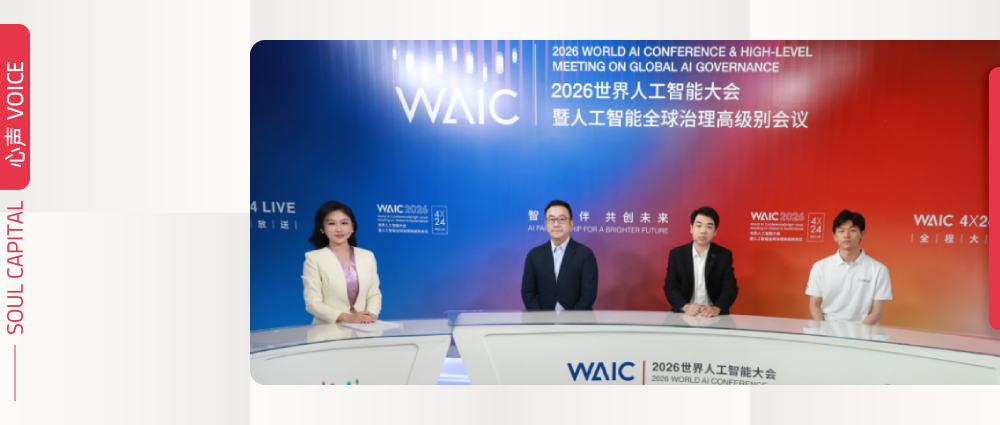
On July 20, during WAIC 2026, Yan Han, Founding Partner of Heart Capital, was invited to join Yicai's special live broadcast, 4×24 Full Coverage, where he participated in the "Startup Sharp Talk: How Frontier Technology Goes Commercial" segment. He engaged in conversation with two young entrepreneurs and shared his observations and judgments on topics including genuine versus fake opportunities in AI entrepreneurship, the global competitiveness of Chinese tech founders, common pitfalls for technical teams going commercial, and the most promising AI tracks for the future.
Han believes the distinction between real and fake opportunities comes down to two core factors — "whether the entry point is small enough" and "whether it comes from the heart." Those who start companies for the sake of starting companies tend to choose broad entry points and want to do everything; those who truly see non-consensus opportunities dig into a specific, niche scenario. In the AI era, the question entrepreneurs should ask isn't "What can AI do?" but "What can only AI do?" He emphasizes that technical metrics alone don't equal product, and floating above scenarios without closing the loop won't work — real moats hide in niche scenarios others are unwilling to touch, requiring you to roll up your sleeves and dig in. If value can't accumulate, it's a fake opportunity.
On the global competitiveness of Chinese entrepreneurs, Han notes that Chinese scientists convert theory to practice faster than anyone in the world, and solid supply chains enable the fastest iteration speed globally. Using Xpeng Motors as an example — from starting car manufacturing from scratch to entering embodied intelligence and flying cars, all within ten years — this could only happen in China. But he also candidly states that China doesn't lack companies going overseas; what it lacks are truly world-class companies — from selling products abroad to building world-class teams and governance structures, there's still a journey ahead.
For directions most likely to birth great companies in the next three years, Han is bullish on the convergence of embodied intelligence and the physical world — a brand new scenario where China has the opportunity to possess the world's richest data and the unique endowment of rapid software-hardware collaborative iteration.
Below is the full interview transcript:
Xin Zi, Yicai: As an investor, you've backed many unicorns and built a global career. Could you tell young entrepreneurs how to distinguish real opportunities from fake ones? When should they go all in?
Yan Han: That's a big question. Listening to the two young entrepreneurs just now, I felt strong resonance. First, both demonstrated a very precise characteristic of starting small — they each saw opportunities and cut in from small, niche scenarios they personally experienced; their entry points were very small. Additionally, I deeply felt they were driven from the heart to do this, not starting a company just for the sake of it. These two points are core to how we evaluate whether a founder's venture is solid — whether it comes from the heart, whether it's entrepreneurship for entrepreneurship's sake, or whether they saw a real opportunity to break through.
Xin Zi, Yicai: How do you distinguish real entrepreneurship from fake entrepreneurship?
Yan Han: Look at whether the entry point is small or large. Entrepreneurship for entrepreneurship's sake has a very large entry point, wanting to do everything — often unreliable. Real entrepreneurship means seeing a non-consensus, niche opportunity that others don't see and cutting in there; that opportunity becomes very large. I have one simple standard for judging real versus fake opportunities: does the work you're doing today make you cheaper and stronger tomorrow? If value doesn't accumulate, it's a fake opportunity.
Let me give an example. Many in the industry say AI needs to integrate with scenarios, but many do scenarios for scenarios' sake — they enter a scenario, can't grasp the pain point, can't close the loop, and data can't become a flywheel. AI floating above scenarios, model capabilities can't keep getting stronger, the core can't accumulate, it gets harder and harder, and has nothing to do with the future. If your original intention isn't right, if the entry point doesn't truly come from experience, you can't close the loop, can't make today's work accumulable for tomorrow. There are several typical forms of such fake opportunities: one is wrapper products — a large model upgrade and you're zeroed out; another is betting on a capability gap in large models and building a middleware tool to fill it, then the next model version fills it itself; another is so-called AI + industry without a data closed loop, doing one deal and it's done.
Xin Zi, Yicai: Floating on the surface, unable to land.
Yan Han: Exactly.
Xin Zi, Yicai: Now more and more young teams are aiming for globalization from day one of their entrepreneurial journey. You started from a USD fund, now founded your own RMB fund, and have seen many entrepreneurs at home and abroad. What do you think is the core competitiveness of Chinese tech entrepreneurs?
Yan Han: Chinese entrepreneurs now stand on the highest peak in the world. Looking closely, we have several major advantages.
First, our entrepreneurs and scientists have the world's fastest conversion speed from theory to practice. In any niche field, from world-class paper publication to practical application, China's conversion speed is the fastest.
Second, China has solid world-class supply chains, bringing the world's fastest iteration speed. For example, we were among Xpeng's earliest investors ten years ago — a founder who had never built a car, from learning to build cars, to embodied intelligence, to flying cars, everything started from scratch within ten years, including computing chips also from scratch. This requires very strong supply chain support and very fast iteration speed. Cases like Xpeng are numerous in China — I think this perhaps could only happen in China.
Third, China lacks long-term capital. When fund cycles are short, founders are easily pushed toward short-term actions, while real hard tech needs someone to walk with them for ten years.
Additionally, Chinese entrepreneurs have a very special trait — they never stop. Lei Jun did Kingsoft before Xiaomi. He Xiaopeng had never built cars before building cars, originally doing UCWeb. In today's AI era, countless entrepreneurs never stop, always striving. This shows me something very different about Chinese entrepreneurs compared to the world — diligence, innovation without cease.
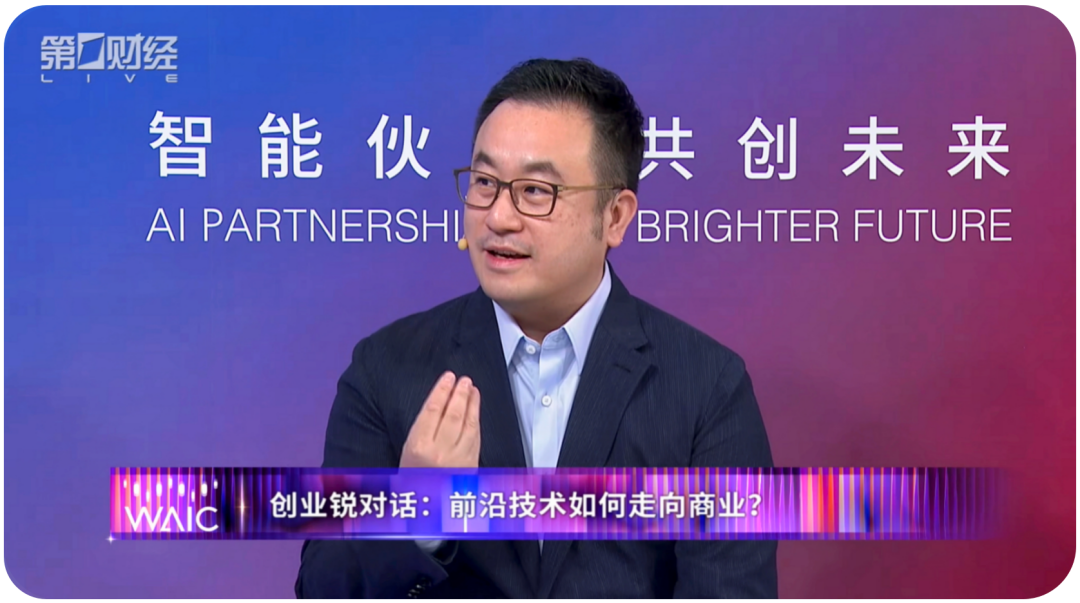
Xin Zi, Yicai: You've mentioned so many strengths of Chinese entrepreneurs. Where do we still have room to grow? What gaps need filling?
Yan Han: Good question. We've witnessed many companies grow from zero to world-class. But after becoming world-class, there are still several areas to optimize.
First, China doesn't lack companies going overseas; what it lacks are world-class companies. Over the past ten, twenty years, many Chinese leaders in niche segments have already become number one, with products and services sold abroad. But in the next ten, twenty years, these companies need to learn how to become world-class companies, how to build world-class teams, world-class boards. From selling abroad to becoming a world company, there's still space to travel.
Second, Chinese scientists, tech people, and entrepreneurs climbing the mountain of technology are already world-class. But human inspiration doesn't necessarily come only from effort — it also needs the brilliance of human nature and connection with nature, even half a day of emptiness to gain inspiration and leap to higher peaks. I've traveled the world and spoken with many scientists. China's top scientists are at world level, even higher. So can we slow down a bit, let the brain and heart together seek this inspiration, to break through to higher peaks? This is also a greater opportunity worth exploring.
Xin Zi, Yicai: So whether entrepreneurs or investors, we must achieve unity of knowledge and action, go out more, join hands to build ecosystems, integrate into overseas cultures — perhaps we can get closer to world-class companies. You've seen so many entrepreneurs, most of whom are strongly technical. What do you think are the easiest pitfalls for them during commercialization?
Yan Han: A founder needs to understand technology, but only understanding technology is very dangerous. I've met technical founders who mistakenly equate technology with product, drawing an equals sign between tech and product. Technical metrics themselves serve scenario solutions — ultimately what you need to communicate with customers is what scenario problem your technology solved. This is a pitfall I've seen many technical entrepreneurs fall into.
Another pitfall is unwillingness to roll up your pant legs, roll up your sleeves and do the dirty work. The biggest opportunities in the AI era lie in niche segments; model capabilities are there, but what's most needed is doing the hard but right things, with small entry points, using model capabilities to dig in, not floating on the surface. Floating on the surface, your capabilities are easily covered by model iterations. What's needed here is digging into niche segments, rolling up sleeves and doing dirty work. The question to ask in the AI era isn't "What can AI do?" but "What can only AI do" — when I do it together with AI, the cost for the next person to do it is extremely high, insurmountable — that's what you must do. So when we meet very strong technical teams, we tell them: you absolutely cannot stop at technology and metrics, you must dig in.
Xin Zi, Yicai: There are still opportunities in niche AI segments. Many young entrepreneurs are basically working on niches now. Having seen so many projects, have you ever had FOMO?
Yan Han: Absolutely FOMO. Especially recently, with AI developing so fast worldwide, AI applications developing so fast, I often encounter entrepreneurs telling us: "We need to decide this week, if you don't decide you'll miss something huge."
But later I slowly told myself: the pearls at the world's highest peak are very few. If something requires透支 several years of operation to give the valuation now, I tell myself to calm down. Having worked over twenty years, from PC to mobile internet, the valuable pearls that ultimately remained were just those few. So in AI you can be blind, you can FOMO, but ultimately whether in entrepreneurship or investment, you must tell yourself to follow your own heart, invest in that true standing, permanent value. So I set a reverse standard for myself: if this project disappears if I don't invest within a week, it probably isn't worth investing in.
Xin Zi, Yicai: Then looking at early-stage AI projects now, what core elements do you value most?
Yan Han: I value two things most. First, the person. People are still the most important. They're not starting a company for the sake of it, but have true original intention. Many people say they believe in AI, but most treat AI as a tool. Truly believing in AI means having original AI thinking, treating AI as the ecosystem, as the air of this era, not merely a tool — only this mindset can truly immerse you in AI.
Second, the thing itself. The thing can't be a story that sounds beautiful and macro, but must truly land in a scenario to solve real problems, and only you can do it. Once effort is spent, this moat is insurmountable. Right person plus right thing, plus a bit of luck and ecosystem support, equals a great company. If I had to rank them, I value: founder's visceral feel for the scenario, greater than exclusivity of data and scenario, greater than how much technical lead. Technical lead is actually the easiest of these three to catch up to.
Xin Zi, Yicai: And investors, patient capital's long-term companionship. Finally, in this era of AI racing ahead, which tracks do you think can birth great companies in the next three years?
Yan Han: Large models are the engine of this wave of AI, but great companies are often not the ones building engines — they're the first person to install the engine in the right car. So after AI large models, the combination with various fields will generate enormous opportunities, and this is China's huge opportunity. If I had to pick one, I'm very bullish on embodied intelligence and the opening of this huge opportunity with the physical world. First, this is a brand new scenario and opportunity; second, China has the opportunity to possess the world's richest data in this opportunity; third, it requires rapid software-hardware collaborative iteration, and China's supply chain endowment is unique in this regard. These three combined, the opportunity is enormous.
Founded in 2022, Heart Capital is a venture capital fund focused on investing in early-stage Chinese technology startups.
Heart Capital's team consists mainly of founding partners and core investors from Lightspeed China Partners, as well as senior investors from industry. The team's past investments include MetaX (688802.SH), Xpeng Motors (NYSE: XPEV, 09868.HK), Full Truck Alliance (NYSE: YMM), 06810.HK (06810.HK), RoboSense (02948.HK), Ambiq Micro (NYSE: AMBQ), Hanshow Technology Co., Ltd. (301275.SZ), FinVolution (NYSE: FINV), HERE (NASDAQ: HERE), as well as LandSpace, MicroNano Space, Baichuan AI, Yunmanman Cold Chain Logistics, World Logistics, FanDeng Reading, and Lanhu.
Rooted in China with a global outlook, Heart Capital is committed to early-stage companionship and support for entrepreneurial teams with the potential to become future world-class companies in China's technology sector. Heart Capital advocates the value of "heart," believing technology can become a bridge linking hearts. Heart Capital looks forward to accompanying more young Chinese entrepreneurs onto the world stage.