Heart Capital's Yan Han: AI Goes Beyond Frontier Models, the Future Belongs to the Real World | VOICE

When AI becomes infrastructure, who will create the next wave of value?

The 13th Milken Institute Asia Summit was recently held in Singapore, bringing together global business leaders, investors, policymakers, and industry experts to discuss the future of the global economy, technological innovation, and capital markets.
Yan Han, founding partner of Heart Capital, was invited to a closed-door session at the summit — the AI Investors' Forum — to participate in a panel titled "Beyond Frontier Models: China's Path to Scale and Real-World Value." The discussion was moderated by Ilaria Chan, founding chair of the Tech for Good Institute, and joined by Jui Chan, managing partner of BlueRun Ventures; Allen Zhu, managing partner of GSR Ventures; and Maryann Tseng, chief strategy officer of Phancy Group.
From early investments in new energy vehicles and commercial aerospace to ongoing bets on semiconductors, AI, and robotics, Han has witnessed multiple technology cycles over nearly two decades in venture capital. At the forum, he drew on China's tech development experience to share his thinking on AI compute, capital structure, and future value creation.
The following is adapted from the on-site discussion:
01 | From Training to Inference: China's AI Opportunity Isn't Just About More GPUs
Yan Han: China does face challenges on chip supply, but I think we need to distinguish between two different markets: training and inference. Right now, the constraints China faces are mainly concentrated in the large-model training chip segment. At the same time, geopolitical and semiconductor supply chain restrictions are also forcing Chinese tech companies to explore new technical paths. Over the past few years, we've seen considerable innovation from China in chip architectures, 3D integration, TPUs, and other directions — some of which have exceeded what American counterparts anticipated.
Constraints often force innovation. But if we extend our perspective from model training to large-scale AI applications, I believe the bigger opportunity may emerge on the inference side. Last year, we invested in an inference chip startup team that came out of the SenseTime ecosystem. Over the past year, this company's revenue has grown more than tenfold. This strengthens our conviction that as AI enters the scaling application phase, the inference end will become a very important market.
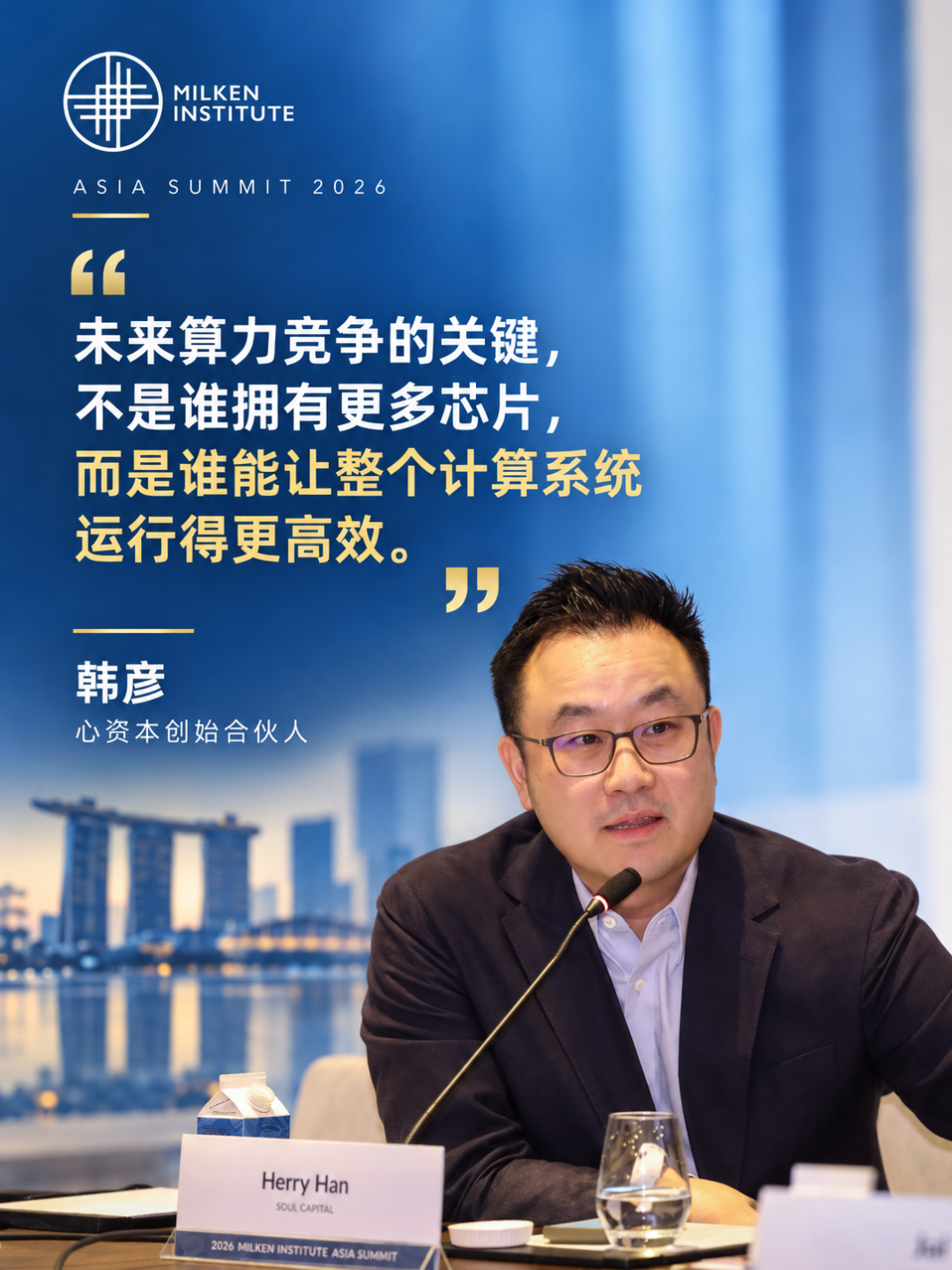
On another front, based on our investment experience over the past decade-plus, the key to future compute efficiency doesn't lie entirely in single-chip performance. We invested early in an optical communications company. As AI infrastructure continues to evolve, the growth of this type of company has shown us that system bottlenecks are shifting from individual chips to the entire computing stack. What truly matters isn't just how much computation a single chip can perform, but how efficiently chips connect with each other and how the overall system achieves higher computational efficiency.
Looking further toward the application layer, whether it's autonomous driving, humanoid robots, or future edge intelligence devices at scale, they may not need the biggest, most expensive general-purpose GPUs. In many scenarios, what matters more is achieving efficient, low-power computation for specific tasks.
So we can't simply measure a country's AI development potential by GPU count. From training to inference, from single chips to system efficiency, the competition in AI compute is moving toward increasingly diverse technical paths.
02 | From Dollars to RMB: What China AI Really Lacks Is Early-Stage Capital
Yan Han: Three or four years ago, right after the pandemic, I gave a talk here in Singapore where I made two predictions. The first was that the next few fund vintages would produce very good investment opportunities. The second was that dollar capital would continue to actively participate in investing in China's high-quality tech assets. Looking back, the first prediction was right, but the second was not.
Today, the capital structure of China's tech investment market has changed significantly. RMB capital is becoming a dominant force in Chinese tech investing. This includes both government guidance funds and industrial capital. At the same time, dollar capital hasn't completely exited the China market. We still see some dollar funds actively seeking quality investment opportunities, particularly at the Growth and Pre-IPO stages of leading AI companies.
There's also a third category of capital worth noting: international capital from outside the United States. Investors from Europe, the Middle East, and Singapore, among other regions, still want to participate in China's most competitive tech companies. But the problem now is that a large amount of capital is chasing later-stage, near-IPO quality assets. These companies have already gained broad market recognition, so valuations are relatively high. Conversely, at the early stage, we're seeing a notable shift in capital supply.
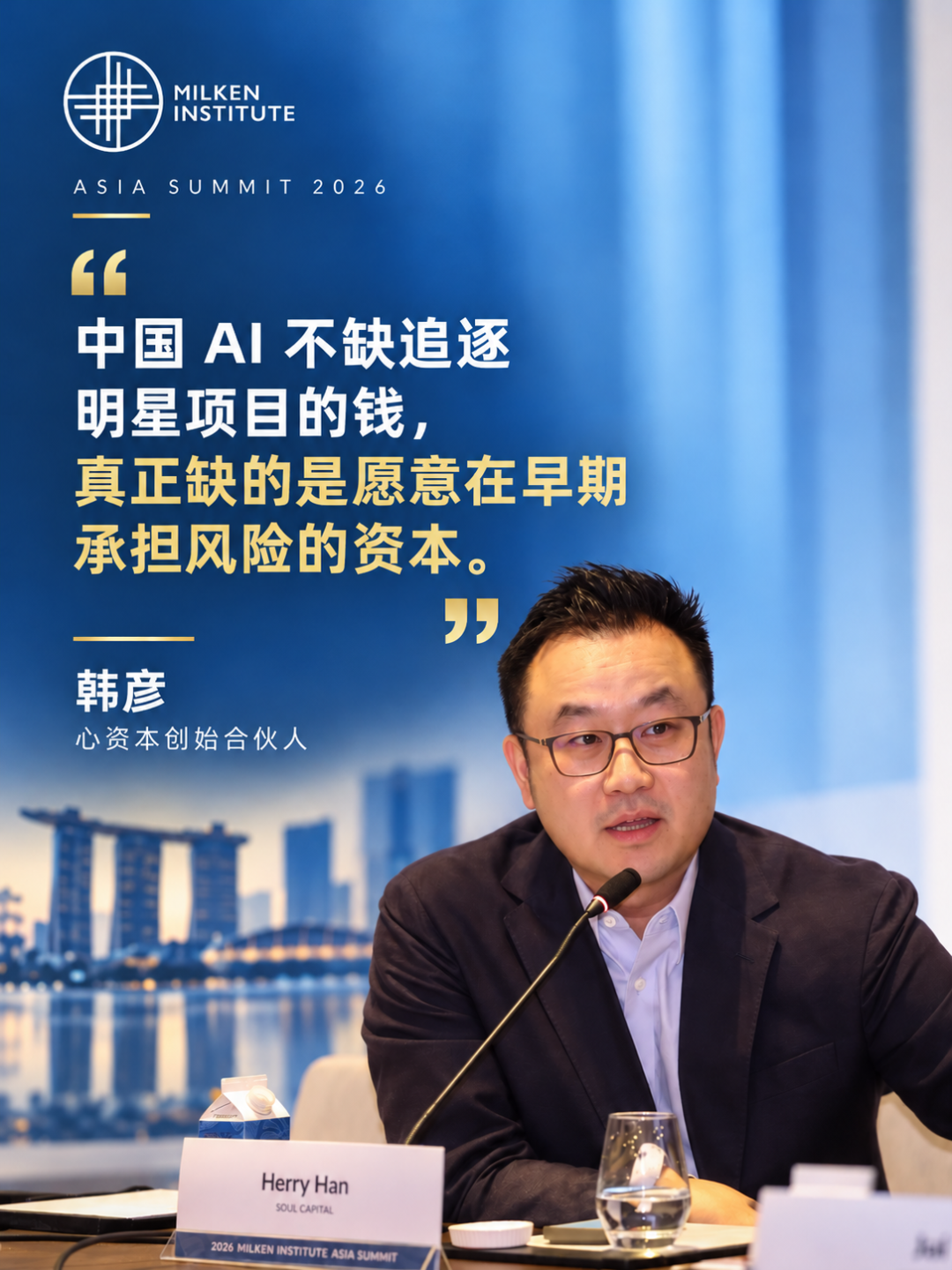
Based on my observations, three or four years ago, foreign currency capital might have accounted for 90% of participation in some early-stage tech investment opportunities; now, that ratio has dropped to roughly 20%. So the core issue in China's AI investment market may not be a lack of capital overall, but a shortage of long-term capital willing to take early-stage risk.
For true early-stage investment institutions, this is both a challenge and a new opportunity.
03 | The Nature of VC: The Greatest Value Is Still Created Early
Yan Han: Over the past six months to a year, people have often asked me: Is there still an opportunity to earn a 10x return by investing in a Pre-IPO or Growth-stage AI company?
In fact, with certain truly excellent companies, such opportunities still exist. But as someone who has been in venture capital for nearly two decades, I constantly remind myself: What is the most essential value of venture capital?
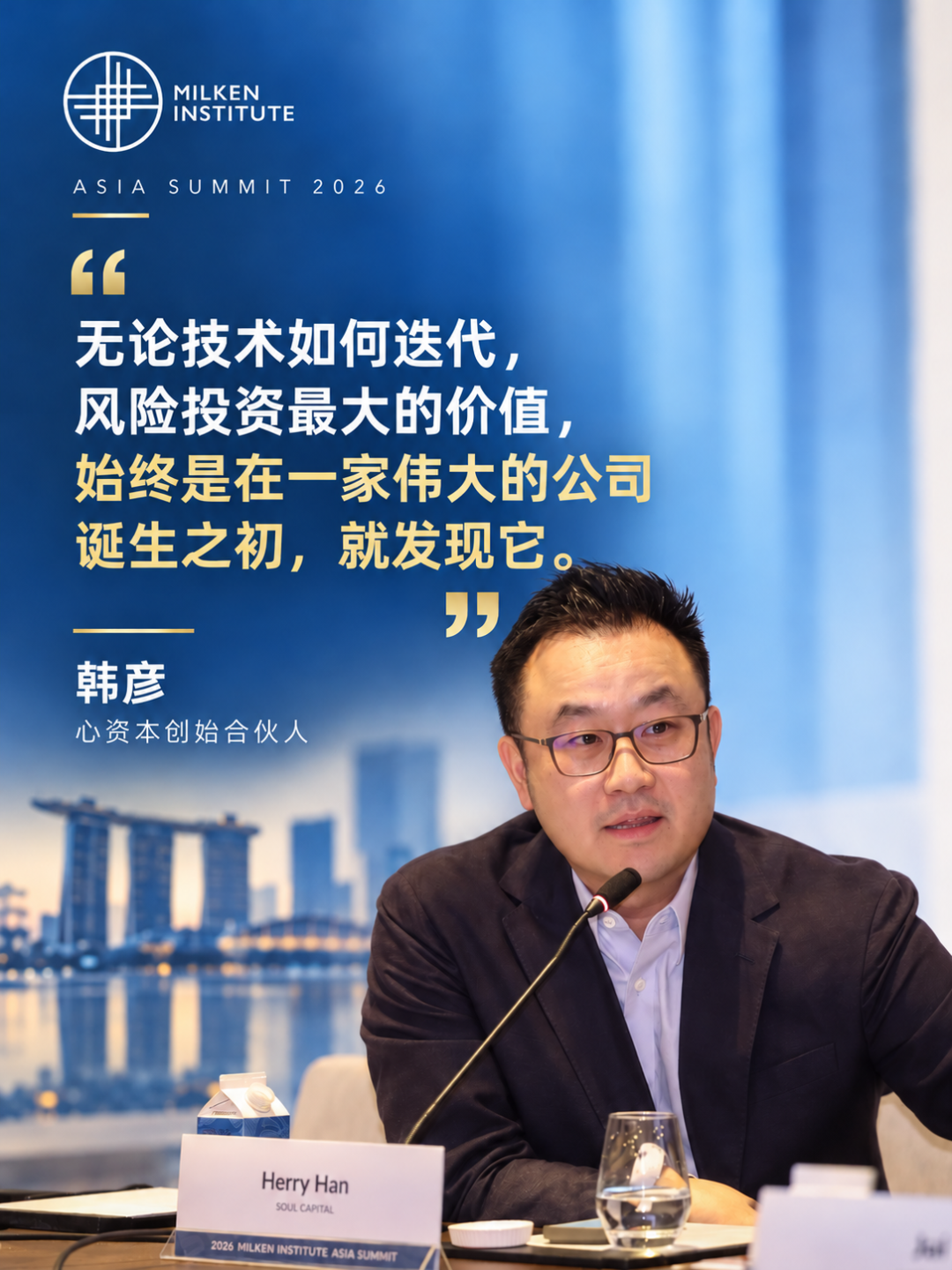
In 2011, when we founded Lightspeed China, our core investment strategy was to focus on Series A. At that time, we wanted to be among the earliest institutional investors for outstanding entrepreneurs. Today, the tech investment market environment has changed enormously. Capital scales are larger, companies go through more funding rounds, and some star companies command ever-higher valuations. We can of course still achieve 5x or even 10x returns on some very high-quality late-stage assets. But I have always believed: The greatest value creation still happens at the early stages of a company's development.
In the AI era, this hasn't changed — if anything, it has become even more important. Today, our entire investment team uses AI. From video, audio, and data collection to industry research, company analysis, and investment decision-making processes, we're trying to integrate AI into our daily work.
But for early-stage investing, what truly matters is always finding those exceptional entrepreneurs who stand apart from the crowd. We need to meet the next Yiming Zhang when they're just starting out, understand them, and build long-term relationships with them. At the same time, we want AI to begin accumulating data about entrepreneurs, industries, and technologies from day one, continuously enhancing our ability to understand new technology cycles.
AI can change how investment institutions research, analyze, and make decisions. But the core capability of VC remains identifying non-consensus opportunities early and growing alongside them.
04 | AI Will Be Like Electricity: The Real Value Lies Beyond the Model
Yan Han: I believe that over the next decade, China and the United States will remain the two main leaders in global AI development. One very fundamental reason is that AI development still relies heavily on human language and the knowledge systems it carries. English and Chinese have massive language user bases and digital content ecosystems. Combined with semiconductor capabilities, computing infrastructure, and technological innovation capacity, both China and the US have foundations for long-term AI development.
But in my view, the China-US relationship is more like two sides of the same coin. A bit like Taiji. When you observe from very close up, you see significant differences in technical paths, industrial models, and policy environments. But if you pull back, you'll find similarities between the two countries in foundational technological capabilities and industrial development in many areas.
Similarly, the currently much-discussed open-source models and closed-source frontier models appear to represent two different technical routes, but in the long term, they too may be two sides of the same coin.
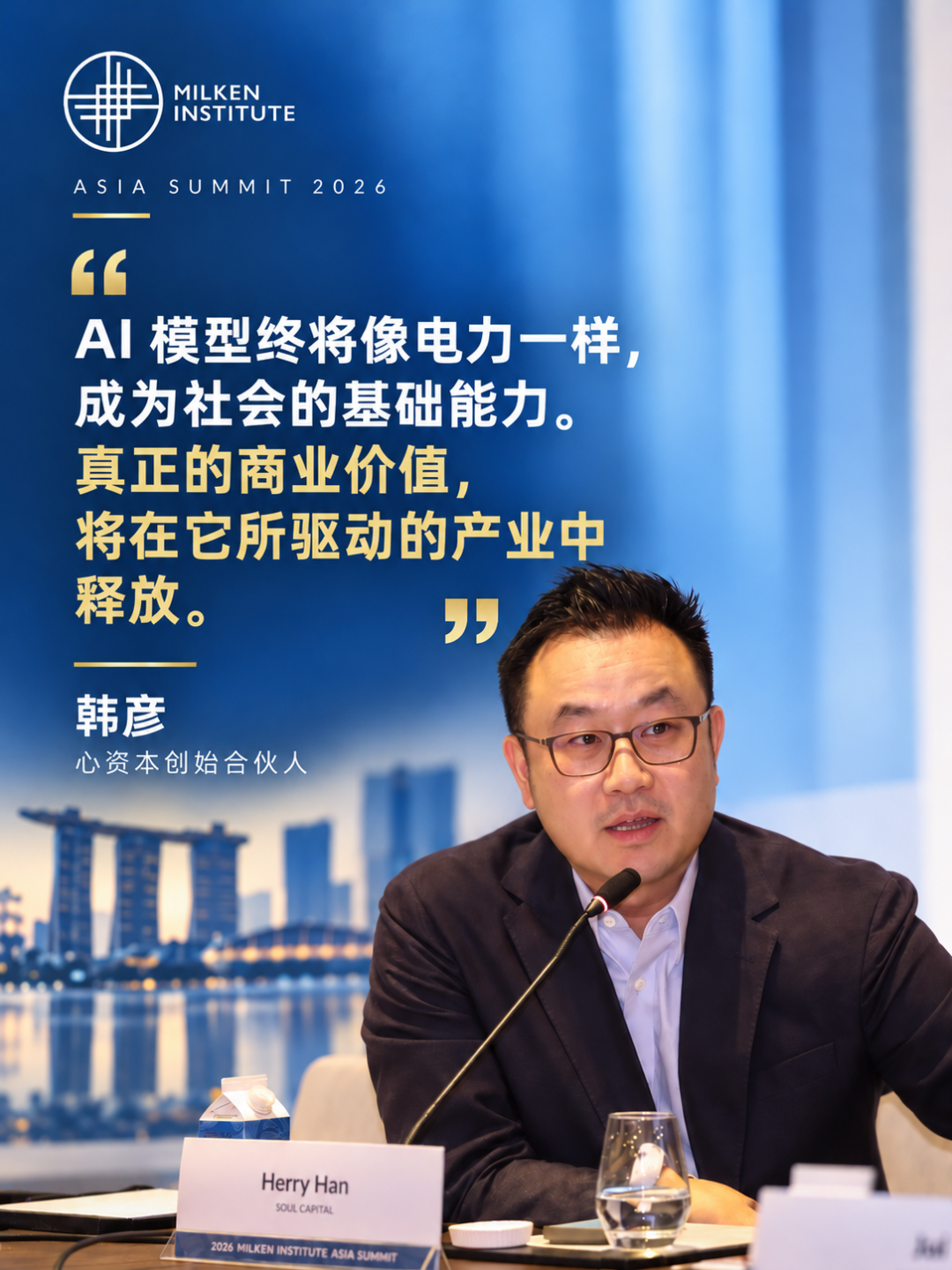
I believe that AI models themselves may not be the segment that captures the most economic value in the long run. They are more like electricity — one of the most important infrastructure elements of modern society — but the truly massive economic value comes from the transformation of the entire industrial system and social production methods after electricity is widely applied.
AI will follow the same pattern. It will become an increasingly foundational capability, even an important component of national technological strength. But much of the value creation will extend upstream and downstream from the model. Downstream are the infrastructures that support AI's operation: chips, computing, optical interconnects, connectivity systems, and other key technologies. Upstream are the applications where AI truly enters the real world: automobiles, humanoid robots, and future intelligent devices of many kinds.
Therefore, rather than simply discussing whether China or the US is ahead or behind on a particular model, I'm more focused on how each country leverages its industrial advantages to translate AI into real productivity. And in these domains, both China and the United States have very significant opportunities.
05 | From the Digital World to the Physical World: AI's Greater Value Has Yet to Arrive
Yan Han: I believe AI development today is still at a stage similar to the early popularization of electricity. Currently, AI has begun to transform large amounts of knowledge and information-processing work. We're seeing the work content of many knowledge workers change, with some jobs potentially being replaced by AI. Over twenty years ago, I worked at McKinsey & Company. The consulting industry today must be paying very close attention to AI, because large amounts of analysis, research, and information-processing work may be redefined by AI.
But in my view, AI's greater opportunity lies not just in transforming the knowledge world, but in entering the physical world. A large portion of human economic activity essentially involves production, transportation, operation, and manufacturing in the physical world. We create value not only by processing information, but also by moving objects from one place to another, or by changing the physical form of matter itself. This transformation occurs at macro scales, and also at micro and even nanometer scales.
For example, scientists are already beginning to use AI for new materials discovery, exploring novel material structures at very microscopic levels. As humanoid robots, automation systems, and other Physical AI technologies develop, AI will gradually move from processing digital information toward understanding and transforming the physical world. When AI truly enters the physical world, the value it can create may expand hundreds of times beyond what we see today.
Of course, even at the current stage, we can already see some very clear commercialization opportunities. For industries like programming and healthcare that have already achieved a relatively high degree of digitization, AI can directly enter existing workflows to improve efficiency and create value.
User willingness to pay is also changing. In the past, we might have been willing to pay $50 per person per month for a SaaS product. Today, for AI tools that can significantly improve work efficiency, enterprises may be willing to pay $200 per person per month.
This shift already demonstrates that AI is transforming from a new technological capability into a productivity tool with clear commercial value. And the truly greater value creation still lies ahead.
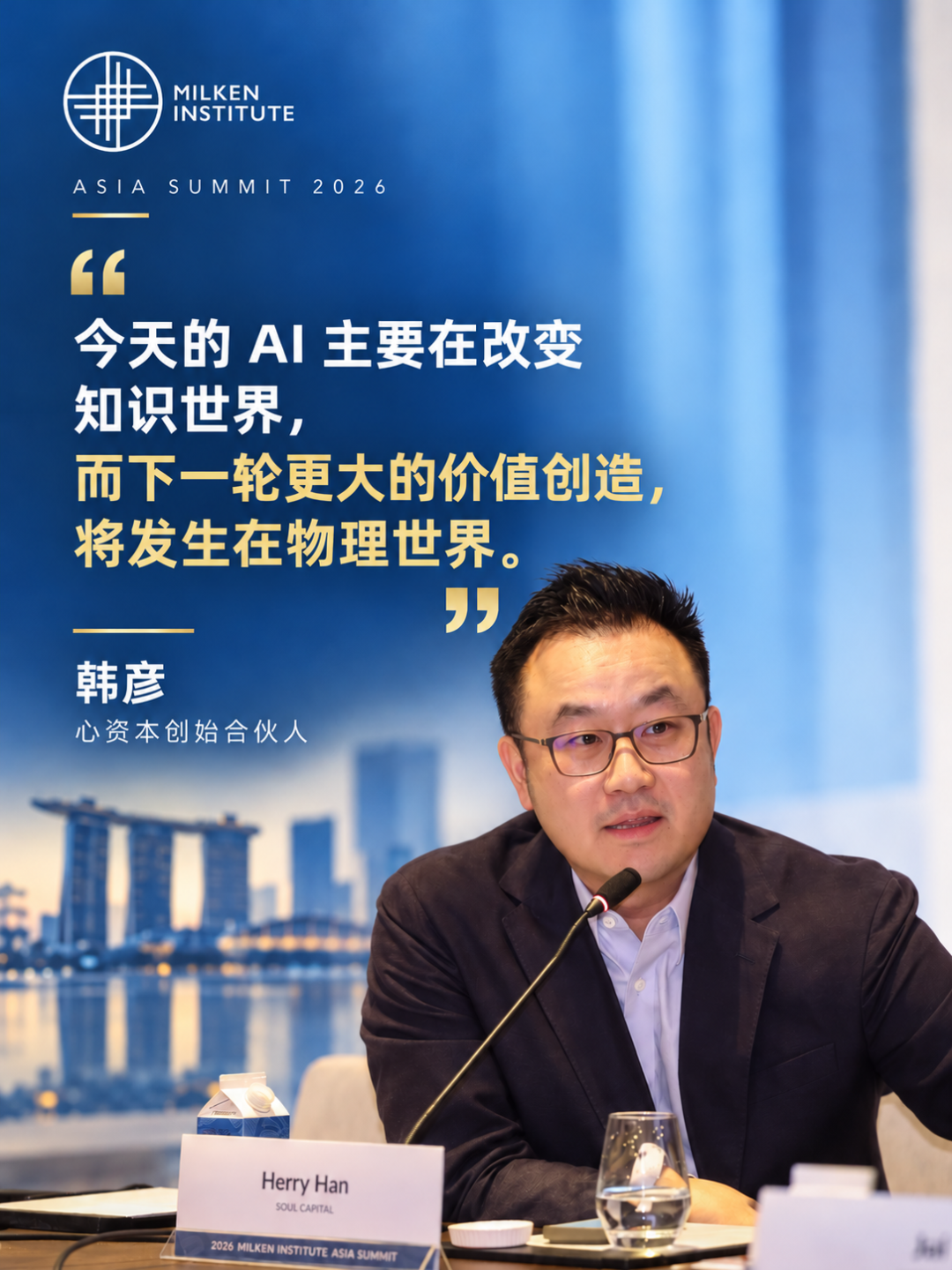
06 | The Scarce Asset of Future AI: Not More Data, But Better Data
Yan Han: I'd like to use humanoid robots as an example. Two months ago, I attended an AI discussion in San Francisco, where one important point left a deep impression on me. The real bottleneck for humanoid robots in the future may not be the quantity of data, but the quality of data.**
In our past discussions of AI, we often emphasized the scale of training data. But entering the era of robotics and physical intelligence, the situation may differ. Large amounts of data from the internet cannot fully solve the problem of how robots understand and operate in the real world.
Truly valuable data often comes from specific industrial application scenarios. For example, in the process of a robot completing tasks in factories, warehouses, or other real environments, it continuously generates new data. This data not only reflects actual conditions in the physical world, but also helps models continuously learn and improve. Therefore, a very important competitive question for the future is: Who can enter real application scenarios earliest and continuously obtain high-quality data?
In my view, over the next three to five years, the company in the humanoid robot space that accumulates the highest-quality real-world data may also possess the strongest intelligence capabilities.
The competition in AI will increasingly take place in real industrial scenarios. And these scenarios may become the most important sources of value in the next phase.
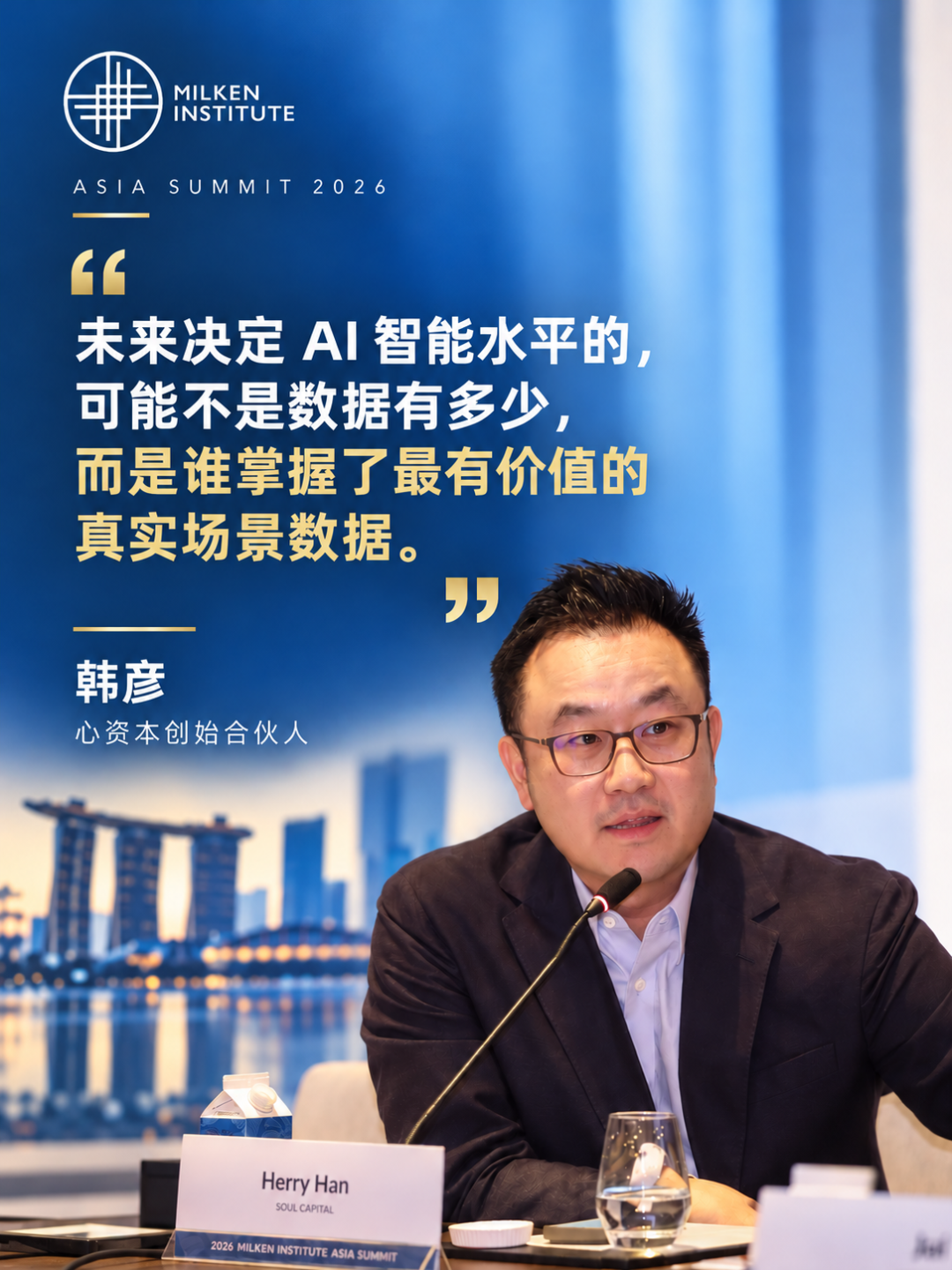
07 | Value Creation Begins When Technology Enters the Real World
Over the past few years, the AI industry has experienced a rapid development phase centered on model capabilities, compute scale, and technological breakthroughs. But as technology continues to mature, new questions are emerging. As model capabilities keep improving and inference costs continue to decline, what may truly matter is no longer just how powerful the model is, but rather the extent to which AI can transform the real world.
For investment institutions, it's equally necessary to re-examine where value creation occurs. It may emerge in new computing architectures, in more efficient system connectivity, on the first day a robot walks into a factory, or in the process of an early-stage startup exploring real application scenarios.
The value of technology is ultimately validated in the real world. And the value of venture capital is discovering these opportunities before they become consensus. This is also the starting point for Heart Capital's continued focus on frontier technology and early-stage innovation.

Founded in 2022, Heart Capital is a venture capital fund focused on investing in early-stage Chinese tech startups.
Heart Capital's team consists mainly of founding partners and core investors from Lightspeed China, along with seasoned investors from industry. The team's past investments include MetaX (688802.SH), Xpeng Motors (NYSE: XPEV, 09868.HK), Full Truck Alliance (NYSE: YMM), 06810.HK (06810.HK), RoboSense (02498.HK), Ambiq Micro (NYSE: AMBQ), Hanshow Technology Co., Ltd. (301275.SZ), FinVolution (NYSE: FINV), HERE (NASDAQ: HERE), as well as LandSpace, MicroNano Space, Baichuan, Yunmanman Cold Chain Logistics, World Logistics, FanDeng Reading, and Lanhu.
Rooted in China with a global outlook, Heart Capital is dedicated to early-stage accompaniment and support for entrepreneurial teams with the potential to become world-class companies in China's technology sector. Heart Capital advocates the value of "heart," believing that technology can serve as a bridge connecting hearts. Heart Capital looks forward to accompanying more young Chinese entrepreneurs onto the world stage.