Heart Capital's Yanchen Liu: AI Enters Its Next Phase — Opportunities, Moats, and Globalization | Voice

What does it take to build a global AI company?
Where are the next opportunities for AI companies?
What is the real moat of an early-stage AI company?
When should Chinese companies start thinking about globalization?
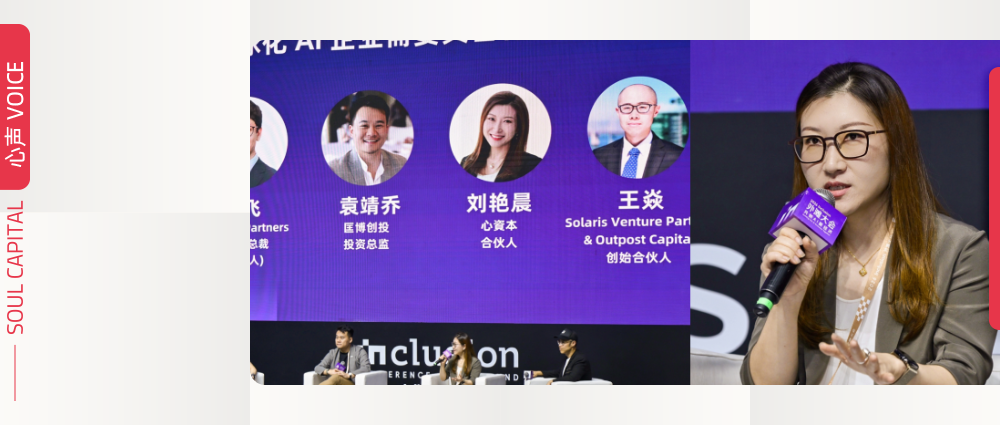
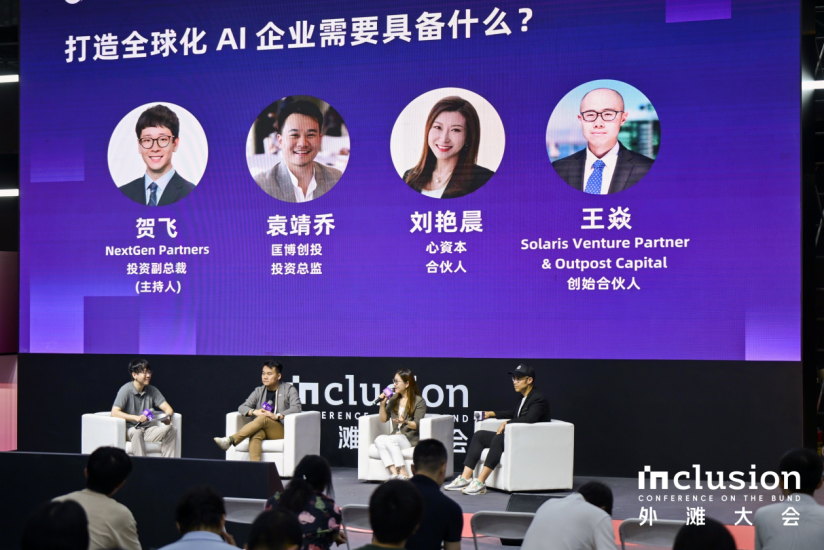
On September 11, at the "VC Meetup" session of the 2026 Inclusion Bund Conference, Yanchen Liu, partner at Heart Capital, joined the panel discussion "What Does It Take to Build a Global AI Company?" Alongside several fellow investors, she explored — from different investment perspectives — the core capabilities Chinese AI companies need to move from the domestic market onto the global stage. Around topics of AI investment, company moats, globalization, and capital structure, Liu shared some of Heart Capital's insights from early-stage tech investing.
Yanchen Liu in an interview with China Daily
01 AI is entering its next phase — where are the investment opportunities?
Yanchen Liu: From large language models two or three years ago, to agents, to today's Physical AI, the hot topics in AI keep shifting. When we look at AI now, we no longer treat it as a standalone industry. Today, there's no field and no one saying "I don't need AI" — it's already woven into how we work and live.
So the opportunities we're seeing now are mostly about AI combining with every industry — AI for Science when it meets scientific research, AI factories when it meets manufacturing. We're also seeing more and more traditional entrepreneurs who want to embrace and adopt AI faster.
What we care deeply about is AI infrastructure. Demand for AI is growing exponentially, and the need for electricity, chips, compute, and storage is enormous. We're still in the phase of building roads, laying bridges, and stringing cables — so we'll keep investing in infrastructure. For example, we invested in MetaX, a general-purpose GPGPU company, and in Xi Wang, an AI inference chip company. We've also made bets in future energy, such as Xeonova.
Another critical piece is data. People might think language data is mostly tapped out, but for multimodal models, Physical AI, robotics, and the smaller vertical models across industries, there's actually a severe data shortage. So going forward, I think both infrastructure and data will be crucial.
02 With technology changing this fast, what is an early-stage AI company's moat?
Yanchen Liu: Heart Capital is a VC focused on early-stage startups. At such an early stage, it's hard to say a company has already built a moat.
So I've always believed: the founder's understanding is the moat; the founder's capability is the moat. When we evaluate an early-stage company, it ultimately comes back to the fundamentals: people, organization, product.
Who is the founder? What's their background? What opportunity did they see? What kind of product are they building? Whatever form the product takes, it must answer one question: what problem are you actually solving?
Everyone is talking about how AI enters industries. Changing an entrenched workflow or organization is genuinely hard. In the future, we'll likely see more and more truly AI-native companies. That doesn't mean "no humans needed" — it means the entire organizational form is built around AI capabilities and AI workflows.
Another moat, I'd argue, is speed. Take dexterous hands and tactile sensing — we've looked at a lot of companies recently, all trying to solve problems that were previously very difficult for robotics. So whether a founder can keep pace with the speed of technological development matters enormously.
03 When should Chinese AI companies start thinking about globalization?
Yanchen Liu: Before joining Heart Capital, I spent five years at Alibaba's Cainiao, where I was also responsible for Cainiao's international logistics investments. During those years I visited many countries and saw firsthand how the big tech companies expanded overseas — and the challenges they ran into. My biggest takeaway was: going global starts with the organization going global.
For example, do you run everything from a headquarters in China covering the world, or do you build localized operations in each country? Even mature, large companies hit plenty of walls going overseas. So now, back in early-stage investing, my first piece of advice to founders is usually: on day one, figure out whether your market is a global market. If it is, then build your organization and team around going global as early as possible.
The second thing is product. Are you building a globalized product from China, or building a product for a global market? Take robotics. If you know from the start that the robot will be sold into the US and European markets, I'd advise you to first get clear with customers: What kind of robot do they need? What hardware? What software stack? What compliance requirements? Then come back and build it. It sounds simple, but it's easier said than done.
04 Everyone is talking about going overseas — what should startups most avoid?
My view is very clear: don't follow the crowd.
A lot of companies now say "we're going overseas," but the whole team may not even speak English, and they don't truly understand overseas markets — yet they're already declaring global ambitions. I don't think that's necessarily the right fit. Of course, that doesn't mean you can't go global without strong English. The core is still the product — many Chinese companies, in both hardware and software, already have very strong product capabilities abroad. AI will also help founders cross the language barrier.
So it comes back to the most fundamental questions: have you genuinely identified a pain point in an overseas market? Does your product genuinely resonate with that market? And the team itself will grow — from Series A to B to C, more talented people will join. So in the end, it still comes back to the three words I mentioned earlier: people, organization, product.
05 RMB, USD, or Hong Kong — how should a globalizing company choose?
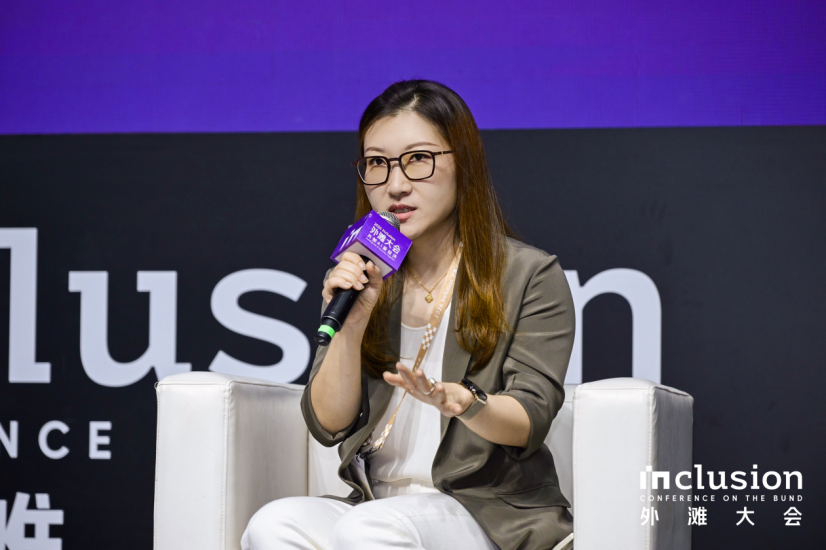
Yanchen Liu: We actually don't simply categorize an investment as a "USD deal" or an "RMB deal" anymore. What matters more is the industry and the company's own needs.
Some sensitive industries, or those sitting at the center of US-China competition, may not be well suited for USD investment. It depends on where the team is, where the company is, and what capital markets it plans to enter in the future. So from a founder's perspective, I think you should also figure out on day one: am I heading toward domestic capital markets or overseas ones? That decision shapes your financing structure.
That said, we've been pleasantly surprised to see China's capital markets becoming increasingly open. More and more globally oriented companies — including Sino-foreign joint ventures — can find their path in Hong Kong, on the STAR Market, and elsewhere. From this angle, RMB investment is becoming more flexible, and RMB LPs are maturing.
As for Hong Kong, I lived and worked there for over a decade and have a deep affection for the city. I've always felt that Hong Kong is an excellent bridge. For the same cross-border logistics or tech solution, a Hong Kong team typically understands overseas market needs better, and knows how to communicate in a way the other side can accept. So from a talent perspective, Hong Kong is a great first stop for going global.
From an organizational structure standpoint, many companies can also set up a Hong Kong subsidiary first — whether for sales, attracting international talent, or building a global team, it's a great transition point.
And one thing that's often overlooked: Hong Kong is itself a market.
At the end of the panel, if I had to give AI founders one piece of advice, my answer is actually quite simple: talk to your customers and potential customers first — that's also one of the things I care about most when evaluating early-stage companies today.

Founded in 2022, Heart Capital is a venture capital fund focused on early-stage technology startups in China.
Heart Capital's team is primarily composed of the founding partners and core investors of Lightspeed, along with seasoned investors from industry. The team's past investments include MetaX (688802.SH), Xpeng Motors (NYSE: XPEV, 09868.HK), Full Truck Alliance (NYSE: YMM), 06810.HK, RoboSense (02498.HK), Ambiq Micro (NYSE: AMBQ), Hanshow Technology Co., Ltd. (301275.SZ), FinVolution (NYSE: FINV), HERE (NASDAQ: HERE), as well as LandSpace, MicroNano Space, Baichuan, Yunmanman Cold Chain Logistics, World Logistics, FanDeng Reading, Lanhu, and others.
Rooted in China with a global outlook, Heart Capital is committed to supporting, from the earliest stages, founding teams with the potential to become future world-class companies in Chinese technology. Heart Capital champions the values of the "heart," believing that technology can be a bridge connecting people. Heart Capital looks forward to accompanying more young Chinese entrepreneurs on their journey to the world.