Heart Capital's Yan Han: Beyond the AI Bubble, What Is True Long-Term Value? | VOICE

In an Era of High Valuations, Why Early-Stage Investors Should Double Down on "Investing Even Earlier"
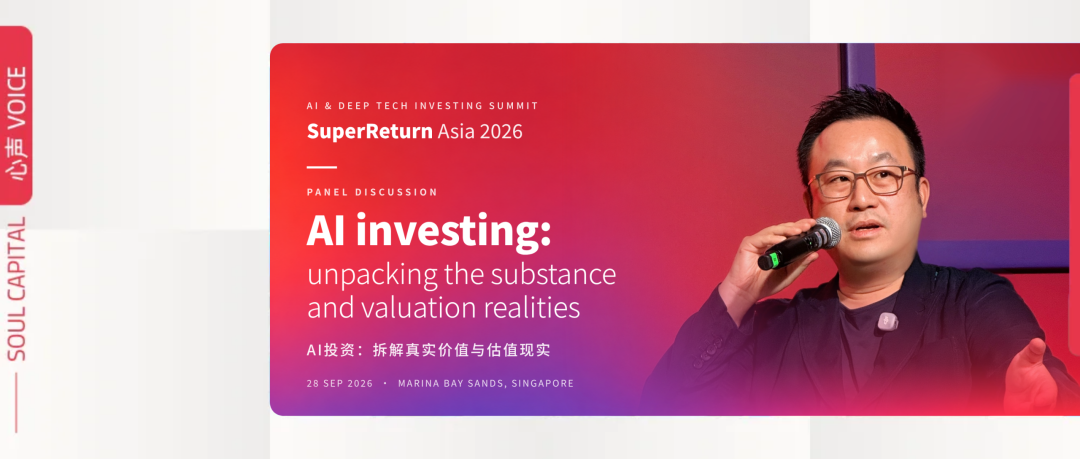
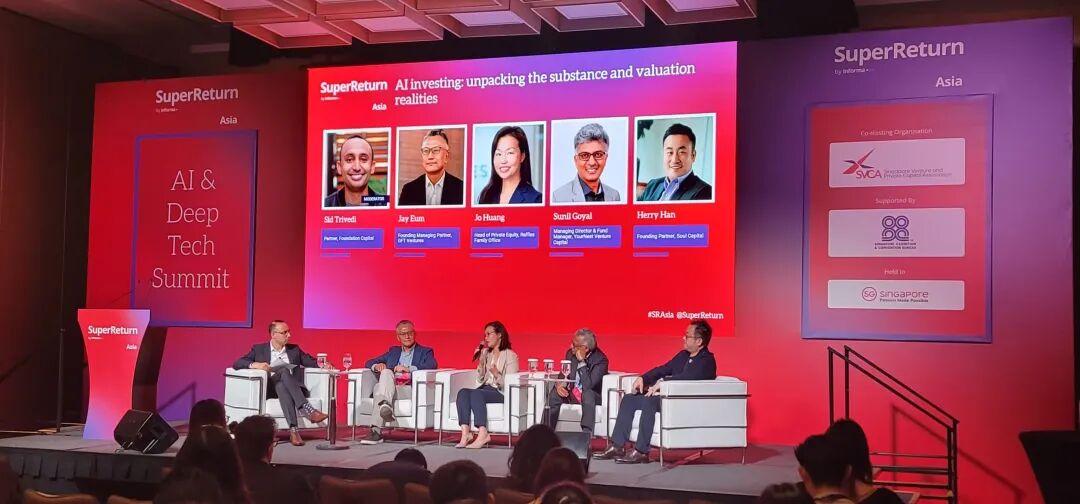
On September 28, the SuperReturn Asia 2026 AI & Deep Tech Investing Summit was held in Singapore. Herry Han, Founding Partner of Heart Capital, was invited to join the panel discussion "AI Investing: Unpacking the Substance and Valuation Realities."
SuperReturn Asia is a major industry conference focused on Asia's private equity and venture capital markets. This panel brought together investors from China, the United States, India, and Asian family offices to discuss technology judgment, valuation divergence, capital concentration, and exit pathways amid the AI investment boom.
Fellow panelists included Jay Eum, Managing Partner of GFT Ventures; Jo Huang, Head of Private Equity at Raffles Family Office; and Sunil Goyal, Founder of YourNest Venture Capital.
Cutting Through Valuation Noise Starts with Returning to the Technology Itself
When asked how to distinguish real technology and commercial value from valuation bubbles in AI companies, Herry said that the earlier the investment, the less one can rely solely on revenue and financial data to make judgments.
At the earliest stages of a company, investors often face only a founder, a business plan, and an unproven technological concept. What truly needs to be assessed at this point is the founding team's understanding of technology trends, the feasibility of their technical approach, and the company's position in the future industrial ecosystem.
Compared to a few years ago, making these judgments has become more complex. Both "hard tech" and "AI" have become broad concepts encompassing numerous industrial segments.
In Herry's view, China's AI opportunities exist on both the hardware and software ends. Currently, China remains in a phase of continuous AI infrastructure construction, so areas such as chips, energy, and data — hardware and infrastructure — still present substantial investment opportunities. As infrastructure gradually matures, China's vast industrial scenarios and data resources will further drive innovation in AI software and application layers.
Understanding Technology's Ten-Year Evolution from Day 0
Herry used GPU company MetaX as an example to share Heart Capital's early-stage investment methodology in hard tech.
When MetaX was still at Day 0, the company had no revenue and the team was just getting started. Facing such a project, investors cannot look only at the business plan; they must work with industry experts to judge: How will technology architectures evolve over the next five to ten years? Can the company's products find their place within the ecosystem established by industry leaders like NVIDIA? Does the team have the capacity for continuous iteration and execution?
Similar judgments were applied to Sunrise, another chip company in which Heart Capital recently invested. From the project's earliest stages, Heart Capital systematically evaluated the team, technical approach, position in the industrial ecosystem, and follow-on financing strategy, while continuing to support the company's growth.
Early-stage investing is becoming more complex, but if you can find the right companies and accompany them over the long term, the value created becomes considerably greater.
IPO Recovery Further Highlights the Value of Early-Stage Investment
Regarding exit environments in the China market, Herry believes that exit markets are gradually recovering. Chinese companies have access to a multi-tiered capital market including the STAR Market, other A-share markets, and Hong Kong. The active Hong Kong IPO market may also represent a more long-term trend.
But improved market liquidity does not mean investment risk naturally decreases.
When large amounts of capital flood into the market, capital may simply be driving up listing premiums. The question investors truly need to answer is: Can such valuation premiums be sustained over the long term? Do a company's fundamentals and growth prospects sufficiently support its current price?
In Herry's view, high IPO valuations are not a reason to abandon early-stage investment; rather, they further underscore the importance of early positioning. Companies that can truly create enormous long-term value have always been scarce. If investors only enter at the Pre-IPO stage, it becomes difficult to build deep, long-term partnerships with outstanding founders.
The significance of early-stage investment lies not merely in entering a company earlier. Only by starting from Day 0 can investors experience technology validation, team building, and market changes alongside entrepreneurs, gradually forming deeper understanding, friendship, and trust through this process.
Herry cited partner Shirley's early investment in RoboSense as an example. The team established a partnership with the company and its founder six years ago, which later enabled them to continue supporting the founder's second venture and extend collaboration into emerging areas such as Embodied Artificial Intelligence.
Nearly two decades of early-stage investment experience have allowed Herry and his team to build long-term relationships with a cohort of technology entrepreneurs. These connections have gradually extended across multiple technology directions: in aerospace and three-dimensional mobility, including LandSpace, MicroNano Space, and XPENG AEROHT; in artificial intelligence, computing power, and frontier technology, including MetaX, Sunrise, Xeonova, Baichuan, LynkSoul, and Lanhu.
Among these, MetaX listed on the STAR Market last December, while LandSpace and MicroNano Space are also advancing their listing processes. Compared to these milestone outcomes, Heart Capital places greater value on the trust formed through long-term accompaniment, as well as the ecosystem composed of entrepreneurs, industry experts, and diverse technology teams.
These companies are at different stages and pursuing different directions, but their common thread is that Heart Capital began building relationships with their teams at relatively early stages and has continued to accompany them through subsequent technology iterations and business development: understanding technology as early as possible, getting to know entrepreneurs, and gradually building trust, understanding, and ecosystem through long-term collaboration.
In the AI Era, VCs Also Need to Build Their Own Knowledge Infrastructure
AI is not only changing portfolio companies; it is also transforming how investment firms themselves operate.
Heart Capital's team already makes extensive use of AI tools in daily work. Internal systems continuously collect industry information, meeting discussions, and research materials, depositing them into the firm's knowledge base to assist the team in initial project screening and industry research.
In his view, outstanding investment institutions of the future must build their own AI tools and knowledge systems. But this capability cannot be obtained through general-purpose tools alone; what truly matters is the proprietary data accumulated by the institution over the long term. Only by working on projects from early stages, continuously tracking companies' technology roadmaps, team changes, and key decisions, can investment institutions accumulate sufficient first-hand data and gradually form their own knowledge bases. Investing early is therefore not just about obtaining better entry prices, but also about understanding industries earlier and preserving that knowledge over the long term.
When this data is combined with AI, the knowledge previously scattered across projects, research, and individual experience can be reorganized and continuously used, gradually transforming into distinctive judgment capabilities.
Herry believes that what will truly stand out in the future is not all VCs using AI, but that "1%" of institutions that possess both long-term data accumulation and the ability to genuinely leverage AI. Such VCs will be more likely to consistently identify opportunities and maintain competitiveness across different market cycles.
Heart Capital aspires to be such a fund: accumulating frontline understanding from Day 0, forming its own data and ecosystem through long-term investment, and then using AI to transform these accumulations into continuously iterative institutional capabilities.
More Important Than Capital Is the Courage to Maintain Non-Consensus Views
During the panel discussion, Herry also shared his understanding of the essence of venture capital.
When facing unproven technologies and business models, people naturally hesitate. Most investors and entrepreneurs prefer directions already validated by the market, yet truly breakthrough companies often originate from non-consensus judgments initially.
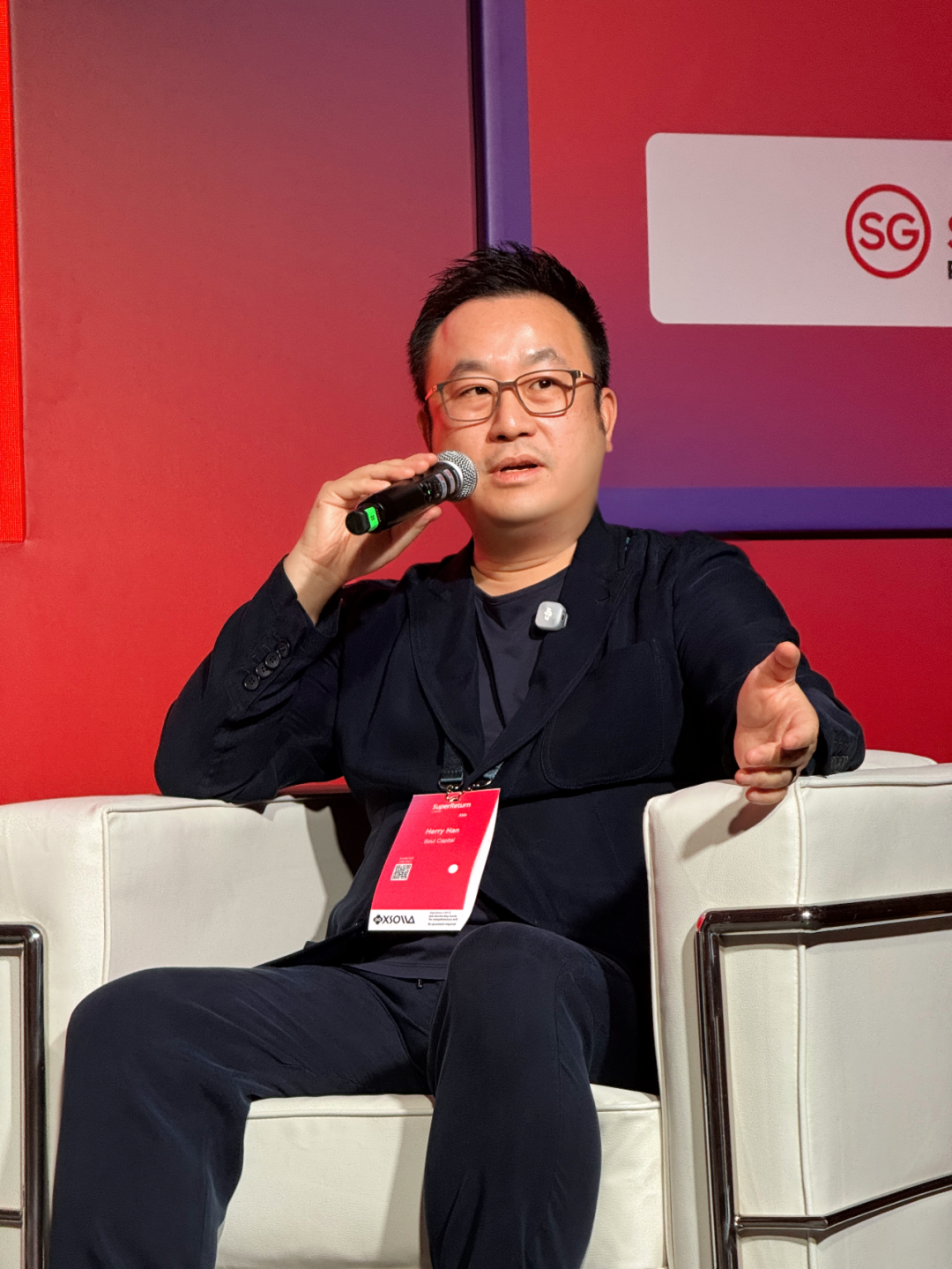
After nearly two decades of investment practice, Herry believes that capital itself is not the most important element in venture capital. More important is the courage to invest sufficiently early, the courage of independent judgment, and the courage to maintain long-term conviction when the market has not yet formed consensus.
AI May Have Bubbles, But Long-Term Value Will Not Disappear
In the final rapid-fire Q&A segment of the panel, the moderator invited each guest to assess: One year from now, which parts of today's AI market will prove to have real value, and which will prove to have been merely bubbles?
Herry stated that the current AI market may have overheated valuations and bubbles, but AI itself remains one of the most substantively significant technological transformations of this era, and will continue to transform people's lives and the operations of industries over the long term.
Short-term capital market fluctuations, high IPO prices, and valuation changes at different stages should not obscure AI's underlying value.
When the market continually debates whether valuations are too high, the questions truly worth focusing on remain: Who is solving real problems, who is building technology with long-term competitive advantages, and who has the ability to transform technology into sustained commercial value.
Cutting through signal and noise in the market has always been the most important capability in early-stage investing.

Heart Capital was founded in 2022 and is a venture capital fund focused on investing in China's early-stage technology startups.
Heart Capital's team is primarily composed of founding partners and core investors from Lightspeed China, along with seasoned investors from industry. The team's past investments include MetaX (688802.SH), Xpeng Motors (NYSE: XPEV, 09868.HK), Full Truck Alliance (NYSE: YMM), SUNMI (06810.HK), RoboSense (02498.HK), Ambiq Micro (NYSE: AMBQ), Hanshow Technology Co., Ltd. (301275.SZ), FinVolution (NYSE: FINV), HERE (NASDAQ: HERE), as well as LandSpace, MicroNano Space, Baichuan, Yunmanman Cold Chain Logistics, World Logistics, FanDeng Reading, and Lanhu.
Rooted in China with a global perspective, Heart Capital is dedicated to early-stage accompaniment and support for entrepreneurial teams with the potential to become future world-class companies in China's technology sector. Heart Capital advocates the value of "heart," believing that technology can serve as a bridge connecting minds. Heart Capital looks forward to accompanying more young Chinese entrepreneurs onto the world stage.