Heart Capital's Yan Han: As IPOs Warm Up, Where Is the Investment Window for China's Hard Tech? | Voice

From tech breakthroughs and capital flows to a recovery in exits.
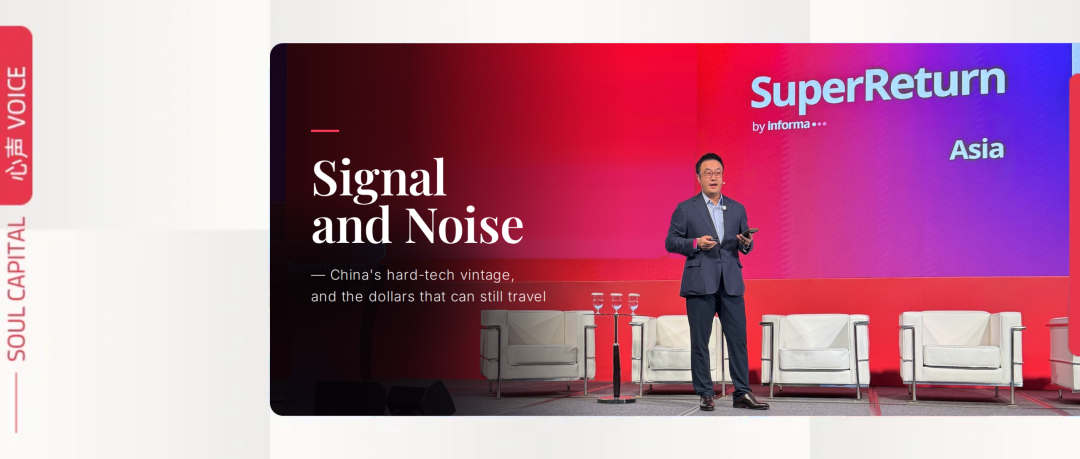
On September 30, 2026, Yan Han, founding partner of Heart Capital, delivered a keynote titled Signal and Noise at SuperReturn Asia 2026 at Marina Bay Sands in Singapore. Focusing on the progress of China's hard tech industries, shifts in international capital flows, and changes in exit markets, he shared his outlook on early-stage investment opportunities from 2026 to 2028.
The technological signals are growing clearer, the IPO market is gradually warming, yet early-stage capital has not fully returned. Drawing from his experience as an amateur radio enthusiast more than three decades ago, Han reflected on his own track record of reading technology and capital — and expanded on how Heart Capital searches for next-generation enterprises along industrial lineages, while building participation pathways for capital from different sources.
The following is the full text of his speech:
More than thirty years ago, I became a ham radio operator. That hobby taught me one thing: what matters is never how loud the noise is, but whether you can pick out the faint, real signal buried inside it.
Three years ago, on this same stage in Singapore, I said: 2023 to 2026 could be a "big year" for Chinese hard tech, much like the mobile internet era from 2010 to 2013 that gave rise to a generation of great companies.
Today, I've come back with a scorecard you can verify: the emergence of DeepSeek; MetaX closing up 568% on its first trading day; Unitree closing up 460% on its first trading day; in the first half of 2026, 97% of global humanoid robot shipments coming from China; and as of August 2026, Chinese open-weight AI models having led global token usage for 15 consecutive weeks. Among these developments are MetaX, which we invested in at Series A, as well as industry cases like Unitree. The signal from Chinese technology is far clearer than it was three years ago.
I got the technology direction right. But I got one thing wrong: I had expected US dollar capital to lead the charge into this wave. It didn't — RMB capital and state capital did. That misjudgment prompted us to build a RMB fund.
It also made me see more clearly the structural gap today: technology is moving forward, exit markets are recovering, yet capital willing to support early-stage company growth has not caught up. This is precisely why I want to discuss the 2026–2028 investment window.
We Don't Invest in the Average
Discussions about China often start with a macro growth number. But I'm more interested in what's happening beneath that number.
In the first half of 2026, China's GDP grew 4.7% year over year. During the same period, real estate investment fell 18%, fixed-asset investment declined 5.7%, and total retail sales of consumer goods grew 2.7%. On the other side, high-tech manufacturing grew 13.3%, industrial robot output rose 28%, and exports increased 13.4%.
Adjustment in traditional industries and growth in new industries are happening simultaneously. The 4.7% is the combined result. For tech investors, what matters is finding the companies that are creating new growth.
In recent years, I've seen four shifts: from consumer internet to hard tech; from dollar dominance to RMB dominance with non-US dollar capital as supplement; from New York listings and VIE structures to Hong Kong and the STAR Market; and from "US innovation, China market" to "China innovation, global market."
Each adjustment, when it happened, looked like bad news. But put them together, and you see that what companies rely on to grow, who provides the capital, and where exits happen have all changed. Understanding Chinese tech investment today requires restudying these conditions.
Transitions also require financial capacity and sustained commitment. In 2025, China's current account surplus reached $735 billion; as of end-August 2026, foreign exchange reserves stood at $3.44 trillion. R&D intensity reached 2.8% in 2025, and the 15th Five-Year Plan identified directions including AI+, embodied intelligence, quantum, and nuclear fusion. To me, these numbers and directions answer the same question: whether the industrial transition has the capacity to keep advancing.
This Time, Products Are Global from Day One
Over the past eighteen years, I've lived through three technology waves: mobile internet, electrification, and today's physical AI and deep AI. Our investment experience has extended from Full Truck Alliance and Xpeng Motors to MetaX and more hard tech companies.
Every wave produces important companies. What especially catches my attention this time is how products face the market.
Take humanoid robots: in the first half of 2026, Chinese companies accounted for 97% of global shipments, with AgiBot at 44% and Unitree at 31%. AI models are also entering other countries' application systems: AI Singapore chose Qwen, and Malaysia's sovereign AI runs on DeepSeek.
These changes show up in company revenues too. Based on our compilation of company disclosures from April 2026, SUNMI's overseas revenue share was 70%, RoboSense's was 50%; Xpeng Motors' overseas revenue share in the first half of 2026 was 25%. From commercial IoT to LiDAR to smart vehicles, global customers are already a significant part of these companies' businesses.
What I want international investors to reconsider is their own AI allocation. We've grown accustomed to viewing compute, energy, data, models, applications, and robots as an interconnected technology system. In my judgment, two complete AI technology stacks have formed globally, yet many investors' portfolios remain concentrated in just one.
China offers another technology route, industrial network, and set of company choices. I view allocating a portion to it as a hedge against existing portfolios: it gives us the chance to re-examine dependence on a single ecosystem, and at the company level, to study different development paths.
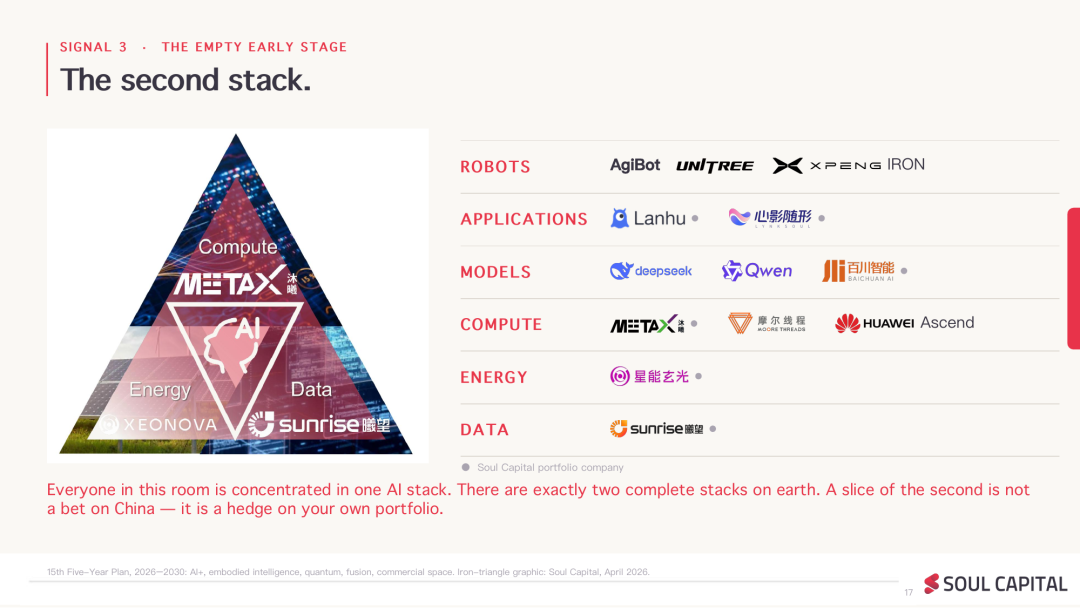
Figure 1: The AI technology system from compute, energy, and data to models, applications, and robots. Gray dots mark Heart Capital portfolio companies as in the original chart.
Of course, it ultimately comes back to the product itself. Whether technology can solve customer problems, whether products can gain overseas market recognition, whether industrial capabilities can convert to revenue — these are the signals we need to keep tracking.
Beyond the IPO Buzz, Value Starts Forming Earlier
The second signal comes from exit markets.
In 2025, Hong Kong ranked first globally by IPO proceeds. In the first half of 2026, Hong Kong saw 85 listings raising approximately HK$210 billion, up 92% year over year. Of that, 74% of proceeds came from industrial and technology companies. Specialist technology companies listed under Chapter 18C reached 13 in half a year, exceeding the total of 8 from the previous three years combined.
Greater China PE exit value rose from $17 billion in 2023, to $46 billion in 2024, to $53 billion in 2025. In 2025, the Asia-Pacific PE market returned more cash to investors than it called in capital — the first time since 2021.
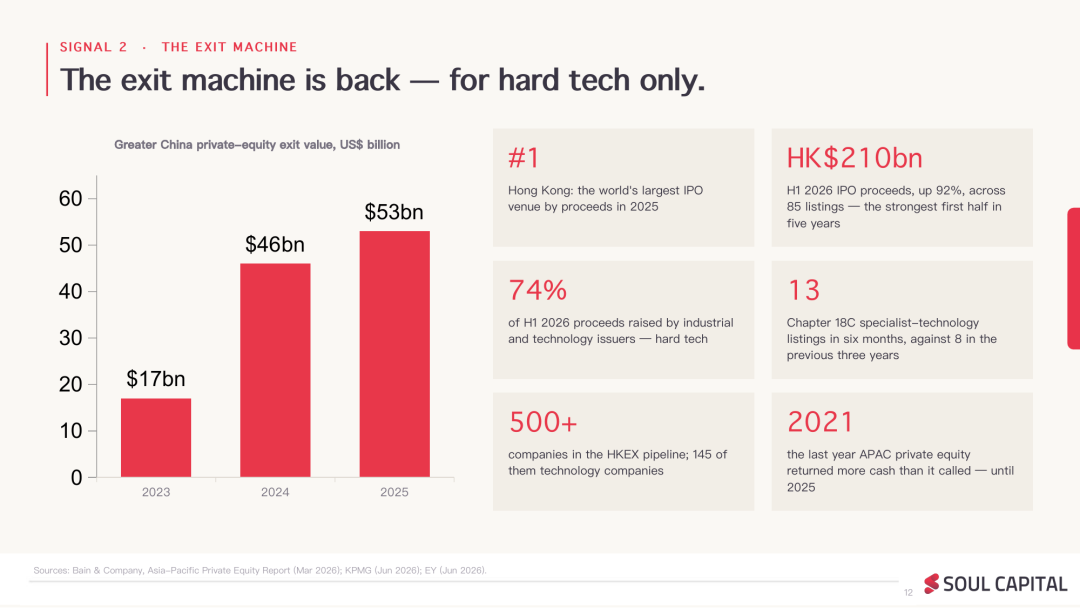
Figure 2: Greater China PE exit value and Hong Kong IPO market. Sources and statistical definitions as noted below figure.
These numbers show me that exit pathways for hard tech companies are becoming clearer. But as an early-stage investor, I want to push one step further: when a company goes public, are you already on its shareholder register?
We invested in MetaX at Series A. On December 17, 2025, it listed on the STAR Market, closing up 568% on its first day. Numbers like that easily make headlines, but the investment relationship was built much earlier.
I want to ask everyone here a question: "Who in this room could buy a single share?" Who could purchase even one share?
Foreign participation in STAR Market IPOs remains restricted, and before listing, companies have already gone through technology validation, product development, and commercialization. Our Series A participation was in this long growth process. By the time a company reaches IPO, the price, transaction structure, and participation methods may already be different.
This is why I emphasize early stage. The recovery of exit channels makes value realization clearer; but whether you can participate in value creation requires building understanding of the company and relationship with the founder earlier.
Three Types of Capital, Moving to Different Positions
My misjudgment about dollar capital happened right here: the technology wave arrived, but the familiar capital didn't return in the same way.
Today, I divide capital in the Chinese market into three categories.
First, US-source dollar capital that has left.
Some US pensions and endowments exited their existing positions. More broadly, fundraising for China-focused foreign-currency funds dropped from $150 billion across 1,105 funds in 2022, to $13.6 billion across 97 funds in 2025. Part of the capital supply that previously supported early-stage companies contracted accordingly.
Second, RMB and state capital that now dominates.
In the first half of 2026, China VC/PE market investment reached RMB 431 billion, up 173% year over year, with 44.7% going to AI. This capital is deploying heavily, but typically prefers companies with existing revenue, profit, or clearer development paths. For earlier-stage teams, there still needs to be someone willing to bear technology and commercialization uncertainty.
Third, non-US source dollar capital that is refocusing on China. This comes from the Gulf, Europe, Southeast Asia, and elsewhere. In 2026, approximately 60 dollar funds are fundraising in the market, involving roughly $35 billion; in the first half of the year, capital commitments to China foreign-currency funds reached $6.7 billion, up 122% year over year. Interest is returning, but fundraising and commitments are still a process away from actually deploying into early-stage companies.
Moreover, returning capital has its own preferences. Some investors prefer IPO participation, or opportunities with shorter exit cycles. The result is:
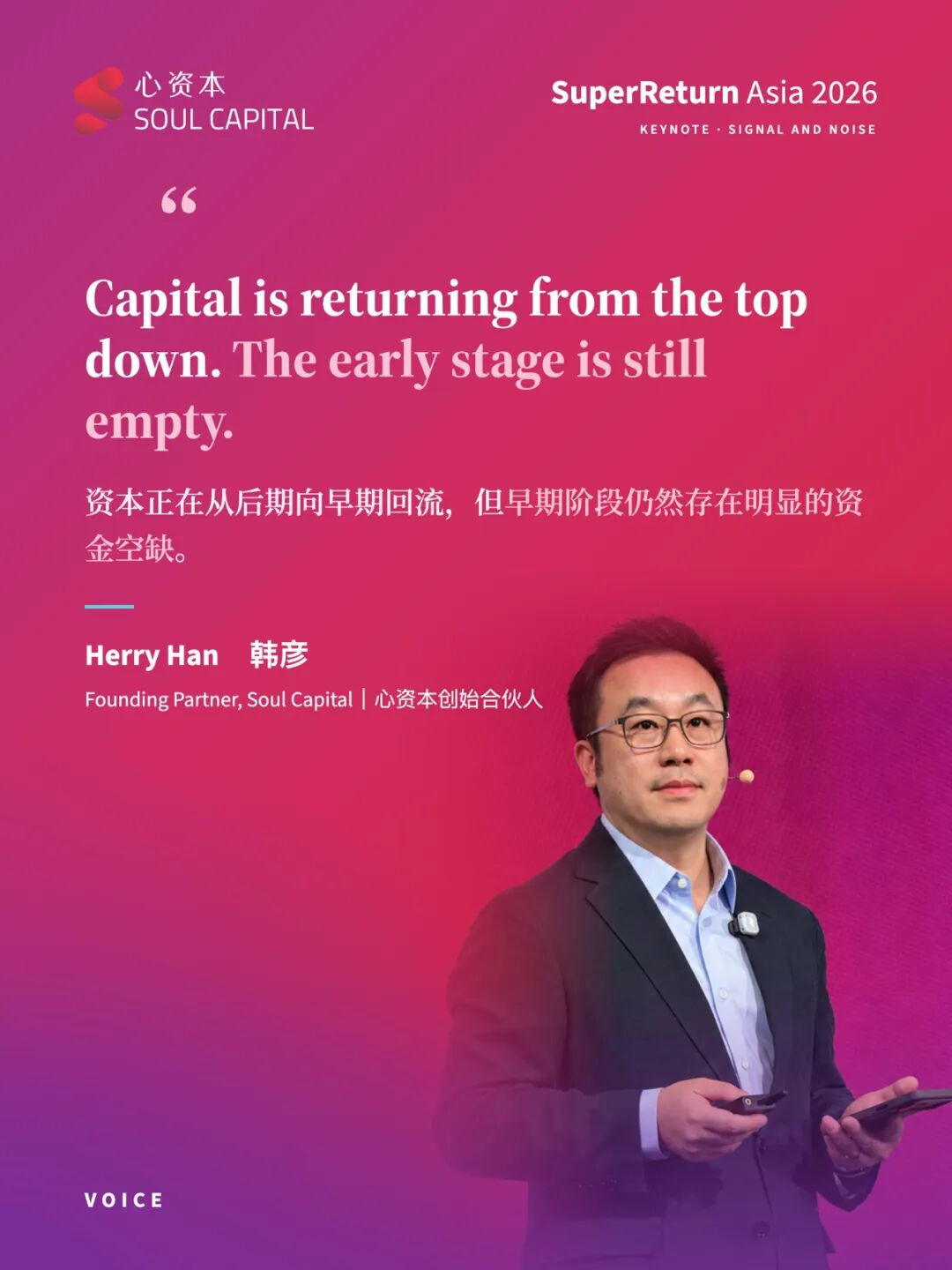
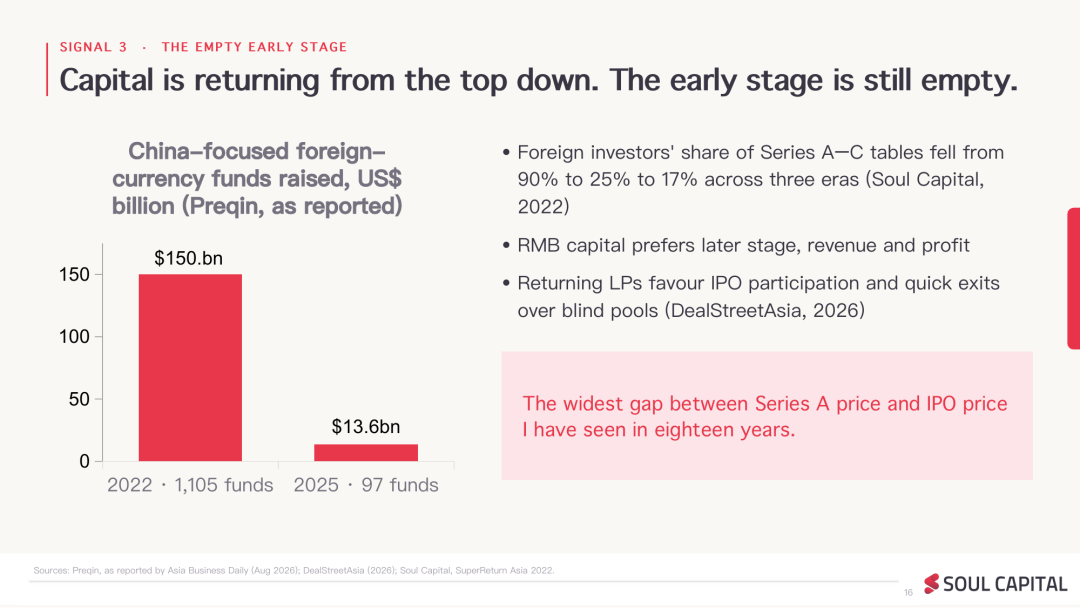
Figure 3: Changes in China-focused foreign-currency fund fundraising and observations on early-stage capital supply. Sources and statistical definitions as noted below figure.
In my eighteen years of investing, this is the largest gap I've seen between Series A pricing and IPO pricing. This is my read on the current market, and why I continue to focus on early stage.
Technology and industrial capabilities are advancing, exit markets are recovering, yet capital willing to accompany companies at earlier stages remains insufficient. For investment institutions that understand technology, know founders, and are willing to commit for the long term, this gap merits serious study.
One House, Two Doors
So we built a house, and left two doors.
One faces non-US source dollar capital, including institutions from the Gulf, Europe, and Asia. Through dollar funds oriented toward these investors, combined with RMB funds and QFLP onshore investment channels, we study participation pathways in semiconductors, GPUs, AI models, and infrastructure within applicable regulatory frameworks. Here "non-US" refers to capital source and relevant identity; the funds are still denominated in dollars.
The other is left for our American friends. We hope to participate in robotics, electric vehicles and eVTOL, energy, industrial digitalization, and applications through standalone vehicles or co-investment arrangements, to the extent permitted by applicable rules. Which specific companies can be invested in, and what structures to use, still require legal review based on investor identity, company business, and applicable rules.
We want to do both doors well. Because this was never about who is out — it's about who can still participate, and in what way.
In today's market, understanding technology is only part of the work. We also need to build pathways that match capital from different sources with companies' long-term development.
We Search for the Next Wave of Challengers Along Industrial Lineages
What we invest in has never been just one company after another. We follow industrial lineages, continuously searching for this wave's leaders and the next wave's challengers.
First, electrification and embodied intelligence.
We participated in Xpeng Motors at Series A, and also Xpeng Motors' flying car unit at Series A. From smart vehicles to eVTOL and low-altitude mobility, to following Xpeng's robotics and IRON humanoid robot, long-term tracking of teams and industrial capabilities allows us to study new product forms more deeply.
Second, AI compute.
From MetaX to Xi Wang, we have continuously tracked GPU development, including Xi Wang's S3 inference GPU. Looking ahead, 3D stacked computing, TPU-class chips, and new computing architectures are all directions we continue to study. We want to understand where the next phase's compute bottleneck lies, and who has the capability to solve it.
Third, optics.
During my Lightspeed China period, we invested early in what became an important part of Zhongji Innolight. Around that company, we accumulated industry relationships and technical knowledge, and continue to follow optical computing and optical interconnect. AI's development is placing new demands on computation and data transmission; we need to build on our existing understanding to find next-generation technology and teams.
Fourth, space. We invested early in LandSpace and MicroNano Space, covering launch vehicles and satellites. LandSpace's Zhuque-3 successfully completed its first-stage recovery mission in 2026. Building on these foundations, we continue to follow next-generation launch capabilities including reusability and high-frequency launch.
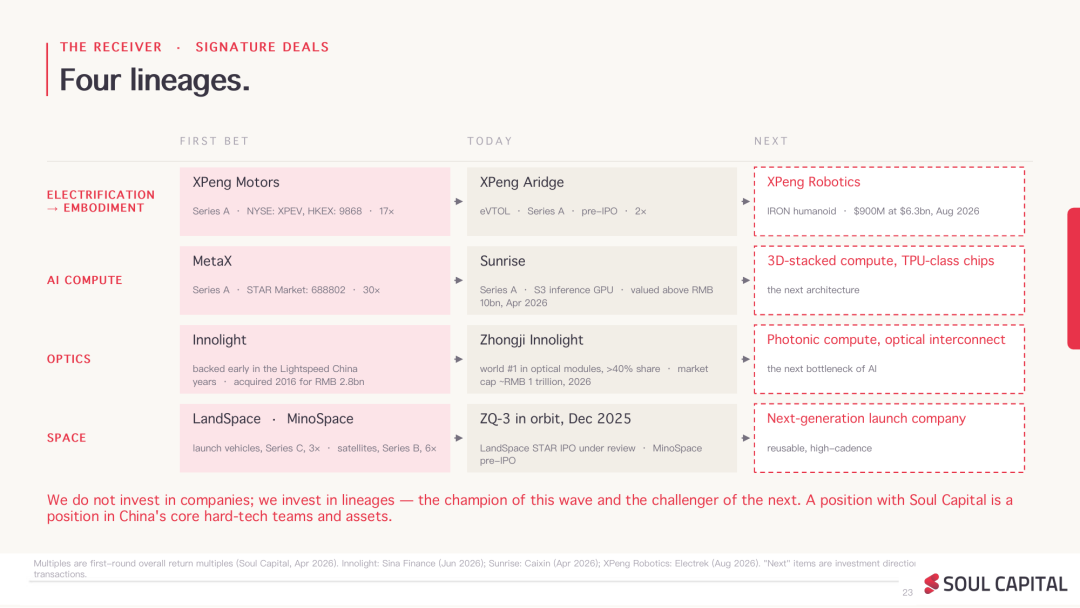
Figure 4: Four industrial lineages extending from portfolio companies to next-generation technologies. "Next" column indicates investment research directions, not completed transactions; return multiples are on a whole-of-first-round-investment basis, not equivalent to fund net returns or fully realized cash distributions; dates and explanations as noted below figure.
Being an early institutional investor for outstanding founders is what we've been doing for eighteen years. Only this time, the technology frontier has moved forward again.
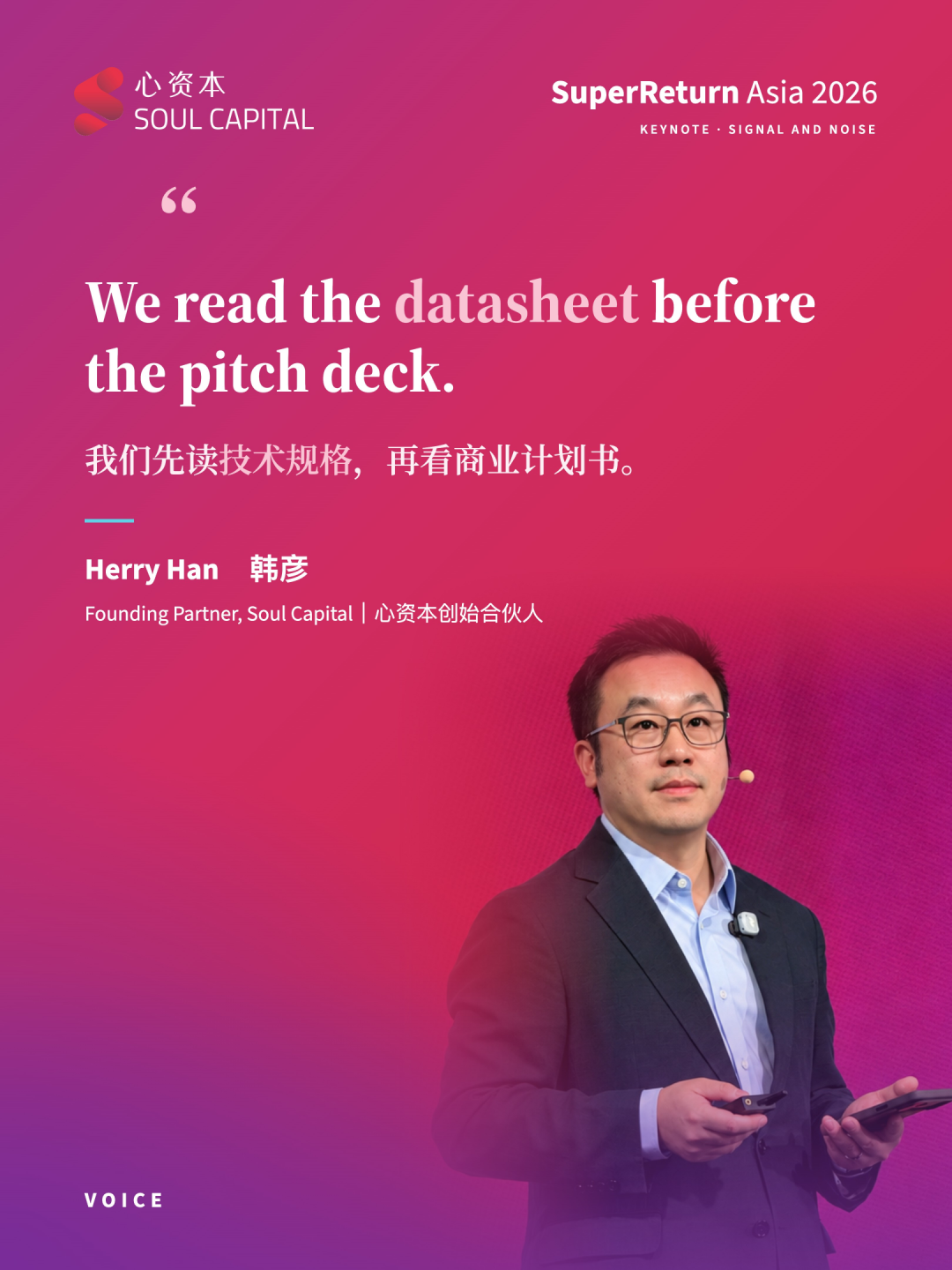
I was once a Microsoft engineer, then went to McKinsey & Company, then into venture capital. Our partners each have over ten years of VC experience, and professional team members come from industry. When we discuss a company, we want to go deep into technical indicators, architecture choices, and engineering implementation — not just stop at market stories.
Fund size should also match this way of working. We set a ceiling of $200 million for each non-US source dollar fund, and RMB 1 billion for RMB funds. We want to deepen conviction in our investments, not endlessly expand fund size.
We also work with local governments and industry leaders to co-invest at Series A, and provide support through subsequent development and exit stages. We've led about twelve founders to meet with Gulf sovereign funds, connecting companies with international institutions.
I often say that Chinese founders "do ten, say one." They've built a great deal, but aren't necessarily skilled at explaining it to the world. Making these stories clear, and helping international capital understand them more directly, is also our work.
2026 to 2028: Three Clocks Are Running
Why do I place the coming investment window in 2026 to 2028? Because three clocks are running simultaneously.
First is the valuation clock.
Public market performance is affecting private market pricing. As companies receive more attention, the price at which investors can enter also changes. The price relationships we see today won't stay where they are.
Second is the regulatory clock.
Conditions for cross-border capital participation continue to evolve. For investors from different sources, we need to put project judgment and structural preparation on the same timeline, figuring out early what pathways are available for participation.
Third is the listing process clock. Hong Kong already has over 500 companies queued for listing applications, of which 145 are technology companies. The companies you hope to participate in early are walking step by step toward public markets. As companies mature, the stages and methods by which early investors can participate are also changing.
In 2023, I gave a time range. Today, what I want to emphasize is that this window has its temporal boundaries. What we need to do is find outstanding founders while technology keeps maturing, exit channels recover, and early-stage capital has not fully returned — accompany them in turning technology into product, and then bringing product to global markets.
Two years from now, someone will stand on this stage presenting the 2028 scorecard. I hope your name is on it.
Come visit Shanghai. Almost everyone who has come has later changed their view. Chat with founders, look at products, walk into the industrial scenes where change is happening — you'll hear those signals more clearly.
Heart Capital was founded in 2022 as a venture capital fund focused on investing in early-stage Chinese technology startups.
The Heart Capital team consists mainly of founding partners and core investors from Lightspeed China, along with senior investors from industry. The team's past investments include MetaX (688802.SH), Xpeng Motors (NYSE: XPEV, 09868.HK), Full Truck Alliance (NYSE: YMM), SUNMI (06810.HK), RoboSense (02498.HK), Ambiq Micro (NYSE: AMBQ), Hanshow Technology Co., Ltd. (301275.SZ), FinVolution (NYSE: FINV), HERE (NASDAQ: HERE), as well as LandSpace, MicroNano Space, Baichuan, Yunmanman Cold Chain Logistics, World Logistics, FanDeng Reading, Lanhu, and others.
Rooted in China with a global outlook, Heart Capital is committed to early-stage accompaniment and support for entrepreneurial teams with the potential to become world-class Chinese technology companies. Heart Capital champions the value of "heart," believing that technology can serve as a bridge connecting minds. Heart Capital looks forward to accompanying more young Chinese entrepreneurs onto the world stage.