Heart Capital's portfolio companies in China's space sector, LandSpace and MinoSpace, both report major breakthroughs — successful launches and test missions | Heart Capital NEWS

Invest in China's technology with conviction and care.

Over the past week, Heart Capital has received a steady stream of good news from the skies. Two Chinese aerospace companies in Heart Capital's portfolio — LandSpace and MinoSpace — have both achieved major milestones. At 12:12 PM on May 17, LandSpace's self-developed Zhuque-2 modified Y2 carrier rocket lifted off from the Dongfeng Commercial Space Innovation Test Zone. It successfully delivered six satellites to their designated orbits: the Tianyi 29 (Geo-1), Tianyi 34 (Southern University of Science and Technology-1), Tianyi 35 (Nanchang Aviation-1), Tianyi 42, Tianyi 45 (Beijing University of Posts and Telecommunications-2), and Tianyi 46 (Beijing University of Posts and Telecommunications-3), all developed by Changsha Tianyi Space Technology Research Institute. The flight test mission was a complete success.
At 12:05 PM on May 21, MinoSpace's "Taijing-3 04" and "Taijing-4 02A" satellites were launched via the Lijian-1 Y7 carrier rocket from the Jiuquan Satellite Launch Center and successfully entered orbit. Their solar panels deployed normally, and telemetry signals were received from both satellites. The launch mission was a complete success. Heart Capital has been investing in the aerospace sector for years, and has witnessed the remarkable track records of MinoSpace, a domestic leader in high-end satellite R&D and manufacturing, and LandSpace, a domestic leader in liquid oxygen-methane launch vehicle development and operations. With both companies now reporting successful missions, the Heart Capital team extends its sincere congratulations. Heart Capital has always believed in the potential of commercial aerospace, actively investing in commercial space projects and remaining bullish on electrification and intelligence opportunities — including aerospace — with the goal of doing China's tech investment right.
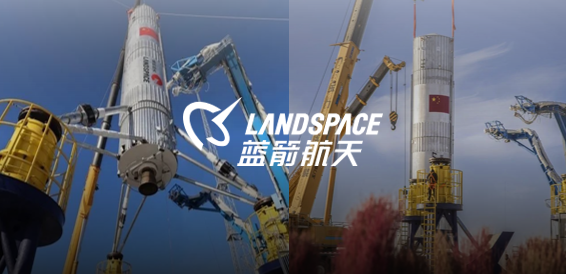
The Zhuque-2 modified is China's first dual-cryogenic liquid launch vehicle to use all-subcooled propellant loading. It integrates core innovations including a high-thrust liquid oxygen-methane propulsion system, niobium-tungsten alloy large-area-ratio nozzle manufacturing technology, and a single-layer common bulkhead tank with integrated single-layer tunnel feed lines. It can deliver 4-ton-class payloads to 500 km sun-synchronous orbit, serving low-Earth and sun-synchronous orbit missions, and is gradually becoming a core product for China's commercial space market.
As a key commercial launch following the Y1 mission, the Y2 rocket largely maintains the proven structural configuration and control strategy of its predecessor. For this mission, it was equipped for the first time with a 4.2-meter diameter, 8.7-meter length composite payload fairing, significantly enhancing compatibility with diverse, large-scale payloads and improving overall mission adaptability.
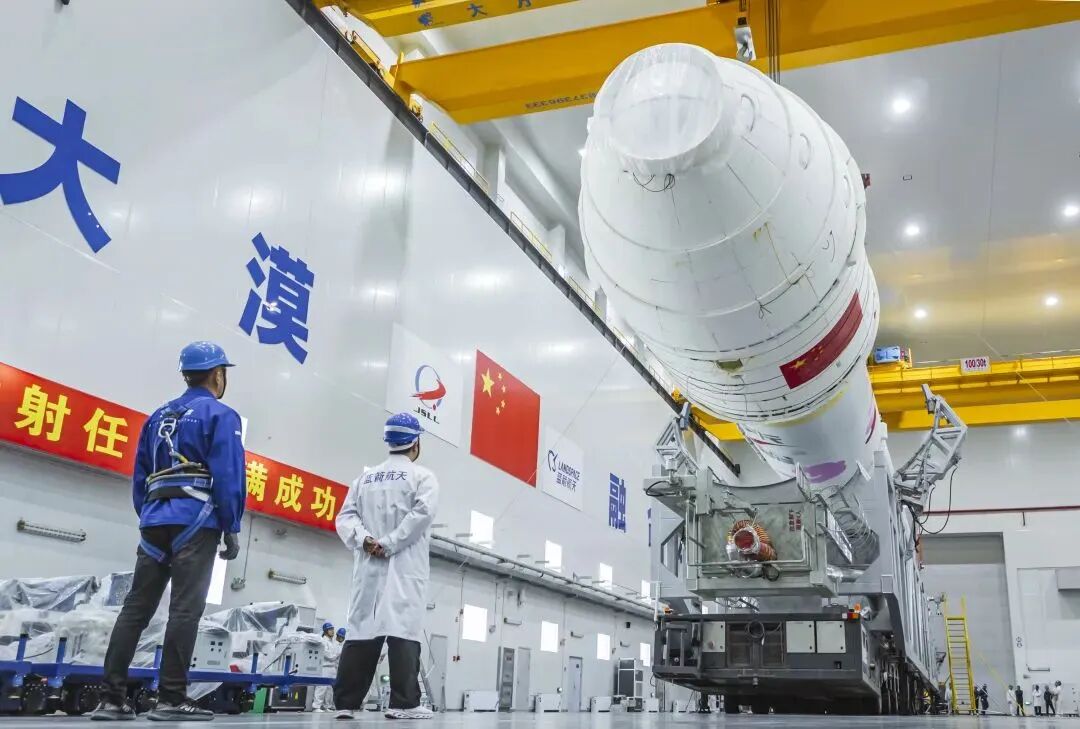
The rocket uses a two-stage configuration. The first stage is powered by four TQ-12A liquid oxygen-methane engines in parallel, each producing 720 kN of sea-level thrust, providing strong propulsion and attitude control capability. The second stage uses the TQ-15A engine with 836 kN vacuum thrust, featuring 60% throttle capability and three-start capability, paired with the YQ-10 auxiliary propulsion system. This supports thrust modulation, orbital maneuvering, velocity trimming, attitude adjustment, and other precision operations to meet complex mission requirements.
Building on continuous optimization, the Y2 rocket incorporates multiple upgrades over the first-flight model, including: increased first-stage engine thrust, elimination of the first-stage oxygen vent connector to streamline launch operations, upgrade from metal to composite payload fairing, and adoption of quasi-real-time wind-corrected trajectory design technology — significantly improving mission response efficiency and system stability.
This mission was organized and implemented in strict accordance with LandSpace's quality and safety management system. During mission preparation, the team conducted multiple rounds of specialized reviews and contingency drills, comprehensively examining technical status and operational risks. During mission execution, the rocket used a "three-horizontal" launch preparation mode: full-vehicle horizontal testing and horizontal mating in the technical area, followed by horizontal transfer to the launch pad for erection, fueling, and launch. All phases proceeded in an orderly manner with stable system operation, further validating the rocket's reliability and commercial launch service capability.
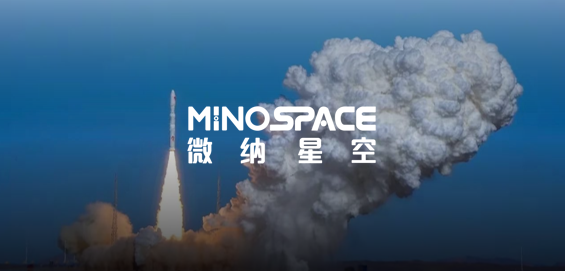
The Taijing-3 04 is China's first agile high-resolution remote sensing satellite in the commercial space sector. Weighing 310 kg, it carries a high-resolution visible-light/multispectral remote sensing camera capable of 0.5 m panchromatic / 2 m multispectral resolution at nadir from 500 km orbit, with a swath width exceeding 17.8 km. The camera payload was fully developed in-house by MinoSpace, significantly reducing R&D costs while greatly improving commercial viability.
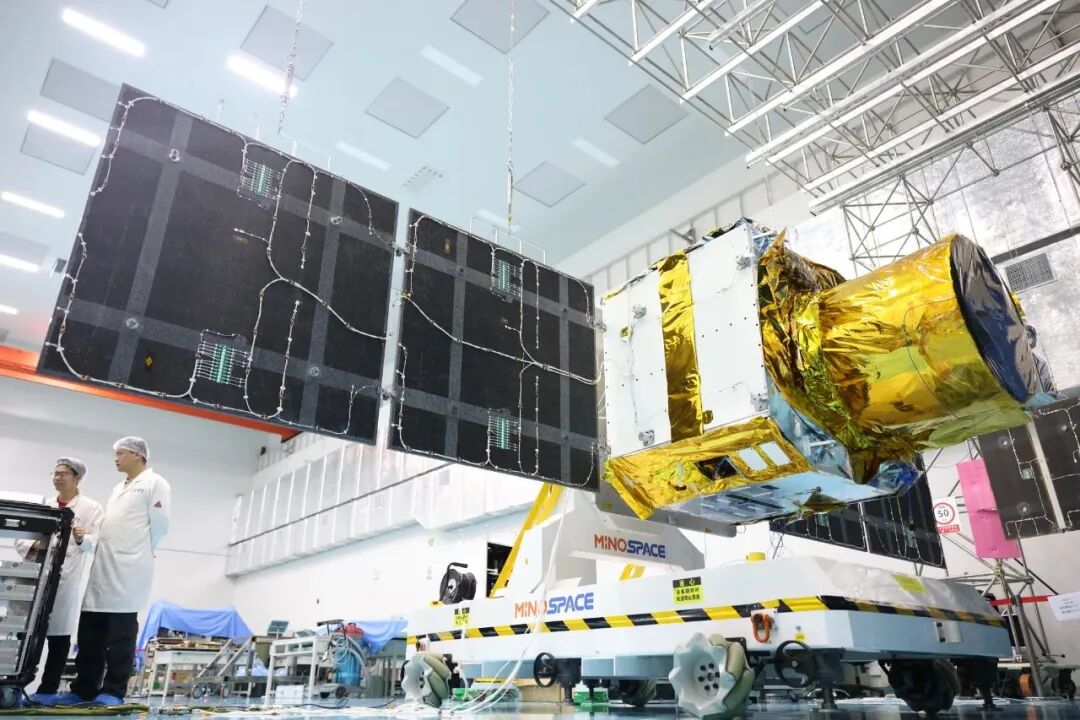
The Taijing-3 04 features exceptional agile maneuverability — more than 80% better than conventional optical remote sensing satellites — enabling multi-strip mosaic, multi-target, and stereo imaging modes, which is of great significance for advancing the construction of a real-scene 3D China. The satellite is also equipped with on-board intelligent processing payloads using a self-developed "computing power+" model, enabling rapid "monitoring, extraction, and data processing" for specific targets with autonomous training and model iteration capabilities. Through real-time interaction between the payload, intelligent processing unit, and high-speed data transmission, the satellite can achieve image-to-recognition-to-downlink minute-level rapid response, making it particularly suitable for emergency scenarios demanding high resolution and processing speed.
Additionally, the Taijing-3 04 is among China's leading commercial satellites with high-resolution remote sensing large-model computing capability. Leveraging MinoSpace's accumulated remote sensing image datasets, it can continuously provide ample data for remote sensing large models. Going forward, this large-model computing capability will substantially enhance post-launch precision service capabilities in areas such as agricultural yield estimation and disaster damage assessment.
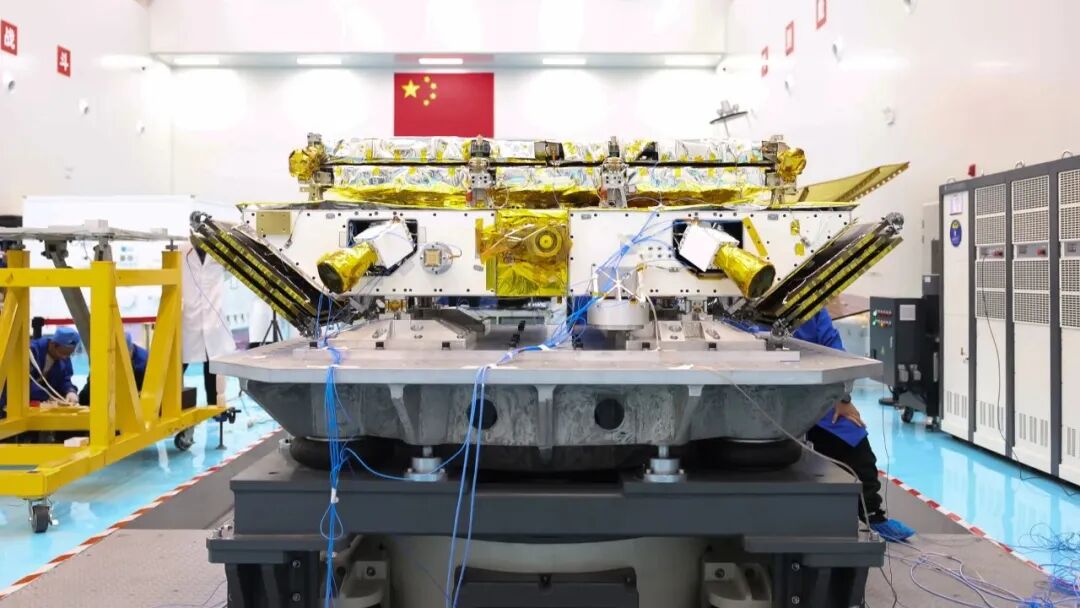
The Taijing-4 02A is a high-resolution flat-panel SAR satellite weighing 267 kg, with sub-meter image resolution and maximum imaging swath exceeding 240 km. It supports multiple imaging modes including spotlight, sliding spotlight, stripmap, TOPS, and scan. After entering orbit, the satellite will leverage synthetic aperture radar high-resolution imaging and microsatellite agile maneuverability to effectively address the challenge of satellites "seeing clearly and seeing widely." Going forward, MinoSpace will continue building on its growing capabilities in satellite "development, launch, and deployment," gradually achieving "no-blind-spot, full-coverage" and correlated surveillance applications through constellation networking. Following the Taijing-4 02A launch, it will perform precision networking with operational Taijing-series satellites to build a spatial remote sensing constellation with collaborative observation capability, significantly improving revisit efficiency.
The Taijing-4 02A uses MinoSpace's self-developed flat-panel SAR satellite standardized general platform. Through modular design and general-purpose component configuration, satellite development cycles are reduced by over 40% compared to traditional approaches. In batch production, MinoSpace has achieved scaled parallel manufacturing of same-platform satellites through configuration optimization and supply chain coordination, cutting single-satellite production time by 60% compared to the first satellite.
Per its development plan, MinoSpace will launch more than 10 additional optical and SAR satellites with international leading capabilities this year, substantially enhancing its satellite networking and Earth observation application capabilities.

Founded in 2022, Heart Capital is an early-stage Chinese venture capital fund focused on technology and digitalization. The team is led by Yan Han, founding partner of Lightspeed China, alongside core investors, a CFO, and senior investors with industry backgrounds. Notable past investments include Series A investments in Xpeng Motors (NYSE: XPEV, 09868.HK), Full Truck Alliance (NYSE: YMM), as well as FinVolution (NYSE: FINV), RoboSense (02498.HK), Baichuan, Manman Cold Chain, Fan Deng Reading, World Logistics, MinoSpace, LandSpace, Lanhu, Starfield, and others. Rooted in China with a global outlook, Heart Capital seeks true value in non-consensus. The firm respects the value of "people" and champions the potential of the "heart," looking forward to accompanying more young Chinese entrepreneurs in strengthening China and going global.