Xpeng Aeroht's "Land Aircraft Carrier" Debuts: The World's Only Car That Can Carry an Aircraft | Xinwen NEWS

Pre-sales are planned to begin by the end of this year.
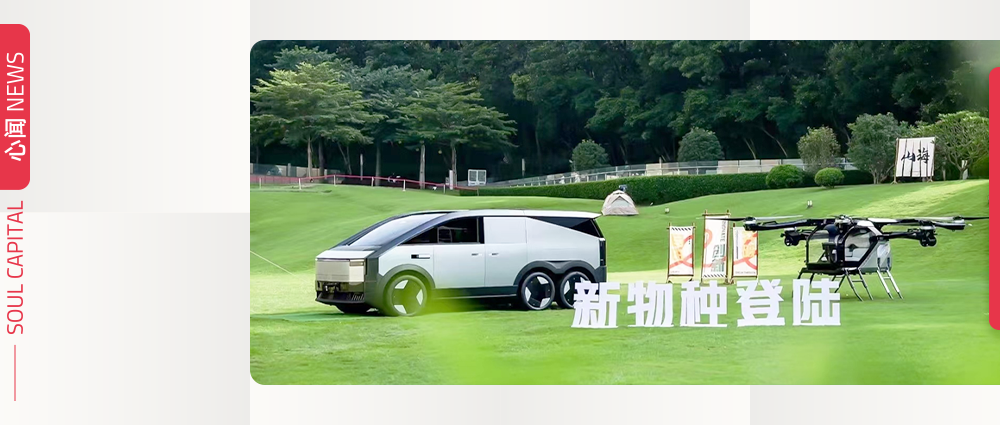
On September 3, Xpeng Motors hosted an advance preview event for its "Land Aircraft Carrier" flying car. The modular flying vehicle made its first public appearance in Guangzhou with an open demonstration flight, showcasing potential use cases for this new breed of aerial transportation. In early August, Xpeng Motors had just announced a $150 million Series B1 funding round and initiated its Series B2. The financing ensures steady progress on R&D, mass production, and commercialization. Heart Capital invested in Xpeng Motors' Series A round in 2021, and was also an investor in Xpeng Motors' Series A round.
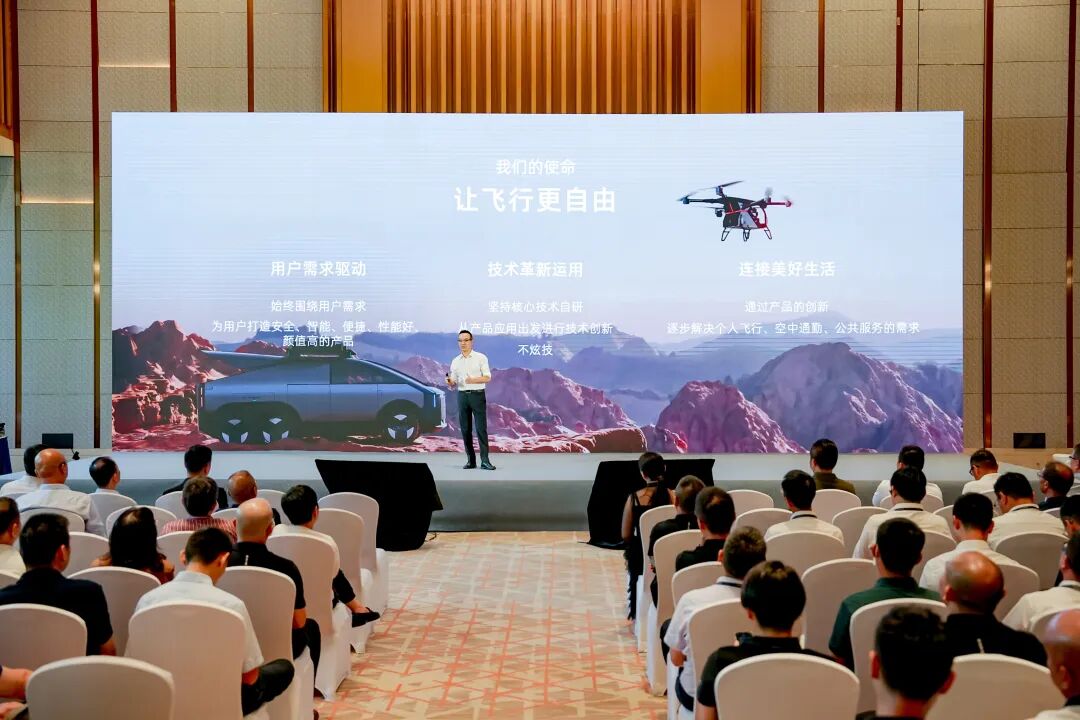
At the event, founder Deli Zhao detailed the company's history, mission, three-phase product strategy, highlights of the "Land Aircraft Carrier," and key commercialization plans for this year: the vehicle will make its first public manned flight at Airshow China in Zhuhai — one of the world's four major airshows — in November, followed by an appearance at the Guangzhou International Auto Show the same month, with pre-sales scheduled to begin by year-end.
The World's First Modular Flying Car Arrives: The Future Is Here
Xpeng Motors is currently Asia's largest flying car company and an ecosystem partner of Xpeng Motors. In October 2023, it first revealed the modular flying car concept. Less than a year later, the physical vehicle was unveiled at this preview event. As Deli Zhao slowly pulled back the curtain, the imposing silhouette of the "Land Aircraft Carrier" came into view.
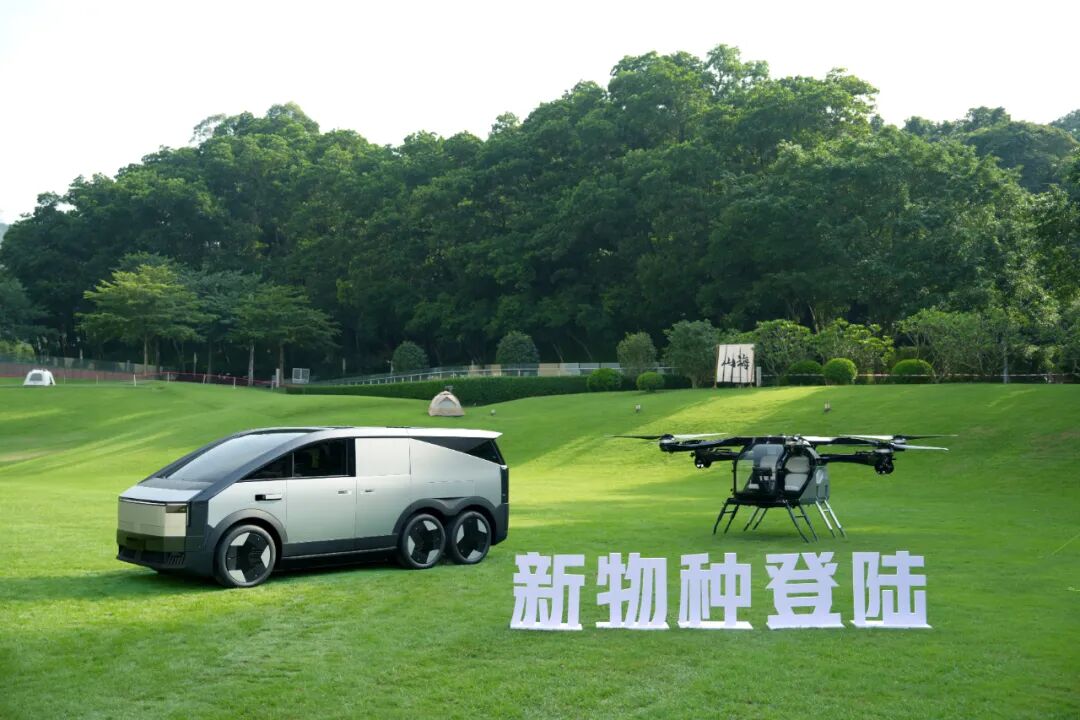 (Image: The "Land Aircraft Carrier" flying car makes its debut)
Beyond the static display, guests witnessed an actual flight demonstration. The aerial vehicle took off vertically from a lawn, circled, and landed smoothly — a preview of a typical future use case: friends and family on an outing, camping outdoors, then taking a low-altitude flight over scenic terrain for an entirely new aerial perspective.
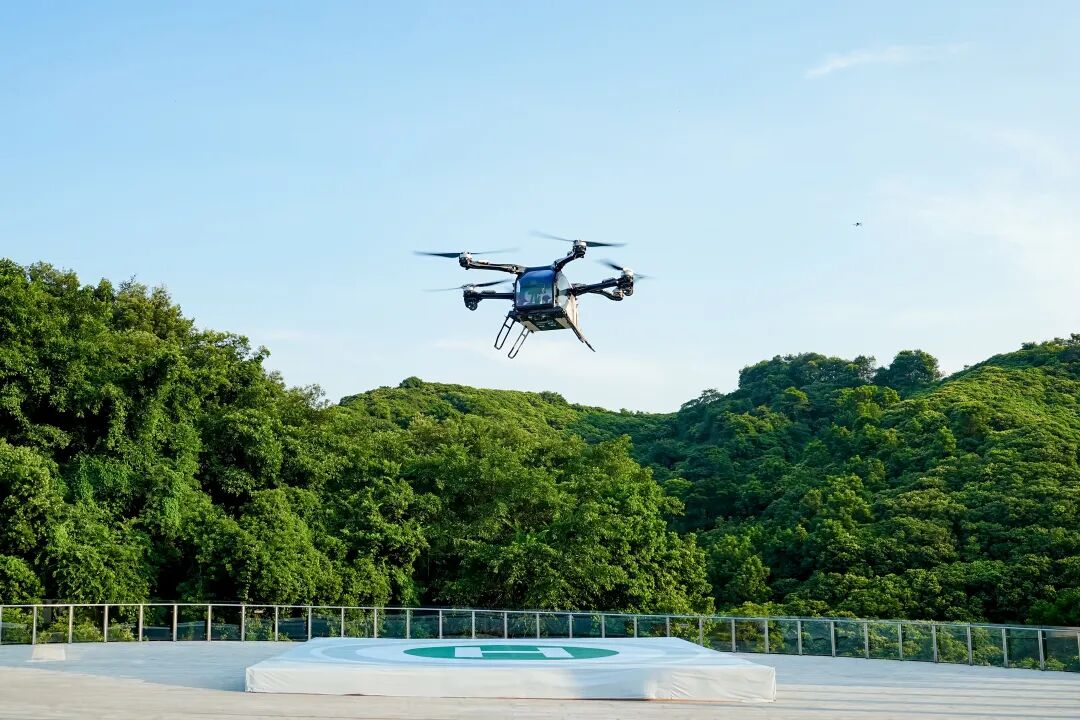 (Image: The "Land Aircraft Carrier" aerial vehicle's first flight)
A "Lunar Rover" for Earth's Surface: Striking Looks, Serious Performance
The "Land Aircraft Carrier" adopts a minimalist, aggressive cyber-mech design language that reads instantly as something new. At roughly 5.5 meters long, 2 meters wide, and 2 meters tall, it fits in standard parking spaces and underground garages, and can be driven on land with a standard Class C license. The vehicle consists of two parts: the ground module and the aerial module. The ground module, dubbed the "land carrier," uses a three-axle, six-wheel design with 6×6 all-wheel drive and rear-wheel steering, delivering solid load capacity and off-road capability. Overcoming unprecedented engineering challenges, the design team created the world's only car trunk that can fit an "airplane" while still providing spacious four-seat interior comfort.
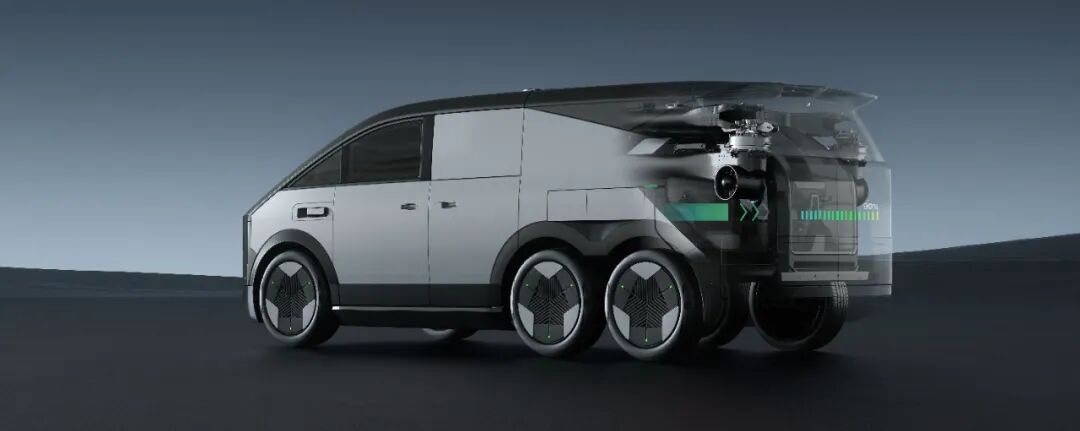 (Image: The oversized trunk — the world's only car that can carry an "airplane")
The side profile is ruthlessly clean, with a flowing "galactic parabola" roofline extending from the full-width headlamps. Power-assisted coach doors add a sense of occasion. The land carrier's trunk features a "semi-transparent glass" design, making the stored aerial vehicle visible — whether driving or parked, proudly signaling that future technology has entered everyday life.
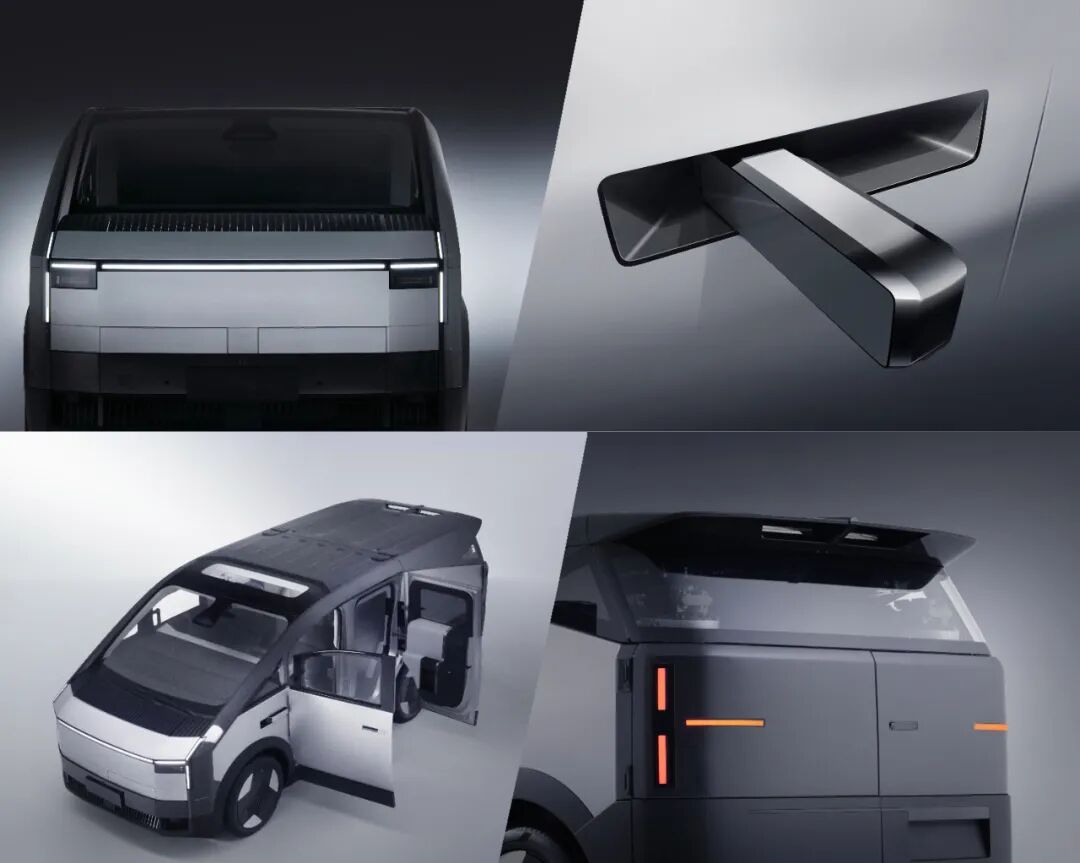 (Image: Exterior design of the "Land Aircraft Carrier")
The aerial vehicle uses a six-axis, six-propeller, dual-ducted fan configuration, with carbon fiber for both the main body structure and rotor blades to balance high strength with light weight. A 270-degree panoramic cockpit gives pilots expansive visibility.
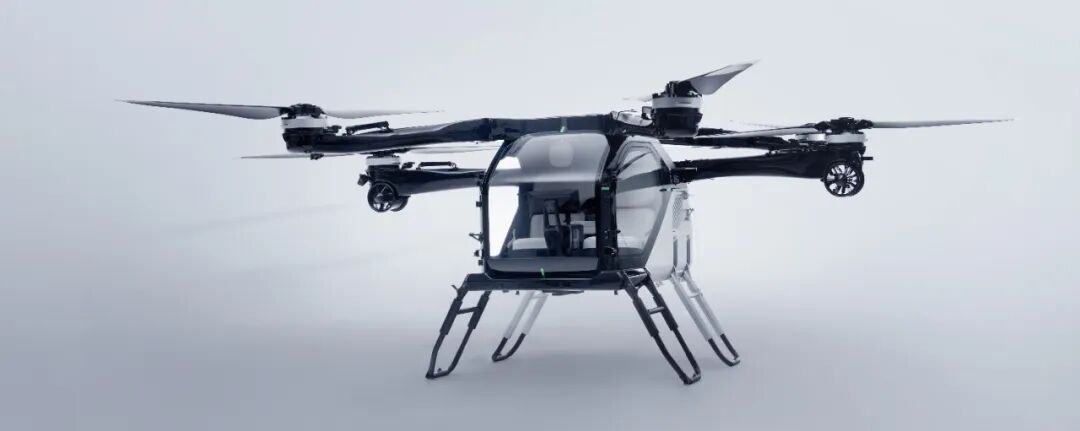 (Image: The "Land Aircraft Carrier" aerial vehicle)
World's First In-Vehicle Automatic Docking System: Go Anywhere, Fly Free
Through in-house R&D, Xpeng Motors developed the world's first automatic vehicle-mounted docking mechanism. With one-button operation, the ground and aerial modules automatically separate and reconnect. After separation, the aerial vehicle's six arms and rotors deploy for low-altitude flight. Upon landing, the arms and rotors fold, and the ground module's autonomous driving and automatic docking system precisely reconnects with the aerial module. This breakthrough solves two major pain points of traditional aircraft: difficulty moving and difficulty storing. The ground module isn't just a mobility platform — it's also a storage and charging platform, a true "land aircraft carrier" enabling users to "go anywhere, fly free."
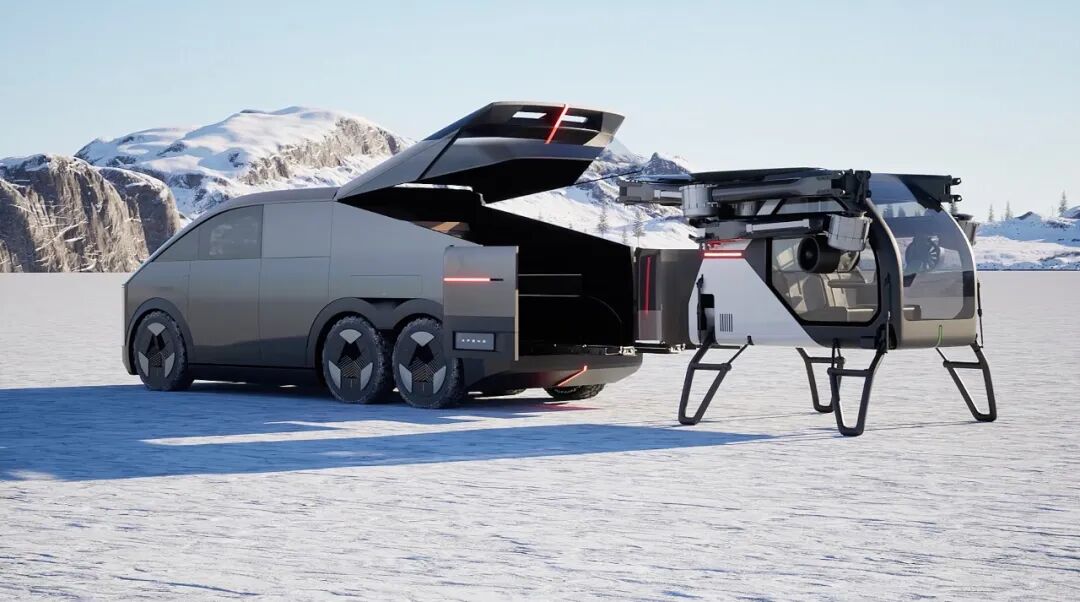 (Image: Automatic separation and docking of the "Land Aircraft Carrier")
Hardcore Powertrain Technology: Worry-Free on Ground and in Air
The land carrier features the world's first 800V silicon carbide extended-range power platform, with combined range exceeding 1,000 km for easy long-distance travel. Beyond that, it serves as a "mobile supercharging station," capable of high-power charging for the aerial vehicle whether driving or parked. A full tank and full charge support six flights.
The aerial vehicle uses a full-domain 800V silicon carbide high-voltage platform, with flight battery, electric drive, electric ducted fan, and compressor all at 800V, enabling lower energy consumption and faster charging.
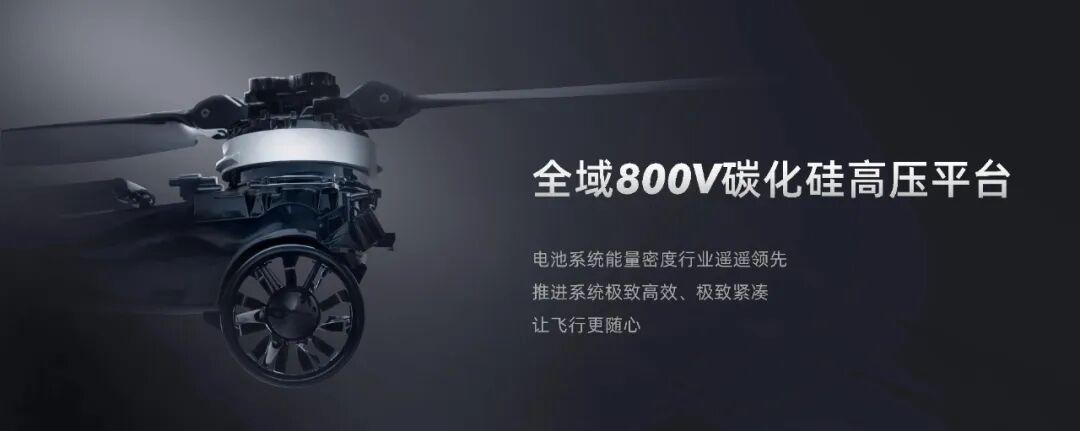 (Image: 800V silicon carbide high-voltage platform electric drive for flight)
Aerial Autonomy, Full-Domain Redundancy: Flying Made Simple and Safe
The aerial vehicle supports both manual and autonomous flight modes. Traditional aircraft controls are extremely complex, with steep learning curves. To address this, Xpeng Motors pioneered a single-lever control system operable with one hand, replacing the traditional "hands and feet" complexity. Even beginners can achieve "five minutes to get started, three hours to get good."
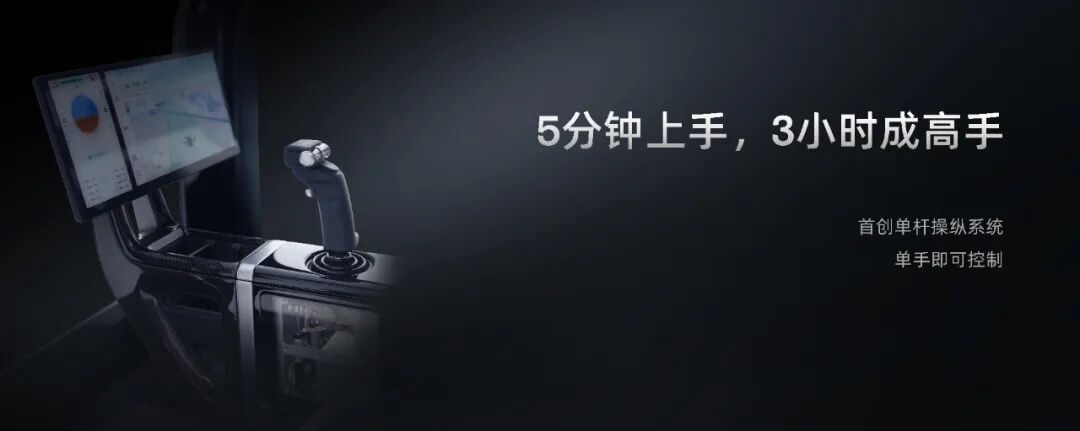 (Image: The pioneering single-lever flight control system)
In autonomous mode, the system enables one-button takeoff and landing, automatic route planning, and autonomous flight, with multi-dimensional intelligent aerial sensing, obstacle avoidance assistance, and landing vision aids.
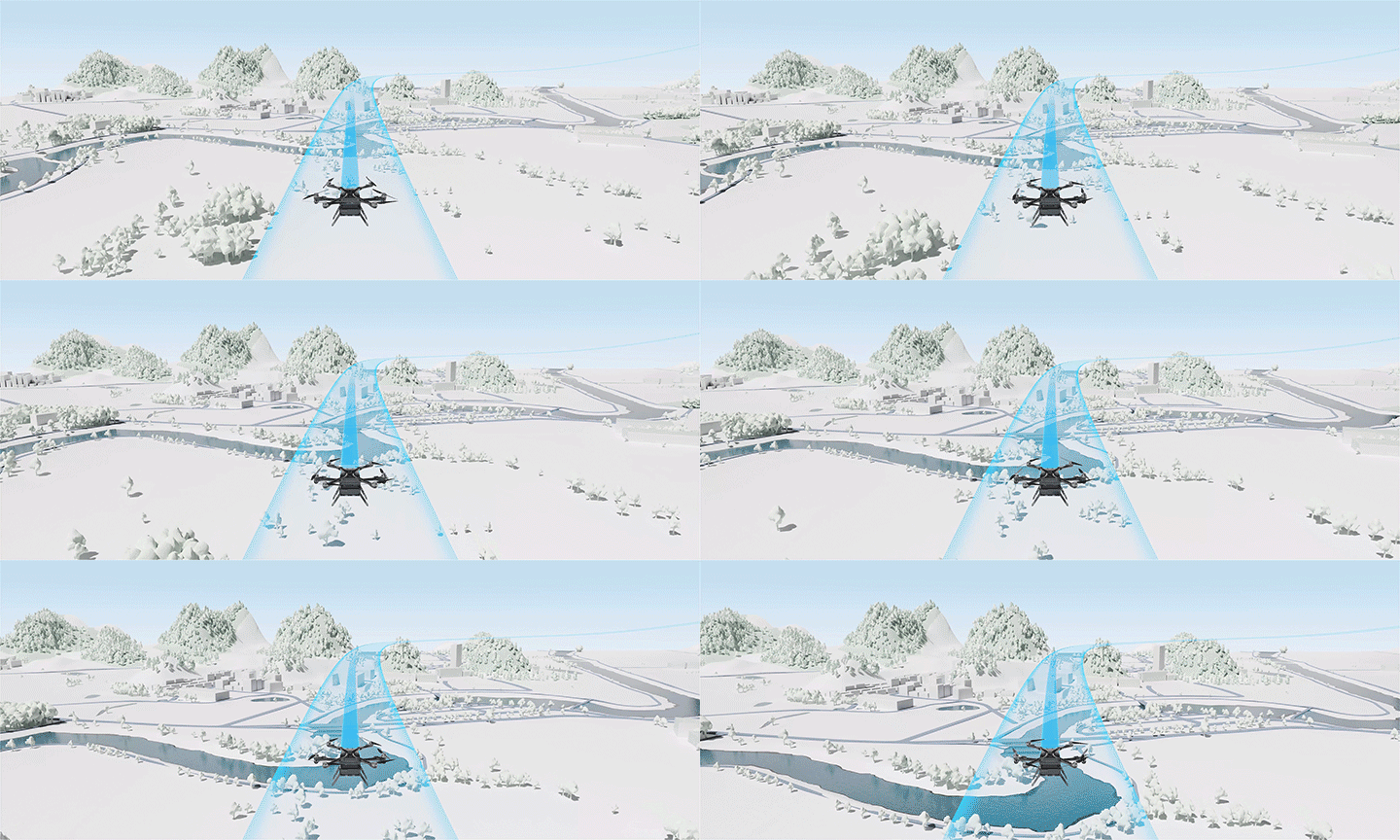 (Image: Autonomous flight and intelligent obstacle avoidance)
The aerial vehicle employs full-domain redundant safety design, with backup systems for power, flight control, electrical supply, communications, and controls — if the primary system fails, the secondary takes over seamlessly. The intelligent flight control and navigation system uses triple-modular heterogeneous redundancy, with different hardware and software architectures to reduce the risk of a single fault mode disabling the entire system. Going forward, Xpeng Motors will deploy over 200 aerial vehicles for parallel safety testing across three levels: components, systems, and complete aircraft. This includes single-point failure tests for all critical systems and components — rotors, motors, battery packs, flight control systems, navigation equipment — as well as "three highs" testing to validate performance, safety, and reliability under extreme conditions of high temperature, extreme cold, and high altitude.
Building a Nationwide Flying Car Experience Network: Making Flight Accessible
Deli Zhao explained that while developing safe, intelligent flying cars and low-altitude mobility products, the company is also partnering nationwide to rapidly build out "Land Aircraft Carrier" use cases. To date, Xpeng Motors has signed cooperation agreements for over 70 flight camps, with plans to exceed 200 by year-end. The goal is for users in core cities to reach the nearest flight camp within a 30-minute drive, or at most two hours in some cities — enabling spontaneous, on-demand flying. Future road trips will expand into the air, with flight camps integrated along classic travel routes so users can "drive and fly all the way," experiencing the freedom of "soaring over mountains and seas, traversing heaven and earth."
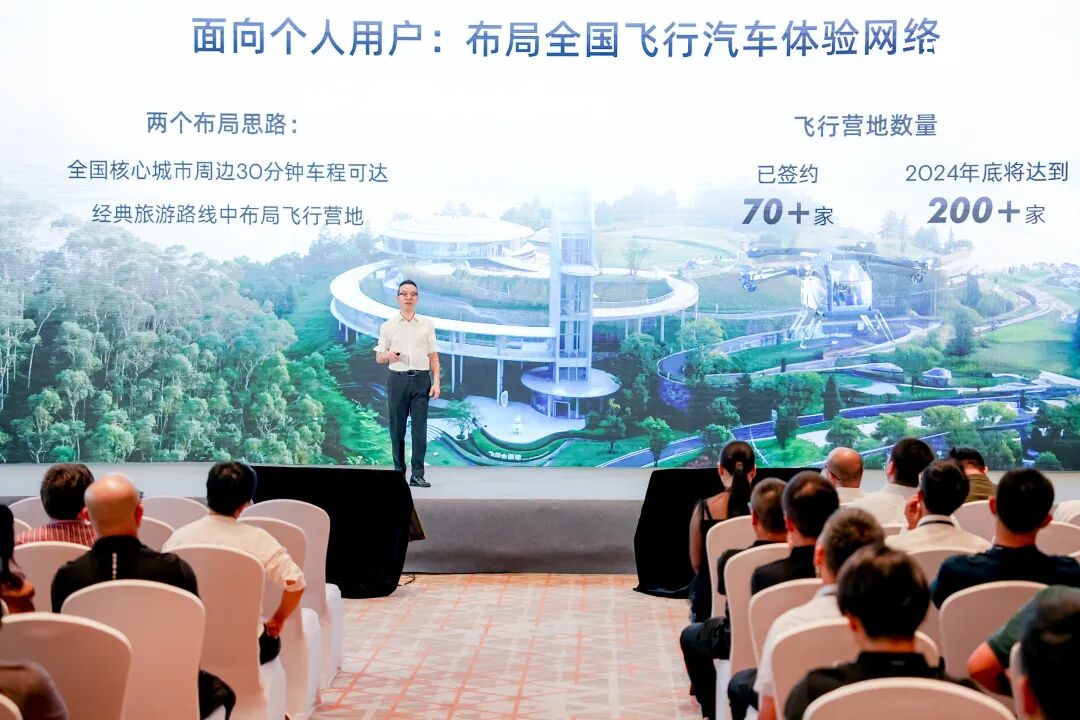 (Image: Xpeng Motors' nationwide flying car experience network plan)
Flying cars offer not just new personal mobility experiences but also significant potential value in public services. Xpeng Motors is simultaneously expanding "Land Aircraft Carrier" applications in areas such as emergency medical rescue, short-distance obstacle-crossing rescue, highway accident rescue, and high-rise escape systems.
 (Image: Typical public service application scenarios for the "Land Aircraft Carrier")
"Three-Step" Strategy: Focused Product Creation Toward Flying Freedom
At the preview event, Deli Zhao introduced Xpeng Motors' "three-step" product strategy for the first time. The company believes that for the low-altitude economy to reach trillion-scale, it must solve passenger and cargo transportation, and that "aerial commuting" will need time to mature. Low-altitude flight will begin in "restricted scenarios" — suburbs, scenic areas, flight camps — then progress to "typical scenarios" like inter-terminal transport and intercity travel, ultimately achieving door-to-door, point-to-point "3D transportation." In short: from flying in the wild to flying in urban CBDs, from suburbs to cities, from experience flights to aerial transit.
Based on this scenario analysis, Xpeng Motors is executing a "three-step" product strategy: Step one, launch the modular flying car "Land Aircraft Carrier" for restricted-scenario flight experiences and public services, driving low-altitude flight industry chain and ecosystem development through scaled production and sales while validating the business model; Step two, introduce high-speed, long-range eVTOL products to solve aerial transportation in typical scenarios, while working with low-altitude stakeholders to build urban three-dimensional transportation; Step three, launch integrated land-air flying cars to truly achieve door-to-door, point-to-point urban 3D transportation. To meet more diverse needs, between steps one and two, Xpeng Motors plans to develop derivative products of the "Land Aircraft Carrier" ground and aerial modules, supporting expanded scenario experiences and public service applications.
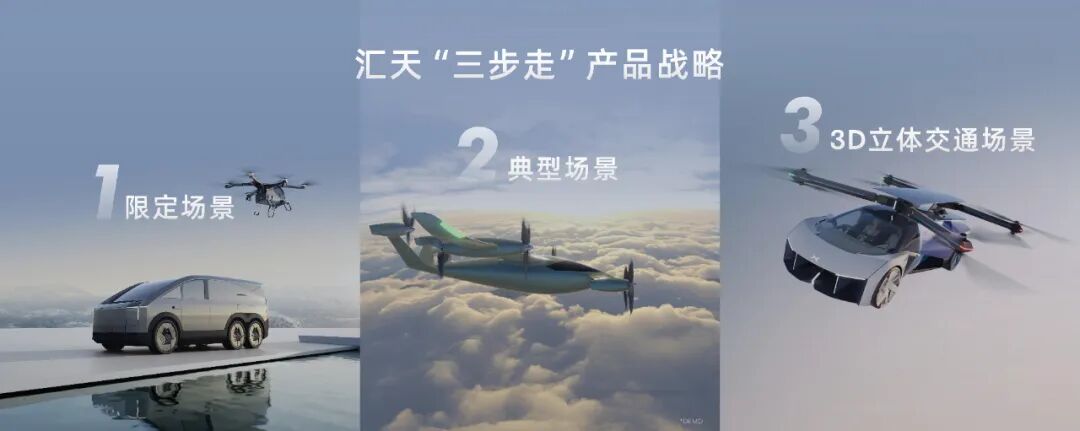
(Image: Xpeng Motors' "three-step" product strategy)

Founded in 2022, Heart Capital is a China-based early-stage venture capital fund focused on technology and digitalization. The team is led by Lightspeed founding partner Yan Han, together with core investors, a CFO, and senior investment professionals with industry backgrounds. Portfolio companies include Xpeng Motors (NYSE: XPEV, 09868.HK) and Full Truck Alliance (NYSE: YMM), both invested at Series A, as well as FinVolution (NYSE: FINV), RoboSense (02498.HK), Baichuan, Manbang Cold Chain, Fan Deng Reading, World Logistics, Micro-Nano Star, LandSpace, Lanhu, Starfield, and others. Rooted in China with a global outlook, Heart Capital seeks true value in non-consensus. The firm respects the value of "people" and champions the potential of the "heart," aspiring to accompany more young Chinese entrepreneurs in strengthening China and expanding worldwide.