Congratulations to LandSpace on the successful flight test of the Zhuque-2 Improved Y5 carrier rocket | Xinxing PORTFOLIO

The Vermilion Bird Questions Heaven, Riding the Rising Eastern Wind.
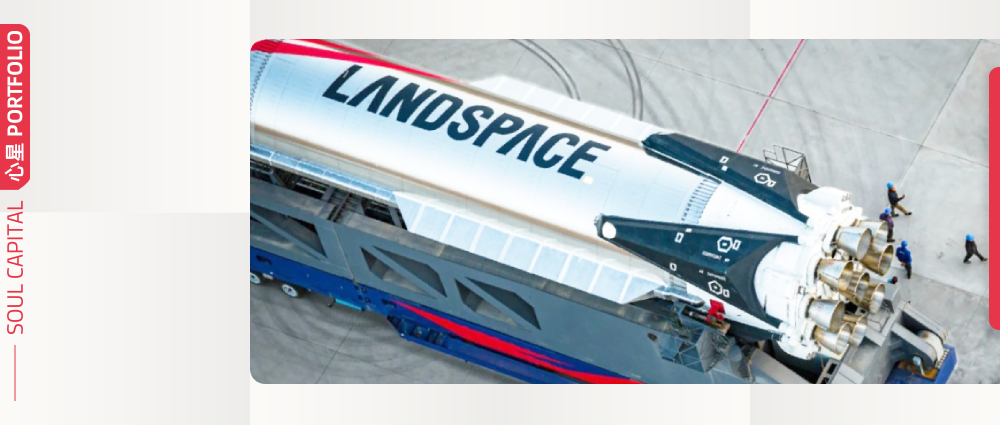
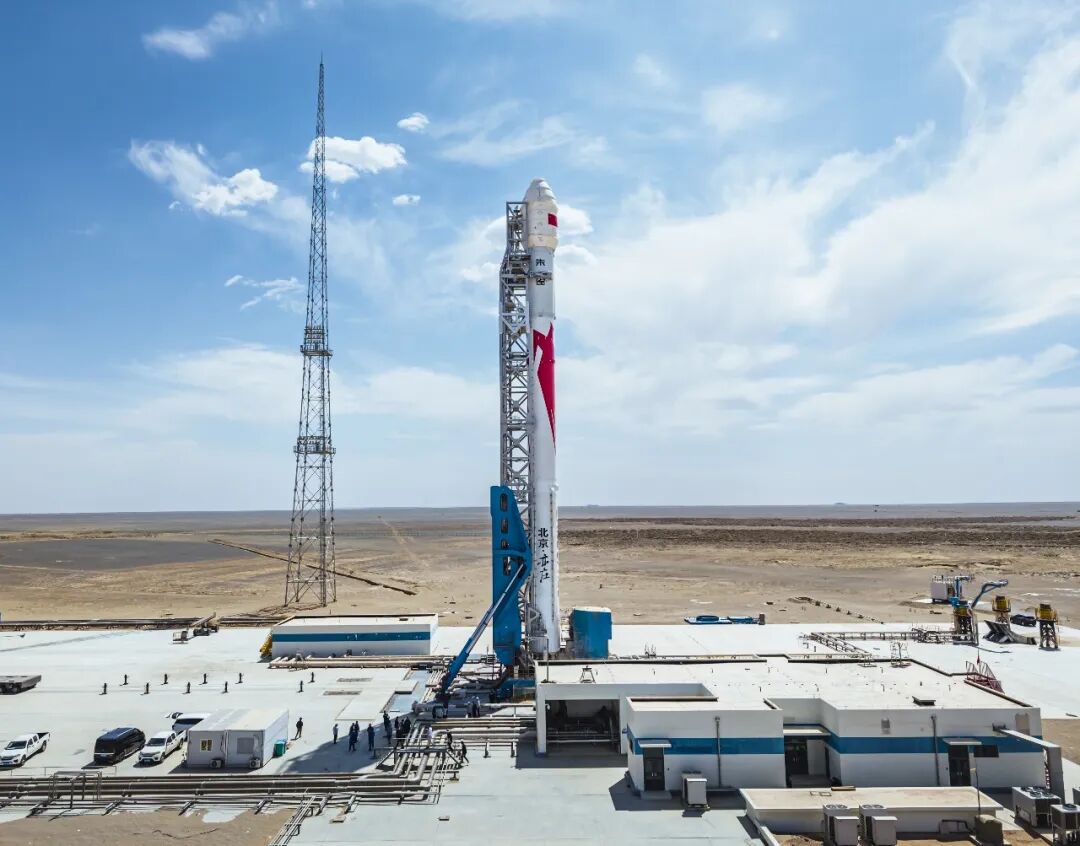
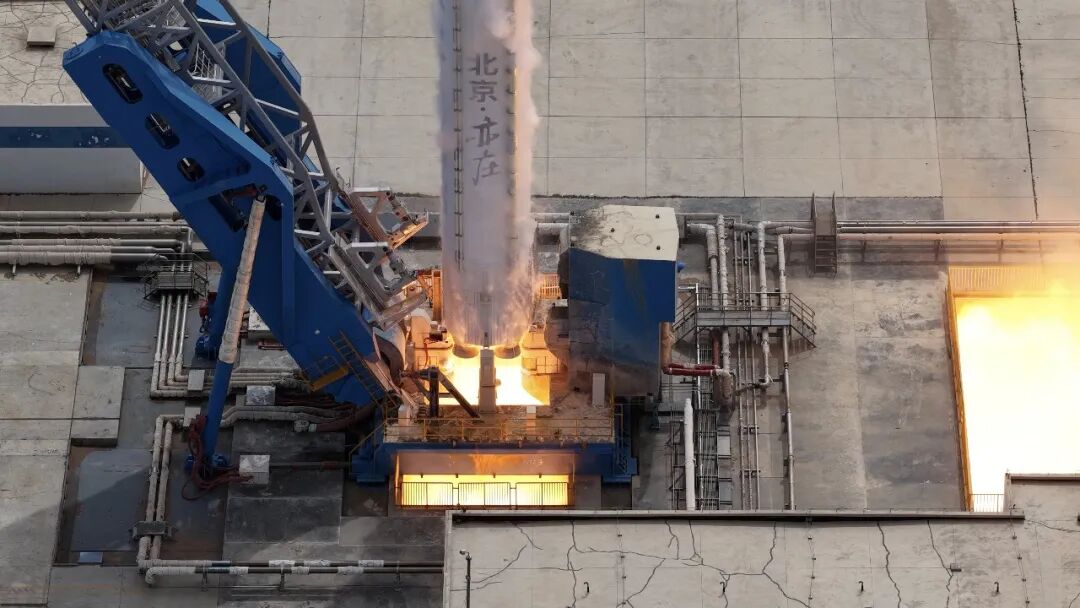
At 11:00 a.m. Beijing Time on May 14, 2026, the Zhuque-2 Enhanced Y5 (ZQ-2E Y5) carrier rocket lifted off from LandSpace's liquid oxygen-methane launch pad at the Dongfeng Commercial Space Innovation Test Zone. The rocket completed its entire flight sequence normally, with the second stage entering its designated orbit — the mission was a complete success. Building on proven technologies from previous flights, ZQ-2E Y5 is a two-stage, cryogenic, extended-length liquid rocket developed through systematic iterative design. This mission targeted a 900-kilometer orbit and carried a 2.8-ton customized test payload designed for large-scale constellation deployment. The success marks ZQ-2E's achievement of heavy-payload launch capability and its readiness for multi-satellite missions, providing mature and reliable launch capacity for building aerospace as an emerging pillar industry, accelerating satellite internet development, and executing future large-scale constellation projects.
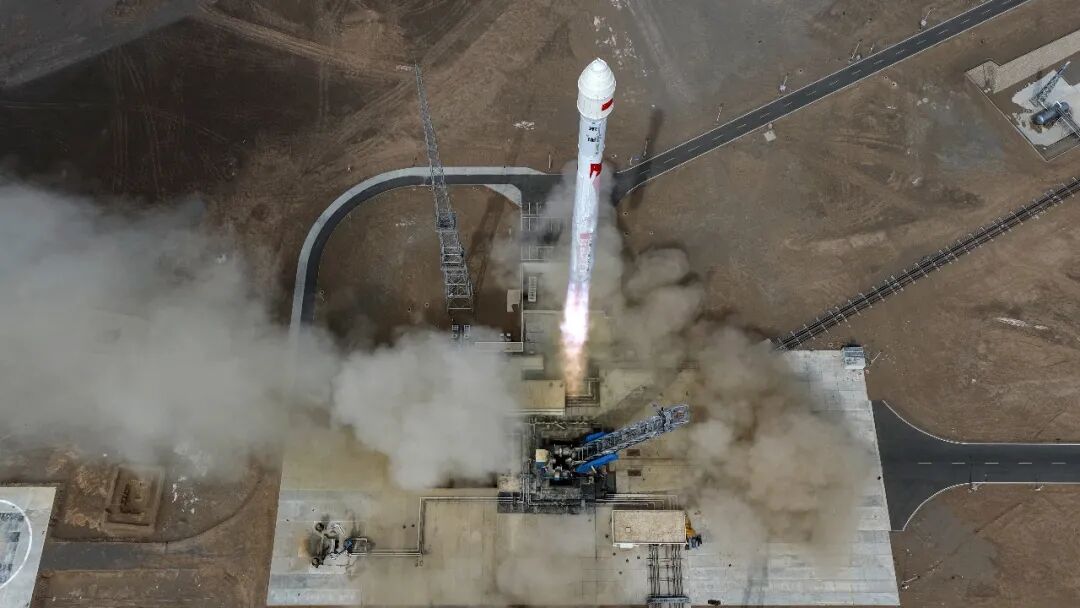
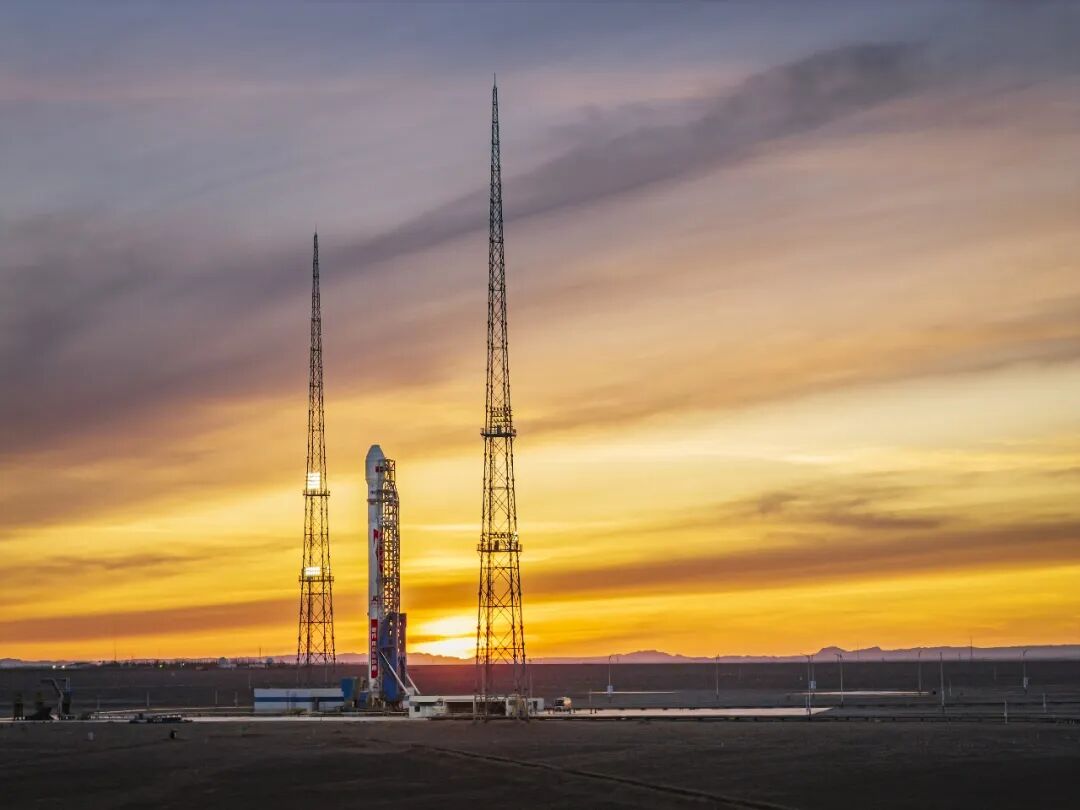
ZQ-2E Y5 measures 3.35 meters in diameter, with a maximum fairing diameter of 4.2 meters and an overall length of approximately 55.9 meters. The rocket has a liftoff mass of 267 tons (excluding payload) and liftoff thrust of 338 tons. The first stage is powered by four TQ-12A liquid oxygen-methane engines in parallel, each producing 828 kN of sea-level thrust — a 108 kN increase per engine over previous versions, with the addition of automatic thrust vectoring correction. The second stage uses a single TQ-15A engine with 858 kN of vacuum thrust. Key upgrades to ZQ-2E Y5 include first-stage lengthening, increased propellant loading, structural weight reduction, and enhanced first-stage engine thrust — all combining to unlock greater launch efficiency, significantly boost overall performance, and strengthen multi-orbit mission capabilities.
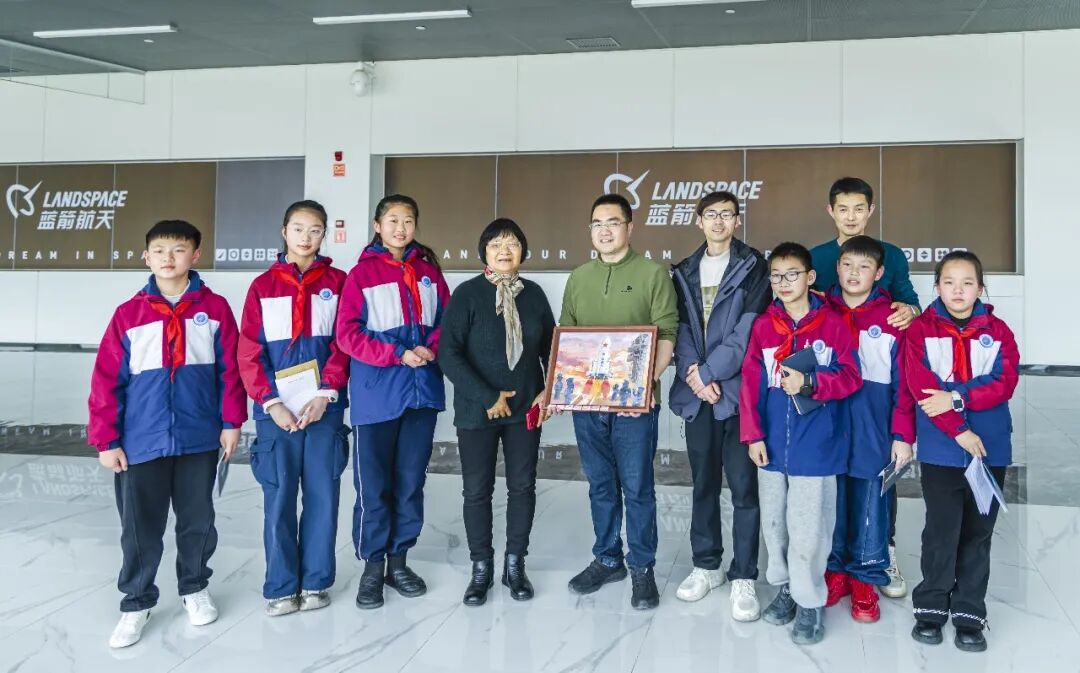
What makes spaceflight compelling isn't just technical achievement — it's the social value it carries. For this mission, LandSpace invited teachers and students from Huanggu Experimental School in Pinghu City to observe rocket operations at the launch site and interact with Qiu Jingyu, chief engineer of the ZQ-2E model. Today, the same group watched the launch together with engineers at LandSpace's Jiaxing facility. Since 1992, teacher Yao Aiying has led students in writing letters and donating to support China's space program, championing the slogan "Don't chase pop stars, chase science stars." For 34 years, she has sown the seeds of space dreams. In those final countdown seconds, this cross-generational dedication quietly took root in young hearts.
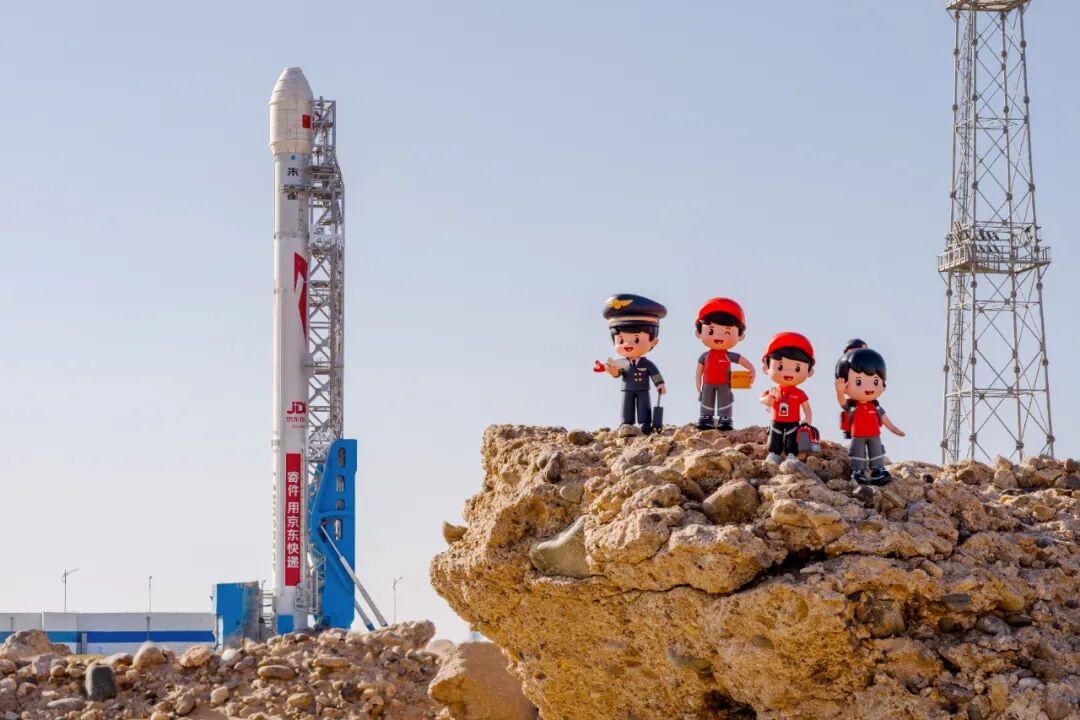
The ZQ-2E Y5 mission represents a concentrated showcase of achievements from Yizhuang's commercial aerospace industrial cluster. The rocket body prominently displays "Beijing Yizhuang" — both a tribute from us as a district-based enterprise to this fertile ground for industry, and a reflection of the tangible support its complete supporting infrastructure provides to the aerospace sector. We also partnered with JD Express to reach the heavens together, using this brand collaboration to demonstrate how social and industrial forces can synergistically empower space engineering, jointly expanding a new paradigm of smart logistics bridging earth and space.
The successful execution of the ZQ-2E Y5 mission signals that the Zhuque-2 series has entered a mature and stable operational state. From ZQ-2 Y1 to ZQ-2E Y5, LandSpace has continuously iterated and optimized key liquid oxygen-methane launch vehicle technologies, gradually forging a development path built on an autonomous and controllable key-component supply chain, with engineering practice driving continuous model upgrades. This lays a solid foundation for China's commercial space sector to execute high-frequency, large-scale launches. The model currently delivers 4 tons to 500-kilometer sun-synchronous orbit and 6 tons to low-Earth orbit, making it the primary operational medium-lift liquid oxygen-methane rocket in China. It can flexibly adapt to diverse mission requirements including multi-satellite launches and heavy-payload deployments, and can be combined with the ZQ-3 reusable launch vehicle for integrated launch services. This mission's success accumulated high-value flight data, providing a robust basis for cross-model technology iteration, and continuously strengthening the performance and service capabilities of the Zhuque series. At this historical starting point of the 15th Five-Year Plan, LandSpace remains deeply committed to liquid oxygen-methane core technologies. Through scaled, cost-effective launch vehicle development, we are building a complete, standardized commercial launch service ecosystem, offering customers diverse solutions including constellation deployment, dedicated launches, and rideshare services — delivering powerful momentum for building aerospace and other emerging pillar industries, and driving accelerated satellite internet development.

What ZQ-2E Y5 "Evolved"
★ After lengthening the first-stage tanks and implementing full subcooled propellant loading, ZQ-2E Y5 increased propellant capacity by approximately 15%. Meanwhile, structural weight reduction measures — including removing部分绝热层 from the first-stage tanks, optimizing cable raceway layout, and eliminating first-stage tail fins — achieved systematic weight savings, reflecting the systems engineering thinking embedded in the rocket's overall design.
★ In a first for China's private space sector, ZQ-2E Y5 pioneered a second-stage three-ignition "tank-pressure ignition + high-orbit deorbit" technical solution. Using engine tank-pressure ignition combined with final-stage passivation thrust, it enables rapid high-orbit deorbit. This ensures ignition reliability while effectively solving traditional high-orbit deorbit challenges, responding to national requirements for rocket end-of-life deorbit and space debris mitigation, and protecting precious orbital resources.
★ ZQ-2E Y5 pioneered first-stage engine online fault diagnosis and self-correction technology, while the second stage首次应用 a propellant utilization system. For conditions such as low engine thrust or mixture ratio deviation, the rocket can perform automatic diagnosis and response during flight, significantly improving flight reliability and launch service capabilities, and advancing launch vehicles steadily toward "smart rocket" status.
★ Drawing on mature mission flow design experience, this mission achieved breakthroughs in rapid launch capability: a 13-day test-launch cycle and 1.5-hour pre-launch propellant loading procedure, fully preparing both ZQ-2E and ZQ-3 vehicles for high-frequency missions.

Founded in 2022, Heart Capital is a venture capital fund focused on investing in early-stage Chinese technology startups.
Heart Capital's team consists primarily of founding partners and core investors from Lightspeed, alongside seasoned investors from industry backgrounds. The team's past investments include MetaX (688802.SH), Xpeng Motors (NYSE: XPEV, 09868.HK), Full Truck Alliance (NYSE: YMM), Sunmi Technology (06810.HK), RoboSense (02948.HK), Ambiq Micro (NYSE: AMBQ), Hanshow Technology (301275.SZ), FinVolution (NYSE: FINV), Qimengdao Group (NASDAQ: HERE), as well as LandSpace, Micro-Nano Aerospace, Baichuan, Manbang Cold Chain, World Logistics, Fan Deng Reading, and Lanhu.
Rooted in China with a global outlook, Heart Capital is dedicated to early-stage support for entrepreneurial teams with the potential to become world-class Chinese technology companies. Heart Capital champions the value of "heart," believing that technology can serve as a bridge connecting hearts. Heart Capital looks forward to accompanying more young Chinese entrepreneurs onto the world stage.