XPeng Aeroht's Mass-Production Factory Rolls Out First "Land Aircraft Carrier" Flying Car | Xingxing PORTFOLIO

Mass production is entering its final countdown.

On November 3, Huitian's flying car mass-production facility in Guangzhou's Huangpu district completed trial production and rolled out its first "Land Aircraft Carrier" airframe — marking the completion of the world's first flying car mass-production line. It is also the first factory globally to use a modern assembly-line process for batch production of flying cars. The airframes from this trial run will be used for testing and flight validation, further verifying product performance and manufacturing processes, laying a solid foundation for mass production and delivery of the "Land Aircraft Carrier" next year.
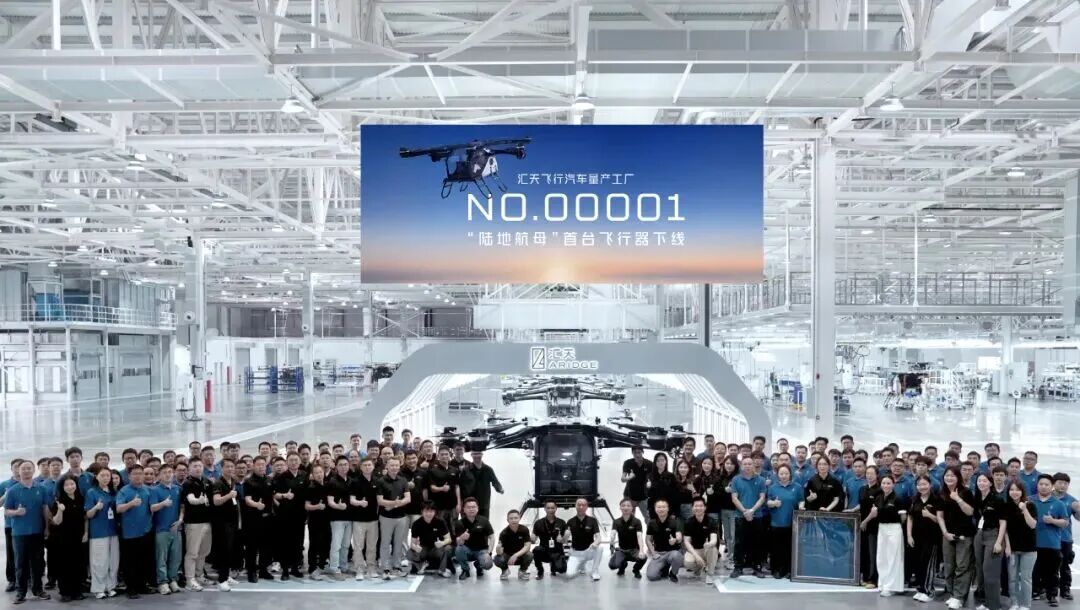
The first "Land Aircraft Carrier" airframe rolls off the line at Huitian's flying car mass-production facility
The facility covers approximately 120,000 square meters and is dedicated to producing airframes for the "Land Aircraft Carrier," a modular flying car. At full capacity, annual output will reach 10,000 units, with initial annual capacity at 5,000 units — making it the first factory worldwide with "10,000-unit" annual production capability. At full capacity, the line can produce one airframe every 30 minutes.
The facility breaks new ground by introducing automotive-style assembly lines to the aviation sector, achieving a leap forward in scale, efficiency, and quality consistency. It also adheres to a philosophy of "refinement, intelligence, and sustainability," with photovoltaic power generation across the entire plant, energy-efficient equipment, and a digital energy management system to significantly reduce carbon emissions.
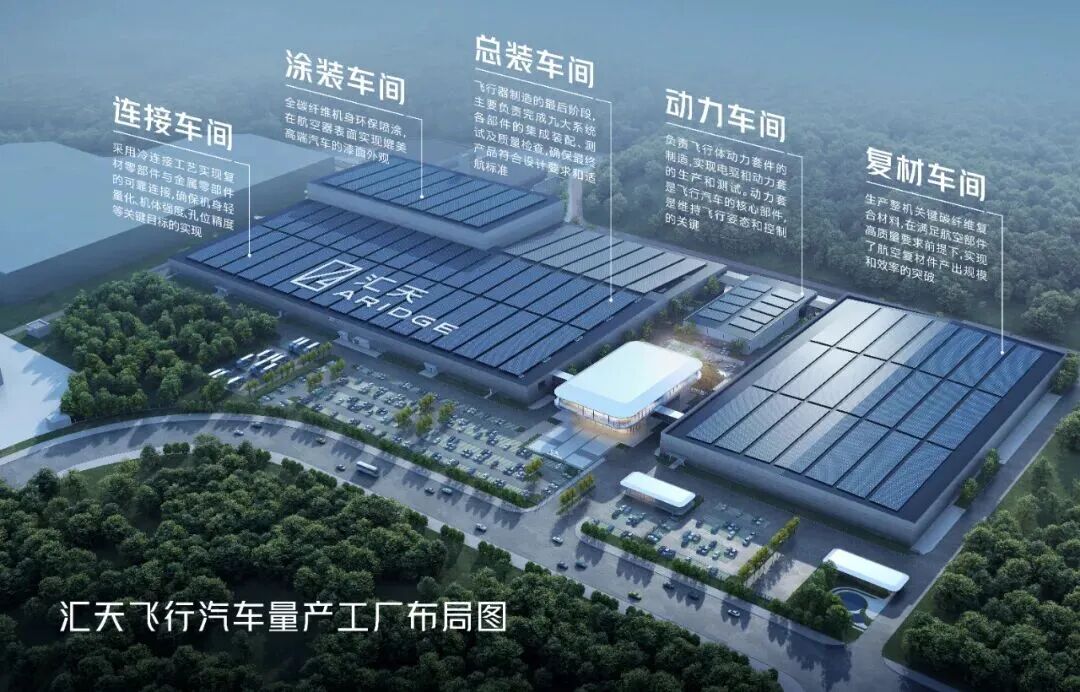
Layout of Huitian's flying car mass-production facility
The facility achieved multiple breakthroughs in manufacturing processes, with five core workshops — composites, powertrain, joining, paint, and final assembly — plus supporting facilities, combining aviation-grade quality requirements with automotive-style mass-production efficiency. At specific process stages, it achieved several industry-first innovations:
Composites Workshop
Aviation-grade carbon fiber components at benchmark production efficiency
- Produces critical carbon fiber composite components including airframe arms, propeller blades, and floor panels. At full capacity, annual output will reach 300 tons with industry-leading production efficiency, making this facility one of the world's largest manufacturers of aviation carbon fiber components.
- Developed an innovative "rigid at room temperature, flexible when heated" air bladder and pioneered high-pressure blow-molding technology above 15 bar. Successfully manufactured asymmetric hollow airframe arms with high vibration resistance, high load capacity, and extreme lightweighting, with internal quality meeting aviation Class A standards.
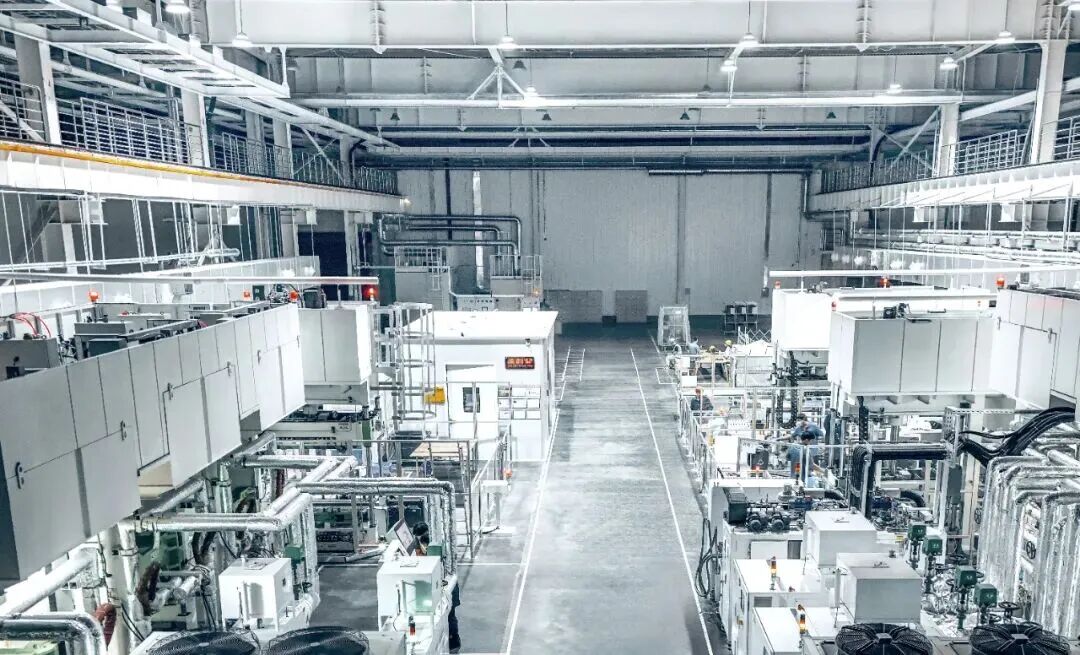
Inside the composites workshop, with the high-pressure blow-molding line on the left
(Note: Carbon fiber composites, or CFRP, are advanced materials made by combining carbon fiber with resin and other matrix materials through composite manufacturing processes. Their core advantage lies in combining carbon fiber's high strength, high modulus, and low density with the bonding properties of matrix materials, creating a material system that is simultaneously lightweight, highly rigid, and corrosion-resistant.)
Powertrain Workshop
World's first intelligent powertrain assembly and inspection line — precision, quality, and efficiency in one
- Manufactures the powertrain assemblies that provide lift and control for the airframe, ensuring safe and reliable flight.
- Houses the world's first powertrain assembly and inspection line, pioneering semi-automatic installation and fully automatic inspection of electric drive and propeller blade assembly. By combining these two precision core components at the source, it reduces powertrain assembly error and builds the foundation for flight safety. Additionally, a precision traceability system assigns a digital "ID card" to each component, with the fully automatic inspection line enabling complete traceability throughout the process.
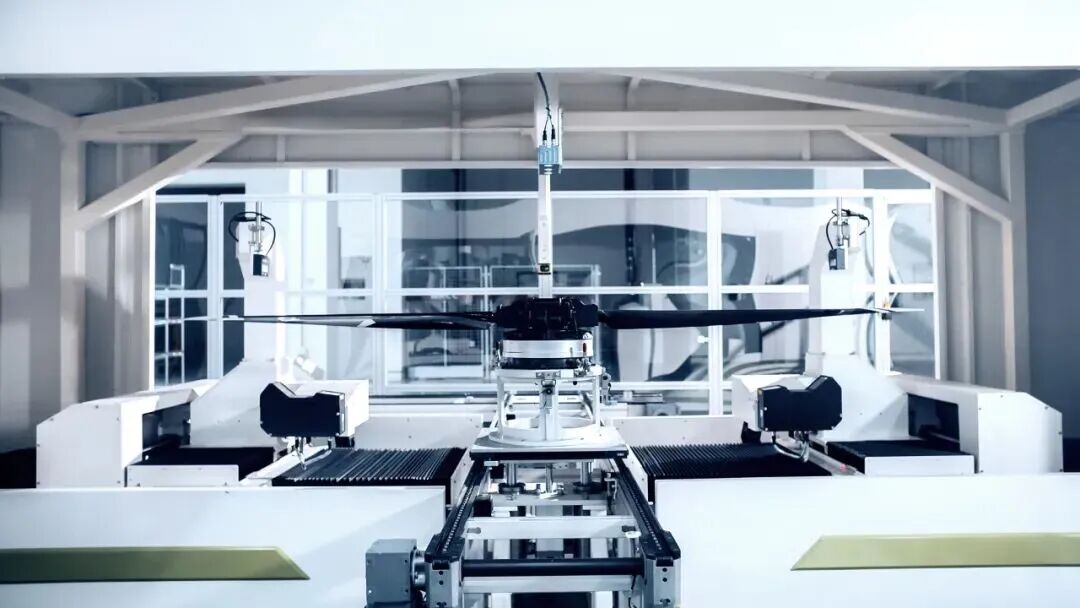
Inside the powertrain workshop, the world's first powertrain assembly and inspection line, pioneering semi-automatic installation and fully automatic inspection of electric drive and propeller blade assembly
Joining Workshop
Aviation-exclusive high-precision cold joining processes for safe, reliable airframe assembly
- Uses riveting and adhesive bonding — cold joining processes unique to aviation — to assemble the flying car's white body structure, achieving both lightweighting and high-precision, high-strength connections.
- Employs an industry-first automatic riveting technology that triples production efficiency, and applies a composite blue-light automatic measurement system to 100% scan the airframe, boosting production efficiency and ensuring quality from manufacturing through inspection.
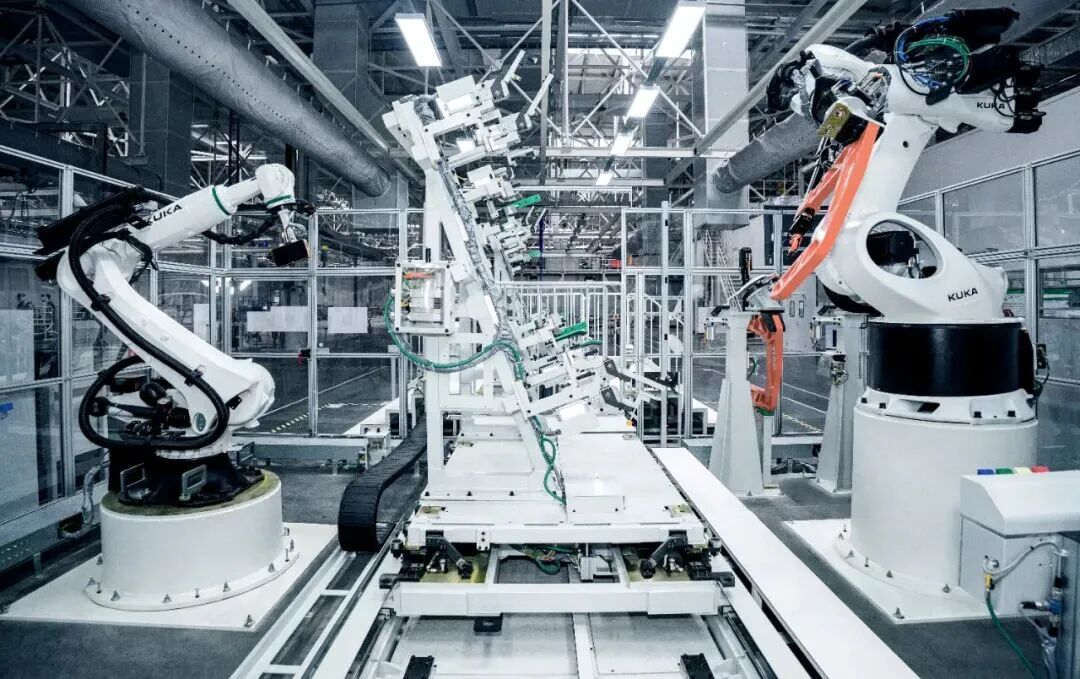
Inside the joining workshop, a riveting robot at work
(Note: Automotive manufacturing primarily relies on steel and aluminum, making "hot joining" the dominant approach. Aviation, in pursuit of extreme lightweighting, extensively uses carbon fiber composites and advanced aerospace aluminum/titanium alloys. These materials are highly sensitive to heat, making "cold joining" the necessary choice.)
Paint Workshop
"8C6B" complex coating process for high-aesthetics, high-performance aircraft finish
- Uses the "8C6B" coating process (a coating system with 8 coats and 6 bakes — higher numbers indicate greater process complexity and superior comprehensive paint film performance) to achieve a finish rivaling premium automobiles under the stringent requirements of "functional protection" and "lightweighting." Conventional manned aircraft typically have 2-3 coating layers, while the "Land Aircraft Carrier" airframe has up to 8.
- Employs the world's first high-automation flexible spray line capable of mixed production of airframe bodies and components, increasing product delivery efficiency by 4x.
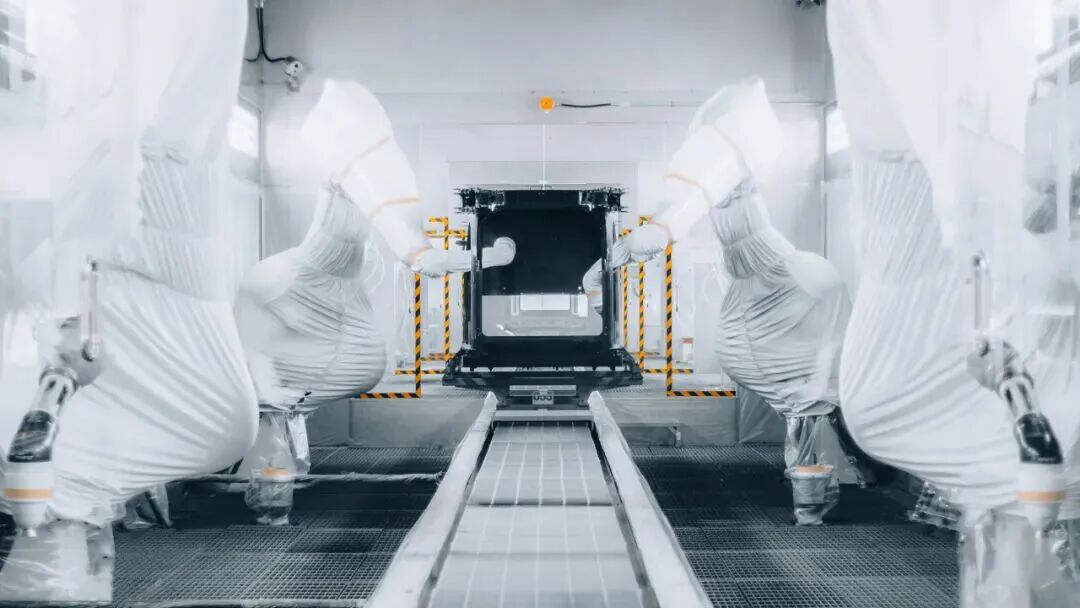
Inside the paint workshop, using the world's first high-automation flexible spray line for mixed production of airframe bodies and components, increasing product delivery efficiency by 4x
(Note: The core goals of automotive painting are "aesthetics" and "corrosion prevention," while for aircraft, the primary goals are "functional protection" and "weight control" — with aesthetics being an extremely expensive "add-on" built upon these demanding constraints. Achieving automotive-grade appearance on an aircraft is a "systems engineering" challenge. It cannot be solved by simply "spraying better" with existing processes; it requires overcoming extreme environmental performance requirements for coatings on complex, asymmetric composite substrates, all under severe weight restrictions, to ultimately achieve visual appeal.)
Final Assembly Workshop
Full-process intelligent calibration and inspection technology — the lifeline for safe airframe delivery
- The final assembly workshop is the last stage of airframe manufacturing, responsible for integrating, testing, and quality-checking components across nine major systems to ensure the final product meets design requirements and airworthiness standards.
- Uses the world's first cloud-based intelligent calibration and inspection technology, requiring no external connections and enabling non-destructive, fully automatic calibration and inspection of autonomous flight functions, flight control navigation, and weight/center of gravity. "Functional calibration" is the lifeline for safe airframe delivery, and this "cloud-based intelligent calibration and inspection" innovation upgrades that lifeline to a smarter, more efficient, and more reliable "all-weather intelligent health monitoring system."
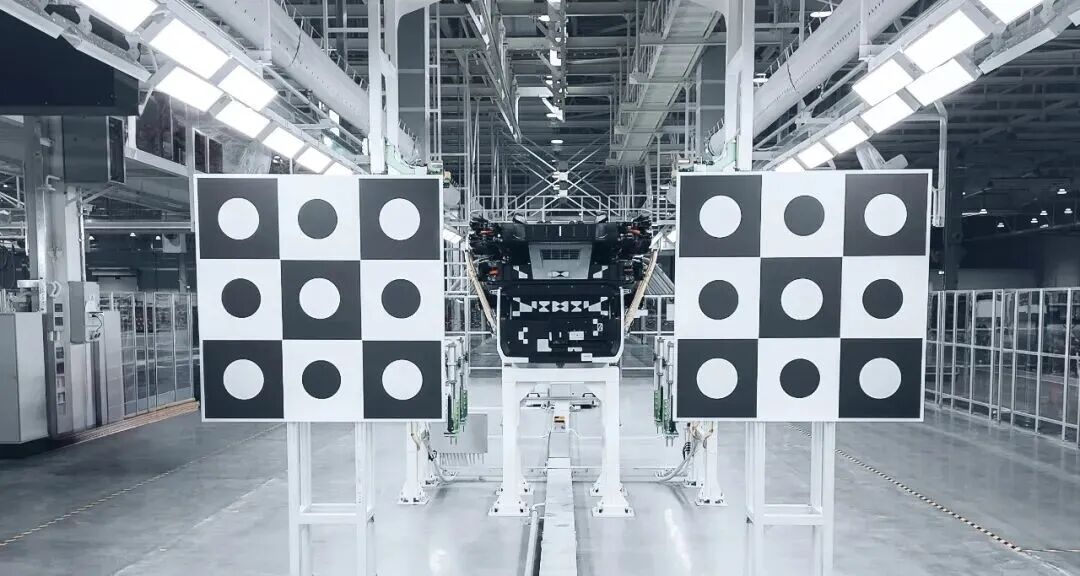
Inside the final assembly workshop, using the world's first cloud-based intelligent calibration and inspection technology, requiring no external connections and enabling non-destructive, fully automatic calibration and inspection of autonomous flight functions, flight control navigation, and weight/center of gravity
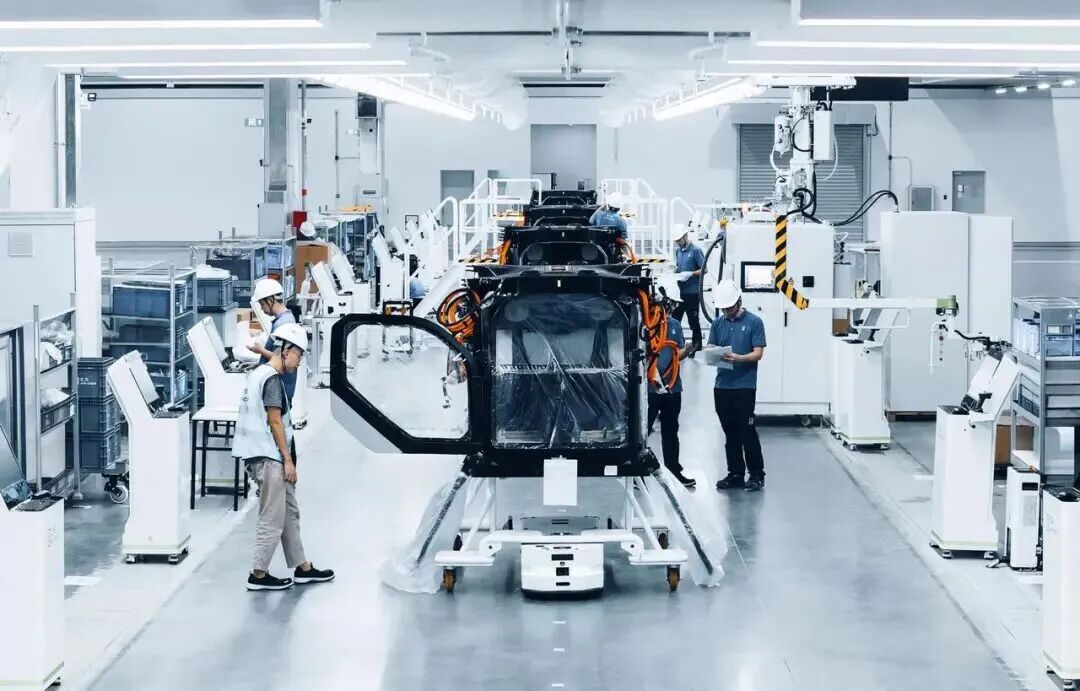
Energy distribution unit assembly station in the final assembly workshop
These industry-leading innovations at Huitian's flying car mass-production facility form an interconnected innovation system that redefines manufacturing standards for flying cars. By reconstructing manufacturing processes with automotive-industry thinking, Huitian has successfully integrated the mature large-scale automated production systems and supply chain management expertise of the automotive industry, achieving deep fusion of "aviation-grade quality" and "automotive-grade efficiency." This also means Huitian has the capability for large-scale, stable product manufacturing. Flying cars have thus entered the mass-production era, and the age of personal flight will accelerate toward reality!

Founded in 2022, Heart Capital is a China-based early-stage venture capital fund focused on technology and digitalization. The team is led by Yan Han, founding partner of Lightspeed, alongside core investors, a CFO, and seasoned investors from industry. Notable past investments include Series A investments in Xpeng Motors (NYSE: XPEV, 09868.HK), Full Truck Alliance (NYSE: YMM), as well as FinVolution (NYSE: FINV), RoboSense (02498.HK), Baichuan, Manman Cold Chain, Fan Deng Reading, World Logistics, Micro-nano Starspace, LandSpace, Lanhu, and Starfield. Rooted in China with a global outlook, Heart Capital seeks true value in non-consensus. We respect the value of people and champion the potential of the human spirit, looking forward to supporting more young Chinese entrepreneurs to strengthen China and expand globally.