A Conversation with He Xiaopeng: I'd Rather Walk Slowly and Fall Less Often | Xinxing PORTFOLIO

Efficiency and effectiveness are the focal points of the reforms He Xiaopeng is currently pushing inside the company.
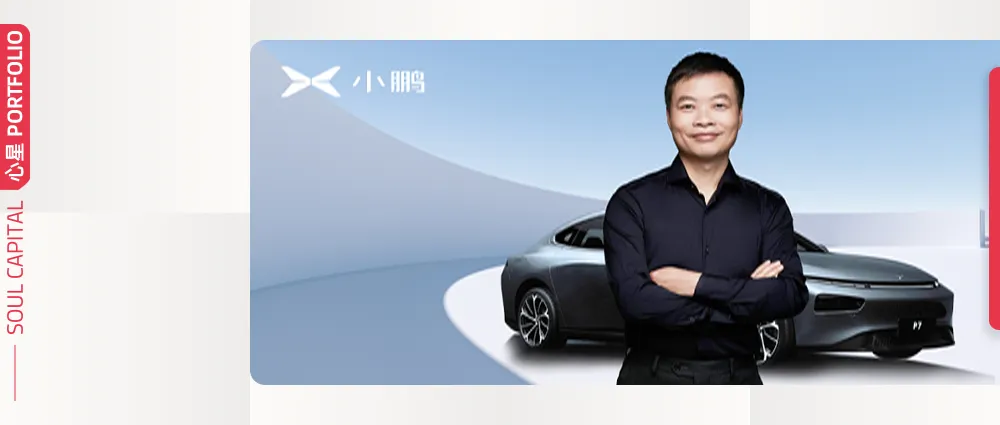
Efficiency and effectiveness are the focal points of the internal reforms He Xiaopeng is currently pushing at his company.
By Ren Yafei, reporter at China Entrepreneur
Edited by Ma Jiying
Header image: Courtesy of interviewee
During the Two Sessions, He Xiaopeng felt nervous speaking at the "Delegates' Corridor" for the first time. He wrote about the experience on Weibo, giving himself a pep talk for the new year: "The road isn't long — walk it steadily, and you'll go far."
This marks the third year that He Xiaopeng, chairman and CEO of Xpeng Motors, has served as a deputy to the National People's Congress. He submitted four proposals covering humanoid robots, low-speed autonomous driving, intelligent driving insurance, and the low-altitude economy.
During several days of internal deliberation meetings, He Xiaopeng noticed a tension: on one hand, grassroots civil servants are already overwhelmed with annual workloads; on the other, delegates raising grassroots issues keep pushing for greater government efficiency in handling affairs. So during a group deliberation on March 9, he proposed leveraging "AI+" to empower grassroots governance.
To his pleasant surprise, by March 10 he had already received a formal research response from relevant authorities. He Xiaopeng expressed his appreciation for such high operational efficiency.
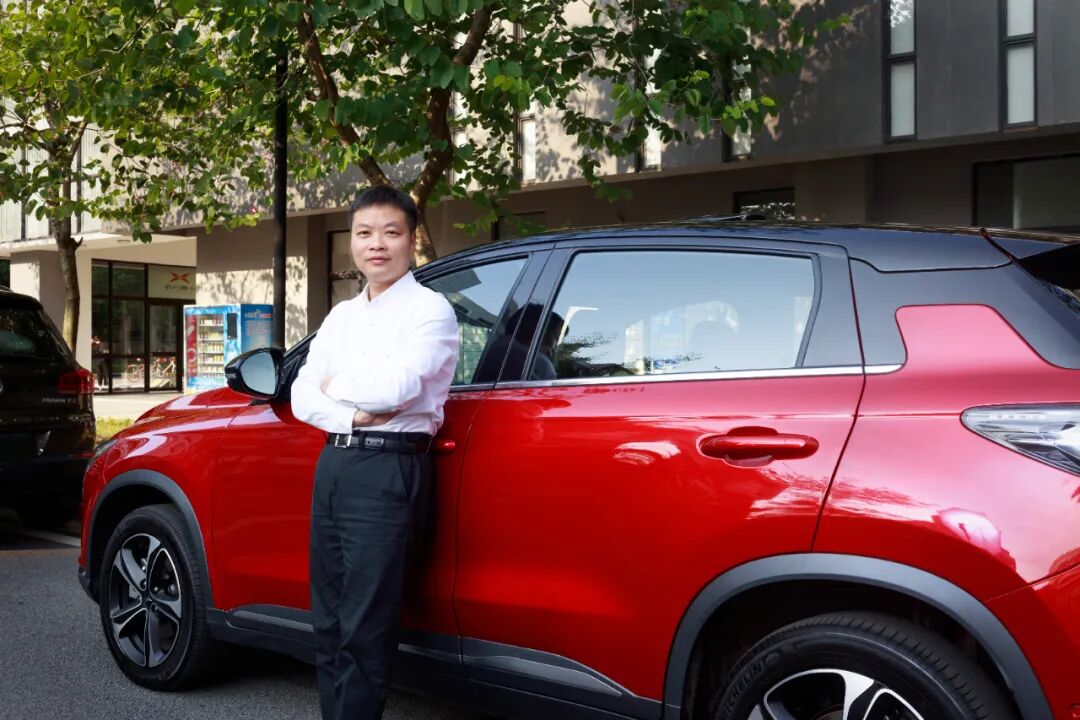
"Efficiency and effectiveness" are also the focus of He Xiaopeng's current internal reforms at Xpeng Motors. The company began organizational restructuring at the end of 2022. The past two years have been painful, but the reforms are showing initial results. In 2024, Xpeng Motors successively launched the MONA M03 and P7+ models. Deliveries, which started the year at fewer than 10,000 vehicles, approached 40,000 by December. This February, Xpeng Motors delivered 30,453 vehicles, once again becoming the top domestic new EV brand by deliveries.
Source: China Image Library
What exactly did Xpeng Motors get right over the past two years?
In an exclusive interview with China Entrepreneur, He Xiaopeng said: "First, rethink everything and reinvent ourselves. Second, turn the knife inward. Third, truly become user-oriented."
He also candidly admitted that the company has been on edge throughout its journey. For 2025, he hopes to "walk steadily and go far." "My requirement for the team is to move a bit slower, solidify the foundational work, improve product quality, think more about organization, reserve some energy to build internal strength, and give ourselves more time to get the technology right," He Xiaopeng said.
He Xiaopeng believes 2025–2027 will be the most intense three years for China's auto industry, and also the most critical and opportunity-rich period for Xpeng Motors. He hopes that during these three years, the company will first get the combination of strengths and weaknesses right, and second, scale sales — "quality scaling, that is."
During the interview, he also shared his views on robots, intelligent driving competition, and internal management changes.
The following is an edited transcript of the interview with He Xiaopeng:
On Humanoid Robots: 20 Years, 50 Billion Yuan
China Entrepreneur: At this year's Two Sessions, you brought four proposals. One was about humanoid robots — you hope the robotics industry can learn from the early success of new energy vehicles. If corresponding subsidy policies are introduced, could that lead to overcapacity and subsidy fraud?
He Xiaopeng: I don't think so. New energy vehicle subsidies were implemented for many years, and relevant regulators have seen countless problems and quickly resolved many of them. I believe they're very wise — the same problems won't recur, and even if they do, they'll be fixed quickly.
China Entrepreneur: Xpeng Motors is also working on humanoid robots. Compared with robotics companies, what advantages do automakers have?
He Xiaopeng: I think each has its strengths. For example, in manufacturing, about 70% of humanoid robot components overlap with electric vehicles. Additionally, automakers have more complete supply chain management systems and can reuse automotive sales channels to sell humanoid robots. More importantly, automotive factories provide real-world application scenarios for humanoid robots. Essentially, both belong to embodied intelligence — one walks, one uses wheels.
Currently, Xpeng Motors has been in humanoid robots for five years, but development is still in early stages with relatively conservative investment. We may need to work on this for another 20 years and spend 50 billion or even over 100 billion yuan more.
On Competition: Compete on Technology, Experience, and Quality
China Entrepreneur: This year, curbing "involution-style" competition was written into the Government Work Report for the first time. What signal do you think this sends?
He Xiaopeng: This is excellent. The core of new quality productive forces is technological innovation, which leads industry innovation. Technological innovation should mean strong differentiation, higher margins, and healthy ecosystems.
So I believe today's auto industry can compete on technology and user experience, but shouldn't compete on low prices, low quality, or exploiting employees.
China Entrepreneur: Do you think price adjustments in the auto industry will continue this year?
He Xiaopeng: It depends on the company. Some companies definitely still have room to optimize costs. At Xpeng, we've done a lot of thinking over the past two years, and I believe we can further improve the details and raise quality. Actually, doing quality well is how you reduce costs. In short, I believe competing rationally on technology, experience, and quality will improve operational efficiency and make companies more comprehensively capable.
On Intelligent Driving: "2025 Will Be an Inflection Point"
China Entrepreneur: Speaking of competing on technology, BYD, Changan Automobile, and others have made big moves in intelligent driving this year. What's your view?
He Xiaopeng: I think it's great. This is the progress and victory of technology, and the progress and victory of user experience and demand. It will help more Chinese users recognize the importance of AI in vehicles. I believe 2025 will be an inflection point for intelligent driving technology development — L3 will be the "iPhone 4 moment" for AI-driven intelligent driving. It's predicted that in 2025, penetration of L2-level and above autonomous driving in new vehicles will approach 65%. Additionally, policy is very supportive. China has already opened L3-level autonomous driving testing and pilots in some cities, and I believe the policy environment will become even more favorable in coming years.
China Entrepreneur: How do you view the impact of Tesla's FSD entering China on Xpeng Motors and other domestic automakers?
He Xiaopeng: There's no impact on Xpeng Motors. We believe Xpeng Motors' intelligent driving is definitely in China's first tier. But after Tesla FSD enters the Chinese market, it will join a small number of automakers like us in advancing high-level intelligent driving — I welcome this. And I believe Xpeng Motors' L3 will far exceed FSD V13. Of course, Tesla may launch V14, V15 versions, but my expectation is to far exceed FSD V13.
On Corporate Governance: Walk Slower, Build Horizontal Capabilities
China Entrepreneur: In your New Year letter to employees, you mentioned last year was like swimming in a sea of blood. Looking back at 2024, what do you think you got right? What capabilities did you develop?
He Xiaopeng: First, I think we're far from success. 2025 to 2027 is the elimination round, and elimination rounds mean every battle is existential. Including those currently in the lead — I believe they're also far from success, just moving faster than us.
Second, we did many things in 2023 and 2024 and achieved modest success. I see three key factors:
One, rethink everything and reinvent ourselves. This starts with the chairman and executives reinventing themselves — not frontline staff, not the industry, not the environment. This is crucial because most failures come from defeating yourself. So we did much reflection — on strategy, planning, product plans, feature details, and more. Because automotive cycles are long, reflections from last year may only show results this year, next year, or even the year after. So the changes people saw at the end of 2024 and start of 2025 — we believe this is just the beginning. In 2025 and 2026, as new products and refreshed models appear, we'll have even bigger changes and continue rising.
Two, turn the knife inward. We recognized our organization wasn't performing well, our operations weren't performing well, our technology height wasn't sufficient, and our internal horizontal processes weren't working. So we've been continuously挖掘潜力 internally — on efficiency, effectiveness, and operations. For example, our operating gross margin was still -5% in Q2 last year, and recently we've reached 15% — that's relatively rapid change.
Three, truly becoming user-oriented. We also talked about user supremacy and user orientation before, but were you really ensuring this through organization, processes, systems, and institutions — not just slogans and trumpets? First, you yourself might not act this way; second, your managers won't do it; so even if employees genuinely want to, they can't. We made massive adjustments last year, but I believe today's adjustments aren't finished — we're still learning.
China Entrepreneur: Why didn't you recognize the user orientation problem earlier?
He Xiaopeng: Our challenges emerged in September 2022. We began reflecting then, started acting in 2023, and of course kept reflecting during the process. 2024 was continuing to act and continuing to reflect — it's an infinite loop.
China Entrepreneur: Have you now grasped some of the essentials?
He Xiaopeng: Yes. But the more you grasp, the more worried you become, because technology changes so fast, and we're on edge. So this year we hope to "walk steadily and go far" — this is very important.
China Entrepreneur: Can you talk about specifically how you're doing this?
He Xiaopeng: First, my requirement internally is to walk slower, solidify foundational work, improve product quality, think more about organization, reserve some energy to build internal strength, and give ourselves more time to get the technology right.
Second, how to use horizontal capabilities to supervise processes. Many small companies don't need horizontal capabilities — a company of 500 or 1,000 people mostly handles simple business scenarios, and a virtual project team can handle everything.
But the auto industry involves projects that typically run three years, requiring coordination across dozens of specialized roles — the demands on horizontal capabilities are much higher. So to build horizontal capabilities, mindsets must change, positions must be adjusted, roles must shift, organizational processes must change, tools and systems must change, supervision and incentives must change — the entire chain must adjust. If everyone only focuses on the simplest numbers, it leads to poor sales. Because without deep accumulation, you can't achieve breakthrough results.
Source: Visual China
China Entrepreneur: Xpeng Motors is doing well now — why emphasize moving slower? Might internal staff feel unsure about what to do?
He Xiaopeng: There are challenges. For example, our supply chain is currently very conservative. I'd rather everyone else takes three steps in the time I take two, but those two steps are solid. Then next year when I take the next two steps, I might avoid a fall. Because if I fall, I might be stuck there for a long time.
China Entrepreneur: In previous interviews, you mentioned that for new EV brands to be number one, weekly sales need to reach at least 15,000 vehicles, meaning monthly sales of 60,000. To achieve this, what weaknesses does Xpeng Motors still need to address?
He Xiaopeng: The auto industry is like 1,000 planks — perhaps 900 can't be short, and 50 are relatively long. What matters most are those 50 long planks. Each company's long planks differ. So what I feared most in the past was that among those 900 planks, some were still quite short, and I would work to fill those gaps.
If a company's CEO doesn't do this, the company moves forward wounded and sick — and eventually must address it. Previously, too many companies focused on those few most important long planks while neglecting medium and short planks.
China Entrepreneur: Over the past two years, what weaknesses have you addressed?
He Xiaopeng: Too many to count. We set countless directions — users, operations, management capabilities, strategic capabilities, AI capabilities. These are all areas we've addressed. Some very short planks needed more attention; some medium-to-long planks needed to be extended further.
China Entrepreneur: In this process, where did you find the greatest obstacles?
He Xiaopeng: Of course, things related to people. Business, finance, people — people are the hardest. Business is easy for everyone to see; finance is harder to see. Many people misunderstand finance — it's not just numbers. You need to integrate business and finance, even business, finance, and people, to truly see financial matters. So now we're patching gaps everywhere.
China Entrepreneur: Regarding the people aspect, some entrepreneurs find that after setting a goal, it's very hard to implement. How does Xpeng solve this?
He Xiaopeng: Because they didn't go down to the frontlines themselves. When a company is small, you have one method: go to the frontlines. When it's large, you can't reach all frontlines, so you need to build extensive horizontal systems to discover issues. I found many problems through horizontal channels last year and the year before. So a large-scale company needs to build multiple horizontal capabilities.
China Entrepreneur: How much time did you spend at the frontlines last year?
He Xiaopeng: People have different views of what "frontlines" means. I believe first, it's users — you need to see more voices from Weibo, Douyin, and various channels. At the same time, you need to pay attention to internal users. We specially built a "Hulk system" (internal codename), now renamed Iron robot, to collect feedback from internal staff.
On Future Development:
"The next 3–7 years, build the system well"
China Entrepreneur: In your New Year letter, you mentioned that 2025–2027 will be the most intense three years for China's auto industry, and also the most critical three years for Xpeng Motors. Why the most critical? How do you ensure you stay at the table?
He Xiaopeng: Major changes will definitely happen in these three years — many brands may disappear. So everyone is thinking about what users will need going forward, especially women as heads of households — what are they thinking?
Also, as I mentioned, we have 1,000 planks. In these three years, one thing is getting the short-and-long plank combination right; another is scaling sales, and quality scaling at that. Because you need sufficient revenue to have sufficient profit, to have sufficient R&D investment, to achieve high-quality development — it's a cycle.
China Entrepreneur: Wang Fengying's joining was crucial for Xpeng Motors. What does she mean to you?
He Xiaopeng: I believe the most important thing in partnership is complementarity; for the long term, it's trust. At the beginning, we communicated extensively — I remember two years ago during the Two Sessions, I had 1–2 hour phone calls with Fengying every night. She had just joined three months prior and had much to handle, from principles to tactics, to strategy, to methods, to implementation. Though our ideas seemed aligned on the surface, there were inconsistencies in finer details. So repeated communication and extensive磨合 were needed to build genuine trust.
We cooperate very well now, making the company's capabilities more comprehensive. Either of us missing would significantly hurt Xpeng Motors. But what enterprises most fear is over-reliance on one or two individuals — that means the enterprise isn't strong enough. So in the next 3–7 years, we need to build the system well. The better the system, the more it means that when I truly become chairman one day, Fengying can take regular vacations — say three months — and the enterprise can still develop very well.
China Entrepreneur: If you had a year to rest, what would you most want to do?
He Xiaopeng: First, exercise. Second, travel around. Third, chat with many friends. If possible, I'd like to eat some good food.

Heart Capital was founded in 2022 and is a China-based early-stage venture capital fund focused on technology and digitalization. The Heart Capital team is primarily composed of Yan Han, founding partner of Lightspeed China, core investors, a chief financial officer, and senior investors from industry backgrounds. The team's past investments include Series A investments in Xpeng Motors (NYSE: XPEV, 09868.HK), Full Truck Alliance (NYSE: YMM), as well as FinVolution Group (NYSE: FINV), RoboSense (02498.HK), Baichuan, Manbang Cold Chain, Fan Deng Reading, World Logistics, Micro-nano Star, LandSpace, Lanhu, Starfield, and others. Rooted in China with a global perspective, Heart Capital is committed to finding true value in non-consensus. Heart Capital respects the value of "people" and advocates for the potential of the "heart," looking forward to accompanying more young Chinese entrepreneurs to strengthen China and go global.