XPENG AEROHT's Deli Zhao: He Flew Before the World Believed | Xin Star PORTFOLIO

A door opening to the sky.
Long before the written word, humans began looking up at the sky.
They watched birds sweep past, clouds surge and billow, the sun and moon and stars rise and fall along ancient paths. And from that looking up, imagination was born.
Zhuangzi wrote of the great peng bird "whose wings are like clouds hanging from heaven." The flying apsaras of Dunhuang soared through murals. Leonardo da Vinci sketched wing after wing. Before ever leaving the ground, humans had already flown for millennia — in myth, in poetry, in dreams.
In 1903, the Wright brothers flew for twelve seconds on the sand dunes of North Carolina.
Twelve seconds — nothing in the long arc of evolution — yet for the first time, a door to the sky swung open. From that moment on, flight no longer belonged only to birds and gods. Humans began to believe: the sky was not only for gazing at, but for reaching.
More than seventy years later, in rural Hunan, China, beside Dongting Lake, a farmer's child crouched on a ridge watching dragonflies.
That child was Deli Zhao.
He didn't know who the Wright brothers were. He had no idea that years later, he would sit astride the world's first flying motorcycle, testing the possibilities of flight again and again. He only saw that dragonflies could hover, fly backward, turn suddenly — go anywhere.
He envied them terribly.
Many world-changing ideas begin unremarkably. They may be nothing more than a child's plain longing: birds have wings, dragonflies can hover, the sky has no roads yet leads in every direction.
Longing makes you look up. But belief is what makes you take the first step.
👆 Full video
First Meeting Deli Zhao, 2021
In May 2026, Yan Han arrived in Guangzhou.
He visited XPENG AEROHT's newly completed showroom. Standing at the entrance, he paused and slowly walked along the product wall.
The showroom was new. On one side, lights fell quietly across generations of aircraft: from early exploratory models to today's "Land Aircraft Carrier," and on to the high-speed, long-range flying car aimed at the future. They unfolded in chronological order, like a river flowing from imagination toward reality.
Yan Han had once ridden in the Voyager X2.
Back then, "flying car" still sounded like a word belonging to a distant future. Now, the Land Aircraft Carrier had moved from concept to engineering and industrialization; further out, the integrated flying car pointed toward an era yet to arrive.
What didn't appear in the showroom was Zhao's earliest flying motorcycle. Yan Han always remembered it: open-frame structure, steel tube skeleton, like a concept welded directly into reality.
That was how he came to know Deli Zhao.
In 2021, Yan Han first heard the name from He Xiaopeng.
As one of XPeng Motors' earliest investors, Yan Han had met countless founders: clever ones, aggressive ones, calculating ones, and some with tremendous charisma.
But when He Xiaopeng spoke of Deli Zhao, his tone was different.
His assessment was direct: Zhao had an almost stubborn seriousness about flight.
Then he showed Yan Han a video.
The quality wasn't clear — apparently shot on a phone. In the frame, a thin man sat on a simple metal frame, several sets of propellers spinning at high speed. No cabin, no guardrails. The human body was almost completely exposed to the blades and airflow.
The machine slowly lifted off, hovered, shifted laterally, then descended again.
The video was short, but hard to forget.
Yan Han's judgment began with facts, but didn't end there. His engineering background and McKinsey & Company DNA made him skilled at breaking down problems, identifying causes and effects; as an investor, he was accustomed to pushing further along these facts and logic, to imagine a future that hadn't happened yet but might be realized step by step through technology.
The product before him was clearly still early-stage: technical approach, application scenarios, commercialization path — all had major questions awaiting answers.
Soon after, Yan Han went to Guangzhou and met Deli Zhao for the first time.
They met at an unremarkable factory complex. Zhao walked out of the workshop, very thin, high cheekbones, still smelling of machine oil.
He took Yan Han to see that earliest flying motorcycle.
In person, it felt even more experimental than in the video. Steel tubes welded into an open skeleton, blade edges bearing marks from repeated test flights. It wasn't yet a complete product, more like a thought still being verified, welded into reality in the most direct way possible.
"How many times have you flown it?" Yan Han asked.
"Two or three thousand times, maybe."
"Crashed?"
"Yeah, all the time."
Zhao said it calmly. For him, crashing wasn't a dramatic plot point — it was an inevitable part of the R&D process.
Later, Zhao invited Yan Han to experience the then-latest aircraft, the Voyager X2.
The X2 already had a two-person cabin. Once they were seated, Zhao said: "Mr. Han, here we go."
The propellers roared to life, and the X2 slowly ascended. The aircraft circled dozens of meters above the ground. Yan Han's face showed nothing, but inside he was tense. After landing, he glanced down at his watch: heart rate 150.
At the time, the product's technical approach, application scenarios, and commercialization path all lacked clear answers. What Yan Han had to judge wasn't just this machine before him, but whether Zhao could continuously transform a sufficiently ahead-of-its-time vision into technology, product, and industry.
Zhao had already test-flown thousands of times for this. He believed transportation would eventually move from two dimensions to three, that cars would one day grow wings.
Yan Han ultimately chose to support him. In 2021, he became one of XPENG AEROHT's Series A investors.
One Person's Looking Up, Beginning at Dongting Lake
In 1978, Deli Zhao was born in a village in Changde, Hunan.
His home wasn't far from Dongting Lake. Walk a few kilometers and you could see the waters of the Yuan River. His parents farmed, life was hard, and what they could give him was limited — but they gave him something that would later prove rare: freedom.
Many people's ambitions are taught to them; Zhao's was not. His ambition was something he saw by looking up himself.
His earliest memory of flight was the Y-5, a light multi-purpose transport plane made in China.
Whenever the lakeside reeds grew thick, the Y-5 would come to spray pesticides. That twin-wing plane flew slowly and low. Young Zhao would run to the embankment, looking up, sometimes able to clearly see the person in the cockpit.
It wasn't a vague black dot on the horizon. It was a specific person. Sitting in a roaring machine, sweeping over villages, rivers, and fields.
For the first time, Zhao knew: the sky didn't belong only to birds. People could go up there too.
Planes gave him distance; dragonflies gave him another kind of imagination.
In summer, he often went fishing by the river. The Dongting Lake basin was rich with water vapor, and dragonflies flew in swarms just above the surface. They could suddenly stop mid-air, shift sideways, fly backward, change direction without warning.
He couldn't understand: how could a dragonfly stop in mid-air? Why didn't it need roads or tracks to freely go anywhere?
These questions stayed with him for more than thirty years. Later, they became problems that the XPENG AEROHT R&D team continued to study.
Childhood imagination naturally went further.
He loved the American cartoon G.I. Joe. As a teenager working in the fields, his mind would busy itself shrinking trains, shrinking planes, imagining himself riding a crow-sized aircraft through forests and valleys, to places farther away.
Years later, Zhao used AI video generation software to turn these childhood images into video. In the footage, he rode a giant dragonfly through the floating peaks of Zhangjiajie, able to hover, move backward, turn at any moment.
"I made my childhood dreams come true," he said.
When Zhao spoke of these things, there was none of the self-mockery adults often have when looking back at childhood. His expression was serious, his eyes still bright, as if these things hadn't happened forty years ago but yesterday.
Looking back on this experience later, what moved Yan Han most was the rare consistency in Zhao. From the Y-5 over Dongting Lake, to the dragonflies by the water, to the early flying motorcycle — he had always been asking the same question: can people leave the roads on the ground and fly freely?
Only, childhood can be all about dreams. In adulthood, every dream must be paid for.
When Zhao decided to build a flying motorcycle, he was already in his thirties.
Before that, he had run a restaurant in Dongguan, earning his first million yuan. He could have continued opening shops, expanding business, buying houses and better cars — walked a secure path.
But he put all the money into flight.
In 2013, he started with model aircraft and drones, exploring power, structure, and flight control. In 2016, manned aircraft R&D entered substantive stages. He welded the fuselage skeleton, installed propellers and flight control systems, and tried again and again to get that early prototype off the ground.
From then on, he had no income.
But Zhao later said those were the happiest two years of his life.
Every day, a straight line from home to lab. At first the machine only trembled; later it could leave the ground; still later it could hover, move. He watched it gradually grow capabilities, like watching a child learn to stand and walk.
Poverty was real; so was joy.
At that time in China, few people saw "flying car" as a business. Investors asked where the market was, who the customers were, how to mass-produce — Zhao couldn't answer any of it. He himself hadn't even thought through whether this thing would ultimately have commercial value.
His goal was so plain it came down to one sentence: just make it fly first.
"If it can fly, that's enough. Let me enjoy it myself even."
Money grew scarcer, yet the aircraft was still immature. Zhao set himself a deadline: by 2018, if there was still no progress, he would stop.
That year, he would turn forty.
At the hardest times, what sustained Zhao wasn't any grand theory, but a few people he had never met.
One was "Mr. Qipao," Cui Wanzhi. Stricken with polio, business failures, crushing debt — he finally stood back up by selling qipao dresses.
Another was Xiong Qinghua, a farmer painter from Hubei. He painted for more than twenty years, long without income or recognition. Finally, a group of old classmates photographed his paintings and put them online, and he was finally seen.
Zhao reviewed their lives repeatedly on his phone.
The lesson these stories gave him was simple: a person not yet seen does not mean what he is doing has no value.
"They could persist in their dreams for twenty years," he said. "What is my little struggle? I still have food to eat."
There was also a propeller supplier.
Test flights burned through blades fastest. The specifications Zhao used were unusual, with almost no other customers. Once, he hadn't placed an order for a long time. When he contacted them again after some time, the person answered the phone with:
"You're still alive?"
Everyone had assumed he was dead.
Perhaps killed in a crash. Perhaps finally giving up, no longer tinkering with that dangerous machine.
Zhao smiled on the other end of the line.
"No money. Can you extend me credit?"
The other person was silent a moment, then said: "Okay."
New propellers arrived again.
He later jokingly called himself "someone who could get credit on Taobao."
That was probably the truest credit of Zhao's early entrepreneurship. No institutional backing, no polished financials — just a distant supplier willing to believe: this person may be poor, but won't default; he crashes often, but will probably keep flying.
In 2018, before the first true manned test flight, Zhao glanced at the calendar.
Three days later was his mother's seventieth birthday.
He immediately stopped work and returned to his hometown in Hunan. His parents had never known exactly what he was doing; Zhao only said he was working on drones. Like many people working far from home, he was accustomed to reporting good news while hiding bad, and had never stopped sending them living expenses.
Those days at home, he ate with his mother, talked, walked — mentioning neither the test flight nor the risks. He wasn't unafraid of death. Precisely because he knew the danger, he had deliberately come back to quietly get through his mother's seventieth birthday.
After the birthday, Zhao returned to Dongguan.
No journalists, no investors, no onlookers. He found an evening and walked alone to that flying motorcycle.
Steel tube skeleton, exposed wires, high-speed spinning propellers. It was still crude, far from a real product. But that day, no one could sit in Zhao's place.
He activated the system.
The engine roared, blades accelerated, airflow kicked up dust from the ground. The machine shook violently at first, then gradually broke free of the earth.
Deli Zhao flew.
This was the most important starting point for what would become XPENG AEROHT. No launch event, no applause, no one knowing where it would lead. A man nearly forty, personally completing the verification of early manned flight on a flying motorcycle, completing the first proof of a lifelong idea.
Flying Up, Letting the World See
Once it flew, the story truly began.
Zhao knew this flying motorcycle could only prove one thing: an ordinary person without credentials, without background, without a professional team, could also build a manned aircraft.
But from "able to fly" to "becoming a product" lay technology, capital, talent, industrialization. This distance could no longer be crossed by flying a few thousand more times.
What he had to do first was let people see.
Zhao began seeking out media everywhere. He left messages on news websites' backends, sent private messages to journalists. But most sank without response.
An ordinary person without background or connections, trying to convince media that he had really built a manned aircraft — the difficulty was no less than getting that machine to fly in the first place.
Until a journalist named Zhou Yuqing replied. Zhou was then working at Guangdong TV's Today's Focus program. Her first question to Zhao was:
"Is it real?"
"It's real," Zhao said.
The next day, she arrived with a cameraman.
They filmed the entire takeoff process of the flying motorcycle. Two days later, the program aired in the evening slot.
After the program aired, everything suddenly changed. Xinhua News Agency, People's Daily, Global Times and others successively contacted Zhou Yuqing, seeking Zhao's contact information. That was Zhao's first time being seen at scale. Overwhelming news coverage flooded with headlines: "Dongguan Migrant Worker Builds World's First Flying Motorcycle," "Hunan Farmer Builds World's First Flying Motorcycle."
His mother, far away in Hunan, also saw the news about her son. Only then did she learn that what her son called "working on drones" was actually personally piloting a self-built flying motorcycle to complete manned test flights.
She didn't blame him, didn't press for details — just watched that video again and again. Outsiders could never know what a mother thought in her silence; perhaps only then did she understand what her son, who had recently come home to celebrate her seventieth birthday, had been carrying inside.
The news brought initial volume. Afterward, Zhao took the flying motorcycle onto many TV programs and public stages, and at each one, he would try to take off in front of hosts, guests, and audiences.
Once the propellers spun up, the enormous roar would fill the entire studio, all eyes converging on that metal structure. And Zhao sat in the middle, expression ordinary, as if this were merely a routine product demonstration.
To raise funding, he also participated in some entrepreneurship pitch programs. At the time, the project had no mature business plan, no financial data sufficient to explain the future. His most convincing material was still that flying motorcycle.
So he flew it again on stage.
After the event, he added several investors on WeChat. Thereafter, every few days, he would send new test flight progress, technical modifications, news coverage.
Sending and sending, a red exclamation mark appeared beside the chat window.
He had been blocked.
Years later, recounting this, Zhao burst into loud laughter: "That's totally normal. I only thought about myself, always wanting to tell them the project had new progress."
Those rejections that could have been humiliating back then were now, in retrospect, nothing more than a few red exclamation marks left when a story hadn't yet been believed.
Media were willing to report the curiosity of a "farmer building a plane"; TV programs were willing to show a thrilling live takeoff. But when the lights went out, investors truly willing to believe this could become a company remained few and far between.
The encounter between Yan Han and Deli Zhao happened in the interstices of this noise and silence.
Believing, Before the Future Arrives
XPENG AEROHT was still at an extremely early stage then. The factory wasn't large, equipment was limited, a few young people busy among parts, wires, and tools. Organization not yet formed, product not yet mature, commercialization path unverified.
But Zhao was very clear about next steps.
He told Yan Han the company needed chief engineers from the aerospace field, more PhDs and professional engineers; structure, power, flight control, and safety all needed genuine technical systems. Today one person could fly the machine; tomorrow a team must make it into a product ordinary people could safely use.
What he spoke of wasn't story, but gaps.
What people were missing, what capabilities needed filling; which technologies were still immature, how to solve them next. Zhao didn't rush to prove himself, didn't deliberately paint a grand future — just laid out the problems blocking the road one by one.
This made Yan Han begin to re-examine the project before him.
Looking at the product alone, risk and uncertainty were obvious: the machine was still early-stage, the market not yet formed, regulation and business model almost entirely without ready answers. Any single one of these was sufficient grounds for rejection.
But early-stage investing can't only look at what's before you; you must also judge what will happen in the future, and who might be able to make it happen.
Yan Han first judged that the direction was valid.
Cars solve two-dimensional ground transportation, yet human demand for the sky has never disappeared. As new energy, autonomous driving, artificial intelligence, and new materials gradually mature, the extension of transportation from two dimensions to three will no longer be concept — in the future, it has strong potential to become a long-term industrial direction driven by multiple technologies.
Beyond direction, what mattered more was the person.
Yan Han had met many clever entrepreneurs. They could analyze trends, calculate markets, skillfully narrate business logic. But in a field without textbooks, without mature paths, cleverness wasn't enough.
A founder must have judgment, and more deeply, a profound drive.
Zhao wasn't just pushing forward on enthusiasm. He could personally build the machine, and in two or three thousand test flights continuously face and solve technical problems. By then he already realized that personal exploration couldn't support industrialization; the next phase must rely on talent, systems, and organization.
He had a rare combination of abilities: sufficiently determined to dare enter uncharted territory; sufficiently clear-headed to know that one person's exploration must ultimately be transformed into engineering capability.
Yan Han later summarized this trait as "using both brain and heart."
If using only brain, Zhao could hardly have survived those days without income, without funding, the path ahead completely unclear. If using only heart, he couldn't have turned a rough imagination step by step into a machine that could actually carry people in flight.
This was a highly uncertain early-stage investment.
But Yan Han decided to support him. Not because the product was already mature, but because Zhao could continuously turn the unknown into solvable engineering problems, and knew when he must move from personal exploration to organizational capability.
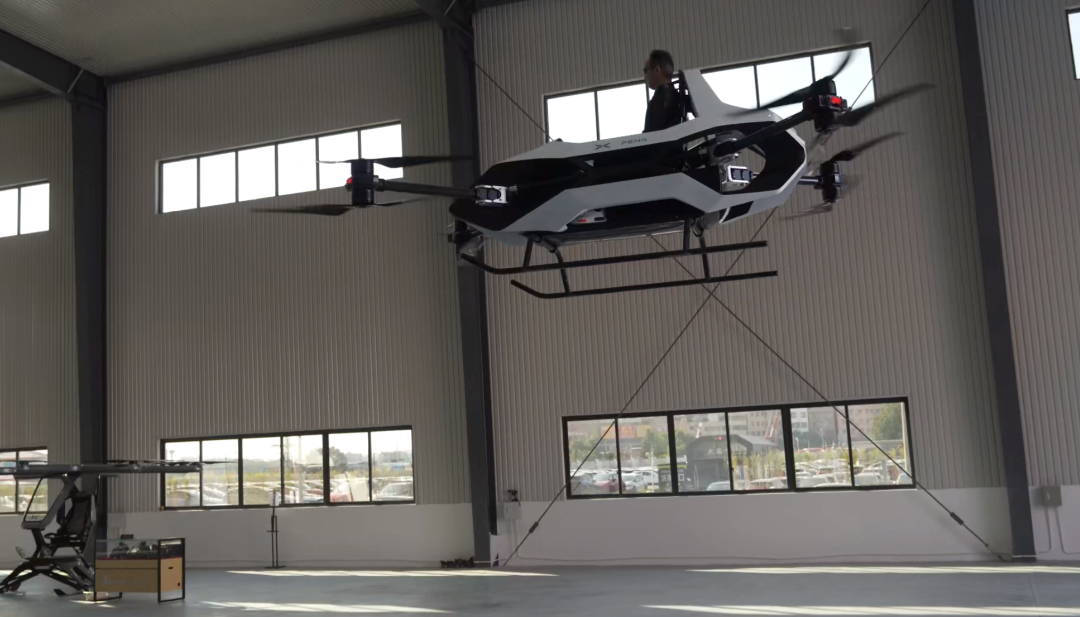
He Wants to Let a Group of People Fly Together
Five years passed, and Yan Han came to Guangzhou again.
In Zhao's new office, the two chatted. Zhao was still thin, still high-cheekboned, speaking with Hunan accent, hands unconsciously waving when excited.
Yan Han quickly noticed he had changed.
Five years ago, what Zhao loved most was flying. He Xiaopeng came, and he said: "Get on, I'll take you up." Investors didn't believe, so he wheeled out the machine and flew for them.
Then, he only needed to prove one thing: this machine could leave the ground.
Now, when someone proposes flying, he becomes cautious instead.
Before, he had to break boundaries; now, he must establish them. This is a turn entrepreneurs must make, yet one rarely seen by outsiders.
Zhao no longer flies every day. What he spends the most time on now is finding people.
Finding the best people from aviation, automotive, and manufacturing, attracting them in; once they arrive, designing systems, building processes, enabling people from different fields to work together.
"Systems must align with human nature," he said.
The company has grown to a team of about two thousand. How products continue iterating, how core technology is reserved, how limited resources support R&D rhythm — these are all judgments he must make.
And policy.
For regulatory authorities, the low-altitude economy is likewise something new. Where are the technology boundaries, how is safety guaranteed, how should new products be managed — there are no ready answers.
XPENG AEROHT needs to communicate repeatedly around technology boundaries, safety guarantees, and product management, seeking viable paths through understanding and consensus.
Zhao calls this "the hardest thing."
Listening, Yan Han thought of the early Zhao who guarded that single flying motorcycle.
Then, his drive was interest. If it could fly, he was happy. Now it's different.
"Before it was interest-driven, now it's responsibility-driven," Zhao said. "I want my family to live a bit better, the brothers fighting alongside me to get results, investors to gain a deal they can be proud of from this project. Further on, let China's low-altitude economy go overseas."
Yan Han picked up his thread:
"Before, working hard was enough. Now you also have to fight with heart, with endurance."
Zhao nodded: "Yes."
From one early flying motorcycle to a company of about two thousand, what has grown isn't just product and headcount, but also the weight an entrepreneur must bear.
In the past, Zhao could be responsible only for his own dream. Today, he must be responsible for employees, shareholders, partners, and an emerging industry taking shape.
He is no longer just that person who personally piloted the machine into the sky.
He wants to let a group of people fly together.
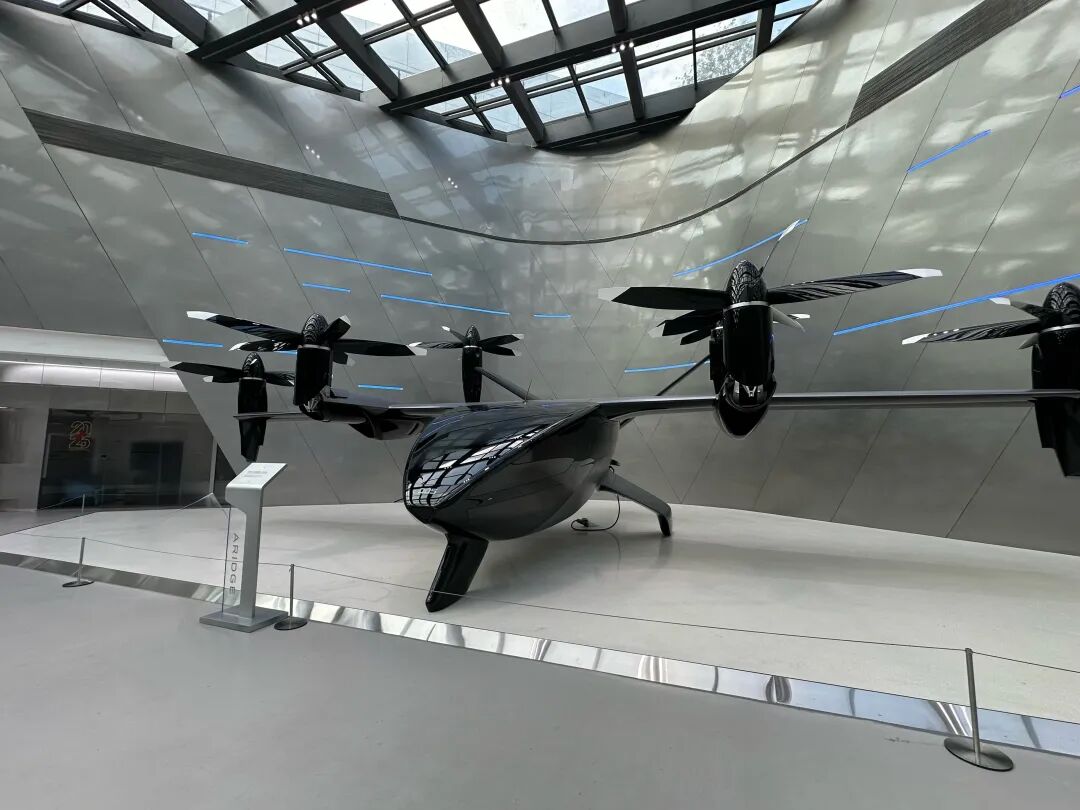
Humanity's Longing for the Sky Has Always Been There
When Yan Han asked about the world fifty years, a hundred years from now, Zhao barely paused.
He started with transportation.
"Future cars will grow wings, transportation will move from two-dimensional ground to three-dimensional air. Residential balconies will grow larger, becoming landing platforms for flying cars; distances between cities and suburbs will be redefined; boundaries between cars and aircraft will gradually disappear."
"After the autonomous driving battle is finished, where do car companies compete next?" he said. "They must grow wings, compete in the sky."
Further out, Zhao's imagination extended from sky to space.
Lunar bases, Mars bases, helium-3, controlled nuclear fusion, and the possibility of humanity becoming a multi-planetary species.
Zhao also spoke of more distant possibilities: whether humanity can build sufficiently good spacecraft to find a second home in the universe, letting civilization reach farther.
He spoke of the continuation of human civilization. Those grand propositions, in his language, remained plain.
No slogans, no deliberate agitation. He simply followed the direction of technological evolution as he understood it, laying out the future he saw layer by layer.
Five years ago, what he cared about most was whether flying cars could truly be built.
Five years later, his gaze extends to more distant spaces.
All Flight Ultimately Leads Home
Near the end of their conversation, Zhao mentioned his parents.
Two years ago, for his mother's birthday, he arranged a helicopter back to his hometown in Hunan.
That day, a light drizzle fell over Dongting Lake. Zhao personally piloted, carrying his elderly parents up into the sky, flying a circle over the Yuan River and lake district.
That was the first time in their lives his parents had been in a plane.
And his father's only time.
When Zhao was five or six, his father had asked: "What do you want to do when you grow up?"
He said: "I want to fly planes."
His father probably never imagined that many years later, this child who had run on ridges looking up at planes would not only truly fly, but build aircraft; even less that his son would one day bring a plane home and personally carry them over Dongting Lake.
Looking down from the air, fields, rivers, embankments and reed beds spread out. His father had toiled on this land his whole life; his son had also run here chasing low-flying Y-5s. Decades later, father and son first gazed down at this familiar land from the sky.
For Zhao, this flight wasn't a demonstration — more like a decades-belated answer to his father's question from years before.
His mother sat beside him, holding up her phone, excitedly livestreaming to the entire village. The first time in her life she flew into the sky, the person piloting the plane was her son.
Last year, his father passed.
"I have no regrets," Zhao said. "He certainly had none either."
He said it calmly. No deliberate pause, no dramatized sorrow.
Later, when Yan Han spoke of this story, he said Zhao had opened more than a door to the sky.
A child looking up at the sky on a ridge, decades later personally piloting a plane to carry his parents into the sky; a mother through a phone sharing beautiful scenery with her entire village. Technology, family, and hometown, connected in that moment.
Technology's most moving moments perhaps lie not in how high planes fly, nor in how precise parameters are. It ultimately returns to human life: letting a child realize childhood dreams, letting two elderly people in the twilight of life see from the sky the land they had farmed their whole lives.
However far technology goes, what it ultimately reaches is still people.

Heart Capital was founded in 2022. It is a venture capital fund focused on investing in China's early-stage technology startups.
Heart Capital's team is mainly composed of founding partners and core investors from Lightspeed China Partners, as well as senior investors from industry. The team's past investments include MetaX (688802.SH), XPeng Motors (NYSE: XPEV, 09868.HK), Full Truck Alliance (NYSE: YMM), SUNMI (06810.HK), RoboSense (02498.HK), Ambiq Micro (NYSE: AMBQ), Hanshow Technology Co., Ltd. (301275.SZ), FinVolution (NYSE: FINV), HERE (NASDAQ: HERE), as well as LandSpace, MicroNano Space, Baichuan, Yunmanman Cold Chain Logistics, World Logistics, FanDeng Reading, Lanhu, and others.
Rooted in China with a global vision, Heart Capital is committed to early-stage companionship and support for entrepreneurial teams with the potential to become world-class companies in China's technology sector. Heart Capital advocates the value of "heart," believing technology can become a bridge linking hearts. Heart Capital looks forward to accompanying more young Chinese entrepreneurs onto the world stage.