Heart Capital Invests in Star Energy Xuan Guang's Pre-A Round to Accelerate Field-Reversed Configuration Fusion R&D | HeartStar PORTFOLIO

The device under construction is scheduled to be completed by the end of 2025 and achieve its first plasma discharge.
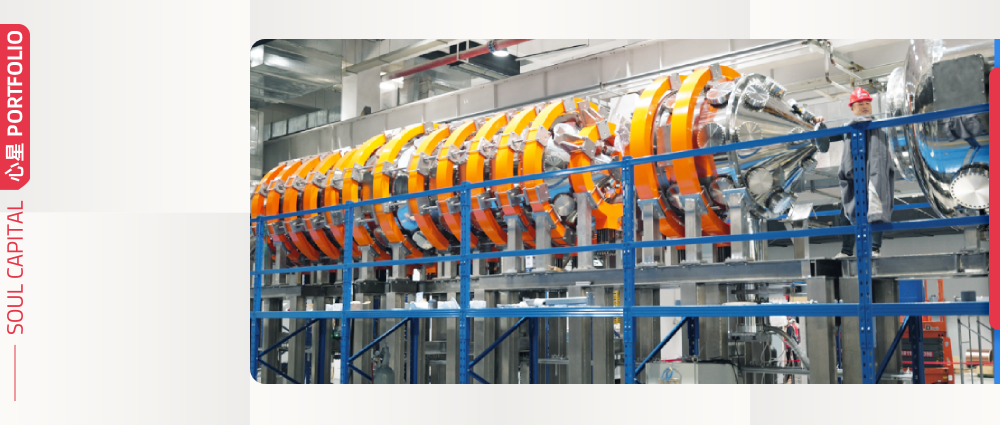
Controllable nuclear fusion technology company "Xingneng Xuanguang" (星能玄光) recently completed a Pre-A funding round of approximately 300 million RMB. The round was led by Ant Group, with participation from Hidden Hill Capital, Zijin Mining, Beyond Era, Heart Capital, Yuanhe Puhua, Luenmei Holdings, and Dinghe Gaoda. Existing shareholders Minyuan International and Renfa Xinneng also increased their stakes. The funds will be used to enhance the performance of its under-construction device, deploy key technologies, and expand the team, all aimed at accelerating the company's proprietary Field-Reversed Configuration (FRC) fusion energy technology and advancing the commercialization of controlled nuclear fusion.
Regarding this funding round, Liu Yanchen, Partner at Heart Capital, stated: "We are honored to participate in this round of financing for Xingneng Xuanguang. We are committed to comprehensive investment around AI, and energy and power are the infrastructure that will support the massive computing demands of the future. In recent years, controlled nuclear fusion has achieved breakthrough progress and has been incorporated into the country's top-level planning. For small-scale and distributed power generation scenarios, we are optimistic about linear technology pathways. The Xingneng Xuanguang team is among the best young, energetic, and execution-oriented teams in China. We look forward to working alongside the company to contribute to China's exploration of fusion energy."
Yan Han, Founder of Heart Capital, said: "Artificial intelligence is an area that Heart Capital has long focused on and heavily invested in. We believe its development relies on three core pillars: computing power, data, and energy. Around these three directions, our team has made a series of early-stage investments and ecosystem layouts.
On the computing power front, we began positioning in the high-performance GPU space relatively early, investing in "MetaX" at its Series A five years ago, and recently investing in "Xi Wang." Additionally, "Ambiq," a semiconductor company we supported early on and a leader in ultra-low-power edge AI design, successfully listed on the NYSE this July.
In the data direction, we invested in "Baichuan," which focuses on medical data and vertical large model development. At the application layer, we invested at the angel round in "Xinyin Suixing," an AI entertainment assistant dedicated to creating new emotional companionship experiences through AI technology.
In the energy direction, we believe this is a highly strategic track. Particularly on the FRC technical pathway, Xingneng Xuanguang has demonstrated top-tier technical capabilities and is the most advanced and most thoroughly established team in China. We look forward to the company achieving even more outstanding results in the future."

Xingneng Xuanguang: Leading China's FRC Fusion Track with Hardcore Strength
Xingneng Xuanguang was established in March 2024 through technology transfer from the University of Science and Technology of China. Its core technology originates from the "Advanced Field-Reversed Mirror Fusion Pathway" proposed by Professor Sun Xuan over a decade ago. This technology has been continuously developed and practiced in the KMAX-FRC research group at USTC since 2013, with results published in multiple international authoritative journals.
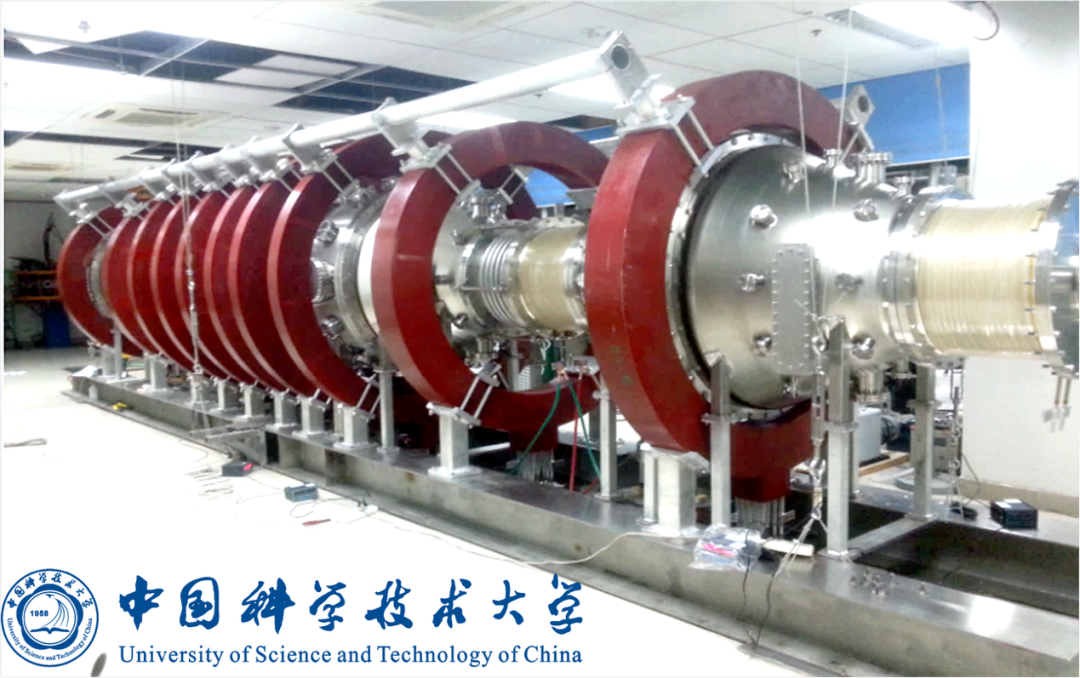
Based on the team's more than ten years of deep scientific research accumulation and established collaborative foundation, Xingneng Xuanguang has formed core advantages in technological leadership, team solidity, and results implementation capability, becoming a recognized leading enterprise in this field.
Founder Professor Sun Xuan has been deeply engaged in the fusion field for over 20 years, with both Chinese and American research and engineering experience at major fusion laboratories, enterprises, and universities. Team members are mostly from renowned institutions such as USTC and Princeton University, possessing complete technical implementation capabilities from physical experiments to engineering deployment.
Professor Sun Xuan points out that the "Advanced Field-Reversed Mirror" technology has the natural advantages of linear devices: low investment, simple structure, easy maintenance, and flexible adjustment, providing a highly promising technical pathway for future construction of efficient, stable, and economical fusion energy power plants.
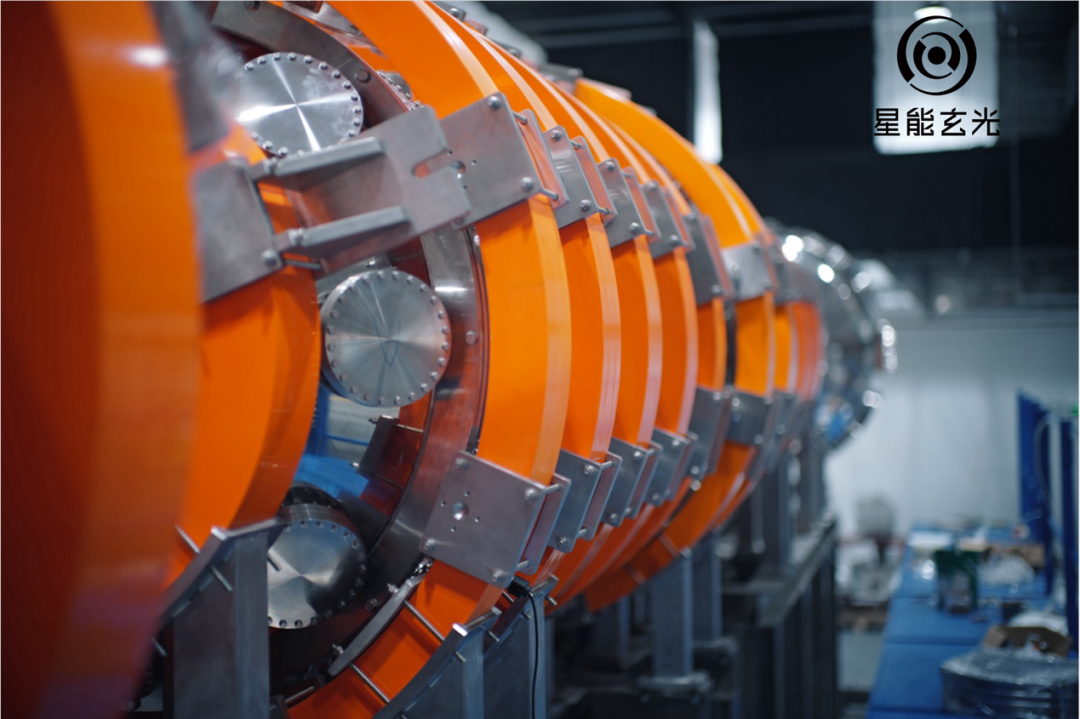
Linear Fusion Devices: With "Simplicity, Savings, and Speed," Poised to Become a Priority Pathway for Fusion Deployment
Against the backdrop of global energy transition, controlled nuclear fusion — with its high energy density, abundant fuel, and clean safety advantages — is regarded as one of the ultimate future energy solutions. According to Keytone Ventures projections, the global nuclear fusion market will grow from $296.4 billion in 2022 to $395.14 billion in 2027.
With the surge in AI computing demand and the prominent energy consumption issues of data centers, fusion energy has become a strategic focus for tech giants. Microsoft has invested in Helion Energy and signed a 50MW power purchase agreement, while Google has partnered with CFS for a 200MW power purchase agreement. On the policy front, China's 15th Five-Year Plan explicitly lists nuclear fusion as a strategically prioritized track, while the United States, Germany, and other countries have successively introduced dedicated strategies and funding programs, collectively propelling the global fusion industry into the fast lane.
Currently, controlled nuclear fusion presents a landscape of multiple technical routes developing in parallel. While mainstream devices represented by tokamaks continue to achieve breakthroughs, they still face engineering challenges including high construction costs, complex structures, and density limits.
In comparison, FRC — with its simple structure, low construction cost, fast iteration, and flexible application scenarios — is becoming a notable alternative. It is worth noting that the key metric for this pathway, the "fusion triple product," has already approached ignition levels, demonstrating strong momentum. For example, US-based Helion Energy has iterated through seven generations of devices, plans to achieve Q>1 (where energy output exceeds energy input) in 2025, and targets grid-connected power generation by 2028; TAE Technologies, meanwhile, expects to build a hydrogen-boron fusion plant around 2030.
Funding Enablement: 2025 Milestones, Accelerating Linear Device Deployment
With the completion of this funding round, Xingneng Xuanguang will advance at full speed under the dual drive of capital and technology. The company's under-construction device is planned for completion and first discharge by the end of 2025. This milestone will not only be a critical verification of the engineering feasibility of the "Advanced Field-Reversed Mirror" technology, but will also lay the foundation for subsequent higher-parameter device development, representing a significant breakthrough for the domestic linear fusion pathway.
At the same time, the company has initiated diversified commercial exploration, providing core components for diagnostic and heating devices to universities and research institutes, and actively positioning in non-power-generation value-added businesses such as neutron sources and isotope production, building a solid foundation for commercialization opportunities during the development of fusion energy.
With the dual boost of policy and capital, Xingneng Xuanguang is committed to transforming "ultimate energy" from vision into reality. The company will continue to accelerate the R&D process for small-scale, distributed fusion reactors, injecting core strength into China's energy structure transformation and the development of the global fusion industry.
Founded in 2022, Heart Capital is an early-stage Chinese venture capital fund focused on technology and digitalization. The Heart Capital team is primarily composed of Yan Han, founding partner of Lightspeed China, core investors, a chief financial officer, and seasoned investors from industry backgrounds. The team's past investments include Xpeng Motors (NYSE: XPEV, 09868.HK) and Full Truck Alliance (NYSE: YMM) at Series A, as well as FinVolution (NYSE: FINV), RoboSense (02498.HK), Baichuan, Yunmanman Cold Chain, Fan Deng Reading, World Logistics, Weina Xingkong, LandSpace, Lanhu, Starfield, and others. Rooted in China with a global perspective, Heart Capital is dedicated to finding true value in non-consensus. The firm respects the value of "people" and advocates the potential of "heart," looking forward to accompanying more young Chinese entrepreneurs to strengthen China and go global.