Yan Han, Heart Capital | Future Core Assets: Global Market Opportunities from China's Tech Innovation | Heart Voice

The world is rethinking Chinese tech, and the narrative around it is being rewritten.

The world is rethinking Chinese technology. The narrative is being rewritten.
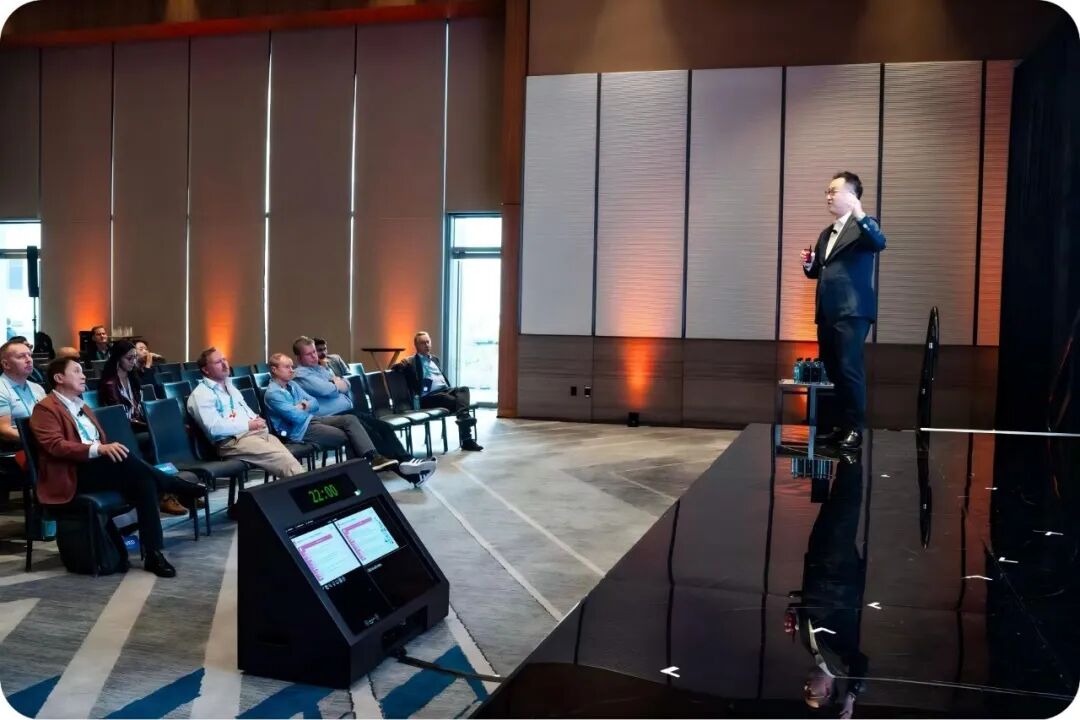
The following is a keynote by Yan Han, Founding Partner of Heart Capital, at the YPO Global Business Summit. | ~3,300 words, estimated reading time: 12 minutes.
I travel to the United States frequently for events — almost every year to San Francisco and New York, but rarely to LA. This invitation to speak at YPO GBS in LA marked my first time sharing direct observations on "Chinese technology" in America in nearly a decade. In conversations at the event, I made one point crystal clear: the world is rethinking Chinese technology, and Chinese technology is entering an unprecedented "structural opportunity window" — a moment to go global.
Yes, the narrative of Chinese technology is being rewritten.

Understanding China: The world's largest homogeneous market, with the strongest purchasing power and fastest adoption speed
China's first impression is often "big." Huge population, massive market scale. True — 1.4 billion people is virtually unmatched globally. But what matters more in China is market homogeneity, and how this homogeneity provides an unparalleled testing ground for technological innovation.
WeChat has 1.3 billion daily active users — 20 times the population of the UK. Taobao's annual transaction volume equals twice Singapore's GDP. China's electric vehicle fleet has reached 26 million. Market scale at this magnitude offers unimaginable speed and breadth for technological innovation. When technology and demand form a closed loop together, iterative innovation accelerates dramatically. This is precisely why China has experienced leapfrog technological transitions — from mobile internet to new energy, and onward to AI and intelligent manufacturing.
Beyond scale, China's robust purchasing power and tech consumption capacity are key drivers of technological development. Global leaders like Apple, Tesla, and Nvidia derive close to or more than half their revenue from China. China is not merely one of the world's largest markets for tech products — it is the primary consumer base driving these innovations. In terms of GDP volume and growth rate, China continues to lead many major economies. According to the latest statistics, China's GDP reached $18.94 trillion in 2024, ranking second globally and accounting for 17.2% of the world economy. With growth of around 5%, it maintains a globally leading position. This strong economic momentum provides sustained endogenous power for technological innovation.
In such a market environment, the speed of technology adoption is unmatched by any other country. Technology is no longer an elite privilege — it becomes part of daily life. Whether smart payments, high-speed rail, or various AI applications, technology penetrates ordinary people's lives step by step. This defines a signature characteristic of Chinese technology: the fastest technology adoption rate in the world.

Chinese talent: Extreme competition has forged a generation of daring, breakthrough-oriented top entrepreneurs
The fastest speed emerges from the most extreme competitive environments, which have also produced a cohort of top-tier entrepreneurs. China's market is complex and volatile. Entrepreneurs must constantly innovate, iterate rapidly, and elevate execution under high-pressure, high-speed competition. This environment doesn't just filter out quality enterprises — it tempers world-class founders. Especially in the mobile internet era, numerous successful entrepreneurs emerged, many of them serial founders. Having experienced failure and setbacks, they developed extraordinary resilience, accumulating agile insight and powerful execution through repeated trial and error. It is this capacity for "adversity-driven breakthrough" that enables them to rapidly integrate resources, seize opportunities, and achieve continuous breakthroughs in complex environments.
I emphasized in my sharing that Chinese entrepreneurs are not simply "hardworking" or "diligent" — they dare to enter completely unfamiliar territory and walk paths others won't. He Xiaopeng, founder of Xpeng Motors, didn't understand car manufacturing initially, yet he dared to cross over from internet into building cars, ultimately becoming one of China's leading intelligent EV brands.
Their success boils down to one key trait — the willingness to bet on unknown domains and persistently go deep. They don't fear complexity. They dare to invest more resources and bear more risk on the path of innovation. It is this fearless spirit that has enabled more and more Chinese tech companies to emerge — not imitating others' success from the outside, but starting from local demand and carving out a distinctly different innovation path.
Chinese technology: From "world's factory" to "global innovation engine"
Speaking of innovation, one cannot avoid discussing the foundational strength of Chinese technology — supply chain capability. China is often called the "world's factory," but this description falls far short of capturing its true position in global industrial chains. As the only country possessing all UN industrial classifications, China occupies an irreplaceable position in the world's industrial structure.
From core industries like batteries and LiDAR to key components like chip packaging and testing, sensors, and air suspension, China not only manufactures the world's largest volume of products but has built a complete and highly efficient industrial system. From smartphones to electric vehicles, from robotics to aerospace, and onward to artificial intelligence — China not only produces global tech products but continuously drives technological iteration and upgrading, becoming a true global innovation engine in the fullest sense.
The depth and density of China's supply chain make it an "industrial matrix" that no technological innovation can bypass. This capability is not merely production scale — it is a systems engineering integrating R&D, manufacturing, and validation. Precisely because of this, Chinese innovation has fully moved beyond the "low-end contract manufacturing" development path and entered an era of full-chain innovation from raw materials to high-precision technology.
Yet when many people discuss Chinese technology, they stop at "high-tech" or "innovation," overlooking a more profound fact: in China, technology first transforms ordinary people's way of life. In China, technology never resides in ivory towers — it directly and rapidly permeates everyone's daily life. You see automated QR-code ticket checking at high-speed rail stations, cashless payment systems for every vegetable market vendor, delivery robots and food delivery systems supporting massive life efficiency, even basic service-capable intelligent robots in hotels. All of this tells us: in China, technology is not the future — it is the present; it is not a tool — it is the way of life.
The speed of technology adoption is one of Chinese technology's greatest characteristics, and it ensures that China has never missed any global technology wave. In 2010, China experienced the mobile internet explosion, giving birth to tech companies valued in the hundreds of billions of dollars. In 2014, China became the world's largest new energy vehicle market, driving the rise of three major new-force automakers. Today, China sits in a golden cycle of AI and technology development.
In this wave of AI, China possesses a unique "compute-model-application" trinity ecosystem. At the infrastructure level, China has globally leading optical module production capacity, high-compute chip manufacturing capability, and stable, robust power grid support. At the model level, open-source large models like DeepSeek have already achieved global influence. At the application level, one-third of the world's top AI applications come from China, giving it an unmatched scale advantage in AI application deployment. Additionally, China has made significant progress in embodied intelligence — companies like Unitree have achieved technological breakthroughs in robotics and intelligent hardware, driving AI's broad application in the physical world.
It is this composite advantage of scale, technology, and industrial chain that enables China's AI to form the world's most complete chain — from R&D to application, from laboratory to real-world scenarios. On this point, China is no longer merely a participant but an undeniable technology setter and scenario validator.
China-US technology: Opposition and complementarity in Taiji
Additionally, in this sharing, I discussed China-US relations, particularly how to view the two countries' roles in the technology domain. I used a philosophical metaphor: China and the US are two poles in the technology domain — simultaneously opposed and complementary, like the black and white of Taiji. The United States leads in original technology, while China possesses powerful manufacturing capabilities and rapid technology-to-application scenarios. The two rely on and complement each other, jointly driving global technology development.
This relationship shows that future global technology development is not a zero-sum game of "either/or" but requires both countries to leverage their respective strengths, collaborate with each other, and advance global technological civilization to higher levels. This cooperation extends beyond economics and markets to cross-domain technological integration and joint development.
China has become the second-largest technology application country after the United States, a position that continues to consolidate and deepen. China has not only achieved notable accomplishments in technology R&D but, more importantly, possesses the ability to rapidly convert technology into practical application. China's innovation capacity gradually covers multiple high-tech domains including AI, robotics, and manufacturing components, and developments in these fields will drive global technological progress while closely connecting with global markets.
Furthermore, China's engineering capabilities and application scenarios make it a proving ground and diffusion center for global tech products. This has received strong support from the Chinese government, particularly in hard technology domains. Through policy, funding, and industrial guidance, the government continuously promotes technological innovation and industrial upgrading, with a clear stance: openness, cooperation, and technology priority.
As Chinese tech companies gradually emerge on the global stage, more and more Chinese enterprises are building products and services to global standards from Day One, rapidly expanding into global markets. Leveraging China's powerful supply chain, engineering technology, and talent advantages, they quickly compete and establish positions in global markets. The development path for Chinese enterprises is becoming clear: hard technology + made in China + global sales. This not only demonstrates Chinese technology's unique advantages in global competition but also lays solid foundations for China to stand out in global markets.

Feeling with heart, walking with the world
From a global perspective, 2025 will be the year Chinese technology enters an entirely new stage. Over the past decade-plus, we have witnessed Chinese technology's transformation from "follower" to "innovator." In the coming decade, China will continue driving global technology development and become an important force in the global technology landscape.
I choose to go all-in on China and fully believe in it, not only because of the innovative vitality here but because I want to share a real China with the world — a China full of innovative spirit and daring breakthroughs. The era of "Chinese innovation + global market" has arrived, driven by Chinese entrepreneurs who possess original aspiration and patience.
Heart Capital will continue accompanying these entrepreneurs, walking with them toward the world, winning greater influence for Chinese technological innovation on the global stage.
YPO (Young Presidents' Organization) is a global leadership community of over 38,000 chief executives dedicated to building better leaders. Its members come from diverse backgrounds with broad cultural perspectives and professional experience, generating positive impact at personal, business, and global levels through sharing and trust. YPO provides a platform for young successful leaders to continuously learn, grow, and together improve lives, businesses, and the world.


Founded in 2022, Heart Capital is a China-based early-stage venture capital fund focused on technology and digitalization. The Heart Capital team is primarily composed of Yan Han, founding partner of Lightspeed China, core investors, a CFO, and senior investors from industry backgrounds. The team's past investments include Series A investments in Xpeng Motors (NYSE: XPEV, 09868.HK), Full Truck Alliance (NYSE: YMM), as well as FinVolution (NYSE: FINV), RoboSense (02498.HK), Baichuan, Manman Lengyun, Dedao, World Logistics, Micro-nano Starry Sky, LandSpace, Lanhu, Starfield, and others. Rooted in China with a global outlook, Heart Capital is committed to finding true value in non-consensus. Heart Capital respects the value of "people" and advocates the potential of "heart," looking forward to accompanying more young Chinese entrepreneurs to strengthen China and go global.