Heart Capital's Yan Han: Patience, Original Aspiration, Cultivation, and Dedication | VOICE

Invest in China's technology with conviction and care.

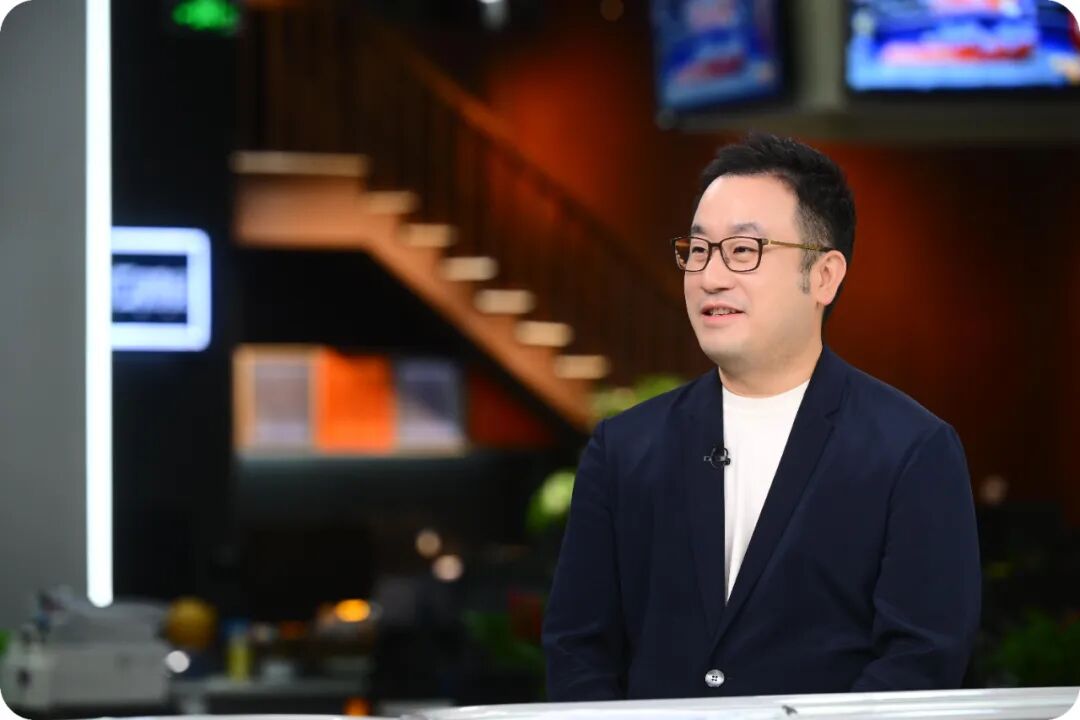
Not long ago, Yan Han, founding partner of Heart Capital, sat down for an interview at Yicai's equity investment forum to talk about "patience, original intent, cultivating the mind, and devotion" in the investment process.
Host: You founded Heart Capital in 2022, your second fund brand after launching Lightspeed in 2011. What made you want to start Heart Capital?
Yan Han: First, Heart Capital is a fund focused on early-stage technology and digitalization investments in China. Unlike Lightspeed, it's structured as RMB-denominated with USD as a secondary currency. When I entered this industry in 2008, I started out serving Lightspeed's US operations. In 2011, I helped launch Lightspeed China, which was primarily USD-denominated with RMB as secondary. After nearly two decades, I finally see the trend where China-based funds are positioned to strengthen China, expand beyond it, and go global. I deeply felt this shift, and it's the core reason I founded Heart Capital.
The name "Heart Capital" aligns with our values and logic. Over the past decade or two, we've achieved strong results alongside remarkable entrepreneurs who built industry-leading companies in China. At the "brain" level, they're already formidable investors. But at the "heart" level, we believe there's even greater power and untapped potential. So the name signifies a new beginning — we hope both investors and entrepreneurs can have not just a powerful mind, but also an inner capacity for包容 and strength, enabling them to do truly impactful things.
Host: You just mentioned Heart Capital. In today's market environment, could you talk about "original intent"?
Yan Han: First, Heart Capital's mission is rooted in China as an advocate of non-consensus investing. Our goal is to identify the top 1% of assets in any industry. Our vision is to build a fund platform that goes from China to the world, eventually becoming the earliest investor in 100 Chinese companies that achieve global status. At the values level, since we're called Heart Capital, "heart" is central to our ethos — which we summarize as devotion, innovation, and patience.
Host: You've spent 16 years in USD funds, lived through the full cycle of China's equity investment market, and witnessed the industry's peak as a globally-minded investor. Now the market environment has changed dramatically — many USD funds have been hit hard and are pulling out of China. How do you view this? And as a Chinese brand, how are you adapting?
Yan Han: "Change" is the keyword here. It's what everyone's been discussing in recent years — geopolitical shifts, economic changes, evolving business models. Both entrepreneurs and investors feel this acutely. But if you zoom out on the timeline, you'll see that change itself is the only constant. The key is to view change with flexibility and adapt to it, rather than resist it. Understanding what massive opportunities lie behind today's changes — that's the crux.
Second, we boldly predict that the next decade will be the decade when Chinese investors and entrepreneurs go global. The past decade saw explosive growth from the internet and traffic-driven models across many sectors, but that also created pressure to break through to the next stage. Under this pressure, investors and entrepreneurs have been thinking from day one: how do I leverage today's excellent products and services to build a world-class company? So we predict the next ten years could be the golden decade for Chinese enterprises and investors to globalize.
Third, even as technology becomes the main arena of competition today, we still believe technology has no borders. You can see technological advances across industries emerging simultaneously across the globe. Take robotaxis and autonomous vehicles — they're developing concurrently in China, the US, and Europe. China's progress has been particularly rapid, with lots of encouraging news and applications lately. This only confirms that technology knows no borders. Precisely in today's competitive environment, we should be more rooted in China while going out to engage with the world on the most advanced technologies.
Fourth, there are domains where China is especially suited to breed world-class companies, given its excellent and hardworking entrepreneurs, rich application environments, and abundant data. I have a vivid example: years ago, we saw early signs that China's aerospace sector was opening space for private enterprises to break through. But there was no consensus then — people assumed the US market, with its flourishing ecosystem, would be more suitable for aerospace development.
After several years of development, we found that China's private aerospace soil had actually formed years earlier and grown substantially. We invested in a company called LandSpace, which in 2023 became the world's first company to successfully orbit a liquid oxygen-methane rocket — something we're incredibly proud of. We even beat the US to this milestone, with technology that's globally leading.
Looking back, why was LandSpace the first to achieve this? Our take: in China's aerospace sector, even a small private company can receive government support before fully proving itself from zero to one. LandSpace was the first private rocket company to have its own launch tower at a national launch site, and received substantial state support on many core components. This means the soil for private aerospace enterprises in China is actually better than internationally. So there are domains — aerospace, AI, and others — where China's environment is particularly conducive to cultivating world-class companies.
Host: So can we interpret this as China's soil being more suitable for enterprise innovation?
Yan Han: Yes, China's soil is very conducive to nurturing innovation by Chinese entrepreneurs with distinctive characteristics. They're diligent, capable, absolutely world-class in product, and backed by strong government support. This differs from innovation in other parts of the world, where you typically need to fully prove your zero-to-one success before stepping onto the stage to ask for support.
Host: We're glad to hear you talk about embracing change — a major theme for us going forward. As a veteran investor, how do you understand professionalism and innovation?
Yan Han: "Professionalism" and "innovation" precisely capture what this industry requires of both investors and entrepreneurs. For investors, professionalism and innovation mean first going deep in your industry — quickly grasping its core through intensive study. You don't need to become an industry expert, but you must rapidly understand how the industry works.
Innovation means what? Venture capital never dances on consensus — it dances on non-consensus, on innovation, on expectations of a future that hasn't happened yet. So the core of this industry is deep industry understanding plus the演绎 that follows from it. The same applies to entrepreneurs. Let me give an example: last year we invested in Baichuan, now a leading domestic large language model company. Its two founders, Chuan Wang and Liyun Ru, both graduated from Tsinghua University's computer science program. Over twenty years ago, right after graduation, they founded their first company, Sogou, which became a leading search engine in China and later went public. They accumulated tremendous expertise there, particularly in big data processing and cleaning. This professionalism and leadership is core to why the company succeeds.
In recent years, as AI developed rapidly, they didn't stop. Building on their original expertise, they made innovative breakthroughs in AI, combining current large models and AI advances to found their new company, Baichuan. Because of their prior professional capabilities, they achieved even better innovation in today's AI landscape.
This example illustrates that whether for investors or entrepreneurs, doing both professionalism and innovation extremely well lets you break through and become an industry leader.

Host: Local governments have become indispensable forces in the primary market, with corresponding requirements around industries, local presence, and reciprocal investment. As a GP, how do you balance investment returns against government demands?
Yan Han: This is an excellent and very topical question, since governments are now actively partnering with the VC industry to support enterprises. From an investor's perspective, there are several key points. First, multi-party wins — understanding government needs while accommodating enterprise needs and investors' industry insights, so all three sides benefit. This is crucial. Government's core need is to support the best industry-leading companies that can drive future industrial development. Investors' need is to help excellent entrepreneurs create positive social value. Entrepreneurs' need is to receive not just investor support — capital and resources — but also government policy, funding, and industrial support. Understanding all three parties' needs and achieving multi-party wins is the core.
Second, I'll put it this way: do what's right but hard. Human energy is limited, government energy is limited, entrepreneurial energy is limited. How to focus on the core top 1% of assets has always been Heart Capital's direction. We could invest in 20 companies a year, or we could invest in the 5 most worth investing in. From the government perspective, it could help 200 companies or support the one chain-leading enterprise with dominant industry position. So how to raise the bar and pick the best of the best to support — this is what government, investors, and entrepreneurs should all think about.
Of course, we also need patience. "Patient capital" is a hot topic now. A company's success doesn't happen overnight; it can't become a chain leader in a single day. So how to open your imagination, and with focus, patiently accompany early-stage companies with dreams and excellent teams from day one through five or ten years to become chain leaders — this requires the patient, long-term mindset that investors and enterprises should have.
Host: You mentioned the buzzword "patience." Another hot term is "new quality productive forces" — President Xi has advocated accelerating their development to promote high-quality growth. New quality productive forces depend on technological innovation. As a GP, how do you implement investment in new quality productive forces enterprises?
Yan Han: "New quality productive forces" is a very new term with lots of recent discussion. Relative to traditional productive forces, it naturally carries meanings of innovation and high technology. First, to do well in new quality productive forces, we must follow national policy guidance. Industries where this is now prominent include aerospace, AI, semiconductors, and low-altitude economy. So as an investor, to invest well in new quality productive forces means first keeping pace with national industrial guidance, and around specific directions in these fields, deeply excavating valuable companies.
Second, to truly unleash new quality productive forces' power, we need concentrated firepower — focusing on the core top 1% of fields and top 1% of founders, not scattering investments widely. We need to go deep into industries, understand their cores, understand the most excellent founders, and concentrate our energy to support them in growing strong.
Host: You mentioned that new quality productive forces also depend on industry, including new energy, low-altitude economy, and commercial aerospace — all hot tracks right now. But we also know you entered these tracks years ago and have backed unicorns like Xpeng Motors, LandSpace, and MinoSpace. Could you share how you understand industry and invest in it?
Yan Han: New quality productive forces indeed depend on some currently hot domains, but to truly invest successfully in these areas at their earliest stages requires deep industrial cognition from investors. At the team level, for example, we have very seasoned industry investors. One of our partners previously came from Cainiao's investment department, with deep industry resources in warehousing logistics and cross-border technology. He successfully invested in RoboSense, now a leading domestic lidar company that successfully listed in Hong Kong. This example shows that to invest well, you need to immerse yourself in industries and have deep industrial cognition — you also need seasoned industry investors to join you.
Another point is how to leverage the aircraft carriers we've invested in across these industries. As you mentioned, over the past decade-plus we've deployed in many fields with carrier-level companies that grew from zero — including Full Truck Alliance in digital logistics, the leading enterprise in trunk logistics; World Logistics in maritime shipping, a top Chinese private maritime platform and top 5 overall; Xpeng Motors in low-altitude economy, which we backed at Series A; and in aerospace, MinoSpace, LandSpace, and other leading companies.
How to leverage these resources to incubate successful industrial companies is part of the formula. So last year we successfully incubated Full Truck Cold Chain. As Full Truck Alliance's earliest investors, through our exchanges with them we discovered that cold chain was growing very fast and aligned with national industrial development. So we participated in incubating it, becoming its first investor after spinning off from the parent company. After the spin-off, it's become a leading enterprise.
Third, even once you're in an industry, you need to swim in non-consensus rather than follow the crowd. Because the ideas and models that will truly break through industries in the future must today be non-consensus — even incomprehensible or unbelievable to most people.
I'll give an example: in 2011-2012, when everyone was investing in mobile internet apps, we asked ourselves what might be non-consensus. Mobile phones were developing so fast — besides these light app models, would they bring major transformation to industries? So we thought about whether mobile internet could empower industries like travel and logistics.
So in travel we invested in Tujia, now a fast-growing company in mobile and homestay lodging — not favored or even conceived of at the time. The most successful example was Full Truck Alliance. We noticed many young long-haul truck drivers getting smartphones, different from before. Previously, drivers found work offline or on PC; with phones, would they use mobile platforms to find loads, pay deposits, get better information? So when basically no industry investors were looking at this space, we incubated what was then called Yunmanman, aiming to help truck drivers find loads more easily and be treated more fairly. We invested in and helped build this company. The results were very rewarding — because we dared to go deep into this industry early and invest in non-consensus, the company eventually developed rapidly and became one of our best-returning investments.
Finally, we befriend the most seasoned and most daring risk-takers in industries. We're among He Xiaopeng's earliest investors at Xpeng Motors — we connected with him in his first week at the auto factory after UCWeb, becoming his investor. We're also close friends with Chuan Wang and Liyun Ru at Baichuan, the AI leader I mentioned, and their Series A investors. So how to befriend leading entrepreneurs with accumulation, expertise, and daring to innovate, accompanying them to strengthen China, go beyond China, and go global — this is the most core thing we do.
Host: So can we understand it as: understand industry, root in industry, then invest in industry?
Yan Han: Right, you must go in deep. You must roll up your pant legs, step in, immerse yourself in the industry, find its most valuable point, and invest in it without hesitation.
Host: Listening to you, I think you've truly practiced investing early, investing small, investing in technology, and investing in innovation. It's not easy to root so early. You also mentioned "patient capital." How do you view it, and what are its opportunities and challenges?
Yan Han: Investing early, investing small — this is very hard. Going back to why we're called Heart Capital: to invest early and small, to be patient, goes against human nature. Investing early and small inevitably brings much fear and hesitation. "Patience" — the word "耐" (endurance) plus "心" (heart) — the character "耐" itself implies this journey won't be smooth. So to do well investing early and small, to be patient, you must cultivate the mind. Without mental strength, you cannot patiently accompany entrepreneurs, cannot endure the loneliness like entrepreneurs do, having great ideas on day one that nobody believes in, persisting five or ten years to build something great for society.
To truly be patient, first recognize the journey is arduous, not achieved overnight. Second, you must cultivate the mind — another reason we're called Heart Capital. Many entrepreneurs aren't first-timers; when they start their second or third company and see the name Heart Capital, to my surprise, they instantly understand why. From their first to second entrepreneurial journey, through various challenges — with themselves, the market, their inner selves — they realize that breakthrough from brain to heart is the core of their entire entrepreneurial path. So they finally understand this capital doesn't just give money, but patient support. This is Heart Capital's deeper meaning.
Host: I think Heart Capital has many meanings — patience, original intent, cultivating the mind, and what else?
Yan Han: Patience, original intent, cultivating the mind, and devotion — being present with heart as well as mind in every decision, to truly create entrepreneurship with positive social value.

Heart Capital was founded in 2022 as an early-stage venture capital fund focused on technology and digitalization in China. The team is led by Yan Han, founding partner of Lightspeed China, alongside core investors, a CFO, and seasoned industry investors. Notable past investments include Series A investments in Xpeng Motors (NYSE: XPEV, 09868.HK), Full Truck Alliance (NYSE: YMM), as well as FinVolution (NYSE: FINV), RoboSense (02498.HK), Baichuan, Full Truck Cold Chain, Dedao, World Logistics, MinoSpace, LandSpace, Lanhu, Starfield, and others. Rooted in China with a global outlook, Heart Capital seeks true value in non-consensus. It respects the value of "people" and advocates the potential of "heart," looking forward to accompanying more young Chinese entrepreneurs to strengthen China and go global.