Heart Capital's Yan Han: Early Bets on LandSpace and MicroNano Space, and What's Next for Commercial Space

How Can Commercial Space Companies Break Through with Differentiation?
How can commercial space companies avoid homogenized competition?
Will today's investment burdens become tomorrow's competitive moats?
As the industry accelerates, what capabilities do investors care about most?
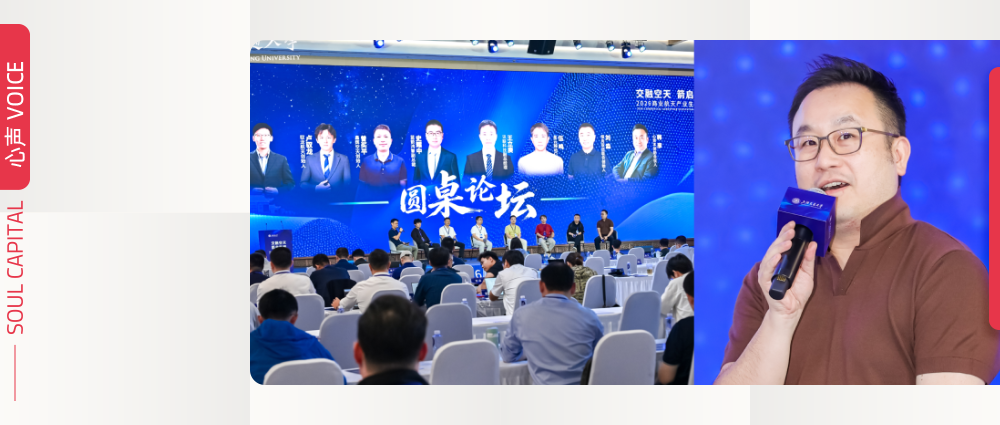
On September 20, 2026, the "Convergence of Aerospace and Space: Launching a New Journey — 2026 Commercial Space Industry Ecosystem Conference" was held at the Lingang Zero Bay Innovation Building. The conference was guided by Shanghai Jiao Tong University and the Minhang District Government, and hosted by Hanyuan Asset Management and the National University Science Park of Shanghai Jiao Tong University.
At the roundtable forum "Strengthening Through Space: Frontier Technologies and Commercialization Paths in Commercial Space," Yan Han, founding partner of Heart Capital, exchanged views with entrepreneurs in the commercial space sector, focusing on how commercial space companies can achieve differentiated breakthroughs, build competitive moats, and chart future commercialization paths.
As an early investor in LandSpace and MicroNano Space, Han has years of investment experience in the commercial space sector. Drawing on his original investment thesis for rocket and satellite companies, he discussed technology choices and long-term barriers, and shared what he looks for in commercial space companies today: repeat purchase pipelines, cost curves, financing cadence, mass production capabilities, and second growth curves.
How to avoid homogenized competition and build moats?
Han: When LandSpace chose liquid oxygen methane, the domestic mainstream was still solid-fuel and liquid oxygen kerosene. At the time, this path was harder and slower, but it created room for subsequent rocket reusability. What we judged wasn't just whether they could reach orbit in three years, but what it would cost to operate rockets ten years out.
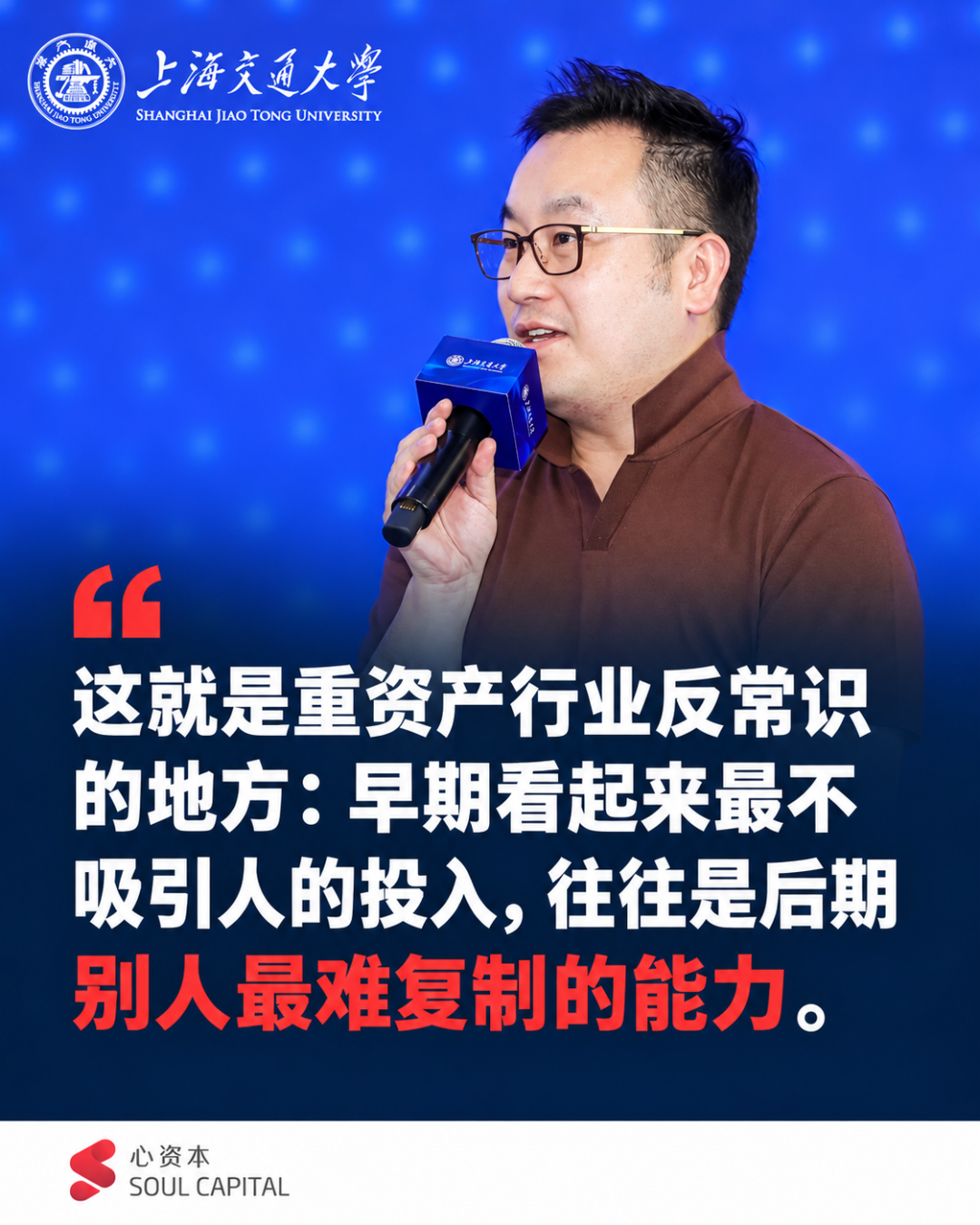
Building an engine company in-house. Building a hot-fire test stand in-house. Building an intelligent manufacturing base in-house. On the 2019 investment committee, these heavy-asset investments counted against them. Looking back today, they've become the moat. This is the counterintuitive nature of capital-intensive industries: what looks least attractive early on often becomes the hardest capability for others to replicate later.
With MicroNano Space, we bet on a different shift: satellites moving from "research institute custom-order model" to "industrial product mass-production model." In the past, they were built one by one to project specs. Could there be standardized platforms where customers select from options and production happens at scale? At the time, the industry had "many satellites, few rockets." What we saw in MicroNano was the ability to turn satellite platforms into standardized products and deliver them in batches.
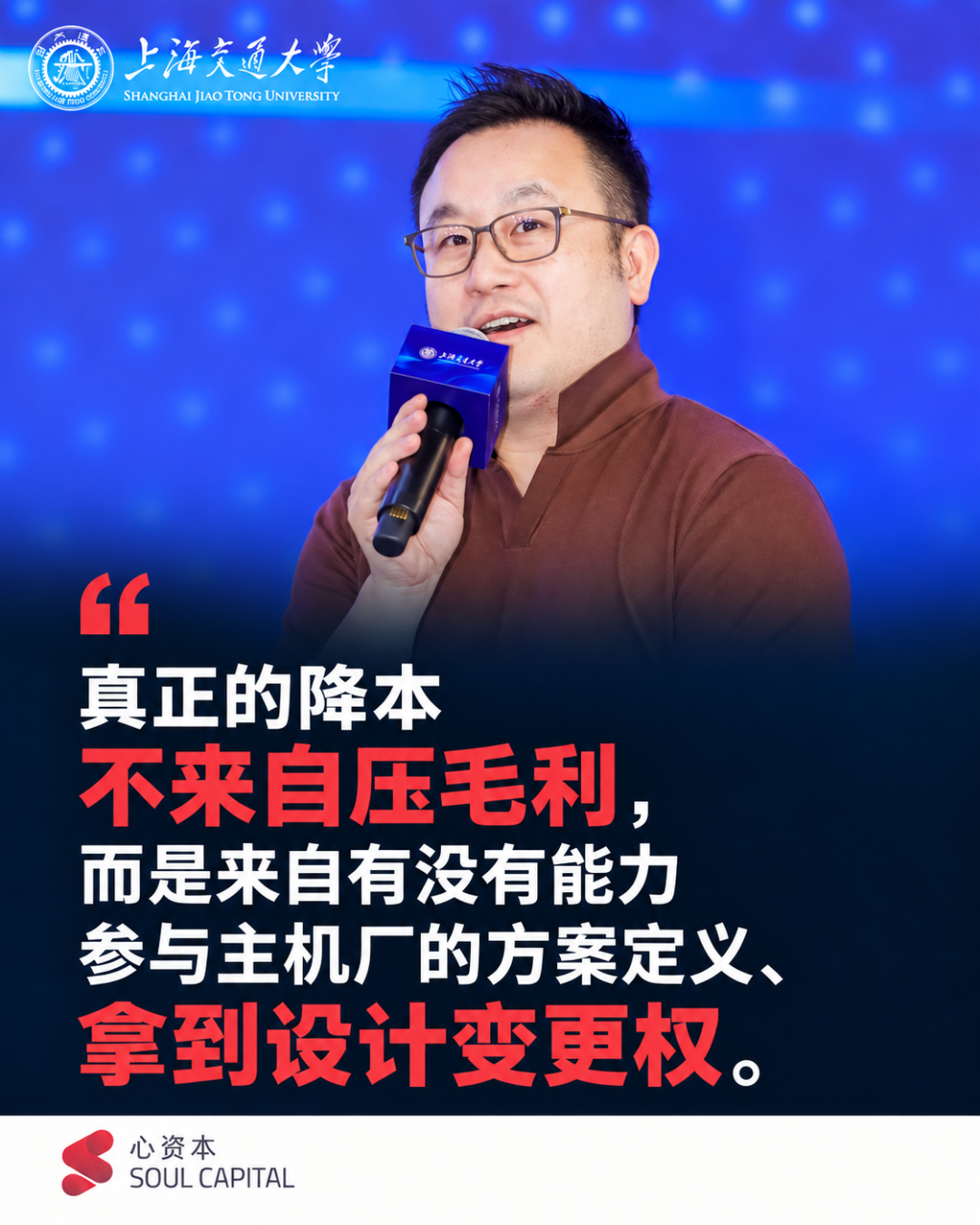
The requirements for components in the reusability era have changed — from "single-use high reliability" to "inspectable, with calibrated lifespan, serviceable." The incumbent capability model doesn't fit. This is the only three-year window for newcomers. And real cost reduction doesn't come from squeezing margins; it comes from having the ability to participate in the prime contractor's design definition and obtain engineering change authority.
Looking ahead, what do investors care about most?
Han: Order quality > order quantity. You need to distinguish whether a customer bought once to validate the product, bought once due to a relationship, or bought again after using it. Will the same customer purchase a second or third time with their own budget? That's the most direct signal of whether a product truly meets needs.
Second, look at the speed of cost reduction, not just current cost. How much lower was the second unit than the first? How much lower can the tenth unit go? As production experience accumulates and processes improve, are costs declining continuously? The data has to tell the story. Capital-intensive industries require heavy upfront investment. Whether you can get better and cheaper with experience determines whether those investments keep generating returns down the line.
Third, whether technology progress matches financing cadence. In this industry, it's often not that the technology can't be built — it's that "the technology needs 18 more months, but the money only has 9 left." For a five-year goal, can the founder break it into phases where each delivers verifiable results, so investors can see progress and judge value? That's part of commercialization capability too.
Fourth, from "making one" to "making one hundred." After building one unit, can you produce stably at scale? What's the yield rate, can you deliver on time, can component and material costs come down, can the supply chain keep up? These capabilities are often invisible in business plans, but they determine whether a company survives. Yield rate, on-time delivery rate, BOM cost reduction, supply chain management — you almost never see this in a pitch deck, but it decides life or death.
Fifth, whether demand is real and whether customers are too concentrated. Today's demand is heavily dependent on two major constellation programs and government procurement. We ask: beyond the state system, who else will buy your product? Where is the second demand curve?
So when we look at commercial space today, we examine whether companies can build moats toward future technical requirements, and whether those capabilities can translate into sustained orders, lower costs, and stable delivery. There are still many opportunities in this industry. The key is aligning the pace of technology, production, and financing — and step by step, turning technical advantages into commercial competitiveness.
Heart Capital was founded in 2022 and is a venture capital fund focused on investing in early-stage Chinese technology startups.
The Heart Capital team is primarily composed of founding partners and core investors from Lightspeed China Partners, alongside seasoned investors from industry backgrounds. The team's past investments include MetaX (688802.SH), Xpeng Motors (NYSE: XPEV, 09868.HK), Full Truck Alliance (NYSE: YMM), SUNMI (06810.HK), RoboSense (02498.HK), Ambiq Micro (NYSE: AMBQ), Hanshow Technology Co., Ltd. (301275.SZ), FinVolution (NYSE: FINV), HERE (NASDAQ: HERE), as well as LandSpace, MicroNano Space, Baichuan AI, Yunmanman Cold Chain Logistics, World Logistics, FanDeng Reading, and Lanhu.
Rooted in China with a global outlook, Heart Capital is committed to early-stage support for entrepreneurial teams with the potential to become world-class Chinese technology companies. Heart Capital champions the value of "heart," believing that technology can serve as a bridge connecting minds. Heart Capital looks forward to accompanying more young Chinese entrepreneurs onto the world stage.