Heart Capital's Yan Han: From Technological Progress to Return Realization, Three Signals for China's Hard Tech Investment | Voice

Examining early-stage investment opportunities through the lens of technological progress, IPO shifts, and the supply of patient capital.
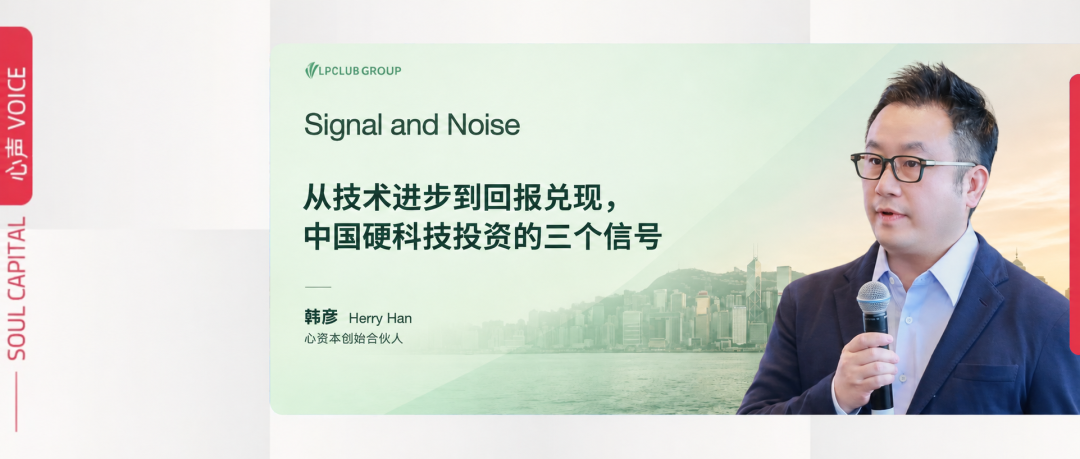
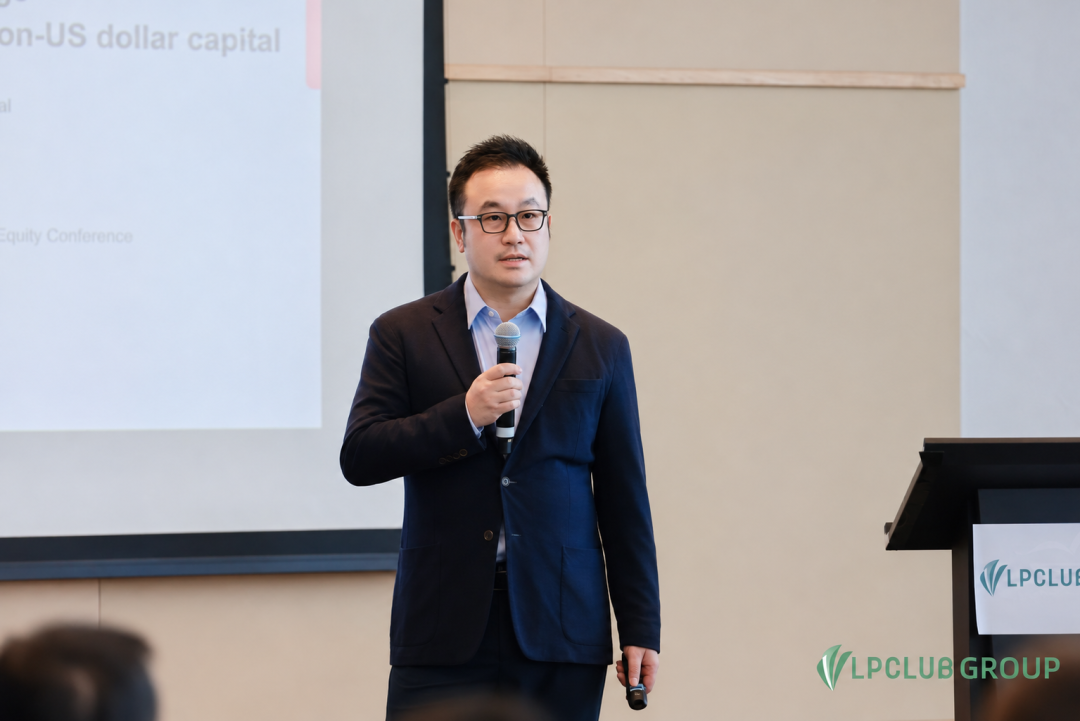
On November 18, 2026, the third International Private Equity Conference, hosted by LP Club, was held at the Hong Kong Convention and Exhibition Centre. Yan Han (Herry Han), founding partner of Heart Capital (Soul Capital), was invited to give a keynote speech, sharing with the audience his views on the industrial progress of China's hard tech sector and early-stage investment opportunities.
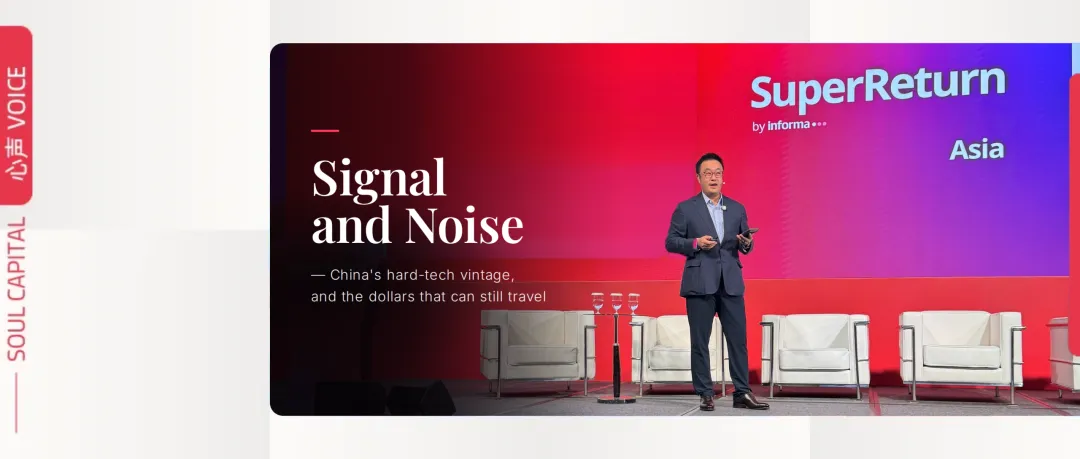
Earlier, at SuperReturn Asia in Singapore, Han had shared his assessment of China's hard tech investment opportunities from 2026 to 2028. In Hong Kong this time, drawing on changes in the IPO market and the supply of patient capital, he explored further how hard tech companies move from R&D to commercialization, and how investors can generate returns while supporting companies' growth.
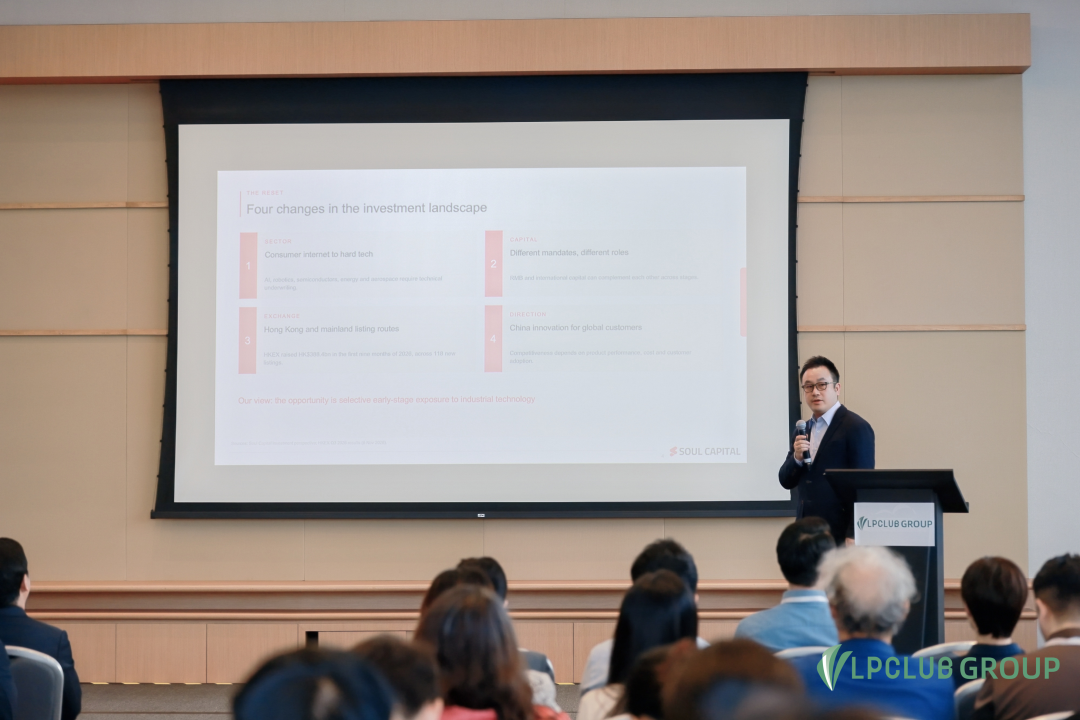
The following is a Chinese transcript of the speech:
I've been an amateur radio operator for over thirty years. Turn on the radio and you're often greeted by a wall of noise. Somewhere in that noise, there may be one voice worth listening to carefully. To hear it clearly, you have to slowly tune the frequency — and you have to be patient.
That experience has shaped the way I invest. Today, we hear all kinds of things about Chinese technology every day. What I most want to figure out is what's actually happening inside companies. What are the engineers doing? What are customers buying? What kind of capital can help these companies grow?
In 2023, I said in Singapore that 2023 to 2026 might be an important period for investing in Chinese technology. The thinking then was simple: fundraising was hard, but technology could keep advancing. Three years on, from compute and robotics to mobility and commercial space, we have more products we can see for ourselves, and more customers we can talk to directly.
Today, from technological progress to realized returns, I want to talk about three signals in China hard tech investing: first, whether the technology has advanced; second, whether there is a realistic exit path; third, whether there is capital willing to support companies over the long term.
Is a technology worth investing in?
First ask customers why they buy again
From the mobile internet and electrification to today's AI, I've lived through three technology waves. These include my investments during my time at Lightspeed China, as well as the work I've done since at Heart Capital. Each wave was different, but when I look at a company, I always ask a few simple questions: How much does the founder understand the hard problem the customer needs solved? What's good about the product? Once the company scales up, can the team still deliver reliably?
With hardware, I like to make the questions even simpler: Does the product work? Is anyone willing to pay for it? Can the company deliver at scale?
After seeing a prototype demo, I want to know how the product actually performs once it's in customers' hands. Talking to a customer once, running a pilot, and getting a repeat order each tell you something different. What I especially want to understand is: after customers have tried it, what makes them willing to buy again?
For customers to place orders, the company also has to be able to actually make the product. Once volumes go up, can the component supply keep pace? What are the production yields? Factoring in after-sales service costs, can the company still deliver every batch at the same performance level, at a price customers will accept?
So meeting the founder is only the beginning. I also want to hear what the engineers building the product have to say, and then ask the people who have actually used it. Especially when test results differ from expectations — what did the team take on board, and what did they change? A hard tech company has a long road ahead, and that ability to learn is also something I'm willing to invest in.
Hong Kong IPOs offer an exit path — but post-listing, you still have to watch how returns are realized
Discussing hard tech in Hong Kong, exits are an unavoidable topic. According to data disclosed by Hong Kong Exchanges and Clearing Limited, in the first nine months of 2026, Hong Kong saw 118 new listings, raising about HK$388 billion in IPO proceeds — more than double the same period the previous year, ranking second globally by funds raised. That gives us a firmer basis for discussing with companies where they might list in the future, and how funds can exit.
For fund LPs, what ultimately matters is how much cash they actually receive. From a company's listing to LPs getting paid, there are still several steps. When does the lock-up period end? Is there enough buying interest in the market? How many shares did the fund sell, and at what price? How much money ultimately gets distributed to investors? The price on the screen on the first day of trading and the price at which the fund actually sells can be very far apart.**
So when I look at the return on an investment, I put several things together: how much was initially invested, how much the stake was diluted through successive financing rounds, how many shares the fund has already sold, how many it still holds, and how much cash LPs have actually received.
The Hong Kong stock market has pulled back recently, which affects valuations, financing conditions, and exit timing. Over a five-to-ten-year horizon, I believe Hong Kong's role as a global technology capital market will only strengthen further. For any given company, what we need to do is keep supporting it through market ups and downs so it can build good products and win customers. As for whether to choose Hong Kong or the mainland market, and when to exit, that depends on how well the company itself is prepared, as well as market conditions at the time.
Being patient capital
Means factoring in the time a company needs to grow
Consider a company developing an industrial product: the prototype works, customers are willing to try it, but testing is taking longer than expected, and there may still be room to improve how much profit each unit sold generates. At this point, how long investors can stay with the company matters as much as how much was invested up front.
If we underestimate how long it takes customers to go from trial to order, we may underestimate the company's subsequent financing needs — and underestimate how much existing shareholders will be diluted. Even if our judgment on the technology is right, the return calculation has to be redone.
So when we make the first investment, we have to ask: if orders come in late, how long can the cash on the company's books last? How much should the fund set aside for follow-on investment? What progress would justify another check? From building the first product and landing the first major customer to scaling production and preparing for an IPO, a company needs different kinds of support at every stage. We need patience, and we need a plan. When circumstances change, the plan has to change with them.
This is also why I value dollar funding from non-US investors. RMB institutions and industrial investors can bring industry relationships and local market experience. Investors from outside the United States — with a suitable investment scope and a long enough horizon — can also bring companies patience, judgment, and international partnerships.
For any given investment, founders should ask whether the terms of the money suit what they're trying to do. LPs should ask whether the manager has the ability to support the company through the period it actually needs.
The next three years
What kind of hard tech companies are worth investing in?
2026 to 2028 are the years we'll be focused on finding investment opportunities. When it comes down to whether a company is worth investing in, I look at three conditions.
First, how far commercialization has progressed. Has the technology been turned into a product? Are there customers willing to use it — and willing to pay?
Second, what price we're investing at. Even superb technology can make for a bad investment if you pay too much. Product delivery may be slower than expected, the company may need to raise more money later, and exit timing and price are uncertain. The price we pay today has to leave room for these risks.
Third, what support we can give the company. After the first check, how much more time and money will the company need? If customers place orders later than expected, do we have the ability to keep supporting it?
These three conditions have to be looked at together. Past experience helps us spot problems earlier, but with every new company, we still have to reassess its team, product, customers, and price from scratch. 2026 to 2028 are the years we'll be focused on finding investment opportunities. How long to hold a company and when to exit depends on its own progress, as well as market conditions at the time.
Finally, back to the radio. The noise changes every day; what we need to do is keep listening carefully.**
Technology is advancing — that's the signal I hear. What kind of investment it becomes depends on the price we pay, how we support the company, and how the value it creates ultimately turns into cash in investors' hands.**
Recommended reading
Heart Capital's Yan Han: As IPOs recover, where is the investment window for China's hard tech?

Founded in 2022, Heart Capital is a venture capital fund focused on investing in early-stage Chinese technology startups.
Heart Capital's team is made up primarily of the founding partners and core investors from Lightspeed China, along with seasoned investors from industry. The team's past investments include MetaX (688802.SH), Xpeng Motors (NYSE: XPEV, 09868.HK), Full Truck Alliance (NYSE: YMM), SUNMI (06810.HK), RoboSense (02498.HK), Ambiq Micro (NYSE: AMBQ), Hanshow Technology Co., Ltd. (301275.SZ), FinVolution (NYSE: FINV), HERE (NASDAQ: HERE), as well as LandSpace, MicroNano Space, Baichuan AI, Yunmanman Cold Chain Logistics, World Logistics, FanDeng Reading, and Lanhu.
Rooted in China and with a global outlook, Heart Capital is committed to supporting, from the earliest stages, founding teams with the potential to become future world-class companies in China's technology sector. Heart Capital champions the value of "heart," believing technology can be a bridge that connects hearts and minds. Heart Capital looks forward to accompanying more young Chinese entrepreneurs as they go global.