Heart Capital's Yan Han: Why Do We Believe Chinese Tech Can Win the Future? The Core Lies Behind the Changes | VOICE

Making sense of the new investment paradigm and China's hard tech in the AI era.
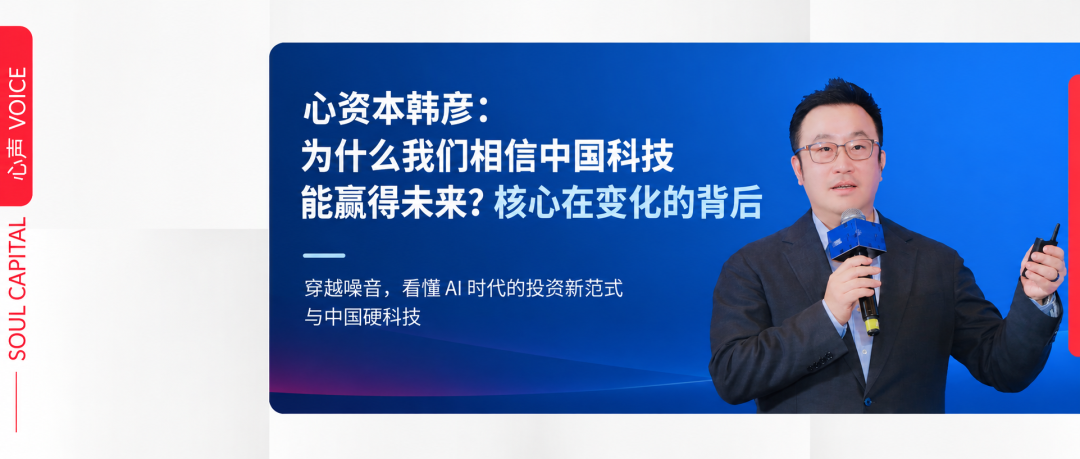
On November 27, 2026, the Futu Blue Star Capital Summit was held in Hong Kong. Yan Han, founding partner of Heart Capital, delivered the opening keynote titled "A New Investment Paradigm in the AI Era and China's Hard Tech Opportunities."
Faced with the rapid technological and industrial shifts of the AI era, Yan Han fixed his gaze on details that are easy to overlook: Have large models actually solved customers' problems? Can robots move from the exhibition booth to stable production? Can Chinese companies' overseas orders evolve from a first sale into repeat purchases?
Starting from these concrete questions, Yan Han shared his investment thinking drawn from years of observing technology, industry, and capital: do the AI math and look at actual results; look at non-consensus and real commitment; look at patience and the growth of understanding.
In his view, what matters more than the changes in front of us is the long-accumulated strength behind those changes. Over the past years, Chinese tech companies have repeatedly achieved leaps in technology, engineering, and industrial capability while solving one concrete problem after another. What truly gives us confidence in Chinese technology is not how many breakthroughs we see today, but the capacity for sustained breakthroughs built up over many years.
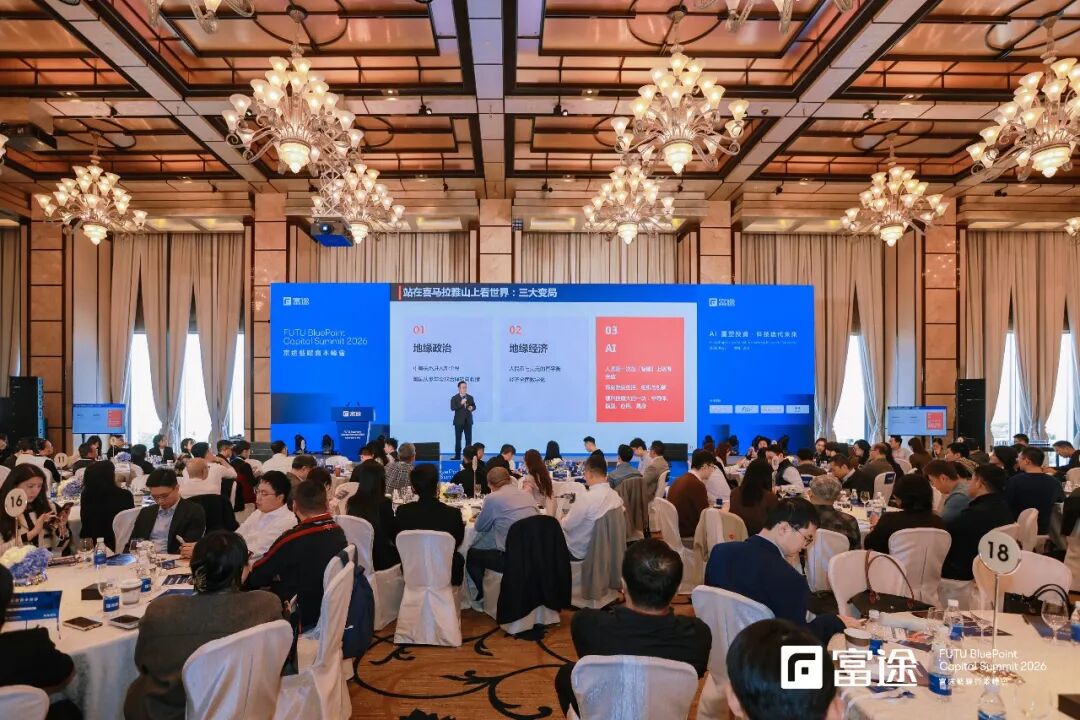
The following speech was compiled by Heart Capital. Full text approximately 6,000 words; estimated reading time 20 minutes.
Bookmark it for a leisurely read, or scroll down to the highlight images for a quick overview of the key points.
The market sees price,
but not necessarily capability
Let me open today by asking you to think of a listed company you know well. If its stock dropped ten percent this morning, how long would it take you to find out? Your phone has probably already set an alert. But if an engineer at that same company finally solved a problem that had stumped the team for two years — when would you know? Maybe next quarter, when customers start increasing orders. Maybe two years from now, when competitors simply can't catch up. Or maybe you'll never know that engineer's name.
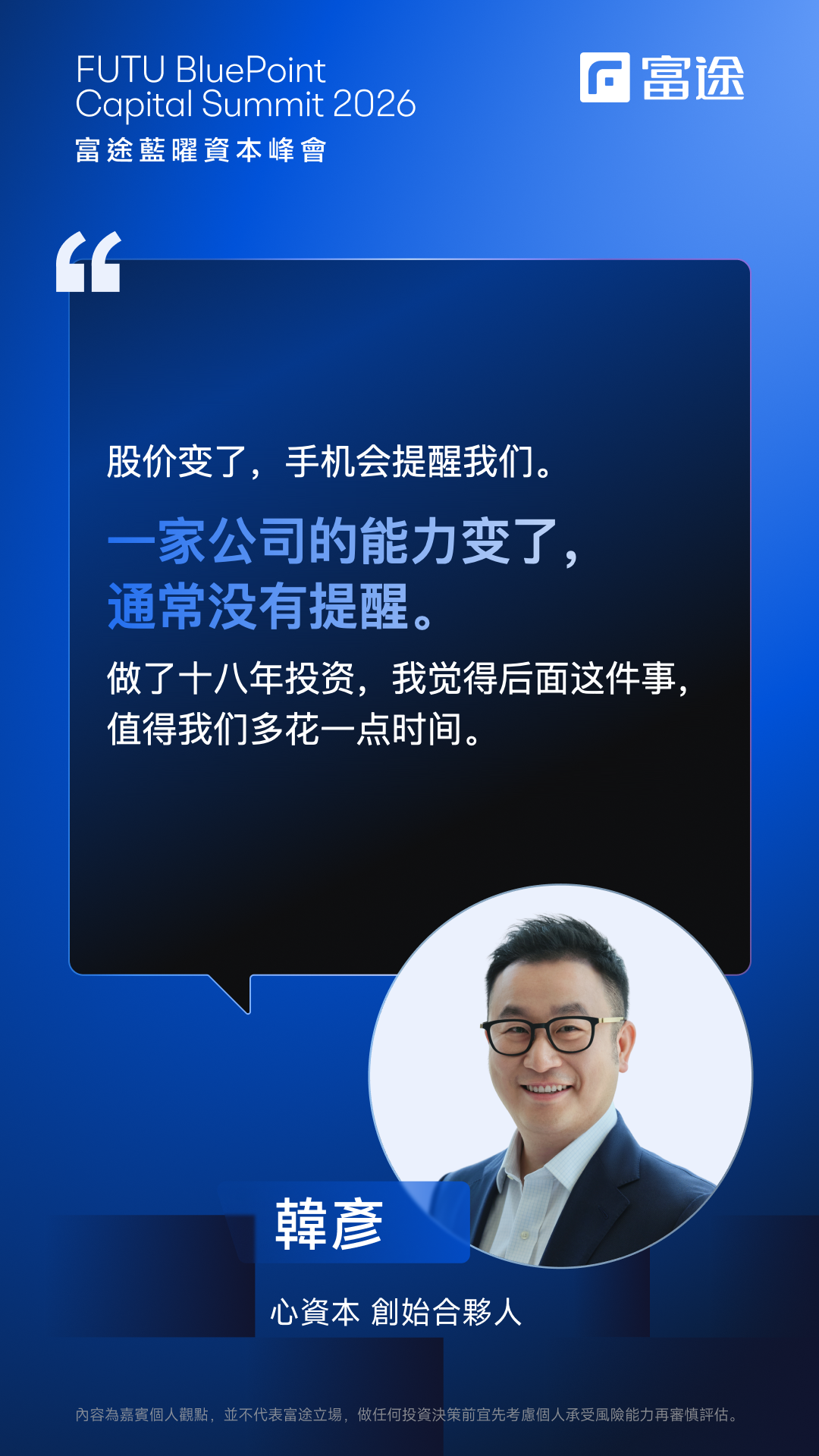
When a stock price moves, our phones remind us. When a company's capabilities change, there's usually no notification. After eighteen years in investing, I've come to believe that what truly determines how far a company can go are precisely these hard-to-see changes. The same is true for a nation's tech industry.
I was an engineer at Microsoft, then moved into consulting and investing. For the next half hour, I'd like to pull our eyes away from the price screen for a moment — to look at a work order, a factory floor, and then consider what in China's next ten years deserves our lasting confidence.
Looking back at the past three years, I got only half of my China tech thesis right. On technology, I was correct. On capital, I was wrong. I spent most of my career in dollar-denominated funds and assumed the next wave of Chinese tech innovation would be led by the dollar institutions I knew well. In reality, a large share of early-stage funding ended up coming from RMB capital — especially state-owned capital. I got this wrong because I leaned too heavily on experience, mistaking the road already traveled for the only road ahead.
But looking back now, that misjudgment made something clear to me: China is not only building up its capacity for technological innovation — the capital forces underpinning that innovation are also undergoing profound change.
Real estate is contracting, manufacturing is growing:
the cycle of one industry is not a nation's ceiling
Imagine two companies on the same street in the same city. One supplies fittings for new residential developments; its owner tells you business is genuinely harder than a few years ago. The other makes robot components; its owner says he can't hire good engineers fast enough. Have dinner with each, and you could go home and write two completely opposite reports on the Chinese economy. Yet both owners are telling the truth: real estate is heading down, high-tech manufacturing is heading up.
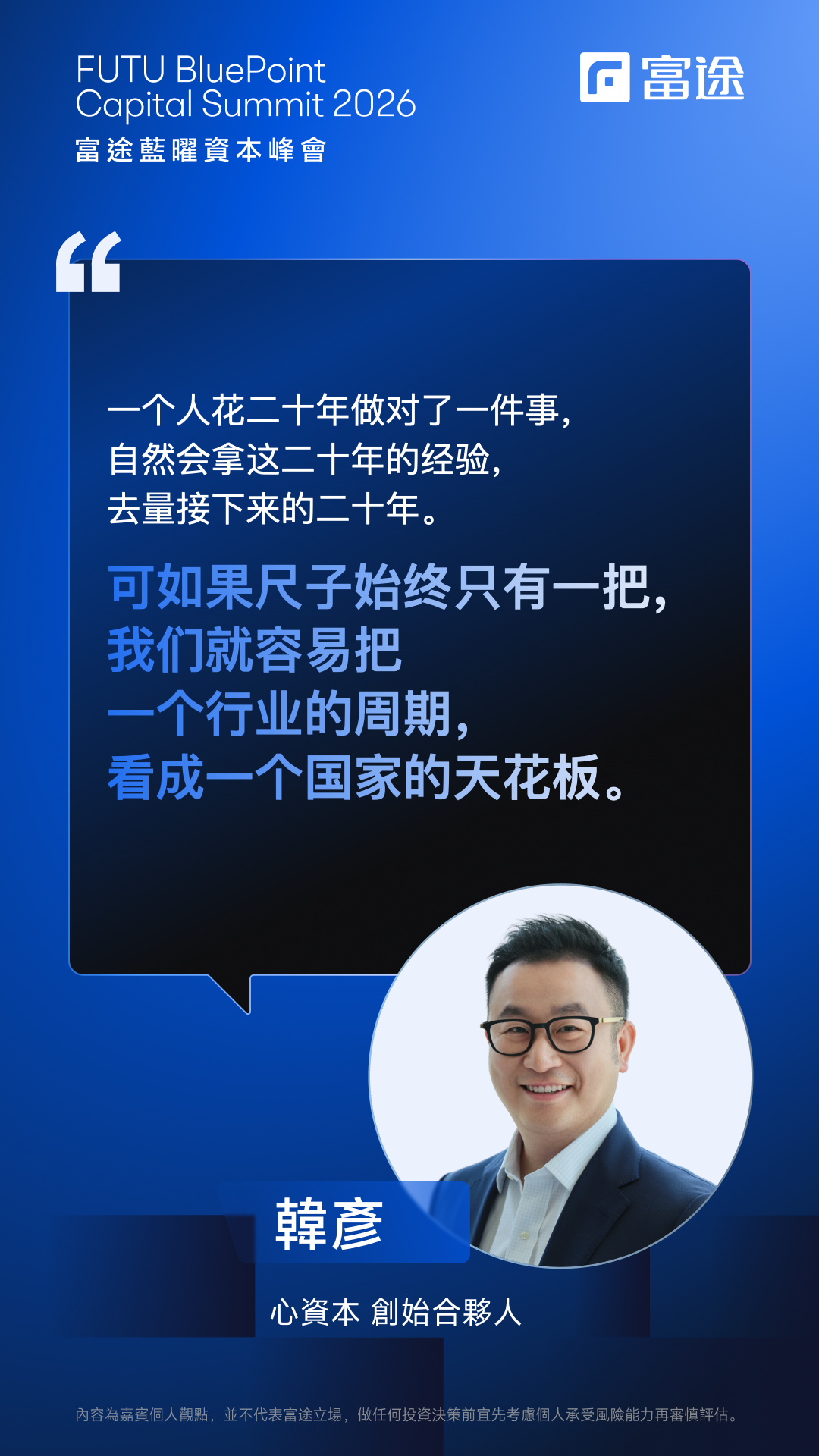
For investors, the most elusive bias sometimes comes from the good business we know best. But if we only ever use one ruler, we risk mistaking the cycle of a single industry for a nation's ceiling.
Zoom out, and you'll see that the engineering talent, manufacturing capability, and industrial supply chains China has built up over decades are now releasing value in new industries. This is not just one sector rising as another falls — it reflects a deeper shift in the drivers of China's economic growth.
I often compare hard tech to the "real estate" of the future — in quotation marks. In the old days, when evaluating a plot of land, people looked at subway access, schools, and commercial amenities to judge how many people would eventually pay for that location. Today, evaluating an engineering team means asking: which capabilities would be hard for others to replicate in a short time? How many years will customers pay for them? There's one difference: land has boundaries, but a technology developed in China can find customers anywhere in the world.
So how do you know overseas demand is real? I focus primarily on repeat orders. On the first order, an overseas customer might just be spending some budget to try a new supplier. By the second, they've seen the failure rate, they know who to call when something breaks, their finance team has run the numbers, and despite having other options, they're willing to buy again. That's when "Chinese innovation, global market" starts to carry real weight for that company.
Hong Kong helps people see this kind of story more clearly. An engineer comes over from Shenzhen and talks about how much performance he's improved. Someone who knows overseas markets might ask just one question: when the machine breaks down on a Sunday in Jakarta, who goes to fix it? It sounds like a bucket of cold water, but it may well be the start of the road to repeat orders. What I hope for Hong Kong is a place where capital prices technology, and where people who understand global markets help Chinese companies turn technical advantages into lasting commercial competitiveness.
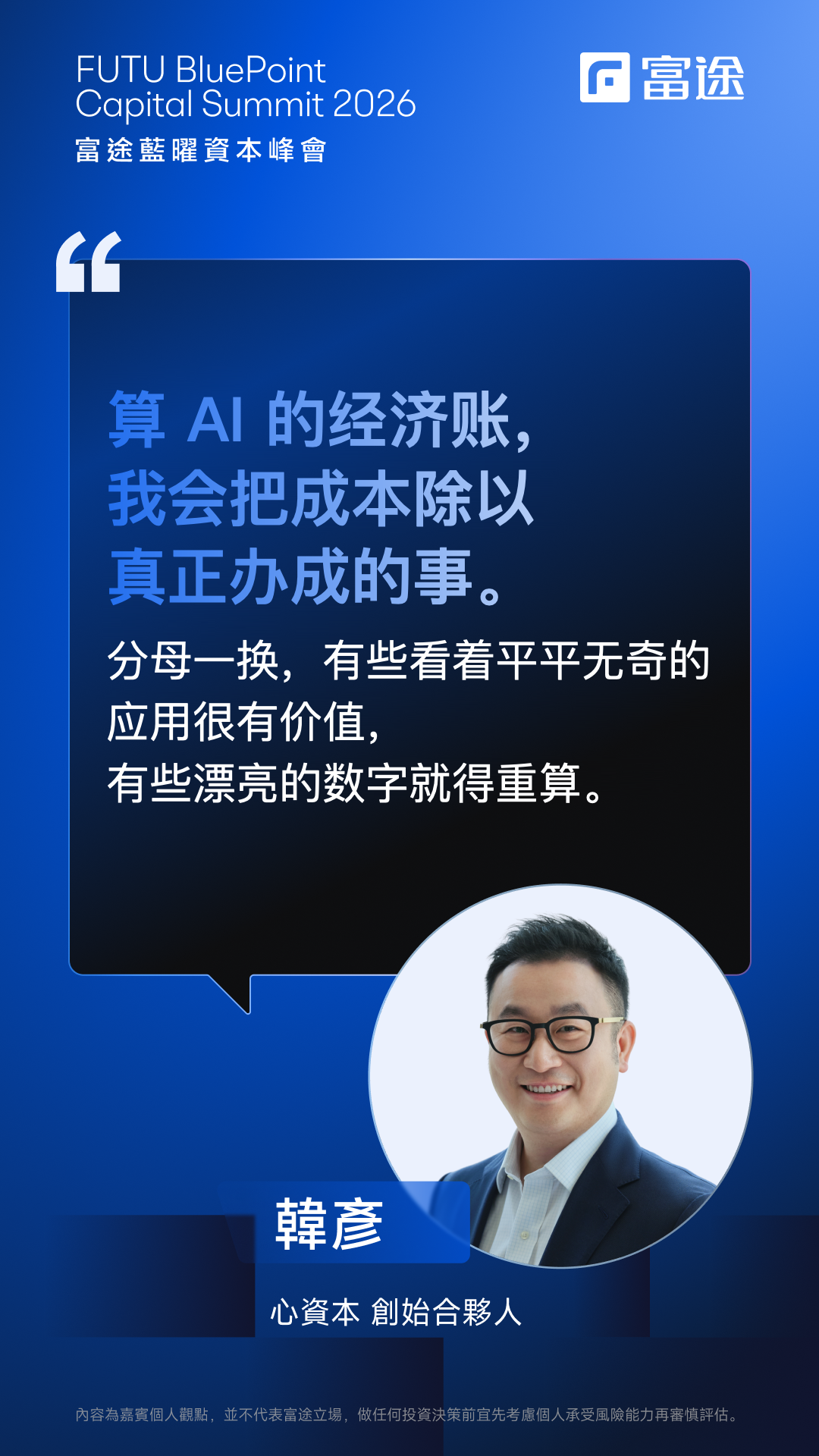
How to do the AI math:
divide cost by what actually gets done
To understand what AI has really changed, I suggest starting with an ordinary refund ticket. Suppose a company's customer service team is using a model. Yesterday it handled ten thousand messages, and each reply cost far less than before. When the boss walks into the office this morning, what's the first thing they should look at? If it were me, I'd want to know: did the customers who asked for refunds yesterday actually get their money? How many of them called again today?
If customers still have to call a second time, and someone else has to re-read yesterday's chat logs, then even though each individual reply is cheaper, the total cost of resolving that refund may not have gone down at all. To do the AI math, I divide cost by what actually gets done. Change the denominator, and some unremarkable-looking applications turn out to be very valuable, while some impressive numbers need to be recalculated.
This small example also helps us think clearly about compute, energy, and data. Chips and electricity determine how much each computation costs. Whether that refund actually went through tells us whether the computation was useful. In any industry, whoever knows the final outcome of a process has the best chance of doing it better next time. That kind of data is often in the hands of the people who are accountable to customers every day. From this angle, the industrial experience and engineering capability China has accumulated over the years take on new value in the AI era. We don't just have rich application scenarios — we have a large number of people who genuinely understand how to solve industrial problems.
Chips have advanced the same way, step by step. Five years ago we participated in MetaX's Series A round; the challenge then was whether Chinese engineers could build a high-performance general-purpose GPU. Last year we invested in Xi Wang, which makes inference chips — the question had shifted to whether each computation was cost-effective. This year we invested in Xi Xuan Chuang Zhi, where chips go inside robots. A robotic hand holds a cup; the cup starts to slip; it has to sense that, compute, and adjust its grip force. How far the chip is from the hand, how long it waits, how much power it draws — these genuinely determine whether the cup drops. Following the new problems customers encounter is a better way to see where opportunities are heading than memorizing a list of hot sectors.
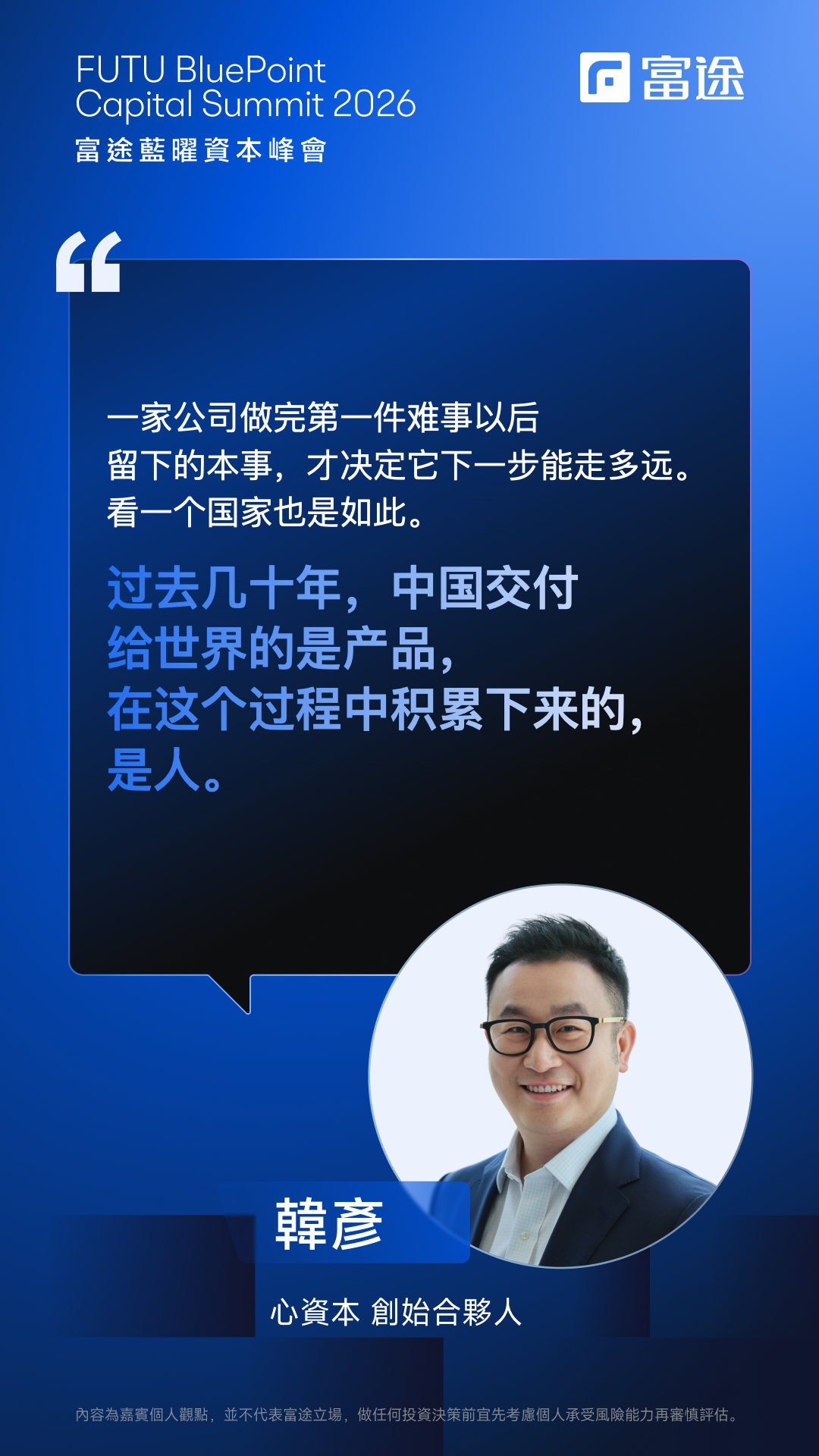
What China delivers to the world is products;
what it accumulates is people
Now let's look at embodied AI. During the day at the exhibition booth, a robot picks up a part, and everyone can see it. What I want to know about is the factory floor at night: if the supervisor still has to come check every ten minutes, the factory still has to assign a person to watch it. So when I look at robots, I like to ask a simple question: how many trips did the night-shift supervisor make last month, and how many this month? The day he feels comfortable walking away to tend another machine — that's when a lot of businesses quietly find their footing, through small changes that rarely make the news.
This kind of capability accumulation is also clear in the case of Xpeng Motors. When our team invested in Xpeng at Series A, we were backing a group of people determined to build intelligent electric vehicles. Today everyone sees Xpeng working on robots and exploring flying cars. Put these together and it's easy to tell a very tidy story, as if we saw all this coming years ago. Frankly, nobody told me about today's ventures back then. What interests me more is: after the first car was built, what remained at the company besides that car? The ability to perceive the surrounding environment remained. The engineers who made software, motors, and batteries work together remained. The experience of working with suppliers to stabilize precision also remained.
A financial statement can tell you how many cars were sold last year, but it can't easily add a line item for how many people learned to build harder things this year because they built that car together. The capabilities a company retains after completing its first hard thing are what determine how far it can go next. The same is true for a country. Over the past decades, what China delivered to the world was products; what accumulated along the way was people.
Products get replaced. Industries evolve. But the skills these people have built up don't reset to zero. As they move into new industries, the accumulation of China's past decades becomes the starting point for the next decade of innovation. This is the fundamental reason for my long-term confidence in Chinese technology.
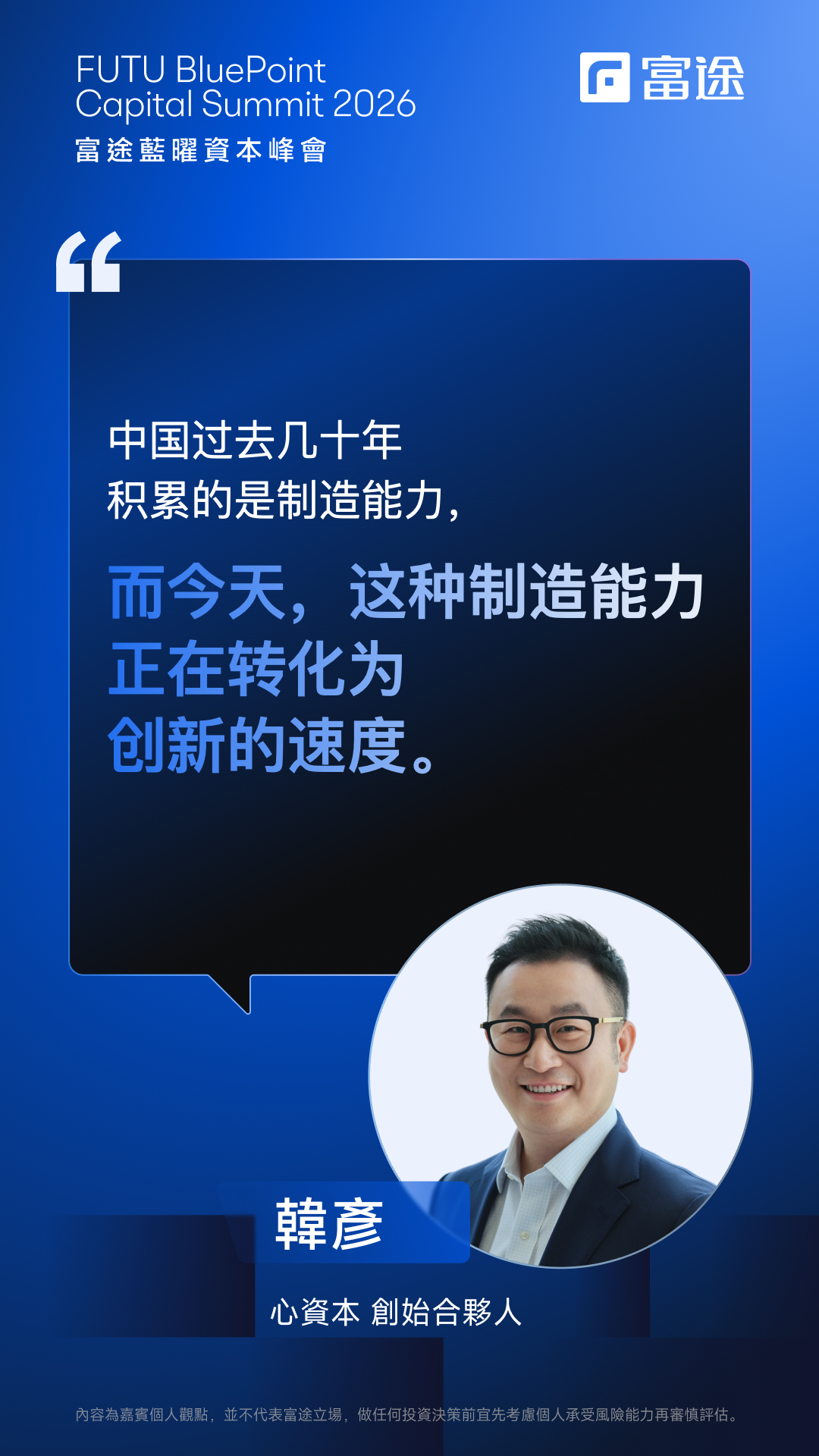
China's manufacturing accumulation
is translating into speed of innovation
Look out at Victoria Harbour. Seeing a large vessel, a trader thinks about what cargo it's carrying. An engineer might think one step further: who takes care of the hull? The more marine organisms attach, the greater the drag. If an underwater robot could clean the hull while the ship is in port, what the shipowner cares about most is probably whether the vessel needs extra downtime, and how much fuel the next voyage will save. An underwater technical problem ends up on the shipowner's balance sheet for the next voyage.
Look up at the sky, and the same logic applies. Rocket engineers care most about whether this launch will succeed. Satellite builders also ask: when does the next one come? Once launches become frequent and reliable, missions that were abandoned because the wait was too long or the math didn't work will find people willing to take them on. When a technology gets cheaper, what's most worth watching is the things people start using it for that they previously couldn't afford to do.
From underwater operations to satellite launches to using AI to screen new materials, there's a common thread: whatever gets computed on a screen eventually has to be built by someone — and it has to withstand water flow, vibration, temperature, or the rigors of a real customer. At that stage, the supply chains and engineers China has built up over the years become the key factor determining how fast a new technology can move from the lab to the market.
How do you put a price on supply chain density? If you walk into a factory, ask a small question: if a customer says on Monday morning that a connector needs a slight modification, when can the revised part be back in their hands? This afternoon, or three weeks from now? Waiting once for a single part may not seem like much, but if a product needs a hundred revisions, the difference adds up to two completely different R&D speeds.
What China accumulated over the past decades is manufacturing capability, and today that manufacturing capability is translating into speed of innovation.
Of course, when the whole industry moves faster, customers save money, but suppliers' margins may be razor-thin. So ask one more question: when the next-generation product is first being designed, whose engineers does the customer want sitting at the table? Only companies that earn a seat at that table have a chance to carry the skills honed on this generation into the next generation's orders.
Moving from building other people's products to co-designing the next generation — that's the change in Chinese manufacturing I care about most. The industrial accumulation of the past decades is becoming the foundation for the next decades of technological innovation.
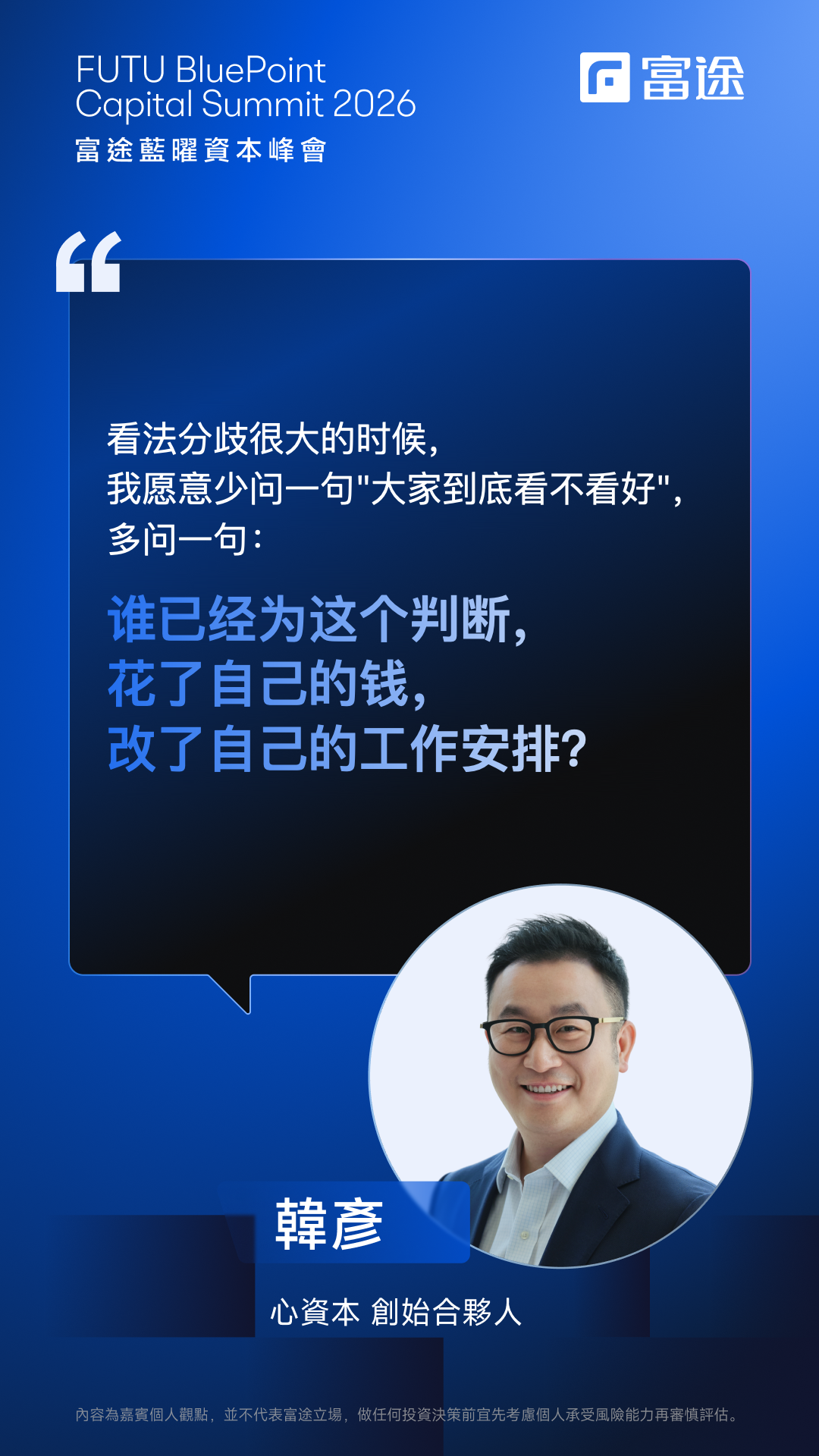
The market hasn't reached consensus,
but industry is already moving
The market works every day to price the future. So why does it sometimes miss things? One perfectly reasonable explanation: many important changes are visible to only a few people for a long stretch of time. When a customer reassigns two software engineers for three months to work on integration with a chip company, that's real money out of the customer's pocket — yet it may not show up as a single dollar of revenue on the chip company's books.
A customer saying "we're very bullish" at a press conference and a customer actually reassigning engineers are two different levels of commitment. Engineers showing up and a procurement manager reserving a line in next year's budget are another two levels apart. By the time volume purchasing happens and public market data becomes available, the starting point of that judgment may have been the day those two people changed desks.
That's what I mean by non-consensus. The chip may not succeed. The customer may change their mind. Those risks are real. But the absence of consensus doesn't stop some people from already being willing to pay the price. When views diverge sharply, I'd rather ask one less question — "Is everyone bullish?" — and one more: who has already spent their own money and rearranged their own work schedules for this judgment?
Industrial progress has its own timeline; it doesn't begin when market consensus forms. Over the years, my confidence in Chinese technology has been built up bit by bit from these changes that happen before market consensus.
The same illusion applies globally. We sometimes think that because we've bought several AI companies across several markets, we have several independent judgments. Lay out the customer lists and you realize these companies' revenues might all depend on whether the same big customer builds data centers next year. Five stock tickers, but maybe only one thing to judge. Conversely, two companies both called "chip companies" — one waiting for cloud providers to expand compute spending, the other waiting for automakers to shift more computing onto vehicles — have completely different people signing purchase orders and completely different reasons for spending. After studying both the Chinese and American industries carefully, I often have this experience: what I thought was diversified turns out to be more concentrated than I imagined; what I thought was redundant shows me a different future.
That's what makes Hong Kong's position so valuable. On the same day, we can hear what global capital is worried about, and we also have the chance to ask a factory manager in the Pearl River Delta whether that worry has actually changed his production schedule for next month. Hearing both ends gives a macro judgment a place to be verified on the ground.
Technology keeps changing;
the ability to create value keeps accumulating
Mobile internet, electrification, artificial intelligence — lined up in a row, the past eighteen years feel like several different worlds. But if you put yourself in the position of an ordinary user, one thread becomes clearer and clearer.
Take Full Truck Alliance, which we invested in early on. Suppose you're a truck driver delivering to an unfamiliar city for the first time. Your truck is empty, and you know this city has cargo that needs moving — you just don't know where. On the other side, a shipper knows there are trucks on the street but doesn't know which one is heading his way. The trucks, the cargo, and the roads all exist. Connecting these two people gives value to a stretch of road that would otherwise be driven empty. Fast forward to smart electric vehicles: after a few years of ownership, what a driver remembers might be that on the congested road home every day, there was one exhausting task the car could finally handle reliably. With today's AI, many people are counting how many characters it can generate per second. From the user's side, what matters more is: can the things I didn't get done yesterday actually get done on time today?
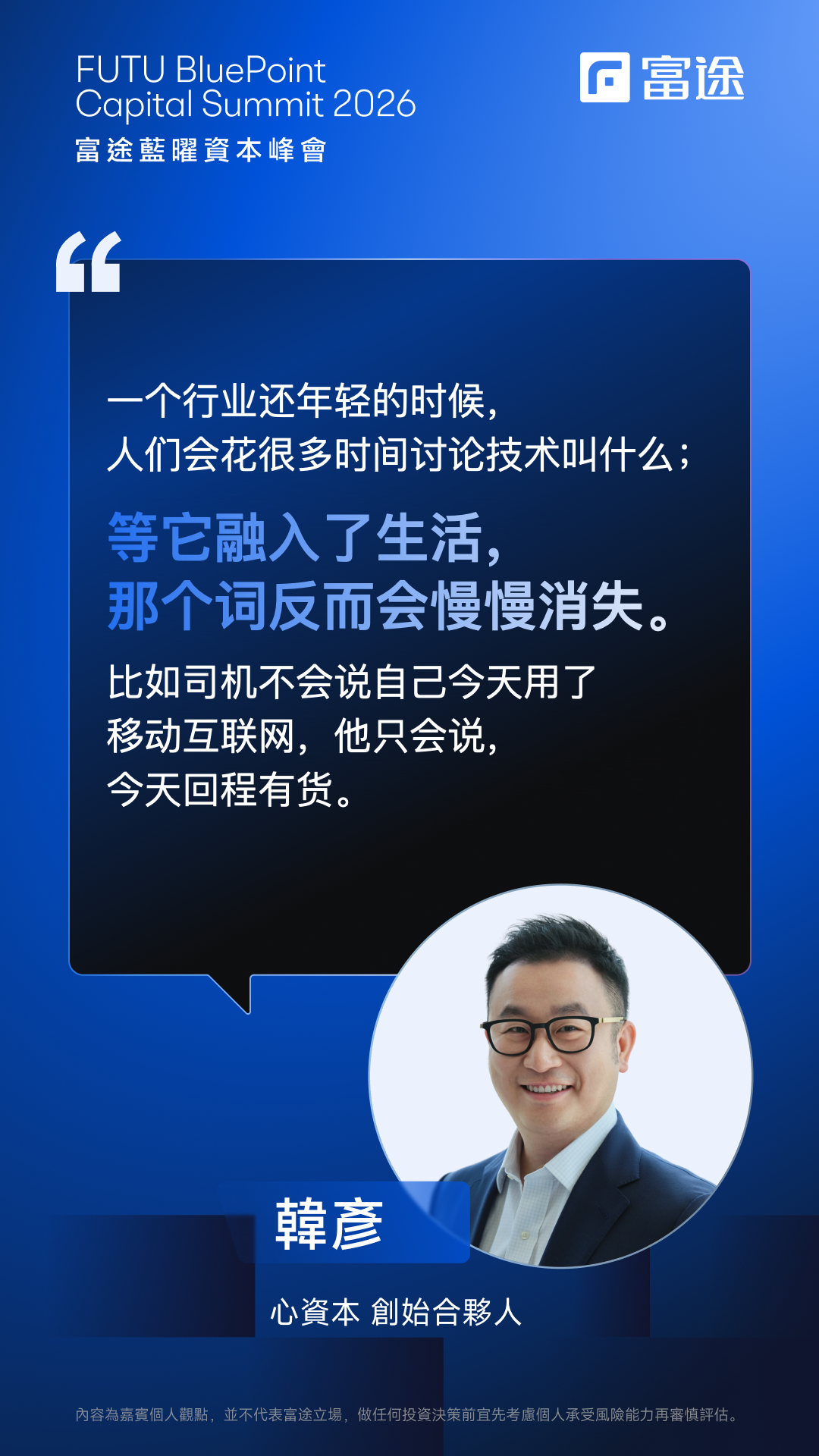
When an industry is young, people spend a lot of time debating what the technology is called. Once it's woven into daily life, that word tends to fade away. A truck driver doesn't say he used the mobile internet today — he just says there's cargo for the return trip.
Looking back over these eighteen years, Chinese companies have been through several waves of technology, steadily building up their ability to understand users, define products, and commercialize. Technology keeps changing, but the skill of turning technology into value accumulates generation by generation. Chinese companies facing AI today are not starting from zero.
So I often set myself an exercise: cross out words like "intelligent," "platform," and "ecosystem" from an investment memo, and leave only one sentence telling me whose life will be a little better tomorrow because of this. The more specific that sentence is, the better I know who to go see next. It's a crude method, but across several different eras, it has somehow kept working.
The measure of patience:
has time passed, and are we closer to the answer?
After years of early-stage investing, I've found that the hardest moments often come between two meetings. At the first meeting, everyone is excited about a new idea — that's natural. Three months later, the founder calls and says he needs another three months. How should you hear that?
In the first scenario, the engineer tells you the product occasionally fails. Over the past three months, they finally managed to reproduce the failure consistently and ruled out several possible causes. Now they have one prime suspect component, and the next experiment will test it. On paper, nothing has been delivered. But knowing exactly where you're wrong is itself progress. If you push him to ship a new feature just so you have something to report at the next meeting, you may actually be hurting him. In the other scenario, the demo looks better than last time and there are two more features. But when you ask how the first customer is using it, he says the customer has been busy — wait a bit longer. When you ask when the customer last turned the device on, nobody can answer. Same three months: the first company made a large unknown smaller; the second is still circling the same problem.
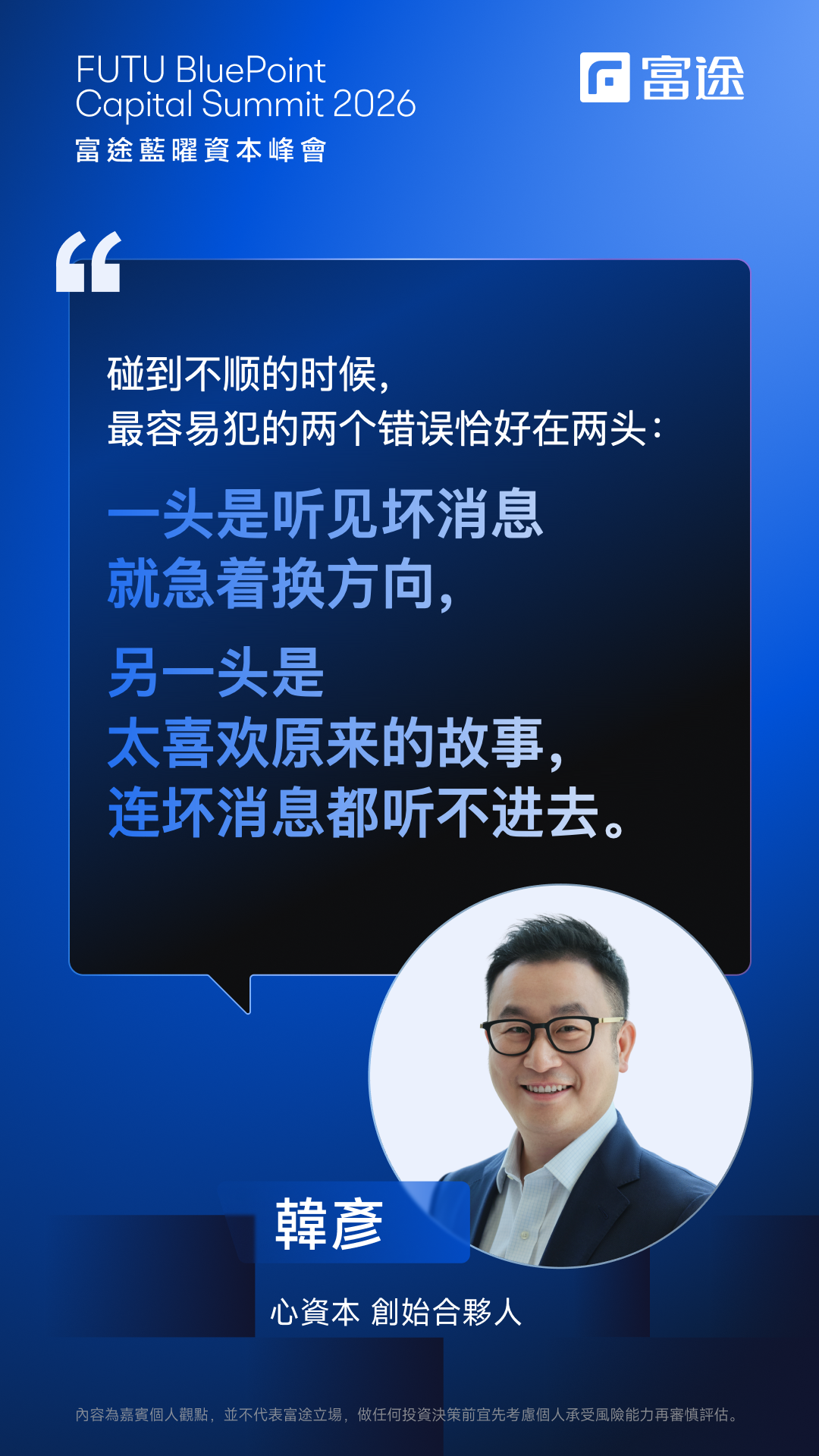
Patience has a ruler too: after these three months, what do we know about the most critical question that we didn't know three months ago? This ruler works for evaluating companies, and it works for evaluating your own judgment. When things go wrong, the two easiest mistakes sit at opposite ends: one is rushing to change direction the moment you hear bad news; the other is loving your original story so much that you can't hear the bad news at all.
When I first started investing, I thought the most important skill was learning to find answers faster. Now my view is gentler: some questions require an engineer to try it hands-on, a customer to spend real money, and time to pass before the answer appears. What we can do is give the person solving the problem the room to tell the truth. When a team dares to lay out what isn't working yet, that's when I can see where it's actually heading.
If we replace three months with ten or twenty years and look at Chinese technology, what I care about most is the same thing: we still face many hard problems today, but our ability to solve them is far beyond what it once was. Our confidence in the future comes not because there are fewer problems, but because our ability to solve them has grown stronger.
The source of long-term confidence:
not fewer problems, but stronger problem-solving ability
Let me close by returning to the two questions from the beginning. When a company's price changes, we know almost immediately. When that company learns a new capability, we may not see it for a long time. Making long-term judgments means always reserving some attention for the latter.
As a boy, I was into amateur radio. The speaker hisses with static; you turn up the volume, and the static gets louder too. You nudge the frequency slightly — the volume is still faint, but you can already make out the voice of someone far away. What I'm willing to listen to a little longer are voices like these: an engineer saying, "We can finally reproduce that bug." A truck driver saying, "There's cargo for the return trip today." An overseas customer saying, "That last machine worked well — I'd like to buy another one." All very ordinary. But string these voices together, and you can hear how an industry grew from nothing, and see how a country's accumulated capabilities turn into things ordinary people can use.
Ten years from now, most of us won't remember what the Hong Kong index closed at this morning. But if by then, a small company that started in China has made a product people use every day around the world, and an engineer who is young today has trained a whole team of better engineers — we'll know that some important things happened on days that looked perfectly ordinary.
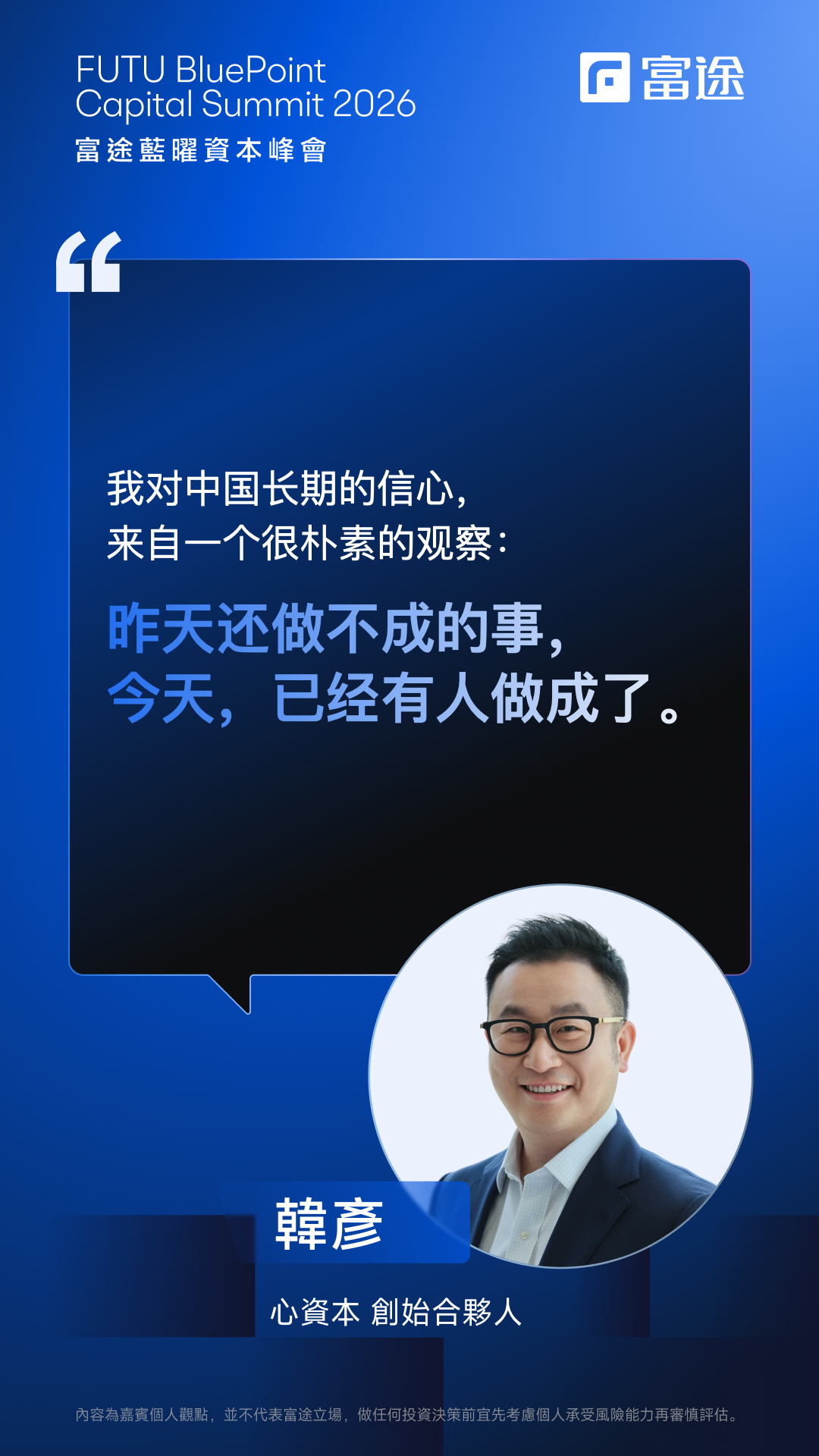
My long-term confidence in China comes from a simple observation: what couldn't be done yesterday, someone has already done today. And every time a hard thing gets done, the skills left behind give us the ability to tackle the next, harder thing. That's how China has walked forward, step by step, over the past decades.
What truly determines the future is not who wins or loses in a given moment, but the capacity — built up over decades — to keep creating new possibilities. That is the foundation of my belief that Chinese technology can win the future.

Heart Capital was founded in 2022 and is a venture capital fund focused on early-stage Chinese technology startups.
The Heart Capital team is composed primarily of the founding partners and core investors of Lightspeed China Partners, along with seasoned industry investors. The team's past investment track record includes MetaX (688802.SH), Xpeng Motors (NYSE: XPEV, 09868.HK), Full Truck Alliance (NYSE: YMM), SUNMI (06810.HK), RoboSense (02498.HK), Ambiq Micro (NYSE: AMBQ), Hanshow Technology Co., Ltd. (301275.SZ), FinVolution (NYSE: FINV), HERE (NASDAQ: HERE), as well as LandSpace, MicroNano Space, Baichuan, Yunmanman Cold Chain Logistics, World Logistics, FanDeng Reading, Lanhu, and others.
Rooted in China with a global outlook, Heart Capital is committed to supporting founders early on who have the potential to become world-class companies in China's tech sector. Heart Capital champions the value of "heart" and believes technology can be a bridge connecting hearts and minds. Heart Capital looks forward to accompanying more young Chinese entrepreneurs as they go global.