"Ma Hui 2016": Xiang Li on CHJ Automotive for the First Time — Reshaping Urban Mobility

On the second day of the Ma Hui event, Source Code Capital LP Xiang Li shared for the first time his new entrepreneurial venture: he's building cars. From R&D and manufacturing to sales and service networks, Li is redefining the future of the auto industry.
Source Code Capital's Ma Hui (Ma Hui) makes every edition as brain-burning and substance-rich as possible — a response to its LPs, founders, and the era of entrepreneurship itself. The endless exchange of ideas and sparks of insight are the kind of energy supply needed at all times. We're sharing highlights from the 2016 Ma Hui program.
A Glimpse of Ma Hui
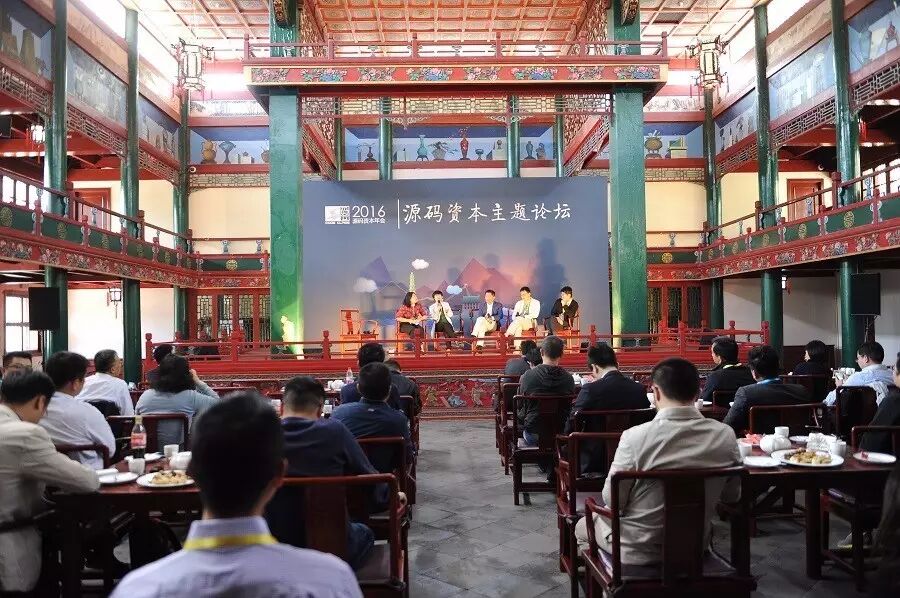
This edition of Ma Hui brought together a formidable lineup including Source Code Capital LPs, portfolio companies, and industry heavyweights. Internet upstarts such as Yiming Zhang, CEO of Toutiao; Xing Wang, CEO of Meituan-Dianping; Wenquan Zhao, CEO of BlueFocus; serial entrepreneur Xiang Li, founder of CHJ Automotive; Min Luo, CEO of Qu Fenqi; Lixin An, CEO of Geshang Wealth Management; Xiaodan Liu, president of Huatai Securities Co., Ltd.; and Zhitao He, CEO of Lianluo Interactive, among others, delivered keynote speeches in succession.
Professionalism, focus, and helpfulness — Source Code Capital's attitude and standard for itself
On the second day of Ma Hui, Xiang Li, a Source Code Capital LP and serial entrepreneur who founded CHJ Automotive, shared his entrepreneurial reboot for the first time: he was getting into cars. From R&D to manufacturing, sales to service networks, see how Li redefined the future of the auto industry.
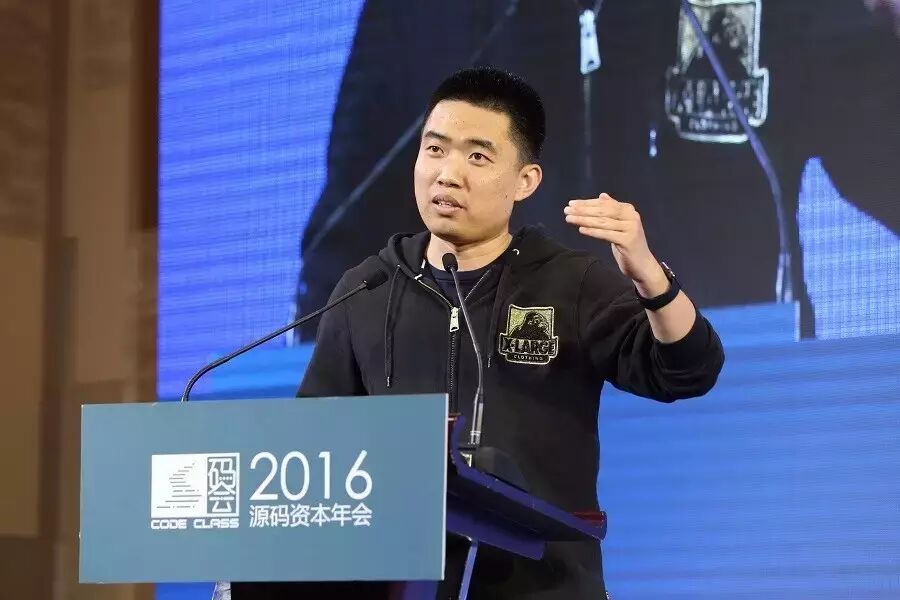
On April 22, CHJ Automotive founder Xiang Li speaks at Ma Hui
Full text of Xiang Li's speech:
Thank you for this opportunity to share with the investors and entrepreneurs here. I'd like to start with three points.
First, after we got into cars, we discovered that the primary market (dominated by venture capital) had almost never invested in autos before. Because all the car companies we saw were either overseas mature enterprises that had existed for fifty-plus years, or state-owned enterprises.
Second, we are a real car company — we do our own R&D, our own manufacturing, our own sales and service networks. We are not "internet car-making."
Third, many people say how incredibly complex the auto industry is. It is, indeed. But we intend to do what needs to be done in a simple, efficient way.
Let me share my understanding of where cars are headed. The automobile has been around for over 120 years, really since Mercedes-Benz gained recognition. In the past 100-plus years, the auto market has had two windows of opportunity. The first was the assembly line, which essentially opened up for the entire United States, giving rise to companies like Ford and General Motors. The second was refined manufacturing, which produced Toyota, Honda, Nissan, Hyundai, and Kia.
Essentially, both past windows in the auto market were directly related to manufacturing.
In my view, from 2015 to 2025 — the coming decade — a third window will open, driven by changes in consumer demand and technology.
This window closely resembles what happened with smartphones ten years ago. At that time, consumers desperately wanted to access the internet through their phones. The early experience was terrible, but the desire was there. Meanwhile, three crucial technologies emerged: 3G, mobile chips, and apps. We saw Nokia go from market leader to being acquired by Microsoft in basically two to three years. Phone replacement cycles were one to two years; miss two generations, and a company was finished.
Of the top ten phone brands today, probably more than five had never made phones before — that's the opportunity we saw last time. In autos, we're seeing the same opportunity.
Where is the biggest shift in consumer demand? Traffic jams. When there were no traffic jams, what we wanted when buying a car was good handling, a good engine. Today that's completely changed. We saw early on from Autohome data that handling had basically nothing to do with consumers' car purchases anymore. Because driving is no longer fun — you're stuck in traffic every day, headaches from traffic, headaches from parking. So consumer demand has gradually shifted. At the same time, three core technologies have emerged.
First, electrification. The biggest benefit electrification brings us, beyond environmental protection, is that it solves the biggest opportunity for a new brand entering this market. Why? Because in the past, automakers' highest barriers were all in the drivetrain — engine, transmission, differential. This barrier was both a technical one and one of long-term experience. But in the electrification era, it gives us a great opportunity. We can easily build a car that drives as well as a Mercedes-Benz, BMW, or Audi. Why? Electrification itself has physical advantages: no more engine vibration, absolutely smooth, no noise. Everyone can make a good car.
Second, I believe, is autonomous driving. Fully driverless is still far off; autonomous driving is right in front of us. Autonomous driving can effectively free up the driver's attention. Cities can have traffic jams — we can be stuck for an hour, an hour and a half commuting. And as a means of transportation from point A to point B, the car is irreplaceable. We can accept traffic jams, but don't make me inch forward with constant braking, jockeying with the car next to me. I think we can turn the entire traffic jam experience into something better. Let the car follow along by itself during jams — that's easy to do, especially in the electrification era. Within two years, it can be done for a few thousand yuan. Commuting in traffic becomes the best time for reading and learning. The car replaces the toilet, becoming a mobile study.
Third, connected car (internet of vehicles). The biggest role of connected car is changing the entire auto business model. Why? For traditional cars, if you look at any 4S dealership's revenue and profit, the main profit comes from after-sales and maintenance. Entering the autonomous driving era, after-sales revenue will drop dramatically, because electric vehicles basically need no maintenance. Autonomous driving will also drastically reduce accident rates. The existing 4S dealership system will be hard to sustain.
Electric vehicles still have many serious problems. I think the number one issue to solve is charging infrastructure, because charging piles are very difficult to deploy at scale.
In January, Beijing issued over 10,000 EV license plates; only a few hundred were actually used, because people found they had no conditions to buy an electric car. Some say commercial or public charging piles could solve this. From what I see, it's even harder, because commercial charging piles fundamentally lack a viable business model. Every charging pile depends on a fixed parking space, and parking space resources are even scarcer. Meanwhile, electricity pricing is extremely transparent. So if you look at the financials of all the commercial charging pile companies, the good ones — their costs, assuming operating costs of 100 yuan, generate revenue of 20 to 30 yuan. I said revenue, not profit. On the other hand, because it's not profitable, all charging piles lack maintenance and management. So basically over 80% are abandoned or occupied by gas cars.
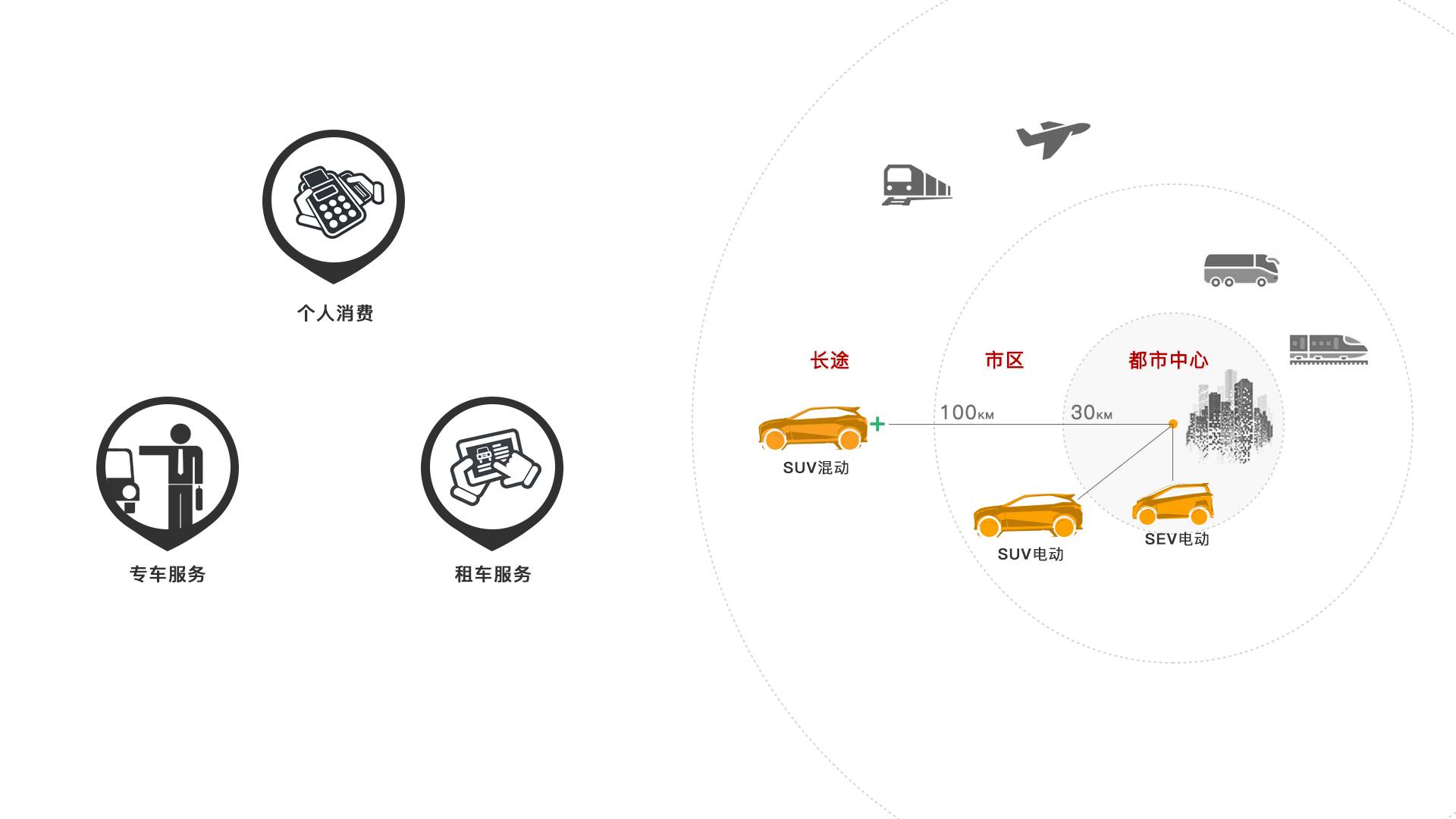
So if we want to build a future-oriented electric vehicle, the most important first thing is solving charging conditions. We'll have an SEV (Small Electric Vehicle) for urban travel within a 30-kilometer radius. We can build a good charging network where it's very convenient for users — find an outlet and charge, take the battery home to charge, or charge at our distributed charging stations. So the user experience is even more convenient than gas cars.
Then our SUV uses range-extended electric power. Our customers can drive pure electric in the city, sufficient for their needs — the pure electric range can reach 150-200 kilometers. When they need to drive long-distance, our range-extended portion can cover 400 to 500 kilometers, so total range reaches 600 to 700 kilometers, becoming an electric vehicle that everyone can own.
Next, our product philosophy. Before Apple released the iPhone, this is how Nokia made phones: Nokia had phones from 1,000 yuan all the way to 80,000 yuan. But the iPhone only released one model. What was the result? Wang Sicong used an iPhone, Faye Wong used an iPhone, every college graduate saved up to buy an iPhone. When we worked it out, actually two vehicles are enough to satisfy over 90% of urban consumer needs: one small SEV, and one SUV.
The core technologies and intellectual property to solve these problems are mainly concentrated in three areas.
First, we must use all-aluminum construction. Every bit of weight saved helps us save on batteries.
Second, our SEV has a removable battery and its distributed charging network.
Finally, our connected car system. We were among the earliest to use a Linux plus Android dual-system solution — ensuring security on one hand, and ensuring the best applications and user experience on the other. We're very confident in saying we should be the world's first auto brand to truly establish a connected car system. Why? Because traditional automakers cannot effectively build connected cars. All connected models ultimately have one core: the account system. Only with this can the entire connected car system truly take shape.
The biggest benefit of having connected cars is that the entire auto service model will transform. With the account system, our business model changes. We only have two vehicle models, each with only one configuration — we only give users the best configuration, never letting them agonize over this again. Our entire supply chain and inventory become completely different. We can very simply use our data to calculate how many cars any store needs the next day, even what colors — this is very easy. So, I'm definitely going with direct sales.
If a consumer buys a car from us, the financial services are 100% ours, because over 70% of our users will purchase the car through financing. And our car is zero-risk from a financial perspective. Going further, including insurance, vehicle leasing, used car business — all of it becomes ours.
Service Ecosystem
Finally, the entire service ecosystem. We want to make ourselves an urban intelligent transportation service provider. Through two vehicles, to satisfy 90% of urban needs. Why do we say we're an urban intelligent transportation service provider rather than simply a car seller? First, we provide convenient energy networks for the entire city. Second, we completely transform our product form — we meet market demand through two simple, effective products. Third, we completely transform the service ecosystem, because the current 4S dealership system, the current distribution model, is completely incapable of meeting the needs of the auto ecosystem after electrification plus autonomous driving.