What Potholes We Hit in Three Years of Entrepreneurship | 2017 Ma Hui

At Source Code Capital's 2017 Ma Hui event, INK Group president Enmin Lin, Yijiupi CEO Wang Chaocheng, Zhirong Group CEO Jiao Ke, and Sales Crown Network Technology Co., Ltd. CEO Huang Weixin — all representing entrepreneurs — shared their hard-won lessons and reflections from the trenches of building companies, drawn from their own struggles and missteps along the way.
"You don't know you're in a pit until you step into it — you only find out by experiencing it firsthand."
Entrepreneurship is naturally accompanied by difficulties and problems. "Stepping into pits" is unavoidable, and the process of falling into different pits and climbing back out is something every entrepreneur must experience for themselves. Entrepreneurship is a training ground — your physical stamina, mental resilience, intellectual capacity, and vision are all put to the test.
At Source Code Capital's 2017 Ma Hui conference, INK Group president Enmin Lin, Yijiupi CEO Chaocheng Wang, Zhirong Group CEO Ke Jiao, and Sales Crown Network Technology Co., Ltd. CEO Weixin Huang, as entrepreneur representatives, shared their hard-won lessons and insights from the difficulties and pitfalls they encountered in their entrepreneurial journeys.
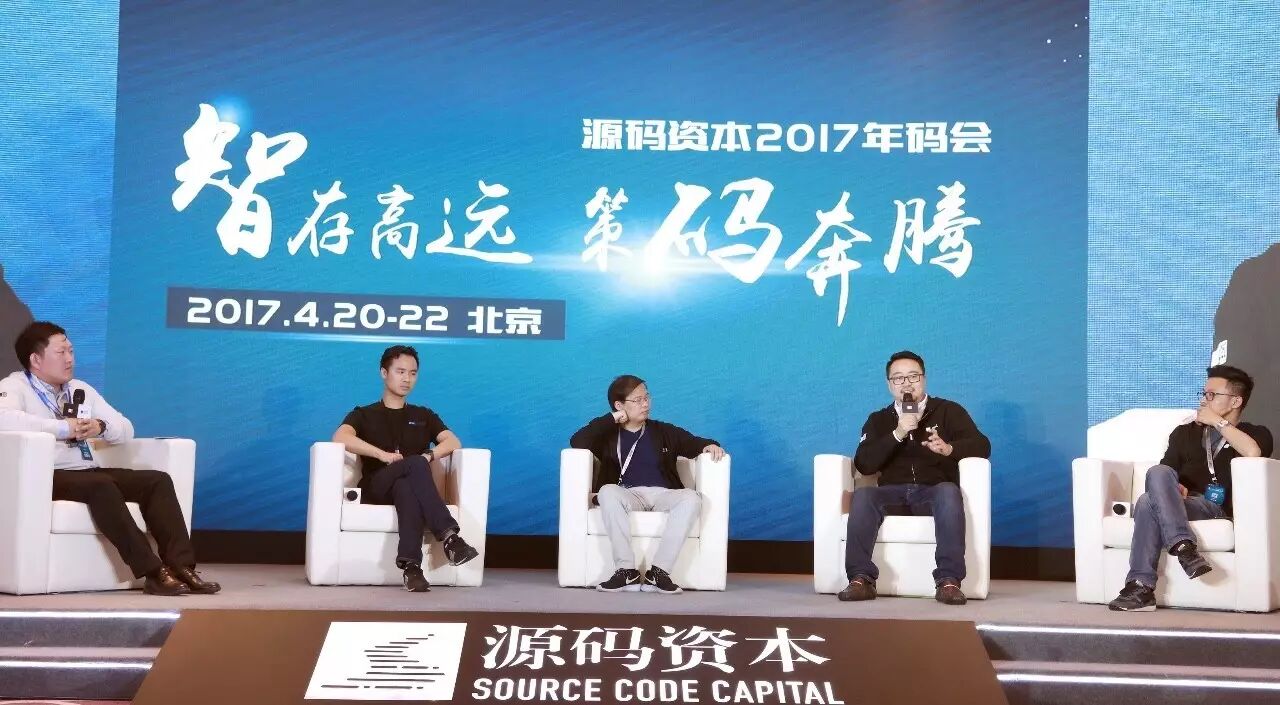
Below is the full transcript of Source Code Capital's 2017 Ma Hui session, "The Pits We Stepped Into":
Xingshi Wang, Investment VP at Source Code Capital: Hello everyone, I'm Xingshi, the moderator for this roundtable. Over the past two days, many guests have shared valuable experiences and insights that I believe can help many entrepreneurs avoid some detours.
Today, we're approaching this from a different angle — sharing about how to step into fewer pits during the entrepreneurial process, and if you do fall into one, how to climb out quickly. Our roundtable theme today is "The Pits We Stepped Into During These Three Years of Entrepreneurship."
1
What are the pitfalls of "people, money, and matters"?
Wang: First question — over these years of entrepreneurship, you've accumulated many experiences and lessons. These lessons have cost you time, energy, and resources. These are the main pits in entrepreneurship.
Lin: You don't know you're in a pit until you step into it — you only find out by experiencing it firsthand. If we're talking about stepping into pits, I'd break it down into three aspects:
First, people. The biggest problem in my past entrepreneurship was giving unsuitable people too much patience and time. Because I was a relatively young entrepreneur with no prior work experience before starting my company, I was extremely cautious with people. Every employee was like a delicate flower in my hands — I nurtured them daily. This nurturing led to unsuitable people staying in certain positions for too long, which limited the company's long-term development.
Second, money. I also encountered major pitfalls here. Especially during negotiations — because I was young, I tended to operate from a principle of altruism, constantly thinking about how to let the other party benefit, believing that only then would things work out.
Third, matters. At the time, I believed in the internet spirit of disrupting everything. I felt like I was holding a knife every day, wanting to kill off traditional players — if I didn't destroy them, I felt I had no meaning or value in this world.
I spent a lot of time thinking about how to use the "internet thinking" that many people talked about, how to disrupt the entire industry, how to eliminate everyone else. I went down many wrong paths.
Looking back today, I've come to more deeply appreciate that what truly matters is the essence of business — how it creates value for customers. As long as someone creates more value for customers, it doesn't matter what methods they use; what matters is the value itself.
2
Without reverence and industry expertise, you'll take detours
Wang: Thank you, Enmin. Enmin shared some lessons from three angles — team, fundraising, and execution. Now let's hear from Mr. Wang Chaocheng.
Wang: Yijiupi is a B2B trading platform. We made major errors in our understanding and depth of knowledge about informatization in trading platforms.
We initially believed that industry understanding was most important for B2B, so our understanding of e-commerce was simply using the internet to build an industry trading platform. We thought that once we built the trading platform technically, everything else would fall into place. This was a huge mistake.
So we started by developing a trading platform — client side and order processing backend. For supply chain, we just bought a third-party ERP system without investing in developing our own. This approach caused us to spend a lot of money, waste many people, and resulted in very low efficiency.
Looking back, the application of internet technology in trading platforms should be divided into four stages. Let me explain our mistakes.
Initially, our understanding was simple — a trading platform just processes orders: complete the order, deliver the goods, collect the money. That was Phase One for internet companies, an order-processing trading platform.
On the surface, it solved customer efficiency, but internal efficiency wasn't addressed. Later we discovered many problems — our logistics wasn't connected, our drivers weren't connected to the trading platform, our distribution layers weren't connected, our handlers had no warehouse location concepts. The entire company's management and operations were disconnected at the information exchange level.
Then we implemented an ERP system, and made another major mistake. At the time we looked at SAP — its database was very expensive. We thought it was too expensive and couldn't buy it, so we bought a domestic ERP company instead, spending several million yuan. Eventually we found that after using it for a while, there were too many problems. Its interfaces couldn't connect with ours — theoretically they could, but the technical development effort required was higher than building our own ERP from scratch. And because of architectural issues, we'd have to keep developing forever.
Later I checked with domestic B2B trading platforms and found that almost no one solved problems this way — everyone built their own ERP from the start. Trading platforms must build their own ERP. So we made the decision, and though we'd already wasted a lot of money and time, we eventually built our own ERP system. We connected internal management, ground sales, logistics, warehousing — everything.
Trading platforms have three stages in information systems:
Phase One is business-driven, i.e., processing orders;
Phase Two is management-driven, i.e., connecting business data with management data.
Phase Three is intelligence-driven, i.e., using what we now call big data and AI to evolve our models and achieve company intelligence.
Information systems aren't just an app or an order processing system as commonly understood — they're critically important comprehensive management systems for the entire enterprise.
Yijiupi has grown relatively fast. In our third year this year, we'll do about 10 billion yuan, growing five to six times annually. This scale of growth creates significant pressure. Looking back, this was our biggest pit.
For people like us from traditional industries entering the industrial internet space, we must revere technology itself and internet company management. Are you an internet species or a traditional company species? If you don't have deep reverence for technology, you're actually a traditional company, not a technology company driven by algorithms and self-optimization. This was a pitfall from our past.
3
The pit of "holding a hammer looking for nails"
Jiao: I'm quite qualified to speak on this — our company "died" once, to the point of borrowing money to pay salaries. I hope none of you reach that point. Let me share my lessons.
I personally feel that entrepreneurship involves hitting pits every day. There's a saying: "Life is unsatisfactory nine times out of ten." Nine out of ten pieces of news you hear daily are bad — if you get three or four pieces of good news, you've struck gold.
The first major pit: I think entrepreneurs are particularly prone to the problem of holding a hammer looking for nails. Because our team came from Baidu, and I'm technically trained myself. We naturally felt we should take search engine technology and look for nails to hit. Baidu succeeded; Ganji and 58.com succeeded; Qunar succeeded; let's see if there are nails in finance to hit. We started hammering away, and later realized this was wrong.
Everyone should first clearly think through what problems exist in the market. Then look at whether the hammer in your hand can solve this problem. If it can't, switch to an electric drill or a screwdriver — that's what matters.
The second major pit: don't design your business logic to be too long and too tight at the beginning. When we first started with search engines, we kept wanting to structure data, create closed loops, and accumulate business circulation data through those loops.
When I first came up with this logic, I discussed it with a friend. He told me: your logic is good and complete, but too tight. You're linking ring after ring. For early-stage entrepreneurs, there's no opportunity there. You need to be short, flat, and fast — don't create such a long path.
The third major pit: focus on core value, not moves, forms, or models. Whether you start with model innovation or move innovation, what ultimately brings you lasting value and forward momentum is your internal engine — your truly differentiated intrinsic value.
4
The pit of "wasting money" through rapid expansion
Wang: We just discussed three dimensions — how to choose better paths, not making paths too tight, and finding the core value, the core engine of something. Now let's hear from Weixin Huang, CEO of Sales Crown Network Technology Co., Ltd.
Huang: Every CEO's pits are different. My biggest pit — actually I think it should be called tuition — was "wasting money."
In 2015, we expanded to over 20 cities. I can tell you that after expanding in 2015, we didn't open a single new city in 2016. The cash burn in 2015 was too severe. Every city needs time to mature from immaturity, and depending on the city's condition and endowments, it takes at least half a year to get properly integrated. Paying salaries for 20 cities simultaneously for half a year — if some cities don't develop, that money is wasted.
So I think this pit is particularly worth noting for what's now called industrial internet when doing horizontal physical spatial layout across cities. Maintain appropriate scale as much as possible. If I could go back to early 2015, I'd probably expand to 10 cities, focus on them, then expand to another ten in 2016 — I wouldn't expand so many in the same year.
Wang: In our layout process, we need to balance internal and external resources. Where do we focus our limited time and energy to achieve this balance?
Huang: I established this strategy from the start — we call it "headquarters VC-ization." We treat headquarters as a VC, as an investment department investing in reliable teams in each city. For city management, it's more post-investment management and technology investment. We have a "deep-rooting principle" — when we enter a city, we need sufficient patience. Headquarters plays a VC role, constantly providing resources and help, letting the company take root in that city rather than hitting and running.
We incubate new businesses through city companies, then replicate successful experiences to other suitable cities, suitable soil. At a certain stage, we've found that because characteristics between cities and regions are very distinct, not everything suits all cities. Tourist cities suit short-term rentals; some cities suit long-term rentals. If we found 10 city company heads to share here, it would be like having 10 CEOs share.
5
Strategy and tactics
Wang: Everyone just mentioned that many companies have been galloping ahead in recent years. In the past two years, capital markets have also changed somewhat. How do we ensure that while the company develops rapidly, it remains healthy? How do we make some adjustments?
Lin: Two things externally — strategy and tactics. From a broad macro perspective, strategy seems to require looking further. My understanding of strategy is that it has two parts: "war" (战) and "omit" (略). The core of strategy often lies not in what you fight for, but in what you omit. Some people want everything and don't want to lose anything. When it comes to war, they want to occupy everything; when it comes to omission, they don't want to omit anything. But without omission, how can there be war? Carefully think through what you're willing to give up.
The biggest difference between strategy and tactics: strategy must be clear, stable, and long-term, while tactics must be varied and fast-changing. Today we do something through partnership; we find partnership has problems, and a month later we switch to doing it ourselves. Things at the tactical level must be highly variable. If tactics aren't variable and fast-changing, not changing means death.
6
As the driver, how do you control speed?
Wang: How do we maintain rapid company development while keeping various businesses healthy?
Jiao: Sometimes inside a company, it's not one car but a fleet, with each car making independent decisions. So the company must have a mission to ensure everyone doesn't end up on different roads. But in practice, you also need to master rhythm, because everyone looks forward. If you look too far, you hit what's right in front of you; if you look too close, you're constantly accelerating and braking — the car can't take that kind of折腾.
So last year as an A-B round company, our requirement was: middle management looks one month ahead, executives look three to six months ahead. This year as we've entered C round, our requirement is: middle management looks three months ahead, executives look six months to one year ahead.
This matches your vehicle speed. When speed is slow, you don't need to look so far — checking what's immediately ahead is enough. But when speed is high, you need to look further ahead. This is a rhythm issue.
I think as drivers, everyone needs to constantly be aware of what speed they're going — whether it's 60 mph or 120 mph — and how far ahead you need to look. You need to keep communicating this with the team. Especially for business-oriented teams, they always look at immediate matters. If you don't tell them, they won't look one month ahead, won't look three months ahead. If you keep reminding them, they gradually develop the habit, and you'll find they've grown too — this benefits the company.