Where Are the Boundaries of Industrial Internet? | Source Code Capital 2019

"Knowledge Capital, Deep Practice" — at Source Code Capital's 2019 Ma Hui annual conference, the founders and CEOs of Xiaoyaoyao, Yijiupi, ZNLH, and YQN Logistics were invited to explore the boundaries and breakthroughs of industrial internet.
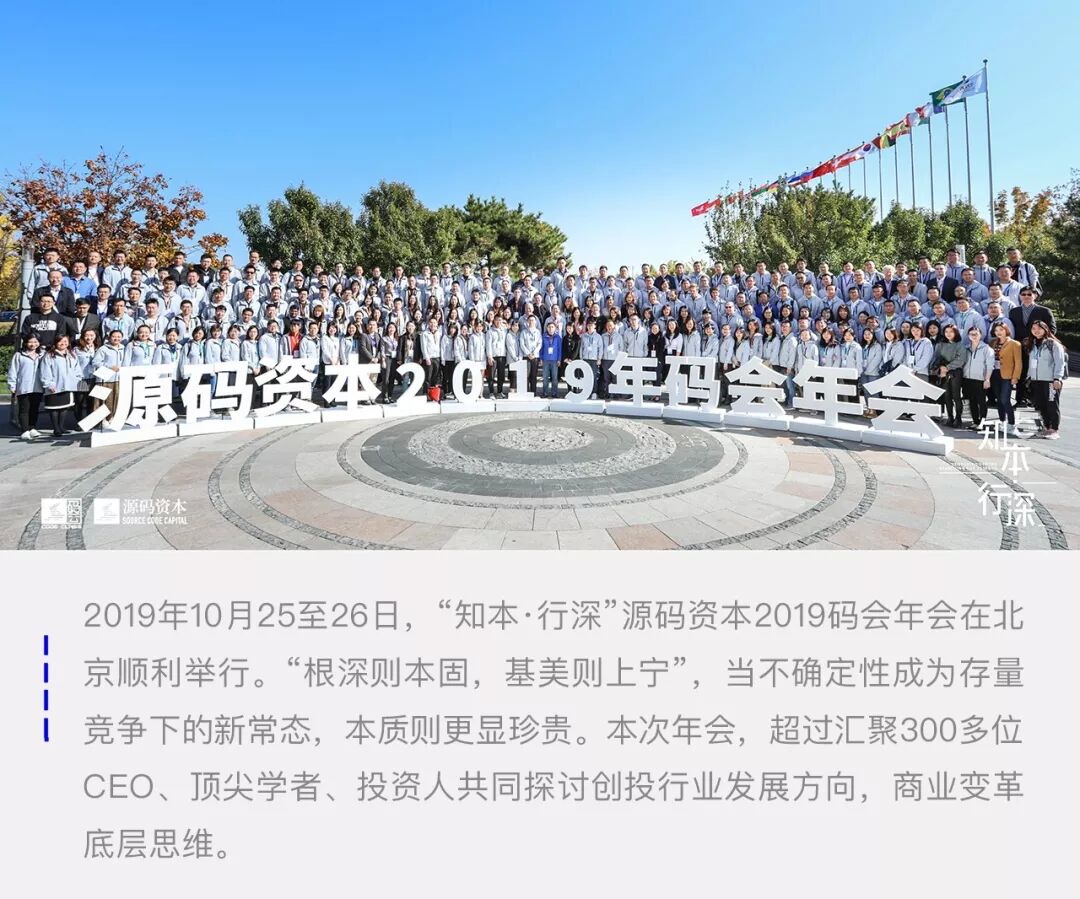
—Introduction—
As traffic dividends gradually fade, competition in the second half of the stock economy is intensifying. The entire internet economy has sounded the horn for advancing into industrial internet, kicking off a land grab over its definition, ecosystem, and even discourse power. Source Code Capital has been conducting research and deep thinking in the industrial internet field since 2014.
Since 2014, Source Code Capital has invested in numerous outstanding industrial internet companies, including leading and sole-investing in Baibu's angel round, Series A, and A+ round, with continued follow-on investment in its Series B and C. In 2015, it led and sole-invested in YQN Logistics' Series A, with continued follow-on in Series B and C. In 2016, it led and sole-invested in RuiGu's Series A, with continued follow-on in Series B; it started investing from Yimi Dida's Series A and continued through Series B, C, and D; and from Yijiupi's Series B, it continued adding through Series D. In 2017, it led Xiaoyaoyao's Series B and added through C+. In 2019, it led ZNLH's Series B, and co-led CassTime's C1 round with Sequoia Capital.
Watching the tides rise, flags planted at the crest. Over the years, in the industrial internet sector, Source Code Capital portfolio companies have gradually become star companies in their respective verticals. Source Code Capital is even more eager to explore the core drivers beneath this volume growth, to trace the corporate DNA beyond boundary-breaking. To this end, the Ma Hui annual gathering invited the founders and CEOs of Xiaoyaoyao, Yijiupi, ZNLH, and YQN Logistics to gather by the Yanqi lakeside, to jointly discuss the boundaries and breakthroughs of industrial internet.

Founder Quotes
- The biggest difference between industrial internet and consumer internet is that consumer internet users are undifferentiated — you just add channels. But industrial internet users are different; adding channels doesn't work.
- To B service providers are half doing transactions, half doing logistics, and will likely do finance too.
- In logistics service scenarios, data experience is the core customer experience.
- Solving the low-cost pipeline problem essentially means solving warehouse sharing, delivery sharing, and shortening the factory-to-endpoint chain as much as possible.
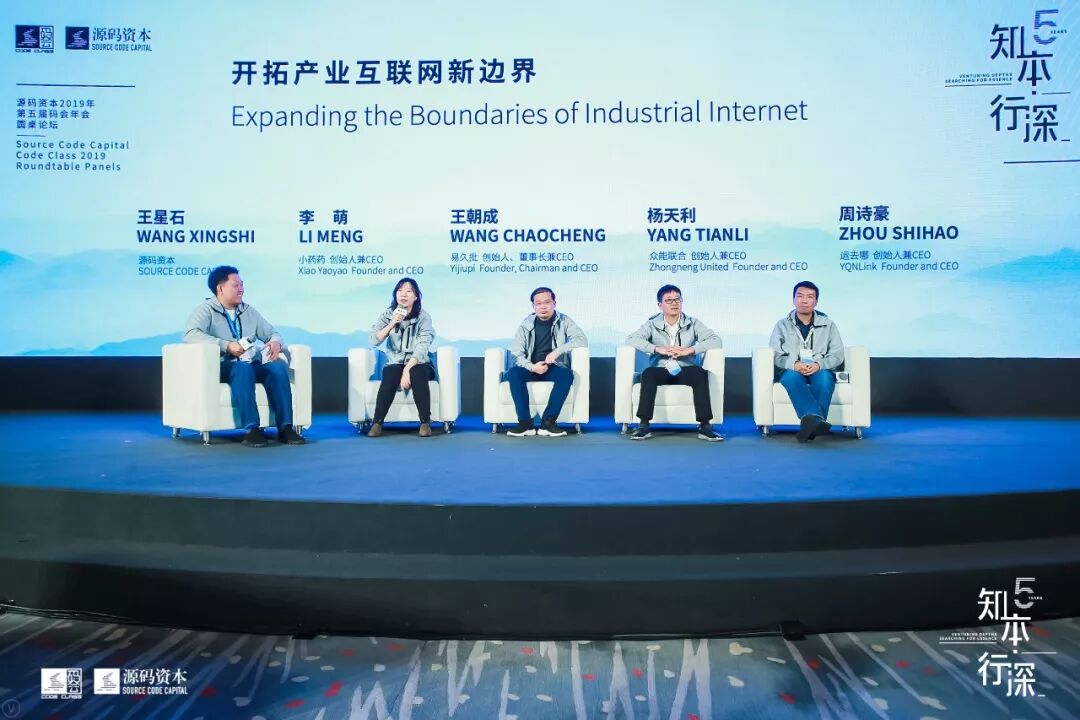
From left: Xingshi Wang of Source Code Capital, Li Meng of Xiaoyaoyao, Wang Chaocheng of Yijiupi, Yang Tianli of ZNLH, Zhou Shihao of YQN Logistics
From the CEOs' discussion, we can see that the first boundary broken by industrial internet is the capability boundary of past players in this industry — whether in number of SKUs operated, coverage range, or growth metrics, all have been greatly expanded. The second boundary is the reorganization of division of labor and position in the industry chain; industrial internet integrates and connects what previously might have required several companies' operations, advancing both toward the front end and downstream of the industry chain.
For example, Xiaoyaoyao can recruit the best cross-industry teams for dimensional reduction strikes; Yijiupi improves distribution network efficiency in fast-moving consumer goods; ZNLH makes operations strategies highly intelligent through information empowerment, improving asset rental efficiency; YQN Logistics breaks numerous information silos in the complex maritime shipping system — these are all core competitive advantages of industrial internet companies.
Source Code Capital will remain committed to exploring the boundaries of industrial internet together with outstanding CEOs, jointly creating lasting, real value.
Selected Transcript
Q1 Xingshi Wang, Source Code Capital: We've been positioning in industrial internet since 2014, and it's been an honor to grow alongside many industrial internet partners. Growth is constantly breaking boundaries — what are the boundaries of industrial internet? Today we've invited four CEOs to share their perspectives. First, please briefly introduce your companies.
Li Meng, Xiaoyaoyao: Hello everyone! I'm Li Meng, founder of Xiaoyaoyao. Xiaoyaoyao is China's largest pharmaceutical B2B self-operated e-commerce platform, and also the company serving the broadest number of households in pharmaceutical industry informatization empowerment. We hope to shorten the layers from pharmaceutical production to distribution, and improve the efficiency of the entire industry through internet and informatization.
Wang Chaocheng, Yijiupi: We're an industrial internet company in the fast-moving consumer goods industry. The market we operate in is the largest domestically. Our mission is to use technology to let good products sell cheaper, shortening the supply chain.
Yang Tianli, ZNLH: Hello everyone! I'm Yang Tianli, founder of ZNLH. We operate a digital equipment rental service platform for construction equipment. Of China's approximately 3 trillion RMB in service equipment assets, there are roughly 700 billion RMB in annual rental revenue, yet the industry's asset operation efficiency is only about 50%. What ZNLH does is use technology and the power of data to improve efficiency and asset efficiency across the entire industry.
Zhou Shihao, YQN Logistics: Hello everyone! I'm Zhou Shihao, founder of YQN Logistics, and an old classmate from Source Code Capital's first fund. YQN Logistics is a one-stop international logistics service platform, helping Chinese import-export enterprises better connect with overseas markets, shipping goods from China to the United States and worldwide, or in reverse helping goods from around the world flow into China. This year our container transaction volume reached 250,000 TEU. Facing greater uncertainty in global trade, YQN Logistics has transformed itself from a China-centric company to one serving the globe. There are many new challenges ahead, requiring joint efforts with the companies here and our fellow classmates.
Q2 Xingshi Wang, Source Code Capital: From your companies' founding to now, what boundaries have you broken in your respective industries? Where will the next boundary be?
Li Meng, Xiaoyaoyao: Before we entered, the pharmaceutical industry was in a state of layered distribution. After leaving the factory, drugs entered multi-level distribution — and this wasn't simple linear distribution, but a network structure. Xiaoyaoyao connects production enterprises with endpoints, making intermediate links relatively transparent. Additionally, the internet breaks geographical boundaries, giving us tremendous capability in geographic expansion. With this capability, we can better help production enterprises improve efficiency on a broader scale. For example, after we achieve direct data connection with some factories, they can use data to set future production expectations, reducing the impact of raw material price fluctuations on production.
After serving production enterprises well, our next boundary is serving our customers (pharmacies, clinics, hospitals) with better informatization services, helping them improve their ability to serve consumers. The biggest difference between To C and To B is that To C saves customers money, while we need to help customers make money. We need to empower customers in various ways — not just supply chain, but also informatization, operational efficiency, back-office management, brand promotion, etc. This is our next step.
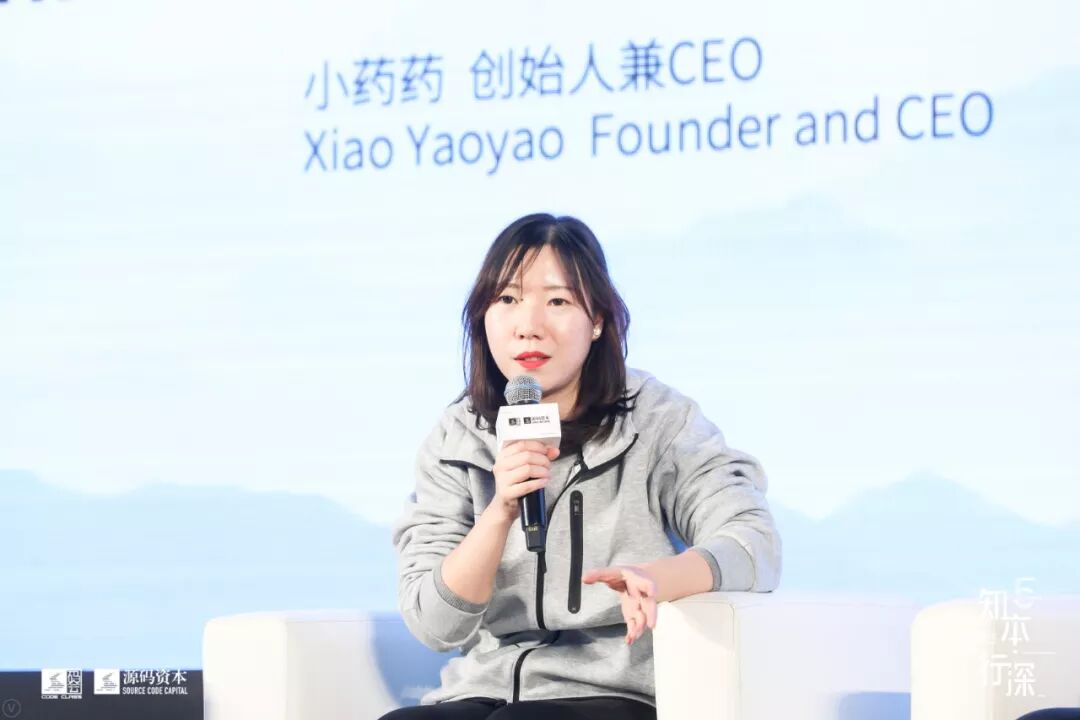
Li Meng, Founder & CEO, Xiaoyaoyao
Wang Chaocheng, Yijiupi: Many people's view of industrial internet is that you're just a big wholesaler — I think this is an extremely shallow and ignorant view of old species versus new species. Internet technology affects industrial internet boundaries in three directions: First, horizontally — one is SKU proliferation. Because we use computers to manage SKUs, low-frequency turnover SKUs use central warehouses, high-frequency use front warehouses, and especially low-frequency use main warehouses; second is region. In the past, doing trade meant being a city distributor at best. Now we cover 27 provinces — this is a horizontal scale boundary breakthrough, though many companies have already internationalized.
Second is vertical breakthrough. The biggest difference between industrial internet and consumer internet is that consumer internet users are undifferentiated. Consumer internet is about adding channels, because there's only one link — get the user, then infinitely add channels and you're OK. But in industrial internet, adding channels doesn't work; quantitative extension is limited. You need to go deep — first connect traders with endpoints, then factories with endpoints, then raw material suppliers with factories and endpoints. This connection is different from the previous two; it's a very deep connection, a vertical boundary break.
The third relatively big boundary innovation is the disruption of logistics and capital flow once you have commercial flow. We sell countless businesses across China, deeply on both upstream and downstream, so we can do supply chain finance. Based on our warehouses with inventory and after-sales capabilities, we provide loans to upstream suppliers, doing supply chain finance better than banks — this year we can do several billion RMB.
The next boundary I think is becoming infrastructure connecting Chinese manufacturing and consumption — a technology-driven infrastructure in China's distribution industry.
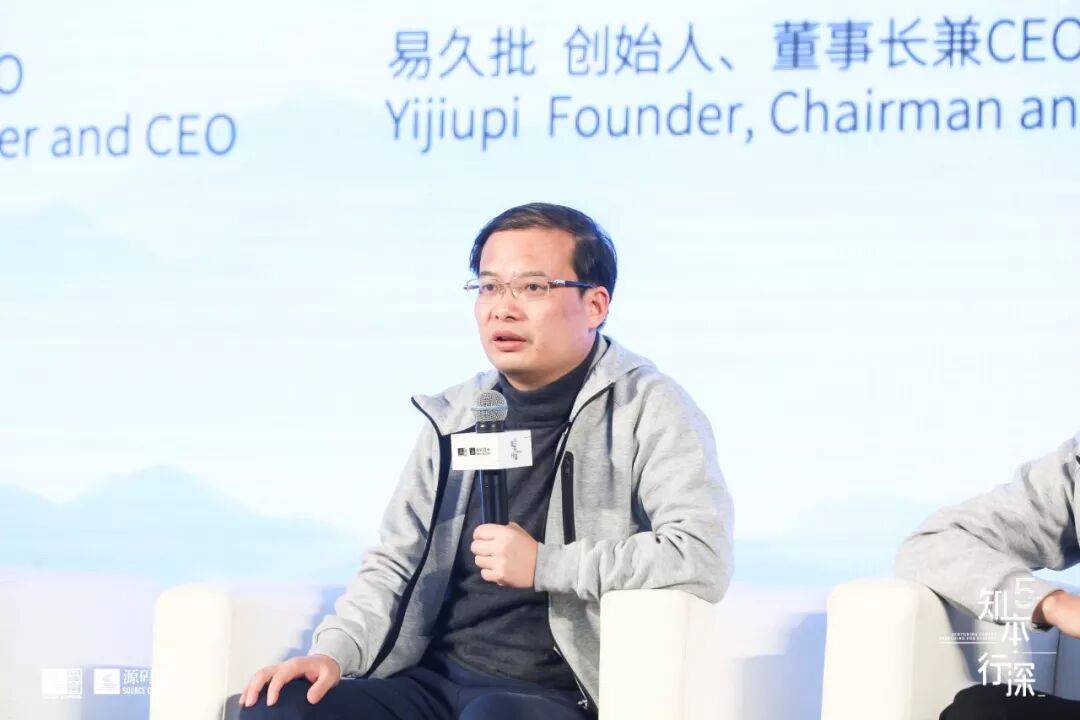
Wang Chaocheng, Founder, Chairman & CEO, Yijiupi
Yang Tianli, ZNLH: ZNLH has maintained compound growth of 200%-300% in asset scale, revenue, and profit for three consecutive years — this speed is a miracle looking at industrial development in China or globally, and throughout this rapid development, overall asset operation efficiency has reached 80%. A second data point: in 2019, we accounted for 35% of new additions in China's aerial work platform equipment single category — this growth rate is also a miracle looking at global equipment development trajectories. Another data point: as a digital company, we have dozens of hardware and software patents — this is also inconceivable in others' eyes. The logic behind these numbers must be supported and achieved through technology and data.
Meanwhile, throughout this process, we've formed many algorithms and models based on technology and data. These algorithms and models provide infrastructure construction for future cross-category replication and asset efficiency improvement across the entire industry.
Based on next steps, we have several ideas: First, deepen and penetrate the domestic aerial equipment rental business; second, starting in 2020, shift from renting equipment to providing value-added services for customers; third, make attempts in other business areas related to engineering, in new categories. These are our plans for the next two to three years.
Zhou Shihao, YQN Logistics: Actually, To B service providers are half doing transactions, half doing logistics, and will likely do finance. First is helping logistics service demand and supply sides achieve rapid matching of extensive SKUs based on demand. Second, logistics is a heavy fulfillment process — when customers pay freight, they're comparing prices based on a deterministic logistics outcome. Internally for fulfillment, we've also reshaped our task-driven engine. Third, we've redefined the boundary of customer experience in the logistics industry. We started defining many sensations; to date we've determined that in logistics service scenarios, data experience is the core customer experience — no need to care about how the interface looks, nor too much about whether it's the lowest market price. Rather, it's about data on price standards during fulfillment, and how data is perceived during fulfillment.
We know the internet is cross-regional and cross-lingual; we must continuously formulate more detailed logistics service standards that fit each country's market based on regulatory conditions. YQN Logistics faces small and medium customers, while also using data methods to serve large and global enterprises — we must make the granularity of split standards as small as possible before free combination becomes possible. From this perspective, continuous iteration of data and algorithms is also a boundary we must break through in the next two years.
Q3 Xingshi Wang, Source Code Capital: Everyone has made many breakthroughs in their industries, which have some entry barriers and understanding barriers. What capabilities support your companies in continuously breaking these boundaries? What exactly is this capability? How does each company build this capability?
Li Meng, Xiaoyaoyao: I'll share on this point — how to map certain people. First, look at people in the same industry; if they have non-competes, what then? Ask your HR. Actually, you can often look across industries for similar patterns. First lock down the company, then lock down the top talent in that company. You can only look at this after breaking down your own departments — you can't shear the same sheep over and over. Only when you have a benchmark team with very strong capabilities in your core departments can you forward-do certain things. Competition ultimately comes down to team capability. Often everyone does the same thing, there's no secret, but why did I beat you in the end? Whether traditional or internet, what it ultimately comes down to is who can do the thing well, including in close combat — who's more efficient, more diligent, who has the stronger team.
Wang Chaocheng, Yijiupi: The core of industrial internet in our line is distribution; the essence of this business is cost advantage. Using pipelines to deliver upstream goods downstream, this pipeline structure must be designed for low cost, cheaper than traditional pipelines. But small shop owners are extremely professional purchasers — they repeatedly buy the same thing multiple times, and 3%-5% cheaper matters enormously to them. So the first principle is how to provide low-cost supply sources conveniently and efficiently in one stop. With the same goods, low cost becomes the core capability of companies like ours. No matter how complex your business model, what translates to the customer interface is only two things: the numerator is goods, including sufficient product variety and no stockouts; the denominator is price.
Solving the low-cost pipeline problem essentially means solving warehouse sharing, delivery sharing, and shortening the factory-to-endpoint chain as much as possible. What's the next core capability? Possibly making goods better. Now that we have data, sell in large volumes, and have delivery capability, the next step is pushing factories to improve product quality higher. This is the most important thing for China's entire industrial internet — ultimately things getting better and better while prices get cheaper and cheaper, this is definitely the interface where industrial internet ultimately interacts with customers. The essential capability for breaking boundaries in phase one is definitely low-cost management capability.
Yang Tianli, ZNLH: We believe the essence of this industrial upgrade transformation has two aspects: first, improving original industry efficiency; second, through insight into customer needs, providing better service for customers. But in the To B domain, there's a very interesting phenomenon: through your operations you generate massive amounts of data, and based on deep operational needs for the business, logic emerges; after logic emerges, new algorithms emerge; after new algorithms, technology in the To B domain produces very significant applications — intelligent applications.
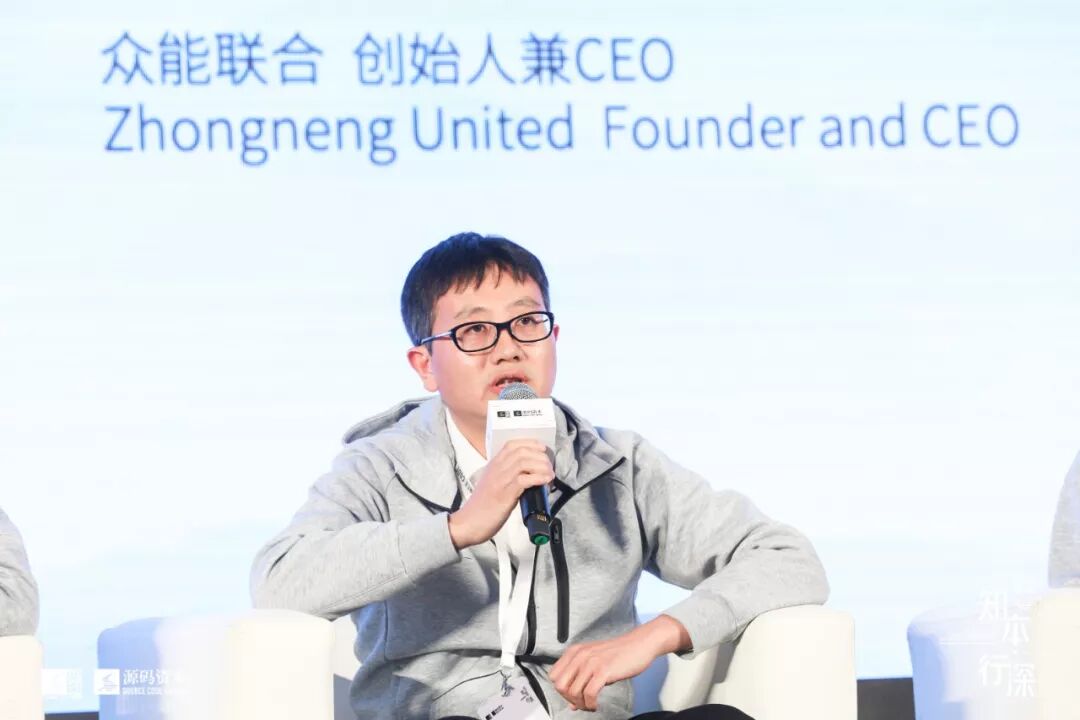
Yang Tianli, Founder & CEO, ZNLH
After this data system connects, salespeople can sell intelligently: First, how to plan their daily sales routes? Second, what kind of customers to see, what solutions to offer them? Third, when encountering competitors, what competitive talking points to adopt? The entire sales process becomes intelligent. Through this efficiency realization, industry-wide efficiency is greatly improved. Simultaneously, company-wide efficiency is also improved. So, intelligent applications in the construction machinery industry, throughout this large industrial upgrade transformation process, are also a very interesting phenomenon — this is the best thing we've discovered.
Zhou Shihao, YQN Logistics: Internally we have a plan called interconnection — simply put, it's connection. Logistics has two connections: one is asset-based connection, one is people-based connection. Asset connection means connecting vehicles, vessels, terminals, and warehouses. We've made a judgment that except for Africa, the world — especially China, the US, Europe, and Japan — doesn't have high shortage of logistics assets. There are massive amounts of warehouses, vehicles, and vessels, but they're not being effectively utilized. Within transportation and logistics costs, the best way to reduce logistics costs is reuse — being able to be repeatedly used by different transportation tasks, utilizing idle time and idle space; only when reuse occurs can maximum efficiency be generated.
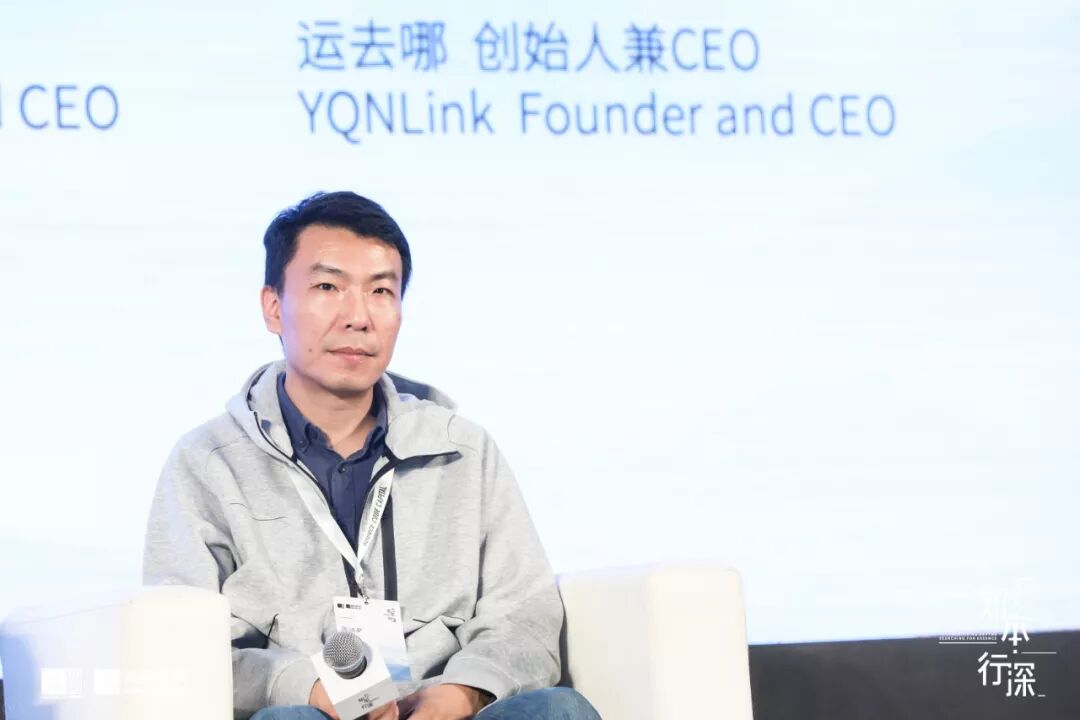
Zhou Shihao, Founder & CEO, YQN Logistics
Based on connection of things and systems, to accomplish great things you must connect great people. For the core team, this people connection and finding suitable people to connect more overseas resources — I think it's very important to spend sufficient time explaining clearly what the company does overseas. Another thing is don't let them feel that your founder and core team always see yourselves as a Chinese company; when you go out, overseas employees will feel a big difference, making it hard for them to walk far with you. One is system resource-based connection, one is people-based connection; only through connection do we get data, future algorithms, more cost advantages, and channel advantages.