Code Brain · 2025 WRC Series | Five Voices: Commercialization Challenges for Robotics and the Pitfalls of Going Global

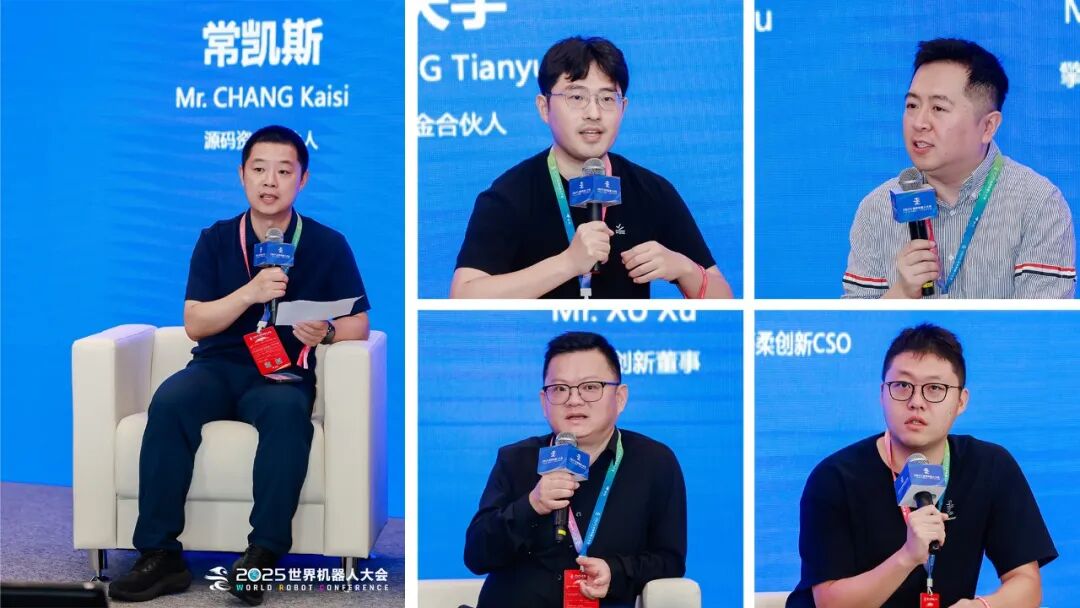
During the World Robot Conference 2025, Xiang Li, partner at Source Code Capital, moderated a roundtable with Tong Li, founder and CEO of Keenon Robotics; Xu Xu, director at Starmax; Chuansheng Wang, chief strategy officer at HAI ROBOTICS; and Tianyu Zang, partner at Jinqiu Fund.

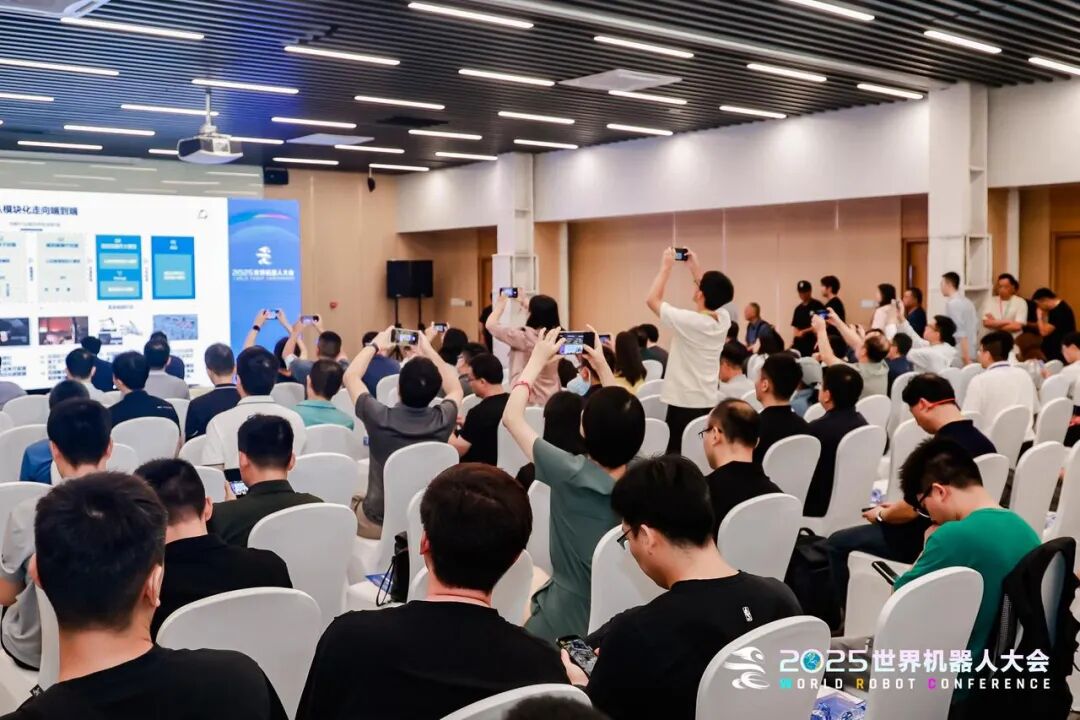
On August 12, the highly anticipated 2025 World Robot Conference (WRC) concluded in Beijing's Yizhuang district. This year's theme was "Making Robots Smarter, Making Embodied Intelligence More Intelligent," with over 200 leading domestic and international robotics companies showcasing more than 1,500 cutting-edge exhibits — including a record-breaking number of humanoid robot companies for any global exhibition of its kind.
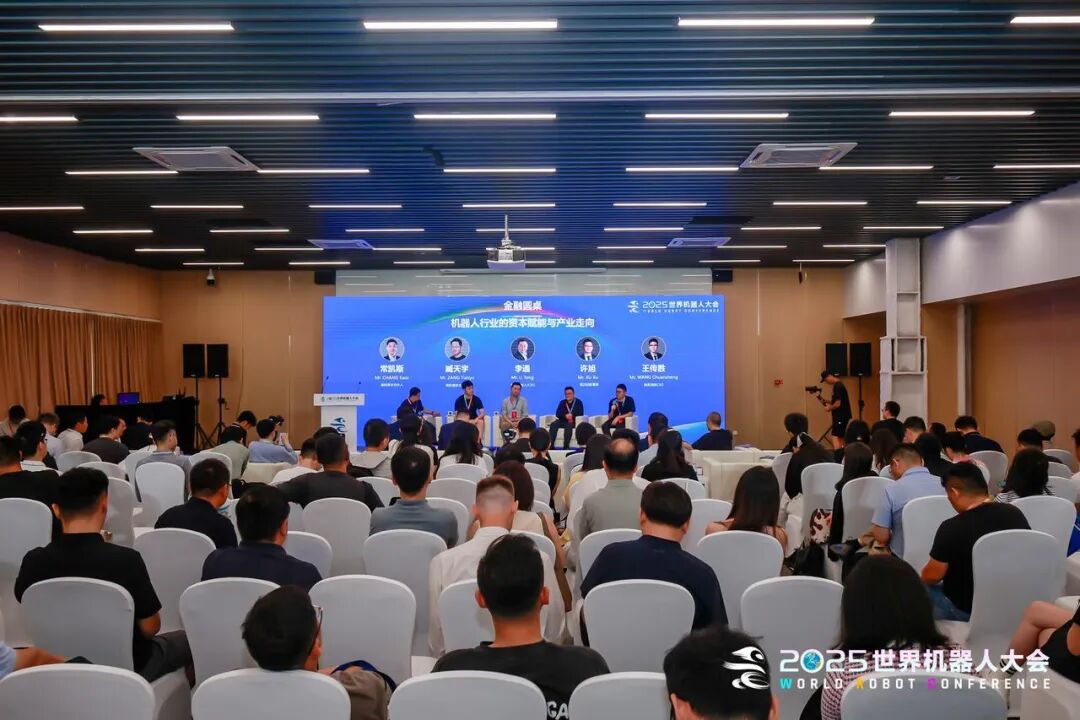
During the conference, the Ministry of Industry and Information Technology's SME Development Promotion Center, together with Source Code Capital and other institutions, hosted a forum titled "Industry-Finance Linkage: Reconstructing Value Density in Robotics from Lab to Industry." Kaisi Chang, Partner at Source Code Capital, served as moderator for a roundtable discussion titled "Capital Empowerment and Industry Trajectory in Robotics" with three MaHui member company guests — Tong Li, Founder and CEO of Keenon Robotics; Xu Xu, Director at Xingmai Innovation; and Chuansheng Wang, Chief Strategy Officer at HAI ROBOTICS — along with Tianyu Zang, Partner at Jinqiu Fund.
The following is a transcript of the roundtable, with some content abridged:
1
The Biggest Challenge for Robotics Commercialization Is Market Education
Kaisi Chang: We have both investors and robotics companies here today. So my first question is: in the robotics industry, what do investors and companies each focus on?
Tianyu Zang: Jinqiu Fund has looked at companies across Robotics 1.0 and 2.0. Simply put, 1.0 companies are judged on business, while 2.0 companies are judged on intelligence.
The 1.0 era was mainly about the spillover and commercialization of autonomous driving tech stacks in semi-enclosed, low-speed scenarios. Excellent companies like HAI ROBOTICS already have billions in revenue, and Geekplus has listed in Hong Kong. There's also a batch of companies in rapid growth with 500 million to 1 billion RMB in revenue, such as Future Robot, which Jinqiu Fund invested in. For growth-stage companies like these, investors definitely focus more on actual business development, order volume, financial health, and so on.
The new wave of 2.0 companies stems from the end-to-end learning paradigm inspired by large language models, aiming to build more general-purpose intelligence — they're all still in very early stages. Right now, the hardware has just reached usable but not yet truly good, while the bigger bottleneck lies in models and the "brain." When true generalization will be achieved may start with limited scenarios and conditions, gradually developing toward truly general-purpose applications.
Jinqiu Fund is a 12-year-cycle AI fund, so although there's currently no clear path for intelligent progress, including data scaling laws and model scaling laws, these are areas that Jinqiu Fund and some investors pay more attention to.
Tong Li: Indeed, investors at different stages may have completely different priorities. Early-stage investors focus more on technological leadership and commercial viability. Next comes actual purchase orders, and finally pure financial metrics like sales and gross margin — this is also the necessary progression for a healthy robotics company.
Xu Xu: We also just raised funding recently. What we've felt people pay more attention to is technology implementation, when products will pass validation testing, what the go-to-market cycle looks like, and how to build out the overseas sales network... As a company, we focus more on the front-end perspective of the product cycle. For investors, of course they also need to focus on the front-end, but more on the back-end — including what the industry ceiling is for the chosen track, how controllable overseas expansion risks are... Many investors also consider future exit methods, IPOs, these are all back-end perspectives. So I understand that companies and investors have overlapping concerns, but also different emphases.
Chuansheng Wang: HAI ROBOTICS has gone through roughly nine funding rounds. In the early-to-mid stages, investors focused more on commercial viability, market space, and technological moats. Now they're more focused on predictability of growth, source conversion, competitive landscape, profit improvement, overseas expansion status, and so on.
Kaisi Chang: You've been through nine rounds — investors must have asked all kinds of questions along the way. Any that left a particularly strong impression?
Chuansheng Wang: For example: when will overseas revenue exceed 50%? When will you become profitable? China's market is so competitive — how will you win? We previously launched our tote-to-person robots with global #1 market share, the best in this category. Investors ask: how do you maintain industry leadership?
Kaisi Chang: For companies, a healthy commercial closed loop is the foundation of healthy development. The robotics companies here today all have considerable commercialization experience — HAI ROBOTICS with billions in sales, Keenon having sold globally in large volumes, Xingmai doing 400 million in its first year. But there must have been bumps along the way. What specifically has been the biggest challenge in commercialization?
Chuansheng Wang: HAI ROBOTICS has faced many challenges. First, continuously improving product competitiveness — how to ensure products, especially hardware plus software, remain industry-leading on all metrics while having the lowest cost and highest overall competitiveness. Second, for robotics and tech companies, talent is the most critical factor; especially for B2B companies, talent and customers are the two most important asset classes. How to continuously attract the best talent is also a major challenge. Third, on overseas expansion: how to achieve overseas localization while internationalizing headquarters, and how to gather diverse global talent? Fourth, how to build a process-oriented organization facing customers — especially as HAI ROBOTICS grows beyond 1,000 employees, highly efficient process-driven operations become essential.
Xu Xu: Xingmai makes pool cleaning robots, essentially the underwater application scenario for cleaning robots. Our entire product development cycle is 18 months, from project initiation, mold opening, validation, testing, small-batch production to mass production — we believe we've compressed this to an extremely lean state, since all founding team members come from the cleaning robot space. But even so, we still feel anxiety about the technical development cycle, sensing competitive market pressure and investor expectations.
While doing product development well, since Xingmai's entire sales market is concentrated in the US and Europe, overseas sales talent reserves and the challenge of adapting to foreign markets are also considerations.
Tong Li: The previous two speakers summarized various issues very well. Keenon has similarly encountered many comparable problems throughout our journey, but at the core, I believe it's still the market education issue. We make service robots, and this category has a very short history in global markets — roughly five or six years.
Think back: before the pandemic, people rarely saw robots in daily life. But in the past five or six years, robots have become quite common and ordinary. It's during these five or six years that Keenon, together with some excellent peers, has worked to transform service robots in China from something never seen to something taken for granted.
Of course, in the subsequent industrialization process, we discovered another key principle for robotics products: one country, one policy. Because every country's market environment is different, you need to educate users country by country. Some countries' users genuinely have never seen service robots, so we need to spend considerable effort telling them: this is what robots can help you do.
Many years ago, people thought the world consisted of China and "foreign countries," but that's completely wrong. There are nearly 200 countries globally, each with different environments. Even if you're doing excellently in Japan today, entering Germany basically means starting from scratch, because all market perceptions are completely different — you need to redo market education from zero. This has been Keenon's biggest challenge since globalizing, and for original industries, it's the most painful and challenging thing over many years, but also the most rewarding.
Tianyu Zang: B2C and B2B companies actually face different commercialization challenges. Currently more robotics products are B2B-oriented, so I'll share two common traps observed from a B2B perspective.
First, in the domestic market, avoid the "zero gross margin" and "long payment cycle" traps — prioritize order selection or strengthen delivery efficiency. Customer and order selection is extremely important. Revenue is a milestone; cash flow and profit are the passes to living well. The domestic market is indeed extremely competitive, with many orders having zero or even negative gross margin, plus long payment cycles, possibly with no prepayment. Encountering one or two such orders could drag down the entire company's cash flow, with raised capital going into projects rather than R&D — this is a significant challenge.
For companies facing such markets, how to organize supply chains well, how to improve delivery efficiency, and how to hone this organizational capability are critical to sustainable development or simply survival.
Another common trap is underestimating the difficulty of overseas markets and upfront investment. The overseas business environment is indeed somewhat better, and Chinese companies do have supply chain advantages. But when actually going overseas, there's substantial upfront market education investment. As completely new players, startups may need to absorb losses for a period. These upfront investments and losses are all "tuition" paid for long-term trade. At the same time, companies need to quickly build localized service capabilities.
The actual sales strategies, delivery strategies, and channel strategies when going overseas may differ considerably from initial assumptions. For example, one of our portfolio companies started overseas expansion with a team of fewer than ten people, with relatively simple thinking: overseas seemed to have mature integrator and distributor systems, so they could business-develop these people, provide training for delivery, even give some leads. But they discovered this wasn't the case. A year later, their overseas team had grown to over a hundred people, because they sell solutions and ultimately need to do this layer of delivery themselves, and need to handle this layer of marketing including brand building themselves.
So I believe that in the overseas expansion process, companies may need to quickly adjust strategies based on actual conditions in destination countries — this is very important.
2
Going Overseas Can't Be "Copy-Paste"
Kaisi Chang: Everyone mentioned that going overseas is a very important and challenging part of commercialization. Could you elaborate on what most needs attention in overseas markets compared to domestic markets? Preferably with specific cases that can help people relate more personally.
Tong Li: I'll share some pitfalls Keenon encountered in our globalization process. Currently, Keenon Robotics has cumulative shipments exceeding 100,000 units, with products selling in over 600 cities across 60-plus countries and regions, with subsidiaries/offices in South Korea, the Netherlands, the United States, Japan, Hong Kong, and over 80 operation centers globally, fully expanding overseas.
As you can see, our best-selling markets are basically developed countries, because we make robots — essentially labor. Local labor prices determine how much robots can sell for. This is market selection: you need to choose appropriate markets based on product characteristics rather than trying to do everything, which is an important principle for going overseas.
Second, as mentioned above, every country is different — actually, product needs differ too. For example, we had one product that sold extremely well in China but couldn't sell in Japan, because the size was too large for Japanese service scenarios. Two such nearby countries have completely different market environments and user habits. So we have product managers in the Japanese market specifically studying local customer needs, local culture, local preferences, and developing relevant products accordingly.
Third, the after-sales service system — especially in developed countries where service expectations are very high. Whether you can provide effective localized service long-term, with timely and efficient responses, is extremely important to their users. Entering their circle is difficult, but once trust is gained, it's ten or twenty years of business — this is very important.
Finally, we found that different countries have different cultures. For example, with our service robots, in East Asian countries like Japan and South Korea, people generally like robots and are relatively accepting. We speculate this may be because users in these countries grew up watching Doraemon and Astro Boy, viewing robots as companions. But when we go to Europe or North America, users' first reaction is whether it's dangerous, whether it's safe. So different national cultures lead to different product concerns, requiring us to make specialized products for local cultures when going overseas, with special designs for privacy security and data security.
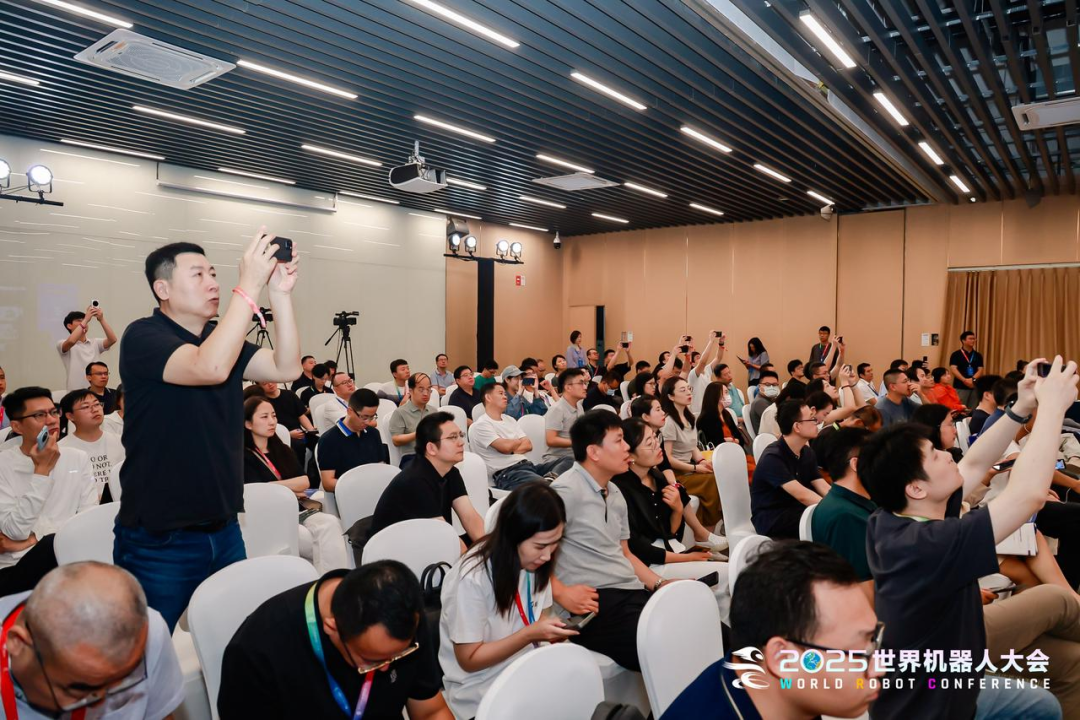
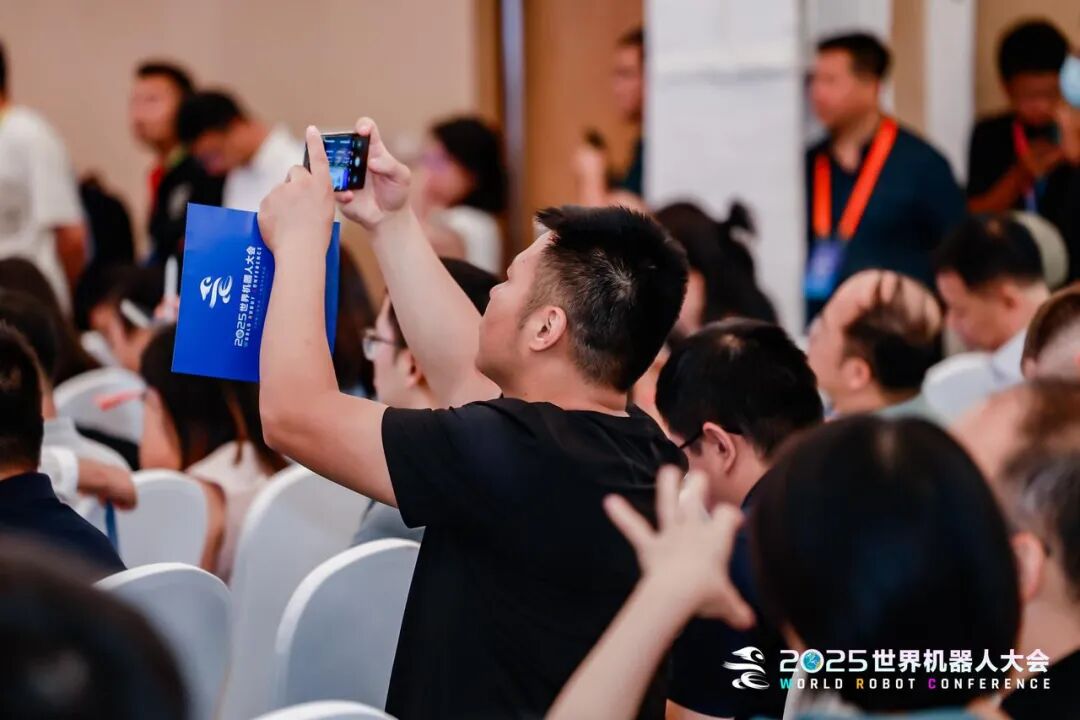
Swipe left to see more
Xu Xu: Mr. Li mentioned many overseas pitfalls that mirror our experiences, such as the data security and privacy issues he specifically addressed. Xingmai mainly makes pool cleaning robots, and our application scenario more directly involves privacy and data security protection concerns. Europe's GDPR (General Data Protection Regulation), California's Consumer Privacy Act, and others have very high requirements for privacy data security — completely different from domestic understanding.
These places really "raise high and strike hard" on data security and privacy protection. I think many companies going overseas will encounter similar issues, including safety compliance requirements. For example: previous cleaning robots used silver ion sterilization, promoted as a selling point domestically, acceptable in some overseas countries, but considered illegal in South Korea. Each country has different specific regulatory requirements, which poses great challenges for us.
There's also the patent protection issue. China's hard science development and engineering talent development are very advanced, but soft science development is relatively lagging. Intellectual property protection and patent protection scope are very narrow — basically descriptive documentation of the technical solution itself, without broad protection scope. Patent levels lag far behind other developed countries.
Chuansheng Wang: HAI ROBOTICS has over 10 subsidiaries overseas, with localized networks covering most of the globe. Our main markets are also developed countries: Europe, the US, Japan, and South Korea. The fundamental reason is our judgment of developed country markets. Because these countries have very serious aging population problems — for example, the median age in Europe and the US is around 45, while Japan has already reached over 50 — so these countries definitely have rigid demand for robots.
But we've also observed that different countries have different product needs for robots, and business environments differ too. For example, Japan is a very special country where the business environment differs somewhat from China's. Trade flows have very established systems that must be followed.
Meanwhile, Japan has the highest quality requirements globally. In China, technical agreements with customers are generally under 10 pages, but in Japan they're typically around 100 pages. One customer negotiated with us for two months, producing over 500 pages of technical agreement. But Japanese customers are extremely loyal — once a partnership is established, it's lifelong, long-term recognition of you. This also helped us change our perspective to focus on full lifecycle value management for each customer, rather than single-order profit capture.
Additionally, different regional customers have different safety requirements. For example, US system availability generally needs to reach 98%, but in Europe and Japan it needs to reach 99.99%.
Tianyu Zang: In overseas markets, there's no "one-size-fits-all" copy-paste — often only "one place, one policy" deep cultivation. Overseas, selling products is just doing a transaction; building comprehensive international capabilities is building a ten or twenty-year endeavor. The substantial upfront investment and market education are necessary "ascetic practice," and also the beginning of building brand moats.
3
Large-Scale Robotics Applications May Come by 2030
Kaisi Chang: Industry development isn't just about individual company development — it requires the entire industrial chain to progress together. The companies here all do integrated hardware-software and have relatively comprehensive observation and influence over the industrial chain. Which link in the industrial chain has helped you most? In other words, if you could summon a dragon to make a wish for robotics industry chain development, what would you wish for?
Chuansheng Wang: AI or large models will definitely have enormous impact on the entire robotics industry going forward. If they can truly solve technical challenges like random piece picking, it would certainly help us further solve mobility problems, also solve manipulation problems, and ultimately achieve full-scene unmanned operation — using robots to transform factories into true super workers.
Second, we also hope that a series of key components for robot bodies can see dramatically improved performance while costs drop significantly — such as motors and batteries.
Xu Xu: For us, if we could summon a dragon, we'd want to summon one for battery and power supply. Could we make cleaning robots that you just throw in the water, and with sunlight they automatically charge, automatically come ashore, automatically clean up garbage — all requiring power support. Including solid-state batteries that were discussed, including possible perpetual nuclear energy applications, making robot operation perpetual.
Tong Li: Keenon has recently invested heavily in embodied intelligent service robots, including humanoid robots — you've seen many outside. From a supply chain perspective, China is already globally the optimal supply chain, without question.
But total shipment volume is still too small compared to automobiles and smartphones, causing the current supply chain to not yet be very standardized or robust. So I especially look forward to the robotics industry, particularly the new humanoid robot industry, gradually standardizing its supply chain to support larger-scale growth.
We're also seeing now that many companies, including many listed companies, are investing heavily in humanoid robot supply chains — this is a very encouraging development. Although there are currently many imperfections, I especially hope this trend can continue, enabling the entire supply chain to become more robust, so that more complex, more intelligent robots can enter millions of households.
Tianyu Zang: At the macro level, I hope Chinese robotics companies can have a better entrepreneurial environment. Whether 1.0 or 2.0 era entrepreneurs, they face more difficult capital environments and customer environments than European and American entrepreneurs. But we believe entrepreneurs who successfully break through in the Chinese market can also play important driving roles in global markets.
At the micro level, I mainly want to talk about the embodied intelligence industry. In the exhibition area, we saw many companies doing VLA (Vision-Language-Action), typically with a larger cloud-based "brain" above the VLA layer. For robots, doing physical world scene understanding, spatial reasoning, even longer-term task planning, including memory — there may be larger models to carry this.
One dimension is the world model that people envision. For example, Google recently released Genie 3, which may be a prototype. In the future, could we do policy evaluation, data synthesis, even direct reinforcement learning exploration in such environments? This may be suitable for large companies to do — DeepMind, ByteDance may attempt this. If these directions develop further, it would be quite helpful for the entire embodied intelligence industry.
Kaisi Chang: Everyone has mentioned embodied intelligence and humanoid robots multiple times — this is indeed a major direction in the current robotics industry, with many companies exploring it. Could each of you make a bold prediction: if humanoid robots achieve large-scale commercialization, what year will it be? And in what scenario?
Tianyu Zang: This is just a wild guess. This year's humanoid robot shipments, from our tracking, are roughly around 10,000 units, but mostly in research scenarios. By 2027, humanoid robot shipments might reach 100,000 units. Of course, this also depends on AI development speed, because it's uncertain when capability boundaries can be opened. Currently we can see some generalization on single objects, single tasks, in backgrounds and environments, or some generalization on manipulation objects, but still limited to certain tasks. When more can be opened up depends on how far intelligent progress goes.
Tong Li: I think we need to differentiate. If we're imagining humanoid robots entering household scenarios, becoming all-purpose nannies that do laundry, cook, and care for children — this cycle may still be relatively long, at least five years or more. But if we're talking about humanoid robots doing specialized work in industrial or commercial service environments, I think there's very good hope for this in the coming few years.
For example, doing cleaning or bartending in service scenarios — essentially job-positioned work. This is foreseeable, because in many industries humans are already divided by job positions and types of work. So humanoid robots doing simple, repetitive, job-positioned work — we should see scaled commercial deployment within two to three years. This is our industry's assessment.
Xu Xu: If we're talking about large-scale application, the scenario should be one where people are generally psychologically accepting of using robots. Currently people still worry about robots replacing human labor. But at that time, people will think about how life would be without robots — then large-scale application will come naturally. I boldly estimate this will happen very soon, probably by 2030.
Chuansheng Wang: We believe embodied intelligence will first land in warehousing scenarios, or subdivided manufacturing scenarios. If I must make a bold prediction, possibly within three years, or at least requiring three years. I also strongly agree that without deep understanding of scenarios, without data accumulation, embodied intelligence and intelligence itself are not worth discussing. So I'm firmly convinced that among industrial-grade players who land earliest in industry and warehousing, the most likely to first achieve relatively general-purpose robot deployment in these scenarios.
Kaisi Chang: We have a little time left. I'd like each guest to leave one final sentence — it can be an expectation for the robotics industry, or a vision, or a call to action.
Chuansheng Wang: Hope to continue creating actual commercial closed-loop value for customers, and together build the robotics ecosystem well.
Xu Xu: I'm somewhat idealistic and romantic. I believe that in the near future, people will surely exclaim: if humanity didn't have robots, what would the world be like?
Tong Li: Hope everyone can have some patience with embodied humanoid robots. I believe this round of embodied intelligence will definitely bring tremendous change to human society.
Tianyu Zang: Look forward to the next 18 months, when embodied intelligence models can make very significant leaps and progress. Chinese embodied intelligence entrepreneurs can play greater value in this historical process.