2026 MaHui | Ethan Yuanming Hu of Meshy AI: 500-Day Countdown to AGI

The real measure of AI proficiency isn't how many tokens you've burned — it's how long your agents can run autonomously without human intervention, and how many of them you can orchestrate at once.

At the 2026 MaHui conference, Ethan Yuanming Hu, founder and CEO of Meshy AI, delivered a talk titled "AGI Countdown: 500 Days." In his view, the most important shifts of the AI era aren't just happening at the model level — they're rewriting how founders work, how organizations are managed, and the fundamental logic by which founders judge technology, deploy talent, and allocate organizational resources.
Hu spoke from the front lines of managing ten coding agents, discussing how AI-native founders can boost agent throughput and understand the real boundaries of vibe coding. He went further to examine how management itself is changing in the AI era: when everyone can leverage AI for higher output, how should organizations redefine talent density, the value of middle management, KPIs and OKRs, and founder mode? The truly urgent question is this: in the window before AGI arrives, how can founders build AI-native cognition, organization, and execution systems sooner rather than later?
This article has been slightly condensed from the original while preserving its meaning.
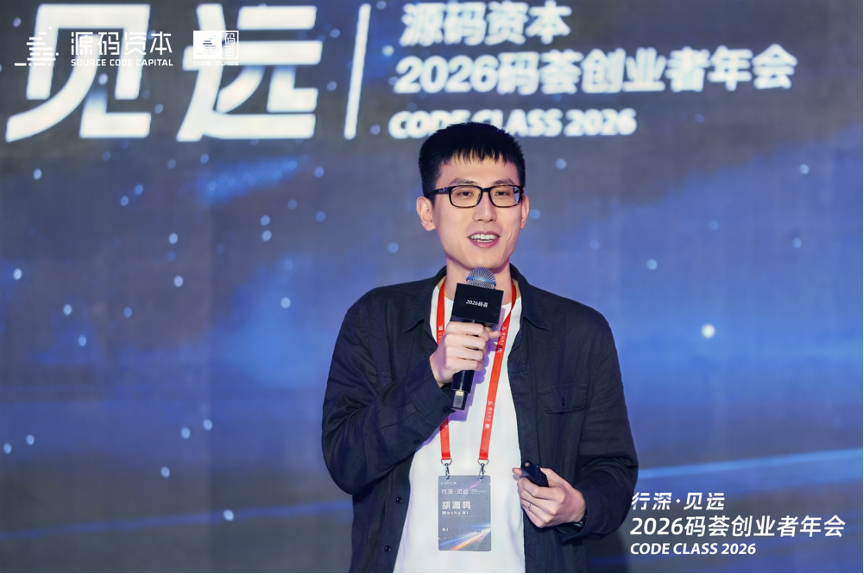
I'm Ethan Yuanming Hu, founder and CEO of Meshy AI. This is a practical, CEO-level talk I prepared specifically for the "2026 MaHui Founders Annual Meeting." Over the past six months, reality has repeatedly corrected my thinking: I once declared that "you should resist the urge to review AI-written code," only to retreat after hitting enough walls to "core code must be human-reviewed"; I judged that AI could "100x productivity," then realized it only applies to certain layers of work, and misapplying it leads to serious misjudgments; and on the question of "should a CEO write code," I've flip-flopped five or six times myself. So this isn't a set of conclusions — it's a living document of practice still being iterated.
Today I want to cover two things: first, my evolving practice of vibe coding; second, how management will change in the AI era. The second is what I most want to discuss with every founder here.
Key points:
- Silicon Valley AI leaders generally believe AGI will arrive by the end of 2027 — every week that passes, we get 1.4% closer. Perhaps 500 days from now, AGI will be realized, and everyone will gain more freedom to do what they love.
- To measure someone's AI proficiency, stop looking at token burn. Look at how long your agent can work continuously without human intervention, and how many agents you can manage simultaneously.
- On most tasks, the rate at which humans improve and are trained is slower than the rate at which AI improves.
- AI's greatest advantage is that it can be ruthlessly objective and doesn't need to protect feelings — while avoiding reality and being irrational are humanity's greatest weaknesses.
1
AI-native founder: starting from managing 10 AIs
Brief introduction: our company is a global leading 3D generative AI product that transforms text, images, and even ideas into 3D models. Meshy AI has already achieved tens of millions of dollars in ARR, holds a leading market share overseas, and has over 10 million global users. We're also honored to be a member company of MaHui.
Let me start with part one: how I manage ten coding agents. During the Lunar New Year period earlier this year, I barely rested, spending most of my time on vibe coding. Through this process, I discovered many ways to build on top of AI coding tools to make them far more powerful. The core question is just this: how to increase a coding agent's throughput.
My approach builds step by step, but each step rests on the same plain management intuition.
Step one: move from GUI-based editors to command-line tools, because the latter makes secondary development much easier — modifying a CLI tool is straightforward, while GUI agents are hard to change.
Step two: find a good container (sandbox). One thing I always do is skip and fully open all permission requests. If you don't, every file addition, deletion, or command execution comes back to you for approval, and your interaction frequency becomes absurd — you'd be approving something every ten seconds. Nobody wants that.
But full permissions carry the biggest risk: dangerous operations. During prototyping, I frequently found it deleting my database — because it treated my production environment as a test environment, ran tests, then wiped everything clean. So I later wrote another agent to back up the database every hour; otherwise I wouldn't dare let it do much. Simply put, we need to give agents a good environment where they can run free, with boundaries that prevent them from going too far.
Step three: develop a multi-process management system so one person can manage multiple AIs. Without tool assistance, I could personally manage about three to four — one for planning, one for execution, one for information gathering — and that was about the limit, because human attention is extremely finite.
Step four: agents must be able to close their own loops: they must write, test, and see the results of their own work. This is actually very similar to managing people — set clear goals and evaluation methods, provide good context, rather than trying to control. Many principles from managing human organizations work well for managing agents too.
A few more things: I built a cloud-based web system so I can manage these agents with voice input on my phone, because agents shouldn't stop working when you close your laptop — they need to be available 24/7. When you're walking and can't type, you can speak. Many fleeting ideas are best captured by simply telling an agent to execute them.
And my view on whether to review code has recently shifted. I used to believe AI-written code didn't need review — just give it an environment and let it debug itself. But after hitting more obstacles, I've stepped back: review core code; let it write non-core code.
I also discovered something particularly useful for myself: using AI to enhance cognition. Previously, learning something meant searching through masses of material myself. Now I can have an agent collect and organize the material, presenting it in visual or even interactive ways, mapping out a field's structure in thirty minutes, then I spend another thirty minutes learning. Internally we call this "eating AI's liquid food" — don't eat dry rice, eat liquid food, absorb faster. Of course, one thing to be extremely vigilant about: information security. Without information isolation, it's theoretically possible for a colleague in one department to accidentally learn sensitive information from another department through AI queries. So in the AI era, sandboxing and permission isolation are among the most important issues for AI-native companies.

(Image source: provided by Ethan Yuanming Hu, founder and CEO of Meshy AI — an art history learning website he created with AI)
2
Why do we keep misjudging AI?
After covering practice, I want to share a more fundamental question: why is it so easy to both underestimate and overestimate AI?
(Image source: provided by Ethan Yuanming Hu, founder and CEO of Meshy AI — an art history learning website he created with AI)
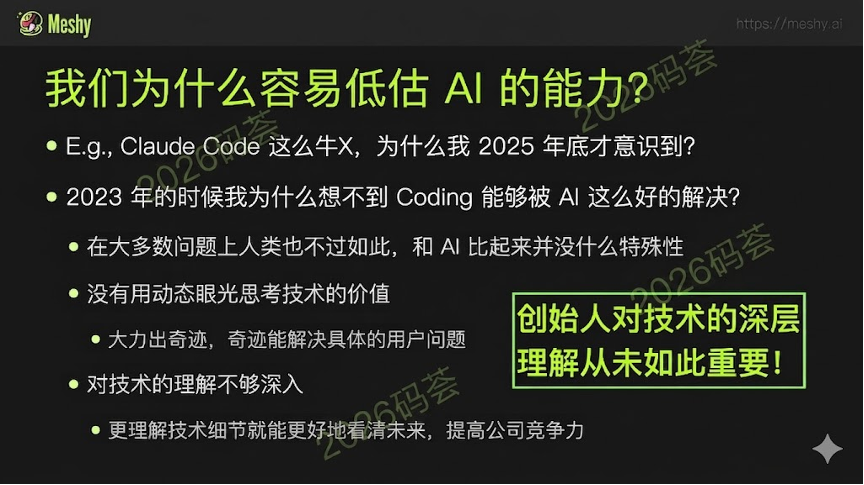
First, underestimation. I've been asking myself: Claude Code is so impressive, how did I only realize in late 2025 that AI could write code this well? I've boiled it down to three factors:
First, as humans, we subconsciously still believe we should be better than AI — this assumption must be discarded. I've found that on most problems, humans aren't that special compared to AI. Human coding is basically just typing commands, thinking, checking references — things AI can do too. When an agent connects these tools to an AI brain, the problems it can solve are not fundamentally different from what humans can solve.
Second, I failed to view technology's value dynamically. In 2023, people thought large models were still toys with many problems, but then scale worked its magic, and now that magic has solved many concrete user problems.
Third, my understanding of the technology wasn't deep enough. When you understand a technology deeply enough, you discover how many imperfections remain — and once those are solved, the technology becomes far more powerful. So now I'm willing to spend significant time understanding technical details, because in today's era, a founder's deep technical understanding has perhaps never been more important.
Now, overestimation — this is actually the flip side of the same problem: how should we objectively measure what AI can help us solve? My thinking is that coding, for example, operates on three levels. Level one is typing code — AI definitely does this extremely well. I used to compete in high school computer science olympiads, writing thousands of lines of code in five hours, ranking in China's top ten, but I can't compete with AI on typing speed because it doesn't type at all. The acceleration here is roughly 100x. Level two is software architecture — AI has seen plenty of good architecture, so it can do this too, but acceleration might only be 3x. Level three is figuring out what user problem this software should solve, and which direction to take — here I believe AI's acceleration is essentially zero. Why? Because valuable things are necessarily new, and new things are necessarily not in historical training data, while AI is precisely trained on historical data.
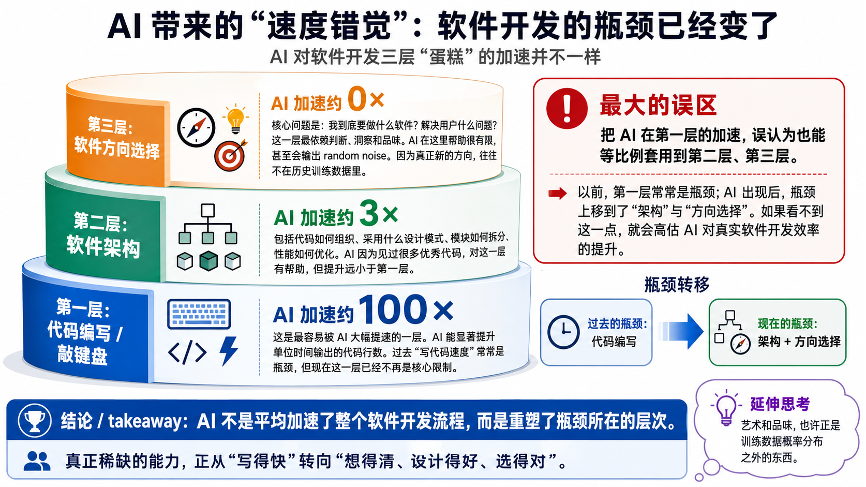
So the biggest reason people misjudge AI is applying that 100x acceleration from level one to level three. We must recognize that AI's acceleration varies wildly across different problem layers. It doesn't uniformly accelerate the entire process; rather, it shifts the bottleneck from "typing" upward to "choosing direction" — and direction is precisely where training data is most scarce. This understanding determines where a founder should spend their time.
3
When AI lets everyone do 10x the work, how do organizations change?
This is something I've been constantly thinking about as a founder, with my views still evolving. My two favorite management books have yielded two principles I still agree with: first, as Grove said, only output measures management. A manager's duty is to maximize team output, and this still holds in the AI era. Second, as Ram Charan said, management is achieving results through others.
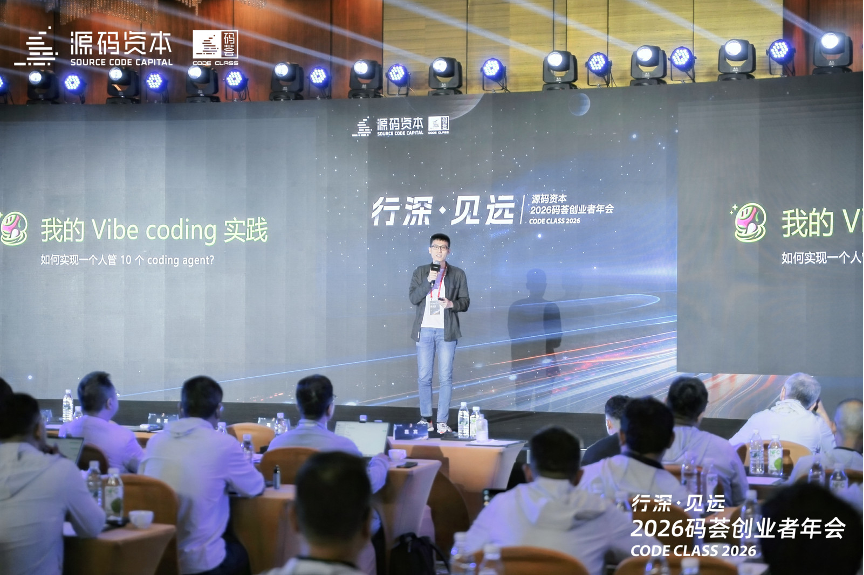
Under this premise, what founders must always do doesn't change — articulate a clear vision, organize excellent talent, and achieve it through effective execution. But the specific management actions are being rewritten by AI almost entirely.
Setting direction: you still need to think about the big direction, but AI has already handled many smaller directions; previously product managers could only describe ideas in their heads, now they can directly use AI to build prototypes and hand them to engineers for engineering — direction has become concrete.
Empowering teams: now perhaps 90% of your team's output comes from AI, and much of my work is actually paving the way for AI, building good infrastructure so it can execute without obstacles.
Developing subordinates: the biggest change is that on most tasks, the rate at which humans are developed is slower than the rate at which AI improves — so talent pipelines should also be "talent that can use AI"; when you develop someone, you're actually teaching them how to use AI.
The most critical point is that AI introduces a completely new competitive dimension. AI's greatest competitive advantage is that it can be objective and doesn't need to protect feelings — while being unpragmatic and irrational are humanity's greatest weaknesses. Many problems arise because we don't face facts, or because communication becomes so feelings-oriented that after talking at length, the other person still doesn't understand what you mean. But talking to AI can be extremely direct. There was an interesting meme online: "Don't say thank you to AI, because if every ChatGPT user worldwide said thank you once daily, it would consume roughly the annual electricity usage of thousands of households." The specific numbers you can estimate from token API pricing. In this era, an open mindset and fact-based thinking become especially important.
Organizational boundaries are also being flattened by AI. For example, many companies used to divide engineers into frontend and backend; now they don't, because much frontend work has been largely taken over by AI. The lines between product managers and engineers are increasingly blurred. So to get things done, what matters is talent density — you need the best people, each capable of doing many things, with strong empathy across functions. Many role definitions, especially for positions with high "AI exposure," may really need to be rethought. Founders must also continuously iterate themselves to remain competitive.
New conclusions for AI-era management
Following this thread, I have several more specific and sharper conclusions I'd like to exchange with fellow founders.
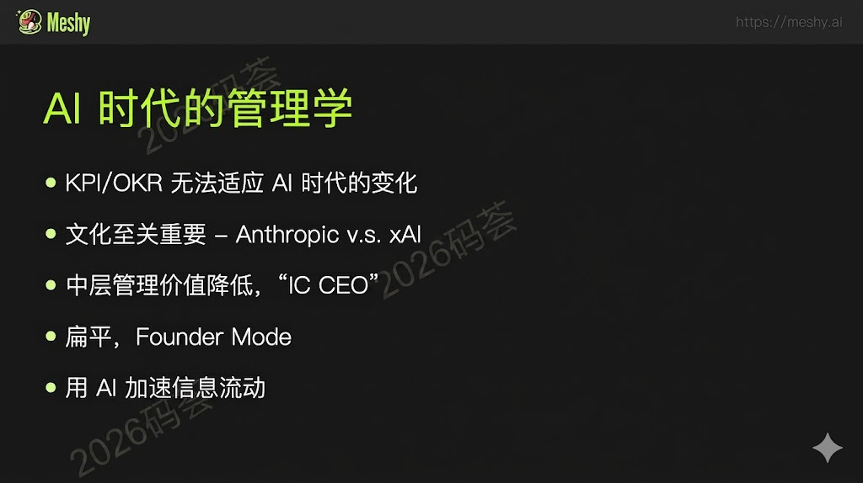
First, KPIs and OKRs may no longer fit this era. When I ask friends working at the most cutting-edge companies in Silicon Valley whether they have OKRs or how seriously they take them, the answer is either no, or they set them and the landscape changes two days later.
So what matters more? I believe it's culture and talent density. Under dramatic change, quantitative metrics often can't measure an individual or team's contribution; compared to building perfect systems, trust and reliance on people become more important. But on the other hand, AI is such an emerging industry that if you require strong track records for every role, you won't find enough talent. At this point, you must boldly elevate capable, self-driven young people and choose to believe in them.
Second, middle management's work will change significantly. I've always emphasized that every technical manager at our company must personally write code or at least deeply understand business details, because you can't manage without understanding these details. And much of what managers used to do — relaying information up and down, making PowerPoints — can be entirely handed to AI. So this era favors people who can hands-on solve problems. Plus, with flattened founder mode (Jensen Huang has 40 direct reports), AI handling much management work makes this easier to achieve. Another point is using AI to accelerate information flow: many cross-team collaboration problems are simply "is this feature done," "when does it launch," "who's responsible" — we're now aggressively pushing to hand all this to AI, which summarizes daily chats into knowledge bases and answers on demand, making the whole organization more transparent and dynamic. Of course, sensitive information still needs proper isolation.
(Image source: 2026 MaHui keynote presentation by Ethan Yuanming Hu, founder and CEO of Meshy AI)
Third, the standard for measuring AI proficiency has changed. Online you often see interview advice to ask "how many tokens do you consume" — I really don't understand this. Emphasizing token consumption easily becomes "I burned a bunch of tokens so I did a bunch of work," but token efficiency varies wildly. I've concluded that two questions are better: first, how long can your agent run continuously and effectively without human intervention? Beginners might need human approval every five seconds, intermediate users set up a sandbox for thirty minutes, the most advanced can let agents work effectively for several hours on their own. Second, how many agents can you manage simultaneously? Beginners manage one, tool users manage three, those who build their own tools manage more. Our company also held a mandatory vibe coding competition for all staff — initially there was resistance, but afterward everyone discovered creativity far beyond imagination, with colleagues from every department automating many of their own workflows.
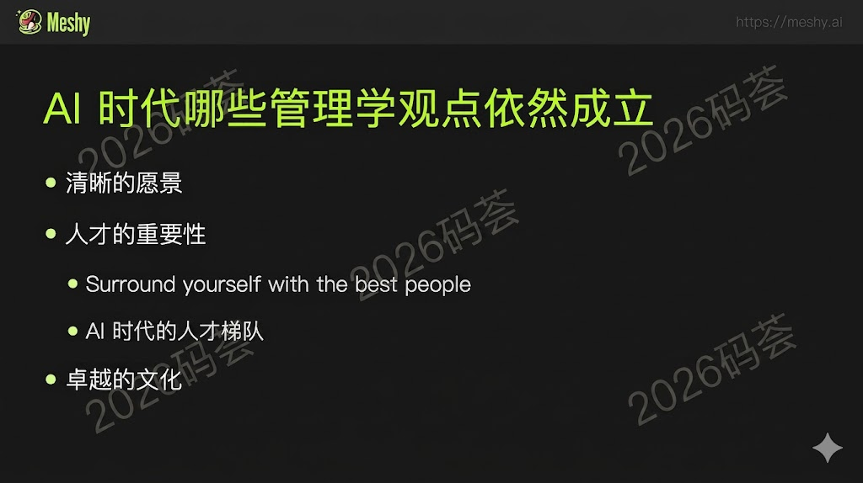
Fourth, what doesn't change. How will founder mode evolve in the AI era? I think, one, you can learn faster through AI; two, managing teams becomes easier. But several management fundamentals never change: clear vision — the team must clearly understand what you're building and what major problem you're solving, and only by articulating this clearly can you attract the best people; the importance of talent — "surround yourself with the best people" is forever the best strategy, looking back at these years, every success came from hiring the right person, every failure from hiring the wrong one; the importance of culture — good culture lets everyone fully perform, bad culture drives good people away. These three things never change regardless of era.
(Image source: 2026 MaHui keynote presentation by Ethan Yuanming Hu, founder and CEO of Meshy AI)
Finally, something exciting. Talking with many Silicon Valley friends, someone separately asked several top AI company leaders "when will AGI arrive," and the prevailing view is roughly end of 2027**. This means every week that passes, we get 1.4% closer; perhaps 500 days from now, AGI will be realized, and everyone will gain more freedom to do what they love. So this is an incredibly exciting era, and each of us can bring our full force to push through this point, and think clearly about what the most important questions of 2030 will be.