600 Million DAU: How New Consumer Brands Can Master Douyin to Prep for Double 11

Large-scale, high mindshare, strong conversion power
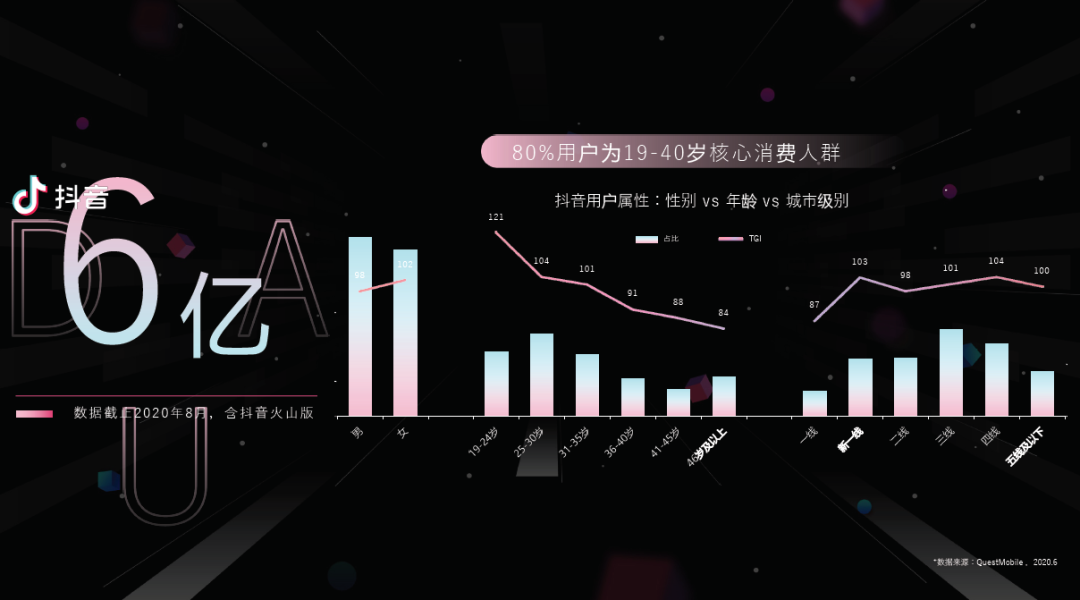
By August 2020, Douyin (including the Douyin Volcano Edition) had reached 600 million DAU — a figure that reflects users' love for the platform and opens up massive business opportunities and unlimited possibilities for new consumer brands.
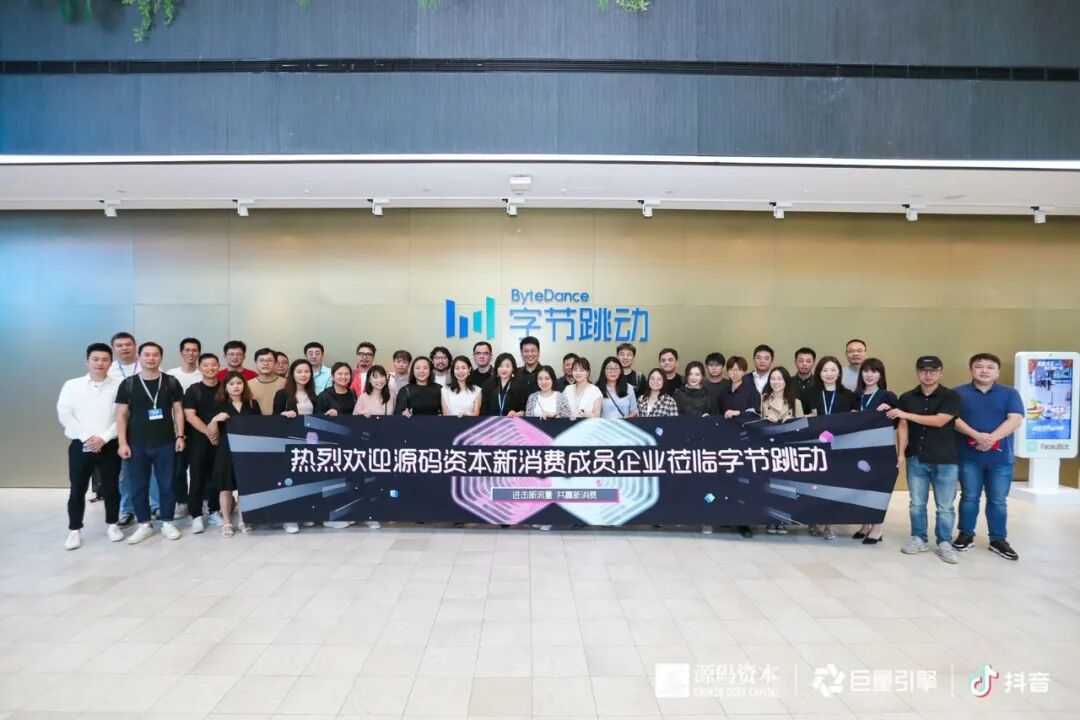
At a critical juncture in the run-up to Double 11, founders from Source Code Capital's consumer portfolio — BlankME, Blokees, Skin Fundamental, Daily Black, Morus, Keyi Tech, Ofood, PWU, Scentooze, Shangshi Beauty, and WANGBAOBAO — gathered at Ocean Engine's Shanghai office for an intensive eight-hour private session on "Tapping New Traffic, Winning New Consumption."
Ethan Zhou, founder and CEO of Daily Black, said: "The guest speakers from Ocean Engine shared incredibly practical insights — for example, what three elements make for effective video creative? How to use joint modeling to find precise audiences from a massive traffic pool? How to build marketing leverage through livestream operations and influencer partnerships? It offered excellent strategic guidance on improving ROI for Douyin ad spend."
#This one is really, really long...
Read to the end and leave a comment
These brands have gifts for you!#
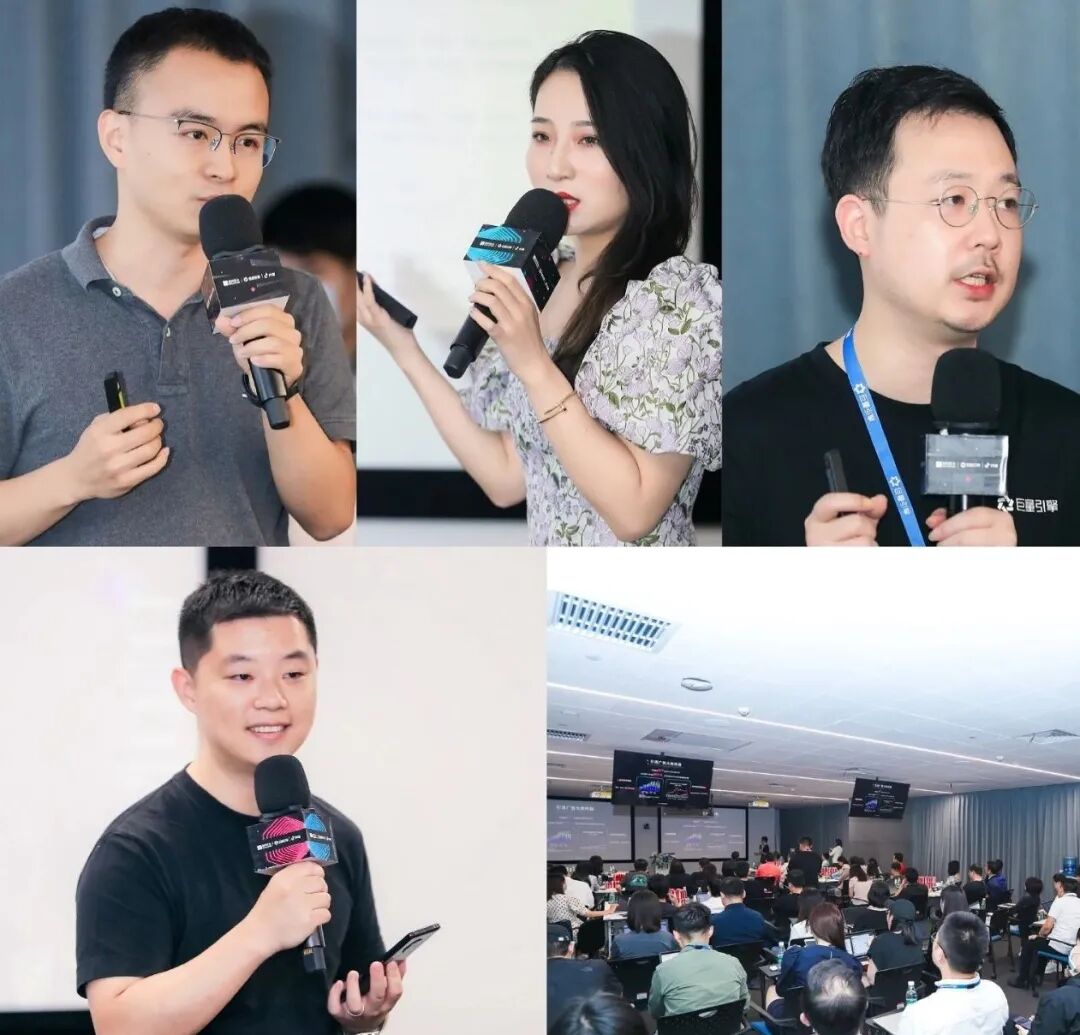
- 01 - Activating a Holistic Strategy for New Consumption Businesses Speaker: Chen E, General Manager of Mass Consumer Business Strategy, Ocean Engine
What kind of platform is Douyin? First, it has massive content and influencers. Second, it produces viral hits. To create viral hits and build influence, you need massive interactive content. One viral piece of content after another makes everything possible.
What are Douyin's core lifestyle scenarios? First, personal care and beauty; second, apparel and accessories; third, gaming; fourth, food and beverages. It essentially covers the vast majority of lifestyle scenarios for young people. Within these scenarios, if you combine content with celebrities and tailored scenes, the result is a completely fresh effect.
As a giant traffic pool, Douyin creates opportunities for new consumer brands through its high DAU and user stickiness. Data is granularly mapped to interest users across industries. Behind this powerful content momentum lies a large number of celebrities and influencers — their content, combined with short-video seeding, makes it all happen. Most users are influenced by content shared by friends and favorite influencers.
Consumers are constantly changing. The post-90s user base keeps growing, reaching 362 million. On Douyin, post-90s users account for 31.4%. In online consumption and real product purchases, the post-90s generation has become the core force. The content share of e-commerce channels is continuously shifting — while the overall pie remains stable, livestream commerce and secondhand trading are growing rapidly. Douyin is a key player in livestream selling and has driven e-commerce development this year.
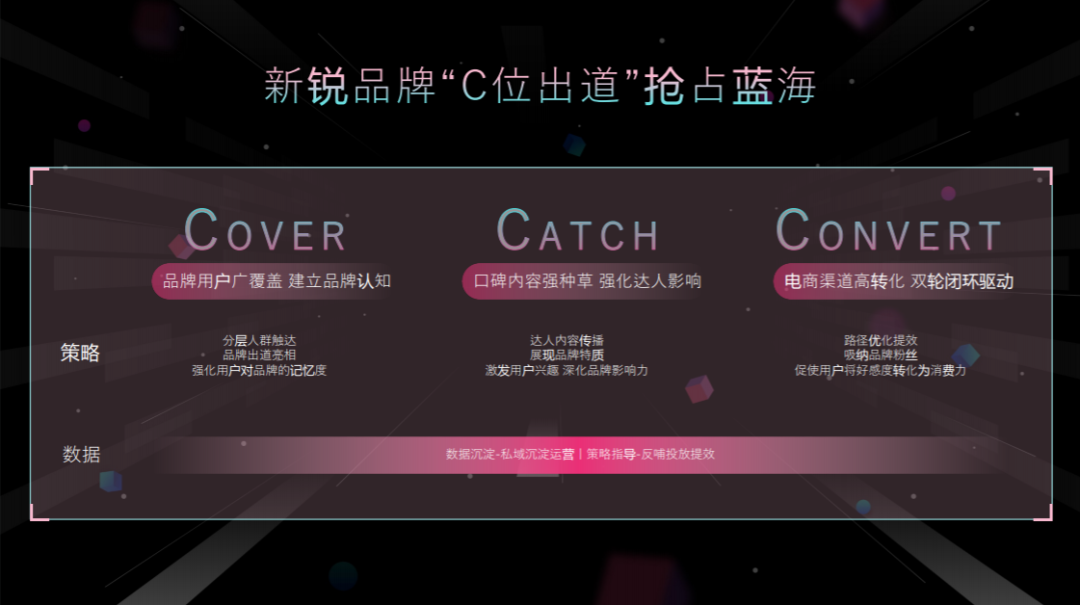
Douyin Marketing 3C
Marketing comes down to two things in the end: acquiring new users, and getting existing users to keep buying. Solving these two comes down to a funnel. For newly seeded users, how do you expand awareness and boost exposure? For users already seeded, how do you deepen their interest and improve efficiency? For core seeded audiences and those who have already purchased, how do you continuously retarget and convert?
There are so many influencers on Douyin, and many companies have gotten very good at working with them. At different stages of development, if you're still early and building word-of-mouth, finding five or ten influencers can have a huge impact on your core customers. But once you move past the initial incubation phase into growth, you find influencer efficiency is far from enough.
First, COVER your target users. With Douyin as the core, plus Toutiao, Xigua, and various vertical apps, we integrate the most powerful traffic resources on the market. Basically all brand target users can be reached here.
Second, CATCH users with word-of-mouth. Through influencers, celebrity content customization, skit performances, ingredient reviews, big-promotion content partnerships, and more. These content formats, including shopping cart components, improve efficiency, ultimately achieving: first, user seeding; second, instant stimulation for rapid conversion.
Third, CONVERT. Whether through livestream or traffic diversion, the final destination is Douyin Shop and third-party e-commerce. The three typical livestream models are: platform livestream, merchant self-broadcast, and celebrity/influencer livestream.
- 02 -
Performance-Branding Tactics and Case Studies for Consumer Industries
Speaker: Lin Xi, Director of Mass Consumer Industry Operations, Ocean Engine
Brand advertising talks about "brand-performance integration." There's a certain methodology for how consumer industries can achieve this on Ocean Engine. The hot categories on Douyin are basically beauty, personal care, and food and beverage brands. In beauty: loose powder, face masks, men's cleanser, eye masks, and facial cleanser top the list. In personal care: teeth whitening strips, toothpaste, toothbrushes, mite-removal spray, and laundry detergent. In food and beverage: enzymes, jelly, snacks, nutritional supplements, protein powder, and cereal. Whether beauty, food, or personal care, videos strengthen seeding by emphasizing product selling points, reinforce those points with scenarios, and must include pricing information. The timing of when price information appears is crucial — with big promotions coming up, this near-promotion price information is extremely important.
Key Metrics and Cycles
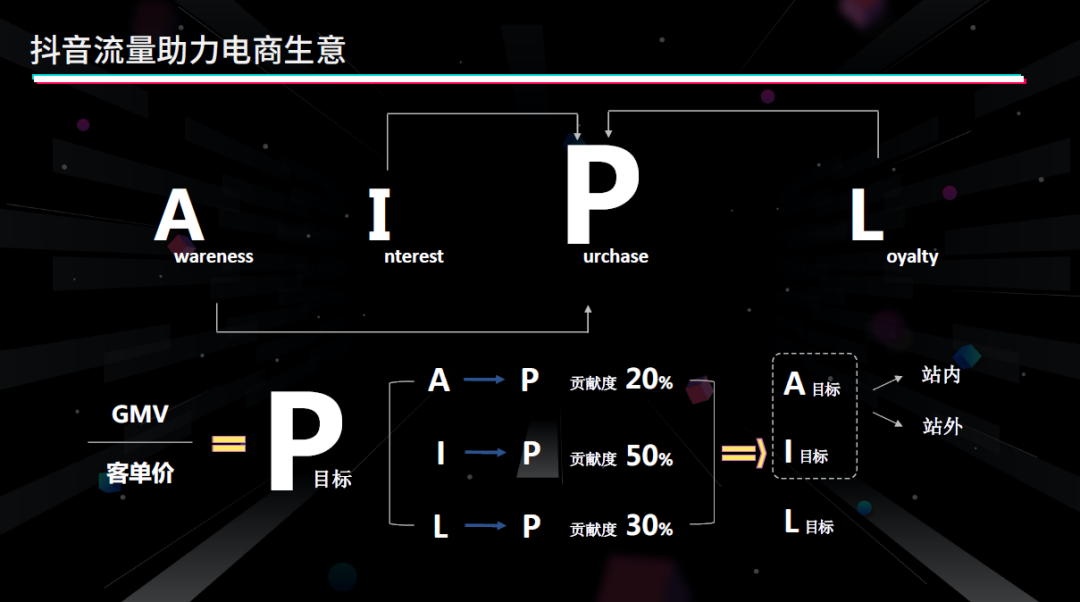
What can move consumers? From a B2B angle, what can you do during big promotion periods? AIPL is a consumer segmentation concept — P is the purchase segment. How do purchases happen? Through A converting to P, I converting to P, and L converting to P. For example, one international beauty client found that L (loyal customers) accounted for 30% of buyers, with 70% coming from new customers, and among new customers, the I segment contributed 50%. Taking 618 domestic beauty as an example, it's clearly divided into accumulation period, explosion period, monetization period, and conversion period.
If you're an emerging brand just starting to work with us, the operations team will give brand placement suggestions covering accumulation, explosion, and conversion. The reason is that during accumulation, you're mainly testing your influencers, bidding, and product selling points — this is when you find what actually sells and what creative actually works.
Entering the explosion period, you massively aggregate audiences interested in your brand or product. Brand advertising itself gets very broad exposure.
Finally, having completed the previous steps — finding real selling points, real creative, and reaching potentially interested people — you enter the conversion period, using bidding to monetize. In different periods, besides ROI, brands should pay attention to different metrics to evaluate performance.
During accumulation, look at product search volume. During explosion, with massive brand ad reach, focus on store UV. During conversion, look at ROI — not just same-day ROI, but 7-day and 15-day ROI. Big promotion business isn't done on promotion day alone; it includes prior cart additions, repurchases, etc. Look at 7-day and 15-day cycle ROI.
Joint Modeling: The Brand-Performance Lever
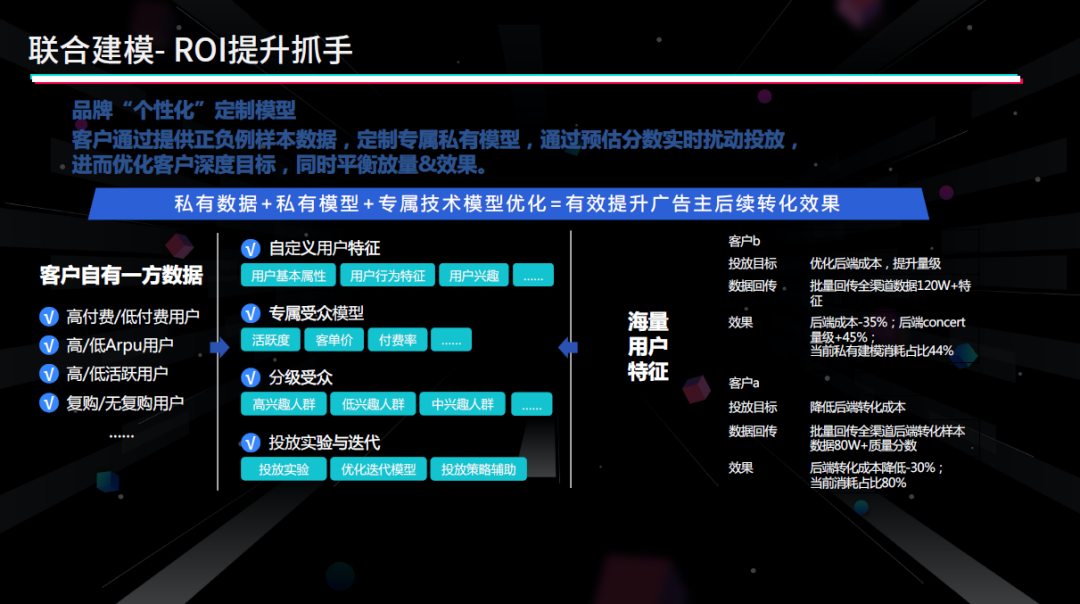
Brand-performance conversion requires audience strategy. Everyone is bidding, and bidding is intensely competitive. Some users are flagged by our model as high-potential, but you may lose them because your bid or eCPM can't compete with other advertisers. These high-potential users, whom the model has determined have higher interest in you than average, are still acquirable.
All optimization comes from data. For traffic diversion, the most important data for brands and platforms is real purchasers — these are true conversion audiences. When this conversion data can be fed back into the model for learning, bidding can help you find the most precise audiences. The concept of joint modeling: you feedback your backend conversion audiences — we mean e-commerce platform conversion audiences — so the model can learn directly and build a brand-specific model that can truly help improve ROI.
With joint modeling, bidding doesn't hit a volume ceiling. It works directly in the model, unlike audience packages which are narrow and eventually run out of volume. Joint modeling continuously finds similar people in the overall pool.
- 03 -
Data-Driven Combinatorial Play for Douyin Accounts
Speaker: Xia Lan, Product Operations Lead, Ocean Engine
To put knowledge into practice and implement these many techniques, you need to understand Douyin accounts and operate them scientifically. Within the Douyin ecosystem, two types of accounts can help with data-driven operations: enterprise accounts and brand accounts. Enterprise accounts work for all business clients. Brand accounts serve only brand clients. Beyond hosting your own brand content, they can collect UGC content related to your brand from public traffic, and after review, curate quality public content into your account as viewable material for users.
On Douyin, there's one center and one hub. The center is the user experience center — where users feel and experience your brand. The hub: with increasingly diverse ad formats and content types, how do you connect them? These account products serve as that connection. For brand accounts, the left hand holds fans, the right hand extends to connect service and business closed loops.
Simply put, brand accounts offer three brand values: people, place, and product. People: traffic acquired on Douyin is沉淀 as initial fans. Content assets or audience assets are used for fan acquisition or maintenance. Place: under Douyin's recommendation feed logic, there aren't many fixed entry points — brand accounts are a strong fixed entry point, a阵地 or private domain space for operation. Product: after seeding, connect service and business closed loops, driving business through integrated public, private, and commercial domain traffic — this is the value of accounts on Douyin.
Four Dimensions of Account Operation
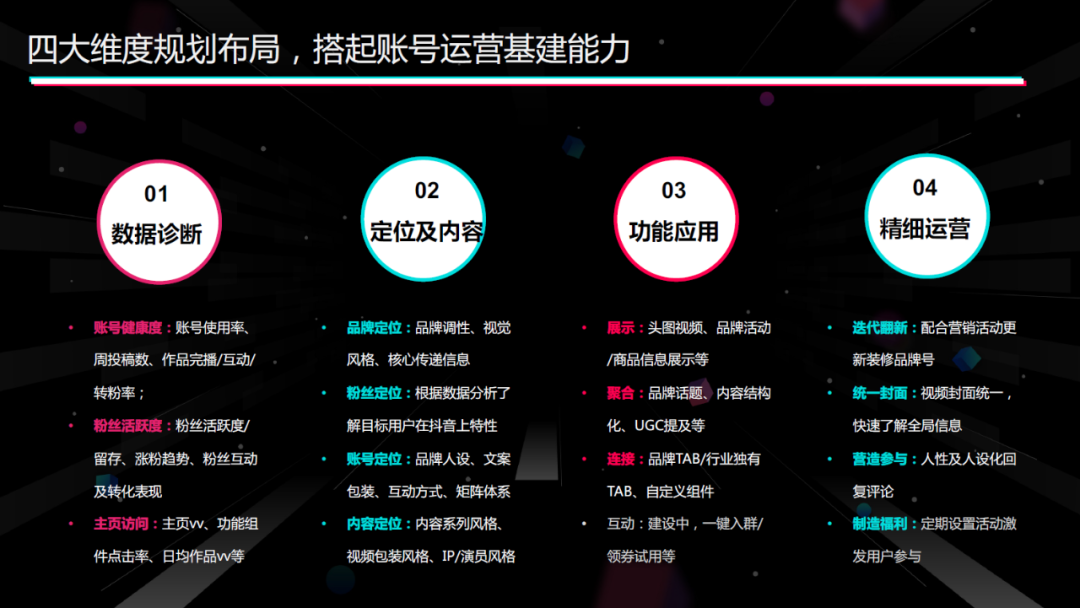
How to operate accounts day-to-day on Douyin? The four core dimensions: data diagnosis, positioning and content, feature application, and refined operation. First, know where problems lie or what your fan profile looks like. Also monitor fan activity rates — are many of your accumulated fans just passing through, and do they actually help future business?
Content strategy requires precise positioning. Brand positioning: what core message does this brand want to convey, and how do I want to communicate with people? Account positioning: persona, like a million-follower influencer's persona. Many CEOs are now joining Douyin, and some are building CEO-led personas as benchmarks. Content positioning: at the most basic level, unified video cover styles. When you see well-curated accounts, you immediately know what content they offer.
How many target users are on Douyin? These are outer-layer fans. In fan expansion, prioritize those with existing positive sentiment. Accumulating fans is a process from aggregation to fission. Aggregation: first collect or attract core seed fans who interact, comment, or even send positive feedback on the platform. Second layer: users already exposed to your brand through Douyin ads. Third layer: high-potential users found based on these, gradually moving from aggregation to fission to achieve fan growth.
With fan targets established, you can build boost mechanisms or traffic tools. Common content services: when you see relatively good content and want faster, broader exposure, you can use content service traffic boosts, or use bidding ads with Douyin account promotion for follower growth. Combine with marketing activities — livestreams are excellent for retaining and activating fans. Various tools and components can help you quickly achieve follower goals.
- 04 -
Brand Building and Measurement for Emerging Brands
Speaker: Lin Junying, Head of Business Strategy Center, Ocean Engine
First, why build brand power. Second, where to build brand power. Third, how to build brand power. Fourth, how to measure brand power.
Why build brand power? Brand growth has three stages. First, the foundation: product-centric, finding the problem to solve through target market and audience, and entering the market with product advantages. Second, the most critical step for brands entering the market: through various channels, using short-term traffic conversion to keep the brand alive. Third, the mindshare growth stage: centered on gaining mindshare, through long-term market touchpoints, strengthening user brand cognition, expanding market coverage at scale, and ultimately沉淀 and shaping long-term enterprise value.
How to build brand power on Ocean Engine? The first-mind platform for brand building has three key attributes: large scale, high mindshare, and strong seeding. Why these three metrics? If you only reach high-conversion audiences, it's hard to continuously expand potential audiences or penetrate target segments further — reach is critical for brand awareness and recognition.
How to build brand power and establish user mindshare. Consumer touchpoints across the full journey need to increase brand memorability, not just conversion. Different marketing objectives require different marketing combinations to influence consumers.
For each endpoint, we've developed many traffic products, optimizing interactions, conversion paths, and visual reconstruction based on each platform's native characteristics. On top of these traffic foundations, we provide much content — including mini-IPs, challenges, events, etc. — to reduce the cost of users consuming content on this media, thereby transferring brand messaging and commercial selling points into user mindshare.
After a year of exploration, we've summarized a "three horizontals, two verticals" evaluation system. First is reach value. When we call Ocean Engine a first-mind platform, we emphasize finding media that can broadly reach your wide audience to improve efficiency. Second is brand value. Brand value refers to brand cognition improvement — we provide brand research capabilities through survey questionnaires, combine media behavior to provide brand indices, and use audience segmentation models to evaluate overall brand value. Finally, we engage third parties and clients to assess overall brand awareness.
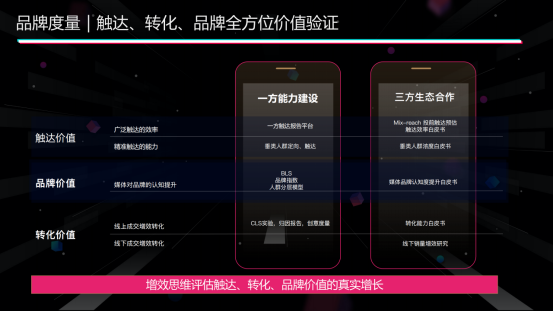
Lift thinking is defined as: through scientific A/B experiment分流 capabilities, controlling whether users have the opportunity to see ads, comparing incremental differences in various metrics between those who saw ads and those who didn't. This includes internal performance evaluation — not looking at how big a project is, but at the增量. We evaluate whether things are done well not by how much you took on, but by how much增量 you created during the process, while existing volume is your denominator.
Marketing measurement: how to evaluate conversion, brand, and other metrics? Only 5% of consumer consciousness can be verbalized; the other 95% can't be captured through surveys, only through behavioral tracking. Based on these two categories, we provide different measurement solutions. For the 95% portion: behavioral data, the indices and behavioral segmentation mentioned earlier. For the 5% that can be expressed: survey collection to see whether cognition and conversion improved after this ad campaign.
We拆解 brand performance across more dimensions including voice, interaction, and sentiment. Voice: reading and browsing behavior. Interaction: likes, shares, comments. For sentiment, we drill down by industry to build sentiment and口碑 systems, drilling to specific terms. For beauty brands, for example, what's the most mentioned positive comment about this brand? Skincare efficacy. What's weaker than industry average? Price, and haircare/skincare functions, etc. This沉淀 data product is called Cloud Map, open to clients with sufficient data capabilities.
Audience asset measurement capability — this is something we've been exploring. Based on users' extensive behavioral interactions with brands on the platform, we identified over a dozen key behaviors to刻画 the proximity between users and brands. This沉淀 as audience assets serves as a brand asset evaluation system, and based on this audience asset segmentation, we enable brand flow to help brands better沉淀 assets through brand marketing investment and manage their流转.

Phew, finally done reading!
Leave a comment to win prizes!
The 10 users with the most likes
will receive gift packages from the brands!