Xijiezhachuan, a fried-skewer snack brand, announced the completion of a 295 million yuan Series A funding round led by Source Code Capital.

"Ten Thousand Stores in a Hundred Cities," dedicated to helping 100,000 Chinese people successfully realize their entrepreneurial dreams.
Xijiezhachuan, a leading fried-skewer snack brand, has recently completed a 295 million RMB Series A round led jointly by Source Code Capital and Xingnahe Capital, with Maxceed Capital serving as the exclusive financial advisor. The funds will primarily go toward upgrading the company's supply chain, building out its operations backbone, and developing its digital systems.
In recent years, street-side "small bites and drinks" have had their moment in the spotlight. Categories like fried chicken cutlets, milk tea, duck neck, and malatang have exploded in popularity, giving rise to ten-thousand-store brands such as Zhengxin Chicken Steak, Mixue Ice Cream & Tea, and Juewei Duck Neck. More and more food entrepreneurs have begun digging into and reinventing distinctive categories found in neighborhood streets and alleyways.
As the leading brand in the fried-skewer track, Xijiezhachuan has expanded from Nanjing to 23 provinces nationwide in just over two years, with more than 1,400 stores opened and nearly 100 new locations signed each month. The company's goal is "10,000 stores across 100 cities," committed to helping 100,000 Chinese people achieve their entrepreneurial dreams.
The Moat of 10,000 Stores
Working backward from the endgame, making "10,000 stores" the lens for category selection, and zeroing in on fried skewers — this was the critical first step for Wang Kuankuan, Xijiezhachuan's founder and chairman. Wang understands that the real moat is the combined strength of brand, channels, products, logistics, production, and processing — the full supply chain. Supply chain capability is the engine that powers scale and the true defensive moat.
Brands capable of reaching 10,000 stores share several traits: complex back-end, simple front-end, and high gross margins.
"Complex back-end" means the backend chain, though intricate, can be fully optimized by headquarters' supply chain or achieved through complete supply chain allocation. "Simple front-end" means store operations and management are straightforward, without cumbersome processes or demanding operational skills. The structurally complex parts are handled by the company — processed, packaged, and sealed at headquarters' plants before being uniformly shipped to stores. Making products simple to prepare solves 20–30% of operational efficiency; add in full supply chain allocation, and stores don't need to worry about product preparation at all, reducing complexity, improving efficiency, and enabling a 20-square-meter shop to quickly output standardized products.
"Fry-and-pan-fry" skewers, with their higher output efficiency, are wildly popular snacks and a street category loaded with warm nostalgic memories. Yet they've remained dominated by mom-and-pop shops, with no recognized brand ever emerging. Wang Kuankuan applied the 10,000-store mindset to reimagining the fried-skewer category, innovating across ingredient selection, seasoning methods, frying techniques, and sales approaches. Currently, Xijiezhachuan stores average nearly 150,000 RMB in monthly revenue, and the company's overall revenue this year is projected to grow fourfold year-over-year.
Building a supply chain moat requires aligning supply chain with organizational capability. On supply chain construction, Wang drew lessons from his previous venture running a malatang chain: when supply chain delivery isn't possible, he steadfastly avoids short-shelf-life vegetables and other fresh products. All dishes — skewers, proprietary braising oil, stinky tofu sauce — are delivered through the full chain, enabling "foolproof" store operations. Xijie has now established eight regional distribution centers nationwide, capable of unified full-chain delivery to all stores, ensuring consistent product quality across regions.
Product Power, Marketing Power, Organizational Power
Xijie's rise to category leadership in just over two years owes to the team's continuous product innovation at different development stages — developing flavors, consistently creating hit products. Product power is also the area founder Wang Kuankuan personally oversees.
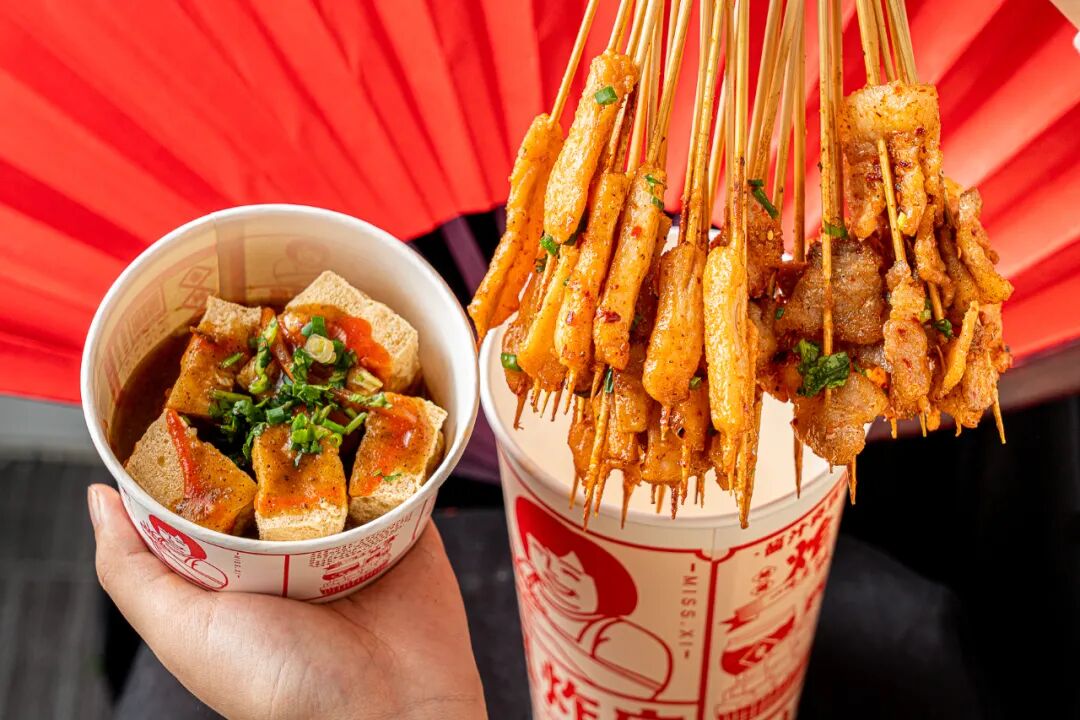
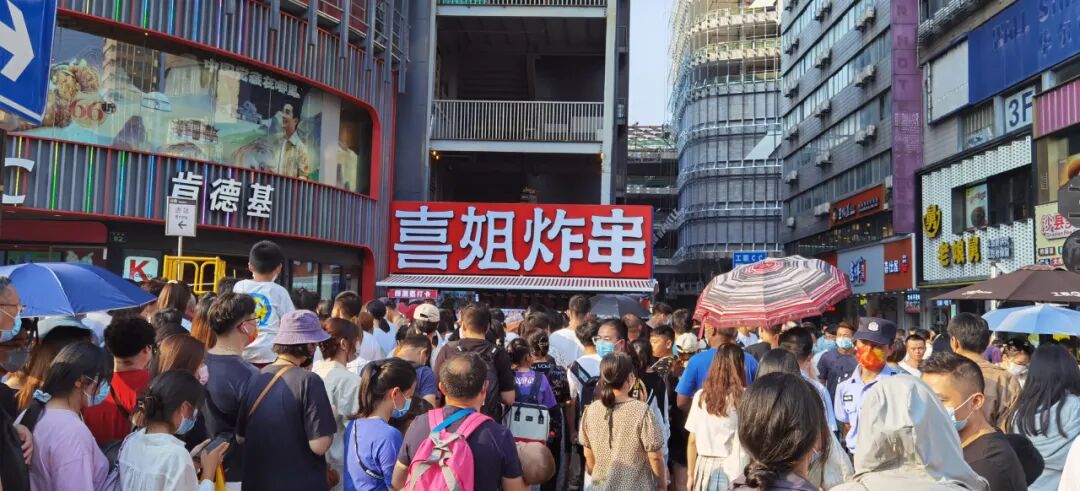
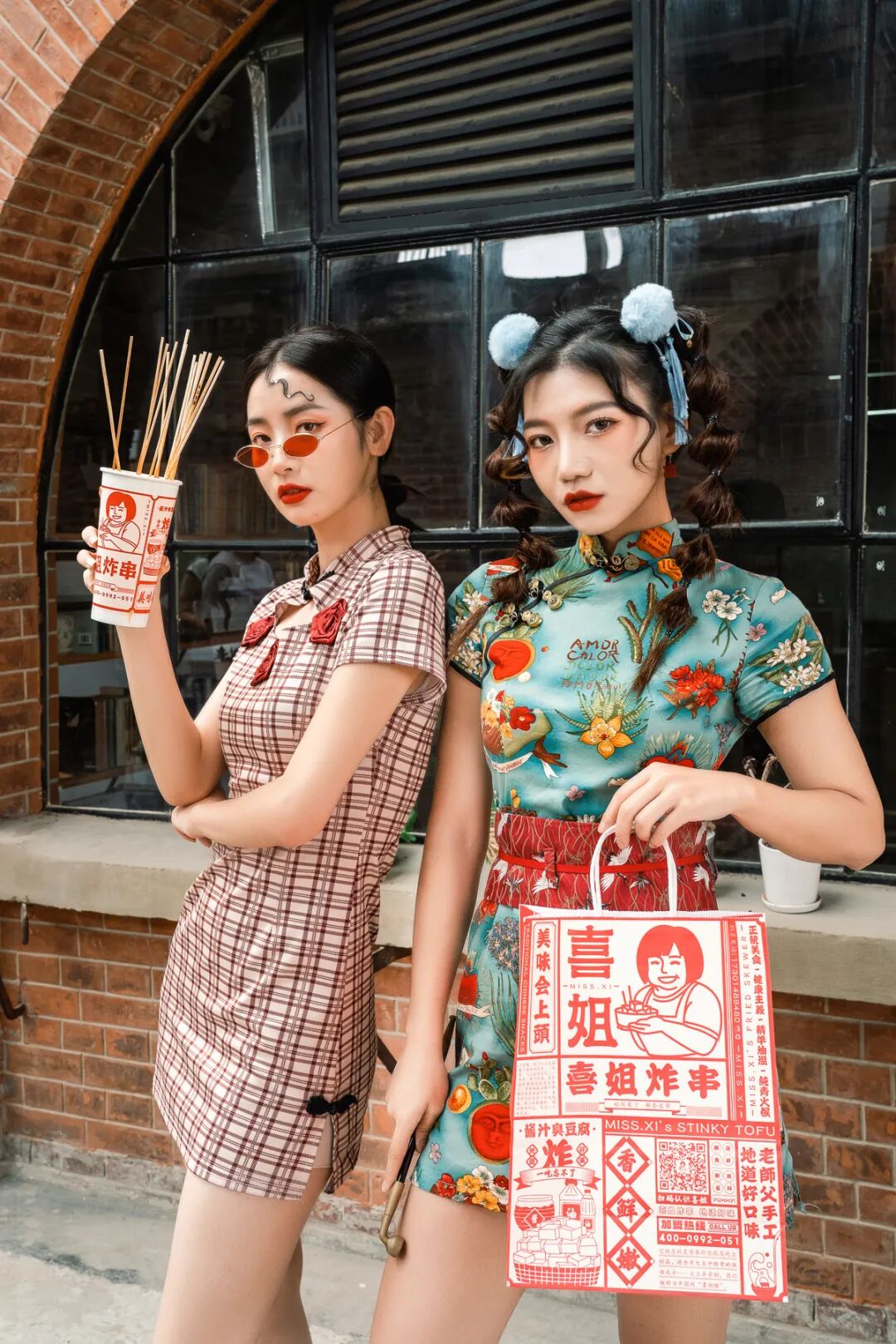
"Memorable products give marketing confidence." Beyond distinctive and stable flavors, "high visual appeal" is another reason for Xijiezhachuan's viral success. Xijie uses eye-catching red backdrops, with oversized signage displaying only the four characters that best answer "who we are" and "what we do." Inside, prominent TOP6 dish displays above the secondary entrance feature carefully selected, most popular hit items, reducing consumer choice paralysis. Meanwhile, the guochao paper-cut style store design and packaging make the skewer buckets, carry bags, and other elements into inherently shareable "must-have photo props." Many customers post on social media with their Xijie skewer buckets and bags, creating explosive word-of-mouth.
On site selection, Wang believes choosing a location means choosing foot traffic — landmarks are traffic entry points. Xijiezhachuan's first store was on Huaihai Road in Nanjing's Xinjiekou, the city's traffic gateway. Currently, Xijie's stores are primarily street-facing shops, first capturing the high ground of cities before radiating out to commercial districts and communities, converting traffic into sales.
Xijie's core team comprises numerous seasoned industry professionals who have held positions at well-known chain restaurants and retail enterprises, with solid theoretical foundations and rich hands-on experience in franchise system building, store expansion, supply chain construction, product R&D, operations, and organizational management. Wang Kuankuan said: "Truly helping 100,000 Chinese people achieve their entrepreneurial dreams — this is what our team genuinely wants, and what we believe is the most valuable thing for sustainable business."
Kaisi Chang of Source Code Capital commented: "Fried skewers is a mass-market category with broad consumer appeal, carrying many people's childhood memories. Xijie has given this category new life through comprehensive upgrades to product, supply chain, and brand. Founder Wang Kuankuan has keen consumer insight and extreme product obsession. We believe that under his leadership, Xijie will grow into a leading enterprise in the snack category."


Source Code Capital Portfolio Company "TenaFe"
Announces $58 Million Series B Funding Round
Existing Shareholder Source Code Capital Continues to Increase Stake

Source Code Capital Portfolio Company "Ruigu"
Announces $250 Million Series D Funding Round
Existing Shareholder Source Code Capital Continues to Increase Stake

Source Code Capital Portfolio Company "Js.Design"
Announces Two Rounds of Funding Totaling Tens of Millions of USD
Existing Shareholder Source Code Capital Continues to Increase Stake

Source Code Capital Portfolio Company "Whale"
Announces $50 Million Series B Funding Round
Source Code Capital Was Lead Investor in Series A

Domestic Leading AI Design Company "Jellyfish Intelligence" Announces 70 Million RMB Series A Funding Round Led by Source Code Capital
Click "Read Original" for more Source Code Capital portfolio companies