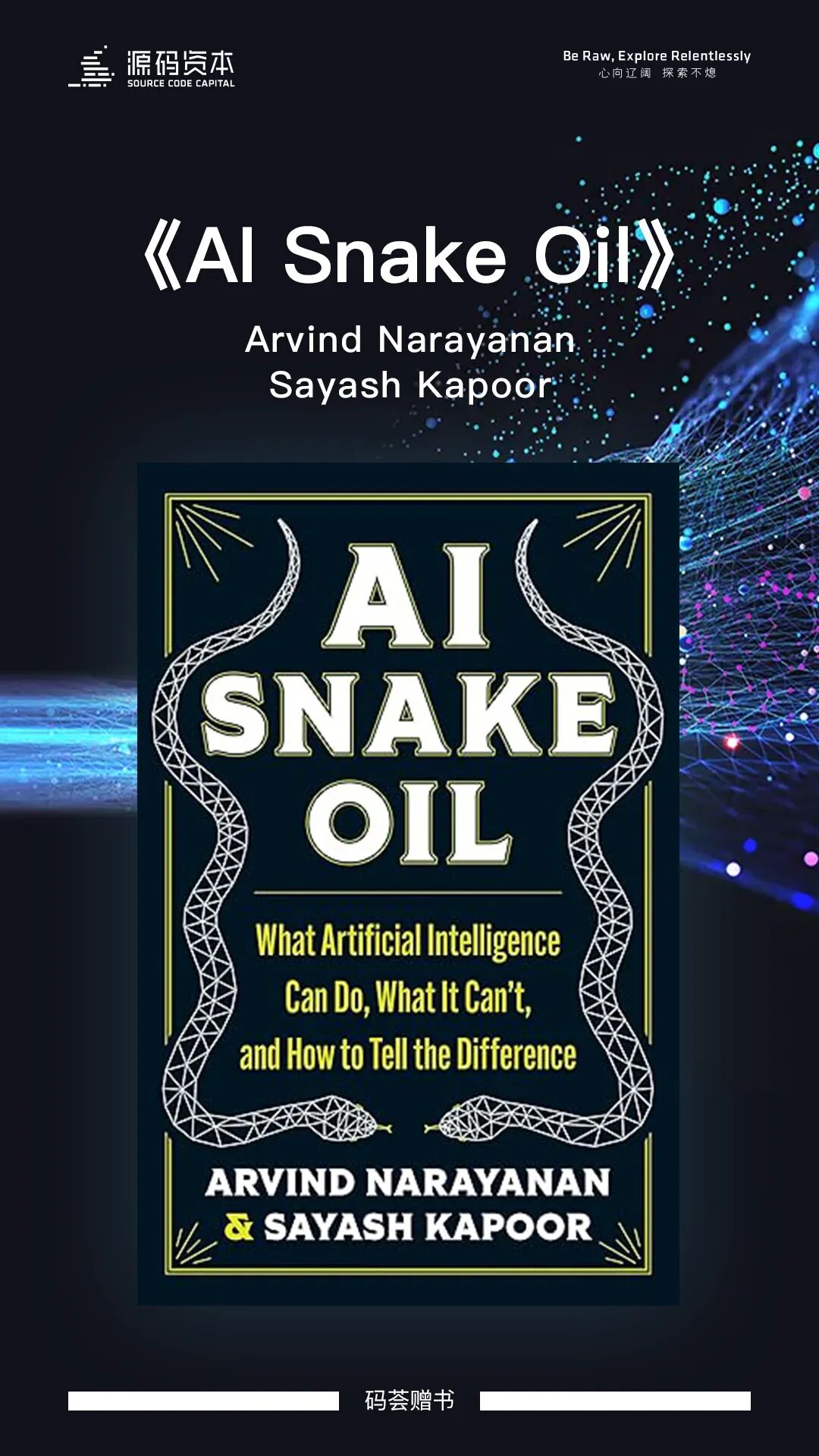
MaHui Book Giveaway | We Should Worry About How AI Is Used, Not AI Itself

This September's MaHui book giveaway spotlights an English-language title about to hit shelves in China — AI Snake Oil, co-authored by Princeton University computer science professor Arvind Narayanan and former Facebook software engineer Sayash Kapoor. A major reason the book has drawn attention: both authors were named to TIME magazine's list of the 100 most influential people in AI. AI is now undeniably a global preoccupation, commanding widespread attention. Yet few things are so thoroughly swathed in hype, misinformation, and misunderstanding.
The book fundamentally explains how AI works, why it often fails, where it helps or harms, and the critical distinctions between different types of AI. While acknowledging the potential of tools like ChatGPT, it forcefully debunks the deluge of misleading claims about AI capabilities — and documents the serious damage already done as AI has been built, marketed, and deployed across education, healthcare, hiring, banking, insurance, and criminal justice.
The authors also systematically assess the value of three major AI application categories — predictive AI, generative AI, and content moderation AI — cutting through to identify which projects are overblown or outright meaningless. As leading industry researchers, their most direct warning is this: if AI remains controlled by tech giants with little accountability, the world faces grave dangers.
In other words, the book's message to the world is that AI is not an existential threat to humanity. We should worry more about how people use AI than about AI itself. The excessive focus on and anxiety about AI — the default cognitive habit of most people today — is precisely what leads to neglect of how it's actually being used.
The book promises to offer clear information and decision-making guidance for managers who need to determine where AI should be applied, for readers intrigued by AI headlines but struggling to separate fact from fiction, and for anyone concerned with the social impact and ethics of AI. (Interested readers can click "read more" at the end of this article to jump to the pre-order link and support the official release.)