Alumni Interview: Yi Cao — Computer Science Inspires My Decision-Making

The idea that the combination of data, algorithms, and computing power produces optimal decisions is a business approach directly inspired by computer science.

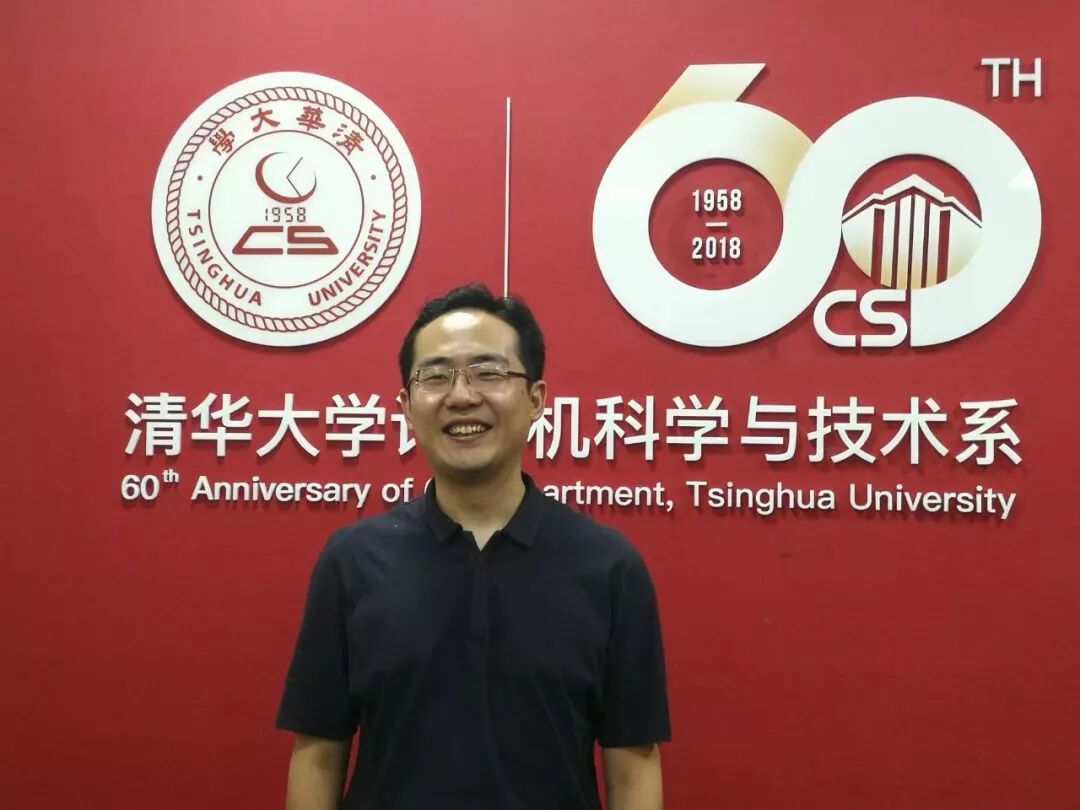
As Tsinghua University's Department of Computer Science and Technology approaches its 60th anniversary, six decades of history have yielded a legacy worth recounting and memories worth revisiting. On this occasion, we spoke with alumni to hear their stories with the department. We extend our heartfelt gratitude to all alumni who have supported its growth and development over the years.
Reprinted from:
Tsinghua University Department of Computer Science and Technology Alumni Association, Department Anniversary Alumni Collection
Interviewers: Jing Li / Yueyi Wu / Qingyu Zhu
Written by: Qingyu Zhu
Yi Cao: Computer Science Inspires My Decision-Making
Discovering Computers
Before the college entrance exam, Yi Cao's goal was Tsinghua's physics department. He had been passionate about physics since high school, and with his competition background, he harbored a strong interest in theory and fundamental research.
After careful consideration, he felt that computer science struck a better balance between theory and application, staying closer to societal transformation and demand. But this was only a surface-level understanding; truly grasping "computer science" would require a gradual learning process.
Like most students, Cao had incomplete information before filling out his application. His foundational knowledge of computers was limited. Looking back, he feels fortunate about his choice — not merely for acquiring technical skills, but more importantly, for gaining a new way of thinking, even a new worldview, through the language of computing.
Though Cao had some exposure to computers in high school, he immediately felt the gap with classmates upon arriving at Tsinghua. During the first week's lab session, a classmate coded up Snake; slightly shaken, he quickly set about catching up. He would write code by hand, then input and debug it at the computing center. After two months, he too had built Snake and largely closed the gap from his first semester. Yet when midterm exam results came out, he experienced being in the bottom half for the first time — which only drove him to work harder than his peers.
Beyond Tsinghua's soil, his hometown environment also offered inspiration. Zhejiang merchants boast a long history and distinct culture, centered on the spirit of entrepreneurship through hard work. Cao says he practiced this spirit through studying from a young age. Though an only child, his family's educational resources were limited; through sheer diligence, he achieved the top score in Jinhua city on the college entrance exam, with a perfect score in the science comprehensive section, repaying his family's investment and expectations.
Outside coursework, exchanges with senior students proved invaluable. From borrowing a senior's computer to becoming deputy moderator of the "Future Road" board on Shuimu Tsinghua BBS, Cao became one of the earliest users from the 2002 cohort. As head of the employment alliance, he connected with Chuan Wang during their undergraduate years. In Cao's view, Wang was enthusiastic — not only giving in-depth presentations to students but also encouraging Cao to start a business and introducing him to investors. The two remain in close contact, soliciting each other's counsel. Cao's BBS handle was "Cao Cao"; sharing the surname, he admired the historical figure's strategic brilliance.
Exploration and Opportunity
In his sophomore year, Cao devoted considerable thought to future planning. He read extensively on the Jiuquan BBS, conducting deep reflection on mainstream paths: technology, product, consulting, research. 2004 marked the early recovery after the dot-com bust, with investment beginning to rebound. His first encounter with the industry came by chance: a summer job posting for a P2P streaming technology investment analyst role. It aligned with his SRT (Student Research Training) project at the High Performance Computing Institute, yet wasn't purely technical. He was immediately intrigued.
What most attracted Cao to investment was how it provided ample motivation and pressure to learn, alongside abundant material for rapid learning. Working intensely in the role constantly pushed him to expand his horizons, boundaries of thinking, cognitive limits, even personality boundaries.
Though his career remained in a promising ascent, Cao had already garnered wide recognition and praise. Industry affirmation brought encouragement, but also pressure on a career not yet concluded. Venture capital is fiercely competitive and ever-changing, requiring practitioners to constantly reestablish their position and direction. Reputation is merely a way for others to learn about oneself and one's firm; what matters more is marshaling resources to create alignment of timing, place, and people.
2014 proved such an inflection point: new capital sources met new ideas, giving asset managers an excellent opportunity. His networks from school and work also proved invaluable — fundraising, project evaluation, partnership opportunities all bore the imprint of mutual recognition and mutual success with friends. The computer science department was the origin point for all Cao's endeavors, providing not only his driving force but also the lens through which he deployed information technology and capital to drive commercial transformation.
Today Cao's team numbers over fifty employees, managing more than 10 billion RMB across investments in over a hundred companies, growing at a pace of thirty new investments annually. The team ranks among the industry's leaders. Operating such a firm requires team-based meticulous division of labor, plus coverage of value-added services post-investment.
Amid vast information, Cao retains command of key decisions. Only through efficient organizational structure can information flow sufficiently to enable the most forceful judgments. In his view, the firm's mission is to use information technology and capital to drive commercial transformation. He believes every industry contains value-creation opportunities, especially through using information technology to reconstruct value chains and thereby create better products and services. Technology and capital are both amplifiers, capable of rapidly scaling good products and models.
Leaving the Comfort Zone
For Cao, computing brought not only accumulated expertise and friendships, but more fundamentally, cultivated an awareness and capacity for continuous algorithmic optimization. This is a process of constant reflection and synthesis: not merely completing the day's work, but promptly updating methods to maximize output from the same time investment. Like learning bubble sort freshman year — quick to pick up, adequate for small datasets, yet insufficient for large-scale data. Only by mastering new algorithms can one perform well on new data. This yielded considerable inspiration. The combination of data, algorithms, and computing power produces optimal decisions — this business operating philosophy itself derives from the inspiration of computer science.
Cao feels that for computer science students, their own excellence provides many safety-net options, but in choosing, one should preserve possibility and space. Graduate school, studying abroad, employment — among these conventional mainstream paths, while equally valuable and meaningful, the inertial pull is strong and autonomous thinking relatively scarce.
Students should more cherish the frontier experiences accessible at Tsinghua, which can broaden one's horizons. Cao hopes students can carve out time to explore diverse information, understanding the world's richness and the variety of industries, before determining how to realize their own value. "The mainstream choice isn't necessarily right for you. Though easier, one shouldn't forget the world beyond the comfort zone."
Cao's decision to leave Sequoia Capital and participate directly in entrepreneurship was itself a self-challenge, yet also an imperceptible process. He encountered entrepreneurs daily, including alumni like Xing Wang and Chuan Wang — their courage, idealism, and desire to change the world all became reasons for later attempts.
Cao hopes to grow into a capital manager, with the transformation process yielding ample rewards. This represents a comprehensive challenge: suddenly far more to consider, from macroeconomic regulation to team collaboration efficiency to psychological changes — all leadership challenges exceeding expectations.
From one person to dozens, each team member operates in an autonomous state, exercising independent thinking and action within certain bounds, while requiring strong collaboration and connection. Cao and every team member alike face pressure and temptation, with countless choices requiring organic integration.
Even while maintaining an intense work rhythm, Cao insists on preserving weekends, using distance from weekday tension to sustain good condition. In free time, he enjoys films and historical dramas, immersing himself in historical events to contemplate their dynamics and processes of change. Whether relatively micro-level industry history or macro-level social history, Cao finds they share connective tissue with enterprise work.
Regarding the department's own history, he commends how it has continuously advanced China's industrial progress and economic development by cultivating quality talent. Each year's graduates serve not only as main forces driving the information revolution, but also change the world in many respects.
On the occasion of the department's sixtieth anniversary, Cao hopes it can cultivate pace-setters: not merely elevating international standards and achieving notable academic accomplishments, but also uncovering applied value itself, thereby enhancing social responsibility and making people's lives better. He concludes with sincere wishes: "May the department cultivate ever more leadership-caliber backbone talent for society!"

Alumni Profile
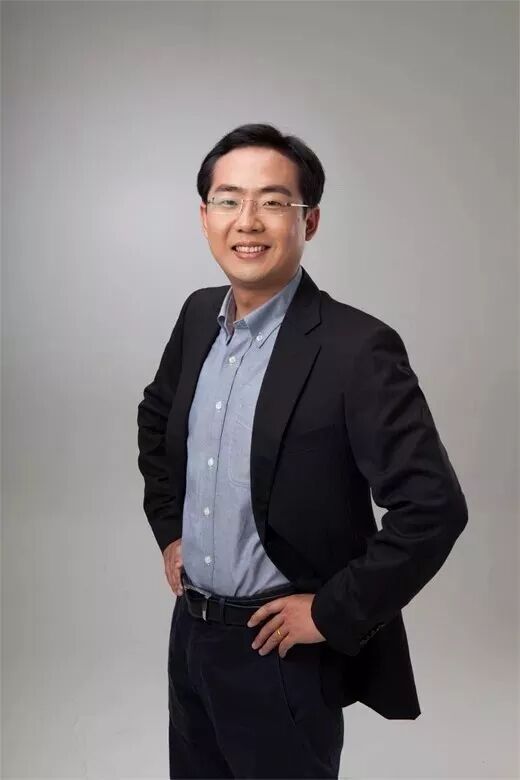
Yi Cao
Class of 2002, Tsinghua University Department of Computer Science and Technology; Founding Partner, Source Code Capital.
Entering investment immediately after undergraduate graduation is rare in an industry that values seniority. Barely past thirty, Cao already had over a decade of venture capital experience. He co-founded the Ali the Fox animation brand with Tsinghua alumni, joined Sequoia Capital in 2009 as its youngest Vice President in China, and founded Source Code Capital in 2014, focusing on early-stage TMT investments. He was named to Forbes' 2018 Midas List, 2017 China Top 25 Investors, and Wealth (Chinese edition) 2016 40 Under 40 China Business Elite.

Source Code Capital
Creating Lasting, Real Value

WeChat ID:
sourcecodecapital
For more professional content
Follow our official WeChat account