Source Code Capital and Zero2IPO Jointly Release B2B Trading Platform Research Report

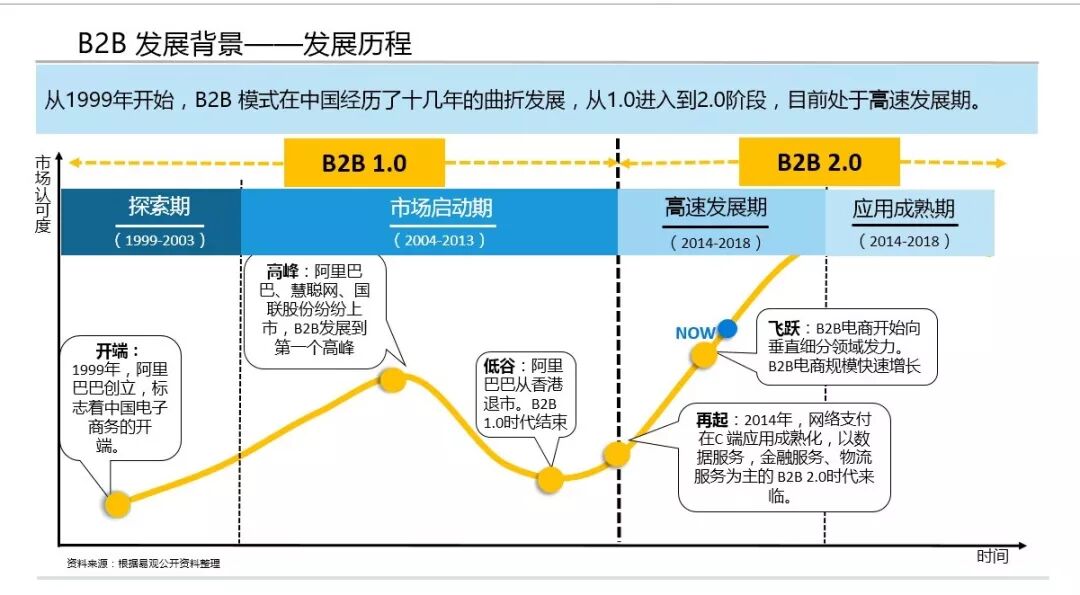
China's B2B market has evolved from its 1.0 phase, spanning 1999 to 2013 and defined by "information publishing" business models, into a 2.0 era characterized by greater commercial diversity, broader industry coverage, and deeper integration with industrial supply chains.
In December 2017, Source Code Capital and Zero2IPO jointly released a research report on B2B trading platform investments, analyzing the market development and investment trends in China's B2B trading platform sector since 2015.
The B2B 2.0 Era: "Information" + "Transactions" + "Services" Driving Industrial Upgrading
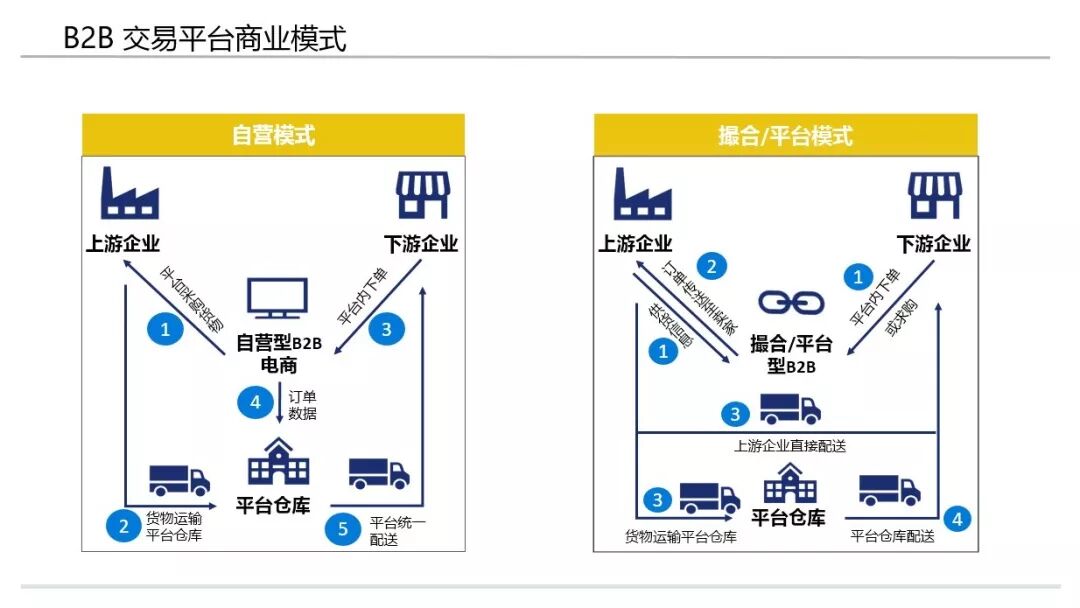
China's B2B market has evolved from its 1.0 phase between 1999 and 2013, characterized by "business information publishing" as the core business model, into a more diverse 2.0 phase featuring broader industry coverage and deeper industrial integration. In the 2.0 phase, B2B companies have expanded beyond information provision into transaction facilitation and industrial services. Trading platforms and enterprise services represent the two primary business models in B2B today.
Against the backdrop of industrial upgrading, B2B trading platforms have used transactions as an entry point to optimize offline distribution channels and improve efficiency, delivering disruptive impact across numerous industries.
B2B Investment Market Boom Since 2015; Greater Rationality in 2017 Trading Platform Investments
Since 2015, alongside the explosive growth of the B2B market, B2B trading platforms have come to cover most sectors of the market economy, powerfully advancing China's industrial upgrading. Capital markets have played a critical role in this process, and a number of outstanding investment firms with deep expertise in the trading platform space have emerged.
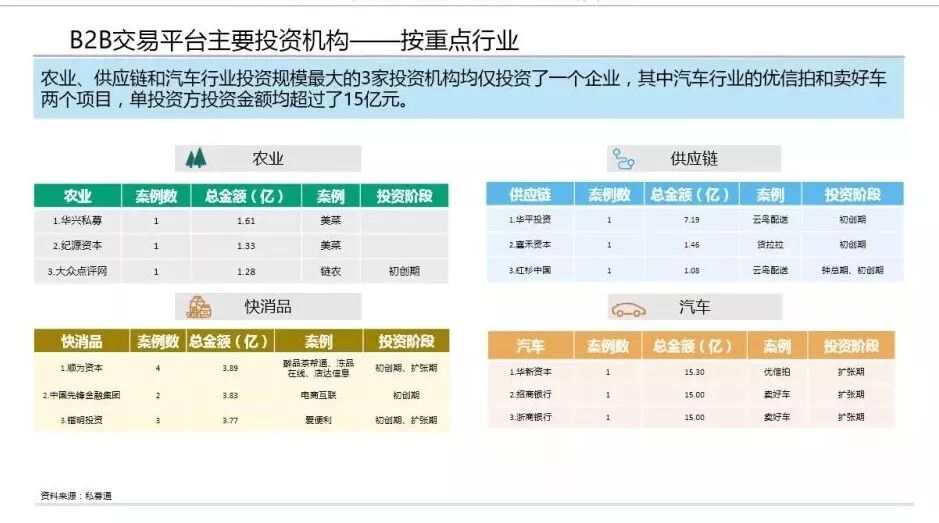
Compared with the previous two years, capital markets approached B2B trading platform investments with greater rationality in 2017: the number of investment events declined while average deal size increased significantly. Between 2015 and the first half of 2017, B2B trading platform projects in automotive, steel, supply chain, fast-moving consumer goods (FMCG), and agriculture attracted the most capital. Source Code Capital, ZhenFund, and Matrix Partners China led in number of investments in this sector.
Approximately 60% of B2B Investments Went to Trading Platform Projects
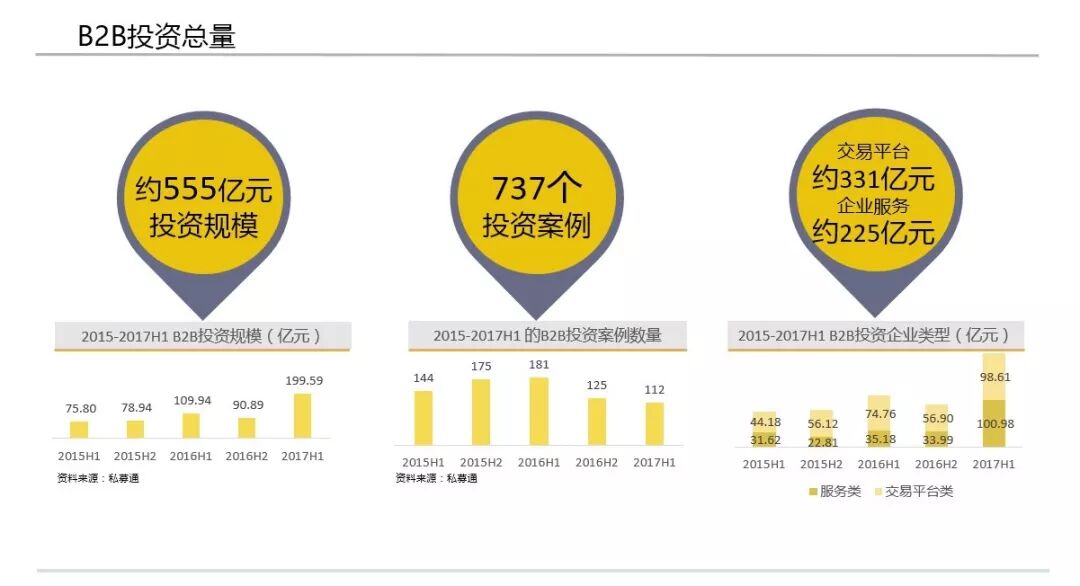
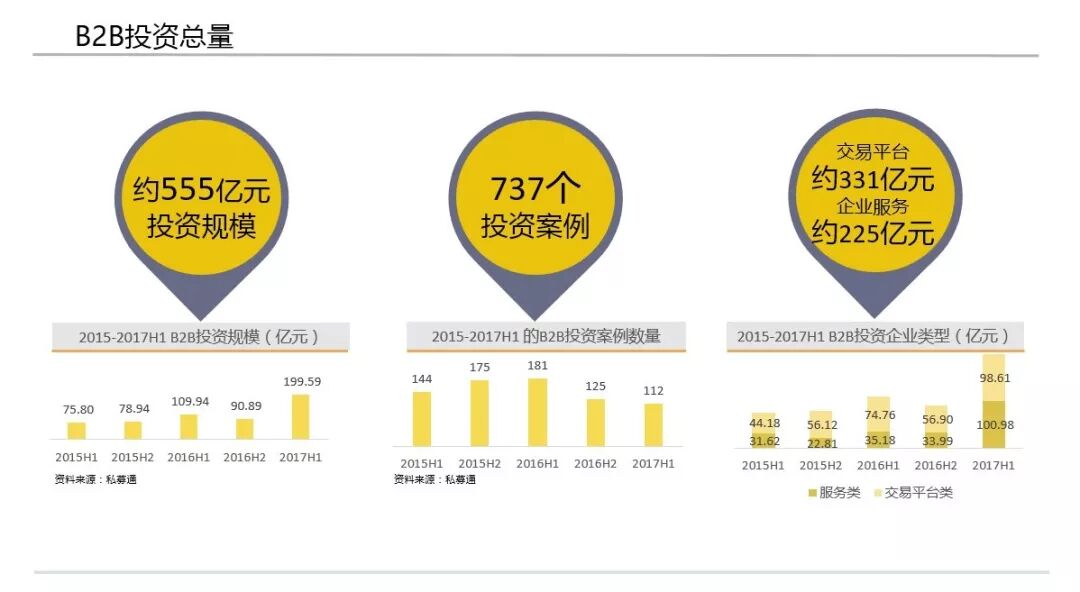
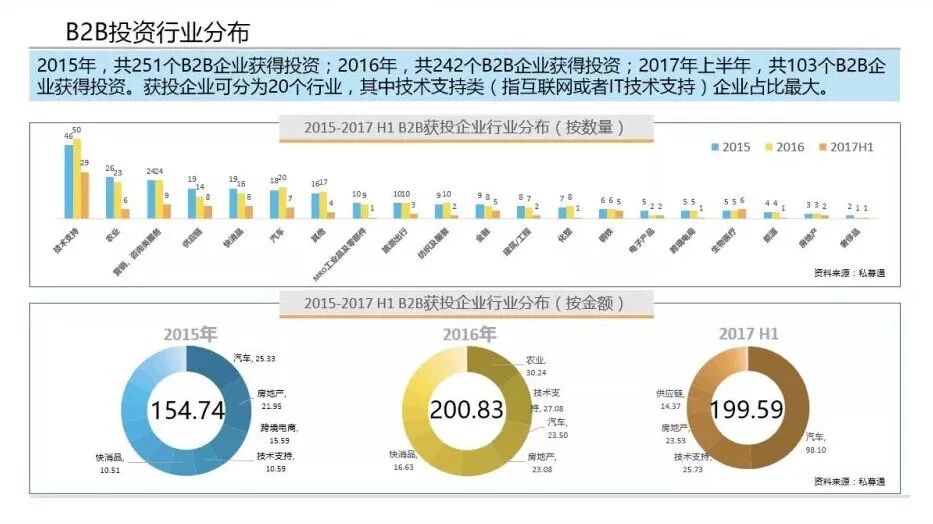
2015 was hailed as the inaugural year of B2B development. According to Private Equity Data statistics, between 2015 and the first half of 2017, B2B projects in China received approximately 55.5 billion yuan in total investment, with investment amounts trending upward. Of this total, roughly 33.1 billion yuan went to B2B trading platform projects, accounting for approximately 59.6% of total investment.
Average B2B Trading Platform Investment Size Rises; Expansion-Stage Projects Most Popular
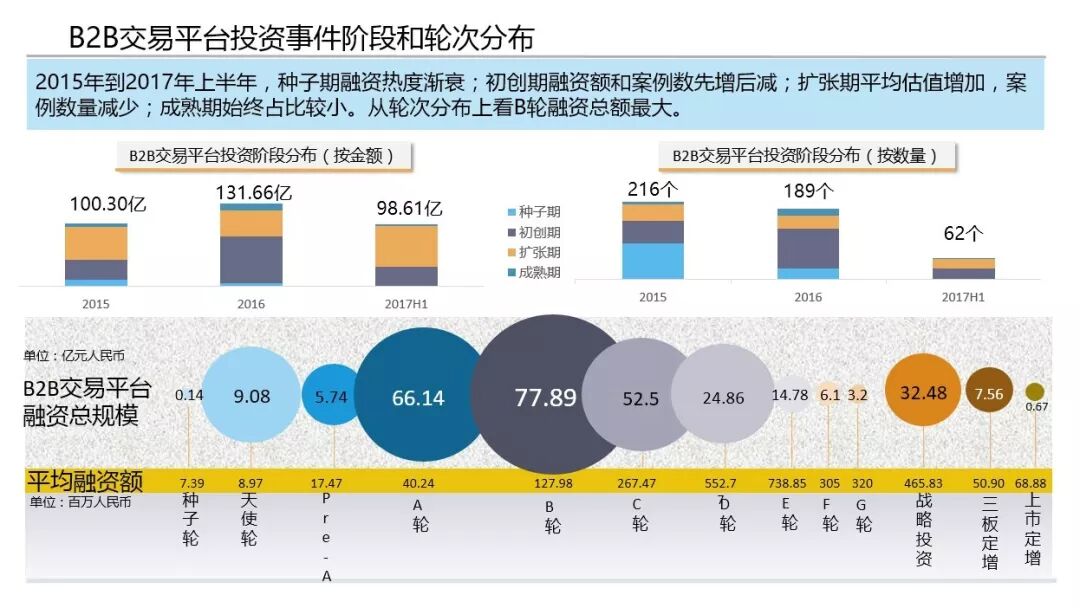
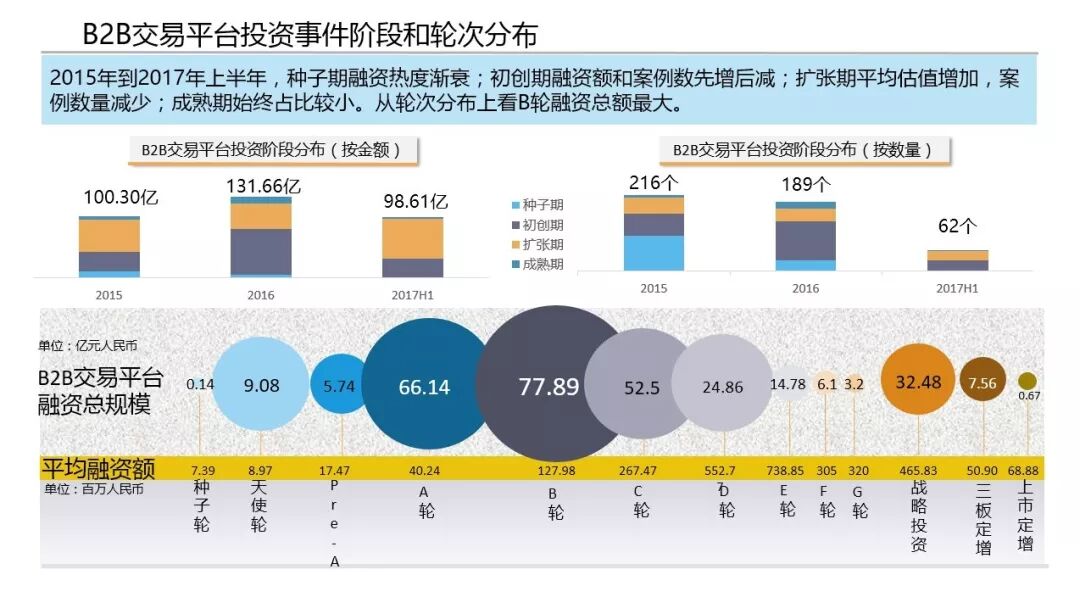
Average investment size in B2B trading platforms grew from 31 million yuan in 2015 to 88 million yuan in the first half of 2017. This increase in average deal size accompanied more rational investment behavior. In the first half of 2017, total investment already reached three-quarters of the full-year 2016 total, yet the number of investment cases was only 36.6% of 2016's figure. Investment in seed-stage and early-stage projects gradually contracted, while expansion-stage projects became most favored by investors. By investment round, Series B saw the highest total investment amount, with an average deal size of approximately 130 million yuan.
Agriculture Led in Number of Funded Projects; Automotive Sector Saw Largest Investment Amounts
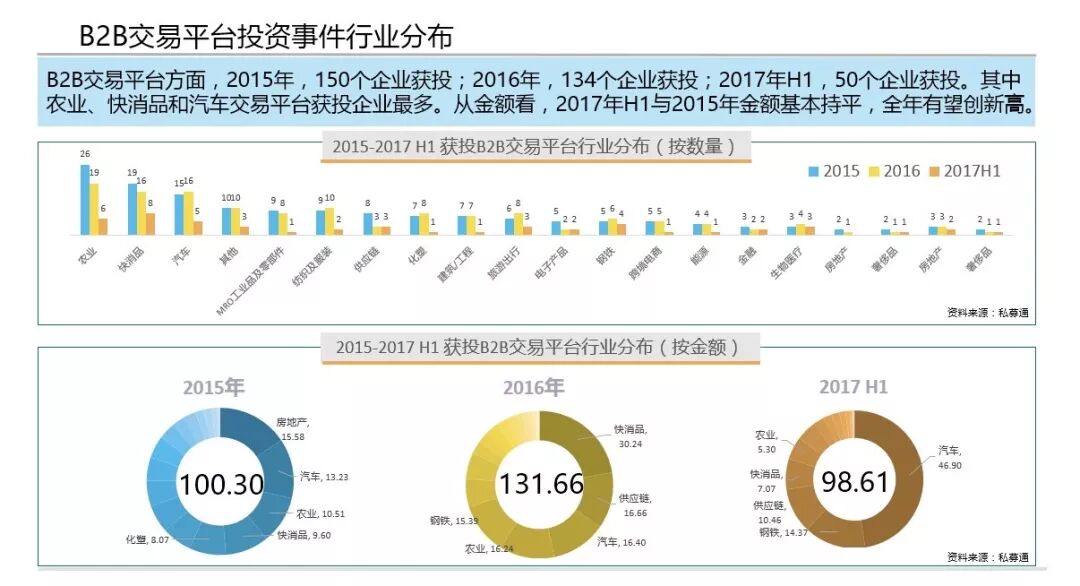
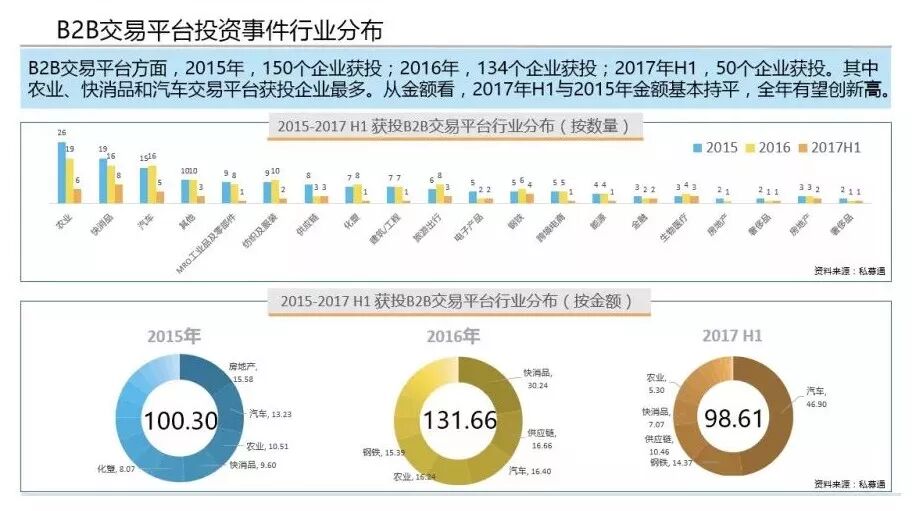
By number of investment cases, agricultural trading platform projects received the most funding over the past two years, though interest showed a marked declining trend. In the first half of 2017, FMCG surpassed agriculture to become the vertical sector with the most trading platform investment cases. By investment amount, automotive trading platforms emerged as a standout in the first half of 2017, attracting nearly 4.7 billion yuan in just six months — 47.6% of total investment across all trading platform categories, with an average deal size of 940 million yuan. Automotive B2B trading platforms receiving investment spanned sub-sectors including new car sales, used car sales, and auto parts trading.
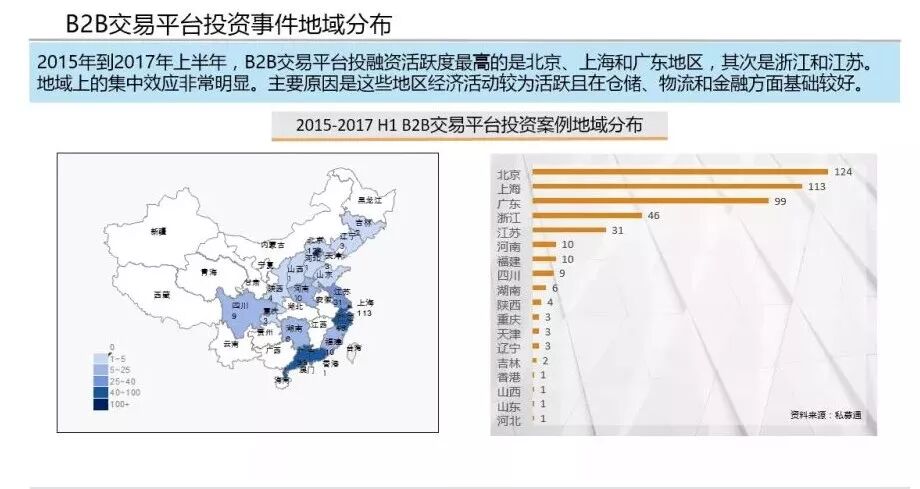
Beijing, Shanghai, and Guangdong Account for 70% of Investment Cases
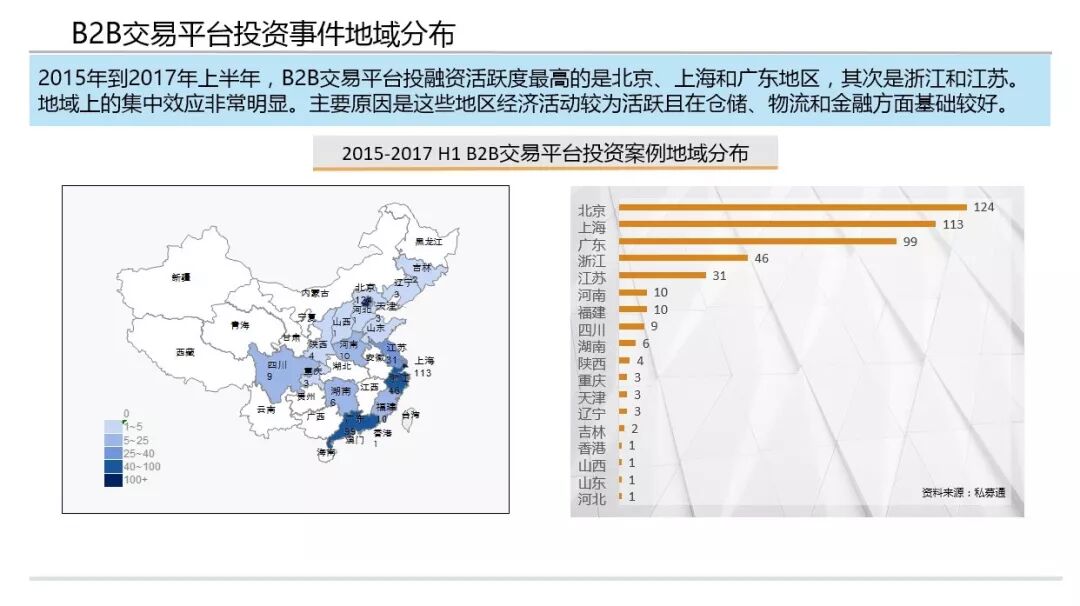
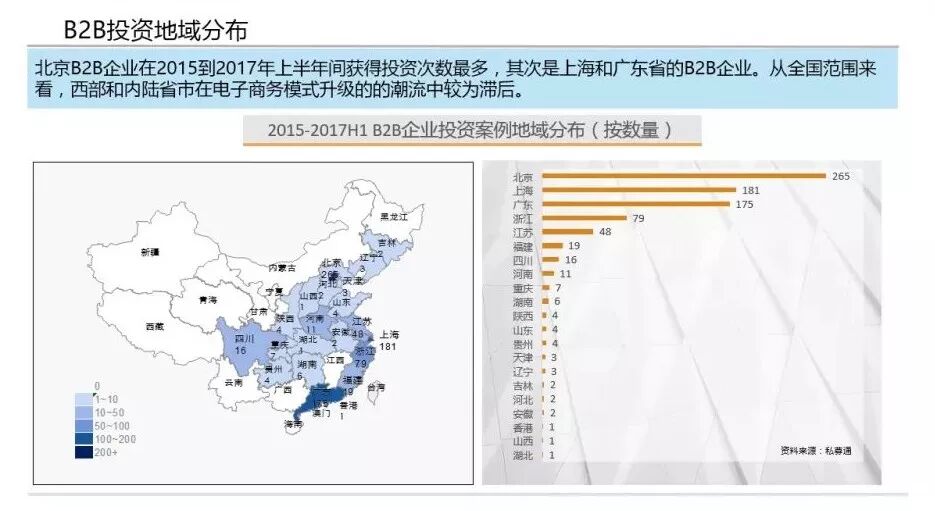
Geographically, trading platform investment cases in Beijing, Shanghai, and Guangdong accounted for 70% of the total. Amid intense competition, industrial chain service capability has become one of the core competitive strengths for trading platform enterprises. Beijing, Shanghai, and Guangdong, with their relatively mature warehousing, logistics, and financial industry infrastructure, have supported the growth of leading trading platform companies such as Zhaogang Group, Yijiupi, Kangzhong, Baibu, and others into well-regarded sector leaders favored by capital markets.
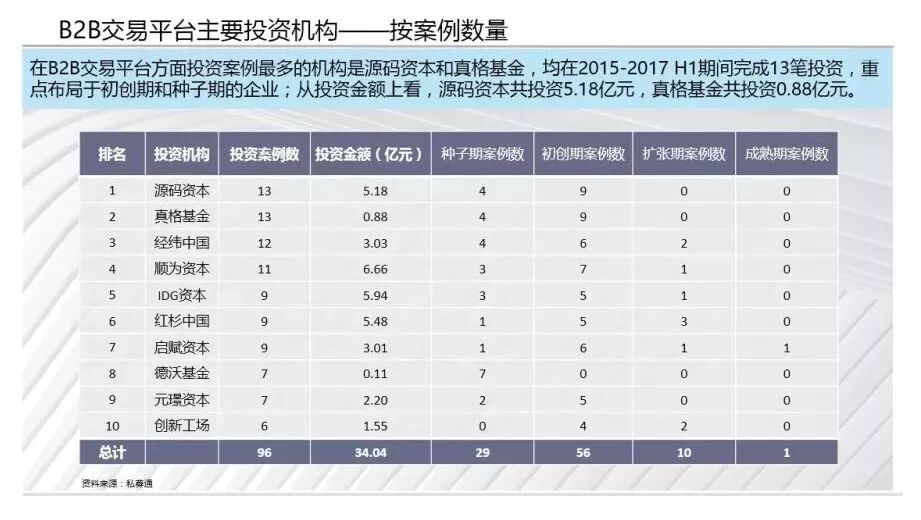
Source Code Capital and ZhenFund Lead in Number of Trading Platform Investments
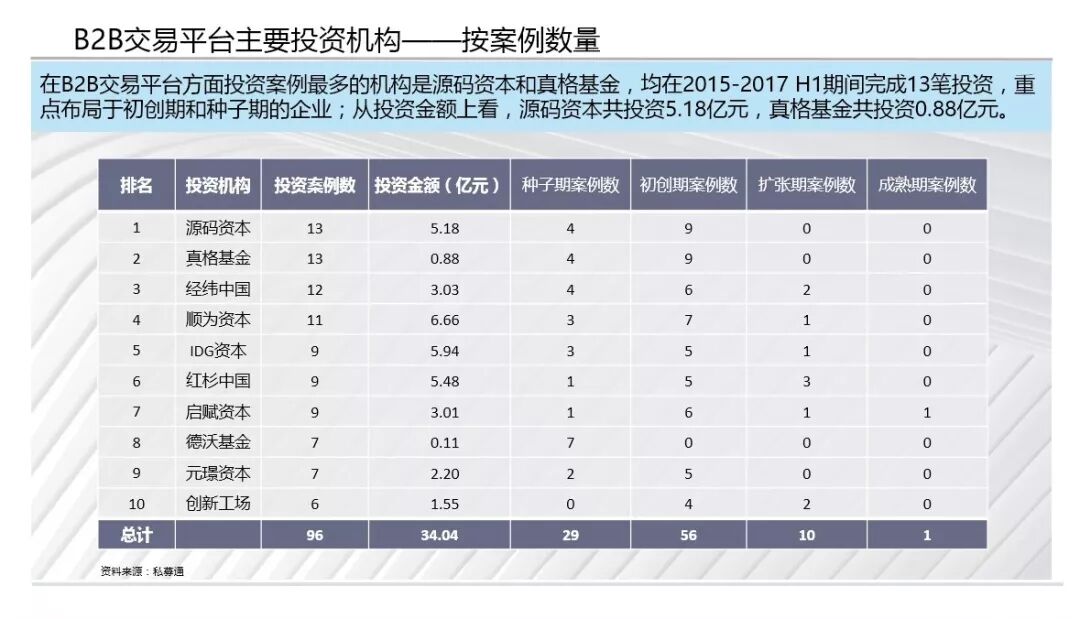
Both Source Code Capital and ZhenFund completed 13 investments between 2015 and the first half of 2017, focusing primarily on seed-stage and early-stage trading platform projects. Source Code Capital established positions across verticals including FMCG, agriculture, textiles, hardware, and pharmaceuticals, investing in trading platforms such as Yijiupi, Zhangshangkuaixiao, Nongfenqi, Baibu, and RuiGu, with total investment amounting to 518 million yuan.
Selected report excerpts:

Source Code Capital
Creating Lasting, Real Value

WeChat ID: sourcecodecapital
More professional content
Follow our official WeChat