Beijing Launches BAAI Action Plan; Source Code Capital Investment Partner Hongjiang Zhang Named First Chairman

Support Scientists in Bravely Venturing into AI's Uncharted Frontier
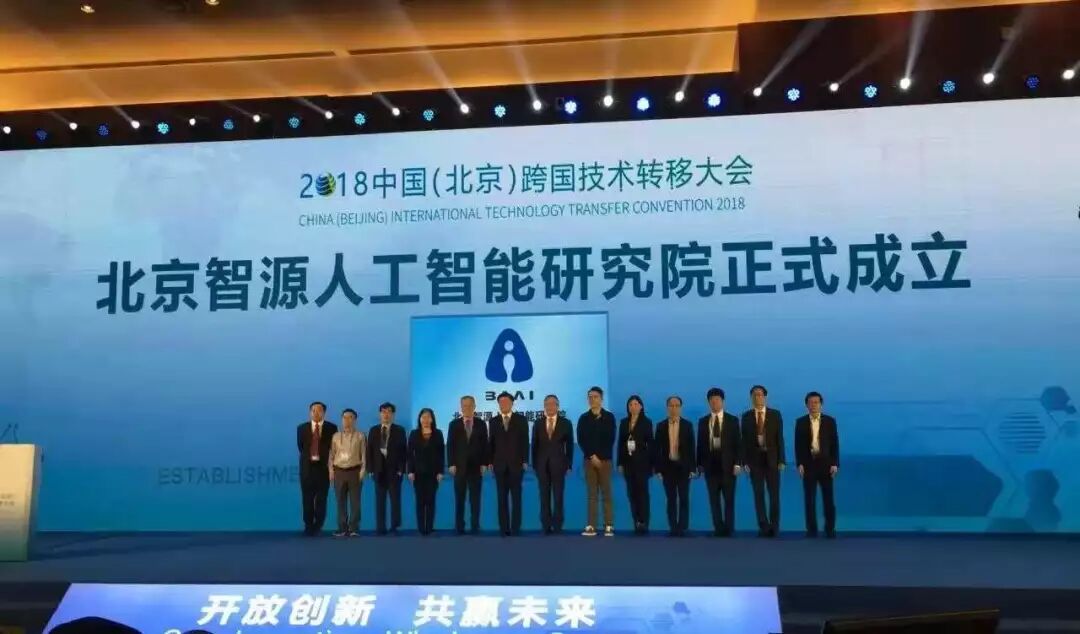
On November 14, at the opening ceremony of the 2018 China (Beijing) International Technology Transfer Conference, the Beijing AI Plan was officially unveiled, and the Beijing Academy of Artificial Intelligence (BAAI) was inaugurated. Wang Zhigang, Party Secretary and Minister of the Ministry of Science and Technology, and Jining Chen, Deputy Party Secretary and Mayor of Beijing, attended the event.
Xu Qiang, Director of the Beijing Municipal Science and Technology Commission, formally released the Beijing AI Plan. Developed under the guidance and support of the Ministry of Science and Technology and the Beijing Municipal Government, and jointly proposed by enterprises, universities, and research institutes, the plan represents Beijing's top-level design for serving AI development and a roadmap that pools collective wisdom.
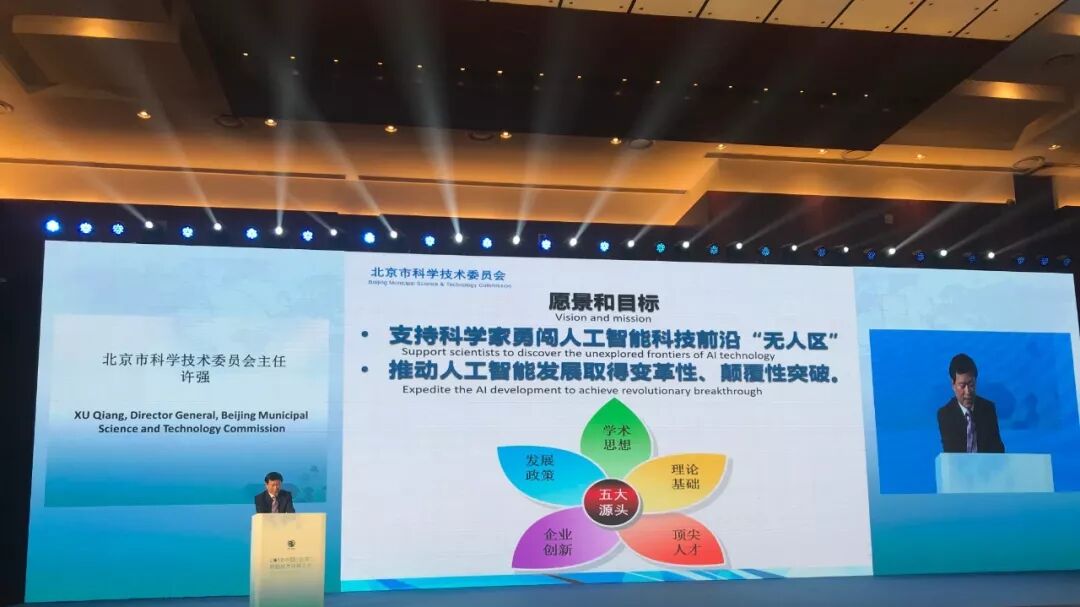
Xu Qiang, Director of the Beijing Municipal Science and Technology Commission
The vision and goals of the Beijing AI Plan align with the national strategic blueprint for next-generation AI development. It aims to support scientists in venturing into the "uncharted territory" of AI's technological frontier, drive transformative and disruptive breakthroughs in AI theory, methods, tools, and systems, and lead the direction of cutting-edge AI research and technological innovation. The ultimate goal is to establish Beijing as the global source of academic ideas, foundational theories, top talent, enterprise innovation, and development policies for AI — powering the AI industry, enabling deep AI application, and transforming human society and the world.
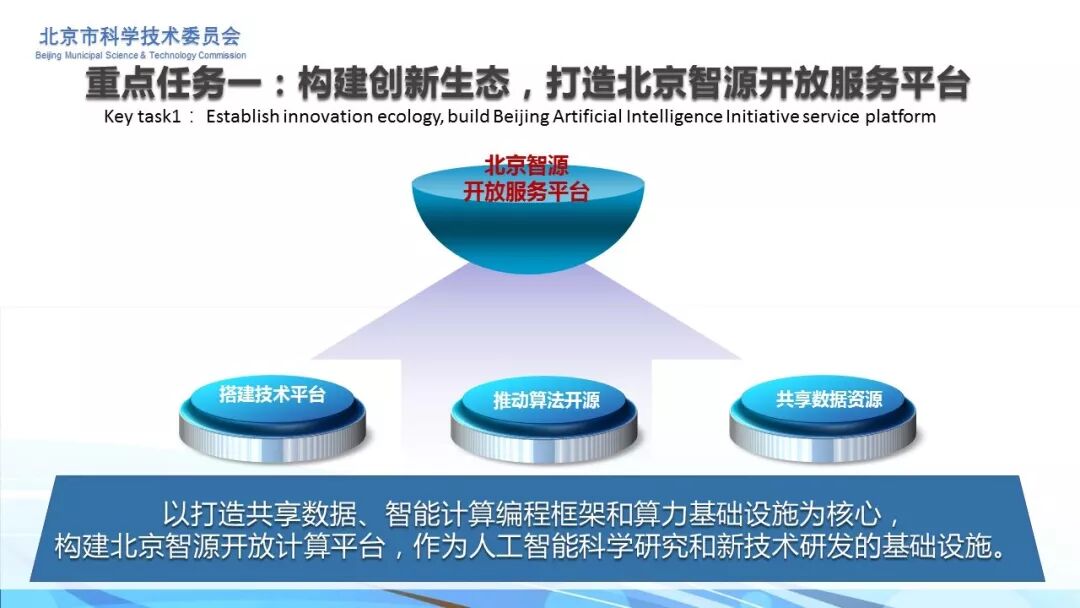
The Beijing AI Plan is an integrated and open system. Focusing on AI open service platforms, joint laboratories, talent cultivation, and industry-academia-research exchanges, it carries out four key missions:
First, building the BAAI Open Service Platform by promoting open-source algorithms and fostering an innovation ecosystem, centered on shared data, intelligent computing programming frameworks, and computing infrastructure.
Second, driving original innovation through high-level joint laboratories. Leveraging national and ministerial-level AI innovation bases or independent laboratories, the plan establishes BAAI Joint Labs to tackle major fundamental theoretical challenges in AI. These labs will assemble research teams and projects for cross-disciplinary, large-scale collaborative innovation in service of national AI development strategy.
Third, attracting and cultivating top-tier talent with a global outlook, gathering basic research resources in AI and building world-class teams with global influence.
Fourth, strengthening industry-academia-research collaboration and hosting global AI summits to position Beijing as the central hub connecting global AI industry and academic resources.
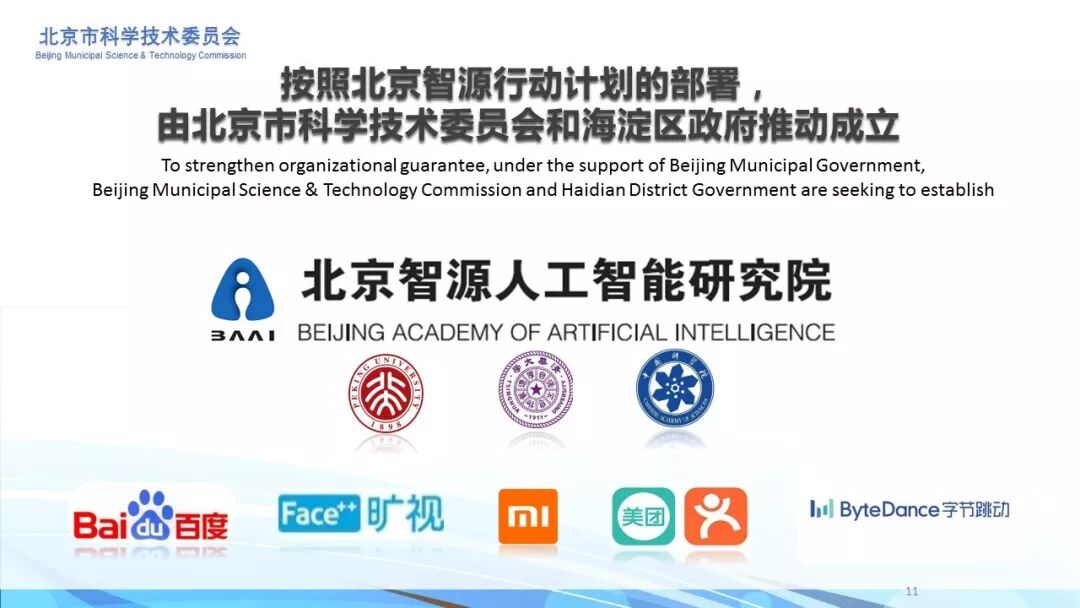
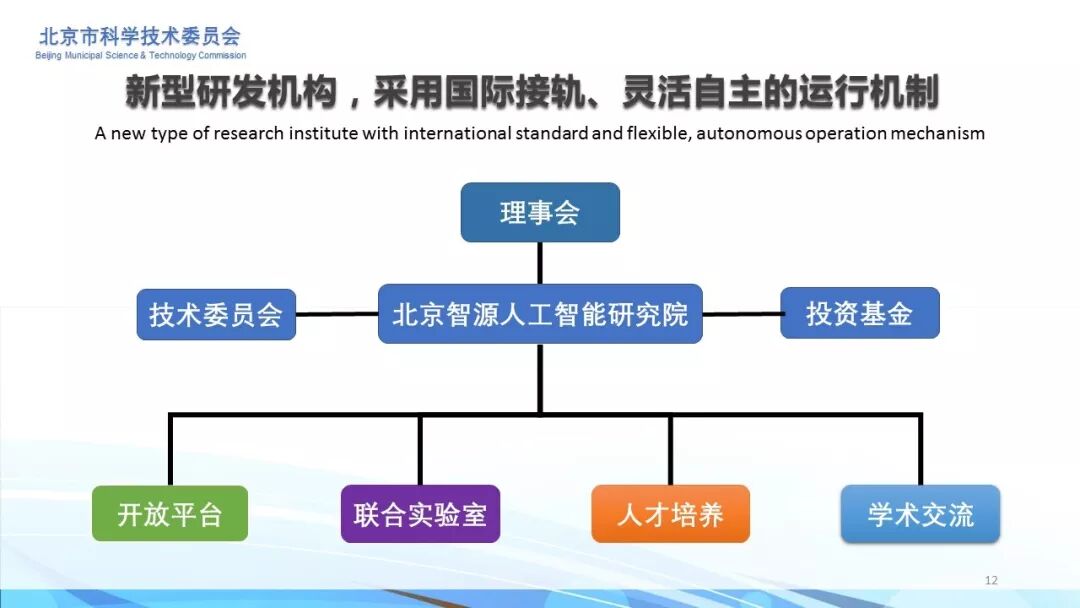
Following the deployment of the Beijing AI Plan, the Beijing Municipal Science and Technology Commission and Haidian District Government facilitated the establishment of BAAI. Drawing on leading AI institutions including Peking University, Tsinghua University, Chinese Academy of Sciences, Baidu, Megvii, Meituan, Xiaomi, and ByteDance, the Academy will build open service platforms, convene AI summits, and coordinate joint labs and talent development. With an internationally aligned, flexible, and autonomous operating mechanism, the Academy is designed to "travel light and move faster."
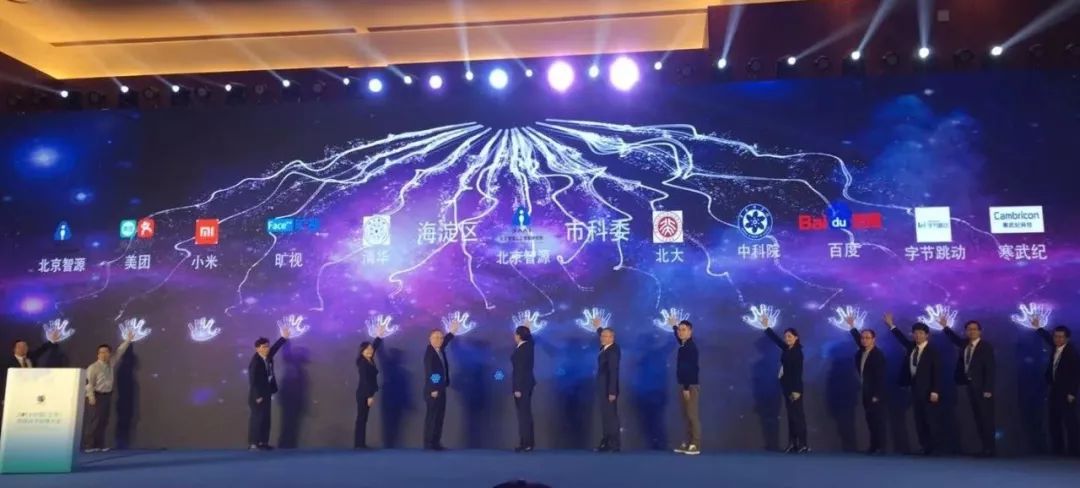
The Academy adopts a presidential responsibility system under the leadership of its board of directors. Hongjiang Zhang, former CTO of Microsoft Asia-Pacific R&D Group and investment partner at Source Code Capital, serves as the inaugural board chair. Tiejun Huang, Chair of Peking University's Computer Science Department, serves as the first president. The Academy will fully leverage the role of enterprises as main actors, while the government focuses on policy-making, environment-building, and service provision.
Representatives from founding institutions and key partners — including Xu Qiang, Director of the Municipal Science and Technology Commission; Dai Binbin, District Mayor of Haidian; Hongjiang Zhang, Board Chair of BAAI and investment partner at Source Code Capital; Tiejun Huang, President of BAAI; Ye Jingyi, Deputy Party Secretary of Peking University; Xue Qikun, Academician of Chinese Academy of Sciences and Vice President of Tsinghua University; Zhou Yefang, Director of the Chinese Academy of Sciences Project Management Center; Qi Yin, President of Megvii; Zhao Cheng, Vice President of Baidu; Baocui Cui, Vice President of Xiaomi; Weiying Ma, Vice President of ByteDance; Liu Jiang, Dean of Meituan Technical College; and Chen Tianshi, General Manager of Cambricon — jointly inaugurated the Academy. Representatives from government agencies, universities, research institutes, enterprises, and investment institutions witnessed the ceremony.
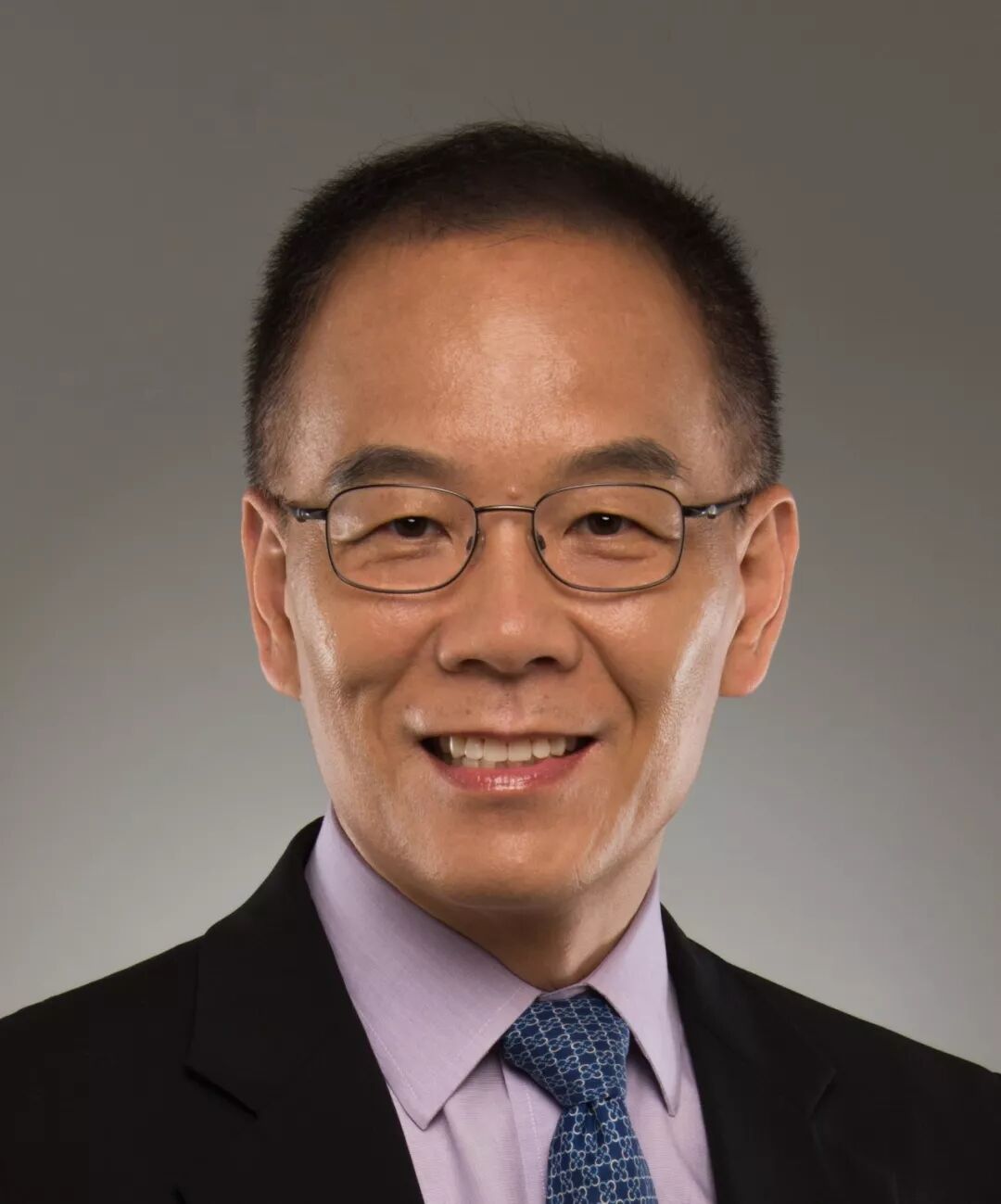
Dr. Hongjiang Zhang, Investment Partner at Source Code Capital
Dr. Hongjiang Zhang is an investment partner at Source Code Capital. He previously served as Executive Director and CEO of Kingsoft Group, and CEO of Kingsoft Cloud. A founding member of the renowned Microsoft Research Asia, he later founded Microsoft Asia Engineering — integrating technology innovation, product development, and research commercialization — and served as CTO of Microsoft Asia-Pacific R&D Group and Microsoft Distinguished Scientist. Dr. Zhang is an internationally renowned expert in multimedia and a pioneer in video retrieval research, ranking among the most influential scientists in computer science. He is a Fellow of both ACM and IEEE, recipient of the 2010 IEEE Technical Achievement Award and the 2012 ACM SIGMM Technical Achievement Award, and was named 2008 Asian American Engineer of the Year.

Source Code Capital
Creating Lasting Real Value

WeChat ID:
sourcecodecapital
For more professional content
Follow our official WeChat