Code Mark | "The Champion Behind Champions": How Booster Robotics Is Lowering the Barrier to Innovation in Embodied Artificial Intelligence

MaHui member Booster Robotics helped Tsinghua University's Huoshen team defend their RoboCup title, with Chinese-made platforms sweeping all three gold medals. Beyond the championship itself, what's more noteworthy: 38 teams chose the same hardware base, and R&D priorities are shifting from "building the body" to "competing on intelligence." What kind of industrial leap is happening behind this tournament? The full article for our readers:
If China's national football team successfully defended a World Cup title, it would probably be the most sensational day in Chinese sports history.
Today, at another World Cup, that very thing happened.
On July 5, Beijing time, RoboCup 2026 concluded in Incheon, South Korea. Tsinghua University's Huoshen team, running on Booster Robotics' Booster T1, successfully defended their Large-size league world championship. A year ago, they had broken China's 28-year title drought in Brazil; a year later, they returned to the top podium, keeping the trophy in China.
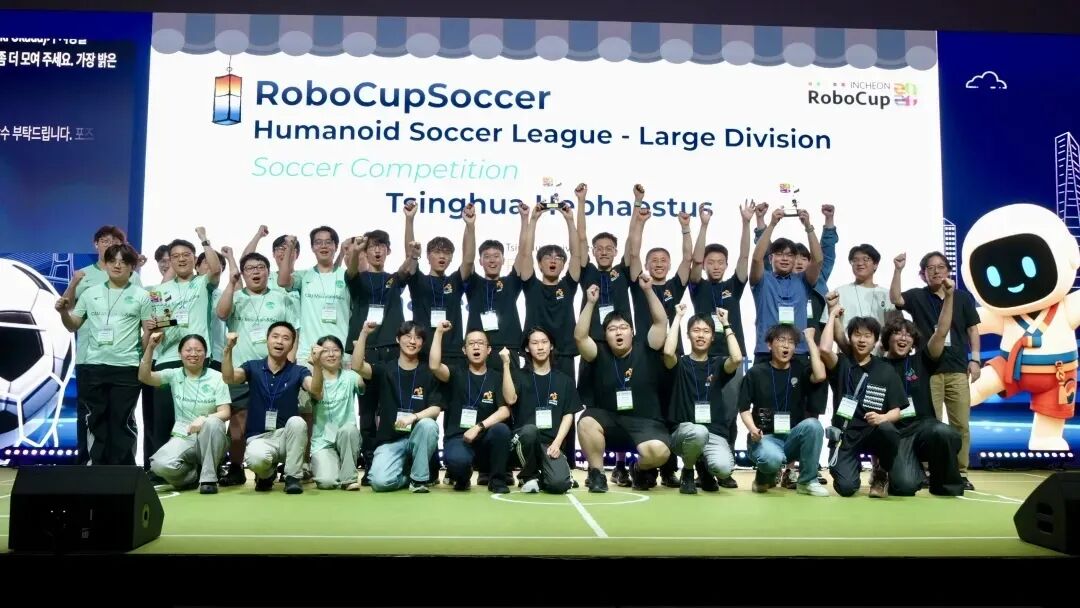
A team's first championship is thrilling enough. But completing a defense means something else: once you become champion, the whole world starts studying you, challenging you — and you still manage to stand on that highest podium.
Huoshen did it.
Yet when the final whistle blew, people quickly realized that this year's RoboCup may have had an even bigger story than this single title.
In the Large-size league, Tsinghua Huoshen defended their title on the Booster T1. In the Middle-size league, B-Human took first place on the Booster K1. In the Small-size league, Wuhan University's Invic team won on the Booster K1 Air. Additionally, top international squads including Germany's HTWK and the United States' UT Austin also chose Booster Robotics hardware as their platform, reaching their respective podiums. This RoboCup, 38 teams in total used Booster Robotics platforms, which swept all gold medals across every humanoid league.
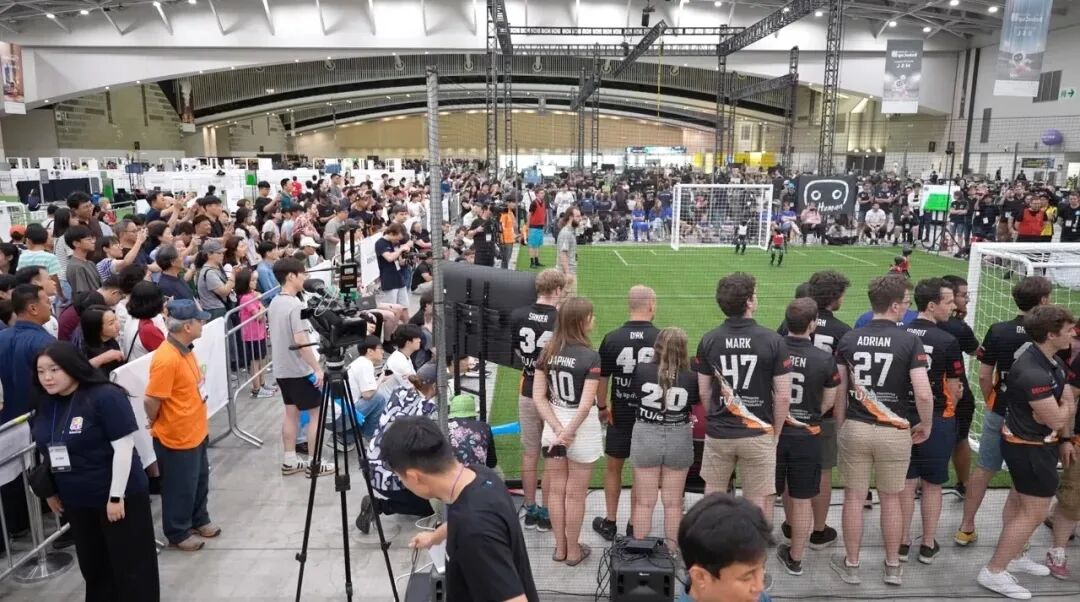
Huoshen's defense was the biggest headline of this RoboCup. But the growing number of teams from different countries, different universities, and different technical approaches all reaching the podium on the same robot gave this year's tournament an added layer of significance.
What changed at this year's RoboCup?
Rewind just a few years, and this scene would have been almost unimaginable.
In the past, nearly every RoboCup team had to build their robot from scratch. From mechanical design and hardware development to motion control, teams spent enormous amounts of time solving the robot itself — leaving relatively little bandwidth for the actual intelligence work: perception, decision-making, multi-robot coordination.
This year, a clearer and clearer signal came from the competition floor: more and more teams are shifting their R&D focus to intelligence itself, entrusting the foundational robot capabilities to more mature platforms.
That's why an increasing number of teams chose Booster this year.
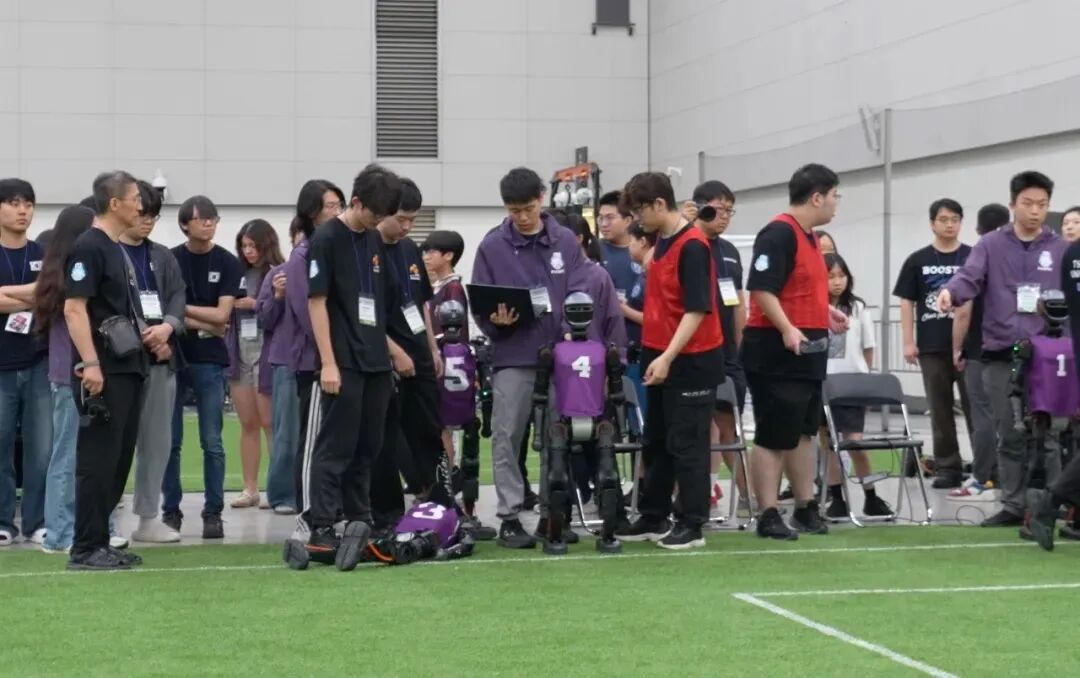
Over the past year, competing teams have continued pushing boundaries in perception, decision-making, and multi-robot coordination. At the same time, Booster Robotics has kept iterating the core locomotion capabilities of the Booster platform, steadily improving stability and reliability during high-speed running, emergency stops, direction changes, fall recovery, and continuous motion.
What truly steps onto the field isn't just an algorithm, and isn't just a robot — it's an integrated system capable of consistently completing matches in real-world conditions.
The competition in robot soccer is gradually shifting from "who can build a robot" to "who can make a robot smarter." As robot bodies mature, teams can devote more time to the innovations that actually matter. That's one of the most visible changes at this RoboCup.
And this shift isn't limited to top-tier universities and labs — it's beginning to open up to a broader community of developers.
This year, the humanoid league featured a team from Pui Ching Middle School in Macao, China — one of the youngest squads in the entire competition. Using the Booster Studio simulation development tool, developers can now build, train, and validate algorithms in a digital environment before deploying them on physical robots, without needing to construct an entire platform from zero.
For growing numbers of university teams, labs, and even high school groups, the barrier to participating in Embodied Artificial Intelligence innovation keeps falling.
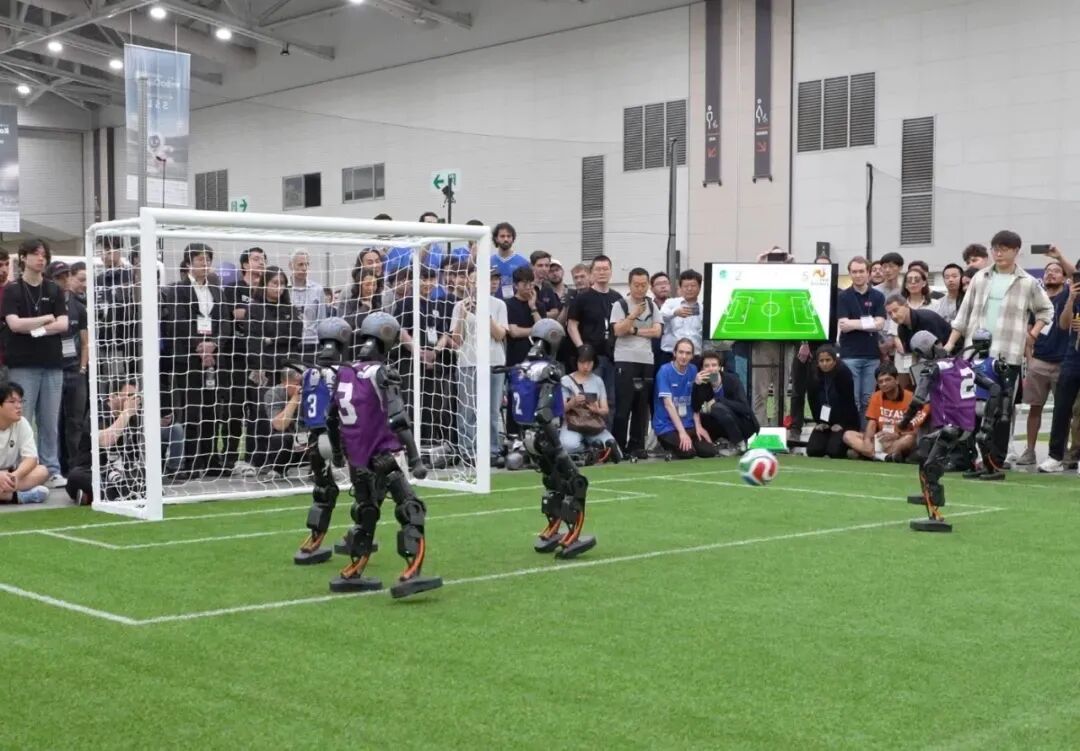
Beyond football, what is really being tested?
RoboCup has never been just about robots playing football.
It has long been regarded as the most authentic proving ground for Embodied Artificial Intelligence, because there are no "standard answers" from simulated environments here — robots must confront the real physical world.
They must actually see the ball, actually understand teammates, actually complete passes and combinations. They must also handle collisions, falls, interference, and countless unpredictable variations during high-speed play. Every startup, turn, stop, and shot; every recovery after a fall — all test the integrated capabilities of motion control, environmental perception, and autonomous decision-making.
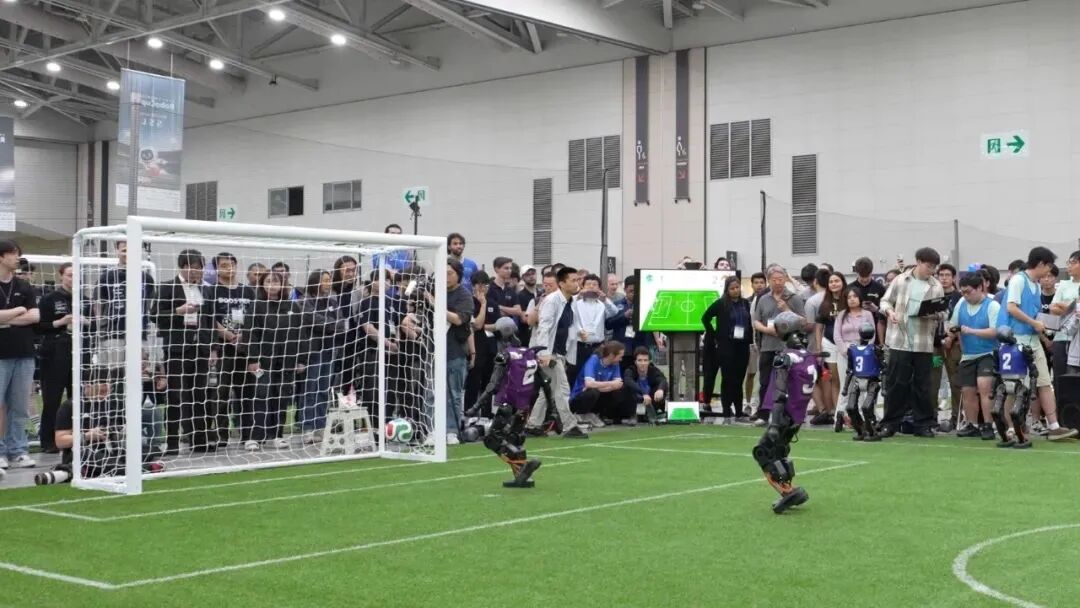
Football is merely the format. What is truly being tested is a robot's comprehensive ability to face the real world: perception, motion, decision-making, coordination, and stability and reliability in complex environments.
And for robots, legged locomotion control is the foundation that enables all these capabilities. Only when a robot can stably run, turn, resist, and recover its balance does higher-level intelligence have room to operate. This is precisely why football has long been considered the optimal training ground for Embodied Artificial Intelligence.
Today, robots learn to run here, learn to coordinate, learn to face uncertainty in real environments. Tomorrow, these capabilities will extend to more of the real world.
The Champion behind the Champions
If last year's RoboCup introduced the world to a Chinese champion team, this year it revealed a new model of innovation.
More and more teams are focusing on what they do best: some pushing perception capabilities, some optimizing decision systems, some exploring more complex multi-robot coordination. Meanwhile, Booster Robotics keeps refining the robot body, legged locomotion control, and Booster Studio development tools — so more teams don't have to repeatedly solve foundational problems, and can instead invest more time in innovation that truly creates value.
Real progress in robotics has never come from making everyone build their own robot from scratch. It comes from enabling more people to stand on the same foundation and continuously push new boundaries.
RoboCup is a robot soccer competition. It is also the most rigorous training ground for Embodied Artificial Intelligence before it enters the real world.
And what Booster Robotics hopes to do is to keep improving robots and development tools, so that more developers, more universities, more research teams, and more young innovators can all participate — collectively driving Embodied Artificial Intelligence forward.
The Champion behind the Champions.