Code Engraving | Enhe Launches BPL Protocol Language, Defining the "Industrial-Grade Compiler" for Bio-Manufacturing

For the first time, it established a formalized language system for biological experimental protocols, creating a standardized interface for Physical AI to enter the physical world.


Recently, Enhe Technology, a portfolio company of Source Code Capital's "Ma Hui" network, published Biology Protocol Language (BPL) and its generation pipeline BPL-COGEN on bioRxiv — introducing, for the first time, a formal language system for biological experimental protocols, creating a standard interface for Physical AI to enter the physical world.
BPL is a compilable, verifiable formal language purpose-built for biological experimental protocols. BPL-COGEN automatically translates natural-language protocols into BPL programs, using a 30-billion-parameter fine-tuned large language model coupled with a deterministic compiler in a "generate-verify-repair" closed loop.
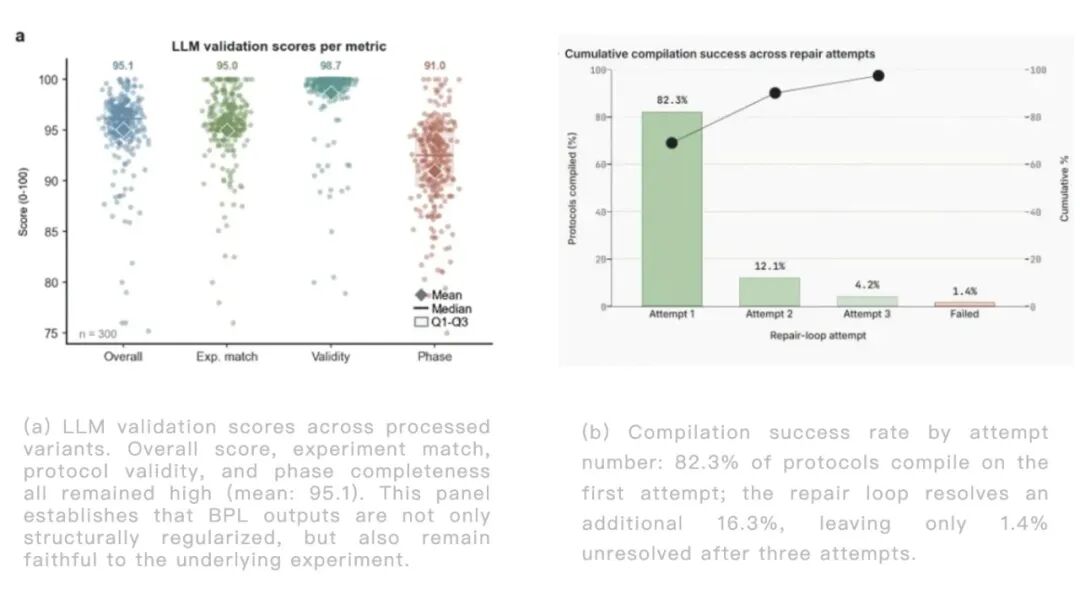
In benchmark tests based on 300 Nature Protocols papers, BPL-COGEN achieved 95.1% first-pass consistency, pushing accuracy to 98.6% through two rounds of compile-simulation feedback. The relevant code has been fully open-sourced on GitLab under the MIT License.
AI Can "Think," But Still Can't "Act"
Today, AI can already generate hypotheses and design experiments in the digital realm. In materials science, self-driving labs have emerged. But in biology, no matter how powerful the upstream AI, its output must ultimately be translated into physical operations — and this process still relies on natural-language text.
This is a gap that the semiconductor and software industries crossed decades ago. Semiconductor design made the leap from natural language to hardware description languages through Verilog and VHDL; software engineering established verifiable reliability through typed languages. Biology has consistently lacked a corresponding foundational language with compiler-verification capabilities — and this is precisely the rate-limiting step between AI-driven experimental design and reproducible physical execution.
The cost is clear. A 2016 Nature survey of 1,576 researchers found that over 70% could not reproduce others' experiments, and more than half could not reproduce their own (Baker, Nature, 2016). The Enhe team further distills the problem into three dimensions:
Protocol precision. Typical instructions often conceal multiple unspecified branch points around concentration, timing, volume, and more. Stack dozens of such instructions, and experimental reproducibility becomes entirely dependent on an operator's experience to fill in the gaps.
Protocol verification. Natural language lacks any mechanism to simulate physical consistency before execution; internal logical errors can only be caught through human judgment or, more often, "experiment failed."
Cross-platform transferability. A synthetic biology study spanning four labs found that nominally identical protocols produced more than twofold differences in transformation efficiency across sites (Beal et al., 2016, 2020). The root cause wasn't biological — it was implicit differences in execution context.
Scientific progress depends on methods being reproducible and faithfully transmitted. If protocols cannot be expressed unambiguously and reused across environments, AI-generated experimental designs cannot reliably reach the bench.
BPL Design: AI Handles Generation, BPL-COGEN Handles Simulation and Verification
BPL replaces the ambiguity of natural language with formal specifications. Under this type system, all implicit parameters must be explicitly declared; any operation violating physical laws (e.g., "take the supernatant after adding solid powder to an empty container") is intercepted directly at the compilation stage, preventing errors from ever reaching the physical lab bench.
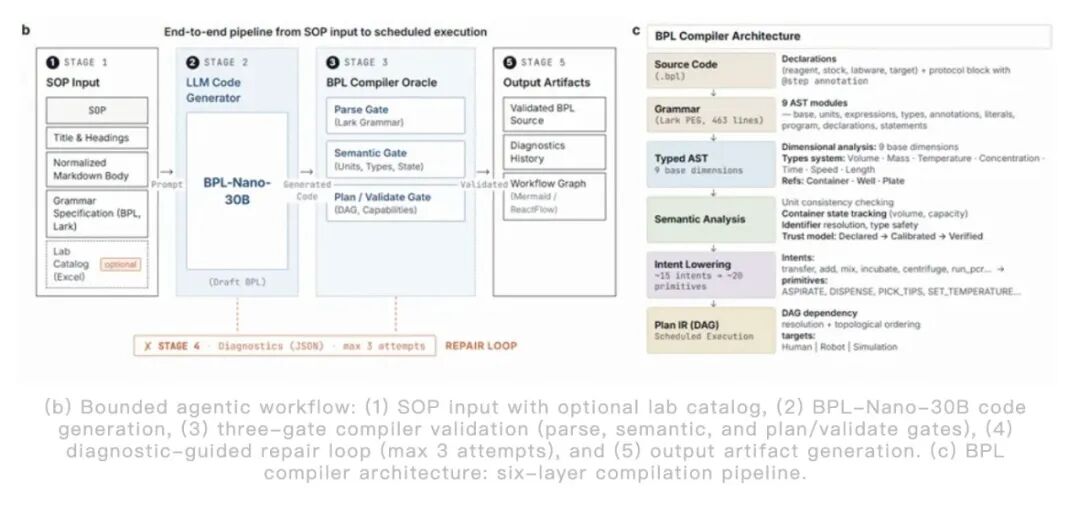
To complement this language system, the team built the BPL-COGEN automated compiler. It couples a 30-billion-parameter fine-tuned large language model with a deterministic compiler in a "generate-verify-repair" closed loop: natural-language SOPs are normalized, converted to BPL, and iteratively corrected based on compiler diagnostics until all physical, dimensional, and state constraints are satisfied. The LLM handles understanding the scientist's intent; the compiler handles verifying physical-world constraints.
Experimental Validation: Multi-Dimensional Confirmation of Three Core Problems Solved
The team systematically validated BPL-COGEN across three layers.
Large-scale text evaluation. On 300 Nature Protocols papers, BPL-COGEN achieved 95.1% first-pass consistency. After two rounds of compile-simulation feedback, iterative accuracy reached 98.6%.
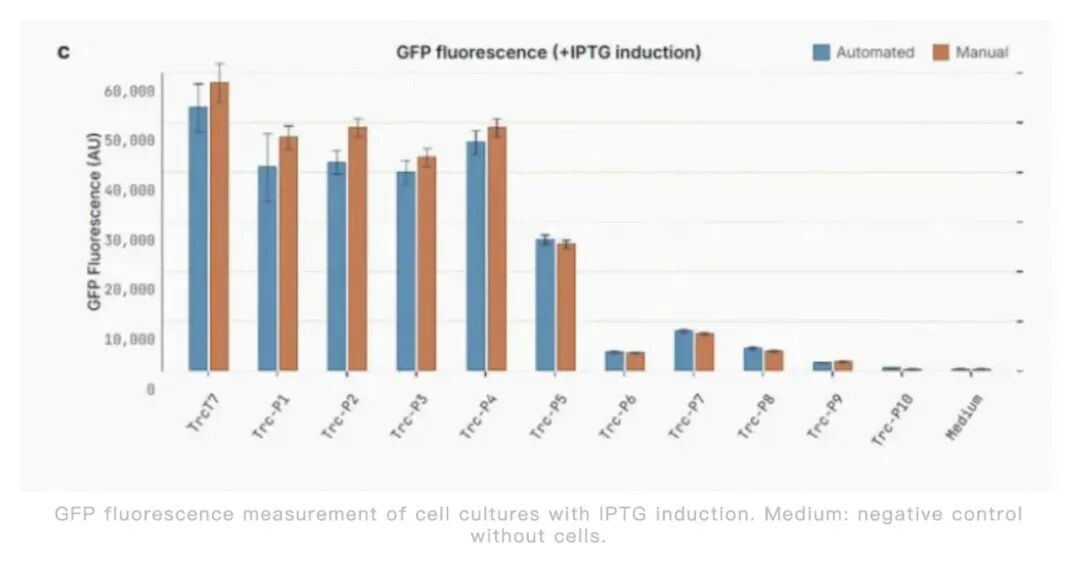
Molecular biology validation. The same BPL source code was compiled to both manual-operation and automated-equipment execution contexts, producing reproducible results in both. This demonstrates protocol transferability across execution modalities.
Analytical chemistry transfer validation. After migration between different equipment contexts, carotenoid characterization yielded comparable analytical results, validating device-independent protocol transferability.
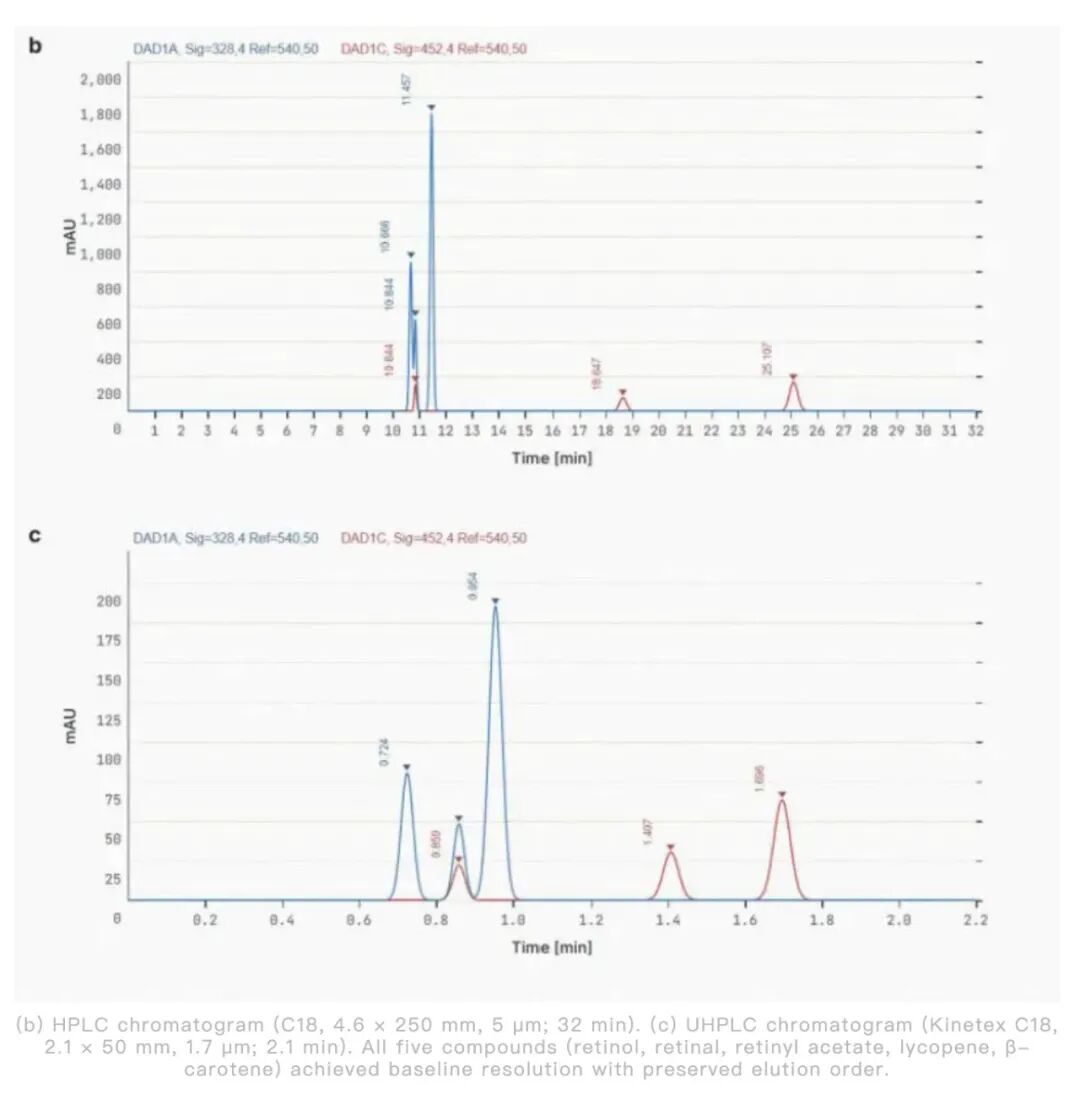
These three validations collectively confirm that BPL and BPL-COGEN simultaneously solve the three core problems that have long plagued the field: protocol precision, verifiability, and cross-platform transferability.
Positioning Within the SAION Physical AI Platform
BPL serves as the standard interface for the execution layer in Enhe's SAION Physical AI platform, which follows a "cognition-control-execution" three-tier architecture. Downstream, it dispatches instructions to automated equipment and human operators at biofoundries; upstream, it feeds back structured experimental execution data to drive continuous evolution of the cognition and control layers.
Combined with the SAION AI platform's previously demonstrated 100% accuracy from literature reading through plasmid design to wet-lab assembly, and 90% success rate in plasmid construction, BPL's introduction gives the execution layer of the physical AI closed loop its first verifiable, transferable standard protocol foundation.
Significance in the Global AI + Bio-Manufacturing Landscape
The core value of AI technology in bio-manufacturing lies in whether it can genuinely drive the realization of economic returns — tens of millions or even hundreds of millions of yuan. AI only earns its place in industry when it truly drives economic value across supply chains, products, and orders. BPL represents Enhe's concrete step in translating "AI delivering industrial value" down to the execution layer.
According to relevant institutional projections, the global bio-manufacturing market will reach approximately $6 trillion by 2035. Looking across industrial history, the critical inflection point for every manufacturing sector's transition from "workshop" to "industrialization" has been the establishment of formal protocol standards. As the first engineering-grade solution with dual capabilities in "compile-time physical verification + cross-platform transferability," BPL provides critical infrastructure for advancing standardization in this trillion-dollar赛道.
As the research team notes in their paper: BPL-COGEN provides the essential foundation for embodied physical AI in biology. Only when AI can "clearly state what it intends to do" in a verifiable language does autonomous lab agent become engineeringly possible. The engineering boundaries of bio-manufacturing are being redefined.
Original paper: Song, R., Fu, Y., Zhao, Z., Yu, J., Yuan, Q., & Chen, C. T. (2026). Towards autonomous biology: Compiler-Verified Protocols as a Foundation for Real World AI Execution. bioRxiv, 2026-05.