Code Brain | When Is a CEO's "Charisma" an Asset, and When Is It a Liability?

If charm can tilt the odds even slightly toward success, the gamble might be worth it.


Since the 1980s, legendary CEOs became full-blown celebrities. But over time, research has shown that charismatic CEOs often have leadership flaws. Charisma, however, proves especially useful in two business contexts fraught with unknowns — startups and corporate turnarounds. In these settings, when everyone — investors, employees, customers, suppliers — is grappling with massive uncertainty, a leader's charisma can give people the confidence they need to take risks.
The author, Nitin Nohria, graduated from the Indian Institute of Technology with a degree in chemical engineering, then earned his PhD in management from MIT. He joined Harvard Business School in 1988 and served as its dean from 2010 to 2020.
As a leadership professor at Harvard Business School, I regularly teach a case study on how Jack Welch led General Electric in the 1980s and 1990s. He attended our discussions more than a dozen times.
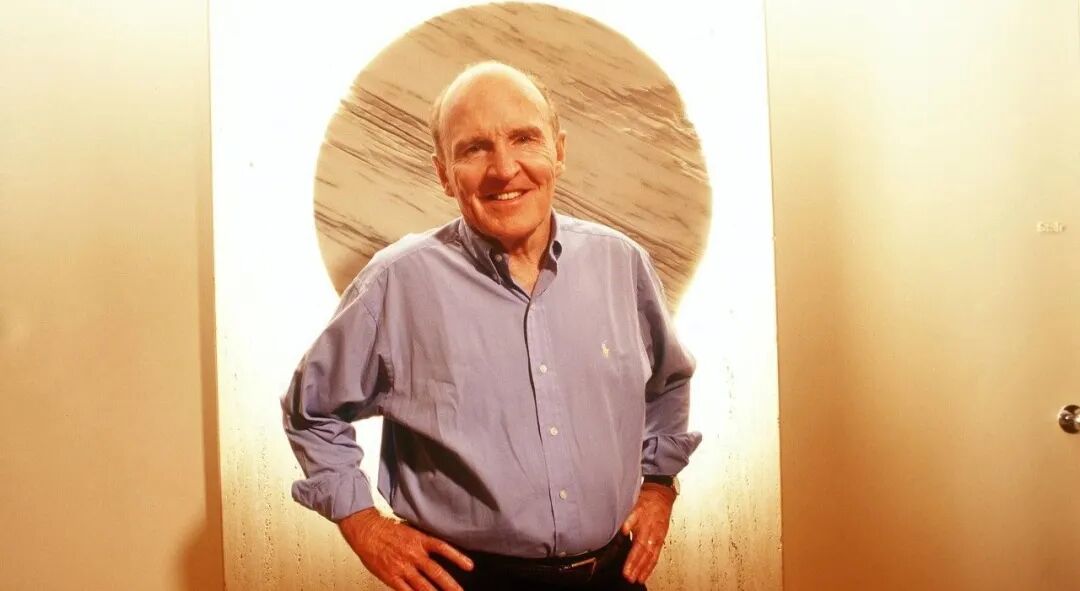
Jack Welch
In the first half of each session, students discussed the case while Welch listened intently. Then I would invite Welch to share his thoughts and reactions. When he stood up to speak, I made a point of watching the students. Most, I found, were spellbound. Welch radiated an energy and intensity that defied easy description. His verbal sparring with students was blunt, argumentative, and fierce. But the day after his visit, when we polled students about their impressions, the word that came up most often was "charisma."
Welch died in 2020, and though he was lionized for much of his life, his legacy is complicated. Under his leadership, General Electric, the old-line industrial giant, saw its market value increase 30-fold, making it one of the world's most valuable companies. But he was also criticized for being brutally tough on people, overly aggressive, and recklessly expansionist into financial services, media, and entertainment — businesses far removed from GE's core competencies, leaving his successors with a formidable mess.
What is beyond dispute is that he was a charismatic CEO in an era when charisma was highly prized.
The renowned sociologist Max Weber was the first to discuss charisma's role in leadership, defining it in the 1910s as "a certain quality of an individual personality by virtue of which he is set apart from ordinary men and treated as endowed with supernatural, superhuman, or at least specifically exceptional powers or qualities." From this perspective, charismatic leaders can be a powerful force for social change.
But charisma cuts both ways. In a 2002 Harvard Business Review article titled "The Curse of the Superstar CEO," Rakesh Khurana described his research on how boards choose chief executives, highlighting some drawbacks of the "charismatic leader" style. Khurana wrote that before 1980, CEOs were generally anonymous executives promoted from within a company, no more recognizable than the local dentist. But in the 1980s, the press began covering a group of charismatic, headline-grabbing, larger-than-life corporate leaders the way the sports pages worshipped athletes. Welch became a genuine celebrity alongside Chrysler's Lee Iacocca, The Walt Disney Company's Michael Eisner, SAS's Jan Carlzon, and Sony's Akio Morita.
Over time, boards became fixated on selecting telegenic, inspirational figures to run their companies — and dramatically increased these leaders' pay to keep them in their seats. Khurana argued that the results often fell short of expectations — in part because business success depends on many variables beyond a CEO's personality. He expanded on this in his 2004 book Searching for a Corporate Savior, and I was struck by his conclusions about the costs and benefits of charismatic CEOs.
Though I admire how some leaders use personal charisma to motivate employees and influence stakeholders, I also tend to view business leaders who seem to crave public attention with skepticism. My own experience, along with academic research, suggests that organizations perform better when led by humble executives who subordinate their egos and focus on the team — leaders who rely more on competence than charisma.
But as I observe how a new generation of charismatic entrepreneurs and executives leads companies today, my view on the value of charismatic leadership has shifted. Specifically, I've come to recognize two situations where a leader's reliance on the force of personality may be beneficial.
The first is startups. When launching a business, every participant — investors, employees, customers, suppliers — faces massive uncertainty. Will the product work? Will it catch on? Can the company scale? Why won't competitors outdo it? Behind every slide deck and rosy forecast, the one thing we know for certain is that startups are fluid, risky, shapeshifting endeavors. In organizations facing so many unknowns, people naturally gravitate toward leaders with a certain force of personality. In startups, a leader's charisma gives people the confidence to embrace risks that would otherwise make rational people anxious.
That charisma is a leadership quality capable of inspiring belief, with roots partly in theology, is no coincidence. The Christian apostle Paul wrote about it in his New Testament epistles. Similarly, nations in times of great uncertainty seem to benefit from a certain kind of charismatic political leadership — think Churchill. Young companies appear to follow the same logic.
Consider Steve Jobs. He was egotistical and routinely flouted rules (he drove without license plates because he didn't like how they looked). At the same time, Jobs possessed an unmatched ability to create what some called a "reality distortion field," as one early employee described it: "A confounding melange of a charismatic rhetorical style, an indomitable will, and an eagerness to bend any fact to fit the purpose at hand. If one line of argument failed to persuade, he would deftly switch to another. Sometimes, he would throw you off balance by suddenly adopting your position as his own, without acknowledging that he had ever thought differently."
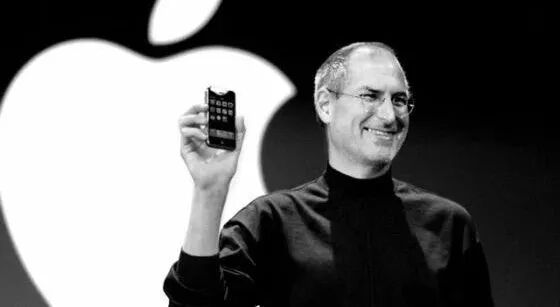
Steve Jobs
Today, many observers recall Jobs's distinctive style — the arrogance, the provocative tendencies, the ability to inspire fanatical devotion — as a virtue rather than a vice.
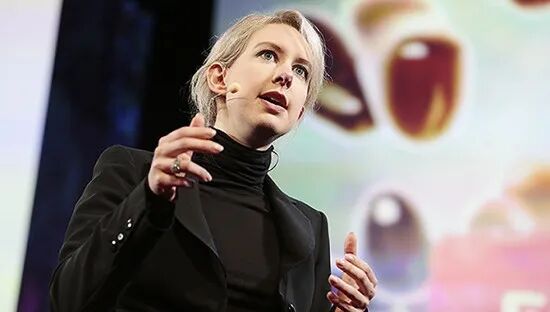
Elizabeth Holmes
Despite his arrogance and showmanship, he succeeded in creating world-changing products. In the debate over whether charisma's benefits outweigh its costs, this is the most compelling evidence in its favor.
Though society has witnessed the damage charismatic entrepreneurs like Elizabeth Holmes, Adam Neumann, and Sam Bankman-Fried can cause, we have also benefited from the creative visions of charismatic founders like Jeff Bezos, Mark Zuckerberg, Sara Blakely, Richard Branson, Arianna Huffington, and Jack Ma. (To be sure, some valid criticisms apply to this group as well.)
The second scenario where charisma proves especially useful is in turning around established companies.
In the late 1970s and early 1980s, Lee Iacocca persuaded the federal government to loan Chrysler money to avoid bankruptcy, then launched an advertising campaign convincing consumers to buy its new line of K-cars and minivans. Iacocca's personal leadership charisma was instrumental throughout this process.
In the early 1990s, Lou Gerstner's personal charisma helped inject urgency and a mandate for change into sluggish IBM. Jobs relied on personal charisma when he founded Apple in the 1970s, and again when he returned in the late 1990s to revive it. In this century, Indra Nooyi and Ginni Rometty brought fresh energy to PepsiCo and IBM, respectively, as leaders.
When Max Weber introduced charisma into discussions of leadership, his view was that the rise of large, modern, bureaucratic organizations would place greater emphasis on competence and rationality rather than charisma. Since then, the premium placed on charismatic leadership has ebbed and flowed. Today, when I work with newly appointed leaders in Harvard Business School's New CEO Workshop, it's striking how many want to avoid the spotlight and minimize their public visibility. Two decades after Khurana offered his corrective analysis, many established companies have abandoned the search for celebrity CEOs.
Quick test: Can you name the CEOs of AT&T, Xerox, ExxonMobil, or UnitedHealth Group?
Rather than rushing to judge whether charisma is good or bad for a CEO, or debating whether Welch's personality-driven leadership style should be emulated or avoided, it may be more useful to carefully consider when charisma is more or less valuable.
For companies just starting out or in desperate need of a reboot, a larger-than-life charismatic leader is likely a choice worth serious consideration.
Finally, charismatic leaders tend to be high-risk, high-reward bets. In any circumstance, the risk that a charismatic leader may cause harm — through malfeasance, misconduct, or arrogance — is real and must be acknowledged. At the same time, the odds of achieving a turnaround or of a startup idea becoming an industry-defining company are extremely low, while the payoff from success can be enormous.
If charisma can tilt those odds even slightly toward success, the gamble may well be worth it.
When Charismatic CEOs Are an Asset — and When They're a Liability https://hbr.org/2023/12/when-charismatic-ceos-are-an-asset-and-when-theyre-a-liability