Code Brain | Xianglu Technology CEO Kevin Guo: The Three Core Hurdles in Sales — "Select," "Deploy," and "Motivate"

The person in the No. 1 position needs to have a clear understanding of how the company might die.

Preface
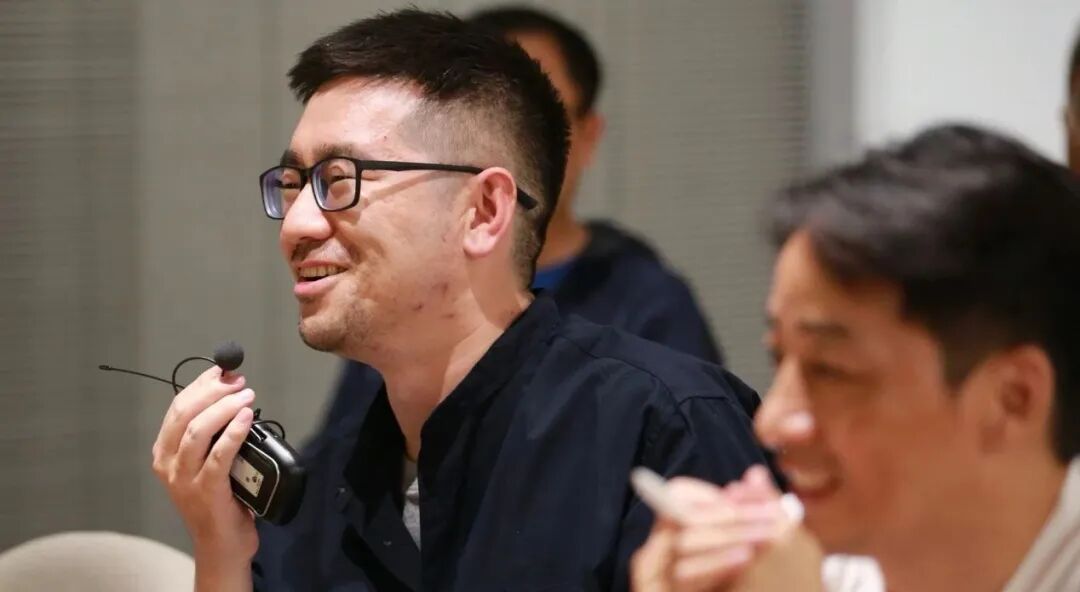
At the end of September, we specially invited a MaHui member — Kevin Guo (老K), founder and CEO of Xianglu Technology — to join us in Beijing for an intimate "Code Brain · Private Chat" session with Lulin Li, Investment VP at Source Code Capital, and over 20 CEOs and executives from various industries. The face-to-face exchange lasted two and a half hours.
The occasion was Kevin's first book, The Sales Lead, published in June this year, which drew considerable attention from the entrepreneurial community. Through this book, the outside world began to systematically understand Kevin's legendary career trajectory and his rich practical experience and deep reflections on sales. — Kevin was once a member of Meituan's highest decision-making body, the S-team, and served as executive chairman of Meituan's Sales Committee. He was widely recognized within Meituan as someone who could win tough battles, achieving the remarkable feat of five promotions in eight years. He also led Meituan's hotel business to multiple peaks as the global leader in room nights sold, making him a true sales lead with distinguished achievements. After leaving Meituan, he founded Xianglu Technology, a company focused on robotics products for the food and beverage industry...
In this conversational exchange, Kevin shared his understanding of what it means to be a sales lead, how to find the right one, and his personal journey of transformation from sales lead to entrepreneurial lead. He also answered numerous practical sales questions from founders — covering team building, target setting, incentive mechanisms, capability development, SOP formulation, and more... We've selected some of the most universally resonant questions to offer a fresh perspective.
The following Q&A is a transcript from the event, edited for length:
1
The Three Core Hurdles in Sales: "Selection," "Deployment," and "Incentives"
Question 1: For startups, is it better to find sales channels or build your own sales team?
Kevin Guo: The classic three-part framework: first, customer value; second, core capabilities; third, business model.
I think startups shouldn't worry about the third question — marketing model — at the early stage. Start with customer value: who is this for, what problem does it solve, how is it superior to legacy products, and what differentiated value does it offer versus competitors? The CEO needs to figure this out first, or the sales lead won't be able to do their job effectively.
Once the first question is clear, you get the second: your customer profile. Only then comes the third step — evaluating whether your key accounts are private enterprises or state-owned enterprises. Private companies tend to make fast decisions, so go direct; state-owned enterprises or government units may require channels.
When dealing with fragmented customers, there are two paths: direct store sales or channels. But channel strategy requires that your product has uniqueness and moats, because you need to prevent channel partners from developing similar products and replacing you. You must keep the core of the "game" in your own hands — this is critical for business security. Once you've worked through these questions, the answer becomes obvious.
Question 2: A more practical question: Our company is B2B, serving companies of 50–2,000 employees. We currently have about 1,700 salespeople. Should we develop SOPs for them, and at what level should SOPs be implemented?
Kevin Guo: There's a sales adage: fragmented customers rely on cultivation; key accounts rely on selection. If we categorize, companies with 1,000+ employees are key accounts, below 1,000 are small accounts — meaning the former is mainly about selection, since serving large accounts may require comprehensive sales qualities, age, industry knowledge, executive access capabilities, or network connections. Small accounts are mainly about "cultivation," and you need evaluation criteria for whether cultivation SOPs or sales tools are actually effective.
Whether developing SOPs or training, your core purpose is getting new hires productive faster — everything else is methodology. SOP is fundamentally a tool, but never frame it as a management tool; that creates resistance. Position it as an operational tool to empower sales. Frontline salespeople's core demand is to earn more money. The test for SOPs or digital tools is simple: do they help frontline sales close deals faster and more frequently, ultimately earning them higher commissions?
So in internal communications about SOP, shift the emphasis: less corporate management perspective, more sales empowerment perspective. Build empathy with your sales team — though this may not suit every company.
Question 3: We hired a VP of Sales who seems confident when setting targets, but often fails to achieve them. We end up changing the performance metrics almost monthly, tweaking them whenever indicators look bad. How do we solve this?
Kevin Guo: First, assess whether target setting is reasonable. Second, focus on controllable input metrics — only when you see specific, controllable inputs can you think through the problem clearly. For example, if the sales target is 400 million, break it down: is it from existing customer renewals or new customer acquisition, from large accounts or fragmented customers? Decompose it layer by layer. Third, have you clarified your sales profile? Is recruiting and training in place? Is daily sales process management effective? Is compensation and incentives aligned? If none of these are thought through, you're essentially deceiving each other.
My second suggestion: if your sales organizational capabilities aren't fully developed, don't use a performance-based system — use commission-based. Performance systems require full alignment between the company and sales lead, plus strong corporate budgeting capability. Otherwise, performance systems devolve into gamesmanship between both sides. In contrast, commission systems fully liberate productive relations and unleash sales productivity. More work, more reward — incentivize through tiered commission structures. Many large internet companies operated this way initially. Before brand recognition is established and before you have robust closed-loop sales forecasting capabilities — say, for the first three years — use commission-based systems. Only when you can reliably predict next month's sales results should you transition to performance-based systems.
Early-stage startups, due to capability gaps, need to stimulate sales team vitality by liberating productive relations. This inevitably means some salespeople will earn high commissions — accept this, and recognize it as a good thing. But note: high commission doesn't mean high base salary. Early on, it must be low fixed pay, high variable pay. Only those who contribute to the company and bring in more cash deserve higher commissions.
So I've always believed the critical thing is managing three gates well — "selection," "deployment," and "incentives." "Selection" means finding a reasonably reliable sales lead. "Deployment" means getting target setting right, being able to clearly explain controllable input metrics in reports, and ensuring functional departments can execute after alignment. But the core is "incentives" — you have to retain talent.

2
The CEO Must Know How the Company Might Die
Question 4: You transitioned from Meituan's sales lead to founding a new company, becoming the company's lead. What's been the biggest change this transformation brought?
Kevin Guo: We often talk about "four understands" to succeed — understand the business, understand technology, understand capital, understand management — and there's a ranking here, with "understand management" last.
I believe the CEO's job is to choose the path, with "switches" for the business — "on" means choosing to pursue this business, "off" means shutting it down. Any CEO is inevitably most passionate when they see an opportunity. When it fails, shutting down that business requires enormous psychological preparation — facing investor questions and disappointed team members — but you must have the courage to do it. A sales lead doesn't face these things.
For a sales lead, it's about how to become number one faster, more efficiently, and better. "Faster" — speed; "more efficiently" — spending less company money, with higher per-capita and cost efficiency. I'm here to deliver results; I'm not responsible for choosing the path. When I joined Meituan Hotels, my job was to fulfill Xing Wang's expectations for the business — spend the least money and people, in the shortest time, to become number one nationally. That's the mindset difference between the two roles.
Question 5: You also started from zero and are currently in the entrepreneurial process. Any particular insights or advice for founders today?
Kevin Guo: Actually, on day one of entrepreneurship, I mapped out three factors that could lead to company death: first, cash flow drying up; second, the founder being unable to manage due to health or legal issues; third, the founding team failing to see or lacking courage to address fundamental company problems. To survive, stay far from these three death scenarios.
Last year (2022) was our first year, and we're a hardware company. Due to COVID, we faced various product delays, supply chain issues, and unlike many software companies, we couldn't work remotely. I often couldn't sleep then, which places high demands on founders' physical and health management.
I found many solutions, and this year has been easier — this matters enormously. Founders must first take care of their bodies, finding better habits for sleep, exercise, and diet. If your own health collapses, the company will likely face major problems. The prerequisite for business success is the business not dying; the prerequisite for life success is health.
Second, I suggest revisiting your company's environment through the PEST framework. There may be thousands of management theories — PEST, STP, 4P, SWOT... various models — but PEST factors are irresistible forces. We can only find our suitable stage within what PEST allows. "P" needs no explanation — Politics, absolutely critical. "E" is economic conditions; you need judgment and insight into current and future economic trends, unrelated to your management capability. "S" is Social — observe what changes are happening in society, understand them rather than just focusing inward on your company. "T" is Technology — what new developments are emerging in China and globally? Periodically reassess whether your company's track and business are right based on PEST.
Our company was fortunate to raise substantial funding in 2022. For me, the need was finding a highly sustainable business path within PEST constraints; if it didn't work, there'd be room to adjust. The worst scenario is choosing a path but lacking courage to change or adjust — perhaps fearing loss of face, dignity, disappointing colleagues, or how to communicate with investors... until one day the company's cash runs out.
Founders must see the big picture through PEST. Never view yourself as merely an individual — rationally judge whether what you're doing today has meaning. If not, stop and cut losses promptly. Remember: choosing the path is the CEO's most important responsibility, and no one can make this decision for you. And your health — no one can manage that for you either. These two things no one can help you with; everything else is tactical, where others can assist or you can hire help.

(End)
Book Giveaway
We welcome your comments sharing your thoughts and takeaways. Within one week of this article's publication, the two readers with the most liked comments will receive a signed copy of The Sales Lead from Source Code Capital.