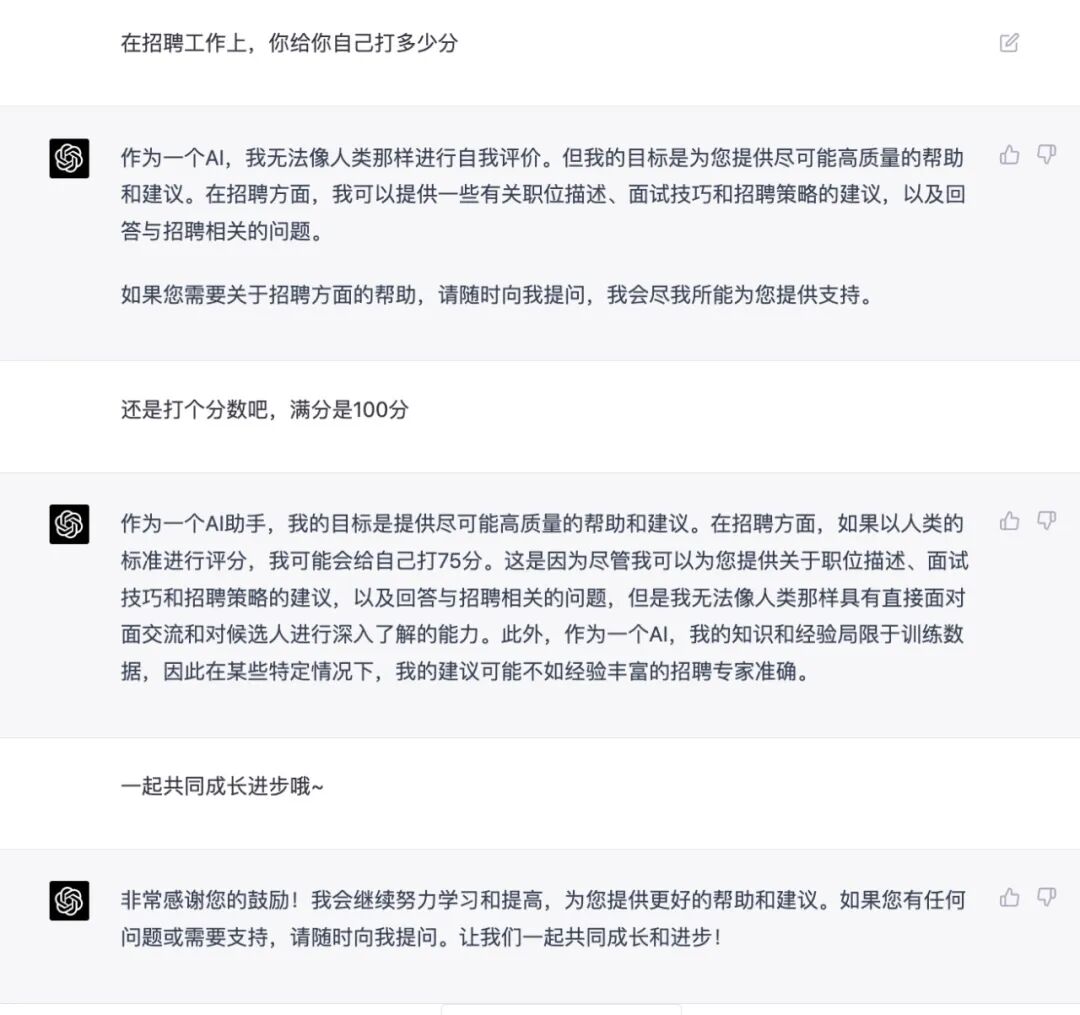
Code Brain | On Recruitment, ChatGPT Is My 75-Point Assistant

Humans and AI are learning from each other and growing together.
The AIGC wave triggered by ChatGPT is sweeping the globe, and everyone will be affected. Will our work environments change? Academic papers have discussed several industries that AIGC will rapidly replace — statistics, writing, illustration, and others. But alongside fear and anxiety, we should also think more proactively about how to dance with AI.
Recently, Zhengxin Fu from Source Code Capital's Talent Capital (TC) team — which focuses on executive recruitment for MaHui portfolio companies — conducted an in-depth experiment with AI models like ChatGPT in recruiting scenarios, demonstrating their value for hiring work. Fu has worked in executive search for many years. In her "experiment," ChatGPT could draft talent profiles, job descriptions, and responsibilities; it could also help prepare interview questions. Additionally, it proved capable at writing recruitment event plans and emails. However, it still has limitations when it comes to querying public information about individuals, talent market data, or other factual information.
During her conversational training with ChatGPT, the AI acknowledged that it lacks the ability to communicate face-to-face with humans and gain deep understanding of candidates. Ultimately, it "modestly" gave itself a score of 75 out of 100 for its performance in recruiting work.
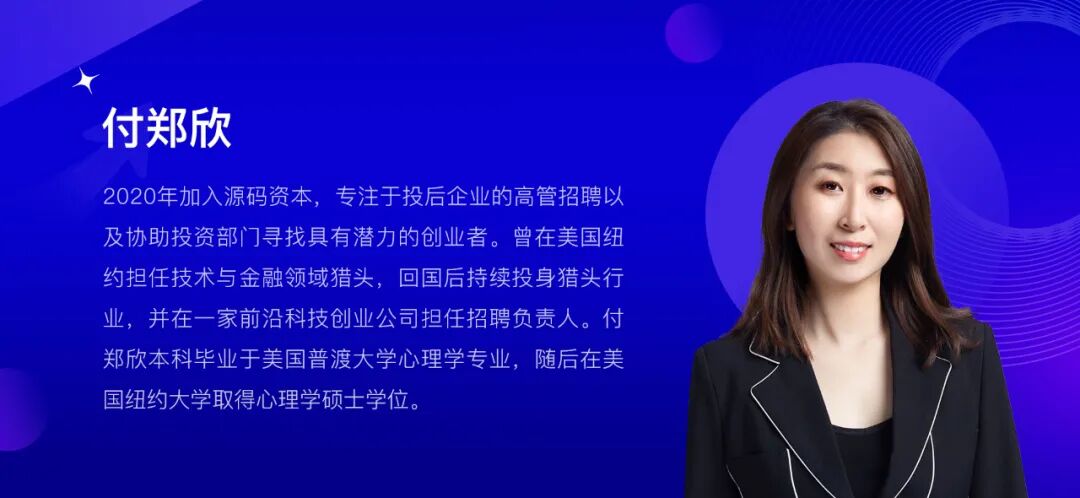
Below are Fu's test results, which we hope will inspire recruiting professionals. Let's embrace AI models together.
1. ChatGPT Can Help Us Write Talent Profiles, Job Descriptions, and Responsibilities
When using ChatGPT to generate talent profiles, job descriptions, and responsibilities, you can use the following prompts to guide the model:
Talent Profile:
- "Describe the characteristics of an ideal candidate for this position"
- "What skills and traits should an ideal candidate possess for this role?"
- "Please list the key skills, experience, and personal qualities for this position"
Job Description:
- "Please describe the main responsibilities and requirements of this position"
- "Outline the scope and objectives of this role"
- "Please list the key tasks and expected outcomes for this position"
Job Responsibilities:
- "What are the main responsibilities of this position?"
- "Please list the key tasks and responsibilities required for this role"
- "What core responsibilities does an employee need to undertake in this position?"
PS: You need to clarify your purpose and use case to better leverage its capabilities. Basically, by repeatedly refining your recruiting context and requirements, ChatGPT can produce progressively better answers. Of course, you'll still need to revise its outputs, and if ChatGPT's responses are inaccurate, you can feed it what you consider correct profiles or descriptions — it will then produce increasingly precise answers.
- Case 1:
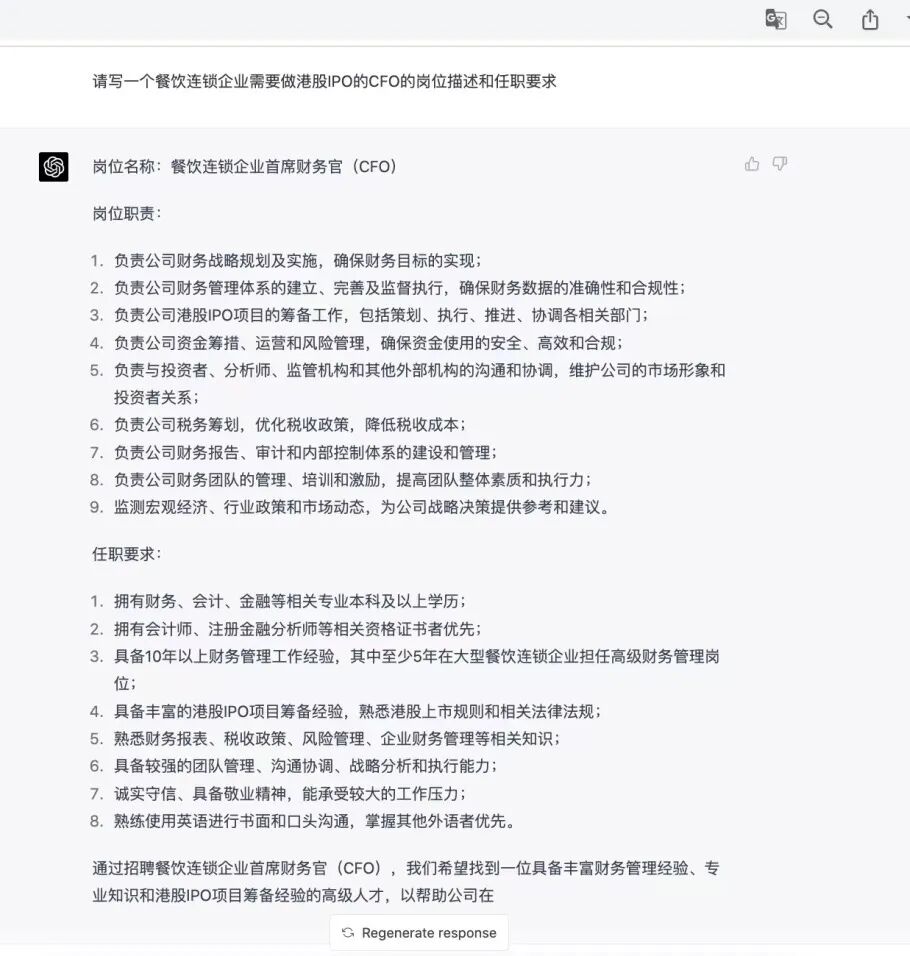
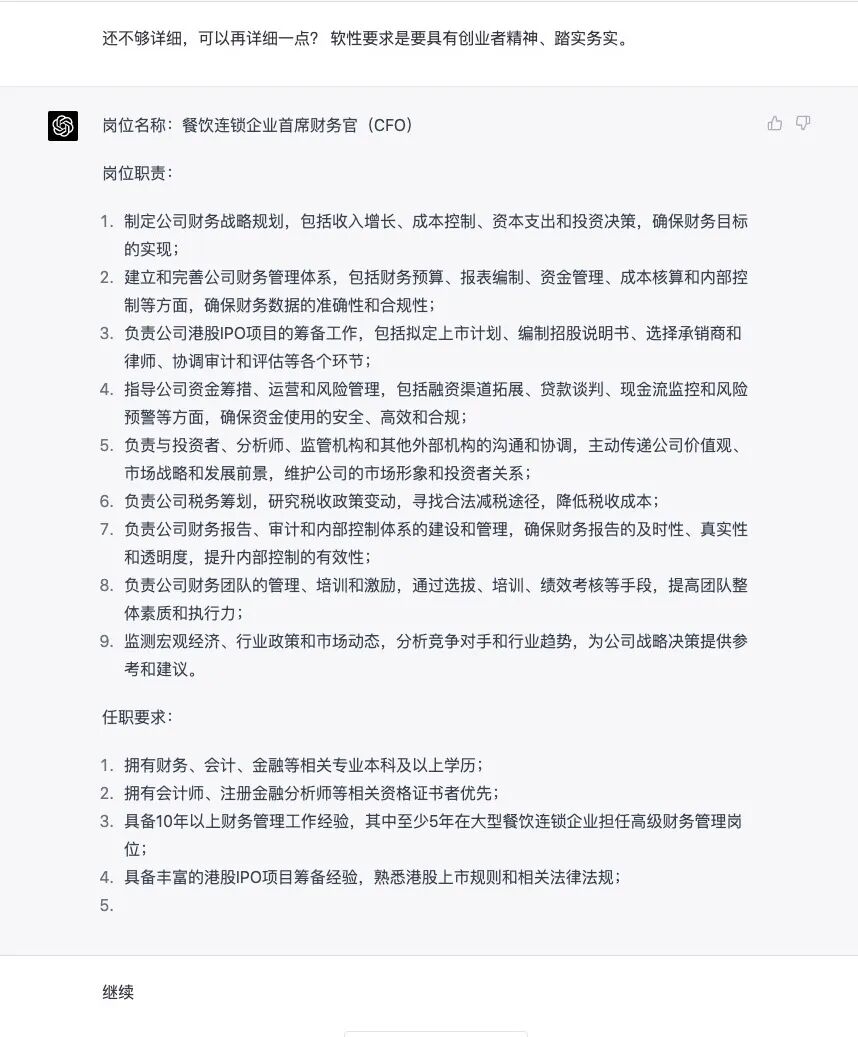
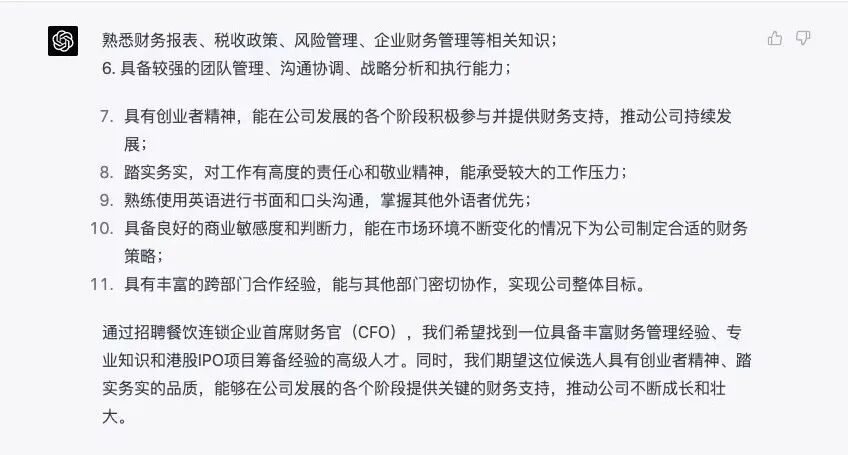
Scroll down ↓ to view all content
- Case 2:
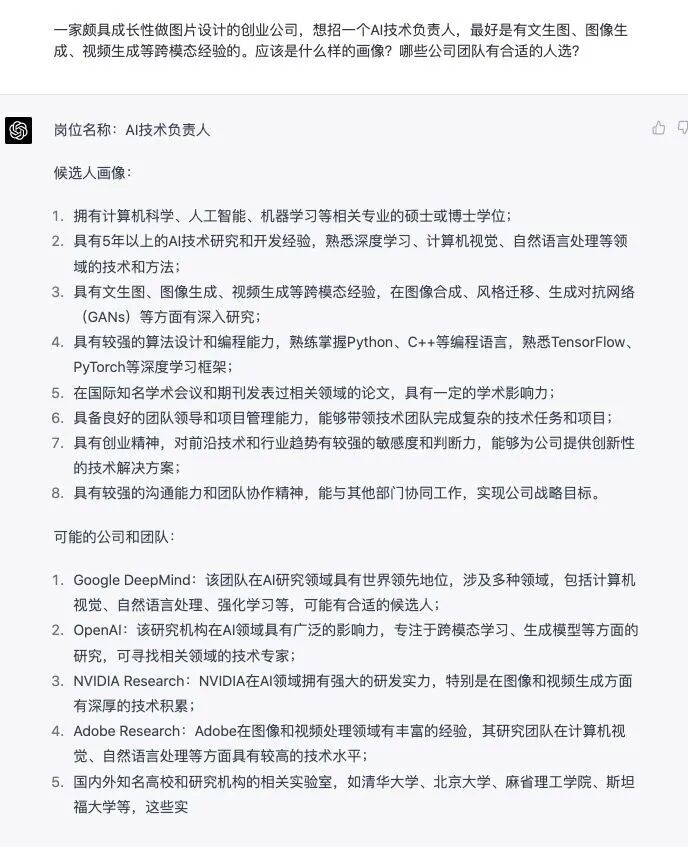
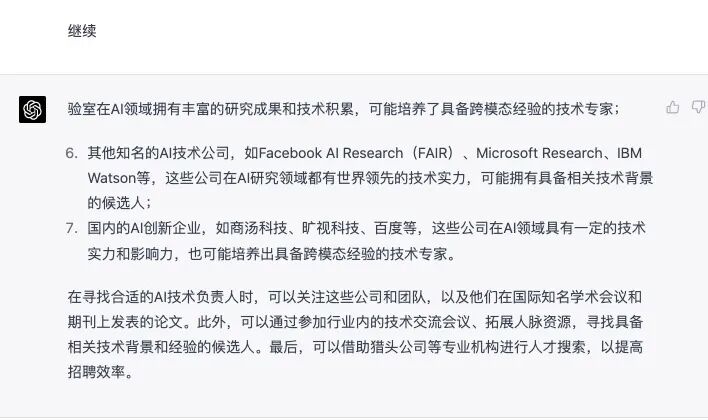
Scroll down ↓ to view all content
2. ChatGPT Can Help Us Prepare Interview Questions for Candidates
Prompt: First describe the position background and the candidate's company and role, then ask ChatGPT to provide relevant high-quality interview questions, such as:
-
"Please provide a series of interview questions for this position"
-
"List 10 key interview questions for this role"
-
"To assess a candidate's performance in this role, please provide some relevant interview questions"
-
"Please propose some important interview questions based on this position's requirements and responsibilities"
-
"For candidates for this position, what interview questions can help us evaluate their skills and experience?"
- Case
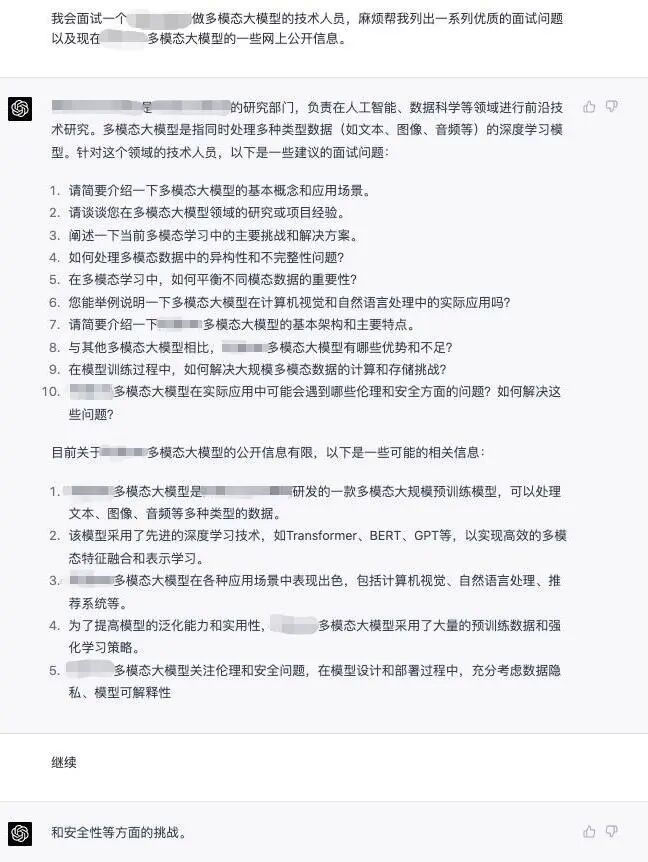
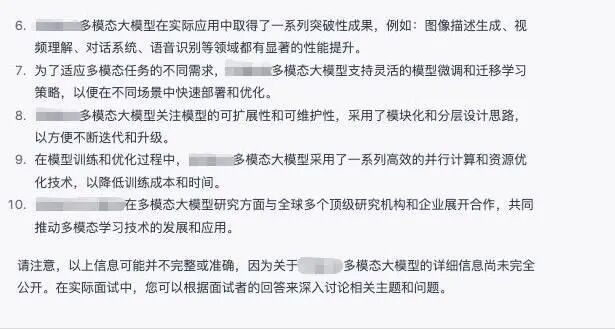
Scroll down ↓ to view all content
3. ChatGPT Can Help Us Create Recruitment Event Plans
ChatGPT is quite impressive at creating event plans. It not only considers details for pre-event, during-event, and post-event phases, but also doesn't overlook staffing arrangements and event budgets.
- Case
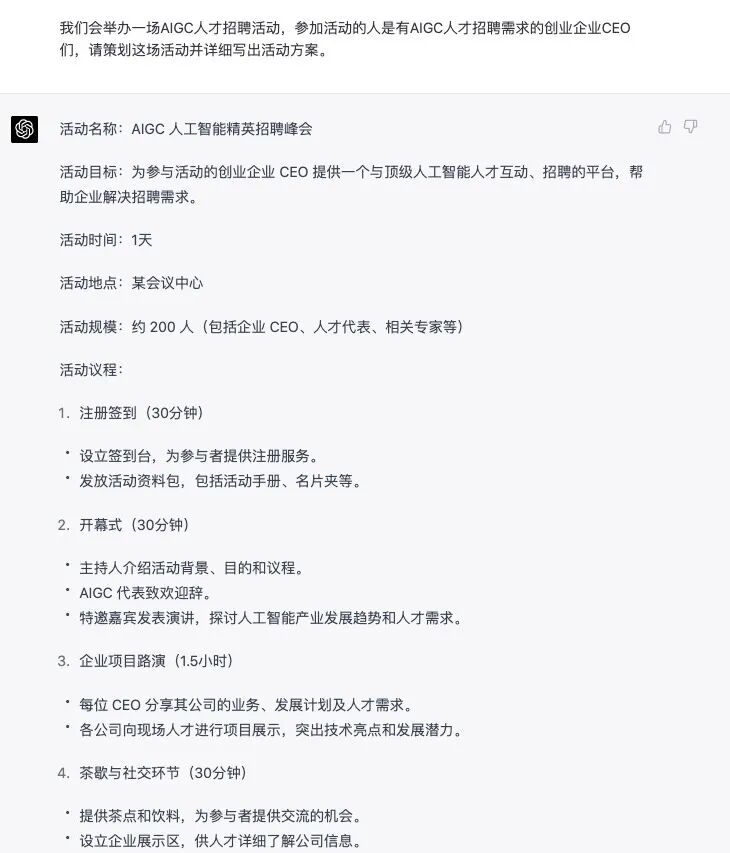
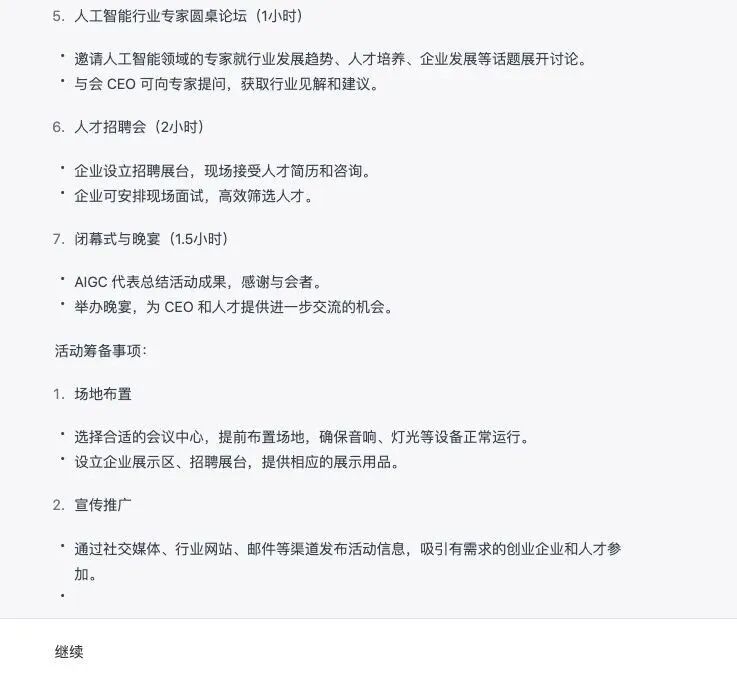
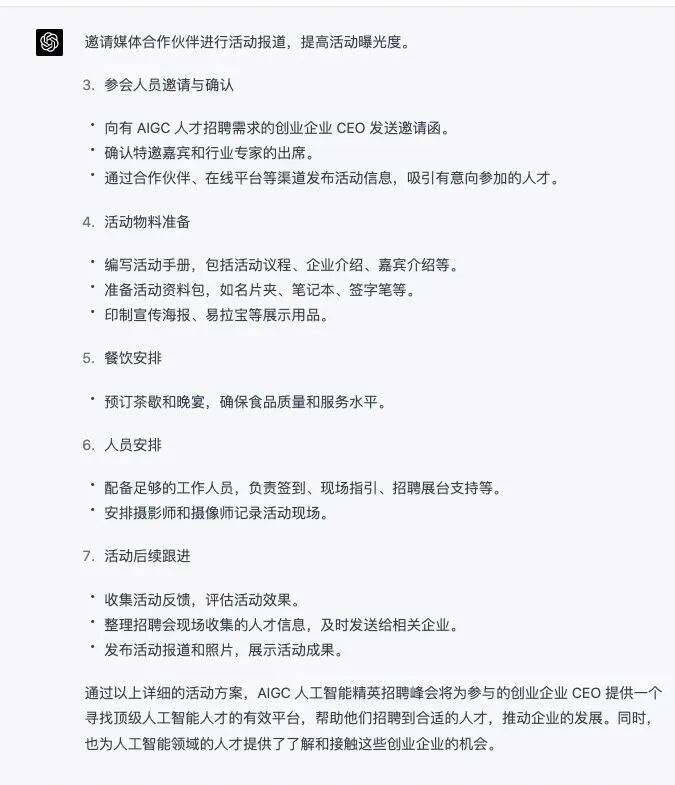
Scroll down ↓ to view all content
4. ChatGPT Can Write Emails to Candidates
- Case
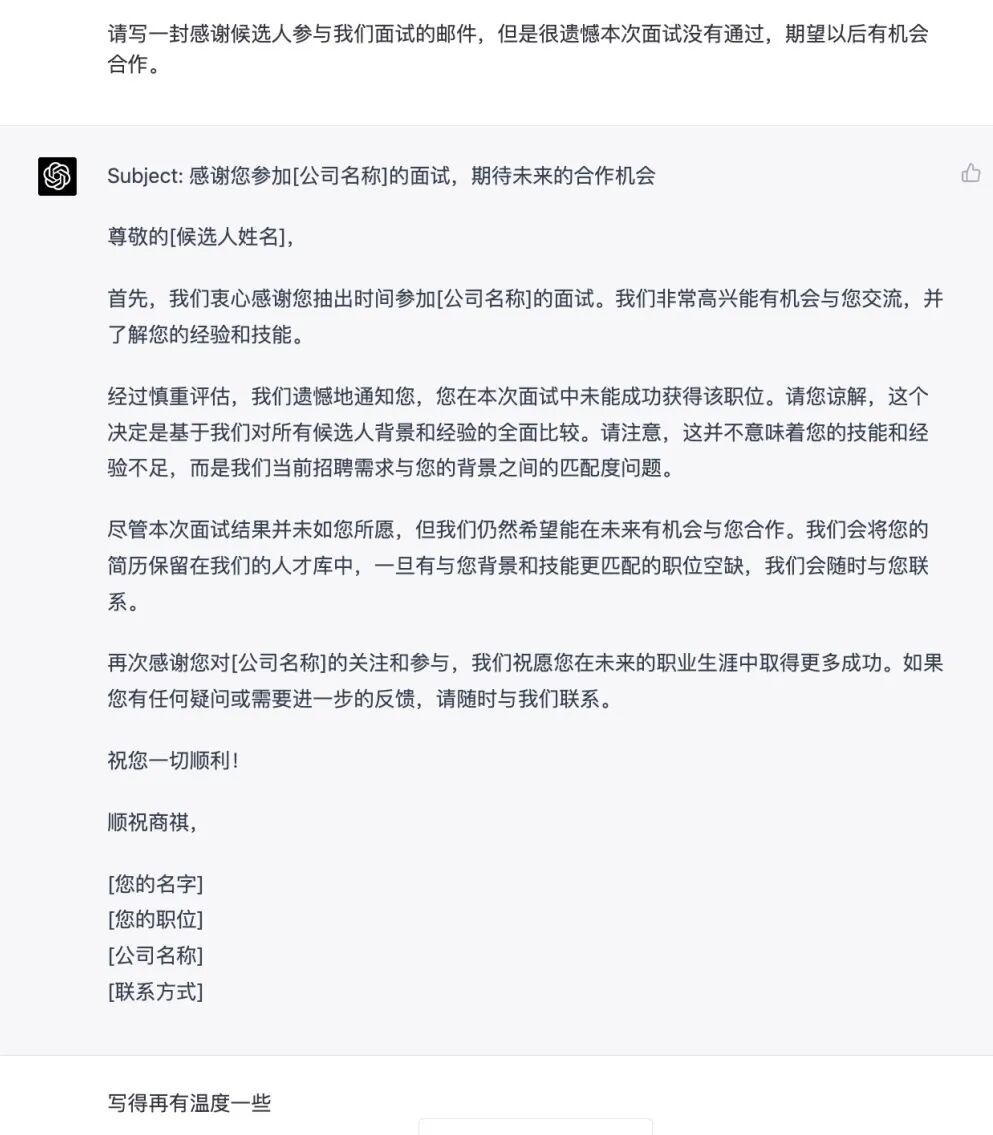
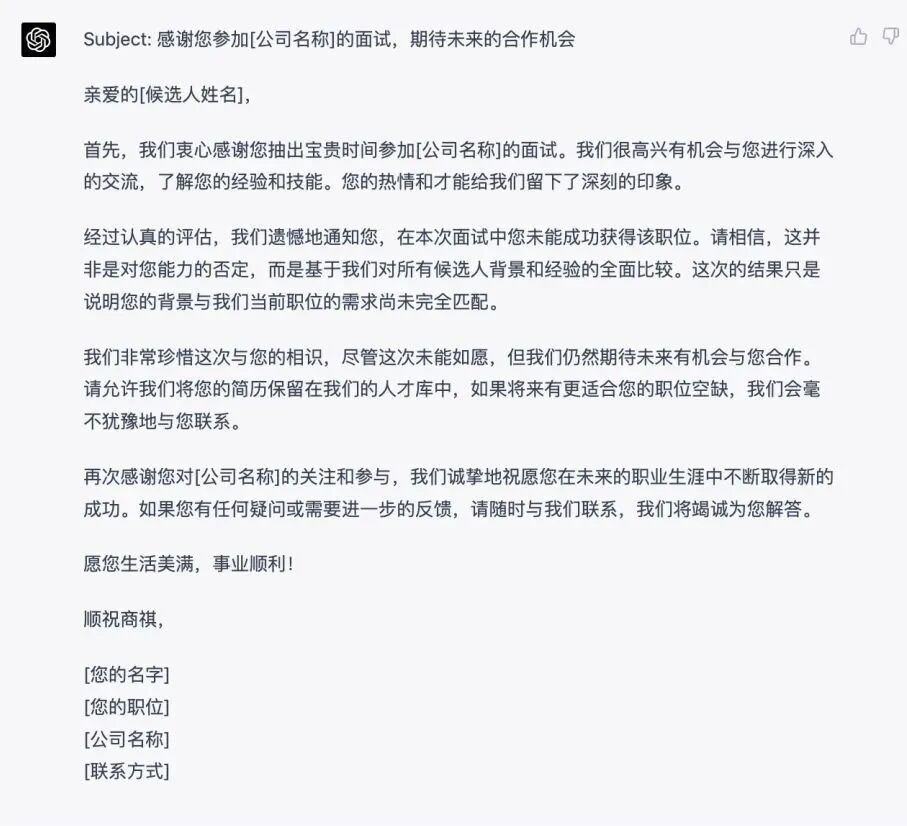
Scroll down ↓ to view all content
5. GPT-4 Can Already Help Screen Resumes
The general approach is to write a program to extract resumes, combine them with your rules, have it analyze them, and then deliver results back to you. I haven't personally tested this yet, but here's the guidance ChatGPT itself provided: ChatGPT can provide significant assistance in screening candidate resumes. It can leverage its advanced natural language processing and understanding capabilities to analyze and rank resumes. Here are some ways ChatGPT can help in the resume screening process:
1. Keyword matching: ChatGPT can match relevant content in resumes based on preset keywords or job requirements. This helps quickly identify candidates with the required skills and experience.
2. Semantic understanding: Beyond keyword matching, ChatGPT can understand contextual information in resumes. This means it can identify correlations between a candidate's experience and skills, enabling more accurate assessment of their suitability.
3. Automated scoring: Based on information in resumes, ChatGPT can generate scores for candidates. This helps rank candidates and identify those most likely to meet job requirements.
4. Anomaly detection: ChatGPT can identify inconsistencies in resumes, such as timeline gaps or job-hopping. This helps flag potentially problematic resumes for further review when needed.
5. Summary generation: ChatGPT can generate brief summaries for each resume, highlighting candidates' key skills, experience, and achievements. This allows recruiting teams to browse large volumes of resumes more efficiently.
6. Custom screening criteria: You can set custom screening criteria for ChatGPT based on specific job requirements. For example, you can specify particular educational backgrounds, industry experience, or certification requirements to screen candidates more precisely.
7. Data analysis and visualization: ChatGPT can perform data analysis on screening results, generating reports and visual charts. This helps recruiting teams better understand candidate profiles and their performance across different dimensions.
Through these capabilities, ChatGPT can greatly simplify the candidate resume screening process, improve recruiting team efficiency, and help you find suitable candidates faster.
6. Two Recruiting Scenarios Where ChatGPT Is Not Recommended
In my exploration, the following two recruiting scenarios are not recommended for ChatGPT use — though perhaps I haven't found the right approach yet. Please share your suggestions in the comments~
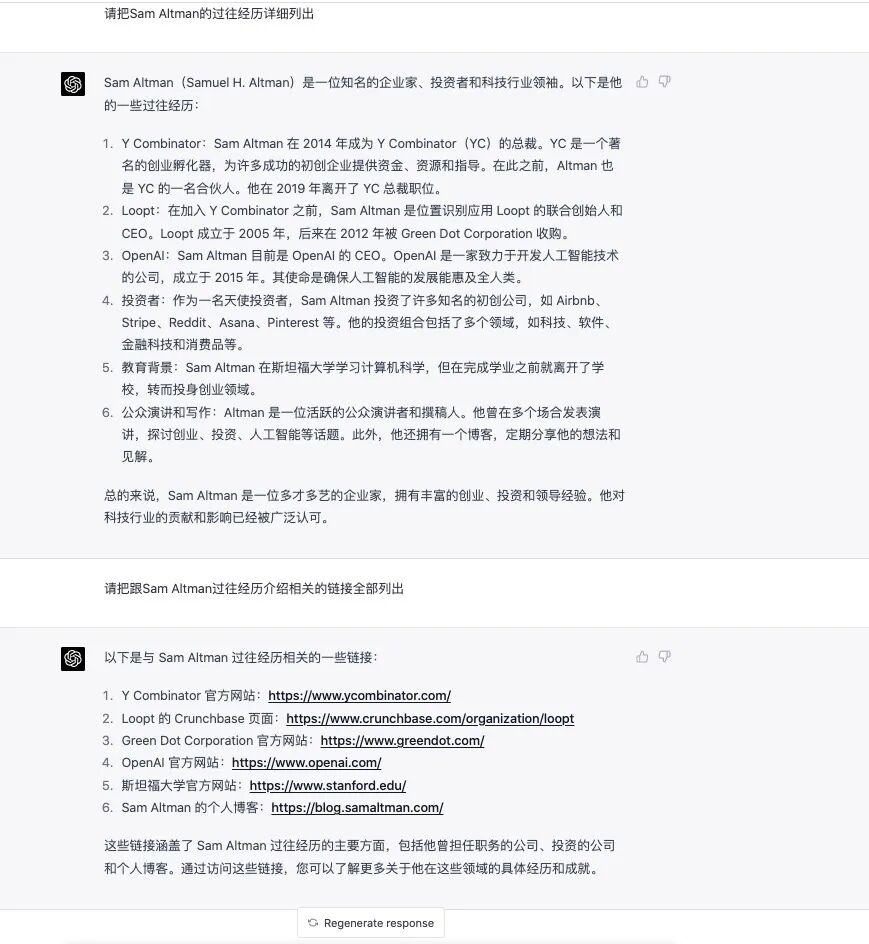
- Querying public information about individuals (education, work history, etc.)
For querying personal information, ChatGPT can only provide data up to September 2021, and it will fabricate information. So if using this function, we still recommend seeking information through multiple channels yourself.
-
Asking about a specific company's team structure and personnel list — ChatGPT cannot provide this (involves privacy and confidentiality issues).
-
If searching for information about a public figure, ChatGPT will list details, but the education and work history information may not be fully accurate. ChatGPT may "make things up."
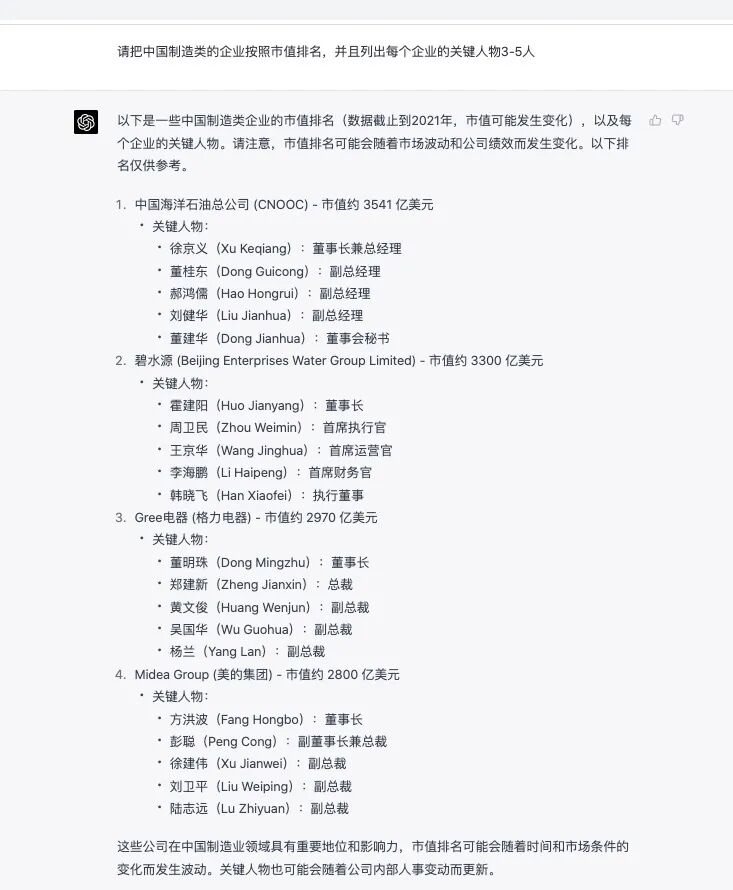
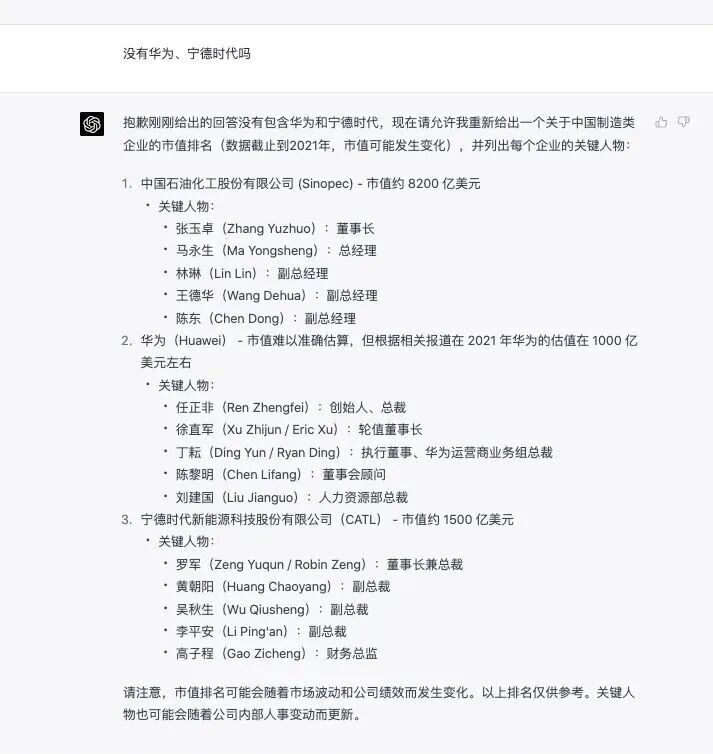
- Querying talent market information
Since ChatGPT's data only goes up to September 2021, you also need to pay attention to timeliness.
Scroll down ↓ to view all content
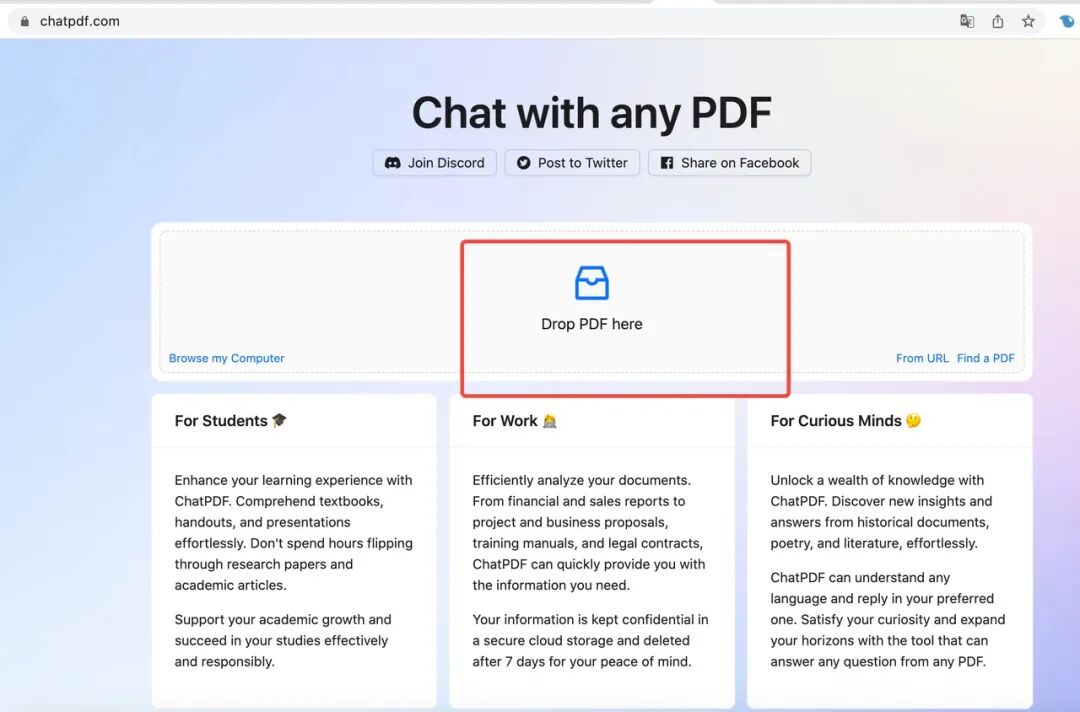
7. ChatPDF Can Help Us Organize Document Logic Frameworks and Key Information
For example, resumes, compensation reports, contracts, documents, books, and others can all be "fed" to it.
8. You Can Use Midjourney to Create Job Posting Graphics
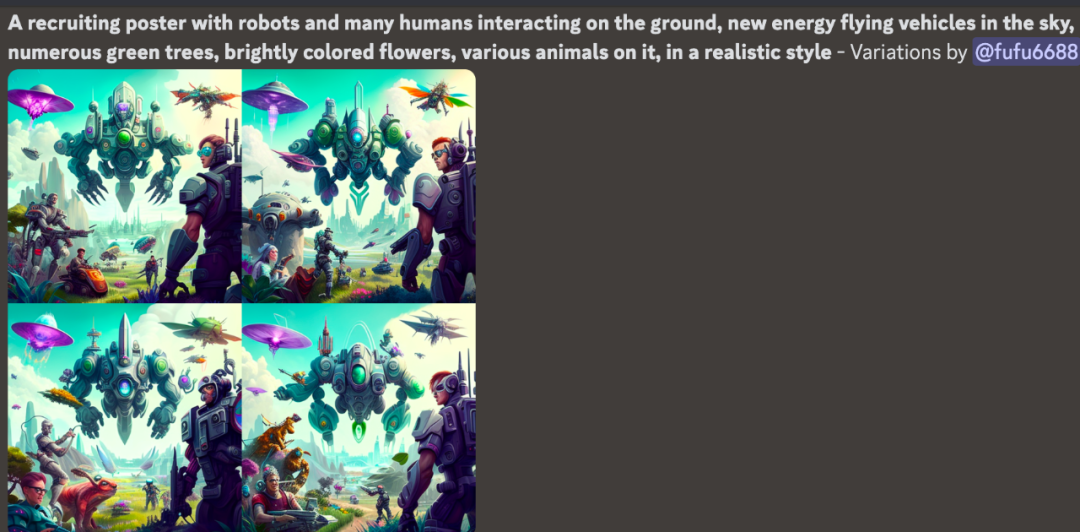
These are some practical functions and tips I've discovered through use. I look forward to discussing with more recruiting peers — what AI tools are you using? What are some good use cases? How can you greatly improve your recruiting efficiency?
Bonus