Code Brain | Ambition or Hell? How Elon Musk Led Tesla Out of Production Hell


This article originally appeared in Bloomberg Businessweek's special report dated July 16, 2018. Tesla recently announced that its Model 3 electric vehicle had reached its targeted production goal.
Bloomberg visited Tesla's factory and, drawing from Elon Musk and multiple employees, pieced together the full story of how Tesla escaped the Model 3 "production hell." The article notes that Tesla still faces many difficulties, but in opening up the electric vehicle market, Musk remains successful.
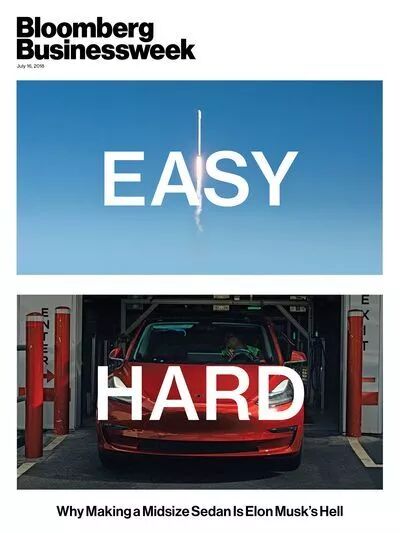
Bloomberg Businessweek cover, July 16, 2018 issue
01
"Production Hell"
On July 1, Musk could finally go home and get a good night's sleep. As Tesla's CEO, he had spent most of the past week sleeping at the Fremont, California factory — sometimes on a couch, sometimes under a desk. Why push so hard? Because he needed to lead the entire company in a collective effort to escape "production hell" and manufacture at least 5,000 Model 3 vehicles in a single week. In an interview with Bloomberg Businessweek, Musk said: "I wore the same clothes for five days. My credibility, the team's credibility — everything was on the line."
Initially, Musk had simply said Tesla would produce up to 200,000 Model 3 vehicles in 2017. To hit that target, he poured massive funds into the factory, installing robots. He described the production line as one that would "build the machine that builds the machine," and said the factory looked like an "alien dreadnought" — a nickname borrowed from an early twentieth-century class of battleship. The entire manufacturing process was supposed to be so advanced, so futuristic, so relentlessly efficient and cost-saving that it seemed extraterrestrial.
But the output didn't match the vision. By the end of 2017, Tesla had produced only 2,700 Model 3 vehicles; by the end of June, that number had reached 41,000. Some analysts expressed doubt, arguing that the Model 3 could never turn a profit — especially since Tesla hadn't even begun selling the $35,000 base model yet.
Worse still, Tesla was already saddled with $10 billion in debt, and its credit rating had been downgraded in March. Every quarter, Tesla's spending averaged $1 billion more than the same period the previous year (sometimes more), and the company had recently announced plans to build a factory in China with unspecified investment costs.
On one front, market competition was intensifying: Volkswagen, BMW, Daimler, and others were preparing to launch multiple electric vehicles.
On another, Tesla was running out of cash. Musk once said: "To be honest, these past few months have been the most painful months I've ever experienced." He said Tesla's assembly lines would continue to be upgraded to improve the odds of hitting the target — 5,000 vehicles per week. Musk also asked employees to build a third general assembly line, one far better than the first two, which sounded even more "alien dreadnought."
A week later, Musk posted a photo on Twitter showing the new factory — no fancy robots, no fixed walls, just a massive tent set up outside the main facility, far removed from the other assembly lines. The automotive world erupted in shock.
In an email to Bloomberg News, Sanford C. Bernstein & Co. analyst Max Warburton wrote: "Apart from armies servicing vehicles in war zones, I don't think anyone has seen anything like this."
The tent was enormous. On July 1, Musk emailed employees: "I think we became a real car company." He told them that in the past week, the company had produced 5,031 Model 3 vehicles.
Even so, under Musk's leadership, would Tesla continue down a path of prosperity or toward destruction? No one knew. Tesla was the most shorted stock in the United States, and the percentage of analysts recommending investors sell Tesla shares was remarkably high — among S&P 500 stocks, only one company had a higher proportion.
But the payoff for Musk's success would be immense. If the Model 3 business went well, Musk could reshape the auto industry, a $1 trillion sector, and cut carbon emissions more than anyone else ever had. There was another possibility: mass-producing cars was the one challenge Musk simply couldn't overcome.
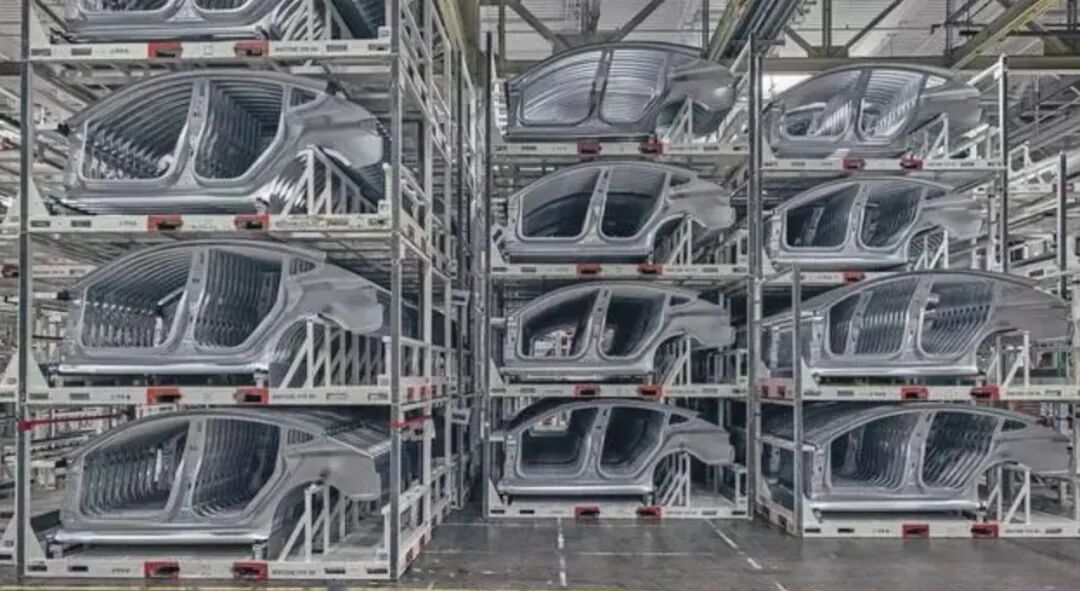
Model 3 side door frame at the Fremont factory
02
Building the Model 3
In early 2015, Musk gathered top engineers for a meeting in a windowless conference room at the factory. Twelve people attended, including experts in batteries, design, chassis, interiors, body, drivetrain, safety, and thermodynamics. Musk himself didn't attend; instead, he had the engineers discuss one question: What should the Model 3 be? During the meeting, engineers filled whiteboards with requirements — all for the Model 3. Range had to be at least 200 miles (320 kilometers). The price had to be cheap. That last criterion made the project extraordinarily tricky, perhaps impossible. And there was something even more daunting: the car needed to go on sale by mid-2017, meaning the team had just two and a half years for design, testing, and manufacturing — compared to the roughly five years traditional automakers typically take.
To build an affordable electric vehicle, maximizing range was critical. To achieve this, Tesla designers used plastic covers ($1.50 each) to conceal four pads on the vehicle's underbody, which supported jacks. This reduced drag and extended range by three miles.
Tesla also equipped the car with four-piston monoblock brake calipers, typically found only on more expensive vehicles. Because the brakes were lighter, they reduced battery requirements and cut overall costs. Doug Field, a former Apple vice president whom Musk recruited to Tesla in 2013, said: "When designing an electric vehicle, we considered every single factor." In other words, electric vehicles demanded an entirely fresh perspective on cost and performance.
Musk required the Model 3 to have just one central touchscreen — all controls operated through this single screen, all information displayed on it. This cut some costs and allowed the front seats to move forward, increasing rear legroom. During the 2015 Christmas holiday, Tesla's chief designer Franz von Holzhausen kept working, figuring out how to design the interior and discard the traditional instrument panel.
Musk wanted the air vents hidden, invisible. Holzhausen recalls Musk saying at the time: "I don't want to see any holes." Holzhausen called in engineer Joseph Mardall and designer Peter Blades to see what could be done.
Blades sketched a recessed slot running the full width of the vehicle, allowing air to flow, with a long wood strip replacing the damper. But Mardall believed that for the scheme to work, the entire ventilation system would need to be redesigned. He asked: "Are we really going to do this?"
Musk indeed wanted to do it. But then came a second problem: with the wood strip mounted beneath the vent slot, it would act like an airplane wing, directing cold air downward onto the driver's legs.
Mardall, an aerodynamics specialist, suggested adding a second hidden slot to direct airflow upward. This upward stream would collide with the downward cold air, deflecting it away from the driver's groin. "That was our eureka moment," Blades said. He was thrilled with the solution.
The system Blades and Mardall designed packed standard HVAC components into plastic equipment — these plastic pieces clustered together, roughly basketball-sized, mounted beneath the hood. Tesla called it the Superbottle. The equipment even bore a logo: a bottle wearing a Superman cape.
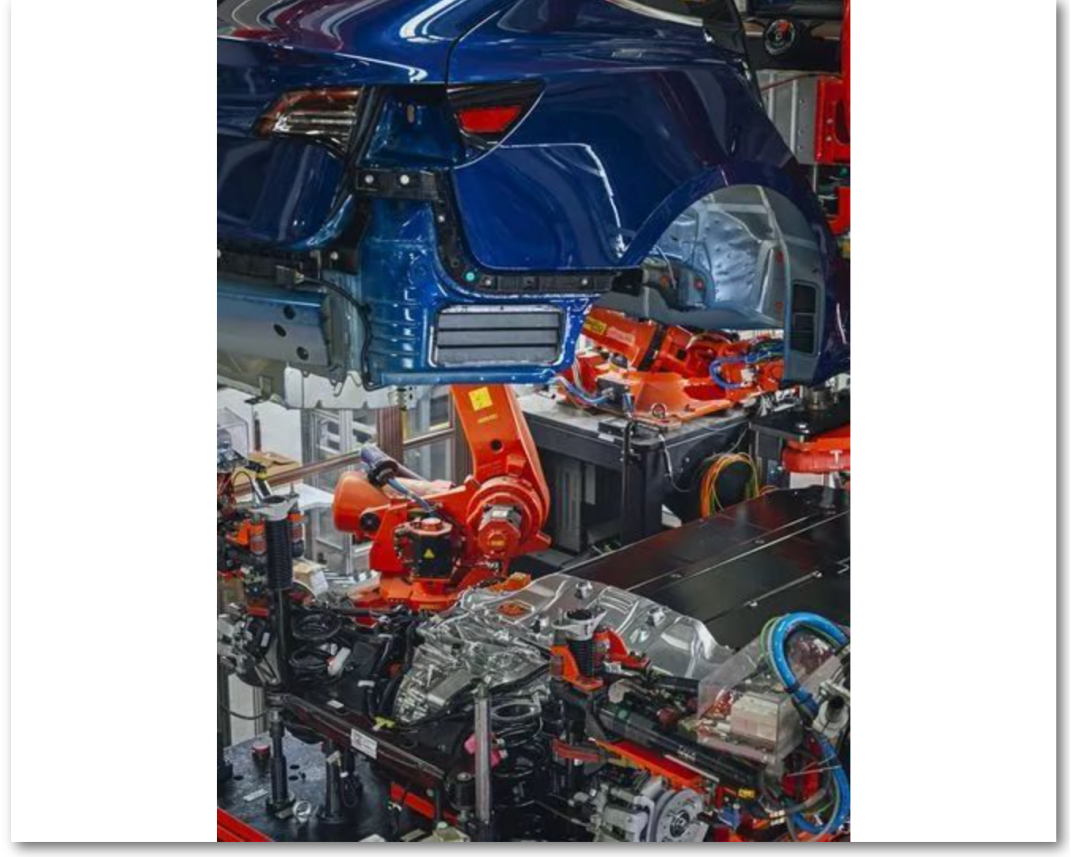
Model 3 chassis on the assembly line
The two were proud of their design. Blades recalls: "I talked it over with my wife: For the next six months, I'll be working seven days a week. And it wasn't just me — that's just part of the Tesla story. At a company like this, if you're not asking somewhat foolish questions and doing somewhat crazy things, then it's probably not the right place for you."
03
Doubts and Corporate Restructuring
Why such loyalty? Partly because Musk thrives on challenging adversity (some would say common sense). In 2002, at age 31, Musk founded SpaceX. He was a software entrepreneur with no aerospace training, and people laughed at him. Now? SpaceX launches more rockets per year than any other company. But mass-producing cars isn't like rocket science — in some ways, it's even harder.
Rockets can be handcrafted, hand-inspected. Mass-producing cars is different: a perfect vehicle must roll off the line every minute, keeping pace with the world's leading manufacturers. A car consists of thousands of assembled components, and must withstand snow and rain, survive potholes, maintain high speeds, and run without problems for years. Apart from a house, a car is the most expensive thing most people buy, and it's a heavily regulated "lethal weapon," given that more than one million people die in traffic accidents annually.
At a typical Toyota factory, building a new car takes roughly 30 labor hours. Michelle Hill, a manufacturing expert at management consultancy Oliver Wyman, says that even with all its robots, Tesla requires more than three times as long per vehicle as Toyota. When building an entirely new car, Toyota would never use a new manufacturing system or new employees. Hill says building cars is extraordinarily complex — "there are so many things that need to be choreographed, kept in harmony."
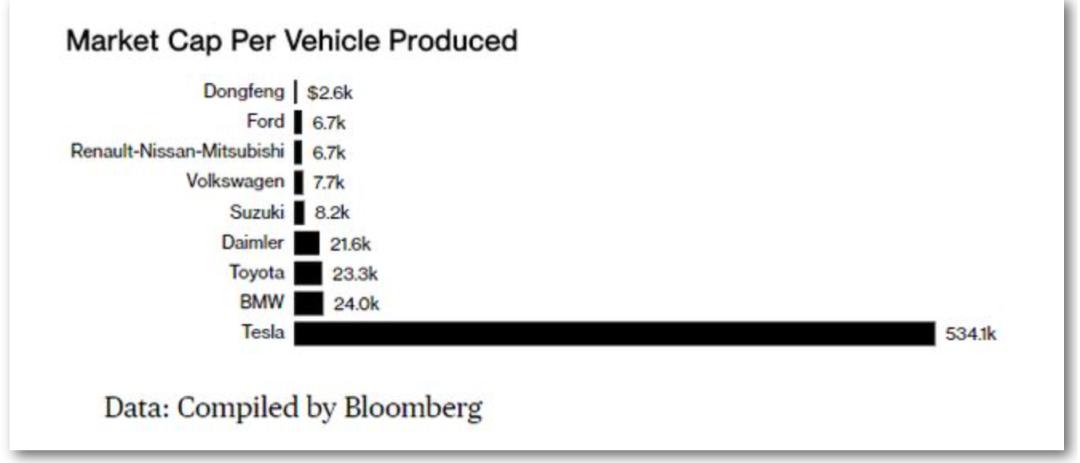
Market value produced per vehicle on average
Breaking tradition is part of Musk's personal appeal. In March 2016, weeks before Musk formally unveiled the Model 3 design, employees made bets on how many prospective buyers would put down $1,000 refundable deposits. The most optimistic estimates were around 200,000 — but the actual number was double. Field recalls that at the employee meeting the following week, he opened by saying: "You now work at a completely different company. Everything has changed."
One supplier recalls that Tesla had initially predicted it would take 28 months to reach mass production, but seeing demand so high, Tesla decided to compress that to 15 months. At first, Tesla had said it would raise annual production to 500,000 vehicles before 2020; skeptics shook their heads, calling it unrealistic. By May 2016, Musk was saying he planned to hit the target in 2018.
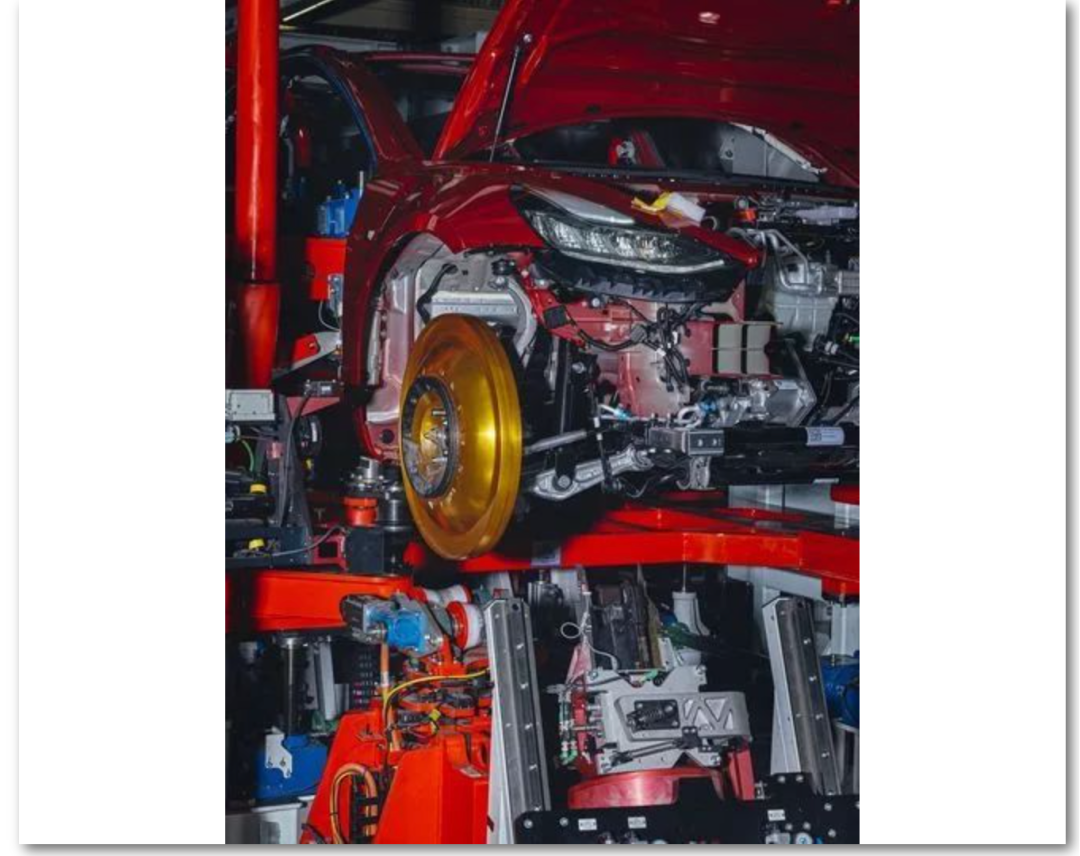
"Golden wheels" on the production line
Defying all expectations, Musk restructured Tesla, sending the engineers who had designed the Model 3 to "invent" the manufacturing process. He put Field in charge of the factory, allocating funds to maximize automation of the vehicle assembly line. Tesla acquired two robotics companies: Germany's Grohmann Engineering and Perbix of Minnesota. Field's team invented dozens of industrial manufacturing techniques.
Typically, automakers rely on thousands of suppliers — for windshield wipers, electronics, and so on. Musk believed this model only led to cost overruns and mediocre products.
Starting in 2015, he told employees he wanted to manufacture every component in-house, even the most supply-chain-complex ones. At the end of 2015, he brought in automotive interior expert Steve MacManus to build a seat factory near the main Fremont facility.
Assembling seats requires substantial labor; large automakers typically outsource this to lower-wage workers. According to MacManus's recollection, when he first spoke with Musk, Musk told him: "Your mission is to get us out of seat production hell."
In one section of MacManus's Model 3 seat production line, we saw more than a dozen robots rapidly assembling front seats, complete with small motors, hinges, heaters, and frames. Tesla boasted that this was the world's first fully automated front seat assembly line with zero human involvement. As planned, The Boring Company (another Musk venture) would dig a tunnel to transport the seats to the Fremont factory, roughly two miles away.
Musk had been thinking about bringing other parts of Tesla's supply chain in-house as well. In a spring email to employees, he announced he would fire all contractors and consultants unless personally vouched for by a Tesla employee. "We are going to clean barnacles off the boat," he said at the company's May earnings call. "It sounds crazy, but there are barnacles on barnacles. So we're going to scrape off a bunch of barnacles."
04
Workplace Injuries and Grueling Labor
To critics, Musk's characterization of contractors as parasitic crustaceans revealed something about his mindset. His near-maniacal dedication to Tesla's mission of saving the world from global warming often seemed to come at the expense of more ordinary obligations — like ensuring his employees' physical safety.
On November 18, 2016, eight months before Model 3 production began, a factory employee heard screams coming from outside the main Fremont factory building. He saw a colleague, quality control supervisor Robert Limon, lying on the asphalt clutching his leg and writhing in pain, "blood pouring out of that leg," the employee said. The specifics of this incident had not previously been reported.
Limon's colleagues quickly gathered around him. Someone applied a tourniquet to his leg. The witness, who requested anonymity for fear of Tesla retaliation, said management offered counseling services to those who had seen everything. This witness took the counseling; the event was distressing.
Limon later told this colleague that he had been struck by a forklift driver who had been idling nearby. Limon did not respond to requests for comment, but according to people who saw and spoke with him in the following days, and according to media photographs, the injured leg had been amputated.
Tesla said both Limon and the forklift driver were at fault for personal misconduct, and that the accident did not reflect the company's safety culture. Later, Tesla said it had fired the forklift driver and held an all-factory safety meeting.
The company suggested that Tesla competitors had deliberately leaked the incident to damage its reputation. "At Tesla, employee safety always comes first," a spokesperson said. "This is not to say there aren't real issues that need to be addressed at Tesla, or that we won't make mistakes in a company with 40,000 employees." The spokesperson added that Tesla's goal was "to become by far the safest factory in the world."
California's Division of Occupational Safety and Health (Cal/OSHA) fined Tesla $800 for the injury, classifying it as an ankle fracture. But agency documents show Cal/OSHA never spoke with Limon. Tesla said it had repeatedly attempted to arrange a meeting without success.
Months later, Tesla safety officer Justine White submitted her resignation to Musk. White said she had "made numerous safety recommendations following an employee's lower leg amputation, to promptly communicate the dangers of forklifts to employees." Tesla disputed White's account.
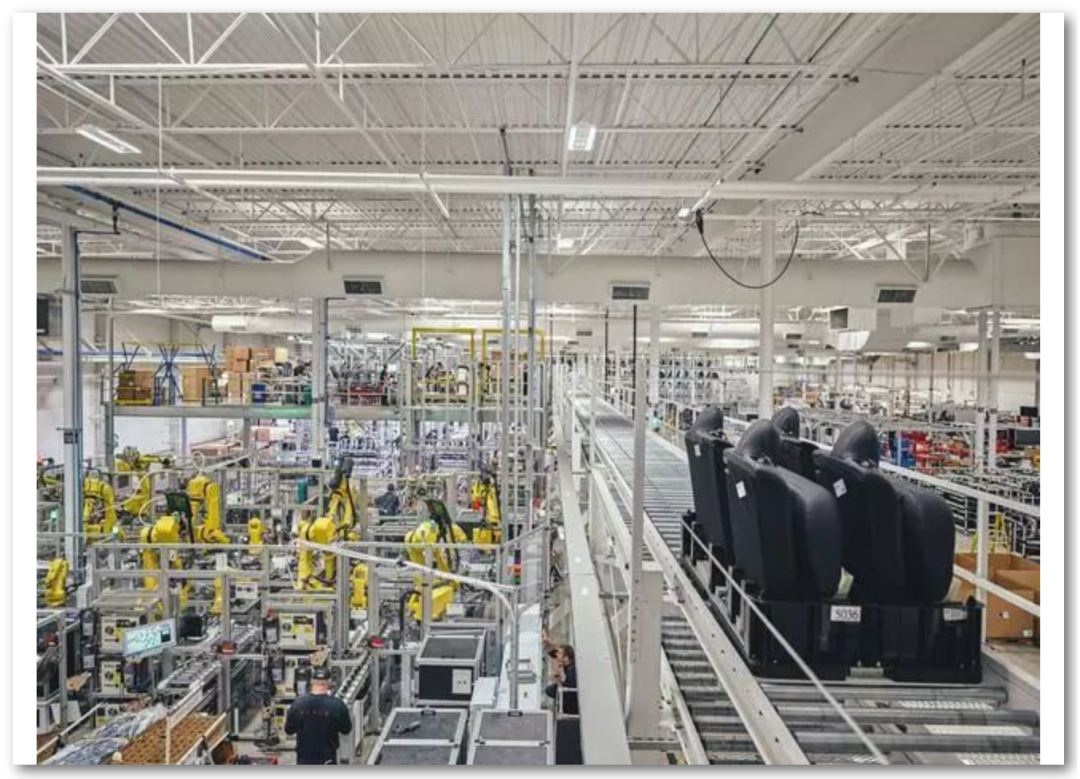
Automated seat assembly line
Dozens of current and former Fremont factory employees (most requesting anonymity) said that a company hell-bent on mass-producing vehicles tends to tolerate unsafe working conditions. A 2017 analysis by nonprofit Worksafe showed that serious injury incidents at Tesla's factory in 2015 and 2016 were substantially higher than the industry average. Tesla, which is non-union, has been a target of the United Auto Workers. Tesla countered that Worksafe had ties to labor interests.
Tesla stated that factory injury rates fell 25% in 2017, roughly matching the industry average. In June of this year, Musk said that as Model 3 production continued to increase, Tesla's injury rate for 2018 so far had been 6% below average.
Tesla's safety record came under renewed scrutiny early this year when the Center for Investigative Reporting published an article stating that Tesla deliberately classified workplace injuries as personal medical issues, making the factory appear safer on paper.
Tesla dismissed the report as "an ideologically motivated attack by an extremist organization," but according to follow-up reporting, Tesla subsequently added 13 injury incidents from 2017 to its safety logs. Tesla responded that the company regularly updated its safety logs to stay prepared.
"One critical mistake Tesla has made is ignoring the rich experience of the auto industry over the past 50 years," said Harley Shaiken, a professor at UC Berkeley. Shaiken chaired a state commission that in 2010 had warned against closing the Fremont factory, which had previously operated as a joint venture between Toyota and General Motors. Shaiken said Tesla sought "to start from scratch in a way that leads to breakdowns and near-breakdowns."
Tesla claimed that the Model 3's automated production lines would make the factory safer. But when machines malfunctioned, employees still had to step in and clean up the mess. For example, an extraordinarily complex machine transport system used to move parts to the production line had to be dismantled, with human teams ultimately taking over the work. (Parts of the transport system, including 500 machines used to lift components, were later repurposed for building the new manual production line inside the tent.)
Tesla's Fremont factory currently employs roughly 10,000 workers. In 2006, at the peak of GM and Toyota's operation there, the same factory produced more than 400,000 vehicles with half as many employees. Tesla argues that more labor is justified given the greater number of vehicle components being produced in-house. But employees interviewed said the company has struggled to maintain adequate staffing levels. Both current and former workers said 12-hour shifts are commonplace, with some stretching to 16 hours.
To combat fatigue, employees consumed large quantities of Red Bull, sometimes provided free by Tesla. New employees coined a term: "the Tesla stare." "They come in full of energy, bright-eyed," said Tesla production associate Mikey Catura. "Then a few weeks later, you see them walking out of the building dazed, eyes glazed over, like zombies."
Four current employees described the immense pressure they faced to avoid delivery delays — to the point where they waded through untreated sewage spills on the factory floor because there was no time to address them.
Dennis Duran, who worked in the paint shop, said that on one occasion when employees hesitated, he and his colleagues were told: "Walk right through it. The line cannot stop." Tesla said it was unaware whether any manager had instructed employees to walk through sewage, and that the piping issue was promptly resolved. Tesla additionally noted that both Duran and Catura have publicly supported unionization at Tesla.
Musk and numerous Tesla employees disputed claims that workers were unhappy or unsafe at Tesla. "From a safety and production standpoint, there will always be challenges — that's manufacturing," said Dexter Siga, who joined Tesla as a technician in 2011 and is now a manager. He added that as a young, rapidly growing company, Tesla "faces considerable challenges," but always treats safety "as the number one priority."
For Musk, he said, Tesla needs to work hard because that's the only way for an American automaker to survive. "I feel a tremendous responsibility to everyone at Tesla," he said, his voice trembling with emotion. "I sleep on the factory floor not because I can't go across the road and stay at a hotel, but because I want people to see that my circumstances are worse. When things are hard, I'm willing to take on more."
"You know," he continued, "at General Motors, they have special elevators for executives so they don't have to mingle with everyone else." (GM spokesperson Ray Wert responded that this was typical Musk-style deflection from the real issue — the ability to mass-produce high-quality vehicles.) "My desk is the smallest in the factory, just big enough to get by," Musk said. "The people in the paint shop are working nonstop because I'm there burning the midnight oil with them. I'm not sitting in some ivory tower saying these things."
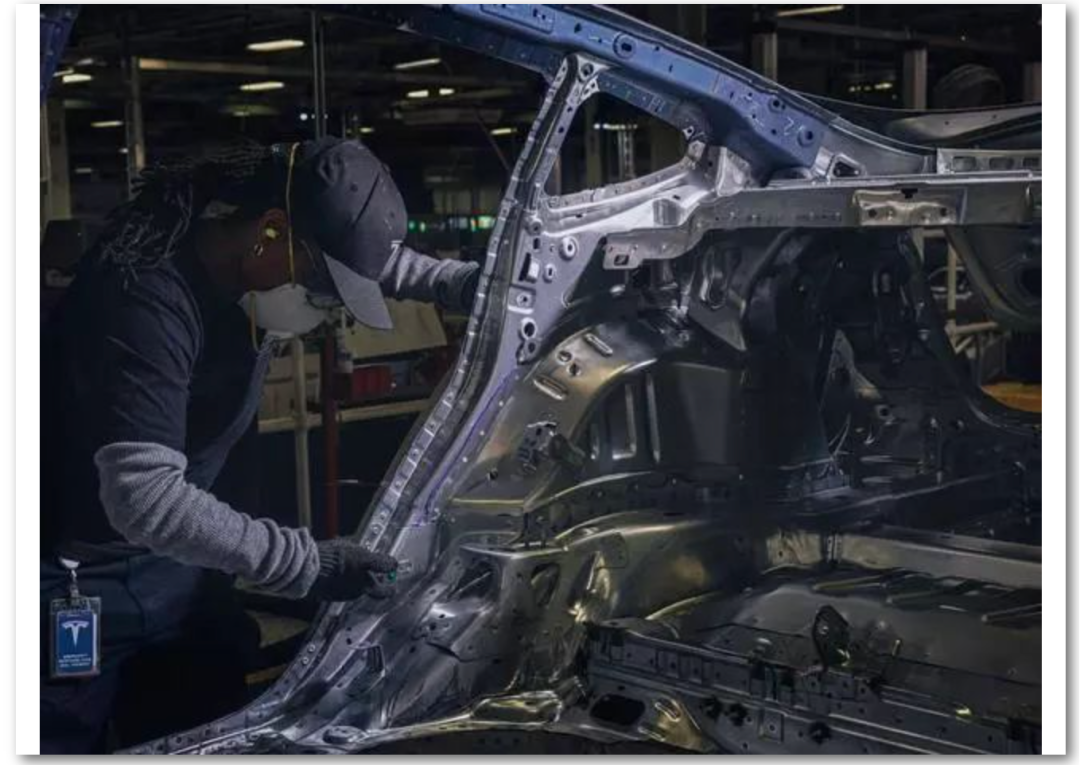
Quality inspector Eli Johnson examining the body assembly line
05
Escaping "Hell"
In July 2017, Musk delivered the first Model 3 sedan at a lively party in Fremont. Reviewers gave the car favorable marks, but one obvious question lingered: Tesla might never deliver Model 3s in the numbers Musk had promised.
The first problem involved batteries. Tesla jointly operated a battery factory in Nevada with Panasonic, and they had just designed a new battery slightly larger than the standard 18650 cells used in previous Tesla vehicles. The new battery performed better, but the automated production line meant to assemble thousands of these cells together simply couldn't handle the new format, so for a time the work had to be done by hand. Eventually, a new system developed by Germany's Grohmann Engineering was built and successfully deployed.
Last November, Musk told analysts he felt "deeply frustrated" but was doing everything possible to solve the battery assembly problem. Then other issues emerged, and Tesla had to shut down the Fremont factory for five days this February.
In retrospect, Musk said, trying to push Tesla's factory to such a high degree of automation immediately had been overly ambitious. "We thought it was a good idea, but it wasn't," he said. "We were so foolish, we didn't know what we were doing."
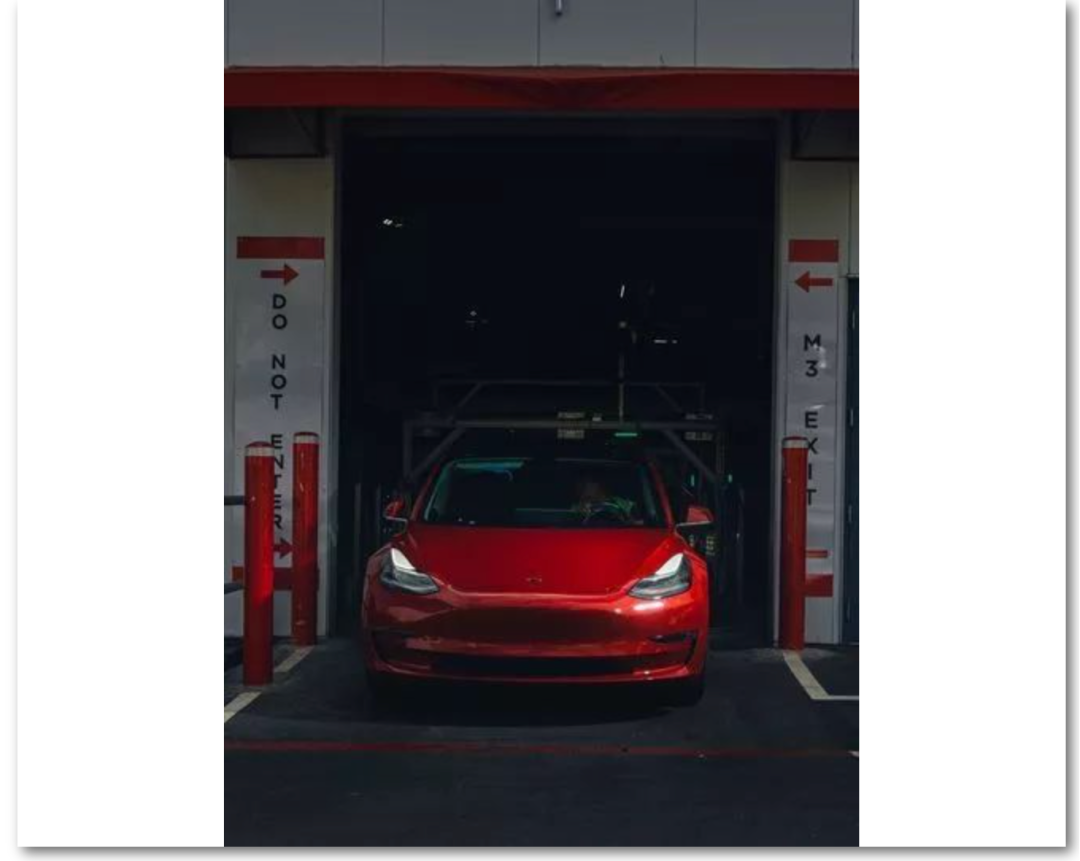
Brand new Model 3 rolling off the line
In April, Musk personally took over manufacturing engineering. "Back to sleeping at the factory," he wrote on Twitter. "Car biz is hell." Factory chief Field went on leave the following month; he subsequently resigned from the company. In mid-June, Tesla announced a 9% workforce reduction, with more than 3,000 people laid off.
Musk spent his 47th birthday in late June, the final week of Tesla's push to hit the 5,000-vehicle production target. "First day at the factory," he tweeted. "Not bad." On the Friday before the production deadline, Musk seemed a bit giddy about the anticipated Tesla stock surge, posting a short video on Twitter. On Sunday, he announced Tesla's new milestone, expressing his love for Tesla employees with characteristic exuberance. Tesla's stock rose 5% Monday morning.
But the joy of success proved fleeting. Before lunch, everything had returned to normal, and Tesla's stock closed down 2% that day. On Tuesday, it fell another 7%. Musk's predicted "short burn of the century" failed to materialize, as skeptics pointed out that Tesla's mad sprint was unsustainable.
In a July 8 interview with Bloomberg Businessweek, Musk appeared relatively confident. "The past year has been incredibly difficult, but I believe everything will be better in the coming year," he said. One foot was still "in hell," he said, but the "manufacturing hell" would be over within a month.
Currently, the Model 3 outsells any comparably priced mid-size sedan in the United States, including sedans from Mercedes-Benz, BMW, and Audi. The Model 3 drives exceptionally well. When you press the accelerator, the Model 3 delivers a backward-pushing jolt. Tesla's designers have tried to replicate this feeling of instantaneous acceleration in every aspect of the driving experience. "Foot down, instant acceleration," said Lars Moravy, director of chassis engineering. "The car doesn't accelerate too fast or with delay. That's the essence of the electric motor and our brand."
Of course, rapid acceleration isn't unique to the Model 3 — all electric vehicles do it. But because Musk did what he did, this category of vehicles has a market at all. He told the world that consumers would buy zero-emission cars in large numbers. Whatever happens to Tesla, Musk has at least succeeded in this. As he put it, Tesla is "a real car company." It is glory, and it is hell.