Code Brain | Google Experience: Fix the Team First, Then Fix the Problem

Skillfully assembling diverse talent into effective teams

As an executive coach, Bill had one guiding principle: the team comes first. And the single most important quality he looked for and expected in people was a "team-first" attitude. As Charles Darwin wrote in The Descent of Man: "A tribe including many members who, from possessing in a high degree the spirit of patriotism, fidelity, obedience, courage, and sympathy, were always ready to aid one another, and to sacrifice themselves for the common good, would be victorious over most other tribes; and this would be natural selection."
This article was written by Eric Schmidt, former CEO of Google and current technical advisor to Alphabet; Jonathan Rosenberg, advisor to Alphabet's management team; and Alan Eagle, advisor to Alphabet's management team.
01 Fix the Team First
At a Google internal meeting a few years ago, the group discussed the costs of several ongoing businesses. Ram Shriram, a former Google board member, said with concern: "Costs are getting out of hand! Shouldn't we take a closer look at how to handle this?" After a few rounds of discussion, Bill spoke up. "Don't worry," he said. "We have the right team working on it."
Ram said: "I learned something from that. Bill didn't jump straight to solving the problem itself — he focused on the team. Instead of analyzing the problem, we discussed the team's staffing and whether they could solve it."
Managers tend to focus on the problem at hand. How are things going? What's the issue? What are our options? These are all worth exploring, but Bill's instinct told him to lead teams in a more fundamental way. Who's working on this? Do we have the right people to solve it? Do they have the resources they need to succeed? Sundar Pichai, CEO of Google, said: "When I became CEO of Google, Bill advised me, 'In this role, you need to rely on others more than ever. Pick your team — and put real effort into thinking about this.'"
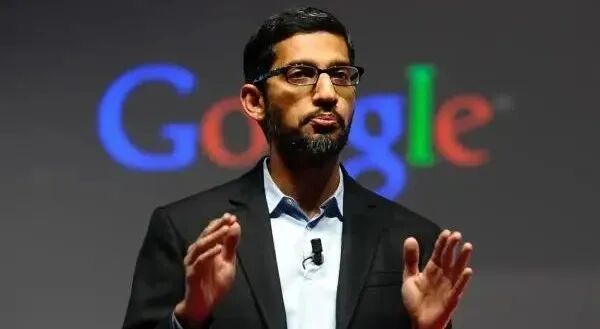
Sundar Pichai, CEO of Google
Bill helped us apply this thinking when we faced a problem in 2010. At the time, Apple (meaning Steve Jobs) believed that Google's Android operating system infringed on patents Apple had developed for the iPhone. Apple sued Google's business partners, the manufacturers of Android phones. For Bill, this wasn't just a business or legal issue — it was personal. He was Jobs's close friend, an Apple board member, and an informal but highly influential coach to Google's leadership. It was like watching his two children fight, except the stakes were far higher than a favorite toy.
Bill's approach remained focused on the team rather than the problem. Though he knew plenty about the issues and phone features involved, he never once offered an opinion on the merits of either side's arguments. What he did do was advise Eric to put the right person in charge of the dialogue with Apple. That person was Alan Eustace. Alan became the chief diplomat facing Apple, and his job was to make sure the relationship between the two companies didn't break.
Later in Bill's career, Google planned a major restructuring. The company was forming a new holding company called Alphabet, and moving its speculative investments (collectively called "Other Bets") out of the parent company into separate, independent companies. This new organizational structure represented a significant shift in both operating structure and management culture. Sundar Pichai would be elevated to lead Google, and Larry Page would become CEO of Alphabet. Meanwhile, Nikesh Arora, the company's sales chief, was departing, leaving a critical leadership gap. Google reached out to Omid Kordestani, its first-ever sales chief. Would he be interested in coming back?
Omid said: "It was clear that the sales business would move to Alphabet, and Sundar would become CEO of Google, but it wasn't yet clear how we would get there — there were many complex steps involved."
When he spoke with Bill, they didn't talk about operational changes, or any tactics or strategy involved. They talked about the team. Bill wanted someone who cared about the company and its people to help navigate this transition, and that person was Omid. Omid said: "It's unusual to care so much about the team at a time like this, because transitions can be pretty brutal. But Bill didn't see it that way — the management team was what mattered most to him."
02 Pick the Right People
Bill said: "If you're running a company, you've got to surround yourself with really, really great people." This wasn't his most startling observation — hiring people smarter than yourself is a business cliché. Everyone who represents the CEO in managing a specific function should be better at running that function than the CEO. Sometimes they represent HR or IT, but most of the time they represent the company. These managers are smart, highly capable people, and the company wants their best ideas.
Bill looked for four qualities in people.
-
They had to be smart — not necessarily good grades, but rather able to learn quickly and work across domains, while building connections in those domains. Bill called this the ability to make "far analogies."
-
They had to work hard.
-
They had to be highly trustworthy.
-
They had to possess a hard-to-define trait: resilience, meaning the passion and perseverance to get back up and charge again after being knocked down.
If Bill believed someone had these four qualities, he would tolerate many other flaws. When assessing these traits in interviews, he asked not just what candidates had done, but how they had done it.
If a candidate said they "led a project that drove revenue growth," understanding the process by which they achieved that growth revealed how deeply involved they had been: Did they actually do the work? Were they a doer? Did they build a team to do it? Bill paid attention to pronouns in their answers: Did this person say "I" (which might indicate a "me-first" mentality), or "we" (which could signal someone who values teamwork)?
Bill also cared deeply about whether a candidate had stopped learning. Did their answers outnumber their questions? That was a bad sign!
He wanted someone committed to the mission, not just their own success. Team first!
As Sundar Pichai put it, the company looks for "people who understand that their success depends on good collaboration, on give-and-take, and on putting the company first." Whenever Sundar and Bill found such people, "they were treasured."
How do you know when you've found them? Pay attention to what they've given up, and whether they get excited about others' success. Sundar noted: "Sometimes making decisions means you have to give something up. I pay special attention to the signals people send when they let something go. Some people also get excited when other things in the company are going well — things that have nothing to do with them, but they're thrilled. I look for these details. It's like a player on the bench cheering for others on the team — Steph Curry jumps up excited when Kevin Durant hits a great shot. You can't fake that reaction."
In 2011, Eric stepped down as Google's CEO. In the subsequent reorganization, Jonathan was also removed from his role as head of products. He was considering several options, including running Google's enterprise business (now the multi-billion-dollar Google Cloud), but decided to turn them all down. The reorganization had hurt him, and he saw the other positions as demotions. Bill was deeply disappointed, because Jonathan had put his wounded ego ahead of what was best for Google's team — and in fact, these options would have been good for him too. He had made "an ego- and emotion-driven mistake," and Bill felt Jonathan needed to shift his thinking away from job titles.
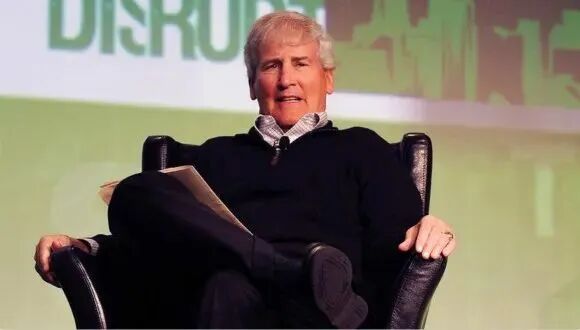
Bill Campbell, Apple board member
He advised Jonathan to spend more time thinking through his decision, and continued to meet with him regularly. With Bill's help, Jonathan later took on other roles and rejoined Google's management team. Bill didn't give up on Jonathan, but he would never let Jonathan forget that he had let the team down. Jonathan's case vividly illustrates: when change happens, people must prioritize what's best for the team.
Bill valued courage highly — people's willingness to take risks and stand up for what benefits the team, even if it meant personal risk.
Early in his Google career, before becoming CEO, Sundar Pichai would speak up when he felt something wasn't right, giving us feedback when he reported to us, and later speaking directly to Larry Page once he became CEO. That took courage, but as Sundar said: "When I voiced my thoughts on these difficult issues, Bill always appreciated it, because he knew I was doing it out of care for the company and the product — that was my motivation."
Sundar now shows the same respect to outspoken employees. "Some people are incredibly team-oriented and genuinely care about the company. Their opinions matter a lot to me, because I know they're coming from a place of good intent."
Bill loved working with "difficult" people — those more outspoken about their views, occasionally abrasive, and unafraid to go against the grain or the crowd.
We don't think Bill actively sought out people with this personality type, but he certainly tolerated and even embraced them. Others might find such people hard to work with, but Bill found them interesting and worth knowing, and sometimes helped smooth their rougher edges. The most effective coaches tolerate and even encourage a bit of quirkiness and "spikiness" in team members. Whether athletes, founders, or corporate executives, top performers tend to be "difficult," and teams need such people.
Sheryl Sandberg said that when she first met Bill in late 2001, it was her first week at Google. He asked her: "What are you doing here?" Sheryl's title was "General Manager of Business Units," a position that hadn't existed before she arrived. In fact, the company had no business units, so she had nothing to manage. She replied that she had previously worked at the Treasury Department. Bill cut her off: "Okay, but what are you doing here?"

Sheryl Sandberg, COO of Facebook
This time, Sheryl answered based on what she imagined the role to be. Bill still wasn't satisfied: "But what are you doing here?" Sheryl finally answered honestly that she wasn't doing anything yet. Sheryl said: "I learned a very important lesson — he wasn't asking what I had done in the past, or what I wanted to do, but what I was actually doing every day." This was perhaps the most important trait Bill looked for in people: working hard every day, and doing work that mattered. He wanted doers.
When evaluating employee performance, it's important to consider their fit with the team and company. People — especially in Silicon Valley — like to find "superheroes," those with extraordinary intelligence and insight who can do anything and do everything best. At the top levels of companies, this tendency is amplified.
As Philipp Schindler said: "Bill used to say, you can't have a team of just quarterbacks, so managers need to focus on team composition and artfully combine different kinds of talent." Everyone has limitations, and it's important to understand each team member — to find out what each person excels at, and then see how to help them work with the rest of the team. Bill greatly appreciated high cognitive ability, while also understanding the value of soft skills like empathy, which aren't always highly valued in business and especially not in technology companies. At Google, he made us realize that only the combination of intelligence and heart makes great managers.
Bill didn't overemphasize experience. He looked at skills and mindset, and he could predict what you could become. This is the unique gift of a coach — the ability to see someone's potential, not just their current performance. Even if you can't judge it precisely, you can believe in people's potential rather than dismissing them simply for lacking experience. Generally, companies hire for experience: I'm hiring for X, so I want someone with years of experience doing X. If you're building a high-performance team, a future-oriented team, it's best to balance experience and potential when hiring.
Picking the right team members also involves reconsidering who among existing company members should be included.
When Jonathan ran Google's product team, he had several product management directors reporting to him. But due to the company structure, engineering directors weren't on the team. This created conflicts when allocating people and resources — product directors didn't always agree with engineering directors. Jonathan's all-hands meetings were often spent arguing about these decisions, with people complaining that engineering directors weren't present. Bill's advice to Jonathan was simple: add more people to the team.
Jonathan should invite engineering directors to the all-hands meetings he ran — not just once, but every time. Then have them participate in product planning discussions, share their perspectives, and ultimately support whatever decision was made. These meetings weren't for Jonathan to demonstrate his command of the topics or to tell people what to do (which Bill had observed him doing sometimes), but to bring the team together. The only way to unite a team is to bring in the people at the center of the disagreement. Of course, there would still be plenty of arguments, but because the meeting composition was richer, they would be resolved more quickly, building stronger relationships between different groups.
Early in his business career, Bill demonstrated his talent for picking people. Eric Johnson was Bill's colleague at Kodak. Eric said that Kodak was so profitable at the time that it didn't tend to fire mediocre performers. Bill wasn't someone who knew how to fire people either — he only learned to better handle underperforming employees later, when he had to make cuts as CEO of Intuit.
At Kodak, however, he developed a talent for finding "doers" in any department and getting those people to voice their views. This wasn't always easy in a large company, but Bill looked for the same qualities in others that he sought in job candidates: intelligence, hard work, integrity, courage. Then he would find ways, formal or informal, to bring these people together to discuss specific projects or problems, and push things forward.
Source: Trillion Dollar Coach: The Leadership Playbook of Silicon Valley's Bill Campbell, Citic Press Corporation. Excerpted and published by ClecChina (ID: ClecChina).