Code Brain | How Far a Team Can Go Depends on These 6 Factors

Code Brain: Ecological Connection, Cognitive Resonance
Entrepreneurship is a never-ending practice. Whether your fundamentals are solid directly determines how far your company can go. Under the pandemic, startups had their weaknesses and blind spots in business operations and organizational management exposed. Managerial fundamentals became a critical test and required course for core leadership teams.
That's why Code Brain is launching its "Management Fundamentals" series, targeting three foundational yet core managerial capabilities for founders — people, finance, and operations — focusing on 10 major themes including personal leadership, talent identification and selection, performance management, high-performance teams, goal management, and business-finance integration. The series provides comprehensive basic management methods and practical, ready-to-use tools, enabling leaders to learn and apply immediately, helping elevate founders' fundamental management awareness and capabilities.
Starting August 2022, the "Management Fundamentals" series will run monthly, with two sessions each time. We've specially invited Xu Yifeng, partner at Chief Organizational Officer, to lead the instruction. He spent a full day comprehensively explaining his understanding of leadership, with particular emphasis on how leadership standards can be implemented in companies and deeply linked with organizational talent systems.
For a team leader wanting to build a high-performance team, personal leadership alone isn't enough — five other elements matter greatly: goals, division of labor, mechanisms, communication, and relationships. Together they form the six key elements of team leadership.
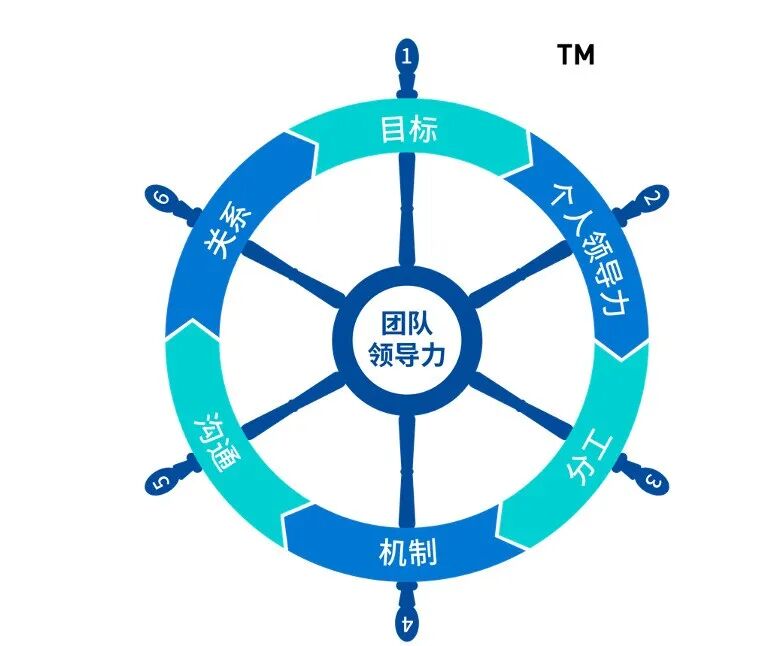
Image source: Team Leadership Model
I. Goals
Goals encompass three aspects: externally/customer-driven; linked to company vision and strategy; and effectively decomposed to teams and individuals. Regarding goal management, here are two tools to share.
1. OGSM Method
In OGSM, O refers to medium-to-long-term goals (3–5 years), G to short-term goals for the coming year; S to strategy (which needs to answer two key questions: "Where to Play" and "How to Win"); and M to corresponding metrics.
The hardest part of "goals" is figuring out what choices enable their achievement. Strategy is choice. Given limited resources and talent, choosing what to do and what not to do, and through what metrics you prove you've done it — this comprises OGSM.
2. OKR Method
OKR's "O" and "KR" refer to objectives and key results respectively, another form of goal management. OKR works better during business strategy exploration/iteration phases.
A word of caution: don't be tool-obsessed. OGSM resembles a mountaintop strategy, largely top-down; OKR encourages everyone to explore direction, because sometimes even the #1 leader isn't sure what the right direction is, and adjustments are generally more frequent.
But both are goal management tools. Companies need only choose one suitable to their development stage and team preferences — don't get bogged down in tool debates.
II. Personal Leadership
Personal leadership is the ability to lead people to places they've never been; it's the process of one life influencing another. It typically comprises "six strengths" — inspirational power, learning ability, decision-making ability, organizational ability, teaching ability, and execution. I won't elaborate further here.

III. Division of Labor: Organization and Process Design
1. Organization Design
First, organization design must match business strategy. Different business strategies require different organizational forms.
For example, some companies' entire business runs through one app — user acquisition, conversion, and commercial success, with a relatively short value chain and simpler organizational structure. For physical industries, especially those building their own supply chains or doing global business, organization design becomes far more complex.
Second, horizontal collaboration, vertical division of labor.
Horizontal division of labor relies on processes; vertical division of labor looks at hierarchy.
Early Xiaomi had only three layers from the #1 leader to frontline employees, representing flat organizations; ByteDance may already have 7–8 levels from frontline to CEO, indistinguishable from major international companies.
Flatter isn't always better. Flatness brings benefits but also problems — for instance, no room to develop talent and build succession pipelines; additionally, one person effectively managing dozens or hundreds of people is simply impossible.
Many startups need only functional divisions early on, without prematurely adopting large enterprises' divisional or matrix structures. Putting a big horse in front of a small cart often costs more than it gains.
So organization design must be highly correlated with business development stage and model.
All contributions tightly connect to company goals — that is, customer value creation.
2. Enterprise Processes
① The Importance of Processes
Many startups neglect processes, focusing only on departments. Why do many internet companies ignore processes? Because they typically have an "operations" role manually executing processes — when work can't find an owner, hand it to operations to string together the workflow manually.
How do siloed departments form? Because horizontal alignment is missing. Relying solely on vertical escalation to resolve issues, with everything requiring the CEO's decision, is too inefficient.
Once a company completes rapid growth and needs efficiency gains, process梳理 becomes unavoidable. With horizontal processes, KPIs become clear: who does what next, what counts as done well, how work flows from one department to another — this step is an unavoidable hurdle for leveling up. Especially with multiple businesses, operating without processes is unimaginable.
② Types of Processes
Processes come in several categories. For SaaS companies (software as a service), the three main general business processes are: IPD (integrated product development), LTC (lead to cash/sales), and ITR (issue to resolution). Supplementary management and support processes complete the company's process system.
③ Common Problems in Process Development and Implementation
First, unclear process functions.
Some functional departments frequently initiate processes to prove their value; another functional department initiates similar processes, which when placed together prove contradictory. The reason: they didn't consider process development from a functional perspective. They often complicate simple matters.
Second, teams don't communicate, working in silos with no "user" perspective.
Process development should generally involve cross-departmental coordination groups, especially including users, to avoid working in a vacuum. For quality inspection processes, at minimum production department staff — the process users — need to participate in process development. Because product quality isn't inspected into existence; it's produced into existence.
Third, no designated process owner, no one responsible for ongoing iteration and optimization.
Assuming work is done once the process is published, eventually the system accumulates piles of processes and later arrivals don't know which to use. In reality, dedicated process owners need to focus on process updates and optimization, accountable for the results. Environments change; processes must change too.
Fourth, betting all problem-solving on process development.
Processes themselves aren't mysterious, nor should process-based organizations be over-mythologized. When you visit McDonald's, Starbucks, or a bank counter, processes everywhere guide staff work.
Processes aim for efficiency, replicability, and sustainable optimization. They're also convenient for training — introduce the process clearly to new hires, and everyone understands how work proceeds.
3. Organization Design
Six dimensions to consider in organization design: task flow, talent selection and development, performance incentives, tools/technology/equipment, data/information, and architecture/decision-making.
Looking only at task flow isn't enough — you must examine talent selection and development. Sometimes it's not a process problem but a people problem. Spending all day on processes is worse than investing time in developing people's capabilities.
Sometimes it's not a people problem but performance incentives not being in place, yet expecting everyone to self-motivate — not very realistic. We must start from normal human nature, considering what reward and punishment mechanisms encourage the advanced and spur the laggards.
If your organizational structure is matrix-style, meaning dual reporting — to both function and business. The hardest part of dual reporting is the person at the intersection. Take HR: follow the boss's demands for high-quality hiring by strict standards, or follow business demands to hire quickly?
If well-executed, matrix structures can better balance short-term and long-term interests than BU systems. BU systems tend toward short-term results orientation — your annual bonus is based on that year's target achievement, so why consider the long term?
Apple remains functionally organized to this day — no phone division, computer division, or tablet division. Why? Because functional organization ensures every function can unreservedly uphold the highest standards and do things right.
Apple uses what appears to be a very "traditional" organizational structure to sustain excellence and produce the best products, capturing over 80% of industry profits with extremely high efficiency.
This is how differences in architecture, process, division of labor, and decision-making mechanisms lead to different results.
IV. Mechanisms
Many mechanisms relate to team operations. Here are several commonly used ones.
1. Goal and Strategy Generation Mechanism
How are annual goals produced? Either OGSM or OKR methods work.
2. Strategy-Organization Alignment Mechanism
Everyone's passionate when setting strategy and goals, but have you considered what organizational capabilities and culture are needed to support these strategic goals? Actually, making bold decisions isn't hard — organizational execution is what matters.
3. Meeting and Decision-Making Mechanism
Executives spend most of their time in meetings; how to meet effectively matters greatly. It's not about categorizing meetings. Clear meeting purpose, principles, communication methods, decision-making mechanisms, and post-meeting follow-up — all are indispensable.
4. Performance Management & Incentive Mechanism
Performance management matters greatly. Many companies just do a performance rating every six months with no management actions in between — this isn't a performance management mechanism, just a performance appraisal act.
Performance management should follow PDCA: plan, daily tracking and feedback, periodic evaluation, and performance incentives — this forms a closed performance loop.
5. OKR Review Mechanism
Conduct regular reviews, with continuous improvement after review. Reviews must hit home; perfunctory reviews are meaningless.
Have you seriously reflected on what subjective and objective reasons explain why something wasn't accomplished, where you could have done better, whether everyone can give honest feedback — these elements form a mechanism.
V. Communication
Active listening, effective expression, effective feedback, questioning ability, proposal ability, cross-departmental collaboration, and conflict management — all fall under communication. As long as work involves dealing with people, whether internally or externally, these skills need practice.
1. Communication Funnel
The difficulty of communication stems from the communication funnel. Why do people need to communicate? Why must the same thing be repeated many times before others remember? Because information transmission distorts step by step.
You think 100%, say 80% — why? Poor expression ability is one reason; also being too indirect, unwilling to speak plainly, expecting the other person to read between the lines.
Why does the listener hear even less? Maybe it wasn't explained clearly, or they misunderstood.
Why is there further loss between hearing and understanding? Maybe the listener lacks background knowledge — you're in IT, I'm in sales, I genuinely don't understand what you're saying.
Why does action fall short even after understanding? Knowing doesn't equal doing; capability or willingness may be issues, or incentives aren't in place, so even understanding doesn't lead to execution.
This is why communication ability needs improvement — to minimize distortion as much as possible.
2. Communication Skills
① Listening
To truly understand others, listening ability matters greatly. When did you last truly listen? When did you last resist the urge to speak throughout?
② Expression
Two layers here: expression ability and expression willingness. You might think of something but dare not say it, so what you want to convey isn't 100% transmitted.
③ Questioning Ability
Direct orders don't always motivate action. Use good questions to stimulate thinking rather than giving answers directly.
④ Feedback
Feedback matters greatly. A timely positive or constructive feedback can change someone's work state and results.
Many people love using the word "but" when giving feedback. You should separate what comes after "but" into distinct feedback sessions. If something was done well this time, say what was done well and its impact on the company. If something wasn't done well next time, say that thing wasn't done well. Sandwich-style feedback appears to reduce the feedback giver's pressure but actually produces opposite effects.
3. Behavioral Pattern Model
The behavioral pattern model includes: what is seen and heard, subjective interpretation, feelings formed, and behavior enacted.
Often in moving from step one to step four, we "fast-forward" through subjective interpretation and feelings formation — many conflicts arise this way. You don't know the other person's reasons at all, yet quickly conclude based on your experience.
If you make these processes transparent, results differ. This skill is called inquiry: "This is how I see it, and here's why." Your conclusion differs from mine — you can also share how you analyzed it.
Probing how the other person thinks — making steps two and three transparent — is an important process for promoting mutual understanding, and can eliminate many cross-departmental collaboration conflicts.
4. Cross-Departmental Collaboration
Cross-departmental collaboration difficulties stem from many sources: cognitive differences, communication ability differences, value differences, and style differences all generate conflict.
① Mindset for Improving Cross-Departmental Collaboration
First, explore needs, understand others before seeking to be understood.
For instance, seeing something, you might say: "I observe you're very emotional — can you share what's behind this?" In communication, you first understand the other person, and they'll naturally be willing to spend time understanding you — this is about posture.
Second, align goals, think win-win.
Cross-departmental goal misalignment is normal. Can everyone think one level higher, not using department goals but considering what company goals need achieving, and how we two can coordinate to better realize company goals?
If departments need to cooperate, they need win-win thinking at minimum — after cooperating, both our results benefit. Not forcing others to do things harming their interests for good KPIs, which ultimately prevents effective cooperation.
Third, consensus on solutions, synergize.
As long as you don't insist your solution is the only correct one, and are willing to openly listen to others' ideas, better methods can be found. We call this the "third solution" — neither your idea nor mine, but a better solution produced through thorough discussion and communication.
Don't always think you hold the truth. Many people hold part of the truth; you need to spend time listening, making the puzzle increasingly clear and comprehensive, making it easier to find better solutions.
② How to Effectively Explore Both Parties' Needs?
Step one: use empathetic listening to understand others. Sharing your feelings is relatively safe, relatively objective — don't evaluate. "How I feel doing this" — it may not be fact, but my feelings matter. "This lacks merit" — that's evaluation. "How this makes me feel" — that's my feeling.
Step two: after first understanding the other person, once they feel understood, you can seek their understanding with respect, stating your own views: "I want..." "Based on my experience, I believe..." "I tend toward..." "Thank you for sharing your thoughts — would you be willing to hear my perspective?"
As long as you do the listening first, then this action, the other person will certainly reciprocate — this is how people interact. The hardest part of win-win thinking is balancing courage and consideration: daring to speak out while having empathy to understand the other person. Many people have plenty of courage, telling others their demands, but lack consideration — things don't get done.
Having willingness doesn't mean having ability; having ability doesn't mean having willingness — balancing these two is quite difficult. Too many things have no single correct answer or single correct method. Often arguments are "my idea differs from yours, you want to convince me, I want to convince you," ending in discord.
If you look one level higher, don't we all want better company results? Knowing self and other enables win-win.

VI. Relationships
Here "relationships" mainly refers to building trust relationships.
Why do many startup teams' veteran members have excellent relationships? Because they've been through battles together. Their mutual trust is very high.
But many teams stagnate precisely because veteran members' relationships are too good — newcomers can't integrate. Due to lack of necessary trust, veterans watch newcomers stumble without telling them. Meanwhile newcomers are especially eager to prove themselves capable, fall into pits, and the boss thinks they're terrible and fires them. Next time the boss thinks of someone, hires a high-salary executive, and repeats the same tragic story.
How to break this?
1. Two Core Elements of Building Trust
Someone with excellent character, selfless and fearless, but zero communication ability — useless. Someone with strong ability but poor character — negative impact.
So both character and ability matter. Character needs long-term cultivation; ability can be forged.
2. Johari Window
How to increase trust? Here's a tool: the Johari Window. It divides a person's situation into four quadrants:
The open arena contains public information known to self and others;
The hidden area contains what self knows but others don't. Reducing the hidden area through self-introduction and life stories — making what others don't know smaller — is an action that increases trust;
The blind spot contains problems you don't see but others know. Moving from blind spot to open arena can be achieved through soliciting feedback. Most Chinese people dislike giving feedback, preferring to let others figure things out. Through feedback actions, good performance gets timely praise, mistakes get timely correction.
The unknown arena contains what neither you nor others know.
Shrink other arenas, expand the open arena. The more open a person is, the easier to gain others' trust.
Why don't I recommend "criticism and self-criticism"? Because everyone wants to save face, easily making it perfunctory, ultimately becoming formalistic.
3. Emotional Bank Account
The emotional bank account is a tool from The 7 Habits of Highly Effective People for building trust. Others are willing to support or cooperate with you because you've done many things building mutual trust, so they'll help when you need it.
This is an emotional bank accumulated over time, usable at critical moments. Much trust comes from repeatedly making deposits, slowly accumulating. At critical moments, even occasional withdrawals (seeking help) won't severely damage trust, because you've saved so much "money."
The above provides a simple, comprehensive introduction to the six elements of team leadership. Leaders who truly achieve high-performance teams get the actions right across all six elements. Hope this brings you some inspiration.

(This article was compiled and edited by Biji Xia)

Code Brain Issue 33 | An Entrepreneur's 11,626.5 Hours
Code Brain Issue 32 | Leadership Is Leading People to Uncharted Territory
Code Brain Issue 31 | Amazon's Ten Overseas Compliance Experiences
Code Brain Issue 30 | 60 Hours of "Practical Leadership" — Full Highlights!
Code Brain Issue 29 | Zheng Yunduan: What Drives Organizations?
Code Brain Issue 28 | Understanding Human Nature to Build Overseas "Vanguard Teams"
Code Brain Issue 27 | Carbon's Origins and Destinations
Code Brain Issue 26 | Overseas Marketing Matters
Code Brain Issue 25 | Mastering Liu Genghong's Traffic Code
More MaHui members can click "Read Original" to view