Code Brain | How the Internet's Most Successful Membership Program Was Born

Amazon Prime Launched in Six Weeks — Because Jeff Bezos Demanded It


This story comes from Jason Del Rey, a senior business reporter at Vox, who published it in 2019. Having covered Amazon, Walmart, and the e-commerce industry for more than a decade, he interviewed multiple insiders to piece together this investigative account.
It's easy to forget now, but Amazon wasn't always the king of online retail. In the fall of 2004, Jeff Bezos's company still mostly sold books and DVDs. That year, Amazon found itself under siege on multiple fronts. Its biggest competitors were expanding brick-and-mortar chains like Best Buy — then growing at 17% annually — while Toys "R" Us was suing Amazon for allegedly violating an exclusive distribution agreement.
And during the holiday season, a series of site outages stoked frustration among both customers and the media.
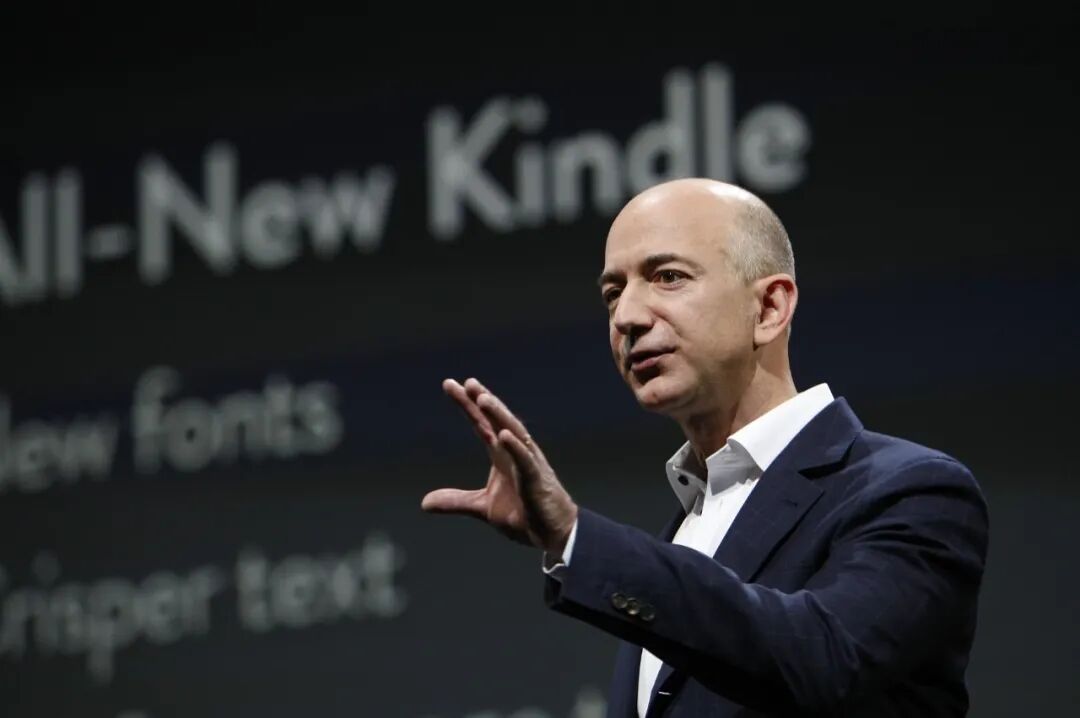
At the time, Amazon's market cap had reached $18 billion. But the internet darling was eBay, valued at nearly $33 billion. If you'd had to pick which company would become the "Everything Store," Amazon would have seemed the unlikely victor. Yet 15 years later, Amazon's market cap had surpassed $900 billion (Editor's note: More than four years have passed since publication; Amazon's market cap has since grown to $1.54 trillion), while its old rival eBay sat at just $33 billion (Editor's note: Now $22.234 billion), having spun off its (more valuable) payments division, PayPal.
Amazon Prime may well be the single biggest reason why.
Prime launched in February 2005, the first service of its kind: for an annual fee of $79, members got unlimited two-day shipping. Compared to the $9.48 per-order cost of two-day delivery, customers would break even after just nine such orders in a year.
At an analyst meeting in February 2005, Bezos told Wall Street: "Even for customers who can afford the per-order two-day shipping charge, Prime offers something close to a luxury experience."
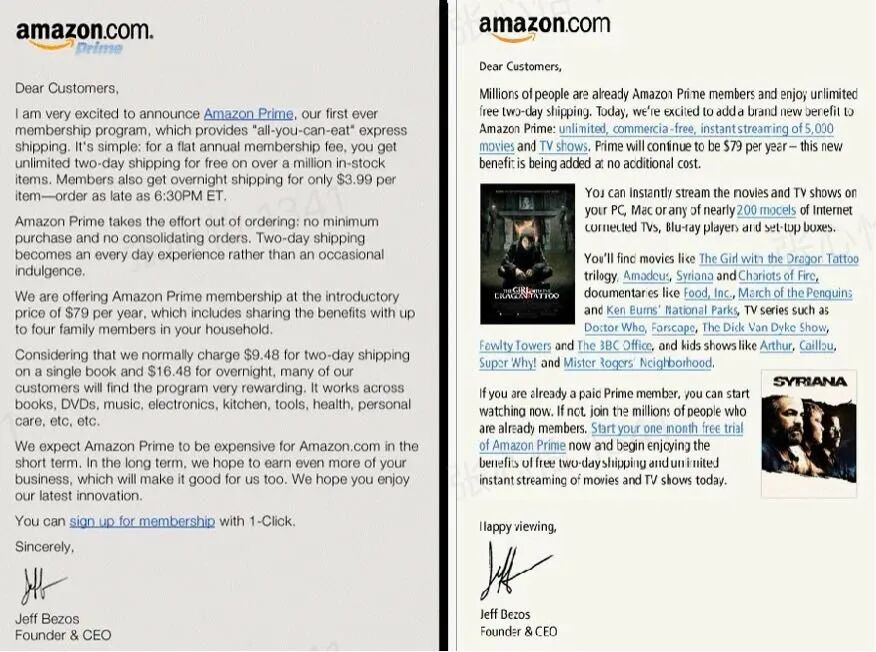
With Prime, Amazon single-handedly raised the bar for online shopping convenience and permanently reshaped consumer habits. Whether it was a last-minute gift or the final pack of diapers at home, Amazon disrupted the in-store experience with speed and ease. But before launch, rolling out Prime was a wildly risky move that sparked genuine tension inside the company. Some managers were particularly aggrieved — their own projects had been deprioritized or shelved for this secret initiative they knew little about. Many others feared that Amazon's core customers would abuse the benefits, bankrupting the company with spiraling shipping costs.
If it succeeded, Prime would also mean sweeping changes — to order fulfillment, freight operations, and internal evaluation systems — changes that were massive and deeply unsettling.
Yet Bezos's instincts proved remarkably sound. Prime members spent more and shopped far more frequently than non-members. As of last year (Editor's note: 2018), Prime had more than 100 million paid members worldwide.
This is the story of how one of the biggest innovations in internet retail came to be, even though every reasonable argument suggested it would be a disaster. It's also the story of how a deceptively simple idea — fast shipping — became powerful enough to forever alter consumer psychology.
The story is told by the ordinary employees and senior executives who built Prime themselves. Their remarks have been edited and condensed for clarity.
Andrea Leigh (former head of Prime, Amazon Canada):
At the time, we didn't know which form of e-commerce would take off. Would it be auction sites? Subscription services? Or a free-shipping model with a minimum threshold?
Vijay Ravindran (former director of ordering, Amazon):
Back then, people didn't blindly believe every Jeff idea would succeed. So there was a lot of pushback. Some brilliant people who hold senior positions at Amazon today told me: "You shouldn't let Jeff do this," "This sets a bad precedent for the company."
The "this" in question was a secret Amazon project codenamed Futurama — which would eventually become Amazon Prime. The origins trace partly to a software engineer's frustration with Amazon's free shipping program (then called Super Saver Shipping), which was maddeningly complicated to operate, both on the back end and for consumers: you needed a $25 minimum order, then had to wait 8-10 business days for delivery.
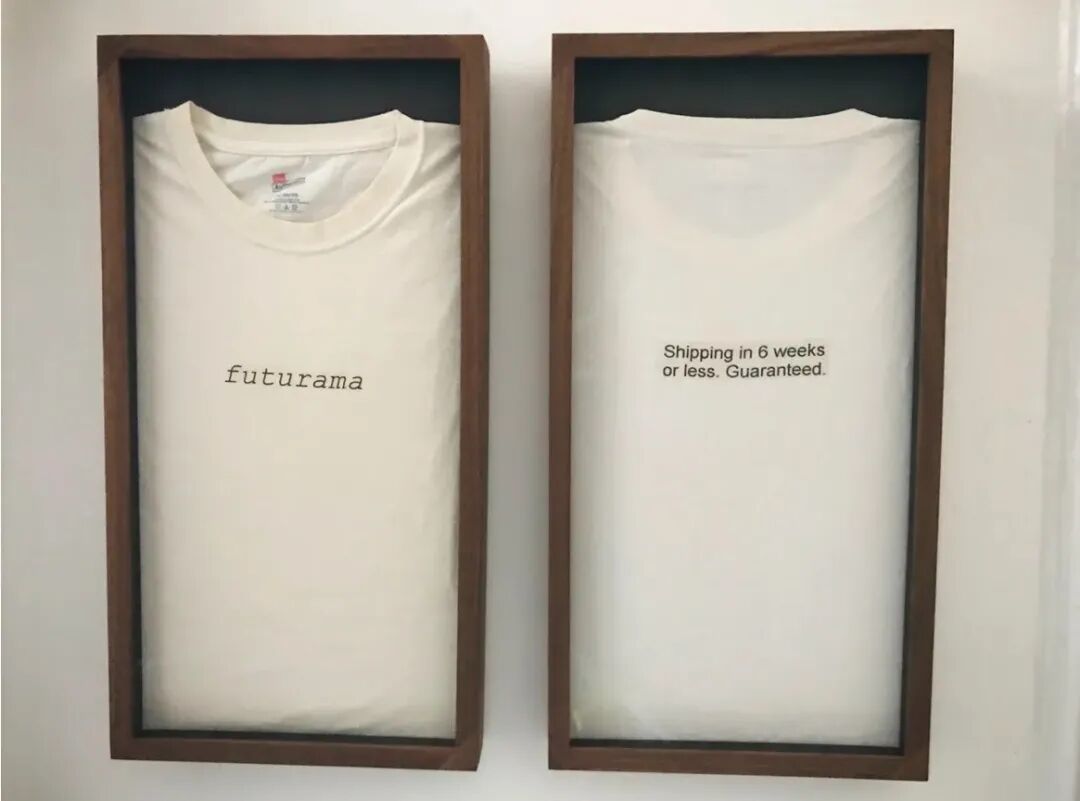
When poaching key colleagues from other departments, the Prime launch team — then codenamed Futurama — would hand out these T-shirts. Charlie Ward (former principal engineer, Amazon; currently VP of technology, Amazon):
I was a one-Click addict. I hated having to navigate through the checkout flow over and over, and on top of that, not being able to use Super Saver Shipping — that was even more annoying.
I have a perfectionist streak. Over time, it became increasingly irritating, and I realized I couldn't fix it alone. So I raised it with my team: "Wouldn't it be great if customers gave us a fee at the beginning of the year, and we gave them free shipping for the rest of it?"
When I said it, we all kind of paused, and everyone was thinking, "Is Charlie crazy?"
But over the next week, I spent some time writing up a half-page proposal outlining the basics.
Dorothy Nicholls (former senior manager of ordering, Amazon; currently VP, Amazon Web Services):
Charlie's idea was unlimited free shipping, but initially the concept itself wasn't about speed. Jeff took it a step further. I remember him saying that nobody wakes up wanting their shipping to be slower.
Greg Greeley (former VP of global media, Amazon; later VP of Amazon Prime):
"Hey, Super Saver Shipping seems to be working really well for us. Can you give me some similar ideas to speed things up?" Jeff said.
That was one day in October 2004, when the idea first surfaced. I came back with what I thought were five or six pretty good ideas...
We had a specific competitor in the book space with a $30 annual membership fee. So I proposed a program where, for $30, you could get a one-level shipping upgrade.
This drew on my airline experience. Like, you pay standard shipping and get two-day delivery, or pay for two-day and get next-day — wouldn't that be cool?
The team looked at these ideas and said, "Okay, these are all decent, but none of them really wow me."
So we mashed them all together... and eventually designed a membership program where paid members got free two-day shipping and half-price next-day delivery.
We were thrilled. I blurted out: "Well, we announced Super Saver Shipping on an earnings call. Wouldn't it be fun if we did the same thing now?" The moment it left my mouth, I wished I could take it back — Thanksgiving was just a week and a half away, the most stressful time of the year at Amazon.
But Jeff immediately seized on it: "That would be great timing for us!"
Vijay Ravindran:
That Christmas in particular, Amazon had experienced some major outages that got a lot of media attention at the time.
It was the week before the holiday shopping peak. Jeff Bezos sent a note to my then-direct manager... saying "I want to talk about this very important project."
"Whatever this is, he's not going to pile an incredible workload on the team at this point," I thought, because we were all running flat out just to keep the site up.
The meeting was scheduled for a Friday afternoon in December. But that Friday morning, the site crashed for several hours.
I don't know if any Amazon employee at my level had ever done this before, but we canceled the meeting with Jeff. And so the Prime legend began, because his response was: "I completely understand. But this is too important, so you have to come to my house first thing tomorrow morning."
The next morning, we showed up at his house on time and were actually led to a boathouse. The boathouse was bigger than my apartment, with a fully enclosed boat slip inside.
What I remember very clearly is this line: "I want to build a moat around our best customers. We must never take having the best customers for granted."
He also said something like: "I'm going to change people's psychology so they stop fixating on price differences between Amazon and other platforms."
That completely changed the mindset. It was brilliant. This would make Amazon the default choice for shopping.
As he was walking us out of the boathouse, he said, "This is really important and needs to launch before the Q4 earnings announcement" — if I remember correctly, the earnings were scheduled for the third week of January.
Nicholls:
We originally had four weeks to get it done... but we thought there was no way we could pull this off in four weeks. Even with the entire team working around the clock, it would take at least six weeks to ship an MVP.
Ward:
Jeff made us a deal. He said: "Okay, look, let's meet in the middle. You figure out how to deliver as early as possible, and I'll push the earnings call back a few weeks."
Rob Lendvai (former Amazon Ordering Technology Product Manager):
So we printed a million T-shirts. The front said "Futurama," and the back said "Guaranteed to ship in 6 weeks or less." Because the Prime project had Bezos's backing, the team had full authority to poach colleagues from any department in the company.
We'd come to your team and wreck whatever project you were working on because we were hiring a principal engineer, and as compensation, we'd leave you with a T-shirt. Your team would literally see you disappear — like you were no longer sitting in your seat, and they had no idea why. This was not a common thing at Amazon.
David Gellman (former Amazon Senior UI Designer):
Some people worked through the night. Some only needed five hours of sleep to recover. During the most intense periods of the project, I was working 110 to 120 hours a week.
Greeley:
At some point in December, I got an email from one of the engineers on the team that said: "Greg, we're working incredibly hard on this, but speaking as a shareholder, I'm genuinely scared. I think this could bankrupt the company. Are you sure this project is financially sound?"
Even for the people writing the code, the long-term outlook was impossible to determine.
Ravindran:
This wasn't a product where MBAs spent months running all kinds of crazy spreadsheet analyses and then said, "Let's do this." It was instinct and conviction — that we were smart enough to make this entirely new way of shopping work, and confident it would create value for the company.
Greeley:
Jeff just blurted out the name. He said: "We're calling it Prime."
I wasn't particularly fond of it. Personally, when I heard "unlimited premium shipping, call it Prime," my reaction was, "Prime rib?" But remember, I was a finance guy.
So I went to Chris Bruzzo, who was handling PR and marketing for us at the time. I said: "This Prime idea, I'm not sure it's quite right. We need to do full brand research."
So we put a bunch of names together and presented them to Jeff: "Look, here are 20 names, and we prefer these three over Prime." ... Jeff came in, read the document, and said: "Oh, well, this is great. I agree. But I like Prime." And then he laughed.
This was the only time in 19 years of working with Jeff that he pretended... to ignore the recommendation. He was absolutely convinced that Prime was the right name.
Ward:
Of course, because we were all computer geeks, we loved the whole prime number thing.
Greeley:
At the time, we didn't realize what an enormous bet Prime was. Could we really attract customers with this delivery speed promise? Would customers fall in love with it? And could we find a way to cover the massive costs that would come from customers loving it too much?
Ravindran:
Amazon dominates the market so thoroughly today that people seem to have forgotten what the competitive landscape looked like back then. At that time, Google had launched a service called Froogle, and eBay's transaction volume was quite substantial compared to Amazon's.
However, eBay had its own internal problems. The company's revenue growth was starting to slow, and internally they projected that holiday sales would fall short of Wall Street analysts' expectations. In early 2005, when eBay reported earnings to investors, its stock dropped 19%.
Friction between eBay's management and the management of PayPal — the online payment darling it had acquired in 2002 — was also disrupting the company's operations.
Michael Dearing (former eBay executive): All of this gradually became apparent in late 2004 and the first half of 2005. It sounded like the perfect setup for a formidable competitor.
Prime was incredibly bold, and it largely reflected the strategic expectations we had for Amazon — this was a multi-decade time horizon. They weren't playing quarter-to-quarter games.
I think there were several points in history where eBay made the wrong call on Amazon. The first was: "Well, their auctions business didn't take off, so they're less of a threat."
The second was: "Well, the Amazon brand is completely tied to books, movies, and music. So who's going to go there to buy clothes?" It wasn't denial, it was "they're good at certain specific things that aren't what we do, so we're fine."
From this, you can see how smart people convince themselves that "there's nothing to worry about."
Yet when you look back at those shareholder letters Jeff Bezos wrote, you see their tolerance for low gross margins, low stock prices, and how they relentlessly invested, invested, and invested again, believing that if they got it right for the user, everything else would follow.
This was another Sam Walton right here. But we weren't fortunate enough to have Sam Walton or Jeff Bezos as our CEO.
The little-known secret behind Amazon's ability to turn Prime from an idea into a live service in just six weeks was more than three years of unglamorous, grinding work in Amazon's warehouses that made the two-day delivery promise possible.
This was the legacy of another Jeff at Amazon: Jeff Wilke, perhaps the company's second-most important executive, who ran Amazon's entire consumer business.
But back in 1999, he had come to Amazon from manufacturing, still a novice in retail.
"I walked into our fulfillment centers fascinated, hearing the language of retail warehousing and distribution, but I didn't really understand the terminology. I saw a factory," Wilke told Recode in an interview. "But everything I had done in manufacturing had obvious parallels to this world."
Starting in 2001, Wilke began driving major changes inside Amazon's warehouse network — the so-called fulfillment centers. Engineering teams redesigned software systems, warehouse layouts were reconfigured. New processes drew on techniques from lean manufacturing and other methodologies. This new system was called FastTrack.
By 2002, FastTrack was delivering results: Amazon had reduced the standard time from order processing to shipment from 24 hours to 3 hours.
Over the following year, Amazon began communicating this to consumers through website copy like "Want it tomorrow? Order in the next 3 hours and 42 minutes." More and more shoppers began paying for faster delivery speeds.
"I would have the fulfillment center managers send me an email at the end of every day explaining the reason for every batch that didn't ship on time," Wilke recalled. "Every single one. We did this for nearly a year to make sure the process was working, so that we could have confidence to launch it externally."
When Bezos approved the Prime project at that crucial meeting in late 2004, Wilke didn't even need to be in the room; he already was. Most of the hard work was already done.
Julie Todaro (former Amazon Finance Director): Amazon Prime's first members were essentially users who had already grown accustomed to paying extra shipping fees for faster delivery. Before Prime launched, they wouldn't hesitate to spend ten dollars each time just to shorten their wait for packages.
For them, the new Prime meant getting the service they were used to paying for at a lower price, though the upfront membership fee wasn't trivial either. This is where we started looking at the data.
Ravindran:
For the business-side people, there was another source of anxiety. At Amazon, shipping revenue had been part of the profit. If only Amazon's best customers joined Prime, and they enjoyed unlimited free two-day shipping, that cost would increase rapidly and substantially.
Leigh:
For my part, it was really hard to see how we'd make money, because the subscription revenue from power users simply couldn't cover what we were spending on air freight.
But at the same time, the supply chain team was getting smarter and smarter about where inventory should be placed and how to reduce reliance on air freight.
Todaro:
But the lovely thing about Amazon is that in those moments, they don't panic or overreact. Jeff wasn't surprised. He may be the smartest person in the world. So we held steady and kept watching customer shopping behavior.
Although this is an extremely analytically capable company, its life and death don't depend on the numbers. Jeff simply saw the strategic benefit of Prime, saw the value it created for customers.
And at some companies, I think they would have said: "Yes, customers are behaving as we expected, but the cost is too high. Let's pull the plug."
In 2006, Amazon launched Fulfillment by Amazon, known in the industry as FBA. Merchants paid Amazon to store their goods in Amazon's warehouses, and Amazon handled the logistics after customers placed orders.
This allowed large numbers of third-party merchants to enjoy the benefits of Prime's two-day delivery service, and massively expanded the selection of products available to Prime members. This strategy has continued to give Amazon enormous competitive advantage from that point to the present day.
Robbie Schwietzer (former Amazon Prime Vice President):
At the time, I thought eBay was finished. There was no way they could respond to this. They didn't have the organizational experience in building fulfillment centers and delivery services like Amazon did.
Steven Shure (first Vice President of Amazon Prime; currently Vice President of Optimization and Procurement Systems at Amazon.com):
What our team focused on was improving the Prime member experience — how to make shipping faster, how to include more Prime-eligible items. And solving some edge cases. For example, in the early years, placing an order on Monday was a much better experience than ordering on Thursday. If you ordered on Thursday, you might not receive your item until the following Monday or even Tuesday.
When our customer count crossed the one million mark, we threw a party — and Amazon didn't throw many parties. Jeff came by at the time and said our next party would be at 10 million. Everyone laughed.
Schwietzer:
When I joined the company, it wasn't clear whether the company's financial situation could remain stable over the long term. We had to consider two extreme challenges — large items and low-priced items.
When someone ordered a $3 toothbrush and we delivered it in two days, there was no way we could make money on that. So we created the add-on program, where customers could choose to add this type of item to a main order, but these items wouldn't qualify for two-day delivery on their own.
As for large, oversized items, we established a set of criteria to ensure they met "Prime standards" — customers could enjoy free shipping, but delivery speed would revert to "standard" rather than two-day. These adjustments gave us more flexibility.
The key to this project becoming profitable was reducing fulfillment costs for fast delivery and improving product margins. You could say that without the innovation and effort of the operations team, Prime would not have continued to exist, nor would it have reached its current scale.
Ward:
Essentially, Prime was really just the cherry on top of the fulfillment business.
Marc Onetto (former Senior Vice President of Worldwide Operations at Amazon):
In 2006, our warehouses were mainly concentrated in the American Midwest. The cost from fulfillment center to customer was about $1.50 per package. Air freight was about $15. Ten times more expensive than ground shipping.
I'll always remember presenting these numbers to Jeff Bezos. I said: "This is the cost of Prime, because of the air freight proportion." Bezos said: "You're not thinking about this correctly."
It was a self-fulfilling prophecy: if customers love Prime, demand will rise. Because demand will increase, we'll have more freedom to build new fulfillment centers.
That's why he's a genius and I'm just an operations guy.
Nicholls: We discussed whether Prime membership could be shared among family members. But who counts as family? How do you verify that? I believe in the basic goodness of people — only a tiny fraction want to cheat you. If someone really is gaming the system, let's study the patterns and find those people, rather than building in lots of friction upfront.
Leigh:
It didn't really take off until we added some online video to the Prime membership benefits. It did keep growing, but it took longer than people expected to surpass "Super Saver Shipping."
Shure:
Of course, there was also Prime Video and music, which brought another major transformation to the industry.
Amazon first launched its internet video service, Amazon Unbox, in 2006, allowing users to download or rent thousands of TV shows and movies. Despite the possibility that this service could cannibalize Amazon's own DVD business, Amazon still took that step.
Just one year later, Netflix launched its streaming video service beyond its DVD business. Amazon finally realized that if it wanted to have a real future in the online entertainment business, it also needed to build a subscription video service. In 2011, Prime Video entered the market.
Bill Carr (former Vice President of Digital Music and Video at Amazon): Netflix's budget for video content was $35 million per year — you'll laugh when I tell you this terrifying number. These were fixed costs. In other words, they spent $35 million every year acquiring film and TV rights, whether there was one viewer or a hundred million viewers, they had to pay this amount. But Amazon's business model wasn't like that.
Paying rights holders $35 million annually without knowing how to acquire subscribers was a daunting prospect. Whether in 2008, 2009, or 2010, this was an astonishing sum of money.
I remember Jeff finally saying: "I have an idea." In typical Jeff fashion, he proposed something completely outside the options on the table. He said: "Let's make it part of Amazon Prime." We looked at him like arms and legs had sprouted from his head. "What are you talking about? Amazon Prime? Isn't that the free shipping program?"
But Jeff had grasped the crux of the problem. We actually needed to do what Netflix did when it first launched its digital service. People scoffed at that too. Like, "You're offering digital + DVD without charging more?"
Netflix's initial content offering wasn't great, but because it was free, users accepted it grudgingly. Then the business became: "Oh, by the way, here, have some movies."
I remember Jeff using these words — "Oh, by the way." "Yes, Prime is $79 per year. Oh, and also, free movies and TV shows." How much would consumers complain about the quality of free content?
Wilke:
At the time, we said this was the best deal in the history of shopping, and by offering this entertainment product, the user experience got even better...
Later, we found that customers who watched movies they loved bought more Tide products. Their shopping frequency increased when they opened the video app, membership renewal rates went up, and the conversion rate from free trial to paid membership also increased significantly. So video viewers told us with their actions that video was an important part of the Prime experience.
Amazon's Prime Video product eventually evolved into several parts: Prime Originals, available exclusively to Prime members and produced by Amazon; à la carte rental or purchase services like iTunes; and Amazon Channels, where Prime members could pay monthly subscriptions for content from channels like HBO and Showtime.
Carr: Bringing HBO into Prime was a big deal, because this content had high brand recognition, and we would have it while Netflix didn't. I don't remember the exact statistics, but after launching HBO, nearly 40 of Amazon Prime's top 50 TV shows were from HBO.
In April 2016, Amazon began allowing customers to subscribe to Prime Video without becoming full Prime members. The goal remained the same: use movies to draw people in, then get them to shop more.
Greg Hart (current Vice President of Amazon Prime Video):
For Prime Video-only subscribers, we obviously want them to subscribe to the rest of Prime as well. So we work hard to convince them of the value of the broader benefits program that Prime offers.
One reason we offer monthly payment is that it's easier to get started than an annual plan. People can pick what they think suits them based on their financial situation and taste.
Carr: We did a lot of work on distribution, but this has always been our biggest challenge compared to competitors. We were at a disadvantage against Apple because they had the largest device distribution network. In many cases, our service was incompatible with Apple devices, or even when compatible, was severely limited in certain ways. We also faced competitive challenges from Netflix that stemmed from Amazon's e-commerce business — there was a period when, due to partnerships with Walmart and Best Buy, we couldn't get our video app installed on Sony devices or Samsung TVs. They very explicitly signaled to Sony and Samsung that they wouldn't sell any TVs or gaming consoles with Amazon apps pre-installed.
We were at a massive disadvantage until we finally launched our own devices.
But then we woke up and realized that the core competitive advantage in this industry was content. Shortly after, Netflix reached the same conclusion, and Netflix's strategy completely pivoted toward producing exclusive content.
In 2010, Amazon launched Amazon Studios, aiming to create its own films and TV shows to give audiences fresh viewing options. Notably: Amazon publicly solicited submissions from emerging screenwriters and filmmakers, rather than only inviting established industry stars.
Carr: The biggest problem for Hollywood studios is the uncertainty of their success, and they lose money on more films than they make. God, if you could improve the hit rate, movies would be a much more fun business. Wasn't there a way to improve the hit rate through audiences?
We received a tremendous number of pilot submissions. But none of them really produced interesting projects. The reality is that creating truly excellent, compelling video content is extremely time-consuming and expensive.
So we kind of gave up on that... and the timing happened to coincide with when we should really start thinking about investing in our own original TV shows or films. After months or even a year of incubation, we finally greenlit projects like Alpha House and Betas. "These are good enough — we should give them the green light and put money into them." That's how we started.
Like most things Amazon does, the Prime membership program also rarely had hockey stick moments. Yes, there was a hockey stick moment when Kindle appeared on Oprah. But Amazon was never like Facebook or Instagram, which took on a life of their own and just soared at crazy speed.
Schwietzer:
I was surprised by the scale of money Jeff and the company were willing to invest in Prime Video — it was a bet after all. It wasn't clear whether it would succeed. I knew the challenges we would face included not just promoting Prime Instant Video, but also a series of potential benefits like Prime Music, cloud storage, and Kindle.
Jeff's directive was to figure out what Prime meant for each part of the company. Frankly, I was focused on making sure the benefits we offered were actually valuable to members. I didn't want Prime to become a coupon book or a long list of meaningless perks pulled from somewhere like a credit card that nobody really knows about or remembers. I didn't want to dilute the value by piling stuff on, if that makes sense.
We once discussed whether there should be different tiers of Prime membership — maybe just shipping benefits, or shipping plus video, or shipping plus pick two from ten other benefits. But that only adds complexity to the consumer's decision-making psychology, and that's not what we wanted.
Greeley:
We eventually set ourselves a goal: how do we get to more than 100 million Prime members globally?
As user recognition of Prime Video grew, I started going to every Amazon business leader and saying, "Hey, Prime is an opportunity to give our best customers the best of Amazon. What parts of your business could fold into Prime to drive more engagement — not just for your business, but to power all of Amazon?" Around 2014, this became our team's mission.
It was this line of thinking that led us to roll out music, photo storage, the credit card, Prime-exclusive products, and Prime Reading.
On June 16, 2017, Amazon stunned the business world by announcing its planned $13.7 billion acquisition of organic grocery chain Whole Foods — the largest acquisition in the company's history. Soon after, Prime became Whole Foods' loyalty program.
Wilke: Immediately after the deal closed, we cut prices on a range of everyday essentials. Over time, we kept adding features so customers could use their Prime benefits when shopping at Whole Foods. Prime members got 10% off existing sale items. We ran special deals on Prime Day that worked really well. If you used the Prime credit card at Whole Foods, you got 5% cash back. Plus, Prime Now offered Whole Foods delivery nationwide. These services are still being refined.
We respected Whole Foods' history and cultural identity, and tried to weave Prime into it in ways that made it better. We're probably still figuring it out.
At Amazon, we often talk about "one-way doors" and "two-way doors." Two-way doors are decisions that are easy to reverse. Branding and how you promote something, for instance, are two-way doors.
If we don't like how something's working, or if customers feel uncomfortable with it, we adjust quickly.
In April 2019, Amazon announced a major overhaul of Prime: the existing two-day delivery promise would be compressed to next-day delivery. The new Prime shipping pledge would soon become one-day delivery.
Leigh:
I think for Amazon or for consumers, shipping is never fast enough — it's not truly satisfying both sides until you can get something to someone's door in ten minutes. I hope Amazon keeps pushing the limits and getting faster and faster. That's always been the goal.
Original link: https://www.vox.com/recode/2019/5/3/18511544/amazon-prime-oral-history-jeff-bezos-one-day-shipping