Code Brain | Kissinger Dies at 100; Won Over Young Chinese With 'China Expertise'

Visited China over a hundred times
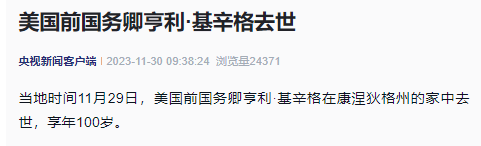
According to a report from CCTV News, former United States Secretary of State Henry Kissinger passed away at his home in Connecticut on November 29 local time. He was 100 years old.
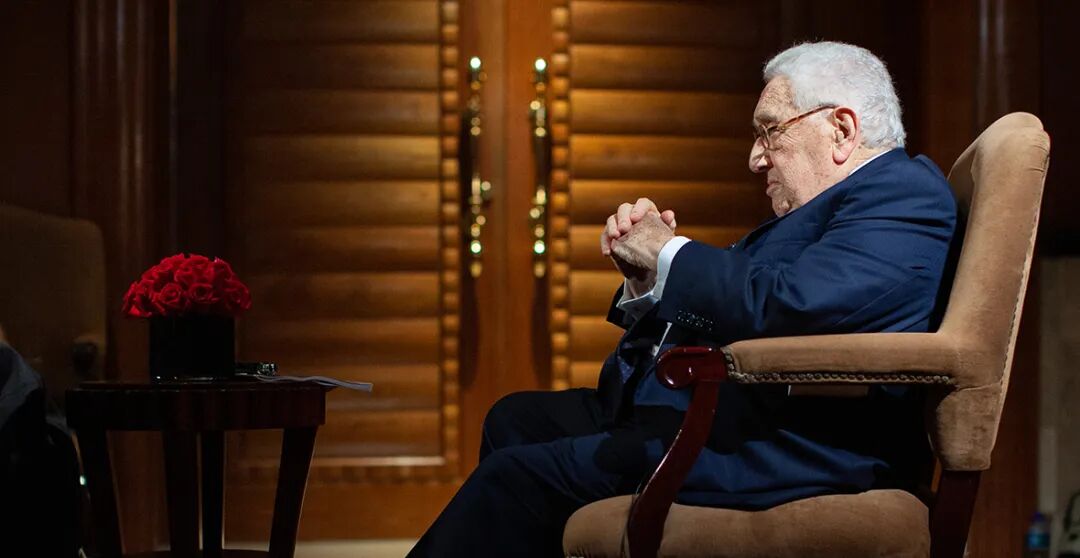
Kissinger during a visit to Beijing on June 27, 2013. Photo by Chen Meiqun.
Henry Kissinger was a renowned American diplomat and international affairs expert, a key member of the cabinet of the 37th US President Richard Nixon. He served as National Security Advisor and Secretary of State, and was awarded the Nobel Peace Prize in 1973.
In July 1971, Kissinger visited China as President Nixon's special envoy, making a historic contribution to opening the door to China-US relations. In the nearly half-century that followed, he visited China more than a hundred times, offering much foresight on the development of bilateral ties. He became known as "the American who understands China best."
01 From Refugee to Secretary of State
In 1923, Henry Kissinger was born in Fürth, Bavaria, Germany — a small city with a Jewish community. Both of his parents came from typical middle-class Jewish families; his father was a respected high school teacher.
In 1933, Hitler and the Nazi Party seized power in Germany. The Nuremberg Laws of 1935 stripped Jews of their German citizenship, banned marriage between Jews and Christians, and expelled Jews from public office. As the Nazi plan to exterminate the Jewish people intensified, 15-year-old Kissinger immigrated to the United States with his Jewish parents in August 1938, escaping the epicenter of the catastrophe. Kissinger once said at an event that he regarded America as his homeland. Many of his relatives were killed in Germany, and the United States had sheltered him and his family, which gave him a profoundly different emotional connection to the country.
After arriving in New York, Kissinger quickly learned English. He rose through the ranks of American academic elites before becoming President Nixon's Assistant to the President for National Security Affairs. In 1973, he was appointed Secretary of State, serving as the principal architect and executor of foreign policy for both the Nixon and Ford administrations. In January 1977, President Ford awarded Kissinger the Presidential Medal of Freedom, praising him as "the greatest Secretary of State in American history."
During his tenure, his efforts to end the 1973 Yom Kippur War (the Fourth Middle East War) further elevated his stature. At the time, Kissinger flew back and forth between Israel, Egypt, and Syria — giving birth to the term "shuttle diplomacy." He was also a controversial figure. Friends would remember his contribution to the China-US "ice-breaking"; enemies had ample reasons to resent him, including the secret bombing of Cambodia in 1969 and the decision to overthrow Chilean President Salvador Allende's government in 1973.
02 "Old Friend of the Chinese People"
"Old friend of the Chinese people" — this seemingly modest title carries extraordinary weight, as China reserves this affectionate designation for only a select few who have made outstanding contributions to the development of China's foreign relations. Former US Secretary of State Henry Kissinger was among them.
In the 1950s, the United States established and pursued a comprehensive policy of containment against China, treating it as an enemy: diplomatic non-recognition, political isolation, economic blockade, and military encirclement, attempting to strangle the newly founded People's Republic in its cradle. Starting in the late 1960s, China-US relations began to undergo major changes. The dynamics of US-Soviet rivalry shifted, and China emerged as a new force independent of both superpowers. Shared national security interests provided a realistic foundation for reconciliation between the two countries, and a communication channel characterized by high-level, secret contacts opened.
To restore relations with the People's Republic of China, from which the US had been cut off for years, Kissinger devoted considerable effort. From the US table tennis team's visit to China, to secret contacts with Chinese representatives in Paris, to mediation through Pakistani President Yahya Khan — Kissinger advised Nixon, orchestrated the details, until Nixon decided to send him on a secret visit to China.
In July 1971, a diplomatic banquet was underway in Islamabad, the capital of Pakistan. Suddenly, US National Security Advisor Kissinger clutched his stomach, crying out in discomfort. President Yahya Khan immediately announced in a loud voice: The heat of Islamabad has affected Dr. Kissinger's health; he must rest for two days at the presidential villa. In fact, this was a "performance" staged by President Yahya Khan to assist Kissinger. His real mission was a top-secret transfer — destination: China.
At 12:15 PM on July 9, 1971, the plane carrying Kissinger and his party landed on schedule at Nanyuan Airport.
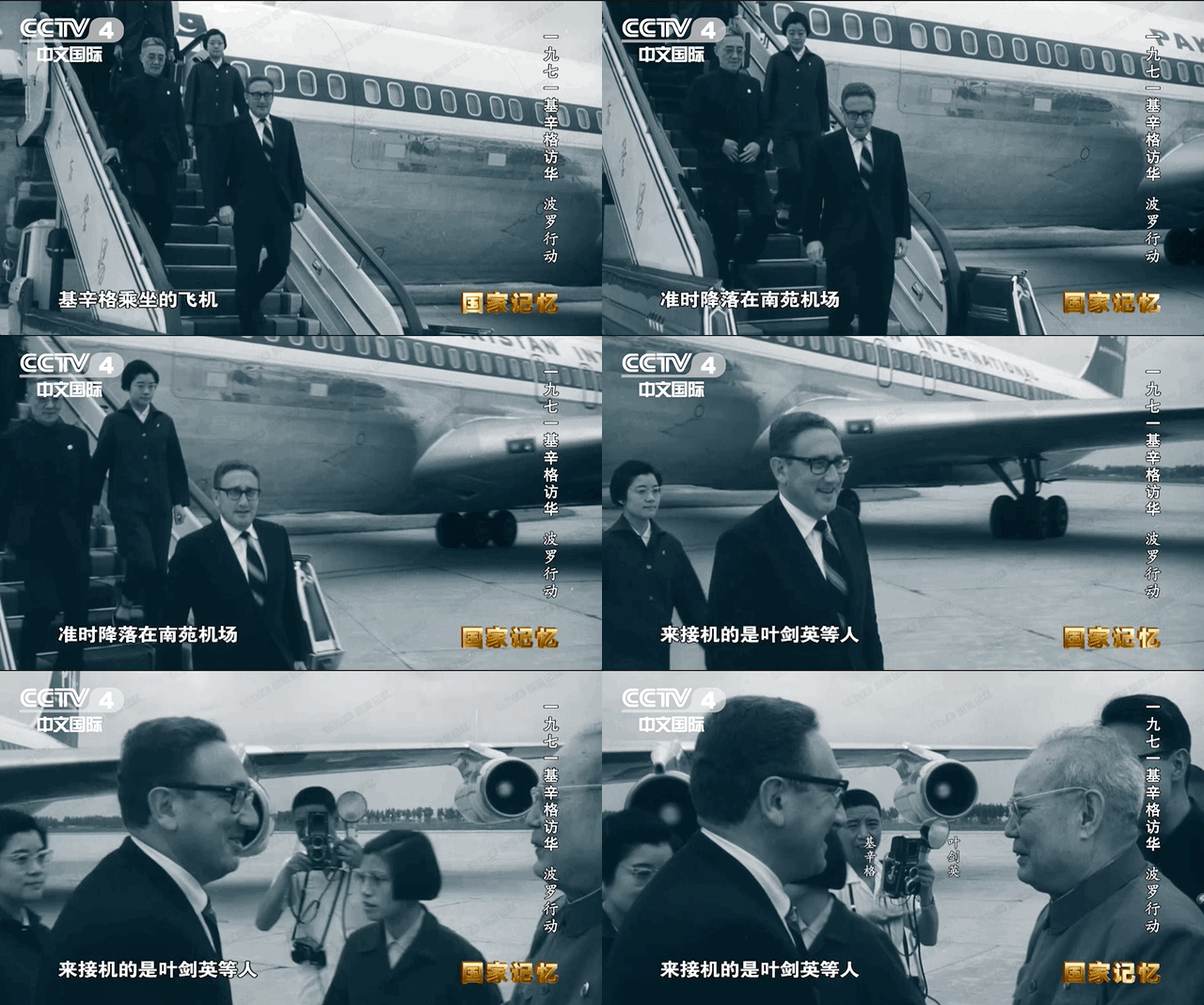
Image source: CCTV National Memory
Kissinger spent 48 hours in Beijing. Zhou Enlai held six meetings with him totaling 17 hours, during which the two sides held friendly consultations on the Taiwan question and the timing of Nixon's visit to China.
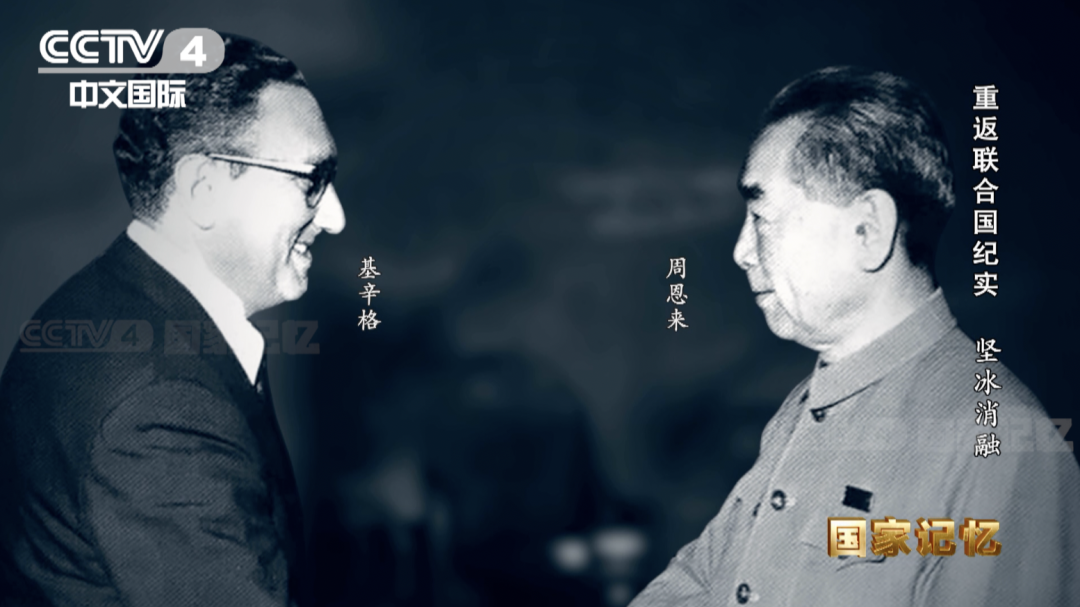
Zhou Enlai meets with Kissinger. Image source: CCTV National Memory
At noon on July 11, 1971, Kissinger departed Beijing. Four days later, President Nixon suddenly appeared on television screens, telling American viewers: "I have sent Dr. Kissinger to Peking during his recent world travels for the purpose of having talks with Premier Chou En-lai. The announcement I am now making will be issued simultaneously in Peking and in the United States."
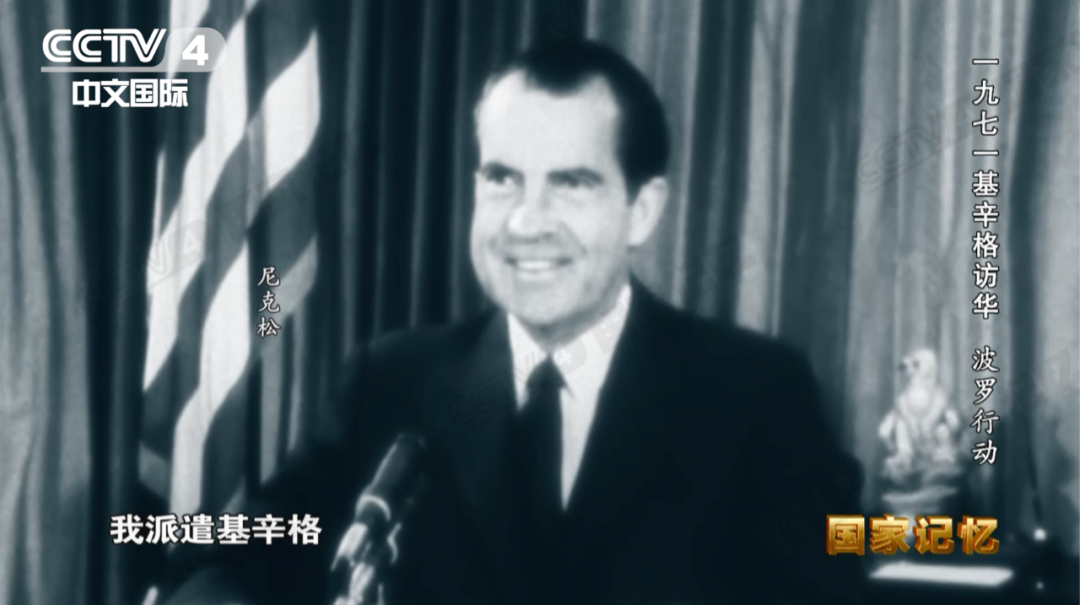
Former US President Richard Nixon. Image source: CCTV National Memory
"Knowing of President Nixon's expressed desire to visit the People's Republic of China, Premier Chou En-lai, on behalf of the Government of the People's Republic of China, has extended an invitation to President Nixon to visit China at an appropriate date before May 1972. President Nixon has accepted the invitation with pleasure."
This announcement, dubbed the "Nixon Shock" by the American press, stunned the world. An American president was about to visit China — a first in the history of bilateral relations.
In February 1972, Kissinger accompanied then-President Nixon on his visit to China. The two countries subsequently issued the Shanghai Communiqué, announcing the normalization of China-US relations. On January 1, 1979, China and the United States formally established diplomatic relations.
As the driving force behind the opening of China-US relations, Kissinger's role in the "ice-breaking" between the two countries is something the Chinese people will not forget.
03 Centenarian Kissinger's Visit to China, "Kissinger-Style" Diplomatic Wisdom Draws Attention
On May 27, 2023, Kissinger celebrated his 100th birthday. In an interview shortly before his centennial, Kissinger expressed concern about the current state of China-US relations. According to a May 26 report in The Wall Street Journal, Kissinger called on the United States to avoid excessive confrontation and Cold War mentality in its foreign policy, emphasizing the importance of dialogue, cooperation, and balance. "The United States should avoid making China a permanent adversary," Kissinger said. He believed such confrontational approaches could lead both sides into "endless confrontation," failing to achieve desired goals.
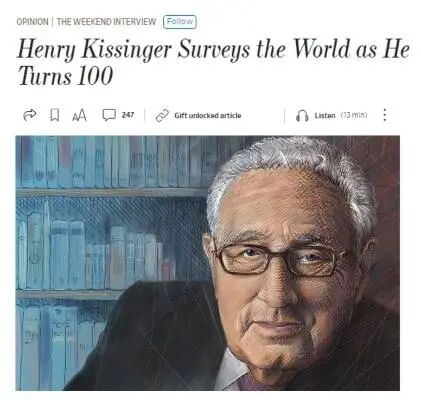
Image source: Screenshot from The Wall Street Journal report
Shortly after his birthday, Kissinger visited China again and received high-level reception from the Chinese side. The meeting was held at Building 5 of the Diaoyutai State Guesthouse — the very place where Kissinger first met Chinese leaders half a century earlier, carrying immense symbolic significance. Kissinger stated that regardless of difficulties, both sides should treat each other as equals and maintain contact; attempts to isolate or exclude the other are unacceptable. He emphasized that although he no longer held public office, he cared about China-US relations and supported efforts by both sides to improve ties.
During his meeting with Kissinger, Wang Yi said that Dr. Kissinger had made historic contributions to the "ice-breaking" development of China-US relations and played an irreplaceable role in enhancing mutual understanding between the two countries. China cherishes the friendship established with this old friend. He noted that US policy toward China needs "Kissinger-style" diplomatic wisdom and "Nixon-style" political courage.
04 Winning Over Young Chinese Through "China Literacy"
What moved young Chinese about Kissinger was his deep knowledge of China. His book On China is required reading for virtually all Chinese scholars and students of international relations. The New York Review of Books described the book as demonstrating "a Western scholar's unabashed appreciation for Chinese particularity." In its pages, Kissinger recorded his interactions with Mao Zedong, Deng Xiaoping, and successive generations of Chinese leaders. As a witness to history, he used a sprawling 600-plus-page volume to illuminate the formulation and decision-making mechanisms of Chinese foreign strategy since the founding of the People's Republic. Through a global perspective and international lens, he told the world how the two most important powers balancing global forces should coexist, and what changes the United States ought to make.
Not long ago, Kissinger specially wrote a new preface for the 10th anniversary of the Chinese edition of On China. Though brief, the new preface distilled his thinking on the direction of China-US relations over the years. Mr. Kissinger candidly pointed out the significant differences and divergences between the two major powers, once again expressing deep concern about the trajectory of bilateral relations. At the same time, he particularly emphasized that in an era of nuclear weapons and high technology represented by artificial intelligence — both of which China and the United States possess in abundance — the two countries must strive to avoid a costly conflict. Seeking common ground while reserving differences, he argued, is the right path for China-US engagement.
Kissinger's push for successive US administrations to pursue positive policies toward China, and his dedication to developing China-US relations, stand among the most brilliant chapters of his diplomatic career.
This article was originally published on the WeChat public account "China News Service" (ID: CNS1952), first published on November 30, 2023, under the original title "基辛格逝世!享年100岁" ("Kissinger Dies at 100").