Code Brain | Showing Vulnerability to Your Team Is a Crucial Turning Point for Leaders

Team collaboration, organizational development, strategy execution, and people development
"As a company grows, it's constantly facing shifts in the external environment, but also endless challenges from within — around organization, strategy, and people. Founders are always looking to great companies for reference points on how to respond. But the hard truth, borne out by experience, is that there's no off-the-shelf playbook for getting strategy, organization, and people to work in tight alignment. Only by consciously building yourself up while pursuing strategic goals — by doing the hard but right things — can a company develop solutions that truly fit."
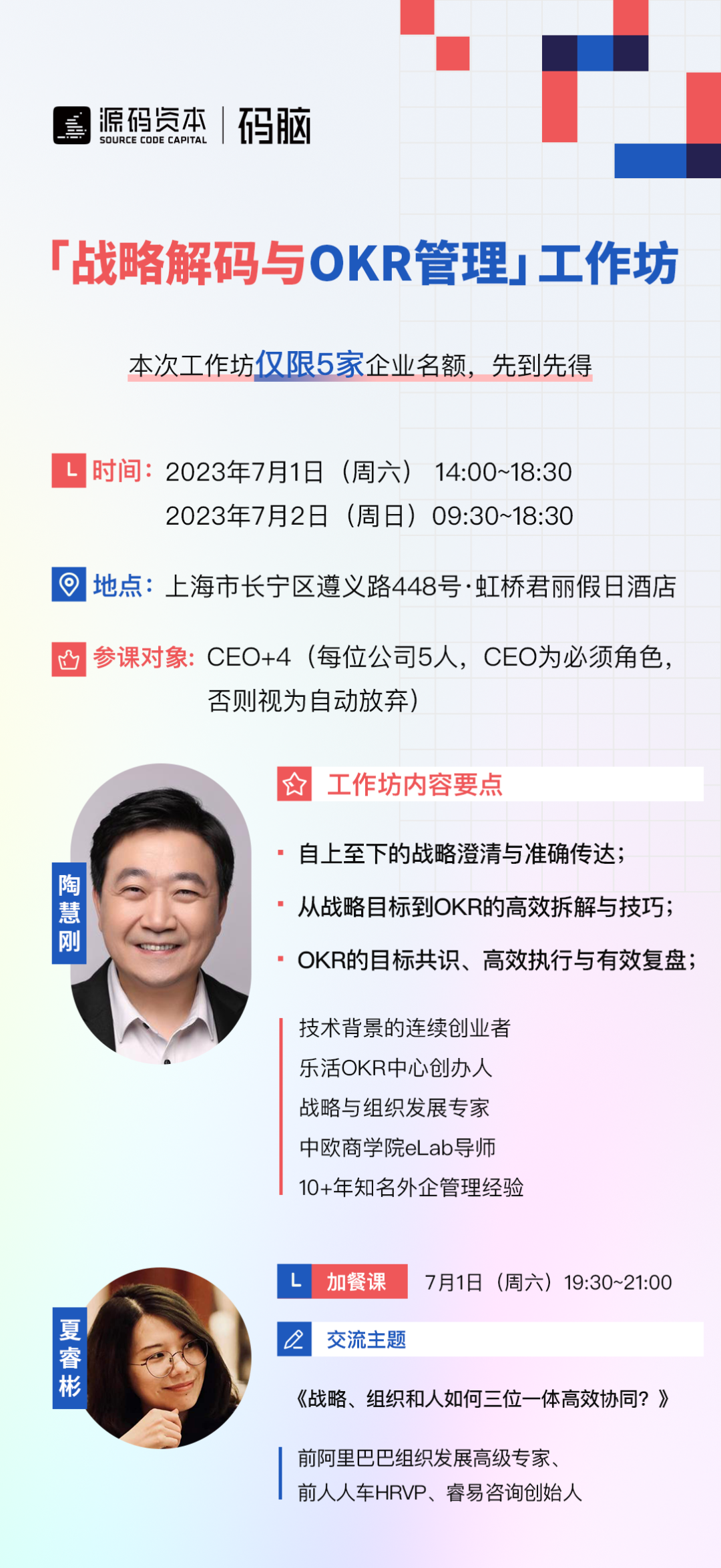
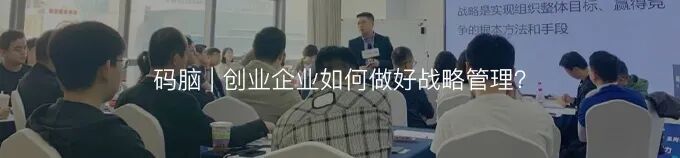
This was the advice Xia Ruibin offered founders at a Code Brain session on July 1. Over two and a half hours, she engaged in multiple rounds of discussion with more than 20 startup CEOs and executives, generating a rich set of keywords: team alignment, organizational building and development, strategy execution, people development... What follows is a distillation of the core ideas from that exchange. Enjoy:
Strategy
Strategy is what moves people
As companies enter a new era of development, the demands on strategy, organization, and people have changed. Compared with organizational work, strategy may be what resonates most deeply with executives and employees alike. Yet strategy today is different from what it was. When facing complex environments, the ability to iterate strategy rapidly becomes a test for every organization and individual. Xia Ruibin shared several reflections on strategic alignment and execution:
- In the past, strategy meant a handful of key people making the right call and executing in unison. Today, strategy requires a group of people making high-quality decisions continuously. This new era demands different capabilities from organizations, people, and strategy itself. Organizations must not only develop the capacity to align these three elements, but also attend to the development of people's mental models.
- Both strategy execution and organizational building are carried out by individuals. If individual mental models don't shift and capabilities don't expand, people will keep doing what they've always done. How can you expect the same people using the same methods to produce different results?
- In an ideal world, a CEO would be a generalist capable of doing every job. But a CEO is a person, not a robot. Every department needs to act on the CEO's behalf — whether finance, HR, marketing, or sales — executing vertically while maintaining a holistic perspective. The CEO bears primary responsibility for organizational work, but there must be someone in the organization who forms a fulcrum with them. This could be an HR leader, a partner, or a business leader.
- Strategy is what moves people. Every growth-stage company can use meetings as a critical lever and pathway. If you can run your key strategic meetings well and manage the entire strategy execution path from there, you can at least ensure strategic delivery. And if you consciously build systems and mechanisms along the way, you'll gradually accumulate organizational capabilities unique to your company.
- Meetings also need someone responsible for follow-through. The process may be energetic and generative, rich with creation and output, but implementation in reality requires a person or department to do the grounding work.
- The external environment changes daily. If you don't change, you risk disaster amid chaos. A healthy company needs to keep exploring multiple growth curves rather than confining its business to a single quadrant. At the same time, it must persistently pursue micro-innovations in its core business to help it thrive.
- The mechanisms that fit you best are created in the process of achieving strategic goals. We must consciously build our own organizational capabilities and systemic mechanisms rather than blindly copying others. When a company reaches the point where organizational capacity-building is essential to withstand pressure, the best approach is iterative repair rather than seeking a one-shot transformation.
Organization
Showing vulnerability to your team is a pivotal turning point for a leader
As a company climbs, it encounters all kinds of problems: choices about overall direction, misalignment between senior and frontline teams in translating and decomposing strategy, teams' strategic execution capabilities. Xia Ruibin believes that people, organization, and business are an intertwined trinity. Shortchanging any element will inevitably surface problems.
- When single-point issues arise — missed targets, team misalignment — don't stay at the surface. Go deeper to see whether there are structural, systemic, or mechanism-level problems. When facing an internal organizational issue, reframe it as a goal to be achieved. A critical part of organizational work is exploring and igniting people's motivation. With motivation, you can enter the work of building systems and mechanisms.
- People, organization, business, and culture are fused together. No single dimension can outrun the others.
- When core executives meet, they often fall into the trap of discussing concepts and judgments without grounding in concrete facts. Executives need deep familiarity with frontline operations. Don't just say collaboration is broken — specify which part, and what the specific symptoms are.
- The Golden Circle has Why at its center, How in the middle, and What on the outside. People typically focus only on How — how to fix the problem quickly. But Why touches the dimension of inner cognition. Only by addressing Why can genuine motivation emerge.
- Showing vulnerability to your team is a pivotal turning point for a leader. When you admit you're not an all-capable warrior, you create space for yourself and for your team. Inviting them: "I ask you to join me in achieving our shared goals. Where I fall short, I need your help" — this is a crucial transformation. But vulnerability and turning don't mean abdicating leadership responsibility. Every level of leader has their own accountability. You can gather resources and seek help, but you cannot shirk responsibility.
- Organizations should approach hiring and development with a mindset of growing people, gathering those who share our direction. Only by building a collective field where people dare to expose their weaknesses and flaws can individuals' mental models develop within the organization.
People
People are the end, not tools or means
Organizations are composed of people; strategy is executed by people. Every individual plays a consequential role. When founders feel they don't have enough people or that capabilities fall short, perhaps the issue is simply that we haven't found the right strategies and methods for using people. How can we gather a group of like-minded people?
- Adults need to develop not just work capabilities but also their mental maturity. As we rise to higher positions in an organization, we face increasingly complex challenges. Consciously turning inward at these moments — building inner certainty to meet external uncertainty.
- Every individual in an organization is worth developing. The top leader must first expand their own mental capacity and then develop others, in order to lead the team through challenges in this VUCA era.
- While developing themselves, core executives must consciously develop those around them. Only by seeing employees as living human beings rather than brains or hands for completing tasks can you activate individual energy to form a back-to-back, development-oriented organization. People's growth and organizational progress will in turn drive strategic growth.
- Once individuals have the motivation to leverage and build the organization, they must move through problems and goals to explore systemic and mechanism-level building. Only doing the hard but right things produces lasting results. Building systems, mechanisms, and processes at the strategic and organizational levels yields two outcomes: first, solving organizational problems and creating business results for the company; second, the collective in the organization, through阶段性胜利 [phased victories], develops cognitive impact that shapes culture. "The best team-building is winning together." The overall culture and interaction patterns then feed back to influence individuals.
- As core management, what seed we plant in the organization is a critical factor; all cultivation and watering revolve around that seed. Every enterprise must ask itself: "In what way do we gather what kind of people, for which customers, to provide what products or services, creating what value." What kind of company we aspire to be — that is the seed.
- People are the purpose of development, not tools. From the industrial age to today, individual uniqueness and intelligence are increasingly seen and valued. And organization is the optimal field for developing people. If we truly believe that business results and human development are one, we will genuinely experience and feel what it means to create together.