Code Brain | Studying the 20th Party Congress: Grasping Economic Trends and Startup Opportunities for the Next Five Years

Code Brain — Ecosystem Connection, Cognitive Resonance
How can we study and internalize the spirit of the 20th Party Congress, assess the future trajectory of our industries, and position ourselves ahead of the curve? For this special edition of Code Brain, we are honored to host Jia Kang, renowned economist and former Director of the Research Institute for Fiscal Science at the Ministry of Finance, to help cut through the fog and see the direction ahead. We look forward to creating lasting, real value together!
Below is the edited transcript of this closed-door session. Enjoy!
01
Chinese Modernization:
Five Characteristics, Nine Essential Requirements, Five Principles
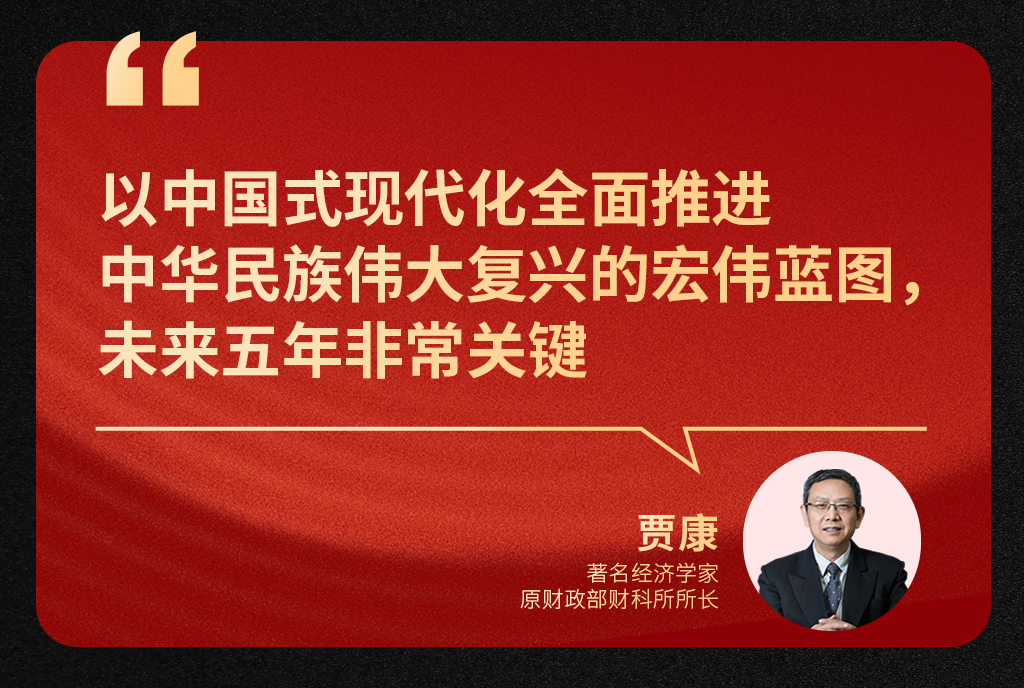
In the report to the 20th National Congress, General Secretary Xi Jinping solemnly declared: "From now on, the central task of the Communist Party of China will be to lead the Chinese people of all ethnic groups in a concerted effort to realize the Second Centenary Goal of building China into a great modern socialist country in all respects, and to advance the rejuvenation of the Chinese nation on all fronts through a Chinese path to modernization." If I had to distill the 30,000-plus-word report into a single keyword, I believe "Chinese modernization" is its most concentrated and refined expression. The report offers a comprehensive exposition of Chinese modernization, mapping out a grand blueprint for advancing the rejuvenation of the Chinese nation through this path.
The report explains the characteristics of Chinese modernization: modernization of a huge population, modernization of common prosperity for all, modernization of material and cultural-ethical advancement in harmony, modernization of harmony between humanity and nature, and modernization of peaceful development.
Several points merit particular attention. First, our population is enormous, making the task extraordinarily arduous and complex. Second, we pursue common prosperity for all, fulfilling the essential requirement of socialism. The third and fourth points address modernization of harmony between humanity and nature and sustainable development. The fifth emphasizes modernization through peaceful development — building a human community with a shared future through win-win cooperation.
Following these five characteristics, the report elaborates nine essential requirements, which I have distilled into eight keywords: Party leadership, socialism, high-quality development, people's democracy, cultural enrichment, common prosperity, harmony between humanity and nature, and a human community with a shared future. Some of these overlap with the five characteristics, and their repetition together underscores that Chinese modernization aims to create a new form of human civilization while achieving the great rejuvenation of the Chinese nation.
The five principles to uphold are: Party leadership, socialism with Chinese characteristics, a people-centered approach, deepening reform and opening up, and carrying forward the fighting spirit. How to understand the fighting spirit? Advancing modernization is unquestionably a process of struggle. As the leadership has said, all happiness is achieved through hard work — we must carry forward the spirit of arduous struggle.
02
Building a High-Standard Socialist Market Economy
The 20th Party Congress report calls for building a high-standard socialist market economy. This formulation is extraordinarily significant and serves as an important, authoritative basis for improving market confidence and expectations.
What does "high-standard" mean? I believe it must be made concrete through a high-standard, law-based business environment: unified markets, protected property rights, fair competition, and the elimination of improper monopolies and barriers from regional fragmentation and departmental segmentation. To achieve high standards, we must act according to those standards and perfect our market economy. Reaffirming the "two unwaverings" in line with a high-standard socialist market economy, and reaffirming the market's decisive role in resource allocation alongside better government function — these are points I pay particular attention to in grasping the core essence of the 20th Congress spirit.
When I learned I could take the college entrance exam to pursue university education, I was thrilled. I rushed to the Museum of History to see historical exhibitions, cramming knowledge to prepare for the exam. This eventually changed the trajectory of my life and set me on a research path. One exhibit left a deep impression: a calligraphy piece by Sun Yat-sen, written after watching the tide at Haining, which read: "The tide of the world flows vast and mighty; those who follow it prosper, those who resist it perish."
After decades of research, I believe the underlying pattern reflecting the main current of human civilization — which can only be followed, never violated — is the synthesis of six trends: industrialization, urbanization, marketization, internationalization, informatization, and rule-of-law democratization. Industrialization was the first item where China fell severely behind after the Industrial Revolution; we must catch up, and the pursuit of industrialization necessarily accompanies its advancement. The four characters "reform and opening up" are what tightly bind China's industrialization and urbanization to marketization and internationalization, allowing modernization to broaden its path.
03
Escaping Misconceptions, Restoring Business Confidence
Based on the foundational theories of Marxist historical materialism and dialectics, we must fully and positively grasp the guiding spirit of the 20th Congress report regarding "Chinese modernization."
In economic life, capital is merely one element on the supply side driving economic development. Whether state-owned or non-state-owned capital, it must necessarily fulfill its dynamic function and propulsive role as a factor of production, and participate in the factor-based distribution process. This is independent of human will. In the economic cycle of supply-demand interaction, truly tangible innovation occurs on the supply side. The supply side combines various factors to form the engine of economic development — the effective supply generated in response to original demand that drives growth. Can we exclude any single factor from this supply-side combination? The contribution of these supply-side factors to economic life, bound together independently of human will, was proven long ago through our reform and opening up and the building of a socialist market economy.
So I want to emphasize: Chinese modernization absolutely does not reject or negate the driving role of capital. Under the track of comprehensive rule of law and modern state governance, with dynamically optimized good laws as the standard, we must form reasonable regulatory criteria for when to "show red lights" or "green lights," thereby enabling capital's functional role to be exercised within healthy, orderly bounds of expansion.
Giving full play to this role is an objective requirement of the market economy. Recognizing this carries immediate practical significance — whether for stabilizing the economic foundation, improving market expectations, and restoring economic operation to a reasonable range in the near term, or for achieving the long-term "new two-step" modernization goals.
Recently, under the intertwining "triple pressures" described by the central government, market confidence has been noticeably weak, and market participants' expectations have softened and declined. Private enterprises in particular have shown signs of anxiety, sensitive to every ripple and breeze. If we cannot now view capital factors rationally, it will add further pressure to business confidence, especially for private enterprises, and deal further blows to expectations. Studying the 20th Congress report means correctly grasping the connotation of "Chinese modernization" within it, and thereby correctly understanding the Party Central Committee's series of policies, guidelines, and lines.
04
China's Economy: Present and Future
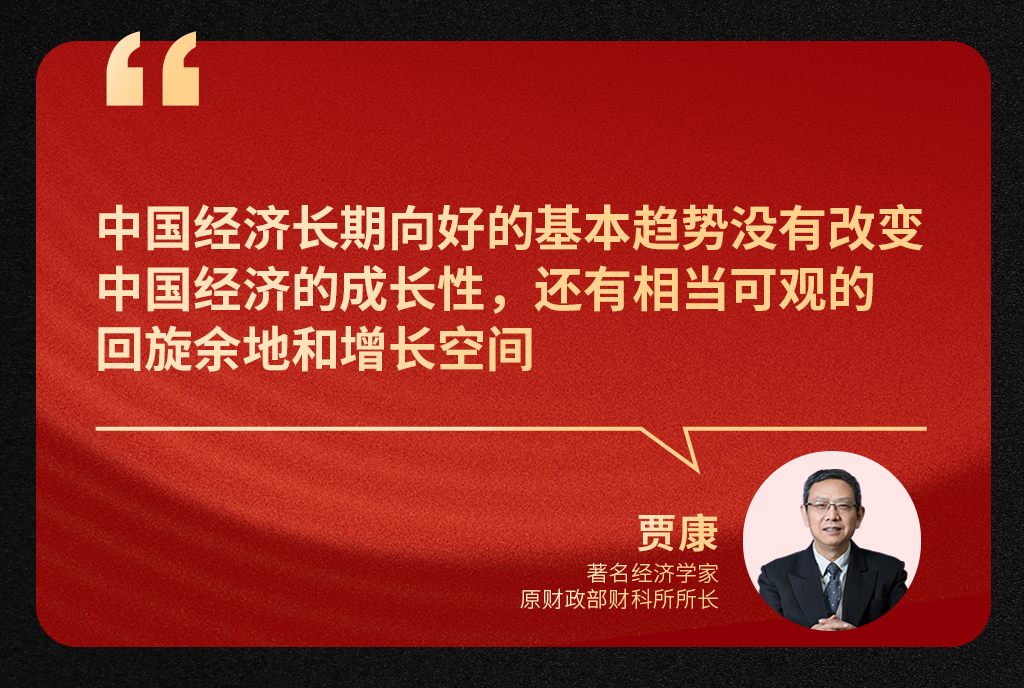
There are all kinds of pressures and frustrations at present, but my fundamental view is that the basic trend of China's long-term economic improvement has not changed. This is not mere propaganda language. Objectively speaking, China's growth potential, room for maneuver, and expansion space remain considerable.
Our industrialization has only reached the stage of transitioning from mid-phase to late-mid-phase. As the world's factory, "large but not strong," we must continue upgrading to reach the late industrialization phase of modernization — there remains substantial room for effort. We cannot keep our main production capacity stuck in the middle of the "smile curve"; we must push our capacity toward both high ends, developing customized solutions across industries and fields. Our path forward is to upgrade our large-scale processing and manufacturing capabilities, currently positioned in the middle of global industry chains, so we can establish ourselves at both high ends. There are already successful examples of this.
If China is to seize opportunities for development, everything ultimately comes down to upgrading development. Having joined global industrial chains without hesitation, engaging in global competition and cooperation, our technological content and market returns will rise as Chinese manufacturing upgrades to Chinese creation and Chinese intelligent manufacturing, further embodying the characteristics of high-quality development.
The urbanization accompanying industrialization offers growth support beyond what most people intuitively sense. We cannot look at the 65% urbanization rate by permanent residence and conclude that urbanization has largely passed its high-speed growth phase. The much lower household registration urbanization rate represents urbanization without water added — currently only slightly above 45%. Round after round of infrastructure construction, building urban districts, pushing outward at urban-rural junctions, and interconnecting infrastructure between central regions, must match round after round of industrial technological upgrading and human capital cultivation. These objective supporting factors are clear and will play their role in China's future development.
Of course, the basic trend of China's long-term economic improvement, combined with the advancement of modernization, will continuously demonstrate its room for maneuver, resilience, and expanding space. In the long run, business people and market participants must make their own judgment. If you do not recognize this prospect, you cannot practice "long-termism."
The next five years are a critical period for China to get off to a good start in building a modern socialist country in all respects. I share my views and discussion to encourage us all. May we cut through the cognitive fog in this uncertain era, grasp the fundamentally positive long-term trend, and steadfastly remain "long-termists."


Issue 38 | Code Brain — Catching the First Wave: 10 Responses for Founders
Issue 37 | Code Brain — Compensation Incentive: Both Science and Art
Issue 36 | Code Brain — The Essence of Performance Management Is Unlocking Human Potential
Issue 35 | Code Brain — The First Step in Hiring: How to Interview Scientifically
Issue 34 | Code Brain — Six Factors That Determine How Far Your Team Goes
Issue 33 | Code Brain — A Founder's 11,626.5 Hours
Issue 32 | Code Brain — Leadership Is Leading People to Places Unvisited
Issue 31 | Code Brain — Amazon's Ten Compliance Lessons for Going Global
Issue 30 | Code Brain — "Practical Leadership" in 60 Hours: Full Highlights!
Issue 29 | Code Brain — Zheng Yunduan: What Really Drives Organizations?
More MaHui members can click "Read More" to view