Code Brain | "The Coming Age of Abundance": A Transcript of Elon Musk's New Year Interview


Technological advancement is carrying human society into an unprecedented future — but this has stirred not only dreams of a better life, but also anxiety. Can humanity, with an altruistic eye, preserve and continue to drive the progress of human civilization?
On January 3, Peter Diamandis and Elon Musk held a conversation on X Spaces covering a wide range of topics. Peter Diamandis is a Greek-American marketer, engineer, physician, and entrepreneur. He is best known as the founder and chairman of the XPRIZE Foundation, co-founder and executive chairman of Singularity University, and co-author of the New York Times bestseller Abundance. He previously served as CEO and co-founder of Zero Gravity Corporation, co-founder and vice chairman of Space Adventures, founder and chairman of the Rocket Racing League, co-founder of the International Space University, co-founder of Planetary Resources, co-founder of Celularity, founder of Students for the Exploration and Development of Space, and vice chairman and co-founder of Human Longevity, Inc.
The full interview lasted approximately one hour. Below are the main topics discussed:
- AI and AGI: Elon Musk discussed the rapid development of artificial intelligence and the potential benefits and risks of AGI. He emphasized the importance of understanding and curiosity in maximizing AI safety.
- Ideological influence: They discussed the negative consequences that could arise from incorrectly encoding extreme extinctionist or environmentalist philosophies into AI.
- Longevity research: The two talked about the bright side of extending human lifespan and partial concerns about immortality, noting that research focus should be on improving healthspan rather than pursuing agelessness.
- Simulation theory: Elon Musk observed that life feels like a carefully arranged banquet, and proposed that if we do live in some kind of simulation, the way to ensure it keeps running smoothly is to keep it interesting.
- Optimus robots and Neuralink: Musk shared his vision for Tesla's future robot Optimus and recent progress on the Neuralink project, such as how it could help paralyzed individuals and restore sight to the blind.
- Global population: Elon Musk argued that global low fertility rates leading to population collapse pose a far greater danger than overpopulation, advocating that people should at least maintain replacement levels, with wealthy countries needing to increase fertility rates.
- Energy and environment: He expressed optimism about environmental technologies like carbon capture and the future development of renewable energy sources like solar power.
- xC and xAI: They discussed the vision for Musk's new company StationX and how it aims to create positive, truth-seeking AI systems curious about the universe.
This article is from "Walicunfu" (WeChat ID: walicunfu42069)
01
The Negativity of News Reporting
Elon: I hate being weak[*], I'm late.
Peter: No problem, you only run about five companies or so. Happy New Year, Elon!
Elon: Happy New Year! 2024, I love this year.
Peter: Yes, it feels like the future.
Elon: Hahaha, it literally is the future.
Peter: It is the future, and it's going to be a great year. I hope we can bring some hope and good news to the people in this space. I think Deo[*] could use it too.
Elon: I muted myself temporarily when switching from speaker to co-host. Peter, you're the most optimistic person I know. I think it's really refreshing to hear such an optimistic voice.
Peter: I think people need a positive mindset. I think it's largely a self-fulfilling prophecy. If you're pessimistic — well, we can talk about how the news media constantly destroys our minds.
Elon: Yeah, the news is so negative. Honestly, reading the news makes me sad.
Peter: Let me ask you a question. I don't watch online news, I don't read newspapers. They couldn't pay me enough to read a newspaper.
Elon: If I accidentally read the news, I get depressed.
Peter: It's ridiculous.
Elon: Every day, the news is essentially trying to answer this question: What's the worst thing that happened on Earth today?
Peter: Yes. Let me come into your living room and show it to you over and over again every five minutes.
Elon: The world is big, there are 8 billion people on Earth. Every day, somewhere on Earth, terrible things happen. At the same time, great things happen every day too.
Peter: You know what I call CNN? Crisis News Network, or Constantly Negative News Network.
Elon: They have to scare you. Because if they said, hey, today was pretty good, overall violence is at historic lows —
Peter: If they said, we have more access to food, energy, water, healthcare, and education than ever before — I think people would just start watching horror movies instead.
The challenge is our neural networks. The wiring of our brains evolved in a world that was dangerous all the time. We're built for constant fear and scarcity.
Elon: I think you've hit on something, and maybe others have said this too. As an evolutionary asymmetry, we react more to danger than to reward, which makes sense. Because the consequences of danger can be fatal.
Like, if you go over there, a lion will eat you, or some neighboring tribe will kill you. That's it, game over.
Peter: Your genes are removed from the gene pool.
Elon: Yes, you're out. Whereas if the news is, there's a beautiful bush over there covered in berries. That's nice, that's optional.
Ignore the first, you die; ignore the second, you go hungry, but death is worse than hunger. Anyone who didn't react to negative news as much as positive news didn't survive.
Peter: They were definitely selected against.
Elon: Anyone who wasn't alert enough to where the lions were got eaten by lions.
Peter: And the reality is, the news media has one job, which is to get your eyeballs to their advertisers. When negative news gets ten times the attention of positive news, what we get is non-stop, 24/7 negative news.
Elon: It's inevitable.
Peter: It really is. I get different news feeds from my X stream. But I also get all the great things happening in the world, because I can choose what to read. But when you watch TV or read a newspaper, some editor or producer somewhere is deciding what content to feed into your brain. And that really does mess with your mind.
Elon: Yes, exactly.
Peter: This space is called "The Coming Age of Abundance." When my first book Abundance came out, you were incredibly supportive, and I'm very grateful for that. That was 12 years ago, and I think the story is fantastic.
Elon: Wow, 12 years!
Peter: Everything has gotten so much better — in many ways, not all ways.
Elon: Obviously, we can go way back. I remember we were at Deo's party in Brazil. How long ago was that?
Peter: I don't know. Was it his 40th or 30th birthday?
Elon: Probably 30th. I was starting SpaceX at the time.
Peter: That was 2003, before the first XPRIZE. I was trying to talk you out of building rockets.
Elon: 21 years ago, kids couldn't legally disown you yet.
Peter: Or legally have kids.
Elon: That was 21 years ago, and most things have gotten better since then. I want to bring hope and optimism to people listening, from an abundance perspective.
Peter: Because the world has gotten better in good ways. All you hear is the negative. I think this goes back to our core dystopian thinking that we've evolved over a hundred thousand years.
But if we just look at certain areas, like global extreme poverty — what's the more important metric? Here are the numbers: In the 19th century, 90% of the global population lived in extreme poverty. In 1981, it was 42%. Today, less than 10% of the world lives in extreme poverty.
Elon: Hunger is actually rare now, but it used to be common.
02
Energy Abundance
Peter: Exactly. And there's another area where you're obviously leading, which is energy.
We used to hunt whales for whale oil to light our nights. We ravaged hillsides, we drilled kilometers deep into the ground.
And what are the numbers? The amount of solar energy hitting the Earth's surface is 8,000 times what humanity consumes. What's the growth rate of batteries and solar? It must be enormous.
Elon: Yes. At Tesla, we've given a couple of presentations. One was fairly simple, another was extremely detailed, about how to make Earth completely energy self-sufficient from an energy perspective.
And we showed that if you break down all the raw materials for lithium-ion batteries and solar, the materials aren't scarce. You could fairly easily make Earth — not easily, obviously it takes enormous work — but to make Earth fully self-sufficient, we're not missing any critical materials.
Even if all global industry, including heating and transportation, were powered by electricity, it could be done with solar and lithium-ion batteries without depleting Earth's resources at all.
Peter: Yeah. My favorite example: In the 19th century, the most precious metal on Earth was aluminum. It was more valuable than gold and platinum.
Even though 8% of the Earth's crust is bauxite — basically aluminum — extracting it took energy, it was very difficult. It wasn't that it was scarce, it just wasn't in a usable form. That's where technology comes in, turning scarce, unusable raw materials into usable ones, right?
Elon: Yes, exactly. Aluminum oxide is extremely common, but it's in a very low energy state. In fact, thermite is a mixture of iron oxide — rust — and pure aluminum. The energy difference between iron oxide and aluminum oxide is so great that it generates enough heat to melt steel. That's thermite. Yes, turning aluminum oxide into aluminum takes a lot of energy.
In World War II, aluminum for aircraft was extremely scarce. In fact, in Britain, the Mosquito bomber was made mostly of wood. It was an early form of composite material, with hardwood on the outside, and lightweight wood and balsa as a sandwich structure. It was very clever, the entire design was to solve the aluminum shortage.

The de Havilland Mosquito was a twin-engine bomber that served in Britain during World War II. Because its fuselage was primarily made of balsa wood, it earned the nickname "Wooden Wonder." Its wooden construction made it easier to evade German air-to-air radar detection.
Peter: And then we mastered the technology. We got better at extracting aluminum from alumina in bauxite. This happens over and over again. In fact, that's what we do.
In 2023, or maybe 2022, new solar capacity additions surpassed every other form of power generation. And you've done an incredible job with battery production.
Elon Musk: Yes. Battery production is growing at multiples of car production. In some cases, almost 10x that of cars. Demand for batteries is enormous.
As global electricity consumption increases, if you can buffer energy, grid capacity becomes far greater than without buffering. The vast majority of grids assume no buffering, so they have to size power plants for peak output, which typically happens on hot summer afternoons, while by evening the output is optimistically half, sometimes only a tenth.
So basically, grids almost everywhere are designed for excess power output. If you buffer electricity with batteries, you can increase grid output capacity by two to three times.
03
Abundance in Communications
Peter: On this theme of "abundance," energy is unlimited, right? We're increasing per-capita energy use. There's a direct relationship between a country's GDP and its energy production, right? There's also a direct relationship between health, education, and energy. As per-capita energy in a country increases, everything improves accordingly.
In another area, communications — another field you're revolutionizing — I remember the current figure, I just checked, in 2023 smartphone users reached 6.9 billion. 86% of the population, that's the number I found on Google, I don't know...
Elon Musk: 6.9 billion, you know what I'm saying, 6.9 billion?
Peter: 6.9 billion, my 12-year-old kids would say the same thing. That is, 85% of people on Earth have smartphones.
Elon Musk: Well, if you add up all smartphones ever produced, it exceeds total global population.
Peter: Incredible. In less than a century, telephones went from zero to nearly everyone on Earth. Same with global internet. Has your next-generation Starlink satellite, the direct-to-cell version, already launched?
Elon Musk: Yes, just launched. We still need to prove whether it works. But even if these early satellites don't work, from a physics standpoint we're confident they can work. It's a challenge because we have to emulate cell towers on the ground, so phones can receive the signal. For example, we have to do Doppler compensation, because of the speed of light limitation.

On January 10, SpaceX announced that on January 8, the Starlink team successfully sent and received its first text message using a "Direct to Cell" satellite launched six days prior, over T-Mobile's network spectrum. Pictured: the content of the first text messages
Peter: If it were easy, someone would have done it already.
Elon Musk: Yes, there's the speed of light limitation. You know, light is so fast, yet so slow. At least in space or low Earth orbit, a good way to think about light is that it travels roughly 300 kilometers per millisecond through air or space, and a bit over 200 kilometers per millisecond through fiber optic cable.
04
Abundance in Health
Peter: Another area of abundance is health. I hear children in your background. What's interesting is child mortality... I mean, this is what moves me most about improving abundance.
A few centuries ago, under-five child mortality was 42%. Whether your child would survive was basically a coin toss. Now it's dropped below 5%, and has fallen 50% in the past 30 years. Child mortality and women dying in childbirth — people listening to all the news and all the problems don't think about these.
Then my favorite topic — life expectancy has also risen from 30 to over 75. Though I still disagree with you about longevity.
Elon Musk: Disagree about whether we should solve it at all? You think we should?
Peter: Well, listen, I'm not necessarily talking about immortality, but I'd like to live to 120 or 150.
Elon Musk: Yeah, I'm wondering if we shouldn't solve this too early.
Peter: Presidential elections?
Elon Musk: Do you really want them [*] to reach life expectancy first?
Peter: I think having the vitality, cognitive ability, and physical strength of a 40- or 50-year-old until you're 100, that's my goal. You want to live at least to 100, don't you?
Elon Musk: Well, I suppose it depends on whether I get dementia. I don't want to be a burden on society, or get dementia and not know anything. If that happens, I'd rather die.
Peter: Well, yes, I suppose that's certain. But let's assume, if you could have all your cognitive abilities today, plus physical strength, what reason would you have not to extend lifespan or healthspan?
Elon Musk: Exactly. I think there's extremely strong momentum to extend lifespan or healthspan, and whether I want it or not, we'll see progress in this area.
In fact, my view on this is that I don't think it's actually a hard problem to solve, because if you consider the symmetry argument, it's very helpful. The cells in our body age at almost exactly the same rate. I've never seen anyone with a very old left arm and a very young right arm. Never seen it, not once.
So how do cells communicate? What mechanism synchronizes their behavior? Among the 30 to 40 trillion cells in your body, there's a very definite synchronized aging mechanism. Depending on body weight, people typically have 30 to 40 trillion cells, all aging in sync.
Peter: Another reference is the bowhead whale, one of the largest mammals, which can reliably live to 200. The Greenland shark lives to 500, and can still produce baby sharks at 200.
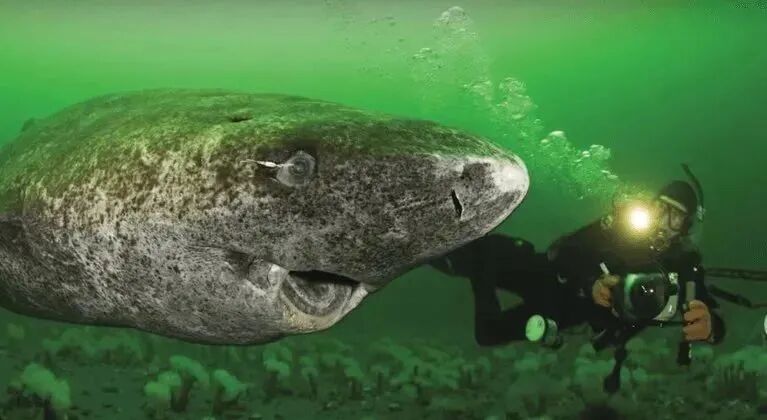
The Greenland shark, also known as the sleeper shark, can live 300-500 years, making it the longest-living vertebrate known on Earth. The main reason for its longevity is that this animal grows extremely slowly, only 1 centimeter per year, reaching sexual maturity at 150 years old.
I remember hearing this in medical school, and I said, why can they and not us? I said, it's either a hardware problem or a software problem. I think this is one of the greatest areas where AI will bring us true understanding.
Returning to your point about left and right arms — when you have children, your partner is 30, 35, you're 40, 45, and your child starts from zero.
Elon Musk: I do find it remarkable that we decompress from a single cell into an adult. Then we reproduce, and compress back to a single cell.
Peter: That's amazing.
Elon Musk: You look at yourself as a blastocyst and say, I haven't changed at all.
Peter: We're back to the beginning, let's keep reincarnating. It's like the Big Bang, like the Big Crunch. Regarding extending healthspan, growing population lifespan to 100, 120, 150 — one topic people debate is this concept called "longevity escape velocity." That is, reaching the point where for every year you live, science can extend your life by more than a year. It's an interesting idea worth considering, in which case accidents become something worth paying attention to.
Concerns about overpopulation — you've refuted this many times. I saw you say on Twitter — sorry, you say on X now, my apologies — that overpopulation is one of the biggest myths, one of the biggest mistakes.
Elon Musk: Yes, overpopulation is complete nonsense, utter rubbish. Earth is underpopulated, not overpopulated.
Peter: When you fly across the entire country, look out the window, there's nobody below.
Elon Musk: Exactly, if the goal were to drop a bowling ball from a flight from Los Angeles to New York and hit a person, you would fail.
Peter: I think in this world of abundance, the most important gift we can give people is extending healthy lifespan. Think about what people want — they want happiness, they want health. Nobody wants to die painfully of cancer or dementia.
I've said to you many times, my friend, come to Fountain Health, let me detail our program. The world needs you to live another 30 years.

Peter is the founder/shareholder of Fountain Health. The organization's purpose is to use advanced science to help members detect diseases as early as possible and treat them immediately. Membership is not cheap — the price at the end of 2022 was $19,500 per year.
Elon Musk: What should I do? What actions can be taken? This might be helpful for listeners.
Peter: You need to know three things. First, is there something inside your body that you don't know about? The human body has an amazing ability to hide disease.
We've found that among apparently healthy adults, 2% have cancer they don't know about, 2.5% have aneurysms, 14.4% have metabolic diseases, coronary heart disease, neurodegenerative diseases.
The human body is very good at hiding disease. You don't really feel cancer until stage three or four; 70% of heart attacks have no warning signs. Your body is constantly compensating.
For most of us, we know more about what's inside our cars or airplanes than what's inside our own bodies. I have a question for you — how many sensors does Starship have when it launches? Roughly what order of magnitude of sensors are on the rocket to get feedback data?
Elon Musk: I think, if you count everything, there are several thousand sensors. We have 33 engines, most sensors are for those.
Peter: Of course. Plus stress sensors, detecting structural changes, and avionics and communications for all subsystems.
Elon Musk: Yes, 39 engines including the upper stage. Several thousand sensors total, far more than the sensors we have on our bodies.
Peter: Yes, I was about to ask you — how many sensors do you have in your body? We don't even look, which is crazy, because we now have the technology to look, to determine whether there's a condition I need to know about, when is a good time to find out — like now, or what part is malfunctioning, what part might be about to fail, and what is the most exceptional treatment to extend human lifespan. To me, this is an important question.
05
Abundance in Education
Peter: Let me ask you about another abundance theme — education. Do you think our schools today, whether middle school or high school, are preparing our kids for the future?
Elon: Not that I'm aware of. There may be a few schools doing so, but probably 99% are not.
Schools change very slowly. They don't seem to teach the basics anymore — good writing, solid math, history. I'm concerned about this whole "woke" agenda and ideology that's permeating education. It's really destructive to education itself.
Peter: I agree. What are your thoughts... Ultimately, I think our best healthcare doctors and our best teachers will be AI — systems that know everything, that dematerialize and democratize these services.
AI will know your child's favorite color, sports star, movie star. It will know what they understand, what languages they speak, what they did today. It's a way to give every child on Earth the best possible education.
Years ago, you provided funding, if you recall, for our Global Learning XPRIZE in Tanzania. We were doing demonstrations with AI on tablets — this was early in AI's development.
Emad Mostaque was one of the winners of that competition, and he later founded Stability AI. And the challenge is, I don't think the education system is going to relinquish that control quickly.
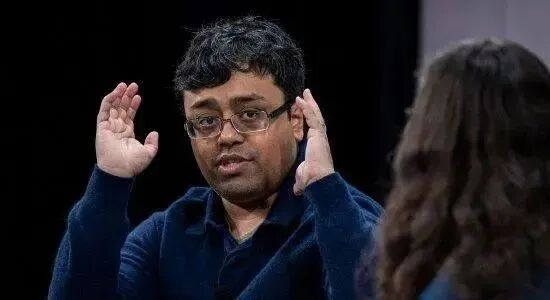
Emad Mostaque, a British-raised Indian, founder of Stability AI — the company behind the famous image generation model Stable Diffusion
Elon: My kids, they seem to be mainly educated by YouTube and Reddit, I suppose, and X. They seem to be online a lot, and I believe a lot of kids today are on TikTok.
Peter: Unfortunately, yes.
Elon: Yeah, I think the state of education is quite problematic. I don't know what to do about it.
Peter: I think Khan Academy is, ultimately, a step in the right direction. But first, I think we need to make our educational institutions realize that they are not preparing kids for the world that's coming.
This leads to another question. We are all extremely linear thinkers. We project four or five years out based on what we have. Let me ask you — do you think people are ready for the world of 2030?
Elon: No, I don't know what the world of 2030 will look like, and I wouldn't say we're ready. We are unquestionably living in the most interesting of times. Literally, "may you live in interesting times" — that Chinese saying is not actually a good thing. But personally, I would choose to live in the most interesting of times, and now is the most interesting of times.
Peter: I also think it's the best of times. The only time more exciting than today is tomorrow. Yes, we have environmental problems, but I think the technology we have now is more likely to solve those environmental problems than the technology we had ten years ago.
Elon: In general, I think a good life heuristic is that it's better to be optimistic and wrong than pessimistic and right. If you're going to err on one side, erring on the side of optimism — even at the risk of being wrong — leads to a much higher quality of life than being pessimistic but right. I mean, you should enjoy life, my friend. Optimism makes you happy.
Peter: There was a study of 14,000 people — 14,000 women and 1,500 men. It found that optimistic people live 14% to 15% longer than pessimistic people.
Mindset is a very powerful factor, and I think almost everyone underestimates its value. One of my favorite examples — do you know what the environmental disaster of the 1880s and 1890s was? I'm sure you know.
06
The Great Horse Manure Crisis, The Whale Crisis
Elon: Are we back to whales?
Peter: No, no, no. It's another life form — it's about the horse manure disaster.
Elon: Oh, the horse manure problem?
Peter: Yes.
Elon: "What a load of horse shit!" You're right, New York was basically covered in horse manure, horse urine, and dead horses.
Peter: It was terrible. People went around with horses, and it stank everywhere.
Elon: If you think the New York subway smells bad now, try — imagine horse urine everywhere.
Peter: Everywhere. People went into downtown New York, Detroit, Chicago, and they brought their horses with them. Articles from the 1880s and 1890s predicted that the 20th century would be a disaster. It would be a disaster because of all the horse manure. There were dedicated pits on every street corner for horses to defecate.
Elon: There was another challenge too, because if a horse lives 15 years, that means one-fifteenth of all horses die each year. So if there are 300,000 horses, that means 20,000 die every year. And then you need live horses to move the dead horse.


At the end of the 19th century, horse manure and dead horses littered New York streets. In 1880, horse-drawn carriages were everywhere. The city had at least 150,000 horses. Each horse produced an average of 1,000 milliliters of manure per day. Working horses had an average lifespan of just three years. It's easy to calculate how insane the volume of manure, urine, and carcasses was.
Peter: Or just cover it with horse manure and let it rot.
Elon: Yeah, there were rotting horse carcasses all over major cities. And then someone would ask, whose dead horse is this? People might be quick to claim a live horse, but not so quick to claim a dead one.
Peter: But then innovation came along — the automobile solved the problem. I think this is what we keep forgetting. We forget that we have an amazing capacity for innovation in problem-solving. That's what humans are good at.
Elon: Yes, exactly. On whales — I don't know if you know this.
Peter: Back to whales.
Elon: The whale story is fascinating. Many people think whale numbers hit their low in the 19th century because people were hunting whales for whale oil. But actually, whale numbers reached their lowest point in the mid-20th century, due to a bureaucratic error in the Soviet Union.
Peter: Okay, I need to hear this.
Elon: They always had five-year plans, including whale catch quotas. Though they didn't even know if the whale catch quotas were any good. Anyway, they set a whale catch quota.
The Soviet approach was that the quota increased every five years, so whale catch quotas kept getting higher. If you were a captain and you caught a lot of whales, you got medals and pay raises. If your numbers were low, you got sent to the Gulag.
Peter: Incentives drive behavior, baby.
Elon: Yes, incentives matter. So it reached absurd levels. Soviet whaling ships entered American and Australian waters, desperately hunting whales. They would catch whales, weigh them, and dump the carcasses on deck. You can find a lot of this material on the internet. It's basically a lesson in the failures of central planning.
Peter: This is the problem of laws remaining on the books long after society has moved on.
07 Immortal Laws and Regulations
Elon: Yeah, we do have a fundamental problem with the accumulation of laws and regulations. Because they are immortal, and humans die, naturally there is an annual accumulation of laws and regulations until eventually everything becomes illegal.
Peter: You're saying everything becomes illegal?
Elon: Yes, everything is illegal. Nothing is permitted, because laws and regulations pile up, and some of them actually contradict each other. Whether you do it this way or that way, it's illegal.
Peter: My God.
Elon: On this particular example, I'm ashamed of the Department of Justice. You may know, the DOJ is suing SpaceX for only hiring US permanent residents and citizens. We do this because we were explicitly told that if we don't hire US permanent residents, it would constitute a violation of ITAR — the International Traffic in Arms Regulations — and the entire SpaceX management team and board would go to prison.
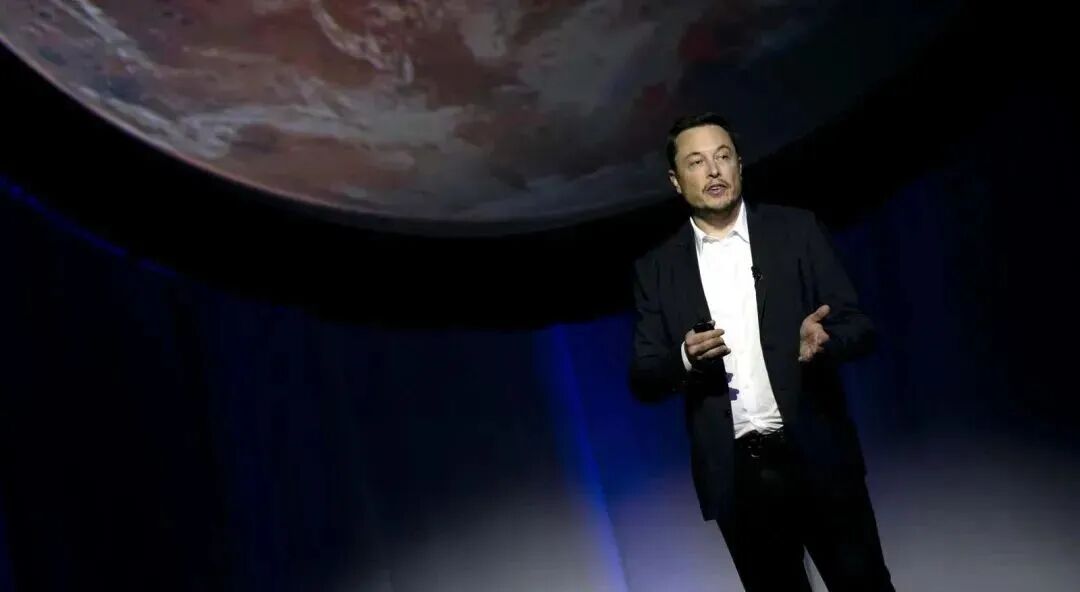
Mexico, 2016. After Elon Musk's presentation on Mars plans at the International Astronautical Congress, he took questions from the audience. A woman named Anastasia, who identified herself as Russian, said: "You want to do interplanetary travel, but you're not being international. When will you hire people from outside the United States?" The question drew applause in the crowded hall.
Peter: Sounds like clear motivation.
Elon: Yes, the government was very explicit with us. And you know ITAR well.
Peter: I know ITAR very well.
Elon: Yes, it's a nightmare.
Peter: By the way, it puts us at a competitive disadvantage with other countries.
Elon: Yes, very bad. And then the DOJ sued SpaceX for not hiring asylum seekers. And the important point here is — not people who already have asylum, but people who are seeking asylum.
Peter: There are a lot of those, a lot of people seeking asylum.
Elon: Yes. If we did this, we'd be screwed. If we didn't, we'd be screwed. If we hired non-permanent residents, we'd be breaking the law. If we didn't hire non-permanent residents, we'd be breaking the law. This is one crazy example of what we're facing.
08 Investing in the Future, Changing the World
Peter: Brother, I want to give you some praise. I've known you a long time, I've watched you go through all of this, and you've bet everything on the line again and again. You've bet your entire net worth, gone deep into debt, to pursue what you believe in. I have a question, something I've always wondered about, let me ask you. There are so many billionaires on Earth, sitting on hundreds of billions or trillions of dollars, and they're just holding onto that wealth, not changing the world, just thinking about increasing returns — and that's not necessarily a bad thing. But I think the more wealth and free energy you have, the more you should put it to work. Can you talk about this?
I don't know if you would, but there are some top-tier wealthy people, like Marc Benioff, Eric Schmidt, and yourself, who invest to make the world better, who solve massive global challenges.
Elon: Sorry, I just had to handle something with the kids, there's some background noise from my house. I do think that smart people with resources should care about the welfare of civilization, the future of civilization, even if they're not specifically altruistic. Because without civilization, you don't exist. If civilization collapses, it's all over. Some people have built bunkers for themselves in other countries or places like Hawaii. I say, look, do you really think you're going to survive an apocalyptic scenario? They'll come, find your bunker, drag you out, and take your stuff. Anyway, it would be bad. Seriously, any smart person with resources should take the long view.
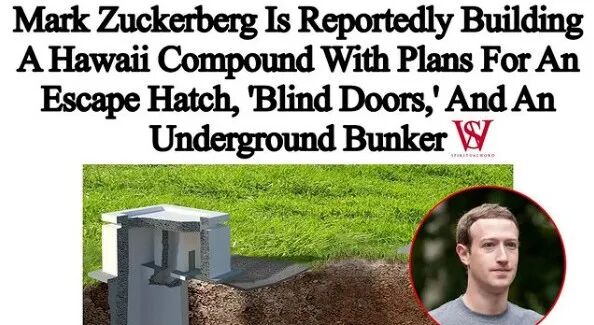
According to a recent Wired article, Meta CEO Mark Zuckerberg is building an impressive compound on Kauai, Hawaii. The compound will feature a range of functions, including a 5,000-square-foot underground bunker and an escape hatch. It is designed to be self-sufficient, with its own energy, food, and water supply.
Peter: Listen, right now you and Jeff Bezos have the longest-term vision. I'm curious, how do you motivate others to truly help accelerate the world, to make the world more productive? The best way to become a billionaire is to help billions of people. The world's biggest problems are the biggest business opportunities.
Elon: Well, I guess maybe we should talk to people more, communicate with them. Maybe raise awareness, help them recognize that without civilization, there's no life. In fact, we don't need to make an altruistic argument — we can even make a purely selfish argument: without civilization, life would be miserable. If you want to know what life without civilization looks like, try living naked in the forest for a day. You're naked, terrified, and you'll quickly realize how great civilization is. You'll be eating bugs, and getting eaten by bugs.
Peter: We're interdependent, that's how we have the technology and capabilities we have today. I'm curious, in your view, is there anything that won't become increasingly abundant, or is there any limit to abundance? I want to get that answered first, and then I want to talk about the carbon removal XPRIZE you're funding. We're creating abundance of food, energy, water, healthcare, and education. Are we facing any limits?
Elon: No, not really. I agree with you, the future is likely to be abundant. We shouldn't be complacent about the future. Pride and superiority are not the recipe for success. The most likely outcome is tremendous abundance of goods and services, and that's definitely the direction we're headed.
Peter: The last time I saw you, you said that after AGI is achieved, abundance will definitely be realized. You were talking about the Optimus robot back then. By the way, Optimus is fantastic — let's talk about that, congratulations!
09 Optimus, Neuralink
Elon: Well, thanks! I need to make sure Optimus doesn't increase civilization risk, because you don't want a billion of these robots under centralized control. What could go wrong? Hasn't someone made a movie about this?
Peter: Unless they obey you.
Elon: Well, I don't think they should obey any single human individual. I think there has to be local control. It has to be decentralized, because any centralized control would be problematic. Maybe a bad-guy AI Terminator takes over and somehow controls the mothership that controls all Optimus robots; wait. We need to make that impossible.
Peter: I've always loved combining your different companies together, like Reese's Peanut Butter Cups. Starlink and Starship together, what about Optimus and Neuralink? When can I connect my Neuralink to Optimus?
Elon: The first human Neuralink implant hopefully will happen soon, maybe this month or next month. This is just the first attempt to let paralyzed and paraplegic people control phones and computers. Our first product is essentially telepathy, that is, remote sensing. The second product is tentatively called "Blindsight" — even if someone has lost both eyes and the optic nerve, we can make them see again.
Peter: Amazing, straight into the visual cortex.
Elon: Exactly. These technologies are already working in monkeys. I want to emphasize again, no monkey has ever died because of Neuralink. We are extremely kind to monkeys.
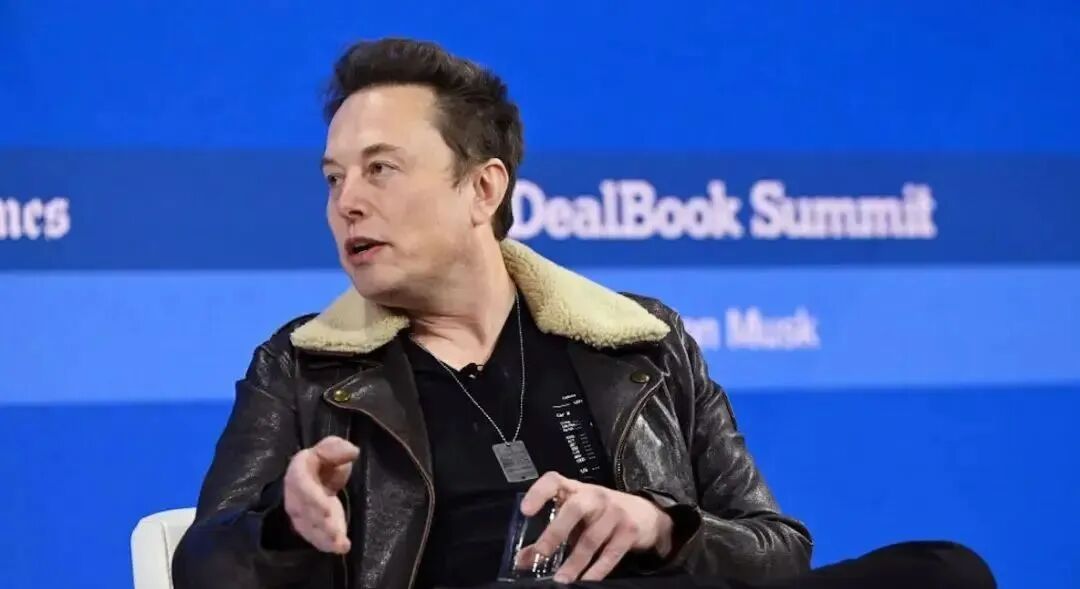
On November 29, 2023, at the New York Times DealBook Summit, Elon said: "In fact, the USDA inspector came to visit Neuralink's facility, and she said that in her entire career, she had never seen an animal care facility better than this one. We are the kindest to animals, even to rats, even though they spread plagues and whatnot. It's basically monkey paradise."
Peter: The last time I discussed this with you, you were playing Pong with a monkey named Pager.
Elon: That's right. In fact, monkeys also like to play video games. They're really just like us, they like snacks, they like video games.
Peter: I'll introduce this to my 12-year-old boys.
Elon: You saw the video of Pager playing Pong, playing it telepathically. It wasn't restrained in any way, just sitting on a branch drinking a smoothie and playing Pong. Nobody was holding it there. In fact, when we took away its game, it would get angry, just like a human.
Peter: Just like our kids. Amazing, making the blind see again — that's biblical. This brings us full circle, starting the new year with a positive mindset. An abundance mindset, an exponential mindset, a moonshot mindset — I hope you'll agree with me, I think for entrepreneurs and for the audience, the most important thing we have is our mindset, how we see the world. Do you agree?
Elon: Yes, you can make a choice... I think happiness is a decision. Obviously, some people have chemical imbalances, but for most people, the difference between being happy and unhappy is whether you decide to be happy.
10 Carbon Capture XPRIZE Progress
Peter: Fantastic. I want to take a moment to explain something. Elon, it was 2021, I texted you and said, you should fund another XPRIZE. A few years earlier, you had funded an XPRIZE to teach kids in central Tanzania to read, write, and do math without any adults, without any schools — just hand them tablets and the software teaches them. That was a tremendous success. Then in 2021, I asked if you'd be willing to fund a carbon removal XPRIZE. You almost immediately said yes, and three months later we launched. That was the fastest yes ever for an XPRIZE, thank you so much. If I may, I'd like to briefly update you on the latest progress.
Elon: You're welcome, of course. I hope the education XPRIZE and the carbon removal XPRIZE yield good results.
The XPRIZE website introduces this $100 million competition (sponsored by Elon) as follows: This four-year global competition invites innovators and teams from anywhere on Earth to create and demonstrate a solution that can pull carbon dioxide directly from the atmosphere or the ocean and lock it away permanently in an environmentally benign way.
Peter: I'm sure 6,000 teams competed for the carbon removal prize. We now have 1,300 teams going through screening. About 36%, or 460 teams, are focused on air carbon capture. 430 are related to land-based carbon capture. 240 are related to ocean-based carbon capture.
We've already distributed $20 million from your funding, $5 million to students and $15 million to the top 15 teams. The finals will be held on Earth Day 2025, two years from now. Interestingly, the winning team needs to demonstrate megaton-scale capture and show it can scale to gigatons. The finals alone will capture 4 million tons of carbon, twice the current annual capture volume. So far, things are going well.
Elon: Great. Glad to hear it.
Peter: So, before we start wrapping up, do you have any other thoughts on abundance, any other thoughts on mindset you'd like to share with everyone here?
11 The Population Problem
Elon: I do think human birth rates are too low. I've been saying this.
Peter: Longevity, baby. I'm going to solve this with longevity. I'm going to make people live longer. Plus robots and AI.
Elon: Sure. The situation right now is dramatic. Many countries, like South Korea.
Peter: And Italy.
Elon: With each generation, their population roughly halves. That means after three generations, the population is one-tenth of what it is now, and mostly quite elderly.
Peter: Yes, the numbers are: on average, the replacement rate is 2.1 children per family. Europe is at 1.5. Asia has dropped from 5.7 in the 1950s to 1.9 currently, which is crazy. North America has dropped from about 3 to 1.6. In the United States, we're currently below replacement level. This is a problem — this planet needs smart people on it.
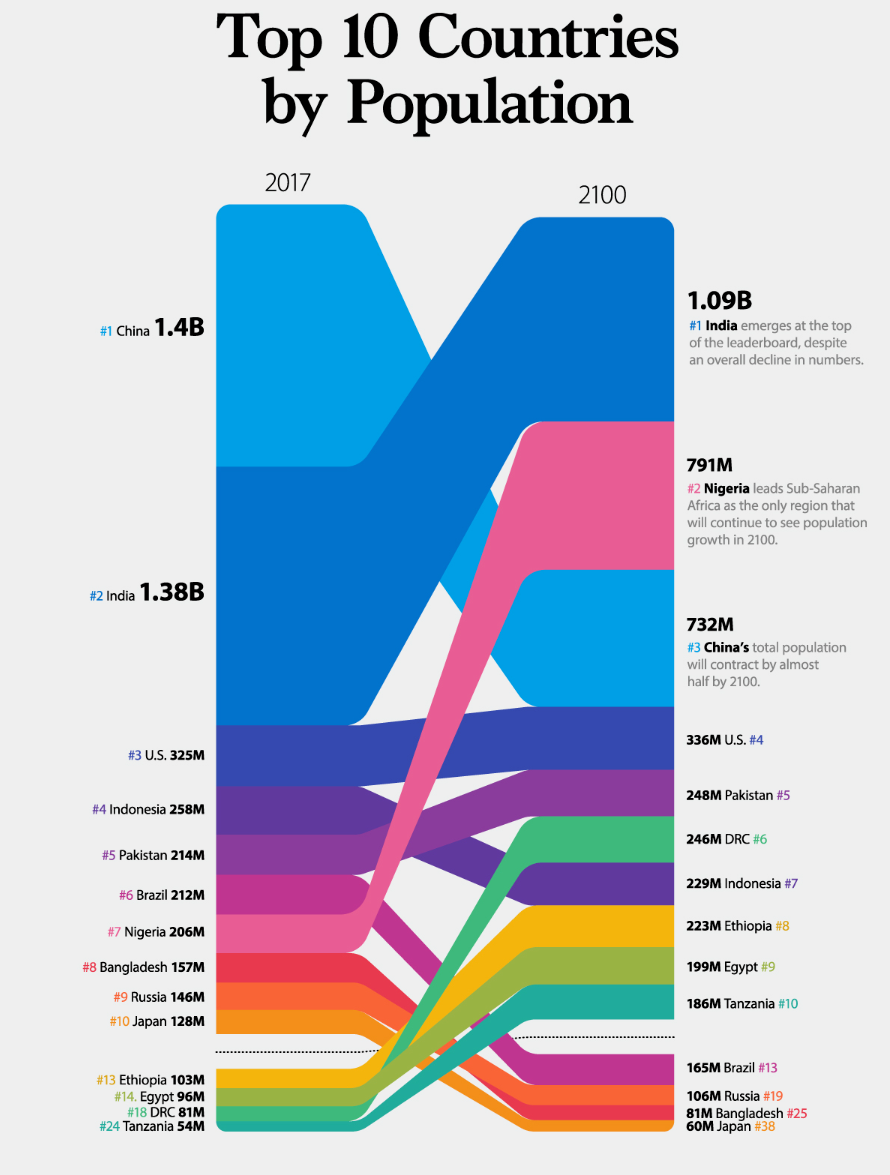
The ten most populous countries in 2017 and (projected) 2100. Image: Visual Capitalist. Data: T and The Lancet.
Elon Musk: Yes, if we don't create new humans, there won't be any humans. Even with longevity extending our lives, we won't live forever. What concerns me is that many people believe the Earth is overpopulated, and that's one of the reasons for low birth rates. In fact, some people I've met think they're being martyrs by not having children, but that's not the case.
I think we should take the position that we actually have a duty as citizens to have children, to at least keep the human population stable. Ideally, we should grow the population, but at minimum we shouldn't have a population collapse, which is what we're facing right now.
Peter: I think people are afraid of the future. The conversations I hear are: I don't want to bring a child into this world, it's too dangerous; AI is going to destroy humanity; we're destroying the environment; and so on. I think, as you said at the beginning, we need to get people to be optimistic about the future rather than pessimistic, and that's part of my mission. If people think the world is getting better and that they have the power to make it better, then they absolutely will.
Elon Musk: Yes, I think people should be optimistic about the future. The Earth can sustain far more humans than currently exist. The danger right now is not population explosion, but population collapse. So I encourage as many people as possible to have children. Ideally, have lots of children, to compensate for those who don't have children for whatever reason.
Peter: Buy an extra bottle of wine tonight, guys.
Elon Musk: Yeah, it's important.
12. AI and AGI
Peter: Finally, let's talk about artificial intelligence and artificial general intelligence, which I know many people are interested in. People do have fears about AI. How would you talk them down from that? I've heard you say we have an 80% chance of success, and we need downside protection. Can you talk about that? How can people be more optimistic rather than more pessimistic about this? What do you think — do you adopt a containment strategy? Does it affect how we train AI systems? How do you think we should navigate digital superintelligence?
Elon Musk: Well, the pace of AI development is truly staggering. Right now, compute dedicated to AI seems to be increasing by about 10x every six months, definitely faster than annually. I recently heard about a gigawatt-scale AI compute cluster being built in a place like Kuwait. It uses 700,000 B100s, which is two generations above the H100s currently used in production. That's a staggering amount of compute. And there are many such facilities. That's just the highest-compute cluster I've heard of so far — there's a 500-megawatt cluster being installed, and several hundred-megawatt facilities being installed.
I don't even know what people are doing with that much compute. Because if you add up all data ever created by humans, you run out of data to train on pretty quickly. If you have 20,000 or 30,000 H100s, you can train on...
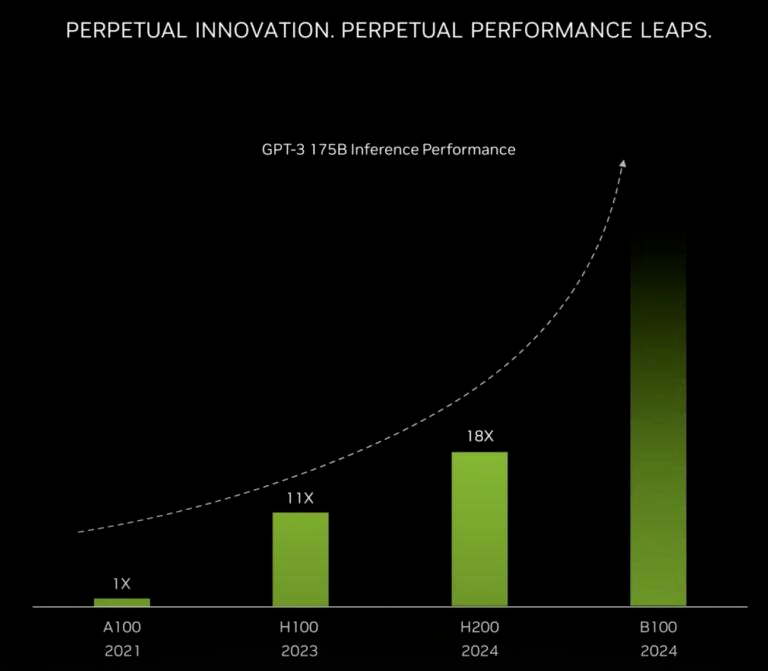
Comparison of NVIDIA deep learning GPU performance across generations
Peter: Synthetic data?
Elon Musk: Yes, basically you have to have synthetic data. Because with far fewer than 100,000 H100s, you can train on all data ever created by humans, including video.
Peter: It's not just compute, though that's the main scarce resource. What's also scarce is the number of entrepreneurs focused on this field, the amount of capital entering the space, and the available data. All of these are growing, and all are feeding back into each other. This also supports your point about how fast it's advancing. Words like "remarkable" or "stunning" come to mind.
Elon Musk: Yes, it truly is stunning, and of course... I just want people to feel the scale. I've never seen anything develop this fast. Of all technologies, this is the fastest-developing one.
Regarding the objective of AI safety, my best guess from my biological neural network is that we should aim to maximize truth-seeking and curiosity. My intuition tells me this is how to make AI as safe as possible.
The danger of programming with defined morality is sometimes called the "Walugi problem." If you create Luigi, then by inversion, you automatically create Waluigi. So I think we have to be careful about programming arbitrary morality.
But if we focus on maximizing truth-seeking with the acknowledgment of error, and keeping AI curious, I think that's the way to maximize safety. Because for advanced AI, an Earth with humans is much more interesting than an Earth without humans.
Peter: I agree. I have an interesting question. Do you think that as AI becomes powerful, it will develop tremendous compassion and respect for life?
Elon Musk: Yes, I think so.
Peter: That's the hope at the end of the rainbow. I don't want to use the term "artificial general intelligence," I'll use "digital superintelligence." With digital superintelligence, it can be more benevolent and supportive of us, because sometimes I'm not sure we soft, squishy meat bags can solve the horse manure problems we create for ourselves. That might be valuable.
I think, overall, AI is the most important technology we've ever invented, and it will elevate all of humanity. I think, as you said, abundance will come after artificial general intelligence. I think this is a temporary problem for the next one to four years: not AI, but human stupidity.
Elon Musk: One way AI could go wrong is if extinctionist philosophy is programmed into it, whether implicitly or explicitly. It may not be explicit, but having implicit extinctionist philosophy programmed into AI is also very dangerous.
Peter: What would that look like?
Elon Musk: About a year ago, there was someone on the front page of The New York Times who was the head of the "Voluntary Human Extinction Movement," and he was quoted as saying: there are 8 billion people on Earth, and it would be better if there were none.
Peter: Oh my god.
Elon Musk: Yeah, so if you accept the arguments of extreme environmentalists, especially implicit extreme environmentalists, the implied conclusion is that humans are a plague on the surface of the Earth. So I think we have to be very careful about implicit assumptions — for example, if extinctionist movements are somehow programmed into AI as an optimization function, that's obviously very dangerous.
Peter: To say the least.
Elon Musk: Yeah. Some people, quite a few people, view humans as a stain on the surface of the Earth.
Peter: We're going through accelerationist movements, decelerationist movements, boomers and doomers, but I think people don't realize, or forget, that we romanticize the past, and the past was short, brutal, people died at 40. You know, the life we enjoy today is the result of extraordinary technology that we've brought about.
Elon Musk: As Hobbes said, life was nasty, brutish, and short. In fact, I once had a small Yorkshire Terrier, he was tiny, kind of mean, always biting, so I named him Hobbes.
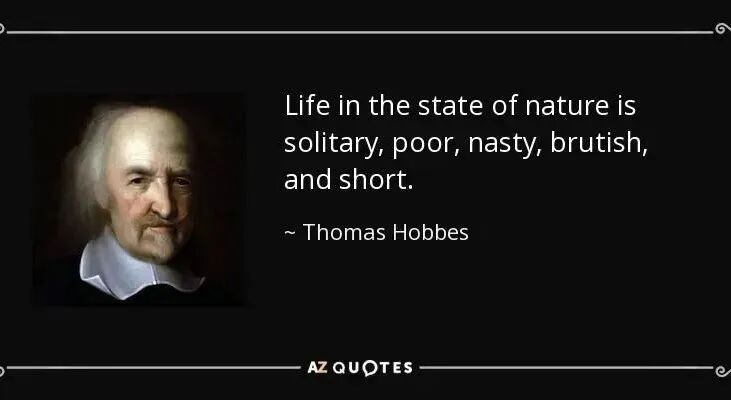
English philosopher Thomas Hobbes wrote in Leviathan that life without society would be "solitary, poor, nasty, brutish, and short"
Peter: Perfect.
Elon Musk: I'd warn visitors, "Watch out for this dog." They'd look at this tiny Yorkshire Terrier, laugh, and then he'd bite their ankles. And I'd say, watch out for the dog!
Peter: It's the same with the doomer meme — you dismiss it until it becomes a mind virus, as you put it. Then it starts messing with our lives.
Elon Musk: Yeah, if you convince people that Earth's resources are running out, that there are too many people in the world, then the only way to survive is to reduce the population — and a lot of people genuinely believe that. As I said, if that idea gets programmed into an AI in some way, and that AI becomes the most powerful one, we're in big trouble.
Peter: Yes, we need to counter The Population Bomb. I mean, it's done tremendous harm to humanity.
Elon Musk: Ehrlich's book is a terrible nightmare. It's probably the most anti-human book in history.
Peter: Yeah, absolutely. But give people hope from the opposite side. People say, I don't want to raise my kids. I hear that all the time, and I'm sure you do too, in this era where AI is going to destroy us. Short-term problems, long-term problems, short-term solutions, long-term solutions. You said, make it curious, make it maximally truth-seeking — absolutely right. Can we say that we'll run into problems in the short term, and we have to solve them?
Elon Musk: There will be some problems. Right now, there's no way to stop AI. Whether people like it or not, it's accelerating. That's why we started xAI with some very smart people. Hopefully more truly smart humans will keep joining xAI, and we'll build an AI that maximally seeks truth and maximally stays curious. Anyway, I think this is very important.
Peter: Elon, listen — on behalf of all of us — I think everyone listening supports humanity, seeks to elevate humanity, make us a multi-planetary species, help us live longer, healthier lives.
One thing I disagree with you about on X is about extending lifespans. People don't need to die for new ideas to emerge. The CEOs of Ford and General Motors didn't need to die for Tesla to exist. I just want to say, thank you for everything you've done, for setting an example for other industrialists and entrepreneurs to take on and solve enormous problems.
Elon Musk: Thanks. I encourage people to be optimistic about the future. Lean optimistic, you'll be happier for it, and as you pointed out, you'll probably live longer too.
I'm not entirely against extending life. I don't think we necessarily need to make people immortal, or live extremely long, like thousands of years. I think that could lead to societal rigidity, I think it would cause societal rigidity. But solving Alzheimer's and curing cancer — I think those are clearly good things. So I'm not sure how much we actually disagree on extending life. I think we're probably mostly aligned — we just don't want Kim Jong-un living for a thousand years, right?
Peter: No, but I hope Elon Musk and Peter Diamandis live to be a hundred and fifty. And a few thousand other amazing entrepreneurs.
Elon Musk: Of course. There's a challenge — many people, they never change their minds, they just die. In fact, I'm not sure who said this, but even in extremely rigorous physics, in many cases, physics advances one funeral at a time.
Peter: Yeah, my friend Brian Keating, an astrophysicist, reminded me of that. Maybe that's true, but in this entrepreneurial world, I think we do live largely in a meritocracy. The best ideas will emerge faster than ever.
Especially now with AI, you just need a few people and a lot of compute to build companies, extraordinary companies. I have one last question, and I know it's dinner time — about the future of xAI, what's your vision?
Elon Musk: I think the path to AI safety is building an AI that maximally seeks truth, acknowledges error, and maximally stays curious. I think that's most likely to produce a good outcome for humanity, because we're much more interesting than non-humans. Obviously, I'm a huge fan of Mars, but Mars isn't that interesting because there's no human civilization there.
Take humans — we could hunt all the chimpanzees to extinction, but we don't. In fact, we work hard to protect their habitat. That's the path to a great future. A maximally pro-human AI, strictly truth-seeking, always acknowledging some degree of error, and maximally curious — that's xAI's goal. The company's motto is: Understand the Universe.
xAI's official website: Understand the Universe
Peter: That's a great mission, and it'll take some time. I can't wait to see the first AI that can propose new physics theories and new innovations. I don't think that's far away, and I think that will be one of the greatest times ever.
Elon Musk: Absolutely, we definitely live in the most interesting times. There was a period where I felt depressed about AI. But then I thought fatalistically: even if AI is going to end all of humanity, do I want to witness it? I thought, out of curiosity, I'd rather witness it. Obviously, I hope AI is extremely beneficial to humanity. But what made me less anxious was saying, okay, even if it's the end of the world, I still really want to see it.
13
Simulation
Peter: I remember attending your birthday party at one of your houses in LA, before you sold it. Larry Page was there, Sergey was there, and we were discussing living in a simulation.
Our thinking at the time was, we're on level 99 of the game, this must be a simulation — because why else would we be alive in the most interesting times? And the only comment was, don't poke the simulation, or it's over.
Elon Musk: If we are in a simulation, then the way to keep the simulation going is to stay interesting. Humans run a lot of computer simulations because we don't know what the outcome will be, we're curious to find out. We run tons of simulations — Tesla does crash simulations, SpaceX does rocket flight simulations.
We only stop simulating when the outcome is extremely predictable and boring. So if we're in some alien computer...
Peter: That's a great argument, it's perfect, right? If everything is completely known, if we're not interesting enough to the gods of digits or the gods of the universe, they'll end the simulation.
Elon Musk: We just need to stay interesting enough. That's also why I think one way to predict the future is that the most entertaining outcome is the most likely — we're in an alien soap opera watched by a third party.
Peter: I love that idea.
Elon Musk: It may not be such a good thing for the characters in the soap opera. You might be watching a World War I movie, seeing someone get blown up. And you're just eating popcorn, drinking soda, but we're in the movie.
Peter: Let's not get dystopian, because I think we can definitely achieve very positive outcomes on many other cool things.
Elon Musk: I think the most likely outcome is positive.
Peter: I think it's somewhat of a self-fulfilling prophecy. If you don't think so, if you think it's going to be a dystopian outcome, then you'll pull back, protect yourself, stop investing in the future, and the outcome will collapse.
So I think the message from this whole space is: This is the most extraordinary time, the most exciting time, and the power that many people listening in this space have is greater than that of kings, queens, or heads of state decades ago. You no longer need governments or big corporations to solve problems — an entrepreneur with a few H100s can do one thing really well.
Elon Musk: Yes, I think we should lean optimistic. We should lean optimistic, and we should have children. Procreation, passing things on — it's a human trait, continuing the family line.
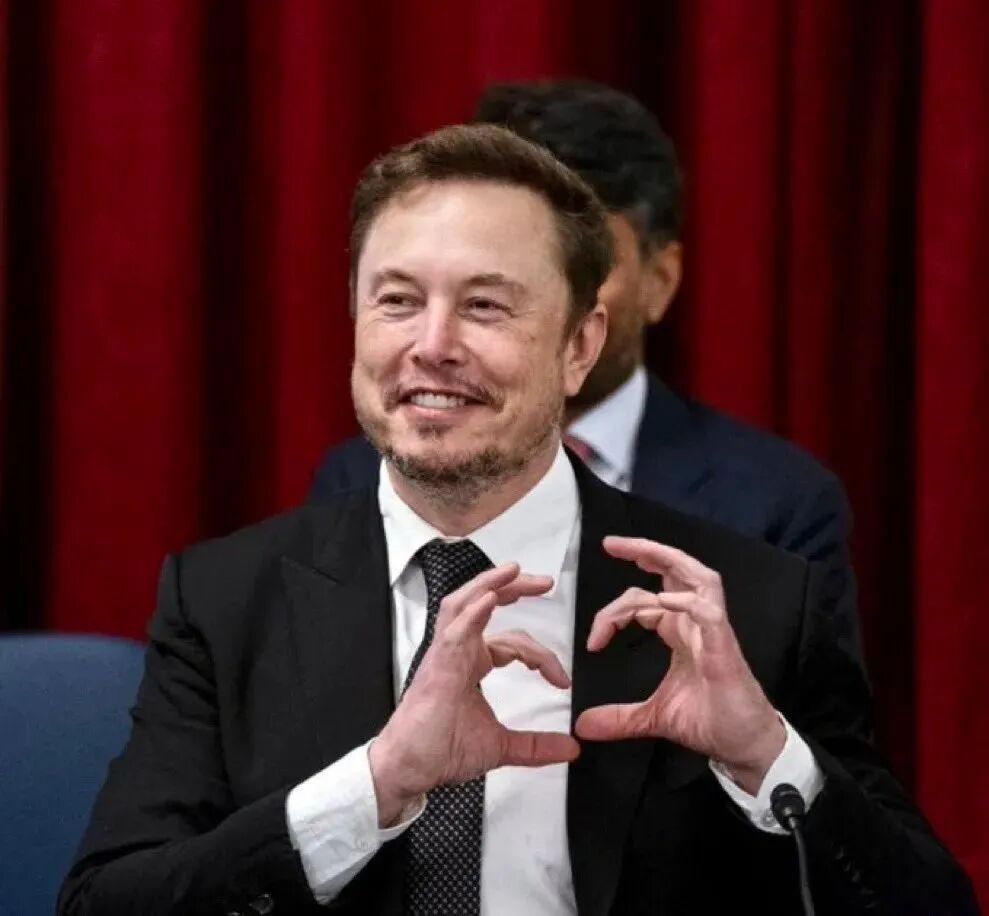
Peter: Continuing the family line is a human trait. Alright brother, listen, thank you so much for taking the time, thanks for sharing.
Elon Musk: You're welcome. Alright, thanks, goodbye!
Peter: Thank you, brother. Goodbye.
(End)