Code Brain | The First Step in Hiring Right: How to Interview Scientifically

Code Brain — Ecosystem Connections, Cognitive Resonance
Entrepreneurship is an endless journey of self-cultivation. The strength of one's fundamentals directly determines how far a company can go. Under the pandemic, startups saw their weaknesses and blind spots in business operations and organizational management laid bare. Managerial fundamentals have become a critical test and mandatory course for core leadership teams.
That's why Code Brain is launching its "Management Fundamentals" course series, targeting three foundational and core managerial capabilities for founders — people, finance, and operations — with 10 themes including personal leadership, talent identification and selection, performance management, high-performance teams, goal management, and business-finance integration. It offers comprehensive basic management methods and practical tools for immediate application, helping founders elevate their fundamental management awareness and capabilities.
Starting August 2022, the "Management Fundamentals" series will run monthly, with two sessions each time. For the "Talent Identification and Selection" theme, we specially invited Pan Xiang, Consulting Director at DDI China. Over the course of a day, starting from corporate talent philosophy, she focused on the STAR model, key stages and core steps in the full interview process, helping founders understand how to scientifically select talent.
For a founder, finding and selecting the right people is crucial — because only when you have the right people can things get done properly.
So how do you conduct effective talent interviews?
Generally speaking, the interview process divides into three major phases — pre-interview, during interview, and post-interview — with eight steps: reviewing resumes; interview planning and preparation; opening the conversation; conducting the conversation; closing the conversation; evaluating information; integrating individual profiles; and making the selection decision.

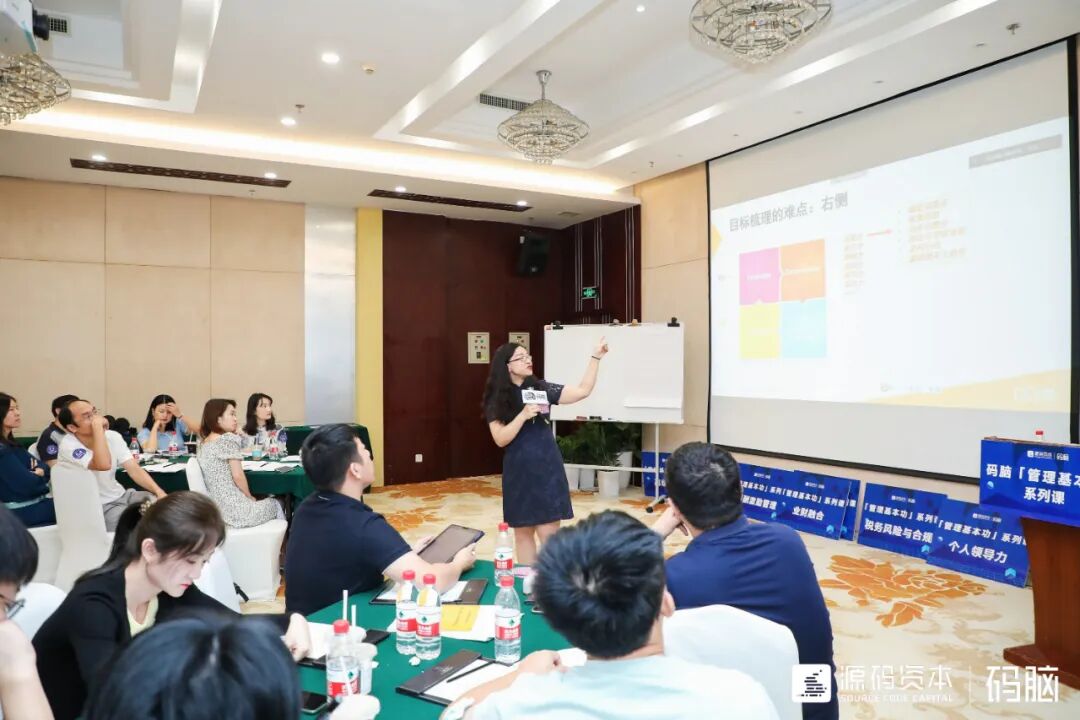
Pan Xiang, Consulting Director, DDI China
I. Pre-Interview
1. Reviewing Resumes
Average interviewers look at resumes mainly for background information — education, family situation, gap periods (discontinuities in timeline), and blank periods (periods without work).
An excellent interviewer first looks at the candidate's overall trajectory. That is, whether the candidate's positions have been rising over time, and whether their responsibilities have become increasingly challenging.
2. Interview Preparation
Selecting resumes doesn't take much time. More time should go into preparing for the interview, mainly confirming division of labor and preparing questions.
① Confirming Division of Labor
Interviews typically involve HR and business department personnel. But asking repetitive questions within limited time creates a poor candidate experience. To scientifically identify suitable talent, interviewers must divide responsibilities rationally. Specifically: HR focuses on underlying learning ability and motivational fit; business managers assess execution ability and decision-making ability; cross-team evaluation looks at influence.
The "first round" interviews fundamentals — general competencies and motivational fit; the "second round" interviews professional skills, business behavioral competencies, and motivational fit; the "third round" interviews macro-level factors — trajectory, potential, team succession planning — while also selling the candidate on the opportunity.
② Preparing Questions
Interviewers often ask questions weakly connected to hiring objectives, confusing candidates. What should you ask? Questions that reveal the candidate's behavioral competencies. Here are some interview guidelines.
③ Planned Questions (Interview Guidelines)
Preparing questions means not just having them, but understanding the principles behind them. Some candidates are "test-takers" who know answers by heart. How to guard against them?
First, always ask about the candidate's experiences, not experience. Experience isn't necessarily one's own — others' experience counts too. Experiences are one's own.
Second, each competency has different contexts; questions should include scenario and timeframe. For example, if a resume shows team management experience, ask how large the team was. Does the candidate's experience match the target position?
When designing questions, recognize that asking about experiences requires candidates to access their memory stores. But retrieval speed varies, as does comprehension. So establishing a time window helps candidates respond quickly and interact effectively.
Ask negative questions proactively, with铺垫 (set-up), and place them in the middle. For learning ability, the scenario is things one hasn't done before. You might铺垫 with: "As the saying goes, knowing is easy but doing is hard..."
Never ask theoretical or leading questions — these are two common interviewer errors in talent assessment.
④ Time Estimation
Time investment for one interview shouldn't exceed 90 minutes. If it goes over two hours, the interview objectives are probably unclear.
II. During the Interview
1. Opening the Conversation
Start with warm-up, expressing expectations for the interview. Then clarify that the interview is mutual selection, avoiding any sense of interviewer superiority and establishing equal footing. Then explain the interview process and framework: resume clarification → confirming specific past experiences → team introduction → answering candidate questions.
2. Conducting the Conversation
Effective interview questions should "kill in one move" (get straight to the point). If they can't, you need to prepare better. Three skills are commonly used: questioning, listening/discerning, and probing.
① Asking Planned Questions
Based on the resume, filter the two most recent work experiences. Identify which questions are frequently asked and which are rarely asked based on these experiences.
② Listening/Discerning — Identifying Information Quality
When answering questions, candidates generally use events to polish their image; next comes listening/discerning.
Listening/discerning means deriving from past actions, not past results. For example, the Journey to the West pilgrimage team — who would be suitable for project management? Judging by results, the team obtained the scriptures. But roles differed, and so did behaviors.
Here we can use the classic STAR model (Situation, Task, Action, Result): ST (Situation, Task) is background — why this task and event existed; A (Action) — what was done and how well; R (Result) — the impact or effect of the action.
The real trick lies in identifying who was present, how responsibilities were divided, and what key actions were taken. In listening/discerning, sequence doesn't matter; what matters is the candidate presenting the event completely. Candidates often describe the beginning (background) and end (result), while the truly important behaviors get omitted.
Each key competency has its key behaviors. For example, learning ability involves: learning need (active or passive), learning activity (whether diverse learning activities exist), rapid mastery (can new knowledge be quickly grasped), and application (cases of applying learning).
Many competencies can be developed later, but in scientific talent selection, check whether candidates have key behavioral support. If candidates have muscular memory of these behaviors, slight stimulation will trigger response.
③ Probing
If a candidate's described behavioral example is incomplete, probe for the missing corresponding part. If the example is invalid or non-specific, probe for concrete examples. If the example is complete, you can probe another example for the previous question, or probe for a negative example regarding the same objective.
Don't forget to probe for negative examples. Positive examples show smooth sailing or good performance despite poor circumstances. Of course, when discussing negative or sensitive topics, be ready to pivot to another topic at any time.
④ Motivational Fit
Experience, knowledge, and ability are all things one "can do," while personal traits, preferences, and motivation are things one "wants to do." If a candidate can do everything but ultimately doesn't want to, all prior interview time is wasted.
But for motivational fit, these questions need elevation. For example, the difference between motivation and motive: motivation is intrinsic; motive may be short-term and purposeful. The intrinsic might be a grand dream; the short-term might be salary and benefits. If you ask "reason for leaving last company," all candidates are prepared, and you may not get genuine intent — so questions must be upgraded.
The job motivational fit model has two dimensions: horizontal axis is like or dislike; vertical axis is present or absent in the work. This creates four quadrants: if the work contains things they like, they'll be excited; if it contains many things they dislike, they'll feel frustrated; if it contains very few things they like, they'll feel regretful; if it contains very few things they dislike, they'll feel fortunate.
There are three important moments to collect motivational fit information: first, during opening you can ask about likes and dislikes; second, when asking about past STAR examples, ask what was satisfying and dissatisfying in the process; third, at interview end, after team introduction, when they ask about company opportunities — these opportunities are what they deeply care about.
III. Post-Interview
1. Evaluating Information
Post-interview scoring should follow the interview division of labor.
First review each collected STAR, judging whether it corresponds to objectives and whether it supports multiple competencies. Then judge whether each STAR's behavior is positive or negative, and assess individual competencies based on relevance to the applied position, impact, and temporal proximity.
Finally use a 1–5 scale for each objective, where 3 is the passing mark, 2 means the candidate would need substantial organizational coaching or support, 1 indicates far below position requirements, and 5 indicates far exceeding position requirements.
2. Integrating Individual Profiles
After scoring, interviewers may give different scores for the same competency due to different responsibilities. Based on consensus reached on various ratings, summarize the candidate's overall strengths and risks, and interviewers make hire/reject decisions.
But consensus score doesn't mean averaging, taking the lowest score, or deferring to seniority. If an interviewer cannot participate in deliberation, they must write out distinct views on strengths and risks.
3. Hiring Decision
There's no absolute weighting for retaining or rejecting a candidate. But it relates to the position's near-term deliverables and the trainability of gaps.
For example, if you insist on hiring someone with poor motivational fit, you cannot "close" this position — continue interviewing for more suitable candidates. If the position needs immediate delivery, such as poor execution ability, you must answer "who will deliver results for them." Trainability of objectives: for example, influence, coaching ability, and organizational ability are easily acquired later. Interrelationships between different objectives: for example, if organization scores low but learning ability scores high, they can complement each other.
4. Ensuring Successful Onboarding
If you neglect onboarding support for the candidate, you may not get expected results. First clarify performance expectations; simultaneously help new team members build good working relationships; help new hires create probation period development plans, including communicating assessed strengths, development areas, and learning recommendations.

(Edited and compiled by Bijixia)

Issue 34 Code Brain | How Far a Team Can Go Depends on These 6 Points
Issue 33 Code Brain | An Entrepreneur's 11,626.5 Hours
Issue 32 Code Brain | Leadership Is Guiding People to Uncharted Territory
Issue 31 Code Brain | Amazon's Ten Overseas Compliance Experiences
Issue 30 Code Brain | 60 Hours of "Practical Leadership" — Full Highlights!
Issue 29 Code Brain | Zheng Yunduan: What Really Drives Organizations?
Issue 28 Code Brain | Understanding Human Nature to Build a Strong Overseas "Vanguard"
Issue 27 Code Brain | The Origin and Destination of Carbon
Issue 26 Code Brain | All About Overseas Marketing
Issue 25 Code Brain | Mastering Liu Genghong's Traffic Code
More Code Hui members can click "Read Original" to view