Code Brain | The Hidden AI Talent Arms Race Behind Deep Learning's Decade-Long Rise

A team of professionals with unwavering conviction will ultimately become hotly contested talent that companies fight over.


Created by Midjourney
As ChatGPT surged in popularity, two large model experts from Google Brain announced their move to OpenAI in mid-February. In this battle of foundation models, the talent competition between companies represented by Google and OpenAI has intensified. Equally important as funding rounds in the hundreds of millions or billions of dollars, top AI talent has become a precious resource that all sides are scrambling to secure. But long before ChatGPT made headlines, the movement and competition for AI talent had been going on for years.
A decade ago, Google successfully won the auction for DNNResearch, the voice and image recognition company founded by deep learning pioneer Geoffrey Hinton, with a bid of $44 million. It then spent $650 million to acquire DeepMind. Shortly after, Facebook founder Mark Zuckerberg personally recruited another deep learning titan, Yann LeCun, to co-found Facebook AI Research. Baidu followed by announcing it had hired Andrew Ng, who had led deep learning research at Google, to run Baidu's labs in Silicon Valley and Beijing. From the moment Google placed its bet on DNNResearch, a talent war for deep learning ignited among global tech companies including Microsoft, Facebook, NVIDIA, and DeepMind.
This article looks back at the decade-long rise of deep learning, focusing on the lesser-known stories behind the AI talent arms race among global tech giants, startups, and academia — with the hope of offering some insights to readers.

01
The Headliner Effect:
The AI Talent War Among Google, Facebook, and Other Giants
Andrew Ng, Yann LeCun, Hinton — these household names in AI have long been the top targets that major companies spare no effort to recruit. Their arrival doesn't just bring cutting-edge technology to a company; it also elevates the firm's R&D reputation and helps attract more outstanding talent.
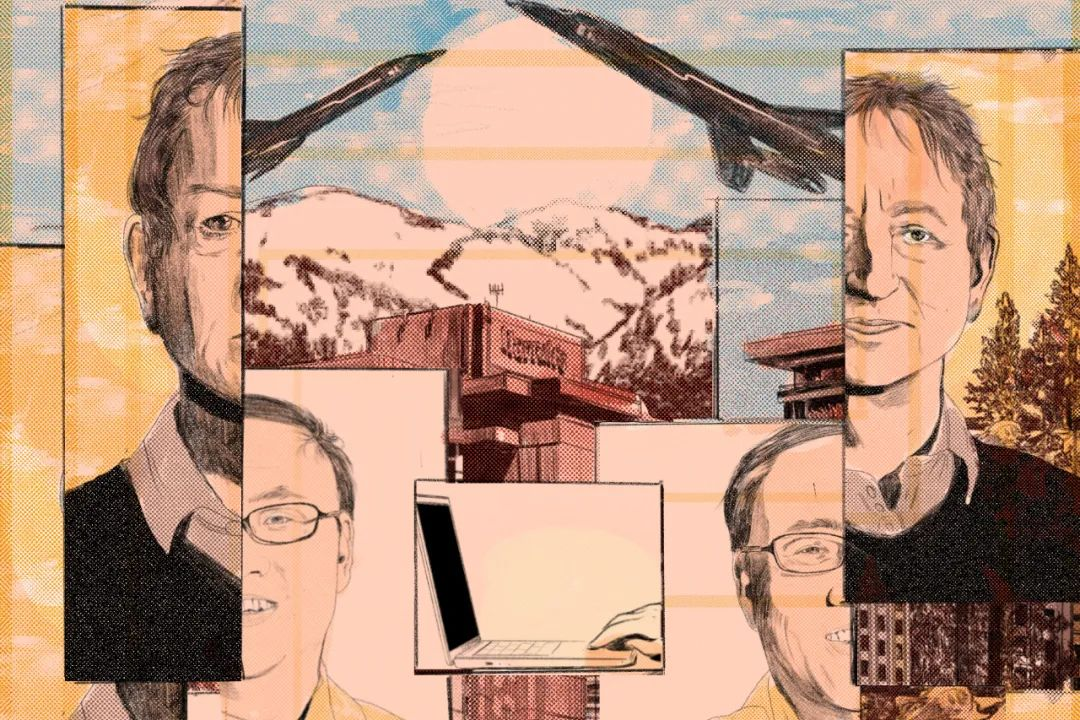
■ Behind Google's Acquisition of Deep Learning Powerhouse DNNResearch: A Secret Auction That Changed the AI Landscape
A decade ago, Hinton was among the few who believed that "deep learning" would one day succeed. In the fall of 2012, he and his students published a lengthy paper detailing breakthroughs in artificial neural networks — a field Hinton had been working in for decades — that dramatically improved machines' ability to understand images. Days after the paper's publication, Hinton received an email from Kai Yu, who was building Baidu's Institute of Deep Learning (IDL). Baidu offered $12 million to hire Hinton and his students.
Hinton and Yu's team were close to reaching a deal, but Hinton hit pause. He saw a bigger opportunity.
Hinton asked Baidu if he could look at offers from other companies before accepting the $12 million. Once Baidu agreed, he had control of the situation. Hinton realized that Baidu and its rivals were willing to pay massive sums to acquire a company, but not to hire a few new employees out of academia — so he created his own small startup. To signal their commitment to "deep neural networks," he named the company DNNResearch. He also consulted a Toronto lawyer about how to maximize the value of a startup with just three employees, no product, and virtually no history.
The lawyer saw two options for Hinton: hire a professional negotiator, which might anger potential buyers, or organize an auction to the highest bidder. After weighing the pros and cons, Hinton chose the auction. In the end, four companies participated: Baidu, Google, Microsoft, and the two-year-old startup DeepMind. Hinton ultimately sold the company to Google for $44 million.
 Painted by Nicole Rifkin
■ Facebook's Major Hire of Yann LeCun, and the Promise to Build an Open World and Open Culture Together
The story of deep learning titan Yann LeCun joining Facebook began in 2013.
At the time, Facebook CEO Mark Zuckerberg and CTO Mike Schroepfer had recognized AI's critical role in the future of technology. To make Facebook a leader in the field, they decided to find an industry luminary with deep experience and expertise to lead their AI research team. LeCun's name rose to the top. He was one of the founders of deep learning and convolutional neural networks, with extensive research experience and industry reputation.
Zuckerberg personally called LeCun with an invitation. Though flattered, LeCun said he preferred being an academic at New York University. Through multiple rounds of persuasion, Facebook's cultural philosophy ultimately won LeCun over. LeCun posed a critical question to Facebook: Was the company committed to building an open world and an open culture? This mattered enormously to LeCun, because he firmly believed that the key to success lies in embracing openness.
Zuckerberg and Schroepfer ultimately gave LeCun a very positive response, and agreed to let him keep his faculty position at NYU and base his lab in New York. LeCun officially joined Facebook in December 2013, becoming head of the company's AI research team, FAIR. True to Zuckerberg's promise, LeCun was given tremendous freedom at Facebook — in organizational planning, talent recruitment, and everything else, he could build things the way he saw fit.
Under LeCun's leadership, FAIR focused on solving long-term problems in AI and machine learning. LeCun knew that to achieve both the team's long-term scientific goals and short-term objectives, he needed some scientists and engineers developing new technologies that would influence the field years down the road, while others focused on technologies that could be applied to existing products. LeCun said that 70% of FAIR's work was long-term scientific research, and 30% was short-term product development.
02
Talent Stories From Brilliant Startups:
OpenAI & DeepMind
■ OpenAI: Sparing No Effort to Attract Heavyweight Talent
With ChatGPT's debut, OpenAI has become a household name, and CEO Sam Altman has been thrust into the spotlight. But between OpenAI's founding in 2015 and GPT-2's release in 2019, many stories unfolded. Greg Brockman was the key figure who built OpenAI from nothing. As a co-founder, his core responsibility was finding the technical talent who could realize the team's vision. Greg wanted to invite a group of the very best people to join the founding research team. Through his powerful network, they connected Greg with top AI research talent including Ilya Sutskever — who had joined Google through the Hinton auction — as well as Andrej Karpathy and Wojciech Zaremba.
For startups, the biggest challenge is usually conveying the mission to candidates. But at OpenAI, its nonprofit status, independence from any tech giant, and mission to promote friendly artificial general intelligence quickly resonated. For Greg, the real challenge was convincing candidates to believe in an organization that didn't yet exist.
The true turning point was research scientist John Schulman's joining. Greg approached John multiple times, convincing him that this was exactly what he was looking for — combining the openness and mission of academia with the resources of a private company. He decided to join! John's endorsement made subsequent engineering hires considerably easier.
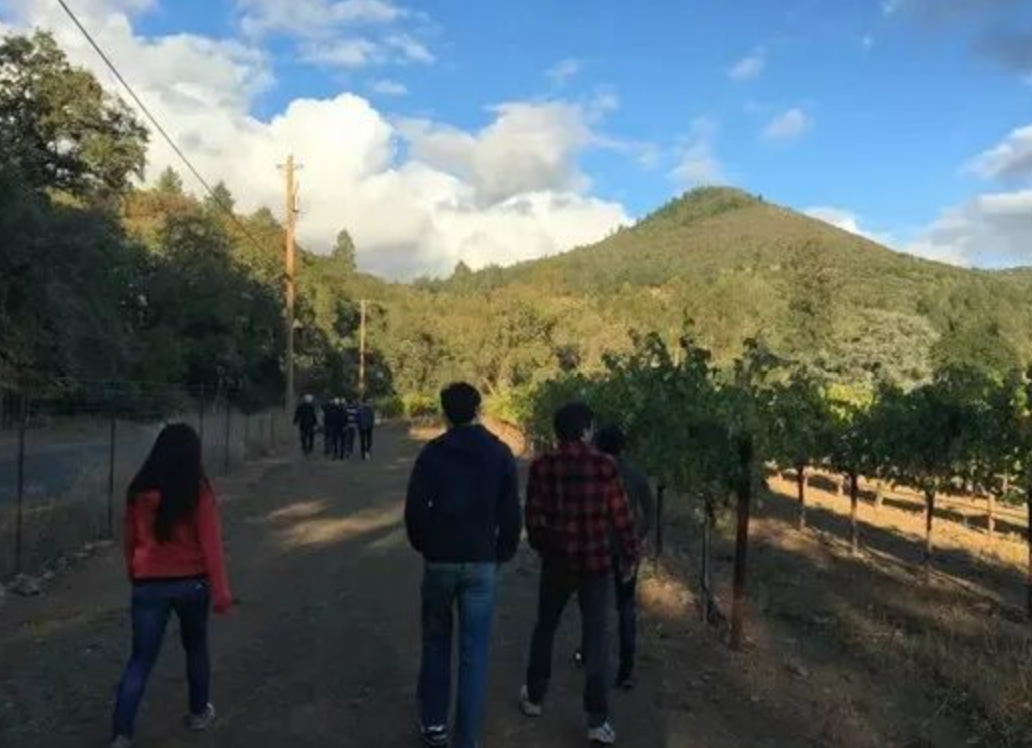
Near the end of 2015, on Sam's suggestion, Greg chartered a bus and invited all the candidates on a hiking trip in Napa Valley. During the outing, Sam and Greg extended offers to every person there, hoping to lock things down quickly and officially announce OpenAI's launch.
But core figures like Wojciech and Ilya had to resign from their old employers, Facebook and Google. After each submitted their resignations, Facebook offered "insane compensation, two to three times market rate" to try to change his mind. Google's offer to Ilya reached several million dollars per year. But both refused — and the rest of the story is history.
 Pictured in 2015
■ DeepMind: Building a Hybrid Culture of Academia and Startup
After Facebook hired LeCun and Google hired Hinton and his students, there were few top deep learning talents left in the industry. Surprisingly, DeepMind — a little-known startup that had just been founded — successfully recruited about 70 AI researchers under the leadership of co-founder and CEO Demis Hassabis, despite the talent scarcity.
But DeepMind found itself in an awkward position: tech giants like Google and Facebook were also becoming interested in deep learning. With their deep pockets, how could DeepMind retain these people? DeepMind either had to sell itself to Google or another giant, or face being poached. In 2014, Google acquired DeepMind for $650 million — though ultimately, Google was buying the talent, not the product. After the acquisition, Google poured substantial funding into DeepMind's AI research, focusing on artificial general intelligence (AGI). Though backed by Google, DeepMind worked hard to maintain its research independence, and profitability was never its top priority.
Hassabis noted that "DeepMind's research environment is a hybrid culture, combining the long-term scientific thinking of academia with the speed and focus of the best startups. We always value our connection to academia, because so many on our team come from that background." This is also why DeepMind has continued to publish important research openly.
■ Academic Talent "Acquisition": Scientist David Silver (Father of AlphaGo)
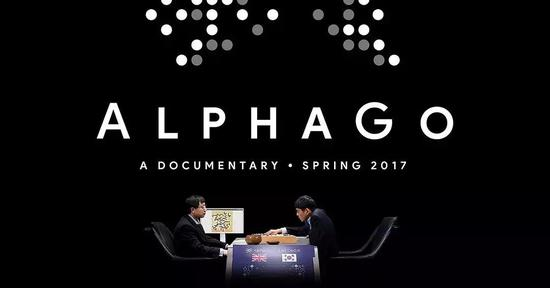
In early 2014, before being acquired by Google, DeepMind began negotiating with UCL to buy out AlphaGo creator David Silver's working hours. This arrangement would let him keep his university position while working full-time at DeepMind.
After joining DeepMind, Silver formed a 20-person AlphaGo team dedicated to Go AI research. Drawing on the entire team's strength, he demanded excellence at every step of technical development. Team members revealed that some intelligent modules seemed perfect to Google's teams, but Silver still considered them failing grades, far from perfect. Long-term focus on AI and the Go project, relentless pursuit of technical excellence, plus Google's massive resources and team coordination — all of this ultimately led to AlphaGo's explosive breakthrough.
Documentary AlphaGo
03
High-Potential AI Talent: The Future's Light
In the tech world's talent arms race, the competition isn't only for famous luminaries. In AI, PhD students who have just graduated — or haven't even graduated yet — also draw corporate attention and command high salaries. They don't just take big paychecks; they deliver results. Many breakthrough achievements have come from these young upstarts. Though students, they stand at the research frontier, pushing the industry forward in innovative directions. Pieter Abbeel, founder of robotics AGI startup Covariant and UC Berkeley professor, shared: "I remember once, these AI PhD students were giving talks at my Berkeley lab, and quite a few people were interested in their research. I really wanted to invite them to be lecturers or postdocs in our lab. Then OpenAI announced they had hired them. I thought, that's it, they've been scooped — they're going to OpenAI to work with Elon Musk, Sam Altman, Ilya Sutskever, Greg Brockman, those incredible people. They definitely won't come here." Similar stories keep happening in this industry — groups of determined specialists ultimately become hotly contested targets for numerous companies.
The AI talent arms race among giants also offers some important lessons for today's AI entrepreneurs:
- The movement and competition for top AI talent has become a major industry topic. As technology continues to develop and find applications, demand for top AI talent keeps growing. Entrepreneurs need to build sufficient talent reserves to stand out from brutal competition.
- AI technology innovation and development, from birth to breakthrough, requires visionary investment, patience, and long-termism. Entrepreneurs need to balance long-term and short-term goals, cultivating soil and environments better suited to their business direction.
- AI startup values are worth seriously exploring and practicing. Related ethics and risks affect not just users and regulators, but also internal talent.
We hope that those of us in AI can also find our fellow travelers, and achieve something great.
References:
The Deep Learning Revolution; The Robot Brain Podcast, hosted by Pieter Abbeel
Authors: