Code Brain | UNIQLO Founder Tadashi Yanai: These Cultural Trends Could Bankrupt Your Company

Nothing is more dangerous for an operator than the delusion that "I'm already doing great."

For any business leader, the most dangerous mindset is thinking "we're doing just fine." Once a manager starts believing that — or convinces themselves that "I've exceeded my own standards, so by my own measure I'm doing well" — the business begins its slide toward failure.
Tadashi Yanai, founder of UNIQLO, identifies six cultural patterns that obstruct healthy company growth. We hope today's reflection serves as a wake-up call.
01
Blindness to Common Sense Stifles Growth
The greatest enemy of corporate growth is "common sense." When we spend years embedded in an industry, a company, or a particular business, we gradually start accepting the current state of affairs as "just the way things are."
Before we know it, we've drawn invisible boundaries around ourselves:
- "Fleece should only be made by mountaineering and outdoor gear manufacturers."
- "HEATTECH products belong in sporting goods stores."
- "BRATOPs with built-in cups are just underwear."
This kind of thinking suppresses our potential. But who set these rules? Is there some international regulation that mandates things must be done this way? There isn't. These are simply conventions that industries or individual companies have established for themselves — lines drawn for their own convenience, to carve out territory. They weren't drawn with the customer in mind.
Things that are meaningless or inconvenient from the customer's perspective get labeled "common sense" by people inside the industry, inside the company, inside the business. The result? We fail to do many things that actually matter to our customers.
That's why we need to approach so-called common sense with skepticism. Ask: "Is this right from the customer's perspective?" "Is this really necessary from the customer's perspective?" When we find ourselves inconvenienced as customers, or thinking "I wish someone made this," or when a customer asks us "Do you have something like this?" — we need to step back and ask: "Have we failed to truly think like our customers because we were trapped in our own internal common sense?"

A famous example of innovation born from questioning common sense: 7-Eleven's "oden in summer" and "ice cream in winter." Supermarkets, bound by culinary common sense, assumed oden — a steaming hot dish — was for cold winter days, while ice cream belonged to sweltering summers. So when temperatures rose, oden came off the shelves; when it got cold, the ice cream section shrank.
But 7-Eleven did the opposite.
Even in peak summer, oden sat prominently by the register. Even in deep winter, ice cream held prime real estate in the store.
Sales were excellent. Other convenience stores quickly followed suit.
Today in Japan, this product placement has itself become "common sense."
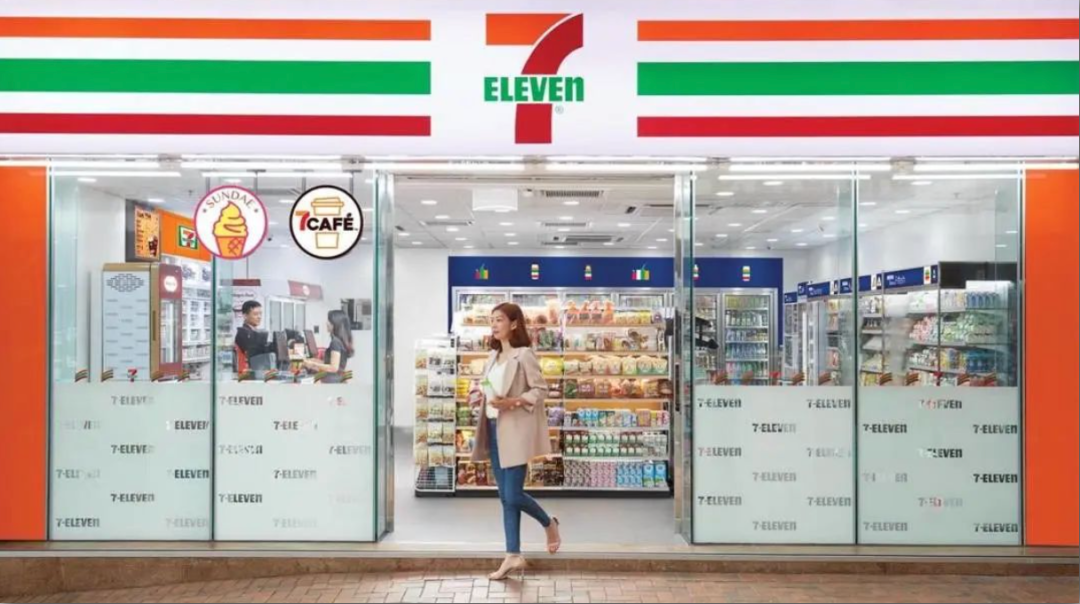
7-Eleven's success owed much to air conditioning. With cooling running in offices and homes during summer, people felt chilly and craved something hot. Conversely, with heating blasting in winter, people felt overheated and wanted something cold.
This shift in living environments dramatically affected what customers wanted to buy.
By questioning common sense from the customer's perspective, 7-Eleven created demand for "summer oden" and "winter ice cream" — and opened up entirely new markets.
There are countless similar examples. The truth is, what people call "common sense" often conceals significant business opportunities.
02
Anxiety and the Pursuit of Stability Lead to Failure
When people challenge themselves with something new, anxiety naturally follows. We worry:
- "Can I really pull this off?"
- "What if I fail?"
Once this anxiety takes hold, we start thinking "I don't want to put the company at risk" — and that thought begins to infect our strategy and decisions.
This is "stability-seeking" management.
It sounds reasonable. But it leads to failure.
The Japanese are particularly susceptible. We've been conditioned by aesthetics that celebrate "moderation as beauty" and "the golden mean as ideal" — and "stability" fits this aesthetic perfectly. It's hard to resist.
Hearing the word, our first reaction is: "Yes, stability is best in all things."
Conversely, hearing "rapid growth," we immediately think: "Unreliable," "worrisome," "they'll fail soon, they'll go bankrupt soon."
But these reactions miss the point entirely.
The fundamental truth is this: a company that seeks stability from the outset will never achieve stable growth. Why? The reason is simple.

Because customers are demanding. No customer wants to spend money on unchanged products or formulaic stores. And with competition constantly churning, every company is scrambling to find new ways to attract them.
Society is evolving at a staggering pace, and customer needs shift just as rapidly.
If customers, competitors, and society were all static, stability might work. But that world doesn't exist.
The reality is: only when managers can not merely survive these changes but convert them into opportunities and skillfully capitalize on them can we avoid being abandoned by customers — otherwise, the company faces extinction.
People who don't understand management often mock companies that boldly embrace challenges as "not facing reality." In this sense, pursuing stability is actually far more "unrealistic."
The desire to "not put the company at risk" is precisely what "puts the company most at risk."
Managers exist to maximize results — both now and in the future.
To fulfill this duty, we must fearlessly take on the challenges that need taking on. When the moment demands full commitment, we must engage with bold decisiveness.
Without this mental preparation, we cannot create customers, nor can we keep the company alive.
03
Lack of "Quality Consciousness" Bankrupts Companies
To succeed, managers must cultivate "quality consciousness."
This means maintaining rigorous standards for the quality of everything we produce — "product quality," "service quality," and "the quality of all outputs." That is management.
The standard for quality is defined by whether something truly benefits the customer.
I want every standard in our organizational mechanisms to be built on this principle. And I want us to pursue these quality standards relentlessly, without compromise.
This means applying this standard to every task, every day, striving for results and continuously raising the bar — weekly, monthly, yearly — demanding more of ourselves.
Managers with ambitious goals cannot compromise on this.
04
Customers Are Demanding
Why do we need rigorous quality standards? Because "customers are demanding."
Put yourself in their shoes and it becomes immediately clear: once customers experience something, they form their own benchmark.
From that point on, they measure everything against it.

And gradually, they grow dissatisfied with the current standard and seek a higher one. Once that higher standard is met, they pursue one higher still. Customer expectations climb step by step.
Consider Japan's 100-yen shops. The product quality is now so good that some items make you wonder: "Can you really get this for 100 yen?"
Any company operating on the standard of "this quality is good enough for 100 yen" would go bankrupt.
The same applies to conveyor-belt sushi, now popular worldwide. At these restaurants, the sushi quality rivals that of masters who've trained for years. Families and foreign tourists alike can enjoy sushi specially prepared for them.
If conveyor-belt sushi merely offered cheap sushi, it too would face bankruptcy.
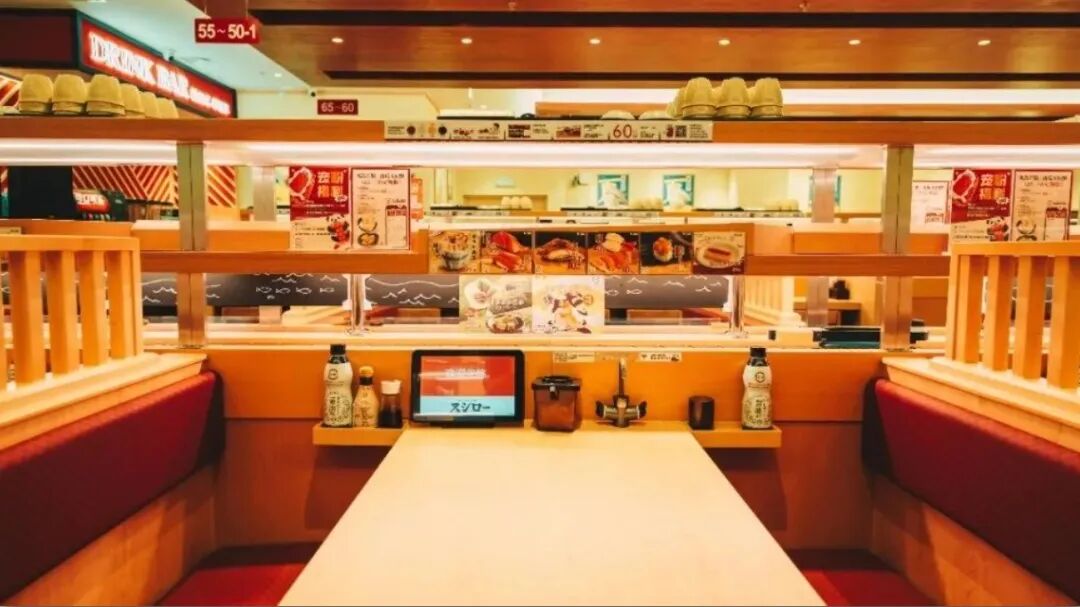
Japanese conveyor-belt sushi chain "Sushiro" Moreover, information and national borders are no longer what they used to be. Customers know about products and services worldwide — many from direct experience. Customers often know more than we do. Hoping to avoid this reality or achieve quick success is pure fantasy.
We spend all year immersed in studying our own company, our own products, our own services. Meanwhile, customers are studying and experiencing products and services across the globe.
In this era, without genuinely high standards, you can be eliminated at any moment.
05
Low Standards You Set Yourself Are Meaningless
When we talk about high standards, we don't mean "standards that are easy for you to meet." Don't misunderstand. Many people say "by our own measure, we're doing well," but this is meaningless for management.
We must measure our work against standards that truly satisfy customers.
These standards are constantly rising. So we must continuously pursue the highest quality worldwide and use that as our benchmark.
- Are our stores the cleanest in the world?
- Is our store environment the most comfortable in the world?
- Is our service the best in the world?
- Do our products offer the greatest value in the world?
- Can our factories produce the highest-quality goods in the world?
- Is our management system the most advanced in the world?
We must set such high standards for ourselves and pursue them unwaveringly, without compromise — until we reach heights that other companies cannot match.
To win in competition, we must embrace this mindset and elevate our operational quality to this level.
Reflect honestly: are you doing this? If we measure ourselves by such standards, we'll likely find we're falling short in many areas.
If someone thinks "I'm doing well," it's probably only because they've set the bar too low.
When a company achieves standards that customers genuinely recognize as high, it gains absolute advantage.

Absolute advantage means that a company's standard has become common sense in the customer's mind — and products from companies that don't meet this standard simply aren't considered for purchase. Google in the internet industry, Apple in mobile technology, and The Walt Disney Company in amusement facilities have all achieved this absolute advantage.
In other words, any company that can successfully drive high-value innovation that changes customer common sense and habits can achieve absolute advantage.
06
Conclusion
For any business leader, the most dangerous mindset is thinking "we're doing just fine." Once a manager starts believing that — or convinces themselves that "I've exceeded my own standards, so by my own measure I'm doing well" — the business begins its slide toward failure.
To summarize:
-
What managers need is a sense of crisis, not anxiety. We must operate with constant crisis awareness —清醒地 recognizing that we're walking a cliff's edge, where one misstep means a plunge into the abyss. This is "normal management."
-
Furthermore, managers must stand in the customer's shoes and examine themselves with the most critical eye possible. If you work in a store, scrutinize your store with a critical eye every single day. Those in other departments must similarly examine their company, their division, their services from the customer's perspective with maximum scrutiny.
In short, managers must hold themselves to standards stricter than they can imagine — and make this their habit.
Author: Tadashi Yanai, Chairman, President and CEO of FAST RETAILING Co., Ltd. Source: China Stone Management Review (ID: guanlizhisheng2015)