Code Brain | What's New in Robotics

Let's Read a New Paper Together


Advances in AI and robotics tend to reinforce each other, often crossing over in unexpected ways. Recent studies published in top-tier scientific journals include robots built from human cells, robots that mimic how octopuses hunt, and an AI system that accomplished in one go what would have taken human scientists 800 years. Let's take a look.
1
A "Robot" That Can Repair Neuronal Scratches, Built from Human Tracheal Cells
Developmental biologist Michael Levin at Tufts University in the United States and his colleagues previously developed tiny robots called xenobots using stem cells extracted from frog embryo cell clusters. Building on that work, the team has now created a new type of microrobot capable of repairing damaged neural tissue. These "microrobots" are constructed from human tracheal cells and measure between 30 and 500 micrometers in diameter.
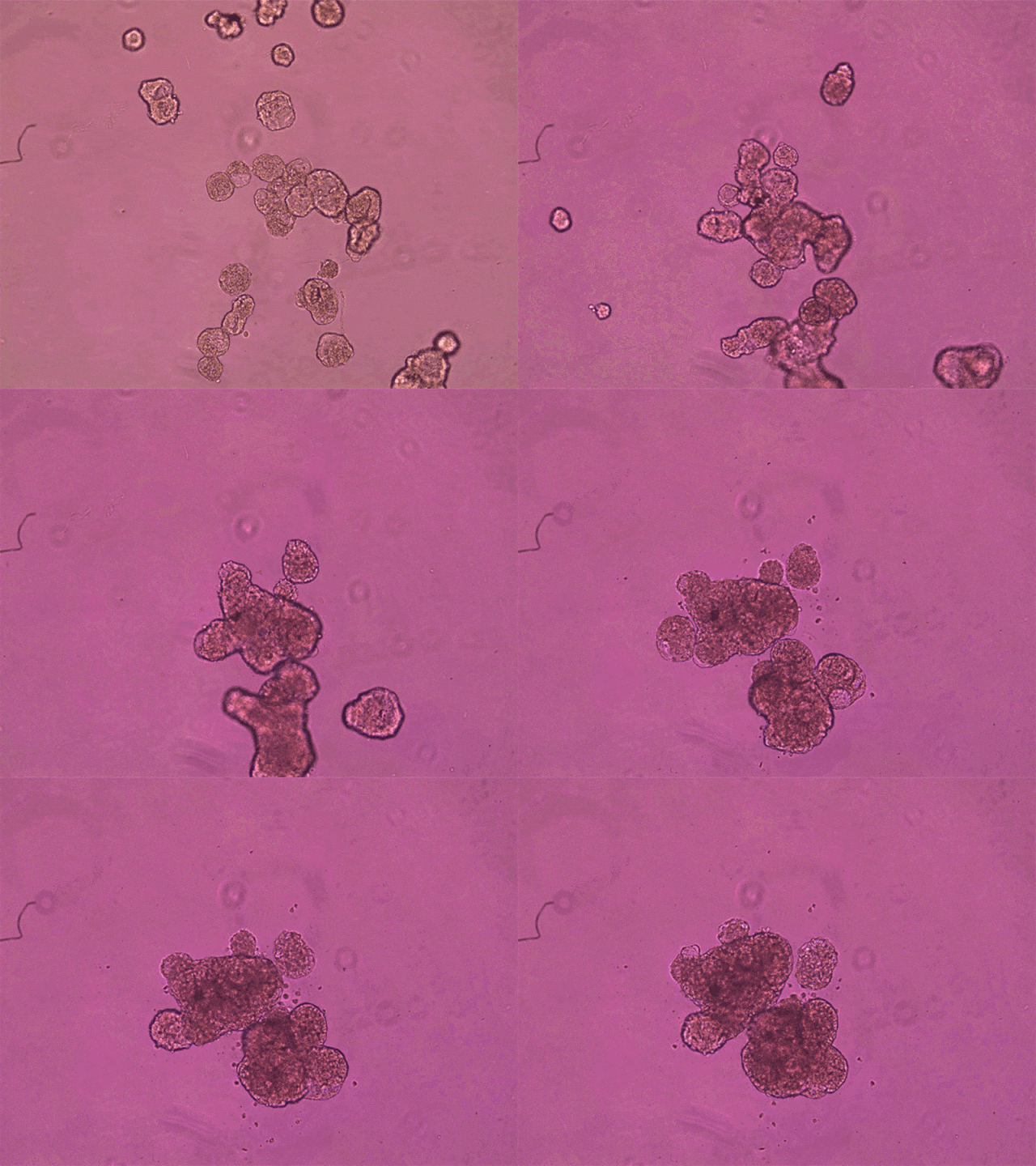
The team chose tracheal cells because they are relatively easy to obtain. Levin and his team cultured spheres of human tracheal skin cells in gel for two weeks, then removed the cell clusters and cultured them for another week in a less viscous solution. During this process, the cilia covering the tracheal cells migrated to the interior of the sphere, acting like paddles that set the organoid in motion. Each "microrobot" grew from a single cell. The researchers found that the resulting robots — each containing hundreds of cells — "swam" in different patterns: some moved in straight lines, some in circles or arcs, and some moved erratically. This study was recently published in the journal Advanced Science. Scientists are continuing to investigate the therapeutic potential of these cellular microrobots.
To test their healing capabilities, Levin and his colleagues placed several robots in a small dish. There, the "microrobots" fused together to form a "superbot." The researchers placed this on a layer of scratched neural tissue. Three days later, the neuronal sheet had completely healed under the superbots influence. Gizem Gumuskaya, a developmental biologist at Tufts University and co-author of the paper, said this was surprising because the robot cells could perform this repair function without any genetic modification.
Looking ahead, the research team believes that robots made from human tissue could be used to clear arteries, break down mucus, or deliver drugs. This study also lays groundwork for future bio-robots with diverse functions, with potential applications in regenerative medicine. Since the robot materials are not human embryos and do not involve any form of gene editing, the research does not raise any safety or ethical concerns.
2
What Would It Feel Like to Have an Octopus Tentacle? Scientists Have Simulated That Too
With their dexterity and intelligence, octopuses have long fascinated and inspired scientists in robotics. "They have hundreds of muscles. They can control so many muscles and so many degrees of freedom," said Li Wen, a robotics researcher at Beihang University. This range of motion and flexibility, he noted, is "completely different from traditional robots."
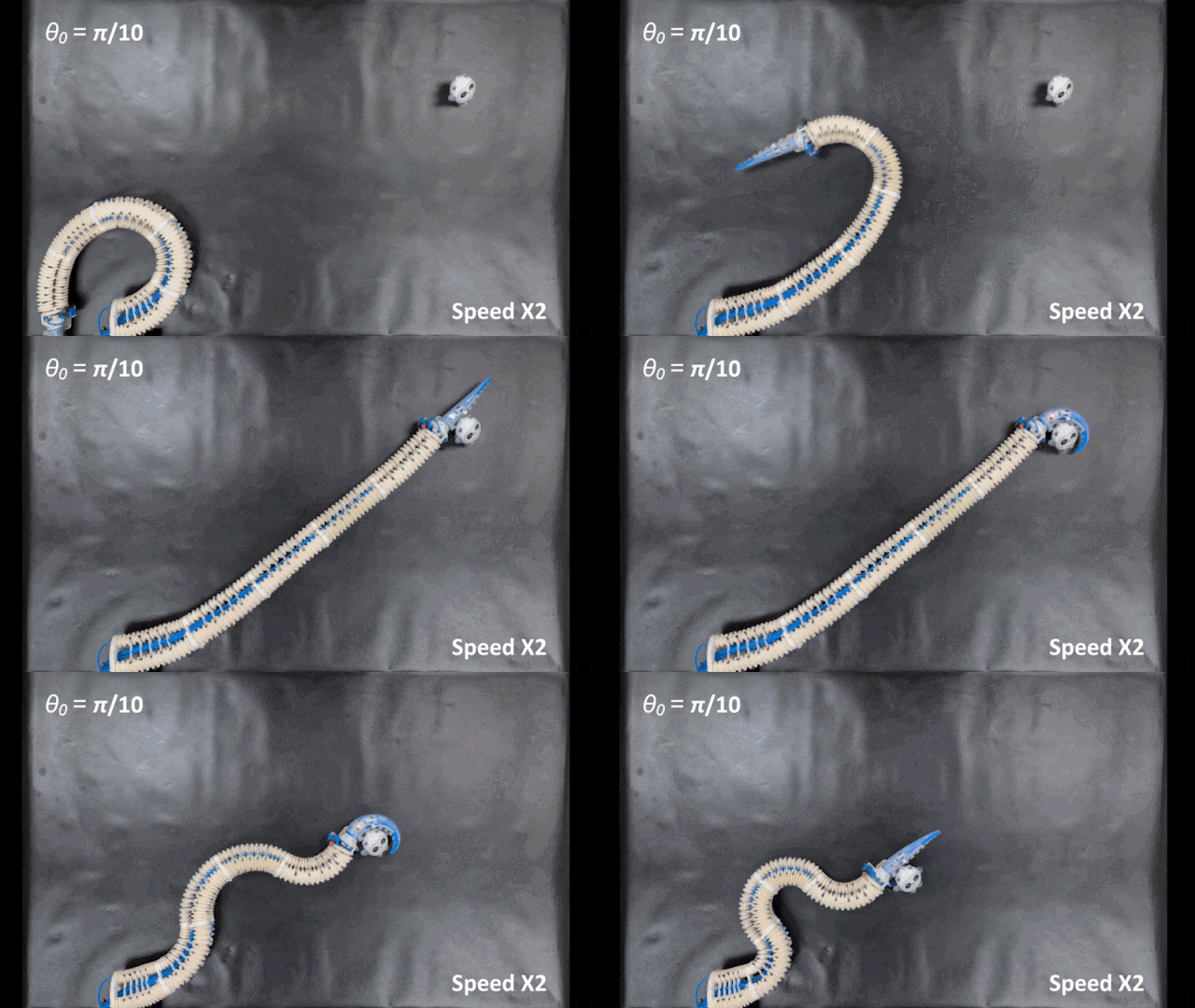
The research team was particularly interested in the "bend propagation" movement octopuses use to extend their tentacles and capture passing prey. The bending motion begins at the base of the tentacle, propagating rapidly to the tip through a simple but distinctive wave of muscle activation, quickly enveloping the unfortunate fish or other creature and attaching suckers to it. "We decided to do this project because we saw how elegantly the octopus captures prey," Li told Nature News. What makes octopuses special is that their tentacles operate almost independently of the brain. "The control signals from the brain to the arms are very, very few," said Cecilia Laschi, a biorobotics engineer at the National University of Singapore. "The nervous system of the arm itself is arranged in a sequential activation way, so the processing and computation required are very limited."
The latest achievement from Li Wen's team is a robotic system called E-SOAM (Electronic integrated Soft Octopus Arm), which mimics the octopus's movements and characteristics by combining a sensing/processing network with the propagating motion of an octopus tentacle.
The main body of the robotic system is a robotic tentacle that simulates octopus tentacle properties. Embedded with liquid metal sensors that mimic the octopus's sensory system, it can detect signals of bending, adhesion, and temperature. Additionally, the robotic tentacle is equipped with a wearable liquid metal finger glove that allows a human operator to remotely control the E-SOAM through finger movements.
These sensors capture not only the fine movements of the operator's fingers but also the pitch, roll, and acceleration of the operator's hand and arm, transmitting these to the tentacle's actions. Like a real octopus tentacle, the "octopus robot" can extend to 1.5 times its original length when reaching for a target.
The researchers wanted to incorporate sensory elements into the design so that the robot's operator could directly feel the engagement of the suction cups at the tentacle tip. Thus, the glove contains three suction cups connected to the wearer's fingers. These designs translate the suction cup effects of the robotic tentacle, so the operator can feel when the robot's suckers have locked onto a target.
In testing, the robotic tentacle successfully grasped prey made of plastic toys, performing well in both air and underwater environments.
David Howard, a robotics researcher at Australia's Commonwealth Scientific and Industrial Research Organisation in Brisbane, said achieving the octopus's "embodied intelligence" is a major goal of soft robotics technology.
This study was recently published in Science Robotics, the robotics sub-journal of Science. Four years ago, Science Robotics featured a lengthy cover story on research led by Associate Professor Li Wen's group at Beihang University, in collaboration with Professor Wood's lab at Harvard University — a biomimetic remora soft suction cup robot.
3
Google's Graph Neural Network Model Discovers 2.2 Million New Materials
After centuries of painstaking research, scientists have synthesized hundreds of thousands of inorganic compounds. Many projects have attempted to reduce the time spent testing various materials in the lab by computationally simulating new inorganic materials and calculating properties such as how their atoms pack together in crystals.
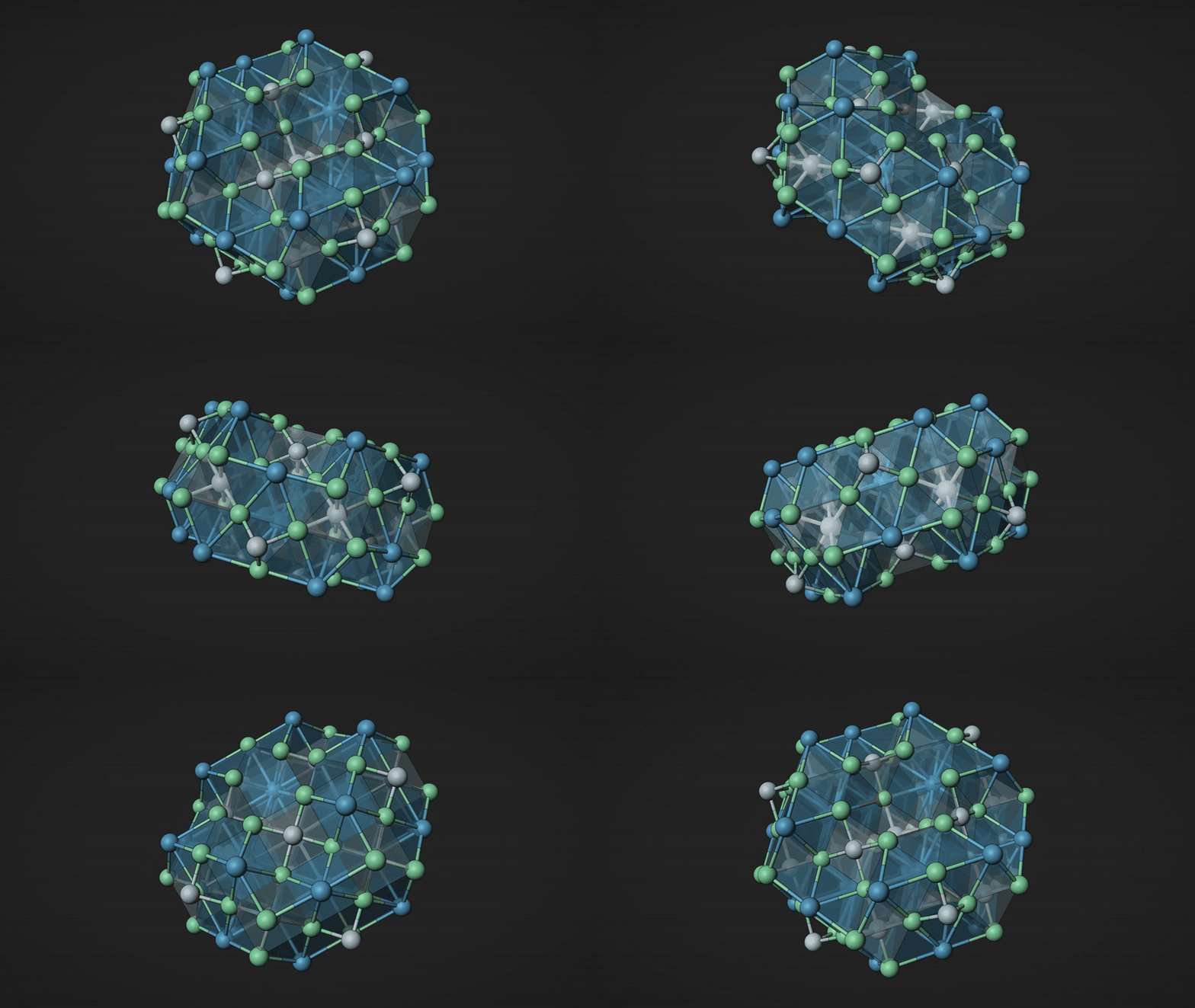
Google's DeepMind has now enhanced this approach with an AI system called GNoME (Graph Networks for Materials Exploration). The DeepMind team trained GNoME using workflows and data developed over more than a decade in the Materials Project, an open-access database from Berkeley Lab, and improved the GNoME algorithm through active learning. Crucially, GNoME employs multiple strategies to optimize computation. For example, rather than replacing all calcium ions in a material with magnesium ions, it might replace only half, or try a broader range of unusual atomic swaps. If these adjustments don't work, that's fine — the system weeds out anything unstable and learns from its mistakes. "It's like ChatGPT for materials discovery," the research team said.
Through computation, GNoME has generated 2.2 million potential compounds. After calculating whether these materials are stable and predicting their crystal structures, the system ultimately identified 381,000 stable new inorganic compounds, which were added to the Materials Project database. According to the latest paper published in Nature, GNoME has improved the accuracy of structural stability predictions to over 80%, and increased precision in predicting composition from 1% to 33% per 100 trials.
Of these more than 380,000 most stable crystal structures, scientists worldwide have already experimentally fabricated 736, demonstrating that GNoME is discovering new materials at an unprecedented scale and accuracy.
Predicting that a material exists is one thing; actually making it in a lab is another. DeepMind researchers collaborated with scientists at Lawrence Berkeley National Laboratory on an A-Lab facility to explore how to apply GNoME's predictions to automated materials synthesis. A-Lab successfully synthesized 41 compounds from 58 computed materials, achieving a success rate of over 70%. This research was also published in Nature.
"We now have the ability to rapidly make these new materials that we have predicted through computation," said Gerbrand Ceder, a materials scientist at Lawrence Berkeley National Laboratory and UC Berkeley who leads the A-Lab project.
The A-Lab research results will be applied across multiple research areas, including batteries, energy storage, solar cells, and fuel cells.