Code Brain | Zheng Yunduan: What Really Drives an Organization?

Code Brain — Ecosystem Connection, Cognitive Resonance
"Uncertainty" may no longer be a buzzword, but for Chinese companies today, it cuts deeper than ever. It has arguably become the single greatest certainty entrepreneurs face. How to survive — and thrive — amid massive uncertainty? This tests not only founders' business fundamentals but also their ability to "fix the roof while it's raining."
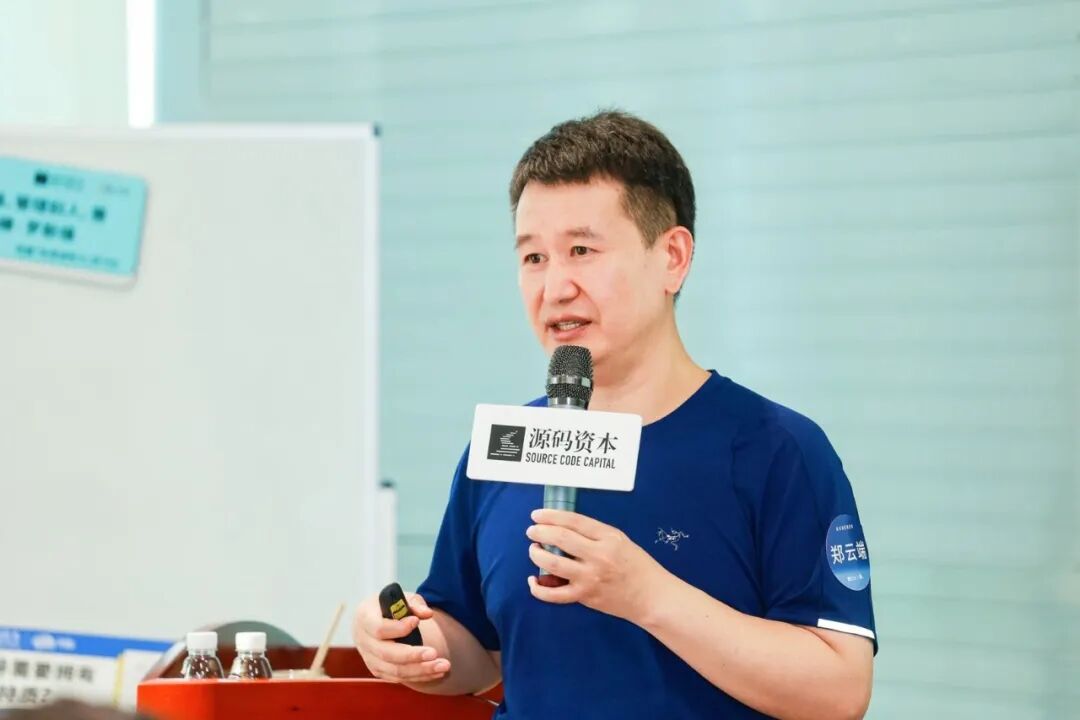
At the late-July Code Brain "Practical Leadership" workshop's closing session, Zheng Yunduan, Partner and CHO at Source Code Capital, shared his understanding of uncertainty and how entrepreneurs should cultivate organizational capabilities that provide real certainty.
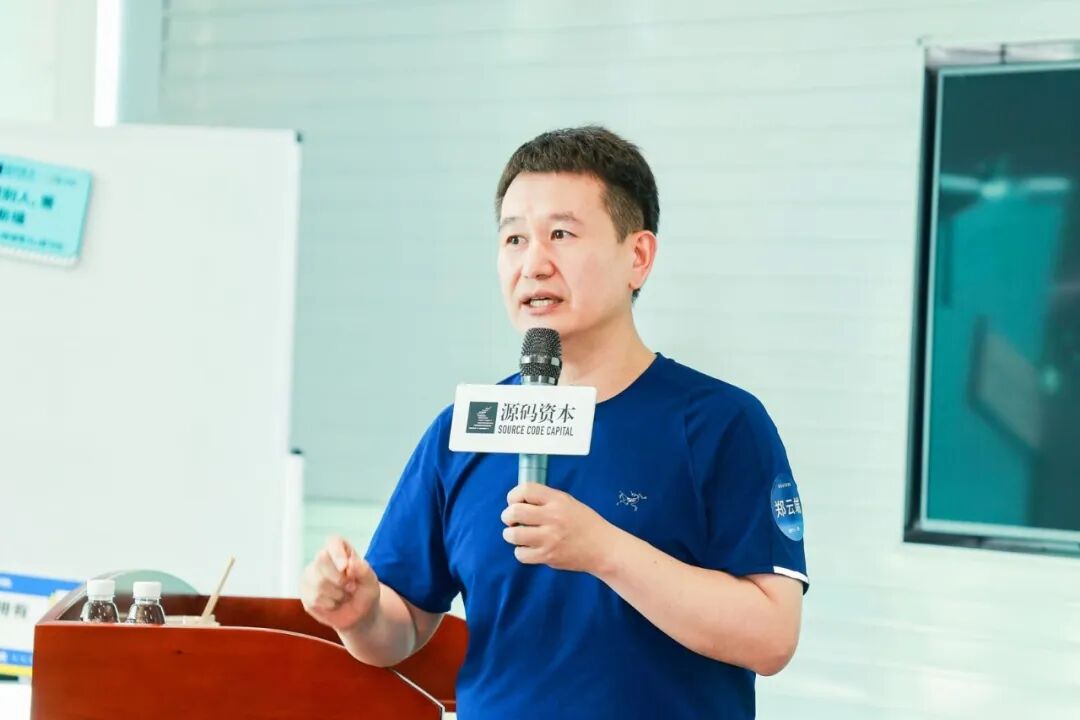
Zheng Yunduan, Partner and CHO, Source Code Capital
The following is adapted from his lecture, edited for length:
What truly drives an organization? This is a question every entrepreneur keeps asking.
Is it driven by people, control, money? Or by mission, vision, ideals, goals? A thousand entrepreneurs will have a thousand different answers. While success can be analyzed in retrospect, on this question, there truly is no "one-size-fits-all" standard answer.
To prepare for this topic, we surveyed numerous companies to understand founders' organizational challenges. We found that when facing the daily, dynamic uncertainties of organizational life, entrepreneurs most wanted to understand what constitutes certainty in organizational capability — the fundamentals for energizing an organization through both good times and bad. From this, I'd like to discuss building the "certain" back-office organizational capabilities.
The "1+4" Framework: Four Pillars of Foundational Capability
What about organizations stays constant?
Typically, we refer to operations, organization, finance, and digitalization as the back-office capabilities of the "CEO+4," or the "1+4" four-horse carriage. These four departments build the organization's "distributed" computing power across product lines, regions, and functional areas.
Operations: BI-Strategy-Objectives-OKR-Projects-Meetings-Reporting
The core function and bulk of operations work is "strategy execution," which includes goal management. Does every department have objectives? Are they broken down? After breakdown, is there follow-up? After follow-up, is there review? What's the cadence and format of review? If through meetings, is there a meeting map? These are operations' core responsibilities — strategic principles, formulation, and execution.
Some may mistakenly think operations sets strategy. Not so. Operations' core duty is to drive the strategic discussion process, monitor company review strategies and annual strategy, control key milestones, and push for team co-creation or CEO decision-making. Operations work is highly concrete, including driving BI (Business Intelligence) research on industries and competitors, conducting deep data analysis, mining insights from data, providing strategic recommendations, organizing strategic discussions, and breaking down and driving implementation of the resulting objectives.
Many founders nostalgically recall early-stage team dynamics. But that was likely because the founder played "product manager," with "full control." As companies grow, founders can't play every role, requiring operations — the COO in large organizations — to be accountable for results, capable of fighting battles and handling complex problems.
Organization: Positioning-Staffing-Leveling-People-Incentives
What's the core work of the organization function? Positioning, staffing, leveling, people, and incentives. Positioning means designing the overall organizational structure, including relationships between roles, role principles, and role inventories. It encompasses how many levels the company needs, what roles, headcounts, and levels correspond to each, creating organizational tiers that promote both efficiency and stability.
"People" really means "cadres" — what kind of people fit what roles. Incentives means what motivational mechanisms can stabilize teams, unleash organizational vitality, and improve efficiency. Incentives aren't just money, nor only "positive" — "negative" incentives have their place too.
Finance: Fundraising-Budgeting-Cash Flow-Compliance
Finance is relatively straightforward: fundraising, budgeting, cash flow, and compliance. These are specialized functions requiring professional expertise. At a certain stage, companies need these professional departments to build the organization's "distributed" computing power.
Digitalization: Online-ization-Informatization-Digitalization
We've found many startups' IT systems are siloed — departments operate independently, systems and permissions don't connect, HR systems, finance systems, operations systems, and business systems all stand apart. This is fragmentation. The digitalization function must own business processes, systems, and data. Only when business processes, information, and data connect with operations, organization, and finance can we call it true online-ization, informatization, and digitalization.
Solving the Organization's "Four Fractures"
I've often mentioned that organizations naturally have "four fractures" — four fundamental divides they must address: individual dreams and organizational mission; tasks and people; parts and wholes; present and future.
First, the fracture between individual dreams and organizational mission — the "soft," intrinsic motivation level, the vision-driven organization. Intrinsic motivation is the rarest; money can't buy it. It means having burning passion to do something, or enduring through difficulties because it matters. Goals, incentives, power — these are "extrinsic" motivators.
Ultimately, everyone is driven by "meaning." From birth, people pursue meaning, exploring why they exist. Organizations must help individuals find their reason for being within the organization, and a sustainable one.
Second, the fracture between tasks and people. Organizations may have over 50% of people in mismatched roles, because when matched, people want to advance or leave. Seeking perfect matches for every role creates two problems: prohibitive cost, and the impossibility of 100% person-role fit. You need to find the "balance point."
Third, the fracture between parts and wholes — the disconnect between departments.
Fourth, the fracture between present and future — connecting today's survival with tomorrow's grand vision.
Organizations are complex systems. Early startup teams are often described as "3F teams" (Family, Friend, Fool) — they start with founders in poor conditions, little money, only ideals and future, but they're easy to mobilize and manage.
As companies grow, 3F team members may not keep pace with organizational demands, requiring professionalization and specialist talent. But everyone brings their own algorithm, derived from Maslow's hierarchy — safety, belonging, esteem, self-actualization. Every additional employee exponentially increases organizational algorithmic complexity.
How to make algorithms compatible? I believe "brainwashing" format is less effective than "compatibility." "Compatibility" means allowing individuals to maintain their individuality while having shared standards everyone adheres to — this creates organizational creativity. Therefore, rising complexity at both organizational and individual levels is a massive challenge for organizations.
What's the Code for Sustained Organizational Prosperity?
Develop Organization as a Product. Design the organization as you would a product.
Most CEOs miss their early startup days as project managers because then they designed visible products — launched to market, customer feedback came quickly, revenue followed fast, positive reinforcement was immediate. Organizations, by contrast, show no short-term results and may not even create lasting value.
But in large organizations, it's often said CEOs should spend over 50% of time on organization, then business — because organizations must empower people, develop teams to execute, give them goals, vision, authority, levels, and performance management. Only then can organizations scale.
Meanwhile, core functional lines need "systematic" capabilities. At a certain stage, executives need systematic thinking, not just functional expertise.
Expertise isn't the ultimate answer to the world; systematic thinking ultimately closes all loops — what we call OGSM: Objective, Goal, Strategy, Measurement. From tasks to expertise, to correct methods, to results, with effective vertical and horizontal linkage. This means core functional lines need executives with systematic diagnosis-design-implementation capabilities.
The Immense Value of Process
In any organization, process is crucial. Core business processes include: sales, supply chain, and R&D processes. Core risk-control processes include: GR, PR, and legal processes. Core management processes include: goal management, budgeting, organizational management, and data management processes.
Why "process" rather than "department"? Because completing sales requires more than sales — it needs cross-functional project teams, working methods, information exchange. Similarly, supply chain alone can't complete all supply chain work.
Organizational structure typically divides, isolates, builds departmental walls. Division brings huge benefits — specialization, accumulation — but also fragmentation. What bridges these divides? Process. Process is the blood vessels; division is the skeleton. They connect together.
Emphasizing organization must go hand-in-hand with emphasizing process. If a CEO lacks strong intuition for process, lacks a three-dimensional concept of it, growing and dividing the organization becomes dangerous. I recommend a book: Process Management. For manufacturing and production enterprises, process is critical. For digital enterprises or enterprise digitalization, process is even more important — though processes become shorter.
Returning to earlier: expressing the "1+4" four-horse carriage capabilities through process management means goal management process, budgeting process, organizational management process, and data management process.
The goal management process runs from vision to mission, to strategic objectives and operational objectives. Strategic objectives are three-year, five-year, ten-year goals. Not every timeframe is mandatory, but at least one long-term target is needed. Strategic objectives can adjust, but not ad hoc — you need a ruler to check organizational capability. Objectives drive organizations; medium-to-long-term objectives help build capabilities, set standards, and accomplish tasks.
The budgeting process means finance proactively analyzes overall business objectives and matches cash and financing plans, rather than passively waiting for business to dictate. Budgeting is finance plus functional lines plus CEO arranging spending patterns and structures by department, akin to a market transaction mechanism — resources given, outputs produced, ROI, etc. The internal transaction mechanism is essentially budgeting; the budget system is the most usable and simplest transaction mechanism. Like business, budgeting is dynamic, cyclical, and process-oriented. Budgeting can also serve as incentive and constraint mechanism, calculated by human efficiency and ROI.
Organizational management and data management fall under management processes. While management processes don't directly create value, the less directly they create value, the more stable they are — foundational capabilities. Because things that don't directly create value also prevent value destruction. For example, when business pivots, related processes need rebuilding, so they change more. But the further back-office you go, the less change, the more cross-business they become — this is where true capability lies.
People often cite management's "four realms": making the abstract concrete, making the concrete abstract, cultivating truth through illusion, cultivating people through tasks. "Abstract" means management — not directly producing results, but making management concrete strengthens business. "Making the concrete abstract" means CEOs shouldn't be buried in operations daily, but rather build operational capability in others, replicating it continuously. "Cultivating truth through illusion" means allowing certain mistakes in the process, using these to develop the leadership team with more time and space. "Cultivating people through tasks" means developing talent through real work, gradually elevating their capabilities.


Code Brain Issue 28 | Understanding Human Nature to Build Your Overseas "Vanguard Team"
Code Brain Issue 27 | Carbon's Origins and Destinations
Code Brain Issue 26 | Overseas Marketing: What You Need to Know
Code Brain Issue 25 | Cracking Liu Genghong's Traffic Code
Code Brain Issue 24 | Equity Financing: What Changes and What Doesn't
Code Brain Issue 23 | Eight Questions on Going Global: Where Are the New Opportunities?
Code Brain Issue 22 | Managing Supply Chains Amid "Volatility"
Code Brain Issue 21 | Clear Despair Beats Vague Hope: On ToB Sales During the Pandemic
Code Brain Issue 20 | Is Your Cash Flow Still Healthy During the Pandemic?
More MaHui members can view by clicking "Read More"